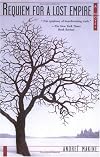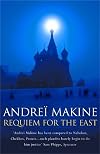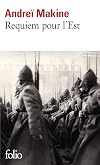
Requiem for a Lost Empire
by Andreï Makine
On This Page
Description
In this remarkable novel, which spans eighty years of the twentieth century, Andreï Makine describes, beautifully but unsparingly, the almost uninterrupted succession of violence, misery, and horror that has been visited on the Russian people since the October Revolution of 1917. For those quick to forget, or too young to remember, he paints a graphic portrait of those years in a three-generational novel that is as moving as it is revealing. A young Russian army doctor is sent to distant show more shores to bind the wounds of those in Africa, the Near East, and South America that are pawns in the global political chess game during the Cold War. Recruited by an intelligence agent, he experiences the bloody reality of revolution on the ground. The book casts its eye back toward his grandfather Nikolai, a Red cavalry soldier fighting the Whites in 1920, and his father, whose story of World War II is invoked with a passion and force that bear comparison to the best writing on the subject. From the battlefields of the 1920s to the harsh African heat and dust of the desert in the 1980s, from the orphanage where the narrator spent his youth to the art galleries and chic salons of the glittering new West, Requiem for a Lost Empire has all the sweep and depth, all the beauty and insight of the great Russian novels. It is, as the eminent French critic Edmonde Charles-Roux noted, "an astonishing novel, one that will surely stand the test of time." show lessTags
Recommendations













Member Reviews
"Requiem for a Lost Empire" is, if nothing else, aptly named. It's narrated sometime in the early nineteen nineties by a Russian doctor, a veteran of various unnamed proxy wars, who was raised an orphan. After the collapse of the Soviet Union, he finds himself at loose ends: separated from his state-appointed life partner, he wanders a suddenly unfamiliar global landscape. The book is long on retrospection: the narrator relates how he learned of his family's tragic history, which was more-or-less defined by a series of twentieth-century tragedies: the Second World War, Stalin's famine and purges, and the small, messy wars that characterized the Cold War. Makine characterizes Russia's history as an almost continual tragedy, and while show more this isn't exactly novel, his writing gives this view real force: his depiction of war and its aftermath is astonishingly direct and excruciatingly difficult to read: it hits the reader with the force of an uppercut. Makine's plotting and construction is also masterful. Readers who insist on a certain level of realism might lose patience with him: he mostly avoids particulars, but while his use of symbolism and metaphor is easy to spot, his characters never feel like literary devices. Makine's characters have had most of their choices made for them by ideologically charged events beyond their control, but they never seem less than human. The author's focus is so personal it almost feels granular: there isn't a sentence in this book that can't be related back to its central themes. It's an impeccably controlled performance.
In the end, it's this personal focus that gives me a few reservations about "Requiem for a Lost Empire." The book is, in a sense, a love story: as the narrator searches for his former partner, her absence fills the whole world. But the book might have done with a wider perspective, too: the narrator's own politics are never really clear, and I kept wanting for him to share some sort of opinion on the whole Soviet experiment. Considering that Marxist-Leninism defined his life, you'd think he'd have something to say about it as he watched it sink out of sight. The novel does draw some comparison between the Soviets' efforts to export their revolution and Western capitalist arms merchants, but this feels like something of a false equivalence and evasion, if you'll pardon the nationality-specific charge, a particularly French evasion of a pretty basic moral judgment. That objection notwithstanding, "Requiem for a Lost Empire" is melancholy, tragic, thoughtful, and beautifully written. Recommended. show less
In the end, it's this personal focus that gives me a few reservations about "Requiem for a Lost Empire." The book is, in a sense, a love story: as the narrator searches for his former partner, her absence fills the whole world. But the book might have done with a wider perspective, too: the narrator's own politics are never really clear, and I kept wanting for him to share some sort of opinion on the whole Soviet experiment. Considering that Marxist-Leninism defined his life, you'd think he'd have something to say about it as he watched it sink out of sight. The novel does draw some comparison between the Soviets' efforts to export their revolution and Western capitalist arms merchants, but this feels like something of a false equivalence and evasion, if you'll pardon the nationality-specific charge, a particularly French evasion of a pretty basic moral judgment. That objection notwithstanding, "Requiem for a Lost Empire" is melancholy, tragic, thoughtful, and beautifully written. Recommended. show less
This book overlays three generations of a Russian family with the the grim upheavals of Revolution, Civil War, World War II and recent Third and Fourth World mini-wars that have claimed its members from October 1917 onward. One reads of this family, which is so torn apart by the continual horrors of military service on behalf of larger ideals and adventures, together with the military destruction of their lives and homeland, that nearest relatives hardly exist -- wives, parents, children, and loves -- but instead remain alive only as the most tenuous and distant of brief memories of isolated happiness between misery and death. One reads of leaders who spring up and enslave people to their ideologies; of opportunists who seize the show more prevailing wind; of cynical and itinerant arms merchants who deliberately foment insurrection to sell their weapons; and of their 'Peeping Toms' who photograph the carnage of exploding and mutilated bodies to produce advertising materials for the encouragement of new buyers. No side is spared. One reads of live victims buried to their necks in standing positions with heads exposed and left to the forest animals to feed upon; and of a man who in his compassion finds enduring love by chancing upon and digging up a still-living woman who turns out to be pregnant carrying a live fetus, who become his family. One reads of the growing disillusion of the main characters as they witness and recall such vivid horrors, but one also reads with lyrical beauty of the Russian homeland as it once was for its people, and as the narrator hopes it might ever again be for him in some distant future.
This is not a war story such as you have ever read. This is not history such as you have ever read. This is not a story of love and devotion such as you have ever read. This is quite simply a story that you must read. show less
This is not a war story such as you have ever read. This is not history such as you have ever read. This is not a story of love and devotion such as you have ever read. This is quite simply a story that you must read. show less
One could note that I was reading this at the airport when my wife arrived here in the heartland. That wouldn't be true. i was holding the novel. My incessant glaring at the pages didn't yeild any comprehension. i kept staring at the pages.
Reading did ensue a few days later and I think I concluded the tome in a federal office. It is a fine example of the sidelong glance, fleeting details which sear into the brain well after the plot, as it were, has faded into the fog.
Reading did ensue a few days later and I think I concluded the tome in a federal office. It is a fine example of the sidelong glance, fleeting details which sear into the brain well after the plot, as it were, has faded into the fog.
As far as contents, a most difficult book to read, poignant, soul-wrenching but so true to life in all respects... And I shall never think about any war (and one in particular) in the same way again. But the beauty of expression is so remarkable that it took my breath away (much as the other A.Makine's book that I've read recently - "Dreams of My Russian Summers"). The talent is unquestionable. Like a sponge, I couldn't help but absorb every single word with gratitude, and in translation, at that! - one can only imagine what a relish it would be to read it in original. Undoubtedly, I have discovered another favorite author, after reading just two of his books. Eager to read more....
"Karlus" of the 09/19/08 review has it right. I was born in 1954. One of the earliest things I learned, as a carefree American child, was that Stalin died in 1953. As Makine's narrator travels back and forth in 20th-century time in this realistic fictional memoir, I as reader correlate each identifiable moment with that time in my own life. The effect is sobering. Makine's language, in this translation from the French by Geoffrey Strachan, both stimulates and orders a reader's thoughts.
on progress
¿Por qué lo fusilaron?», le pregunta un día un adolescente huérfano a Sacha, la mujer de pelo cano que, una noche, cuando era niño, se lo llevó estrechándolo entre sus brazos de la cabaña escondida en un bosque del Cáucaso donde vivía con sus padres. La respuesta de Sacha es la conmovedora historia de los abuelos de ese niño, Nikolai y Anna, de la sanguinaria guerra civil que sufrieron, de las atrocidades de Blancos y Rojos, de la ciega obediencia al Soviet y sus nefastas consecuencias, de las hambrunas...; y es la historia de Pavel, su padre, de su aterradora experiencia durante la segunda guerra mundial, de sus compañeros en la tropa disciplinaria usada como carne de cañón para liberar un campo de concentración, de su show more vida errante tras la guerra hasta que conoce a su mujer y se establecen en esa cabaña del bosque. show less
Mar 14, 2023Spanish
Members
- Recently Added By
Published Reviews
Andrej Makine hat in diesem Roman mittels des exemplarischen Lebenswegs seiner Hauptfigur und deren Vorfahren fast ein ganzes Jahrhundert russischer Geschichte erzählt. Es ist tatsächlich ein Requiem herausgesprungen, ein Buch der Enttäuschungen und Verluste, des Schmerzes und unerfüllter Sehnsüchte, ein Trauergesang auf eine untergegangene Kultur und eine an der Politik gescheiterte show more Liebe. Die Neigung zum sentimentalen Pathos ist ein genuines Phänomen großer russischer Literatur. Obwohl Makine seit geraumer Zeit in Paris lebt und Französisch schreibt, sind diese künstlerischen Wurzeln bei ihm unübersehbar. Hier spricht so etwas wie die melancholische "russische Seele", gebrandmarkt durch die Geschichte und gekränkt von unerwiderter Vaterlandsliebe. show less
added by Indy133
Author Information

34+ Works 4,465 Members
Andrei Makine was born in Siberia in 1957. Although raised in the Soviet Union, he learned about France and came to love that country through the stories told by his French grandmother. He now lives in Paris himself, having been granted political asylum by France in 1987, and writes in French. His grandmother figures prominently in the show more autobiographical novel, "Dreams of My Russian Summers," for which Makine received both the Goncourt Prize and the Medicis Prize, becoming the first author to simultaneously receive both of these prestigious French awards. In the U.S., the English translation of "Dreams of My Russian Summers" has also received recognition, including the Boston Book Review Fiction Prize and the Los Angeles Times Best Book of the Year award. Andrei Makine is also the author of "Once Upon the River Love" and "The Crime of Olga Arbelina." (Bowker Author Biography) show less
Some Editions
Series
Belongs to Publisher Series
Gallimard, Folio (3587)
Common Knowledge
- Canonical title
- Requiem for a Lost Empire
- Original title
- Requiem pour l'Est
- Alternate titles
- Requiem for the East
- Original publication date
- 2000
- Important places*
- Rusland
- Epigraph
- Onda människor hafva inga sånger. Hur kommer det sig att ryssarna hafva sånger? - Friedrich Nietzsche "Afgudaskymning"
"Wicked men have no songs. How come Russians have songs?"
-Friedrich Nietzsche, 'The twilight of the idols
"There are only two peoples now Russia is still barbarous, but it is great...The other nation is America...The future of the world is there between two great worlds. Some day they will collide and then we shall see struggles ... (show all)of which the past can give no idea."
-Sainte-Beuve, 'Chaiers' 1847
"The other day I turned up the pages of an address book from before the war. I had to mark crosses and grim notes on every page: 'Exiled...Disappeared...Dead...Killed in battle...Shot by the enemy...Shot by his own side..."
Alfred Fabre-Luce, 'Journal d'Europe' 1946-1947 - First words
- It has always been my conviction that the house that sheltered their love, and later my own birth, was much closer to the night and its constellations than to the life of that vast country they had managed to escape without l... (show all)eaving its territory.
Jag har alltid vetat att huset där mina föräldrar älskade varandra och där jag föddes låg närmare natten och dess stjärnbilder än livet i det väldiga rike som de flytt från utan att lämna dess territorium. - Last words*
- (Click to show. Warning: May contain spoilers.)Men vi behöver inte längre dess timmar.
- Original language
- French
*Some information comes from Common Knowledge in other languages. Click "Edit" for more information.
Classifications
- Genres
- Fiction and Literature, General Fiction, Historical Fiction
- DDC/MDS
- 843.914 — Literature & rhetoric French Literature French fiction 1900- 20th Century 1945-1999
- LCC
- PQ2673 .A38416 .R4613 — Language and Literature French, Italian, Spanish and Portuguese literatures French literature Modern literature 1961-2000
- BISAC
Statistics
- Members
- 301
- Popularity
- 106,760
- Reviews
- 9
- Rating
- (3.68)
- Languages
- 12 — Dutch, English, Finnish, French, German, Norwegian (Bokmål), Polish, Portuguese, Romanian, Slovenian, Spanish, Swedish
- Media
- Paper, Audiobook, Ebook
- ISBNs
- 26
- ASINs
- 5