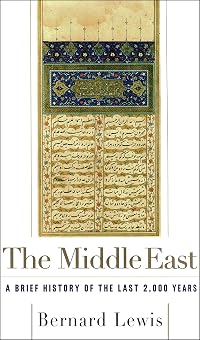
The Middle East: 2000 Years of History From the Rise of Christianity to the Present Day
by Bernard Lewis
Phoenix Press History of Civilization
On This Page
Description
In this immensely readable and wide-ranging book, Bernard Lewis charts the successive transformations of the Middle East, beginning with the two great empires, the Roman and the Persian, and covering the growth of Christianity, the rise and spread of Islam, the waves of invaders from the east, the Mongol hordes of Jengiz Khan, the rise of the Ottoman Turks, and the changing balance of power between the Muslim and Christian worlds. 'This book is a masterpiece' Sir Anthony Parsons, Daily TelegraphTags
Recommendations
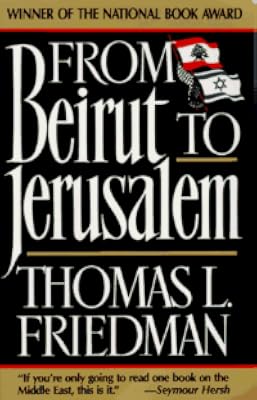
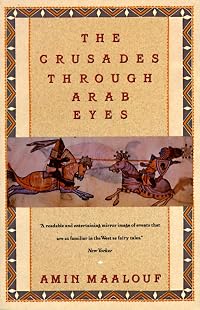
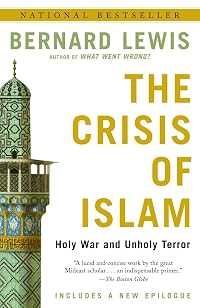

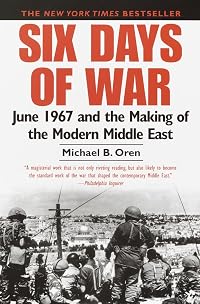



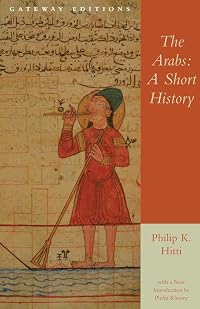


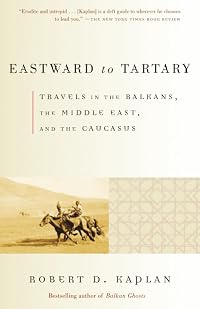
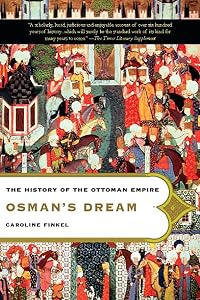




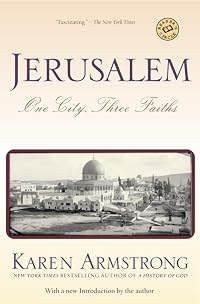
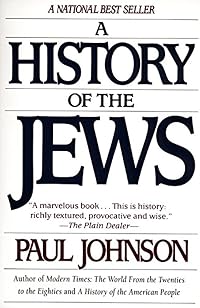


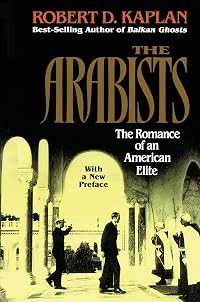
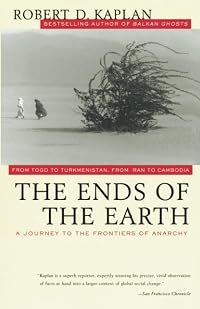
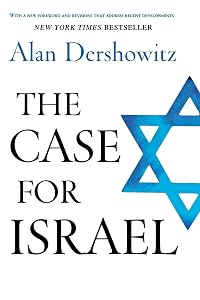
Member Recommendations
Member Reviews
****
# Review: The Middle East – A Brief History of the Last 2,000 Years
Bernard Lewis’s *The Middle East: A Brief History of the Last 2,000 Years* offers a sweeping, chronological survey of a region that has been a crossroads of civilizations, religions, and empires. Spanning from the Hellenistic era through late 20th-century transformations, Lewis distills two millennia of political, social, and cultural developments into an accessible 448-page narrative. His goal is to identify recurring patterns—unity and fragmentation, external influence and indigenous innovation—and to probe whether historical precedents can shed light on contemporary conflicts.
---
## Narrative Scope and Structure
Lewis organizes the story into clear, show more digestible eras:
- Hellenization and the emergence of **early Christianity** under Roman rule
- The **rise and spread of Islam**, from the Prophet Muhammad to the Umayyad and Abbasid Caliphates
- The impact of the **Mongol invasions**, reshaping political centers and opening pathways for new dynasties
- The **Ottoman and Safavid empires**, whose contests defined regional borders and religious divisions
- Encounters with **Western imperialism** and the challenges of modernization in the 19th and early 20th centuries
- The **post-World War II period**, decolonization, the Arab–Israeli conflicts, and the rise of nationalism and political Islam
---
## Key Strengths
- Meticulous scholarship: Lewis draws on archaeological findings, contemporary chronicles, and modern historiography to ground his analysis.
- Clarity and elegance: Dense material is rendered with graceful prose, making complex transitions and dynastic shifts understandable to non-specialists.
- Pattern recognition: By tracing recurring themes—center-periphery tensions, sectarian divides, and reactions to foreign intervention—Lewis invites readers to consider how history informs present-day dynamics.
---
## Considerations and Criticisms
- Publication date: First released in 1997, it does not cover developments of the 21st century, including the Arab Spring or recent geopolitical realignments.
- Grand narrative trade-offs: A single-volume treatment inevitably glosses over local intricacies and the diversity of Arab, Persian, Turkish, Kurdish, and other communities.
- Perspective: Critics have noted Lewis’s pro-Western outlook may understate indigenous agency and overemphasize external influence in shaping the region.
---
## Conclusion
*The Middle East: A Brief History of the Last 2,000 Years* remains the most comprehensive single-volume introduction to the region penned by a leading scholar. It excels at laying a foundation—charting key dynasties, cultural florescences, and crisis points. For those seeking an up-to-date or deeply localized study, pairing Lewis with newer monographs or specialized regional works is recommended. As a gateway to a complex past, however, his narrative continues to enlighten and provoke informed inquiry into the Middle East’s enduring challenges and possibilities.
I have read the book, and it is informative. show less
# Review: The Middle East – A Brief History of the Last 2,000 Years
Bernard Lewis’s *The Middle East: A Brief History of the Last 2,000 Years* offers a sweeping, chronological survey of a region that has been a crossroads of civilizations, religions, and empires. Spanning from the Hellenistic era through late 20th-century transformations, Lewis distills two millennia of political, social, and cultural developments into an accessible 448-page narrative. His goal is to identify recurring patterns—unity and fragmentation, external influence and indigenous innovation—and to probe whether historical precedents can shed light on contemporary conflicts.
---
## Narrative Scope and Structure
Lewis organizes the story into clear, show more digestible eras:
- Hellenization and the emergence of **early Christianity** under Roman rule
- The **rise and spread of Islam**, from the Prophet Muhammad to the Umayyad and Abbasid Caliphates
- The impact of the **Mongol invasions**, reshaping political centers and opening pathways for new dynasties
- The **Ottoman and Safavid empires**, whose contests defined regional borders and religious divisions
- Encounters with **Western imperialism** and the challenges of modernization in the 19th and early 20th centuries
- The **post-World War II period**, decolonization, the Arab–Israeli conflicts, and the rise of nationalism and political Islam
---
## Key Strengths
- Meticulous scholarship: Lewis draws on archaeological findings, contemporary chronicles, and modern historiography to ground his analysis.
- Clarity and elegance: Dense material is rendered with graceful prose, making complex transitions and dynastic shifts understandable to non-specialists.
- Pattern recognition: By tracing recurring themes—center-periphery tensions, sectarian divides, and reactions to foreign intervention—Lewis invites readers to consider how history informs present-day dynamics.
---
## Considerations and Criticisms
- Publication date: First released in 1997, it does not cover developments of the 21st century, including the Arab Spring or recent geopolitical realignments.
- Grand narrative trade-offs: A single-volume treatment inevitably glosses over local intricacies and the diversity of Arab, Persian, Turkish, Kurdish, and other communities.
- Perspective: Critics have noted Lewis’s pro-Western outlook may understate indigenous agency and overemphasize external influence in shaping the region.
---
## Conclusion
*The Middle East: A Brief History of the Last 2,000 Years* remains the most comprehensive single-volume introduction to the region penned by a leading scholar. It excels at laying a foundation—charting key dynasties, cultural florescences, and crisis points. For those seeking an up-to-date or deeply localized study, pairing Lewis with newer monographs or specialized regional works is recommended. As a gateway to a complex past, however, his narrative continues to enlighten and provoke informed inquiry into the Middle East’s enduring challenges and possibilities.
I have read the book, and it is informative. show less
Bernard Lewis is one of the most knowledgeable and aware historians I have ever encountered. This work is encyclopedic, akin to taking a course. He is one of the few authors who frequently uses vocabulary with which I am not familiar, but he writes well, as if this were an extended New York Review or New Yorker essay. As an introduction to Islam--it's history, politics, social relations, and evolution--the book has no comparison. My only quibble is that the section on modern times seems truncated; this work is more focused on early historical aspects of this region and the middle ages. Another drawback is its 1995 copyright: it seems almost a bizarre omission not to have updated the introduction or not to have provided an epilogue which show more would encompass the jihadists and their activities. The world changed on 9/11 and to omit such an essential historical development, given the level of scholarship the book demonstrates, is perverse. show less
Bernard Lewis takes on the task of explaining from history how the Middle East got to where it is today. To this end he reaches far back into history, beginning with the pagan Hellenistic world, successor to the ancient civilizations of Egypt, Mesopotamia and Iran, which became divided into a Christian and Roman west and Iranian and Zoroastrian east. While necessary background, this is remote history and is concluded by page 55.
For the next 330 pages or so Lewis charts the Islamic history of the Middle East, from its origins with Mohammed, through the Arab, Seljuk and Mongol periods, giving the lion’s share of the treatment to the Ottoman era. Again, this is probably right, since the Ottoman Empire has had the most profound effect on show more the Middle East today.
The political and military history is summary, and much of the treatment is thematic. There are also chapters given over to social, religious and economic factors. The last section of the book deals with the reaction of the Middle East to the increasing influence of Western Europe, beginning with the Ottoman defeat at Vienna in 1689, and culminating with the post-1918 partition between Britain and France. It will be interesting if his observations of the current scene, penned before 9/11, are vindicated in the long run.
I found many of the thematic elements in this book helpful, especially for an understanding of the Islamic mindset. Thus, the solidarity between Muslims, the origins of the main Islamic sects, the purely utilitarian attitudes towards non-Muslim cultures and societies (until the modern era), and the tension between participation in the often ephemeral Muslim states and the duties of a pious Muslim. Lewis effectively highlights continuities (eg. between Helleno-Roman and Persian society on one hand, and Umayyad and Abbasid caliphates on the other) as well as major discontinuities (eg. the impact of the Seljuks and the Mongols).
Lewis also demonstrates a sympathy and historical understanding towards the Middle East that challenge many preconceptions held by Westerners today. One cannot understand the Middle East as a contemporary region, nor the Muslim outlook, without ingesting Lewis’ lessons.
However, I found the lack of a sufficiently detailed narrative annoying. If I had not had some basic reading in Middle Eastern history, I would have struggled to make sense of the historical sections of the book. A blow-by-blow “kings and battles” treatment is obviously inappropriate for a book that appeals to the general reader, but the general reader needs some help through the bewildering kaleidoscope of Muslim dynasties (at least before the rise of the Ottomans).
Lewis is important reading for anyone wanting to understand the Middle East, either in its history or where it is today. I would not recommend him, however, as the definitive treatment or introduction. show less
For the next 330 pages or so Lewis charts the Islamic history of the Middle East, from its origins with Mohammed, through the Arab, Seljuk and Mongol periods, giving the lion’s share of the treatment to the Ottoman era. Again, this is probably right, since the Ottoman Empire has had the most profound effect on show more the Middle East today.
The political and military history is summary, and much of the treatment is thematic. There are also chapters given over to social, religious and economic factors. The last section of the book deals with the reaction of the Middle East to the increasing influence of Western Europe, beginning with the Ottoman defeat at Vienna in 1689, and culminating with the post-1918 partition between Britain and France. It will be interesting if his observations of the current scene, penned before 9/11, are vindicated in the long run.
I found many of the thematic elements in this book helpful, especially for an understanding of the Islamic mindset. Thus, the solidarity between Muslims, the origins of the main Islamic sects, the purely utilitarian attitudes towards non-Muslim cultures and societies (until the modern era), and the tension between participation in the often ephemeral Muslim states and the duties of a pious Muslim. Lewis effectively highlights continuities (eg. between Helleno-Roman and Persian society on one hand, and Umayyad and Abbasid caliphates on the other) as well as major discontinuities (eg. the impact of the Seljuks and the Mongols).
Lewis also demonstrates a sympathy and historical understanding towards the Middle East that challenge many preconceptions held by Westerners today. One cannot understand the Middle East as a contemporary region, nor the Muslim outlook, without ingesting Lewis’ lessons.
However, I found the lack of a sufficiently detailed narrative annoying. If I had not had some basic reading in Middle Eastern history, I would have struggled to make sense of the historical sections of the book. A blow-by-blow “kings and battles” treatment is obviously inappropriate for a book that appeals to the general reader, but the general reader needs some help through the bewildering kaleidoscope of Muslim dynasties (at least before the rise of the Ottomans).
Lewis is important reading for anyone wanting to understand the Middle East, either in its history or where it is today. I would not recommend him, however, as the definitive treatment or introduction. show less
With the recent escalation of conflict in the Middle East I felt compelled to become more knowledgeable regarding the conflict and the history of the Middle East. Bernard Lewis is said to have been one of the foremost world experts on this complex part of the world so I thought this would be a good place to start. Spoiler alert - I gave up after 280 pages. Professor Lewis was clearly exceptionally learned and I am sure that those in academia would have found this book extraordinary. For my part I thought it was dense, very hard to follow and written in a manner that was far too academic for my taste. There is no question that the Middle East is steeped in a complex history however this book takes something complex and amplifies the show more complexity rather than distilling or interpreting it in a way that is accessible for those who are not as scholarly. show less
Too much for my taste on the twentieth century, and not enough on the pre-Ottoman world, but that can be forgiven. The slightly oily feeling I got reading the last few chapters, however, cannot: Lewis seems to know an awful lot about the middle east, but, as with many biographers, all that knowledge seems to have made him less, rather than more, keen. The take-away of the last half of the book seems to be "if only they'd act more like Americans!" One day, we can wistfully hope, Arabs, Turks and Persians will embrace the system that has laid waste to their world over the last two centuries. Only then will they be able to re-take their rightful place at the bottom of the world's food chain. That weirdness aside, the first half is very show more readable and interesting, the second half intermittently interesting and very repetitive. But this book really tries to cover far too much, too quickly. There's no need for chapters about generic processes of modernization ("And then we gave the Arabs newspapers! And then we gave them coffee! And then we gave them...").
Finally, it's downright surreal to read a book about the Middle East written not only pre-Arab-Spring, but pre-9/11. To put it mildly, Lewis was *not* a good prognosticator, and his repeated references to (unnamed) democratic governments in the area seems laughable this side of the winter of 2010/11. show less
Finally, it's downright surreal to read a book about the Middle East written not only pre-Arab-Spring, but pre-9/11. To put it mildly, Lewis was *not* a good prognosticator, and his repeated references to (unnamed) democratic governments in the area seems laughable this side of the winter of 2010/11. show less
A very nice narration of the happenings in the Middle East for the past nearly 2 millenia. Anyone wanting to know about this most misunderstood region should read this book first.
The Middle East goes up to 1995 and is a good start, I think, for reading about the middle east. Since it covers a large area and many years it doesn't go into much detail about specific areas, but gives the overall view of what was happening.
On thing that he does well is to express an earlier world view that formed as Islam advanced from the Middle East to Africa and part of Spain, feeling that they were the culmination of religion - Mohammed being the last of the prophets in thier view, and their success in conquest being attributed to the rightness of their cause. Though they studied their own history, the history of the western world was not seen as being of value. In the 1800 and 1900 hundreds, then, when they met with military show more reversals, it was a shock that led to a deeper questioning of their own purpose. The earlier view is easy to empathize with in the U.S., because, whatever we think of the uses made now of U.S. power, it is very much ingrained in us that the U.S. is one of, if not the most powerful, at the moment. U.S. power may be declining, and, if it becomes clear, that it is, I think that will be a shock. Bernard talks about the response to that, from attempts to establish democracy, to rejection of the west and turning to Islamic fundamentalism.
There is a section towards the end where he talks about the question of whether the middle east was better off for its contact with western imperialism. He concludes that general life conditions are better, although he says the positive effects were more where the colonial power was actively involved in administration such as in India. This is a statement that I simply don't know enough to evaluate, though I have doubts, certainly, as a general statement about colonialism.
There is very little about the position or role of women, although the former is covered generally, as earlier being restrictive though with some legal rights not available to European women at the time, to some loosening with modernization, and increasing restriction with the turn to Islamic fundamentalism in some places. This is a topic, though, where the specifics would be helpful, with more on areas with different prior cultures, or among various social classes, or branches of Islam. show less
On thing that he does well is to express an earlier world view that formed as Islam advanced from the Middle East to Africa and part of Spain, feeling that they were the culmination of religion - Mohammed being the last of the prophets in thier view, and their success in conquest being attributed to the rightness of their cause. Though they studied their own history, the history of the western world was not seen as being of value. In the 1800 and 1900 hundreds, then, when they met with military show more reversals, it was a shock that led to a deeper questioning of their own purpose. The earlier view is easy to empathize with in the U.S., because, whatever we think of the uses made now of U.S. power, it is very much ingrained in us that the U.S. is one of, if not the most powerful, at the moment. U.S. power may be declining, and, if it becomes clear, that it is, I think that will be a shock. Bernard talks about the response to that, from attempts to establish democracy, to rejection of the west and turning to Islamic fundamentalism.
There is a section towards the end where he talks about the question of whether the middle east was better off for its contact with western imperialism. He concludes that general life conditions are better, although he says the positive effects were more where the colonial power was actively involved in administration such as in India. This is a statement that I simply don't know enough to evaluate, though I have doubts, certainly, as a general statement about colonialism.
There is very little about the position or role of women, although the former is covered generally, as earlier being restrictive though with some legal rights not available to European women at the time, to some loosening with modernization, and increasing restriction with the turn to Islamic fundamentalism in some places. This is a topic, though, where the specifics would be helpful, with more on areas with different prior cultures, or among various social classes, or branches of Islam. show less
Members
- Recently Added By
Published Reviews
ThingScore 100
The distinguished scholar Bernard Lewis has written a gem of a book, eminently readable and full of wonderful insights and brilliant aperçus. It combines narrative and analysis in just the right proportions and embraces the whole sweep of the history of the Near and Middle East, starting as far back as late antiquity. The study then moves forward, step by step, through the far-flung empires show more of the caliphs and sultans to the more recent emergence of the Arab world, after a long period of subjection and passivity, to independence and self-assertion. Professor Lewis concludes his book with some parting thoughts, elegantly and persuasively presented, on the reasons for the Middle East’s present uneasy confrontation with the challenges posed by European (and more recently American) modernity. show less
added by TomVeal
Lists

Best General History Books
103 works; 23 members

Radical Islam/Islamism
75 works; 6 members

The Emergence of the Modern Middle East
289 works; 13 members

Books Read in 2017
4,249 works; 130 members

r/History Recommended Reading List
603 works; 12 members

r/AskHistorians' Recommended Books
1,068 works; 19 members
Author Information

69+ Works 11,196 Members
Bernard Lewis was born in London, England on May 31, 1916. He graduated with honors in history from the School of Oriental Studies at the University of London in 1936 with special reference to the Middle East. In 1938, he was named an assistant lecturer at the University of London, where he received a Ph.D. the next year. In 1940, he was drafted show more into the British armed forces and assigned to the Army tank corps. He was soon transferred to intelligence. He taught at the University of London for 25 years. In 1974, he accepted joint appointments at the Institute for Advanced Study in Princeton, New Jersey and Princeton University. He also taught at Cornell from 1984 to 1990. He became an American citizen in 1982. He was a scholar of Middle Eastern history and a prolific writer. His books included The Emergence of Modern Turkey, What Went Wrong?: The Clash between Islam and Modernity in the Middle East, and From Babel to Dragomans: Interpreting the Middle East. Because he was considered an expert on interactions between the Christian and Islamic worlds, his view helped shape American foreign policy under President George W. Bush. He died on May 19, 2018 at the age of 101. (Bowker Author Biography) show less
Some Editions
Awards and Honors
Awards
Series

Belongs to Publisher Series
Common Knowledge
- Canonical title
- The Middle East: 2000 Years of History From the Rise of Christianity to the Present Day
- Original title
- The Middle East: 2000 Years of History From the Rise of Christianity to the Present Day
- Original publication date
- 1997
- Important places
- Middle East
- Original language
- English
Classifications
- Genres
- History, Nonfiction, General Nonfiction, Religion & Spirituality
- DDC/MDS
- 956 — History & geography History of Asia Middle East Asia: Turkey, Iraq, Syria, Lebanon, Israel, Jordan
- LCC
- DS62 .L594 — History of Europe, Asia, Africa and Oceania Asia History of Asia Middle East. Southwestern Asia. Ancient Orient. History
- BISAC
Statistics
- Members
- 1,855
- Popularity
- 11,728
- Reviews
- 16
- Rating
- (3.53)
- Languages
- 10 — Chinese, Czech, Danish, Dutch, English, French, Italian, Portuguese, Spanish, Turkish
- Media
- Paper, Audiobook, Ebook
- ISBNs
- 28
- ASINs
- 9