On This Page
Description
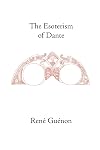
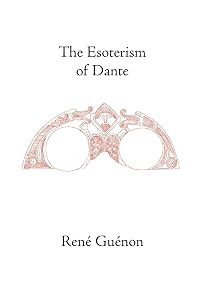
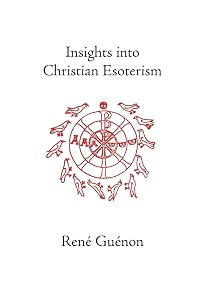
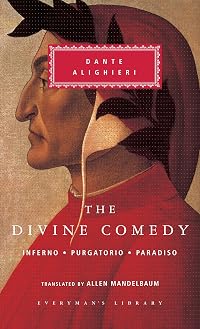
Especially since the Renaissance, some in Western Christendom have suspected that the deeper dimension of their tradition has somehow been lost, and have therefore sought to discover, or create, an 'esoteric' or 'initiatic' Christianity. In the middle of the nineteenth century two scholars, Gabriele Rossetti and Eug ne Aroux, pointed to certain esoteric meanings in the work of Dante Alighieri, notably The Divine Comedy. Partly based on their scholarship, Gu non in 1925 published The show more Esoterism of Dante. From the theses of Rosetti and Aroux, Gu non retains only those elements that prove the existence of such hidden meanings; but he also makes clear that esoterism is not 'heresy' and that a doctrine reserved for an elite can be superimposed on the teaching given the faithful without standing in opposition to it. One of Ren Gu non's lifelong quests was to discover, or revive, the esoteric, initiatory dimension of the Christian tradition. In the present volume, along with its companion volume Insights into Christian Esoterism (which includes the separate study Saint Bernard), Gu non undertakes to establish that the three parts of The Divine Comedy represent the stages of initiatic realization, exploring the parallels between the symbolism of the Commedia and that of Freemasonry, Rosicrucianism, and Christian Hermeticism, and illustrating Dante's knowledge of traditional sciences unknown to the moderns: the sciences of numbers, of cosmic cycles, and of sacred astrology. In these works Gu non also touches on the all-important question of medieval esoterism and discusses the role of sacred languages and the principle of initiation in the Christian tradition, as well as such esoteric Christian themes and organizations as the Holy Grail, the Guardians of the Holy Land, the Sacred Heart, the Fedeli d'Amore and the 'Courts of Love', and the Secret Language of Dante. In addition to Dante, various other paths toward a possible Christian esoterism have been explored by many investigators-the legend of the Holy Grail, the Knights Templars, the tradition of Courtly Love, Freemasonry, Rosicrucianism, and Christian Hermeticism-and Gu non deals with all of these in the present volume as well as his Insights into Christian Esoterism. In the latter, one chapter in particular, 'Christianity and Initiation', will be of special interest with regard to the history of the Traditionalist School. When first published as an article, it gave rise to some controversy because Gu non here reaffirmed his denial of the efficacy of the Christian sacraments as rites of initiation, a point of divergence between the teachings of Gu non and those of other key perennialist thinkers. Both The Esoterism of Dante and Insights into Christian Esoterism will be of inestimable value to all who are struggling to come to terms with the fullness of the Christian tradition. show lessTags
Recommendations











Member Reviews
>
da 'Informarmy.com'
da 'Informarmy.com'
Dec 7, 2014Italian
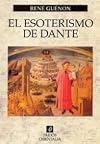
EL ESOTERISMO DE DANTE
La existencia de Dante,
poeta, filósofo y político
revolucionario, resulta lo
suficientemente compleja
como para operar como
piedra fundamental en el
análisis de sus textos y
específicamente de su
ópera magna, "La Divina
Comedia", a cuyos versos
él mismo asigna cuatro
significados
complementados y
sustanciados en una
síntesis única.
El significado esotérico es,
obviamente, el más difícil y
sutil de ser percibido y por
ello más descuidado
Durante mucho tiempo,
analizar a Dante bajo este
aspecto supuso admitir su
herejía. Hoy, no obstante
y a la luz del estudio de
Guénon, el esoterismo
verdadero se exime de
ese planteo y lo eleva a la
metafísica pura, universal
y sin limitaciones.
Lo que a su vez avala la
introducción en un show more mundo
fascinante de significados
herméticos, que
comparten el enlace de la
antigua y sempiterna
verdad áurea con el
preanuncio de una
anticipada modernidad. show less
La existencia de Dante,
poeta, filósofo y político
revolucionario, resulta lo
suficientemente compleja
como para operar como
piedra fundamental en el
análisis de sus textos y
específicamente de su
ópera magna, "La Divina
Comedia", a cuyos versos
él mismo asigna cuatro
significados
complementados y
sustanciados en una
síntesis única.
El significado esotérico es,
obviamente, el más difícil y
sutil de ser percibido y por
ello más descuidado
Durante mucho tiempo,
analizar a Dante bajo este
aspecto supuso admitir su
herejía. Hoy, no obstante
y a la luz del estudio de
Guénon, el esoterismo
verdadero se exime de
ese planteo y lo eleva a la
metafísica pura, universal
y sin limitaciones.
Lo que a su vez avala la
introducción en un show more mundo
fascinante de significados
herméticos, que
comparten el enlace de la
antigua y sempiterna
verdad áurea con el
preanuncio de una
anticipada modernidad. show less
Apr 23, 2024Spanish
L´ÉSOTÉRISME DE DANTE
Dans cette brève et substantielle étude, l'auteur des Aperçus
sur l'Initiation corrige les méprises de ceux qui n'avaient fait
qu'entrevoir le sens profond de l'aeuvre dantesque, et donne
une explication entièrement neuve de multiples points que
les commentateurs du grand Florentin nont jamais pu élucider
d'une façon satisfaisante.
Sans avoir la prétention d'être complet sur un sujet qu'on
pourrait dire inépuisable, René Guénon a jeté ainsi une clarré
inattendue sur un côté qui est proprement ésotérique et
initiatique dans l'oeuvre de Dante et surtout dans sa Divine
Comedie.
Dante fut sans doute tout autre chose que le genie
littéraire qui suscite tant d'admiration, et l'on est en droit
de penser que show more bien des choses, pour ne pas dire des trésors
restent à découvrir dans ce que René Guénon a appelé non
sans raison " le testament spirituel du Moyen Age" . show less
Dans cette brève et substantielle étude, l'auteur des Aperçus
sur l'Initiation corrige les méprises de ceux qui n'avaient fait
qu'entrevoir le sens profond de l'aeuvre dantesque, et donne
une explication entièrement neuve de multiples points que
les commentateurs du grand Florentin nont jamais pu élucider
d'une façon satisfaisante.
Sans avoir la prétention d'être complet sur un sujet qu'on
pourrait dire inépuisable, René Guénon a jeté ainsi une clarré
inattendue sur un côté qui est proprement ésotérique et
initiatique dans l'oeuvre de Dante et surtout dans sa Divine
Comedie.
Dante fut sans doute tout autre chose que le genie
littéraire qui suscite tant d'admiration, et l'on est en droit
de penser que show more bien des choses, pour ne pas dire des trésors
restent à découvrir dans ce que René Guénon a appelé non
sans raison " le testament spirituel du Moyen Age" . show less
Aug 8, 2018Spanish
A chaque siècle son oeuvre clé. Cette dernière se joue sur deux tableaux: socio-historique et symbolique. On peut proposer pour le XIVème siècle "La Divine Comédie" de Dante. Voici une bonne introduction à cette oeuvre par Guénon qui sommairement en décrit le sens caché et ses rapports avec les différents mouvements traditionnels.
Jun 13, 2018French
Librería 8. Estante 5
Jan 2, 2020Spanish
Ratings
Members
- Recently Added By
Published Reviews
Veliki pesnik Dante Alegijeri je sam tvrdio da njegova Božanstvena komedija ima četiri značenja. Istraživači su do ove Genonove knjige otkrili tri: doslovno, filozofsko-teološko i socijalno-političko. Genon tvrdi da je četvrto značenje inicijacijsko, koje je "metafizičko po svojoj suštini". Ova strana Danteovog dela važna je i za ostala tri značenja, bez koje Božanstvena komedija show more ne bi imala onaj smisao koji ima danas. Genon tvrdi da nije važno da li je Dante bio paganin, hrišćanin ili albigenz, jer je čista metafizika univerzalna. show less
added by Sensei-CRS
Author Information

159+ Works 3,061 Members
Rene Guenon (1886-1951) was one of the founders of the Perennialist or Traditionalist school of comparative religious thought. In a time of unquestioning belief in the dogmas of progress and evolution, Guenon issued a devastating critique of the modern world. A pioneering philosopher and orientalist, he also provided the intellectual keys for a show more reclamation of the West's spiritual riches through an exposition of the Eastern metaphysical doctrines. show less
Series

Common Knowledge
- Canonical title
- L’esoterismo di Dante
- Original title
- L'ésotérisme de Dante
- Original publication date
- 1925
- Epigraph
- O voi ch’avete li ’ntelletti sani,
mirate la dottrina che s’asconde
sotto ’l velame de li versi strani.
Inferno, IX, 61-63 - Quotations
- Situarsi al centro del ciclo vuol dunque dire situarsi nel punto dove queste due tendenze si equilibrano: come dicono gli iniziati mussulmani, è il “luogo divino in cui si conciliano i contrasti e le antinomie“; è il ce... (show all)ntro della “ruota delle cose“, secondo l’espressione indù, o l'”invariabile centro” della tradizione estremo-orientale, il punto fisso intorno al quale si compie la rotazione delle sfere, la mutazione perpetua del mondo manifestato.
Il viaggio di Dante si compie secondo l’ “asse spirituale” del mondo; soltanto di là, in effetti, si possono vedere tutte le cose in modo permanente - in quanto siamo anche noi sottratti al cambiamento – e averne di conseguenza una visione sintetica e totale. - Original language
- Francese
Classifications
- Genres
- Fiction and Literature, Literature Studies and Criticism
- DDC/MDS
- 851.1 — Literature & rhetoric Italian, Romanian & related literatures Italian poetry Early Italian; Age of Dante –1375
- LCC
- PQ4407 .N8 .G813 — Language and Literature French, Italian, Spanish and Portuguese literatures Italian literature Individual authors and works to 1400
- BISAC
Statistics
- Members
- 136
- Popularity
- 241,381
- Reviews
- 6
- Rating
- (4.04)
- Languages
- 6 — English, French, Hungarian, Italian, Serbian, Spanish
- Media
- Paper
- ISBNs
- 14
- ASINs
- 1