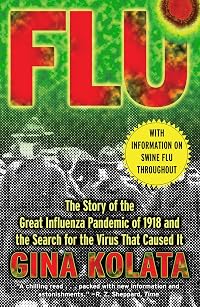
Flu
by Gina Kolata
On This Page
Description
Veteran journalist Gina Kolata's Flu: The Story of the Great Influenza Pandemic of 1918 and the Search for the Virus That Caused It presents a fascinating look at true story of the world's deadliest disease.In 1918, the Great Flu Epidemic felled the young and healthy virtually overnight. An estimated forty million people died as the epidemic raged. Children were left orphaned and families were devastated. As many American soldiers were killed by the 1918 flu as were killed in battle during show more World War I. And no area of the globe was safe. Eskimos living in remote outposts in the frozen tundra were sickened and killed by the flu in such numbers that entire villages were wiped out.
Scientists have recently rediscovered shards of the flu virus frozen in Alaska and preserved in scraps of tissue in a government warehouse. Gina Kolata, an acclaimed reporter for The New York Times, unravels the mystery of this lethal virus with the high drama of a great adventure story. Delving into the history of the flu and previous epidemics, detailing the science and the latest understanding of this mortal disease, Kolata addresses the prospects for a great epidemic recurring, and, most important, what can be done to prevent it.
. show less
Tags
Recommendations


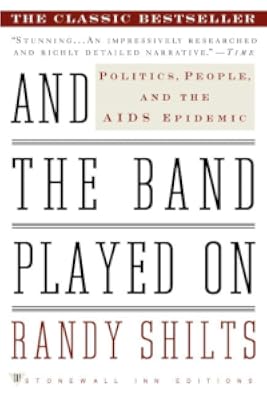
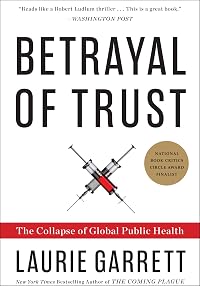
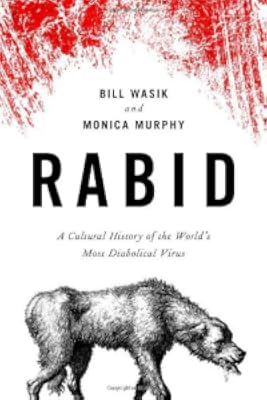
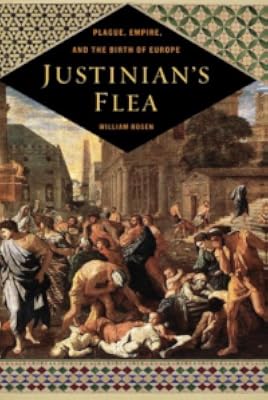
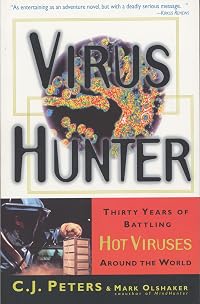
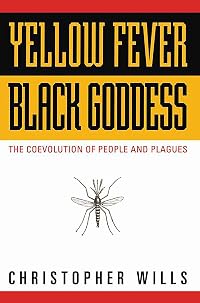
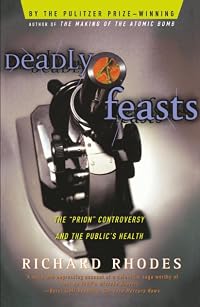
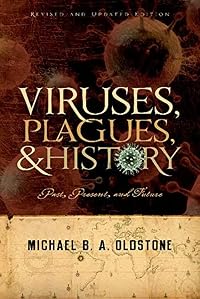
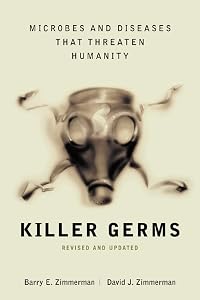
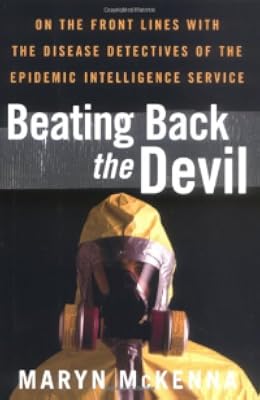
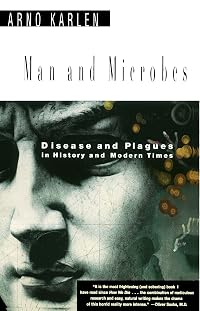
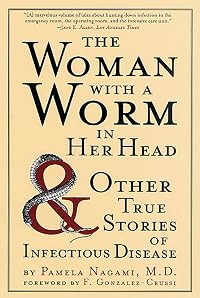

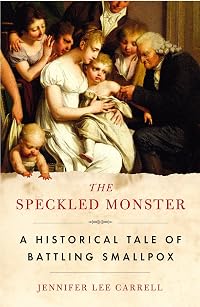
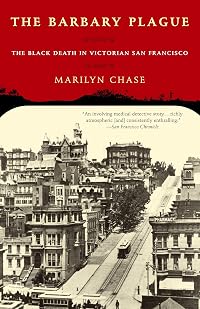
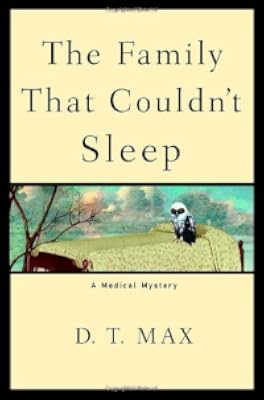
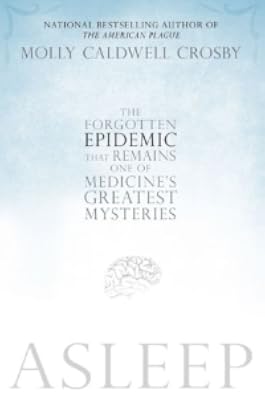


Member Recommendations
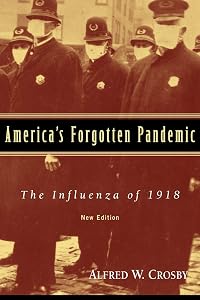
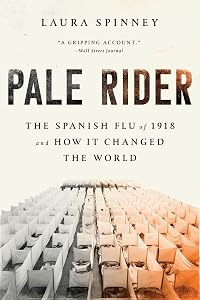
hailelib Covers the same pandemic with a different approach.
Member Reviews
Consider this: During the great influenza pandemic of 1918 the average life span of the U.S. population fell by twelve years. Twelve! Gina Kolata writes that “Undertakers in Philadelphia were overwhelmed and some were…hiking prices as much as 600%.”
Desperate, and with no animal model available to use in studying the disease, authorities offered pardons to convicted naval prisoners who would agree to be infected by what scientists hoped were fluids or air with the contagion. Sixty-two convicts agreed to be lab rats. Prison must have been an especially dire place ca. 1918.
You might think a book about such terrible epidemics, and the pursuit of defenses against them, would have no amusing moments. Not so. As an example, in 1940, show more Johan Hultin, while on leave from the University of Uppsala in Sweden where he studied medicine, came to the U.S. to work at the University of Iowa. First he visited New York and when a friend there showed him a sign that said ‘coin laundry,’ recalled “I never asked what it was—I knew it. Americans are so worried about germs that they have their coins cleaned.”
If only there were such places. Think of all those bright, shining pennies.
Gina Kolata has written an informative account covering disease origin, manifestation, spread, treatment, mortality, and prevention. One might expect the approaches we use to address these issues would tap primarily our rationality and intelligence. But as she relates, they are matters that have become much politicized. With what consequences remains to be seen. show less
Desperate, and with no animal model available to use in studying the disease, authorities offered pardons to convicted naval prisoners who would agree to be infected by what scientists hoped were fluids or air with the contagion. Sixty-two convicts agreed to be lab rats. Prison must have been an especially dire place ca. 1918.
You might think a book about such terrible epidemics, and the pursuit of defenses against them, would have no amusing moments. Not so. As an example, in 1940, show more Johan Hultin, while on leave from the University of Uppsala in Sweden where he studied medicine, came to the U.S. to work at the University of Iowa. First he visited New York and when a friend there showed him a sign that said ‘coin laundry,’ recalled “I never asked what it was—I knew it. Americans are so worried about germs that they have their coins cleaned.”
If only there were such places. Think of all those bright, shining pennies.
Gina Kolata has written an informative account covering disease origin, manifestation, spread, treatment, mortality, and prevention. One might expect the approaches we use to address these issues would tap primarily our rationality and intelligence. But as she relates, they are matters that have become much politicized. With what consequences remains to be seen. show less
I decided to reread Gina Kolata's Flu during self-imposed COVID-19 isolation. I thoroughly enjoyed this book when it was first published in 1999. The author provides a brief history of the 1918 flu pandemic, and of earlier pandemics, but most of the book is focused on the efforts to identify and understand the virus that caused that pandemic. Many of the researchers the author interviewed for this book have probably retired or passed on by now, and epidemiology has changed dramatically since 1999, but the stories are still interesting.
The 1918 flu struck near the end of WWI, when troops on the front were already exhausted and malnourished, and when US military bases were packed with new recruits. The movement and mixing of large show more numbers of people greatly contributed to the spread of the pandemic.
Some things never change. In 1918, crazy conspiracy theories about the cause of the pandemic were rampant. Public officials in many countries tried to downplay the risk - until they couldn't. Various "cures" were promoted, some worse than others. And 100+ years later, we are still making the same mistakes. show less
The 1918 flu struck near the end of WWI, when troops on the front were already exhausted and malnourished, and when US military bases were packed with new recruits. The movement and mixing of large show more numbers of people greatly contributed to the spread of the pandemic.
Some things never change. In 1918, crazy conspiracy theories about the cause of the pandemic were rampant. Public officials in many countries tried to downplay the risk - until they couldn't. Various "cures" were promoted, some worse than others. And 100+ years later, we are still making the same mistakes. show less
In case the long title doesn’t make it clear this book is about the scientists of various generations and disciplines who, in combination, have searched for, and found, the virus that caused the world’s last great flu pandemic. The book starts off with a short description of the worst impacts of the flu (in America) and gives a potted history of major disease outbreaks through history before stepping through the many decades of steps that were taken by a variety of scientists to understand what cased that pandemic. Perhaps the most well known of these steps was the extraction of the virus from the preserved bodies of people who had died in the pandemic and whose bodies had been accidentally preserved in the permafrost of show more Alaska.
Writing entertainingly about science is not, I assume, a walk in the park and Kolata (a Science journalist) does a good job of balancing the need to create an engaging, understandable narrative for non scientists with the need not to treat readers like simpletons (which happens all too often these days). There’s clearly a load of research in the book and while her conclusions are not always in line with other reading I’ve done on the subject of the pandemic itself they’re solidly backed up. And what is science if not the posing of theories and questioning of them? I’d have liked to see more reliance on primary sources and archival material rather than the delayed first-hand accounts and newspaper reports Kolata uses but all in all it’s a good read with more excitement and drama than some fiction I’ve read. show less
Writing entertainingly about science is not, I assume, a walk in the park and Kolata (a Science journalist) does a good job of balancing the need to create an engaging, understandable narrative for non scientists with the need not to treat readers like simpletons (which happens all too often these days). There’s clearly a load of research in the book and while her conclusions are not always in line with other reading I’ve done on the subject of the pandemic itself they’re solidly backed up. And what is science if not the posing of theories and questioning of them? I’d have liked to see more reliance on primary sources and archival material rather than the delayed first-hand accounts and newspaper reports Kolata uses but all in all it’s a good read with more excitement and drama than some fiction I’ve read. show less
Interesting, but ultimately unsatisfying. I learned a lot about the 1918 flu - I'd been aware of it, of course, but I had no idea of the scope of the disaster. Knowing that, the later scares about bird flu and the like make more sense. But then she goes on to describe some of the recent and current attempts to understand this flu virus; it's framed as a triumphant "we figured it out!" story, but in fact there are no solid answers yet. Things have been figured out, but they don't include why the 1918 flu was so virulent, why it harmed those it did, how to make a vaccine against it if it shows up again...it's very much a story in progress, which appears to dribble off inconclusively in the book. If it had been framed differently - as a show more search rather than a solution, say - it might have ended more smoothly. Still worth reading. show less
I think I chose the wrong book to read about the 1918 pandemic.
Journalist and science writer Gina Kolata takes us on a wild-goose-chase to find the virus behind the mysterious and deadly flu pandemic that killed from 20 million to possibly 100 million people worldwide. It was an interesting perspective from the pre-Covid world but not much in terms of science writing or history or anything much coming from this "investigation." The mysterious nature of the virus itself is never solved. If anything, I came away feeling that it didn't even matter if they found it so much as the important thing was how do we deal with the possibility that "a killer virus was lurking." Scientists of the time thought that the virus weakened with the show more mutations; our mainstream scientists are warning us about "variants." Looking at history, all epidemics and pandemics fade away. Survivors come out stronger. They have antibodies that makes them stronger for the next influenza or plague.
Something of interest I want to highlight: early scientists of the pandemic recruited volunteers (prisoners) to expose themselves to the virus by visiting bedside those who had the influenza. They subjected themselves to being coughed on, sneezed on and even injected with it. NOT ONE volunteer became sick with the virus. The scientists were mystified. If it's not directly contagious, how is it spreading?
The most difficult passage of this book was the description of this tragic plague. Gina Kolata, writing in 1999, with a certain bewilderment at their "wearing surgical masks in a vain attempt to ward off the virus" --they attended public, outdoor events wearing masks and much like today, the people of the time became divided on the best course. Some throwing caution to the wind and living their best life now as a way of dealing with this terror. After the pandemic was over, the world became silent about this. It was such a traumatic event that it was largely forgotten in our history books. The Encyclopedia Britannica gave it a mere 3 lines. The novel by Virginia Woolf, "Mrs. Dalloway" is the central character who carries this trauma with her, a silence. That was the legacy of this pandemic- silence.
I did not enjoy this book. I wanted more about the actual pandemic (which had scant info and a brief mention) and I wanted more on virology itself. What there mostly is is so much background--irrelevant to the most interesting threads- the history and the "virus."
It ends not with answers but more questions and empty speculation on how much "better understanding" we would have for the next pandemic. show less
Journalist and science writer Gina Kolata takes us on a wild-goose-chase to find the virus behind the mysterious and deadly flu pandemic that killed from 20 million to possibly 100 million people worldwide. It was an interesting perspective from the pre-Covid world but not much in terms of science writing or history or anything much coming from this "investigation." The mysterious nature of the virus itself is never solved. If anything, I came away feeling that it didn't even matter if they found it so much as the important thing was how do we deal with the possibility that "a killer virus was lurking." Scientists of the time thought that the virus weakened with the show more mutations; our mainstream scientists are warning us about "variants." Looking at history, all epidemics and pandemics fade away. Survivors come out stronger. They have antibodies that makes them stronger for the next influenza or plague.
Something of interest I want to highlight: early scientists of the pandemic recruited volunteers (prisoners) to expose themselves to the virus by visiting bedside those who had the influenza. They subjected themselves to being coughed on, sneezed on and even injected with it. NOT ONE volunteer became sick with the virus. The scientists were mystified. If it's not directly contagious, how is it spreading?
The most difficult passage of this book was the description of this tragic plague. Gina Kolata, writing in 1999, with a certain bewilderment at their "wearing surgical masks in a vain attempt to ward off the virus" --they attended public, outdoor events wearing masks and much like today, the people of the time became divided on the best course. Some throwing caution to the wind and living their best life now as a way of dealing with this terror. After the pandemic was over, the world became silent about this. It was such a traumatic event that it was largely forgotten in our history books. The Encyclopedia Britannica gave it a mere 3 lines. The novel by Virginia Woolf, "Mrs. Dalloway" is the central character who carries this trauma with her, a silence. That was the legacy of this pandemic- silence.
I did not enjoy this book. I wanted more about the actual pandemic (which had scant info and a brief mention) and I wanted more on virology itself. What there mostly is is so much background--irrelevant to the most interesting threads- the history and the "virus."
It ends not with answers but more questions and empty speculation on how much "better understanding" we would have for the next pandemic. show less
This history of the 1918 flu pandemic and the search for the virus that caused it is very readable and fairly wide-ranging. Gina Kolata is a science journalist who studied microbiology and history in college but, like many of us, she never grasped the fact of its seriousness until she read a paper in Science in 1997 about an attempt to establish the virus's genetic code in order to write an article about this attempt for the New York Times. Two years of research and interviews later this really interesting book was published.
From descriptions of the rapidity of the fatal attacks, the overcrowded hospitals and mass graves to the latest efforts to explain the way the epidemic spread and where it originated, Kolata has written a book that show more was a page turner for me. As for the seriousness of this particular influenza some estimates of the worldwide casualties go as high as 100 million deaths with many who "recovered" never being in good heath afterwards. It also tended to target the young and healthy and more than one general blamed the illness for their failures to reach their objectives in WWI.
Recommended for those interested in medical histories and research. show less
From descriptions of the rapidity of the fatal attacks, the overcrowded hospitals and mass graves to the latest efforts to explain the way the epidemic spread and where it originated, Kolata has written a book that show more was a page turner for me. As for the seriousness of this particular influenza some estimates of the worldwide casualties go as high as 100 million deaths with many who "recovered" never being in good heath afterwards. It also tended to target the young and healthy and more than one general blamed the illness for their failures to reach their objectives in WWI.
Recommended for those interested in medical histories and research. show less
Of the three books on the 1918 influenza pandemic I’ve read recently (the other two were John M. Barry’s The Great Influenza and Alfred W. Crosby’s The Forgotten Pandemic), this one is the most up-to-date and the most “popular”. Gina Kolata, a science journalist, spends most of her time discussing personalities rather than scientific and medical details. That’s not such a bad thing, really, since most of the personalities involved are pretty interesting – Johan Hultin, who excavated a mass grave of flu victims in the Eskimo town of Brevig, Alaska, and recovered enough lung tissue to partially sequence the virus; Kirsty Duncan, who turned the search for preserved tissue in the Svalbard permafrost into a media event, and show more Jeffery Taubenberger, who recovered virus from tissue samples preserved in the Armed Forces Institute of Pathology, are three of the most interesting. Kolata also covers the “Swine Flu” episode of 1976 and the Chinese “bird flu” outbreak, and the politics associated with both. Not good if you want technical details – Barry’s or Crosby’s books are better for that – but as befits her profession, Kolata is a more gripping storyteller. show less
Members
- Recently Added By
Lists

Disaster Books
74 works; 19 members

Best Medical Nonfiction
79 works; 29 members

Vote: Science, Religion, and History Group Reads
30 works; 17 members
Best Books About Plagues and Epidemics
99 works; 17 members

Books about World War I
80 works; 14 members
Talk Discussions
Past Discussions
The Great Influenza / Flu - SRH group read in 75 Books Challenge for 2014 (April 2014)
Author Information

Awards and Honors
Awards
Common Knowledge
- Canonical title
- Flu
- Original title
- Flu
- Alternate titles
- Flu: The Story of the Great Influenza Pandemic of 1918 and the Search for the Virus that Caused It
- Original publication date
- 1999
- Important events
- World War I; 1918 influenza pandemic
- Epigraph
- This is a detective story. Here was a mass murder that was around 80 years ago and who's never been brought to justice. And what we're trying to do is find the murderer.
— Jeffrey Taubenberger, molecular pathologist - Dedication
- For my parents
- First words
- If anyone should have known about the 1918 flu, it was I.
- Last words
- (Click to show. Warning: May contain spoilers.)"Finishing the sequence of the 1918 virus is a good thing," Taubenberger says. "But we're nowhere near the end."
- Blurbers
- Alden, John R.; Benderly, Beryl Lieff; Sheppard, R. Z.; Fisher, Helen; Whelan, Elizabeth; Verghese, Abraham (M.D.) (M.D.) (show all 10); Henig, Robin Marantz; Williams, David; Moore, Roger; Silver, Lee M.
Classifications
- Genres
- History, Nonfiction, General Nonfiction, Science & Nature
- DDC/MDS
- 614.51809041 — Applied science & technology Medicine & health Epidemics, Poisons, Alternative Medicine Incidence of and public measures to prevent specific diseases and kinds of diseases Salmonella infections, bacillary diseases, clostridium infections, diphtheria, cholera, dysenteries, influenza Influenza Influenza--incidence--1900-1919
- LCC
- RC150.4 .K64 — Medicine Internal medicine Internal medicine Infectious and parasitic diseases
- BISAC
Statistics
- Members
- 1,413
- Popularity
- 16,725
- Reviews
- 37
- Rating
- (3.72)
- Languages
- 6 — Dutch, English, German, Italian, Korean, Swedish
- Media
- Paper, Ebook
- ISBNs
- 19
- ASINs
- 8