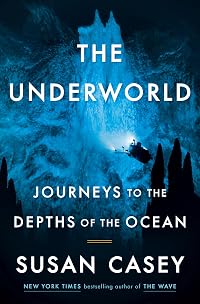
The Underworld: Journeys to the Depths of the Ocean
by Susan Casey
On This Page
Description
"From New York Times bestselling author Susan Casey, an awe-inspiring portrait of the mysterious world beneath the waves, and the men and women who seek to uncover its secrets For all of human history, the deep ocean has been a source of wonder and terror, an unknown realm that evoked a singular, compelling question: What's down there? Unable to answer this for centuries, people believed the deep was a sinister realm of fiendish creatures and deadly peril. But now, cutting-edge technologies show more allow scientists and explorers to dive miles beneath the surface, and we are beginning to understand this strange and exotic underworld: A place of soaring mountains, smoldering volcanoes, and valleys 7,000 feet deeper than Everest is high, where tectonic plates collide and separate, and extraordinary life forms operate under different rules. Far from a dark void, the deep is a vibrant realm that's home to pink gelatinous predators and shimmering creatures a hundred feet long and ancient animals with glass skeletons and sharks that live for half a millennium-among countless other marvels. Susan Casey is our premiere chronicler of the aquatic world. For The Underworld she traversed the globe, joining scientists and explorers on dives to the deepest places on the planet, interviewing the marine geologists, marine biologists, and oceanographers who are searching for knowledge in this vast unseen realm. She takes us on a fascinating journey through the history of deep-sea exploration, from the myths and legends of the ancient world to storied shipwrecks we can now reach on the bottom, to the first intrepid bathysphere pilots, to the scientists who are just beginning to understand the mind-blowing complexity and ecological importance of the quadrillions of creatures who live in realms long thought to be devoid of life. Throughout this journey, she learned how vital the deep is to the future of the planet, and how urgent it is that we understand it in a time of increasing threats from climate change, industrial fishing, pollution, and the mining companies that are also exploring its depths. The Underworld is Susan Casey's most beautiful and thrilling book yet, a gorgeous evocation of the natural world and a powerful call to arms." show lessTags
Recommendations





















Member Reviews
Susan Casey's The Underworld, a book about deep sea exploration, has received rave reviews, but I found myself underwhelmed. Substantively, her book contains very little information that isn't already online: this is not new information, but old material, presented newly. Unfortunately, this leads to two major shortcomings.
First, the chief value she adds to existing information is a series of in-depth interviews with people engaged in exploring and studying the deep sea. Her interviews, however, border on hagiographic - in fact, she goes out of her way to dismiss and defend some of them against serious concerns about the colonial nature of their endeavours, instead of taking these arguments seriously, as they ought to be. It feels as show more though she uncritically accepts and believes anything she's told: her scepticism is reserved only for a museum docent who mansplains, she says, and has nothing to do with the subject material of the book. I'm not the only one to feel this way: in the Scientific American, a review notes that "Although Casey pays lip service to Vescovo's critics, The Underworld would have benefited from a more thorough examination of ocean exploration's politics and power dynamics. In the 21st century, must our most celebrated adventurers remain impossibly rich white guys?" https://www.scientificamerican.com/article/todays-deep-sea-explorers-are-mineral... It is particularly acute when you realise that Vescovo, a rich hobbyist explorer who receives fulsome praise from Casey, is also known for doing reckless solo dives and freewheeling on safety precautions. After the Triton sub incident, and the vast amount of public funds expended on attempting to rescue the rich and reckless, can we afford to be so flippant about the subject?
Second, when you have no new research to contribute, but you write an essay, the expectation is that you write in a manner that presents the information lucidly, in a way that is engaging to the reader, and a pleasure to read. Otherwise, you're writing a high school science report. I found her writing passable at best, and often amateurish, bordering on egregious. Debris around the wreck of the Titanic is described as a "piñata of tragedy". When she's not being flippantly funny, she's buried deep in the purplest of prose, as though she had never come across an adjective or a cliche she didn't immediately want to insert in her book. Perhaps I'm being a little harsh - it's clear that she's passionate about the ocean, cares deeply about conservation, and loves the water. Still, when the quality of nature writing is set to a high bar by authors like Helen MacDonald, Robin Wall Kimmerer, or Camille Dungy, it's hard to accept this level of glib, uncritical pedestrian prose. I'm sure Booktok will enjoy it. show less
First, the chief value she adds to existing information is a series of in-depth interviews with people engaged in exploring and studying the deep sea. Her interviews, however, border on hagiographic - in fact, she goes out of her way to dismiss and defend some of them against serious concerns about the colonial nature of their endeavours, instead of taking these arguments seriously, as they ought to be. It feels as show more though she uncritically accepts and believes anything she's told: her scepticism is reserved only for a museum docent who mansplains, she says, and has nothing to do with the subject material of the book. I'm not the only one to feel this way: in the Scientific American, a review notes that "Although Casey pays lip service to Vescovo's critics, The Underworld would have benefited from a more thorough examination of ocean exploration's politics and power dynamics. In the 21st century, must our most celebrated adventurers remain impossibly rich white guys?" https://www.scientificamerican.com/article/todays-deep-sea-explorers-are-mineral... It is particularly acute when you realise that Vescovo, a rich hobbyist explorer who receives fulsome praise from Casey, is also known for doing reckless solo dives and freewheeling on safety precautions. After the Triton sub incident, and the vast amount of public funds expended on attempting to rescue the rich and reckless, can we afford to be so flippant about the subject?
Second, when you have no new research to contribute, but you write an essay, the expectation is that you write in a manner that presents the information lucidly, in a way that is engaging to the reader, and a pleasure to read. Otherwise, you're writing a high school science report. I found her writing passable at best, and often amateurish, bordering on egregious. Debris around the wreck of the Titanic is described as a "piñata of tragedy". When she's not being flippantly funny, she's buried deep in the purplest of prose, as though she had never come across an adjective or a cliche she didn't immediately want to insert in her book. Perhaps I'm being a little harsh - it's clear that she's passionate about the ocean, cares deeply about conservation, and loves the water. Still, when the quality of nature writing is set to a high bar by authors like Helen MacDonald, Robin Wall Kimmerer, or Camille Dungy, it's hard to accept this level of glib, uncritical pedestrian prose. I'm sure Booktok will enjoy it. show less
I love finding out all the stuff we don't know yet. And the ocean is so unexplored it's mind numbing. This was clearly written just before the Titan disaster last year, so there's no commentary on that. I'm thinking the author would be sympathetic to their cause though. It's a difficult tug of war between wanting to know everything about the ocean and wanting to leave it undisturbed and alive.
without the pressure of the deep ocean, the snailfish would not maintain its form. aquanauts have documented it in water squarely in the hadal zone just shy of 27,000 feet. no other fish has been seen to go that deep. however, that does not mean life ends there. life still abounds below that: amphipods, crinoids, etc.
this book takes us on a journey exploring the deep ocean, especially the hadal zone trenches, with the author over the span of a few years in the late 20-teens and early 2020s. she tagged along with a team of some of the most renowned deep sea explorers and adventurers on a series of dives in a newly engineered submarine that could withstand the pressures of the hadal zone deeps in the 5 deepest places under the ocean, show more including the deepest: the Challenger Deep in the Mariana Trench. not only did she witness and report, she dove and actually piloted one of the subs for about 15 minutes earning her a dolphin pin from Don Walsh who, along with Jacques Piccard, was the first to set down in the Challenger Deep.
Casey, the author - a journalist by trade, gives us some history of deep sea expiration and then gets into the modern pursuit of achieving the deepest dive or the most number of deep dives, etc. i found her prose easy to read and decent blend of factual narrative and personal anecdote - “on the scene” reporting. fascinating stuff if you like engineering, exploration, adventuring, biology, travel, etc., etc.
while she sticks mostly with the story of chasing the deepest dives in the deepest parts of the ocean, she does spend a bit of time on treasure-hunting old galleons and other shipwrecks as well as political and legal pushes to mine the abyssal and hadal zones - really, just another kind of treasure hunt.
the book ticks a log of boxes for those of us interested in such expansions of the human experience and the planets upon which we live, but remains accessible for those who might not want all the technical detail (i do wish she had provided more!). informative and engaging. show less
this book takes us on a journey exploring the deep ocean, especially the hadal zone trenches, with the author over the span of a few years in the late 20-teens and early 2020s. she tagged along with a team of some of the most renowned deep sea explorers and adventurers on a series of dives in a newly engineered submarine that could withstand the pressures of the hadal zone deeps in the 5 deepest places under the ocean, show more including the deepest: the Challenger Deep in the Mariana Trench. not only did she witness and report, she dove and actually piloted one of the subs for about 15 minutes earning her a dolphin pin from Don Walsh who, along with Jacques Piccard, was the first to set down in the Challenger Deep.
Casey, the author - a journalist by trade, gives us some history of deep sea expiration and then gets into the modern pursuit of achieving the deepest dive or the most number of deep dives, etc. i found her prose easy to read and decent blend of factual narrative and personal anecdote - “on the scene” reporting. fascinating stuff if you like engineering, exploration, adventuring, biology, travel, etc., etc.
while she sticks mostly with the story of chasing the deepest dives in the deepest parts of the ocean, she does spend a bit of time on treasure-hunting old galleons and other shipwrecks as well as political and legal pushes to mine the abyssal and hadal zones - really, just another kind of treasure hunt.
the book ticks a log of boxes for those of us interested in such expansions of the human experience and the planets upon which we live, but remains accessible for those who might not want all the technical detail (i do wish she had provided more!). informative and engaging. show less
This book is filled with facinating facts about the deepest sites in the ocean. Casey's approach is that of a neophyte who joins adventurers and scientists as they explore these little known places on the earth. She makes compelling cases for their preservation and the need for further exploration.
An exceptional book! Such an amazing world that has been for so long overlooked. Thank you, Susan Casey for sharing your adventures and insights. Ms Casey is a wonderful writer. She really captures one's attention and doesn't let go. I will be following up on her suggestions of ways to help protect the depths of the ocean. Thank you for bringing its importance and fragility to my attention in such an engaging way!
Ratings
Members
- Recently Added By
Published Reviews
"Although Casey pays lip service to Vescovo's critics, The Underworld would have benefited from a more thorough examination of ocean exploration's politics and power dynamics. In the 21st century, must our most celebrated adventurers remain impossibly rich white guys?"
added by rasdhar
Lists

Science: Earth
109 works; 1 member
Author Information

10+ Works 2,655 Members
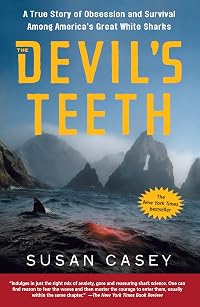
Susan Casey is the editor in chief of O, The Oprah Magazine. She is the former editor in chief of Sports Illustrated Women and former development editor of Time Inc. She is a National Magazine Award-winning journalist. Her work has appeared in numerous publications including Esquire, Sports Illustrated, Fortune, Outside, and National Geographic. show more She has written several books including The Devil's Teeth: A True Story of Obsession and Survival Among America's Great White Sharks and Voices in the Ocean: A Journey into the Wild and Haunting World of Dolphins. (Bowker Author Biography) show less
Awards and Honors
Awards
Distinctions
Classifications
Statistics
- Members
- 322
- Popularity
- 98,564
- Reviews
- 5
- Rating
- (4.09)
- Languages
- English
- Media
- Paper, Audiobook, Ebook
- ISBNs
- 6
- ASINs
- 3