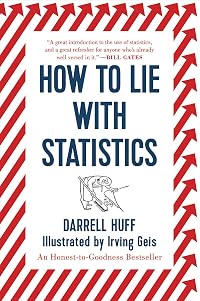
How to lie with statistics
by Darrell Huff
On This Page
Description
Darrell Huff runs the gamut of every popularly used type of statistic, probes such things as the sample study, the tabulation method, the interview technique, or the way the results are derived from the figures, and points up the countless number of dodges which are used to fool rather than inform.Tags
Recommendations



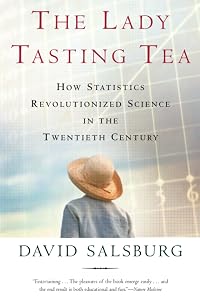
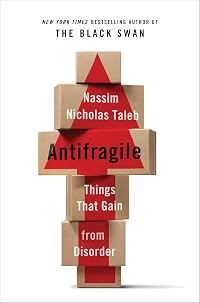
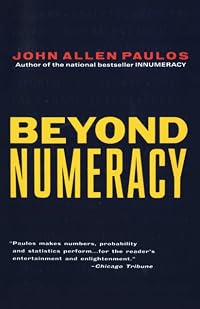
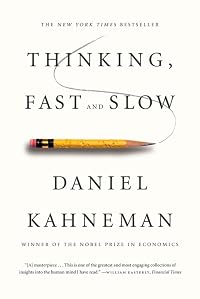


Member Recommendations

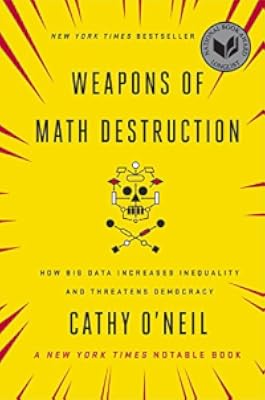
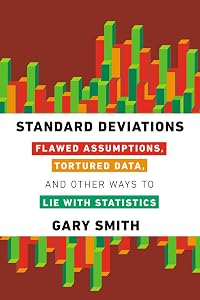
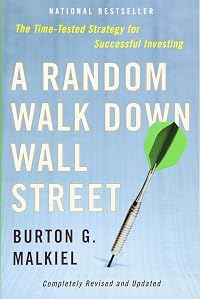
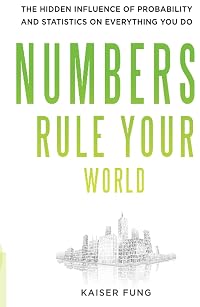
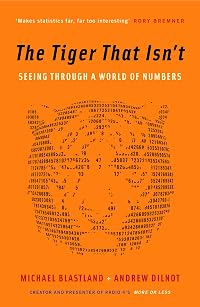
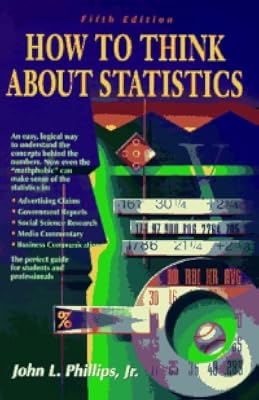
PuddinTame Daniel J. Levitin said that his book was inspired by Huff's, a book he had read several times and appreciated more with each reading.
Member Reviews
What catches you first is its title. What keeps you in it are the examples, humor, and illustrations. Yes, it is somewhat dated, but certainly not outdated and is still relevant -- possibly more than ever with the lifetimes-worth of content on the web. Reading this book will help you sniff out the bad stuff so you can focus on the information that counts.
The main theme is fairly simple: don't take a number at face value -- there's chicanery afoot. Yes, people want to win arguments and make gains. It turns out numbers help with this. Even if there isn't an element of chicanery (the word's used a lot in the book), clumsiness or carelessness can still lead to false conclusions, and each chapter describes a mischievous tactic for twisting a show more number to come to those conclusions.
There aren't too many pages and the lessons are invaluable. Take a few hours to read this and keep the lessons in your frontal lobe when you meet numbers supporting conclusions. show less
The main theme is fairly simple: don't take a number at face value -- there's chicanery afoot. Yes, people want to win arguments and make gains. It turns out numbers help with this. Even if there isn't an element of chicanery (the word's used a lot in the book), clumsiness or carelessness can still lead to false conclusions, and each chapter describes a mischievous tactic for twisting a show more number to come to those conclusions.
There aren't too many pages and the lessons are invaluable. Take a few hours to read this and keep the lessons in your frontal lobe when you meet numbers supporting conclusions. show less
For a book to remain in print for fifty years it must be good. This one was originally published in 1954 and, as far as I can tell, has been in print ever since. A book less than 150 pages long, generously seeded with amusing cartoons is not what you would expect to find on a graduate school reading list but that is exactly where I learned about this one. Darrell Huff and illustrator Irving Geis produced a little marvel with their book “How to Lie with Statistics”. As Huff points out early in the book a cat-burglar who writes a how-to memoir in prison does not do it for other cat-buglers. They already know how to burgle. The intended audience is people who do not want to be burgled, or, in the case of this book, lied to.
Huff is show more careful to spread the blame for lying statistics widely, overeager researchers, poor information gathering by statisticians, advertising people willing to apply lipstick of any color to their pig, journalists looking for a marketable story. The fact that most of these lies are “true” is not ignored. For me the most memorable story he uses to make this clear is the restauranteur who explains his rabbit-burger is 50% rabbit, he mixes it in a 1 to 1 ratio with horse-meat. One rabbit to one horse.
After nine chapters of explaining how easy it is for statistics, charts, graphs, and percentages to lie the last chapter makes a serious attempt to explaining how we can avoid being lied to by asking a few simple questions like, who says so, how does he know, what’s missing, and does it make sense. As Huff points out it is important to be able to detect these lies, not just because of misleading advertisements but because we have elections every few years.
As an amateur historian who is just a few years younger than this book I have to admit I enjoyed the window into the past that the many cartoons offered. Yes, we really dressed and smoked like that. The books age was a little disconcerting when Huff dissected an article about the income of the “average” Yale graduate. Going to Yale hardly seemed worth the $25,000 income it offered until I ran it through an inflation calculator, then it made sense. This book is one of the most informative and fun books I have read in a long, long time. It was informative not because I know nothing about statistics, I do, it was informative because nether of the classes I have taken on statistics covered how easy it is to miss-use or misunderstand exactly what it is the numbers say. If you do not like being lied to, consider reading this book. show less
Huff is show more careful to spread the blame for lying statistics widely, overeager researchers, poor information gathering by statisticians, advertising people willing to apply lipstick of any color to their pig, journalists looking for a marketable story. The fact that most of these lies are “true” is not ignored. For me the most memorable story he uses to make this clear is the restauranteur who explains his rabbit-burger is 50% rabbit, he mixes it in a 1 to 1 ratio with horse-meat. One rabbit to one horse.
After nine chapters of explaining how easy it is for statistics, charts, graphs, and percentages to lie the last chapter makes a serious attempt to explaining how we can avoid being lied to by asking a few simple questions like, who says so, how does he know, what’s missing, and does it make sense. As Huff points out it is important to be able to detect these lies, not just because of misleading advertisements but because we have elections every few years.
As an amateur historian who is just a few years younger than this book I have to admit I enjoyed the window into the past that the many cartoons offered. Yes, we really dressed and smoked like that. The books age was a little disconcerting when Huff dissected an article about the income of the “average” Yale graduate. Going to Yale hardly seemed worth the $25,000 income it offered until I ran it through an inflation calculator, then it made sense. This book is one of the most informative and fun books I have read in a long, long time. It was informative not because I know nothing about statistics, I do, it was informative because nether of the classes I have taken on statistics covered how easy it is to miss-use or misunderstand exactly what it is the numbers say. If you do not like being lied to, consider reading this book. show less
Don't believe anything!
This fast little read does an amazing job uncovering the methods of presenting misleading statistics. This book was first published in 1954, but it reads as fresh as ever. People with axes to grind have been employing the same subversive tactics since statistics have been popularized. Furthermore, this book is often funny, hilarious even, particularly with the illustrations. The "claim to fame" statistic on the cover is an almost certainly deliberate illustration of ironic contempt for misleading statistics. After all, just because "Twighlight" was a bigger seller than "Anna Karenina" doesn't make it better.
This fast little read does an amazing job uncovering the methods of presenting misleading statistics. This book was first published in 1954, but it reads as fresh as ever. People with axes to grind have been employing the same subversive tactics since statistics have been popularized. Furthermore, this book is often funny, hilarious even, particularly with the illustrations. The "claim to fame" statistic on the cover is an almost certainly deliberate illustration of ironic contempt for misleading statistics. After all, just because "Twighlight" was a bigger seller than "Anna Karenina" doesn't make it better.
This is an excellent little book for understanding how little most of this statistics we see every day are meaningless. We are never really given the important information needed to assess the usefulness of the information and this was demonstrated spectacularly during the most recent US presidential election. People were arguing over numbers and percentages that most likely had very little basis in reality. In addition, the author says that, in reality, statistics can very seldom predict future behavior.
The one drawback to this book is that most of the examples are quite dated (household income of $5000). To be fair though, this might actually make the information much more digestible for the average person as the numbers are small. show more This makes it a little like reading story problems in math class in school. But don't let this take away from the value of the information.
In the last chapter, Huff sums up the basic questions to ask when trying to determine if statistical information is even worth considering:
-- Who says so?
-- How does he know?
-- What's missing?
-- Did somebody change the subject?
-- Does it make sense? show less
The one drawback to this book is that most of the examples are quite dated (household income of $5000). To be fair though, this might actually make the information much more digestible for the average person as the numbers are small. show more This makes it a little like reading story problems in math class in school. But don't let this take away from the value of the information.
In the last chapter, Huff sums up the basic questions to ask when trying to determine if statistical information is even worth considering:
-- Who says so?
-- How does he know?
-- What's missing?
-- Did somebody change the subject?
-- Does it make sense? show less
Easily the most entertaining introduction to statistics and critical thinking I've come across. (What's my experience rate, you ask? You must have read the book!)
While many examples are dated, they remain relevant and the lessons on how to separate the wheat from the chaff are vital. This should be required reading, but that may make it even more inaccessible. Let's do a study on that!
While many examples are dated, they remain relevant and the lessons on how to separate the wheat from the chaff are vital. This should be required reading, but that may make it even more inaccessible. Let's do a study on that!
This is a short and really fun book on the techniques and fallacies people using statistics. It’s triply as fun for someone like me who works with numbers on a regular basis. The engineer in me aiming for exact and truthfulness has always been bothered by the researcher in me that has use sample sizes and leaps of faith on stats formed by formulas and not research.
How to Life with Statistics is armed with wit and cartoons that illustrate the points and adds tremendously to the readability and entertainment value.
Darrel Huff wrote this back in 1950’s so many of the events are outdated. However, the lessons here are timeless. This is a book that professional number pushers and puller can enjoy but the common householder should look at show more well. Not every chart, graph, and piece of research should be taken at full face value. show less
How to Life with Statistics is armed with wit and cartoons that illustrate the points and adds tremendously to the readability and entertainment value.
Darrel Huff wrote this back in 1950’s so many of the events are outdated. However, the lessons here are timeless. This is a book that professional number pushers and puller can enjoy but the common householder should look at show more well. Not every chart, graph, and piece of research should be taken at full face value. show less
Huff's short book/ long pamphlet is tandard reading before you pass the Writing Requirement at my undergrad school (Marlboro College). Unlike Strunk & White's _Elements of Style_, it is not brilliantly written. However, it amusingly and very clearly illustrates Twain's (?) quote:
There are three kinds of lies: lies, damned lies, and statistics.
You'll never be swayed by numbers in an article again without checking out their stats methodology.
There are three kinds of lies: lies, damned lies, and statistics.
You'll never be swayed by numbers in an article again without checking out their stats methodology.
Members
- Recently Added By
Lists

Favourite Books
1,819 works; 309 members

Books Read in 2016
4,666 works; 197 members

Books referenced in History by Numbers by Pat Hudson
88 works; 1 member


Non-Fiction Worth Reading
1,016 works; 262 members

el
1,139 works; 1 member
Author Information

Some Editions
Awards and Honors
Common Knowledge
- Canonical title
- How to lie with statistics
- Original title
- How to Lie with Statistics
- Original publication date
- 1954
- Epigraph
- There are three kinds of lies: lies, damned lies, and statistics.
-- Disraeli
Statistical thinking will one day be as necessary for efficient as the ability to read and write.
-- H. G. Wells
It ain't so much the things that we don't know that get us in trouble.
It's the things we know that ain't so.
-- Artemus Ward
Round numbers are always false.
-- Samuel Johnson
I have a great subject [statistics] to write upon, but feel keenly my literary incapacity to make it easily intelligible without sacrificing accuracy and thoroughness.
-- Sir Francis Galton - Dedication
- To my wife
WITH GOOD REASON - First words
- "There's a mighty lot of crime around here," said my father-in-law a little while after he moved from Iowa to California. (Introduction)
"The average Yale man, Class of '24," Time magazine noted once, commenting on something in the New York Sun, "makes $25,111 a year." - Last words
- (Click to show. Warning: May contain spoilers.)"One gets such wholesale returns of conjecture out of such a trifling investment of fact."
Quoting Mark Twain in Life on the Mississippi - Canonical DDC/MDS
- 519.5; 519
Classifications
Statistics
- Members
- 3,183
- Popularity
- 5,446
- Reviews
- 58
- Rating
- (3.86)
- Languages
- 11 — Czech, Dutch, English, Finnish, German, Greek, Italian, Spanish, Swedish, Portuguese (Portugal), Portuguese (Brazil)
- Media
- Paper, Audiobook, Ebook
- ISBNs
- 25
- UPCs
- 1
- ASINs
- 19