
On This Page
Description
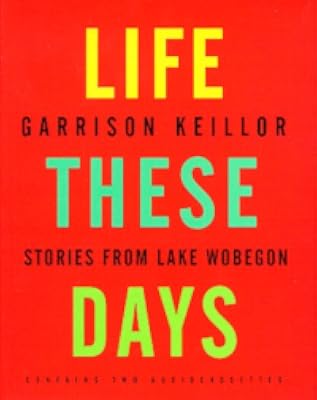
Garrison Keillor is the consummate storyteller, gifted with the rare ability--both in print and in performance--to hold an audience spellbound with his tales of ordinary people whose lives contain extraordinary moments of humor, tenderness, and grace. This exclusive recording of Garrison Keillor reading a carefully edited abridgement of the book and includes a few segments taken from live performances recorded during a fundraising tour for public radio stations in 1985.Tags
Recommendations


















Member Recommendations
Member Reviews
I enjoyed this book so much. It starts with the origin of the town of Lake Wobegon, and then proceeds with Garrison Keillor reminiscing about the good old days through his eyes as he reels you into the sleepy town, a place representing any one of thousands of small towns and lakes for which Minnesota is known. He introduces you to an array of colourful people, with stories of their equally colourful lives. Anyone who has grown up in the upper Midwest will find this especially funny to relate to. I live three thousand miles away from Minnesota, but these small town idiosyncrasies are everywhere. I loved the humour, the book reminded me a lot of Northern Exposure with the town of Cicely's weird and wonderful residents.
Sumus quod sumus show more ,'' reads the towncrest of Lake Wobegon. ''We are what we are.''
I'm even supporting the Whippets now .. show less
Sumus quod sumus show more ,'' reads the towncrest of Lake Wobegon. ''We are what we are.''
I'm even supporting the Whippets now .. show less
witty, satirical, endearing, but ultimately there is no thread that pulls me through. every few pages there are new characters - and they really aren’t “characters.” they are names and deeds that happened in and around Lake Wobegon. an anthology of human quirk centered on a small town in the northern US. i think it’s the monotonous stream of prose with no break or continuity even for a whole family life. he’s telling the stories from far above with a telephoto lens. mythic but impersonal and mystifying. i feel like i’m reading a series of long, really wry jokes with punchlines subtle or semi-extant rather than a story about a town and its people. again, i feel i am to unsophisticated to read this properly. my head is not in show more this space at this time. show less
The best way to enjoy Lake Wobegon is always to listen to Garrison Keillor himself read about his fictional hometown. This audiobook reminds me of hours listening to Keillor on Prairie Home Companion and listening to cassette recordings — yes, actual cassettes! — of his shows.
I had forgotten so much! A farmer who sells live Christmas trees, warning his customers that Christmas trees are terrible fire hazards. A disappointed former Lake Wobegon adult who returns with his own 96 Theses against the small town. A young Keillor hitting his older sister with a ripe tomato when she bends over while gardening. Ralph’s Grocery. Keillor’s mother pondering whether a funeral was “too much” for a young Garrison; deeming himself to have show more been subject to too little, too much sounded just perfect to Keillor. Most of these vignettes I heard on Prairie Home Companion, but they’re evergreen tales I could listen to again and again. Love it every time. show less
I had forgotten so much! A farmer who sells live Christmas trees, warning his customers that Christmas trees are terrible fire hazards. A disappointed former Lake Wobegon adult who returns with his own 96 Theses against the small town. A young Keillor hitting his older sister with a ripe tomato when she bends over while gardening. Ralph’s Grocery. Keillor’s mother pondering whether a funeral was “too much” for a young Garrison; deeming himself to have show more been subject to too little, too much sounded just perfect to Keillor. Most of these vignettes I heard on Prairie Home Companion, but they’re evergreen tales I could listen to again and again. Love it every time. show less
This heartfelt homage to small-town America, describing the fictional Minnesota village made famous in Keillor’s Prairie Home Companion radio show, shines with gentle humor.
Keillor is better on the air or on audiobook, but this collection of essay is still unmistakably in the spirit and feel of Lake Wobegon, and in many places you can hear Keillor's voice narrating it. He may not be quite as warm and funny on the page as on the air, but even on paper, he's still warmer and funnier than anyone has a right to be.
At 337 pages of continuous droning, this book was extremely difficult to get through. Although Keillor did really well articulating small town Protestant life in the Midwest, he made the book WAY too long to hold my interest. The novel seemed like a disjointed work of short stories or essays instead of a believable whole. At times I wasn't sure who was the narrator or where the story/ies was/were going. Despite these setbacks, I found myself laughing at the second half of the book a lot more than the first. Once Keillor got past the uninteresting (and unfunny) early settlement history of Lake Wobegone, the book was a lot more digestible, albeit in very small doses. While not my particular cup of tea, I would recommend it to an older show more crowd, listeners of "A Prairie Home Companion," and Midwest Lutherans/Scandinavians who can relate to the author's specialized humor. show less
A friend of mine saw I was reading this book and expressed surprise; she didn't think this would be something I'd like. "So you think a big city gal like me can't appreciate small town charm?" "Yup," she answered. I'd love to prove her wrong, because I'm perverse that way and hate to admit she knows me that well--but... well. I gather it helps if you've listened to Garrison Keilor narrating The Prairie Home Companion on radio--I have not.
More than a few reviewers, even the complementary ones, have called this book "rambling"--and is it ever. It has no real narrative focus from what I can tell from the 50 or so pages I could make myself read. It seems more loosely connected stories and history of fictional, Lake Wobegon, Minnesota, show more U.S.A, a small town not far from the twin cities. In the opening chapter, "Home" it shifts without warning from a super-omniscient to first person and back, from present to past tense and back. There seems to be a narrator, because we hear about "when grandmother died" and "in 1958 when six of us boys" and how he had "turned 16" but it just didn't gel for me. I soon lost patience with the folksy voice and boy did I hate the frequent footnotes--by the time you got through them you've completely lost the thread of the main narrative. And though I tried this because it was listed on "The Ultimate Reading List," I didn't find this funny. I not only didn't laugh out loud, I didn't crack a smile.
I could see this was literate and lyrical and got an idea why some might be charmed, but I was irritated and bored out of my mind. Humor is such a personal thing. Just not for me. show less
More than a few reviewers, even the complementary ones, have called this book "rambling"--and is it ever. It has no real narrative focus from what I can tell from the 50 or so pages I could make myself read. It seems more loosely connected stories and history of fictional, Lake Wobegon, Minnesota, show more U.S.A, a small town not far from the twin cities. In the opening chapter, "Home" it shifts without warning from a super-omniscient to first person and back, from present to past tense and back. There seems to be a narrator, because we hear about "when grandmother died" and "in 1958 when six of us boys" and how he had "turned 16" but it just didn't gel for me. I soon lost patience with the folksy voice and boy did I hate the frequent footnotes--by the time you got through them you've completely lost the thread of the main narrative. And though I tried this because it was listed on "The Ultimate Reading List," I didn't find this funny. I not only didn't laugh out loud, I didn't crack a smile.
I could see this was literate and lyrical and got an idea why some might be charmed, but I was irritated and bored out of my mind. Humor is such a personal thing. Just not for me. show less
Members
- Recently Added By
Lists

The Guardian's 1000 Novels Everyone Must Read
1,005 works; 551 members

Best Laugh Out Loud Books
143 works; 49 members

Unread books
1,063 works; 87 members
Best Satire
188 works; 29 members

A Good Read (Radio 4)
287 works; 1 member

Wayland Preaching Class
31 works; 2 members

BBC World Book Club
267 works; 5 members

Fiction With Familiar Settings
280 works; 93 members

Michael Dirda's 100 Best Comic Novels
100 works; 1 member

World Book Club (BBC World Service)
212 works; 1 member
Author Information

188+ Works 23,114 Members
Humorist Garrison Keillor was born Gary Edward Keillor in Anoka, Minnesota on August 7, 1942. He began using the pen name Garrison at the age of thirteen. He received a B.A. from the University of Minnesota in 1966 and paid for his tuition by working at the campus radio station. In 1974, he wrote an essay for the New Yorker about the Grand Ole show more Opry, which led to his live radio program, A Prairie Home Companion. Stories from Prairie Home were collected and published, but his debut as a novelist was in 1985 with Lake Wobegon Days. His other novels include WLT: A Radio Romance, The Book of Guys, Wobegon Boy, Me by Jimmy (Big Boy) Valente, and Good Poems, American Places. He has also written the children's books Cat, You Better Come Home, The Old Man Who Loved Cheese, and The Sandy Bottom Orchestra. He won a Grammy Award for his recording of Lake Wobegon Days and was inducted into the National Radio Hall of Fame in 1994. Keillor received a National Humanities Medal from the National Endowment for the Humanities in 1999. In September 2007, Keillor was awarded the John Steinbeck Award. (Bowker Author Biography) show less
Some Editions
Awards and Honors
Awards
Distinctions
Series

Work Relationships
Is contained in
Common Knowledge
- Canonical title
- Lake Wobegon Days
- Original title
- Lake Wobegon Days
- Original publication date
- 1985
- Important places
- Lake Wobegon, Minnesota, USA
- Important events
- Grand Ole Opry
- Epigraph
- Dogs don't lie, and why should I?
Strangers come, they growl and bark.
They know their loved ones in the dark.
Now let me, by night or day,
Be just as full of truth as they. - Dedication
- To Margaret, my love
- First words
- The town of Lake Wobegon, Minnesota,* lies on the shore against Adams Hill, looking east across the blue-green water to the dark woods.
- Last words
- (Click to show. Warning: May contain spoilers.)He starts out on the short walk to the house where people love him and will be happy to see his face.
- Blurbers
- Seymour, Miranda
Classifications
Statistics
- Members
- 4,764
- Popularity
- 3,004
- Reviews
- 40
- Rating
- (3.62)
- Languages
- 6 — Dutch, English, Finnish, German, Norwegian (Bokmål), Swedish
- Media
- Paper, Audiobook, Ebook
- ISBNs
- 37
- UPCs
- 2
- ASINs
- 32