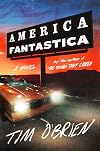
America Fantastica
by Tim O'Brien
On This Page
Description
On a quest to settle a score with the man who destroyed his life, Boyd Halverson robs a bank and takes a hostage. At 11:34 a.m. one Saturday in August 2019, Boyd Halverson strode into Community National Bank in northern California. "How much is on hand, would you say?" he asked the teller. "I'll want it all." "You're robbing me?" "Not you," Boyd replied, revealing a Temptation .38 Special. Angie Bing, the teller, scraped together $81,000. Boyd stuffed the cash into a paper grocery bag. "I'm show more sorry about this," he said, "but I'll have to ask you to take a ride with me..." So begins the adventure of Boyd Halverson-star journalist turned notorious online disinformation troll turned JC Penny manager-and his irrepressible hostage, Angie Bing. Haunted by his past and weary of his present, Boyd has one goal before the authorities catch up with him: settle a score with the man who destroyed his life. By Monday Boyd and Angie reach Mexico; by winter, they are in a lakefront mansion in Minnesota. On their trail are hitmen, jealous lovers, ex-cons, an heiress, a billionaire shipping tycoon, a three-tour veteran of Iraq, and the ghosts of Boyd's past. Everyone, it seems, except the police. show lessTags
Recommendations





Member Reviews
This book goes off in a million directions. I guess O'Brien wanted to get everything off his chest. He tried to hide the disconnectedness by patching it together as some zany caper, but the disguise was insufficient. The book just tried to be way too many things and often cribbed from other books in which the same tone, messaging, and storylines were better done. Frequently it jumps the tracks of satire into the bitter whining of an old man who feels he has lost control of the world.
I said in my updates that this is a second-rate The Crying of Lot 49, and in part it is. That turns out to be only one of the better books this one brings to mind. The second-rate Pynchon is glommed together with second-rate other things too. None of it show more feels like homage. It did make me want to go read some Pynchon and Vonnegut and Don Winslow, so I guess that is good.
One of the other great problems with this book is that everyone acts like it is 1963 even though the book is firmly set in 2019 and 2020. Men are the providers. Most of the women are housewives who dedicate themselves to spending their man's money or are trying to get to that lofty place. The rest of the women use their powers of seduction to bring down men, getting them to to their bidding with the power of the yoni. The men are assholes too, but in more varied ways. I was put off by the mash-up of midcentury (that would be the 20th) stereotypes and the ubiquitous anti-Trump rants (which were tiresome even to me, a person who is horrified and disgusted by that idiot and the people too lazy to care about facts or truth who support him.)
I do want to note that as someone who lived in Fargo for 2 years, it was nice to get some Western Minnesota humor. I haven't heard a good Bemidji reference since I left Fargo-Moorhead in 2018. Some of the stuff was dead on but some was just nasty and not representative of life in the region. Also there is not a single reference to a Paul Bunyan statue, which is just wrong if you are writing about Bemidji. There were also some scenes where O'Brien worked hard to make people look like idiots, and it did not read like satire. It read like the words of a pissy superior old man. One example: O'Brien had one of the Minnesota hicks refer to a Blackfeet man by some other name I cannot recall (maybe Blockfoot or something) and the Indian man corrects him and tells him it is "Blackfoot" but the hick is too stupid to remember the "right name." It was an unnecessary scene to give the reader a chance to point and laugh, but also, Mr. Snark is wrong. The tribe is not "Blackfoot" it is Blackfeet. He would say "I am a Blackfeet" not "I am a Blackfoot." I wouldn't have cared as much if the name was not wrongly stated in the middle of a snappish tirade about stupid White Minnesotans who don't know the name of a local nation. There are a lot of moments like that.
The Things They Carried is one of my favorite books ever, it is brilliant, so my heart wants to restrict my brain to praising O'Brien. But though this has some enjoyable moments it really never comes together. I was pretty sure this was going to be a 3-star, but the last 50 pages were such a disaster. The story just limped to an exhausted close and given that a 2-star is the best I can do.
One last note -- with some reining in of peripheral stories and smoothing of characters to focus on Boyd and Angie (by a woman or by a man that does not look at women as an alien species who base their understanding of earthling women's behaviors on repeated watches of Gilligan's Island - Mrs. Howell, Ginger, and Marianne are all here), I think this is going to make a kick-ass Coen Brothers movie that I am going to watch repeatedly when it gets made. show less
I said in my updates that this is a second-rate The Crying of Lot 49, and in part it is. That turns out to be only one of the better books this one brings to mind. The second-rate Pynchon is glommed together with second-rate other things too. None of it show more feels like homage. It did make me want to go read some Pynchon and Vonnegut and Don Winslow, so I guess that is good.
One of the other great problems with this book is that everyone acts like it is 1963 even though the book is firmly set in 2019 and 2020. Men are the providers. Most of the women are housewives who dedicate themselves to spending their man's money or are trying to get to that lofty place. The rest of the women use their powers of seduction to bring down men, getting them to to their bidding with the power of the yoni. The men are assholes too, but in more varied ways. I was put off by the mash-up of midcentury (that would be the 20th) stereotypes and the ubiquitous anti-Trump rants (which were tiresome even to me, a person who is horrified and disgusted by that idiot and the people too lazy to care about facts or truth who support him.)
I do want to note that as someone who lived in Fargo for 2 years, it was nice to get some Western Minnesota humor. I haven't heard a good Bemidji reference since I left Fargo-Moorhead in 2018. Some of the stuff was dead on but some was just nasty and not representative of life in the region. Also there is not a single reference to a Paul Bunyan statue, which is just wrong if you are writing about Bemidji. There were also some scenes where O'Brien worked hard to make people look like idiots, and it did not read like satire. It read like the words of a pissy superior old man. One example: O'Brien had one of the Minnesota hicks refer to a Blackfeet man by some other name I cannot recall (maybe Blockfoot or something) and the Indian man corrects him and tells him it is "Blackfoot" but the hick is too stupid to remember the "right name." It was an unnecessary scene to give the reader a chance to point and laugh, but also, Mr. Snark is wrong. The tribe is not "Blackfoot" it is Blackfeet. He would say "I am a Blackfeet" not "I am a Blackfoot." I wouldn't have cared as much if the name was not wrongly stated in the middle of a snappish tirade about stupid White Minnesotans who don't know the name of a local nation. There are a lot of moments like that.
The Things They Carried is one of my favorite books ever, it is brilliant, so my heart wants to restrict my brain to praising O'Brien. But though this has some enjoyable moments it really never comes together. I was pretty sure this was going to be a 3-star, but the last 50 pages were such a disaster. The story just limped to an exhausted close and given that a 2-star is the best I can do.
One last note -- with some reining in of peripheral stories and smoothing of characters to focus on Boyd and Angie (by a woman or by a man that does not look at women as an alien species who base their understanding of earthling women's behaviors on repeated watches of Gilligan's Island - Mrs. Howell, Ginger, and Marianne are all here), I think this is going to make a kick-ass Coen Brothers movie that I am going to watch repeatedly when it gets made. show less
Thanks to NetGalley and the publisher for providing me with this book for review.
"America Fantastica" is a literary gem that takes readers on an extraordinary journey through the heart and soul of the United States. This thought-provoking and beautifully written book is a captivating exploration of the nation's diverse landscapes, cultures, and stories, offering a profound and intimate look at the American experience.
The prose in "America Fantastica" is nothing short of enchanting. The author's mastery of language and vivid descriptions make every page come alive, transporting readers to the breathtaking beauty of the American landscapes. Whether it's the rugged terrain of the Southwest deserts or the lush tranquility of the Appalachian show more mountains, the book skillfully paints a vivid picture of the nation's geographical wonders.
What truly sets this book apart is its ability to dive deep into the rich tapestry of American life. It weaves together narratives from all corners of the country, celebrating the diversity of voices, experiences, and dreams that make up the United States. From the tales of immigrants seeking a new life to the inspiring stories of individuals pursuing their dreams, "America Fantastica" shines a light on the resilience and spirit that define this nation.
The author's meticulous research is evident throughout the book, offering a comprehensive and insightful look at the nation's history, culture, and social fabric. This blend of fact and fiction creates a rich and immersive reading experience, allowing readers to not only appreciate the beauty of America but also gain a deeper understanding of its complexities.
Moreover, "America Fantastica" is a thought-provoking exploration of the American identity. It challenges readers to reflect on what it means to be an American and the values that underpin the nation's identity. It's a timely and relevant conversation in today's world, making the book not just a captivating read but also a source of introspection and discussion.
In conclusion, "America Fantastica" is a literary triumph that should be on the reading list of anyone who appreciates the power of storytelling, rich cultural narratives, and a deep exploration of the American experience. This book is a testament to the beauty and diversity of the United States, and it leaves readers with a profound sense of appreciation for the nation's history and potential. It's a literary journey that will stay with you long after you've turned the final page, making it a must-read for anyone seeking a deeper connection to the American spirit. show less
"America Fantastica" is a literary gem that takes readers on an extraordinary journey through the heart and soul of the United States. This thought-provoking and beautifully written book is a captivating exploration of the nation's diverse landscapes, cultures, and stories, offering a profound and intimate look at the American experience.
The prose in "America Fantastica" is nothing short of enchanting. The author's mastery of language and vivid descriptions make every page come alive, transporting readers to the breathtaking beauty of the American landscapes. Whether it's the rugged terrain of the Southwest deserts or the lush tranquility of the Appalachian show more mountains, the book skillfully paints a vivid picture of the nation's geographical wonders.
What truly sets this book apart is its ability to dive deep into the rich tapestry of American life. It weaves together narratives from all corners of the country, celebrating the diversity of voices, experiences, and dreams that make up the United States. From the tales of immigrants seeking a new life to the inspiring stories of individuals pursuing their dreams, "America Fantastica" shines a light on the resilience and spirit that define this nation.
The author's meticulous research is evident throughout the book, offering a comprehensive and insightful look at the nation's history, culture, and social fabric. This blend of fact and fiction creates a rich and immersive reading experience, allowing readers to not only appreciate the beauty of America but also gain a deeper understanding of its complexities.
Moreover, "America Fantastica" is a thought-provoking exploration of the American identity. It challenges readers to reflect on what it means to be an American and the values that underpin the nation's identity. It's a timely and relevant conversation in today's world, making the book not just a captivating read but also a source of introspection and discussion.
In conclusion, "America Fantastica" is a literary triumph that should be on the reading list of anyone who appreciates the power of storytelling, rich cultural narratives, and a deep exploration of the American experience. This book is a testament to the beauty and diversity of the United States, and it leaves readers with a profound sense of appreciation for the nation's history and potential. It's a literary journey that will stay with you long after you've turned the final page, making it a must-read for anyone seeking a deeper connection to the American spirit. show less
This book is very different when compared to O'Brien's classics about the Viet Nam war "Going after Cacciato" The Things They Carried' both of which were award winners. This book which is h is first novel in 20 years is a funny, satirical road trip taking place from August 2019 until just before the 2020 election. The basic plot surrounds Boyd Halverson a late 40 JC Penny manager in the small Northern California town of Fulda who robs the local bank of $81k and takes the bank clerk(Angie Bing) as a friendly kidnap. They begin a year long road trip through the US while being pursued by various characters of dubious morals. This book is funny but the attempts to satirize the Trump era of lying and mis truths is nothing new. Because the show more characters are so outlandish it all comes across as an entertaining cartoon. O'Brien had a lot of crime including murders which were treated in a very cavalier way. Of course in the end the bad guys got their proper justice and Boyd(the liar in chief) came to face some basic truths about his life. Again, the writing was excellent and taken as a funny caper book, it is an easy pleasurable read( reminded me of Carl Hiaasen) but if you are looking for a deep dive into the psyche of the American soul in 2020 etc. then this misses the mark. Try his other early novels. show less
An unputdownable, well-written page-turner that is intriguing, heart-pounding, and thought-provoking. Its compelling, complex, and fascinating angles are expertly woven and extensive. I found the author’s take creative, captivating, and replete with vivid descriptions, entrancing dialogue, an oftentimes wacky plot with sometimes over-the-top, unforgettable characters, but a wise, satisfying ending for me. It's a must-read to progress towards fixing our delusiveness, and that will leave you turning pages late into the night.
This book is all over the place. There are too many characters, too many plot lines, and most make no sense at all.
The characters are not well developed at all. I never felt like I really knew Boyd, Angie, Evelyn, or Doug. They might as well have been cardboard cutouts. The dialogue was stilted and unoriginal. All the characters spoke alike, despite being from different parts of the country.
Two major issues with the book were its length and number of characters. The book comes in at 450 pages, at least 200 pages too long. Much of the minutia could have been cut and the book would have been much improved. There were too many characters, many of whom were minor characters that did not need to even be named.
Several things did not add up show more concerning the plot. Boyd robs a bank where he has an account and the teller knows him personally. No one is that stupid, not even Boyd. Plus, he had over $70,000 on deposit in the bank and he only got $80,000 from the robbery. Not worth the risk for a net of $10,000. The teller he robs goes with Boyd as he leaves the bank after the robbery. She had several opportunities to escape while they were on the run, but she never availed herself of those opportunities. That made no sense, especially since she was not a part of the robbery plan. The bank does not report the robbery to the police. Really? Reasons are given for this, but they made no sense.
The author tried to inject a lot of humor into the prose, but it all fell flat. Imagine 400 pages of “dad jokes.” I think you get the idea. Poor execution.
The ending may have been the worst part of the book. The final two chapters read like a newspaper roundup of how things ended for everyone. What a terrible ending. The book was difficult to read at times as it was so slow and labored. It took much longer to finish than it should have. I do NOT recommend this book. show less
The characters are not well developed at all. I never felt like I really knew Boyd, Angie, Evelyn, or Doug. They might as well have been cardboard cutouts. The dialogue was stilted and unoriginal. All the characters spoke alike, despite being from different parts of the country.
Two major issues with the book were its length and number of characters. The book comes in at 450 pages, at least 200 pages too long. Much of the minutia could have been cut and the book would have been much improved. There were too many characters, many of whom were minor characters that did not need to even be named.
Several things did not add up show more concerning the plot. Boyd robs a bank where he has an account and the teller knows him personally. No one is that stupid, not even Boyd. Plus, he had over $70,000 on deposit in the bank and he only got $80,000 from the robbery. Not worth the risk for a net of $10,000. The teller he robs goes with Boyd as he leaves the bank after the robbery. She had several opportunities to escape while they were on the run, but she never availed herself of those opportunities. That made no sense, especially since she was not a part of the robbery plan. The bank does not report the robbery to the police. Really? Reasons are given for this, but they made no sense.
The author tried to inject a lot of humor into the prose, but it all fell flat. Imagine 400 pages of “dad jokes.” I think you get the idea. Poor execution.
The ending may have been the worst part of the book. The final two chapters read like a newspaper roundup of how things ended for everyone. What a terrible ending. The book was difficult to read at times as it was so slow and labored. It took much longer to finish than it should have. I do NOT recommend this book. show less
If Elmore Leonard wrote literary political fiction, it'd have been a lot like this. I enjoyed this a lot--don't let the opening pages scare you away, it settles down. I'd recommend anything by O'Brien.
This originally appeared at The Irresponsible Reader.
---
HOW DOES THE PUBLISHER DESCRIBE AMERICA FANTASTICA?
HarperCollins.com says:
At 11:34 a.m. one Saturday in August 2019, Boyd Halverson strode into Community National Bank in Northern California.
“How much is on hand, would you say?” he asked the teller. “I’ll want it all.”
“You’re robbing me?”
He revealed a Temptation .38 Special.
The teller, a diminutive redhead named Angie Bing, collected eighty-one thousand dollars.
Boyd stuffed the cash into a paper grocery bag.
“I’m sorry about this,” he said, “but I’ll have to ask you to take a ride with me.”
So begins the adventure of Boyd Halverson—star journalist turned notorious online disinformation troll show more turned JCPenney manager—and his irrepressible hostage, Angie Bing. Haunted by his past and weary of his present, Boyd has one goal before the authorities catch up with him: settle a score with the man who destroyed his life. By Monday the pair reach Mexico; by winter, they are in a lakefront mansion in Minnesota. On their trail are hitmen, jealous lovers, ex-cons, an heiress, a billionaire shipping tycoon, a three-tour veteran of Iraq, and the ghosts of Boyd’s past. Everyone, it seems, except the police.
In the tradition of Jonathan Swift and Mark Twain, America Fantastica delivers a biting, witty, and entertaining story about the causes and costs of outlandish fantasy, while also marking the triumphant return of an essential voice in American letters. And at the heart of the novel, amid a teeming cast of characters, readers will delight in the tug-of-war between two memorable and iconic human beings—the exuberant savior-of-souls Angie Bing and the penitent but compulsive liar Boyd Halverson. Just as Tim O’Brien’s modern classic, The Things They Carried, so brilliantly reflected the unromantic truth of war, America Fantastica puts a mirror to a nation and a time that has become dangerously unmoored from truth and greedy for delusion.
HOW WAS THE NARRATION?
It was fine—any problems I had with the book weren't on Wyman's side. He didn't work too hard on making each character stand out from the others with a distinct voice so that in each scene you knew immediately who was talking, but this isn't the kind of book that lends itself to that. Also, the book didn't become hard to follow because of that—nor did individual scenes. That's all I really care about (as much as I might enjoy very distinct characters when the narrator does that).
The one heavily accented character's accent didn't sound quite right to my ears, but I'm not precisely sure what their accent should've sounded like. And...well, in context, I'm not sure their accent should've sounded right.
Basically, Wyman did well enough, and I'd easily listen to something else he narrated.
SO, WHAT DID I THINK ABOUT AMERICA FANTASTICA?
I'm going to sound a little self-contradictory here. I think I missed most of the point of this book/narrative, and O'Brien was as subtle as a pallet of bricks.
There are intercalary chapters/sections (I'd have to see the print version to know for sure) describing the spread of "mythomania" across the nation like an infection (to be followed by COVID). And this is very clearly what the book is supposed to be about—contemporary America's hunger for lies, half-truths, alternative facts, myths, whatever you want to call it. I'm not disinclined to argue with this as a whole—I just found these portions wanting. I'm not sure what it was I didn't respond to here--lack of nuance and a feeling that O'Brien was trying to be too clever, come close, but really I just can't put my finger on it.
Then there's the narrative—narratives. I didn't connect with any of them for very long (if ever). I kept going because many of them seemed to be on the verge of paying off, or at least giving me something to sink my teeth into. If I didn't know this was a satirical novel from the description, I wouldn't have picked up on it. I'm not really sure I get everything that was being satired (and really don't care). The best way I can describe the storylines was that someone took a bunch of discarded ideas from disparate Elmore Leonard novels and mashed them together, whether they fit or not, and without Leonard's skill/craft—then threw COVID into it at the end.
O'Brien had some very clever ideas, some nice writing, and a good line here and there. But the ideas didn't pay off, the writing went nowhere, and the good lines weren't worth the effort to get to them.
Maybe this was the right book at the wrong time for me and if I'd read/listened to it a few months ago—or a few months from now—I'd be recommending it, maybe even raving about it. But I listened to it now, so that's what we're stuck with. So the me of "now" says that it was an endurance race for me. A determined effort for me to understand why I should like this. A reminder that the sunk cost fallacy is something that I'm very susceptible to.
I'm more than prepared for people to come along and tell me why I should've appreciated this. But I can't recommend this to anyone, and I would recommend you look elsewhere for a good commentary on the U.S. show less
---
HOW DOES THE PUBLISHER DESCRIBE AMERICA FANTASTICA?
HarperCollins.com says:
At 11:34 a.m. one Saturday in August 2019, Boyd Halverson strode into Community National Bank in Northern California.
“How much is on hand, would you say?” he asked the teller. “I’ll want it all.”
“You’re robbing me?”
He revealed a Temptation .38 Special.
The teller, a diminutive redhead named Angie Bing, collected eighty-one thousand dollars.
Boyd stuffed the cash into a paper grocery bag.
“I’m sorry about this,” he said, “but I’ll have to ask you to take a ride with me.”
So begins the adventure of Boyd Halverson—star journalist turned notorious online disinformation troll show more turned JCPenney manager—and his irrepressible hostage, Angie Bing. Haunted by his past and weary of his present, Boyd has one goal before the authorities catch up with him: settle a score with the man who destroyed his life. By Monday the pair reach Mexico; by winter, they are in a lakefront mansion in Minnesota. On their trail are hitmen, jealous lovers, ex-cons, an heiress, a billionaire shipping tycoon, a three-tour veteran of Iraq, and the ghosts of Boyd’s past. Everyone, it seems, except the police.
In the tradition of Jonathan Swift and Mark Twain, America Fantastica delivers a biting, witty, and entertaining story about the causes and costs of outlandish fantasy, while also marking the triumphant return of an essential voice in American letters. And at the heart of the novel, amid a teeming cast of characters, readers will delight in the tug-of-war between two memorable and iconic human beings—the exuberant savior-of-souls Angie Bing and the penitent but compulsive liar Boyd Halverson. Just as Tim O’Brien’s modern classic, The Things They Carried, so brilliantly reflected the unromantic truth of war, America Fantastica puts a mirror to a nation and a time that has become dangerously unmoored from truth and greedy for delusion.
HOW WAS THE NARRATION?
It was fine—any problems I had with the book weren't on Wyman's side. He didn't work too hard on making each character stand out from the others with a distinct voice so that in each scene you knew immediately who was talking, but this isn't the kind of book that lends itself to that. Also, the book didn't become hard to follow because of that—nor did individual scenes. That's all I really care about (as much as I might enjoy very distinct characters when the narrator does that).
The one heavily accented character's accent didn't sound quite right to my ears, but I'm not precisely sure what their accent should've sounded like. And...well, in context, I'm not sure their accent should've sounded right.
Basically, Wyman did well enough, and I'd easily listen to something else he narrated.
SO, WHAT DID I THINK ABOUT AMERICA FANTASTICA?
I'm going to sound a little self-contradictory here. I think I missed most of the point of this book/narrative, and O'Brien was as subtle as a pallet of bricks.
There are intercalary chapters/sections (I'd have to see the print version to know for sure) describing the spread of "mythomania" across the nation like an infection (to be followed by COVID). And this is very clearly what the book is supposed to be about—contemporary America's hunger for lies, half-truths, alternative facts, myths, whatever you want to call it. I'm not disinclined to argue with this as a whole—I just found these portions wanting. I'm not sure what it was I didn't respond to here--lack of nuance and a feeling that O'Brien was trying to be too clever, come close, but really I just can't put my finger on it.
Then there's the narrative—narratives. I didn't connect with any of them for very long (if ever). I kept going because many of them seemed to be on the verge of paying off, or at least giving me something to sink my teeth into. If I didn't know this was a satirical novel from the description, I wouldn't have picked up on it. I'm not really sure I get everything that was being satired (and really don't care). The best way I can describe the storylines was that someone took a bunch of discarded ideas from disparate Elmore Leonard novels and mashed them together, whether they fit or not, and without Leonard's skill/craft—then threw COVID into it at the end.
O'Brien had some very clever ideas, some nice writing, and a good line here and there. But the ideas didn't pay off, the writing went nowhere, and the good lines weren't worth the effort to get to them.
Maybe this was the right book at the wrong time for me and if I'd read/listened to it a few months ago—or a few months from now—I'd be recommending it, maybe even raving about it. But I listened to it now, so that's what we're stuck with. So the me of "now" says that it was an endurance race for me. A determined effort for me to understand why I should like this. A reminder that the sunk cost fallacy is something that I'm very susceptible to.
I'm more than prepared for people to come along and tell me why I should've appreciated this. But I can't recommend this to anyone, and I would recommend you look elsewhere for a good commentary on the U.S. show less
Members
- Recently Added By
Lists

Books Read in 2025
4,128 works; 98 members

Books Read in 2024
4,727 works; 128 members
Author Information

21+ Works 26,173 Members
Tim O'Brien was born on October 1, 1946 in Austin, Minnesota. He graduated from Macalester College in 1968 and was immediately drafted into the U. S. Army, serving from 1969 to 1970 and receiving a Purple Heart. Three years later, his memoirs of the Vietnam War were published as If I Die in a Combat Zone, Box Me Up and Ship Me Home. Later works show more include Northern Lights (1975), Going After Cacciato (1978, winner of the National Book Award), and The Things They Carried (1990, winner of the Melcher Book Award and finalist for the Pulitzer Prize and the National Book Critics Circle Award). (Bowker Author Biography) show less
Awards and Honors
Distinctions
Common Knowledge
- Canonical title
- America Fantastica
- Original title
- America Fantastica
- Original publication date
- 2023-10-24
- Epigraph
- We had fed the heart on fantasies,
The heart's grown brutal from the fare... -William Butler Yeats
We are not a nation of truth lovers.
-Hunter S. Thompson - Dedication
- For Meredith, Timmy, and Tad
- First words
- The contagion was as old as Africa, older than Babylon, wafting from century to century upon sunlight and moonbeams and vibrations of wagging tongues. During the second decade of the twenty-first century, the contagion alight... (show all)ed in Fulda, California, riding aboard the bytes of a MacBook Air. -Chapter 1
- Canonical DDC/MDS
- 813.54
- Canonical LCC
- PS3565.B75
Classifications
Statistics
- Members
- 294
- Popularity
- 109,179
- Reviews
- 11
- Rating
- (3.32)
- Languages
- English
- Media
- Paper, Audiobook, Ebook
- ISBNs
- 11
- ASINs
- 3