Lolly Willowes, or The Loving Huntsman
by Sylvia Townsend Warner
On This Page
Description
In Lolly Willowes, Sylvia Townsend Warner tells of an aging spinster's struggle to break away from her controlling family-a classic story that she treats with cool feminist intelligence, while adding a dimension of the supernatural and strange. Warner is one of the outstanding and indispensable mavericks of twentieth-century literature, a writer to set beside Djuna Barnes and Jane Bowles, with a subversive genius that anticipates the fantastic flights of such contemporaries as Angela Carter show more and Jeanette Winterson. show lessTags
Recommendations








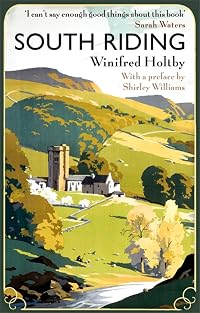
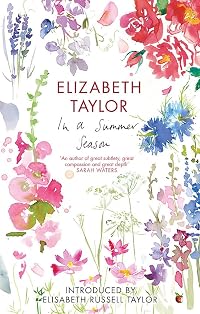


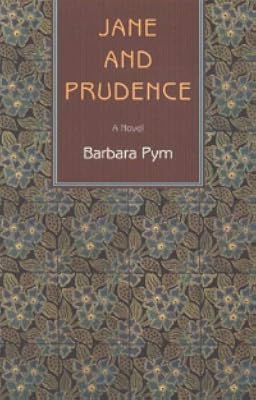


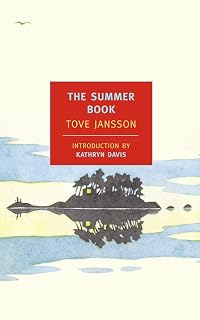





Member Recommendations

Stuck-in-a-Book This is another book which uses the fantastic to combat spinsterhood.
30

Stuck-in-a-Book Another great work of the fantastic.

Member Reviews
I have kind of a thing for British early-to-mid-20th-century women writers: Barbara Pym, Elizabeth Jane Howard, Pamela Hansford Johnson, Jane Gardam, et al. I don't know how Sylvia Townsend Warner escaped me. I did pick up (and enjoyed) The Corner That Held Them owing to my fascination with medieval monasticism, and then her competent and sympathetic biography of T.H. White. Then I kept seeing mentions of this novel, and thought, well, guess I should try it.
I loved it. Gentle, sly, quirky, odd, marvelously imagined and written - I kept stopping because I didn't want it to end. The tale is Laura's, a turn-of-the-century young "spinster," whose life is lived by the assumptions of others so smoothly and calmly and easily that she cannot show more even maintain her own name, let alone realize she has a life that should be hers to live, and not just assigned to the supervision of male relatives and children. Until one day, she has a vision of a ripely fruiting orchard, picks a village off the map, and just...goes. And - as such things should always do in a good story - everything changes. Her new neighbors keep odd hours, she comes and goes as she pleases, exploring her new realm. She meets a lovely fellow who teaches her how to handle chickens - for the first time, she feels "wise and potent" rather than "useful." Gradually she is drawn into the eccentric life of the village - and discovers it is rather more other-wordly than she had understood. And then, a cheery nephew decides he is going to come visit - and even live in - her village. She would once again be "Aunt Lolly," subject to Titus's whims and needs. She kneels in a meadow suddenly filled with cowslips - she had been waiting to see their great blossoming, but:
...she had watched the wrong fields.... The weight of all her unhappy years seemed for a moment to weigh her bosom down to the earth; she trembled, understanding for th first time how miserable she had been; and in another moment she was released. It was all gone, it could never be again, and never had been. Tears of thankfulness ran down her face. With every breath she drew, the scent of the cowslips flowed in and absolved her.
And now the fairy tale begins: a kitten arrives through the keyhole, strange little mishaps befall the importunate nephew, and Laura makes the acquaintance of a new friend who welcomes her, offers aid, and a place of belonging. Readers can decide for themselves who and what the devil may be, and what bargain is the right one to strike. You only get one life, after all, and it can be hard to see the good and evil thereof.
This is one I will reread. A gem.
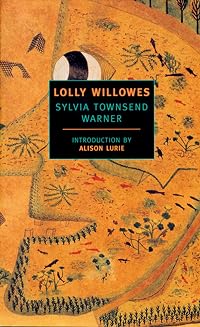
And one last treat: I instantly recognized the cover of the NYRB edition I got from the library: a painting by August Natterer. Natterer is featured in Charlie English's compelling and terrific book about the art of psychiatric inpatients during the Nazi era, The Gallery of Miracles and Madness. An imaginary head formed of woods and waterways, birds and animals, it is the perfect image for this odd and wonderful story. show less
I loved it. Gentle, sly, quirky, odd, marvelously imagined and written - I kept stopping because I didn't want it to end. The tale is Laura's, a turn-of-the-century young "spinster," whose life is lived by the assumptions of others so smoothly and calmly and easily that she cannot show more even maintain her own name, let alone realize she has a life that should be hers to live, and not just assigned to the supervision of male relatives and children. Until one day, she has a vision of a ripely fruiting orchard, picks a village off the map, and just...goes. And - as such things should always do in a good story - everything changes. Her new neighbors keep odd hours, she comes and goes as she pleases, exploring her new realm. She meets a lovely fellow who teaches her how to handle chickens - for the first time, she feels "wise and potent" rather than "useful." Gradually she is drawn into the eccentric life of the village - and discovers it is rather more other-wordly than she had understood. And then, a cheery nephew decides he is going to come visit - and even live in - her village. She would once again be "Aunt Lolly," subject to Titus's whims and needs. She kneels in a meadow suddenly filled with cowslips - she had been waiting to see their great blossoming, but:
...she had watched the wrong fields.... The weight of all her unhappy years seemed for a moment to weigh her bosom down to the earth; she trembled, understanding for th first time how miserable she had been; and in another moment she was released. It was all gone, it could never be again, and never had been. Tears of thankfulness ran down her face. With every breath she drew, the scent of the cowslips flowed in and absolved her.
And now the fairy tale begins: a kitten arrives through the keyhole, strange little mishaps befall the importunate nephew, and Laura makes the acquaintance of a new friend who welcomes her, offers aid, and a place of belonging. Readers can decide for themselves who and what the devil may be, and what bargain is the right one to strike. You only get one life, after all, and it can be hard to see the good and evil thereof.
This is one I will reread. A gem.
And one last treat: I instantly recognized the cover of the NYRB edition I got from the library: a painting by August Natterer. Natterer is featured in Charlie English's compelling and terrific book about the art of psychiatric inpatients during the Nazi era, The Gallery of Miracles and Madness. An imaginary head formed of woods and waterways, birds and animals, it is the perfect image for this odd and wonderful story. show less
A very Happy Halloween
I can tell already that I am going to love this book all the rest of my life.
Warner's prose is crisp, insightful, playful, and lyrical. Her pacing is perfect. I've never read better descriptions of the English country side. While reading, I lived where Lolly lived, breathed the air she breathed, and perfectly understood her stupor, then beautiful awakening. I could have lived in Part II, on loop, happily ever after. But when her nephew moved to Great Mop, into Lolly's sanctuary, I was crestfallen, dreading all that he would drag with him.
I didn't have any idea just how apt reading this the last days of October would be.
The resolution in the last third is the part that makes this novel famous and the part that has show more given me the most to chew on. Not just me, every reader. Almost 100 years on since 1926. Wow.
SPOILER FOLLOWS
It is a perfectly presented dilemma, an ultimatum even. Lolly may remain under the careless stewardship of a deaf God who favors patriarchy. She would continue the fate of women of her class at the turn of the last century--the tedium, the constrictions, the servitude, the lack of agency, the lack of privacy, and the lack of everything else that had made her new life in Great Mop such a joy, including her peaceful communion with Nature.
Or--the only other option--she could accept to become a witch along with most of the other village ladies, born high and low, and continue to live all her solo, independent days in Great Mop, to have her joys and rights protected, and for a long while to be forgotten by Satan. Until, one presumes, her death when he would collect his due. But even if she had chosen the other more palatable (hmph) option, there is no guarantee her afterlife destiny would be any different--God is incredibly fickle and has St. Peter with his big book at Heaven's gate making sure only the most obedient or slavish may enter; double obedient, double slavish if you are a woman.
Warner's message wasn't meant literally, surely. But she must have thought about it a long time to have created such a convincing and unique Satan. She presented the dilemma with such realism that it drove home the point like no socially-correct, half-dead, namby-pamby story telling would have done.
Instead, Warner's witchery was exciting, alive, and the most devilishly delightful metaphor. Wickedly good, it was.
Audio book narrator Sarah Nichols sounded like she thoroughly enjoyed the story, too.
So, I have found a new annual Halloween tradition to replace the Trick or Treaters that no longer roam the neighborhood and ring doorbells. I'll read Lolly Willowes and eat all the candy corn myself! show less
I can tell already that I am going to love this book all the rest of my life.
Warner's prose is crisp, insightful, playful, and lyrical. Her pacing is perfect. I've never read better descriptions of the English country side. While reading, I lived where Lolly lived, breathed the air she breathed, and perfectly understood her stupor, then beautiful awakening. I could have lived in Part II, on loop, happily ever after. But when her nephew moved to Great Mop, into Lolly's sanctuary, I was crestfallen, dreading all that he would drag with him.
I didn't have any idea just how apt reading this the last days of October would be.
The resolution in the last third is the part that makes this novel famous and the part that has show more given me the most to chew on. Not just me, every reader. Almost 100 years on since 1926. Wow.
SPOILER FOLLOWS
It is a perfectly presented dilemma, an ultimatum even. Lolly may remain under the careless stewardship of a deaf God who favors patriarchy. She would continue the fate of women of her class at the turn of the last century--the tedium, the constrictions, the servitude, the lack of agency, the lack of privacy, and the lack of everything else that had made her new life in Great Mop such a joy, including her peaceful communion with Nature.
Or--the only other option--she could accept to become a witch along with most of the other village ladies, born high and low, and continue to live all her solo, independent days in Great Mop, to have her joys and rights protected, and for a long while to be forgotten by Satan. Until, one presumes, her death when he would collect his due. But even if she had chosen the other more palatable (hmph) option, there is no guarantee her afterlife destiny would be any different--God is incredibly fickle and has St. Peter with his big book at Heaven's gate making sure only the most obedient or slavish may enter; double obedient, double slavish if you are a woman.
Warner's message wasn't meant literally, surely. But she must have thought about it a long time to have created such a convincing and unique Satan. She presented the dilemma with such realism that it drove home the point like no socially-correct, half-dead, namby-pamby story telling would have done.
Instead, Warner's witchery was exciting, alive, and the most devilishly delightful metaphor. Wickedly good, it was.
Audio book narrator Sarah Nichols sounded like she thoroughly enjoyed the story, too.
So, I have found a new annual Halloween tradition to replace the Trick or Treaters that no longer roam the neighborhood and ring doorbells. I'll read Lolly Willowes and eat all the candy corn myself! show less
Can’t believe I didn’t stumble upon this treasure earlier in my life. So much of what I love about cozy characters and comedies of manners is present in the first acts. It feels like the origin of many widely-beloved characters and plot lines; an independent spinsterish character, scoffing at society and longing for something darker and stranger, but caring for the mundane world in the meantime. The rush of fulfillment and wit at the end is a total delight. The final act has such a modern tone, I was pretty amazed that it was published in 1926.
Sentence after sentence that makes you smile with delight. Very British, very witty, and a countryside I would not mind losing myself in. Besides this, this is a book about suffocating social conventions, women who are not allowed to have lives of their own, space of their own - and about how to win your life and space. I think this is the kind of book it is going to be a pleasure to re-read at some point.
Published in 1926, Lolly Willowes is a wonderfully unique novel, containing themes that feel ahead of its time. The story follows Laura Willowes, an aging spinster, who, tired of her stifling life as a caregiver to her family, decides to leave London and start over in the countryside. What begins as a tale of her escape eventually morphs into something far more intriguing, as Laura unexpectedly finds herself drawn down a darker path. While the Goodreads summary makes it sound like the entire book is super witchy, it isn’t - it only really comes into the plot towards the end.
Warner's writing is sharp, clever and beautiful. It reminded me quite a bit of Jane Austen’s writing, but it’s also laced with an eerie, surreal quality, show more especially as she writes about Laura's transformation. While it suffers a bit from a slowly paced start, its blend of social commentary with supernatural elements makes it uniquely compelling, and very worth reading all the way to the end.
This book will definitely resonate with readers who appreciate stories about personal freedom and defying societal expectations placed onto women. It will also appeal to introverted readers who long to get away from it all, as Laura is the ultimate introvert. A very strong 4 star read! show less
Warner's writing is sharp, clever and beautiful. It reminded me quite a bit of Jane Austen’s writing, but it’s also laced with an eerie, surreal quality, show more especially as she writes about Laura's transformation. While it suffers a bit from a slowly paced start, its blend of social commentary with supernatural elements makes it uniquely compelling, and very worth reading all the way to the end.
This book will definitely resonate with readers who appreciate stories about personal freedom and defying societal expectations placed onto women. It will also appeal to introverted readers who long to get away from it all, as Laura is the ultimate introvert. A very strong 4 star read! show less
In writing Lolly Willowes, Warner masterfully describes the awakening of Laura Willowes from a single woman being cared for by her family to a woman who takes control of her own life. Laura grows up attached to her father, caring for him and helping to run their household. When he dies, she is expected to live with one of her brothers' families. Because in 1902, an adult woman surely could not live on her own. She spends years living with this family, spending time with her nieces until they also grow up and move on. And there she still is. But a chance encounter with a guidebook about a small village in the country leads her to take control of her own life and strike out on her own, much to the horror of her conservative family.
People show more in this village that she moves to keep to themselves, but as Laura connects to more and more to nature, she realizes there is magic all around her. The end really takes a strange turn, and while I got what Warner was doing, it also felt a little out of the blue to have Laura make a deal with Satan for her independence and to find that the sleepy town is full of witches!
I'm not sure yet if this book was brilliant or crazy. show less
People show more in this village that she moves to keep to themselves, but as Laura connects to more and more to nature, she realizes there is magic all around her. The end really takes a strange turn, and while I got what Warner was doing, it also felt a little out of the blue to have
I'm not sure yet if this book was brilliant or crazy. show less
That was one weird novel. It did not start weird though - the first 2/3rds of the novel are a novel about the fate of single women of a certain class at the start of the 20th century. Then the last third comes and ejects all of that out of the window and leaves you wondering if that was meant to be a supernatural tale or a psychological one or if someone somewhere got a bit crazy (the reader? the writer? both?)
Laura Willowes is a dutiful daughter and sister who lives in the countryside with her father and keeps house for him. She is quite happy with her life and independence. Until her father dies and her brothers cannot imagine her living on her own (it is 1902 after all) and she is forced to move to London to play the unwed aunt to show more her nephews and help run the house of her brother.
If the novel had ended here it would have been a nice albeit short story of the times. But Sylvia Townsend Warner is not satisfied with her heroine loss of self control so Lolly (as everyone calls Laura) starts getting eccentric (isn't that a marvelous word to use when describing someone who is not conforming to the expectations). Everyone is patient with her for awhile - until she meets someone (no, not that way) and decides that her life is her own and she is moving to the countryside - to a new place noone had ever heard of.
And that's where the novel gets a bit... crazy. One way to read it is that the man who helped her throw away the expectations was the Devil. The other way is that our Lolly got a bit touched in the head. Which I usually do not mind in novels but... this one is considered a feminist icon and it just looks a bit weird that the only way for a woman to get free and clear from expectation is either via a deal with the devil or by getting crazy. On the other hand, considering when the novel was set, that may have been really the only possible way for the story to work. If anything, I am surprised her brothers did not try to commit her into a hospital.
So did I like the novel as a whole? I am still not sure. I liked the language and I liked Lolly but the whole thing sounded like a bit of a cheap trick. Of course, I also live almost a century after the book was published and even longer since the time of the action and that is one period I had not read much from. From the little I had read though, that may have been the only way to get a book about a spinster who decides not to do what is expected to be published. And it made me want to read more from the author so there is that. show less
Laura Willowes is a dutiful daughter and sister who lives in the countryside with her father and keeps house for him. She is quite happy with her life and independence. Until her father dies and her brothers cannot imagine her living on her own (it is 1902 after all) and she is forced to move to London to play the unwed aunt to show more her nephews and help run the house of her brother.
If the novel had ended here it would have been a nice albeit short story of the times. But Sylvia Townsend Warner is not satisfied with her heroine loss of self control so Lolly (as everyone calls Laura) starts getting eccentric (isn't that a marvelous word to use when describing someone who is not conforming to the expectations). Everyone is patient with her for awhile - until she meets someone (no, not that way) and decides that her life is her own and she is moving to the countryside - to a new place noone had ever heard of.
And that's where the novel gets a bit... crazy. One way to read it is that the man who helped her throw away the expectations was the Devil. The other way is that our Lolly got a bit touched in the head. Which I usually do not mind in novels but... this one is considered a feminist icon and it just looks a bit weird that the only way for a woman to get free and clear from expectation is either via a deal with the devil or by getting crazy. On the other hand, considering when the novel was set, that may have been really the only possible way for the story to work. If anything, I am surprised her brothers did not try to commit her into a hospital.
So did I like the novel as a whole? I am still not sure. I liked the language and I liked Lolly but the whole thing sounded like a bit of a cheap trick. Of course, I also live almost a century after the book was published and even longer since the time of the action and that is one period I had not read much from. From the little I had read though, that may have been the only way to get a book about a spinster who decides not to do what is expected to be published. And it made me want to read more from the author so there is that. show less
Members
- Recently Added By
Lists

The Guardian's 1000 Novels Everyone Must Read
1,005 works; 551 members

Favourite Virago Modern Classics
183 works; 38 members

Best Fantasy Novels
821 works; 361 members

Classics you know you should have read but probably haven't
421 works; 409 members

In and About the 1920s
181 works; 31 members

Fiction Featuring Cranky, Eccentric Old Folks
80 works; 35 members

Backlisted
109 works; 9 members

Best Feminist Literature
188 works; 26 members

Books Set in Great Britain
191 works; 13 members

Books I've Read More Than Once
602 works; 49 members

Pleasant Surprises: Books That Exceeded Our Expectations
418 works; 142 members

500 Great Books by Women
507 works; 60 members

Top Five Books of 2018
802 works; 264 members

Global Reads: Books Set in the United Kingdom and Ireland
109 works; 5 members
1920s
141 works; 6 members

The Guardian's 100 Best Novels Written in English
105 works; 13 members

Survey of Fantasy Classics
111 works; 23 members
Best Books of the 20th Century
193 works; 5 members

Favorite Books from the 1920s
33 works; 3 members

Bibliography for How to be a Heroine
148 works; 12 members

Books Read in 2022
5,226 works; 115 members

Books Read in 2020
4,379 works; 124 members

Reading LIst
648 works; 1 member

Top Five Books of 2025
954 works; 303 members

Books Read in 2025
4,128 works; 98 members
Books We Want To Read Again For The First Time
384 works; 160 members

To Read
13 works; 1 member

Books That Changed Our Perspective
423 works; 168 members
Top Five Books of 2024
795 works; 264 members
Backlisted Podcast
65 works; 3 members
Witches and Wizards Oh My
135 works; 12 members

Witchy Fiction
253 works; 126 members

Book wishlist
78 works; 1 member

Books Read in 2018
4,360 works; 110 members

Books Read in 2021
5,361 works; 114 members
Undiscovered Classics to Read
70 works; 15 members

Best Books of 1926-1935
403 works; 10 members

Unmarried women
66 works; 6 members

The Guardian’s 20 brilliant books you can read in a day
20 works; 2 members
Talk Discussions
Past Discussions
A fiction story about a woman who decides to sell her soul to the devil so she does not have to live in Name that Book (October 2012)
Author Information

69+ Works 6,160 Members
Some Editions
Awards and Honors
Series
Belongs to Publisher Series
Work Relationships
Common Knowledge
- Canonical title
- Lolly Willowes, or The Loving Huntsman
- Original title
- Lolly Willowes; or, The Loving Huntsman
- Alternate titles
- Lolly Willowes
- Original publication date
- 1926
- People/Characters
- Laura "Lolly" Willowes; Henry Willowes; Caroline Willowes; Everard Willowes; James Willowes; Sibyl Willowes (show all 10); Titus Willowes; Mrs. Leak; Devil; Mr. Saunter
- Important places
- London, England, UK; Great Mop, England, UK
- Important events
- World War I
- Dedication
- To Bea Isabel Howe
- First words
- When her father died, Laura Willowes went to live in London with her elder brother and his family.
- Quotations
- Preference, not prejudice, made them faithful to their past. They slept in beds and sat in chairs whose comfort insensibly persuaded them into respect for the good sense of their forbears. Finding that well-chosen wood and ... (show all)well-chosen wine improved with keeping, they believed that the same law applied to well-chosen ways.
So Laura read undisturbed, and without disturbing anybody, for the conversation at local tea-parties and balls never happened to give her an opportunity of mentioning anything that she had learnt from Locke on the Understandi... (show all)ng or Glanvil on Witches. In fact, as she was generally ignorant of the books which their daughters were allowed to read, the neighboring mammas considered her rather ignorant. However they did not like her any the worse for this, for her ignorance, if not so sexually displeasing as learning, was of so unsweetened a quality as to be wholly without attraction.
Being without coquetry she did not feel herself bound to feign a degree of entertainment which she had not experienced, and the same deficiency made her insensible to the duty of every marriageable young woman to be charming... (show all), whether her charm be directed towards one special object, or in default of that, universally distributed through a disinterested love of humanity.
She had thought that sorrow would be her companion for many years, and had planned for its entertainment.
After some years in his house she came to the conclusion that Caroline had been very bad for his character. Caroline was a good woman and a good wife. She was slightly self-righteous and fairly rightly so, but she yielded t... (show all)o Henry's judgment in every dispute, she bowed her good sense to his will and blinkered her wider views in obedience to his prejudices. Henry had a high opinion of her merits, but thinking her to be so admirable and finding her to be so acquiescent had encouraged him to have an even higher opinion of his own.
Mr. Arbuthnot certainly was not prepared for her response to his statement that February was a dangerous month. "It is," answered Laura with almost violent agreement. "If you are a were-wolf, and very likely you may be, for... (show all) lots of people are without knowing, February, of all months, is the month when you are most likely to go out on a dark windy night and worry sheep."
When the better days to come came, they proved to be modelled as closely as possible upon the days that were past. It was astonishing what little difference differences had made.
Out of these she had contrived for herself a sort of mental fur coat. Roasted chestnuts could be bought and taken home for bedroom eating. Secondhand book-shops were never so enticing; and the combination of east winds and ... (show all)London water made it allowable to experiment in the most expensive soaps. Coming back from her expeditions, westward from the city with the sunset in her eyes, or eastward from a waning Kew, she would pause for a sumptuous and furtive tea, eating maron glaces with a silver fork in the reflecting warm glitter of a smart pastry-cook's. These things were exciting enough to be pleasurable, for she kept them secret.
Women have such vivid imaginations, and lead such dull lives. Their pleasure in life is so soon over; they are so dependent on others, and their dependence so soon becomes a nuisance.
Even if other people still find them quite safe and usual, and go on poking with them, they know in their hearts how dangerous, how incalculable, how extraordinary they are.
One doesn't become a witch to run round being harmful, or to run round being helpful either, a district visitor on a broomstick. It's to escape all that - to have a life of one's own, not an existence doled out to you by oth... (show all)ers, charitable refuse of their thoughts, so many ounces of stale bread a day, the workhouse dietary is scientifically calculated to support life.
Lovely to be with people who prefer their thoughts to yours, lovely to live at your own sweet will, lovely to sleep out all night! She had quite decided, not, to do so. It was an adventure, she had never done such a thing b... (show all)efore, and yet it seemed most natural.
Sir Ralph Maulgrave, the Satanic Baronet, the libertine, the atheist, who drank out of a skull, who played away his mistress and pistolled the winner, who rode about Buckinghamshire on a zebra, whose conversation had boon too... (show all) much for Thomas Moore.
One has to offer marriage to a young woman who has picked dead wasps out of one’s armpit. - Last words
- (Click to show. Warning: May contain spoilers.)A closer darkness upon her slumber, a deeper voice in the murmuring leaves overhead--that would be all she would know of his undesiring and unjudging gaze, his satisfied but profoundly indifferent ownership.
- Blurbers
- Updike, John
- Original language*
- Engels
*Some information comes from Common Knowledge in other languages. Click "Edit" for more information.
Classifications
Statistics
- Members
- 1,952
- Popularity
- 10,915
- Reviews
- 93
- Rating
- (3.82)
- Languages
- 8 — Catalan, Dutch, English, French, German, Italian, Portuguese, Spanish
- Media
- Paper, Audiobook, Ebook
- ISBNs
- 59
- UPCs
- 1
- ASINs
- 42