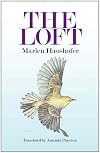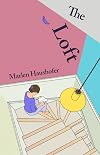
The Loft
by Marlen Haushofer
On This Page
Description
An Austrian housewife sits in her loft intent on her drawings of birds and insects. The loft is a retreat where she can work undisturbed. It is also a retreat from her dull and dissatisfied husband, a man who sighs unhappily even when she sneezes. Their grown-up children are living independent lives and the house is very quiet. Her dreams are filled with domestic drudgery. Then one day, a package arrives containing extracts from the narrator's diary, written twenty years before. Back then show more she had been sent away to a remote cottage in a bid to 'cure' her from unexplained sudden deafness. More mysterious packages containing old diary entries arrive. Who is sending them? And what did happened all those years ago in the forest? show lessTags
Recommendations













































Member Reviews
Die Mansarde, Haushofer's last novel, describes a week in the life of the narrator, a middle-class Vienna housewife. Her house-cleaning, shopping expeditions, duty-visits, and routine conversations with her husband are described in painfully realistic detail, and set against the (equally painful, but startlingly non-realistic) imaginative life of her dreams and forced recollection of a period of her life she has been trying to repress.
To think for herself, she has to retreat from the male-owned space of the house into her only piece of private space, the loft where she has a studio in which she can pursue - "as a hobby", her husband insists - her former career as a book-illustrator.
This seems to be above all a book about loneliness, show more and the difficulty of real contact with other people. The period of breakdown she would prefer not to think about manifested itself through - apparently psychosomatic - deafness, i.e. a physical refusal to accept other people's attempts to communicate with her; her artwork is frustrated by her inability to draw a bird that doesn't look as though it is the only one of its kind in existence. Her contacts with the people around her - her children, her husband, a "friend" from the maternity ward, her former landlady, an old servant of her mother-in-law - probably look quite normal from the outside, but lack any real level of empathy or communication.
Not a book you would want to read if you need cheering up, but very beautifully written and perceptive. show less
To think for herself, she has to retreat from the male-owned space of the house into her only piece of private space, the loft where she has a studio in which she can pursue - "as a hobby", her husband insists - her former career as a book-illustrator.
This seems to be above all a book about loneliness, show more and the difficulty of real contact with other people. The period of breakdown she would prefer not to think about manifested itself through - apparently psychosomatic - deafness, i.e. a physical refusal to accept other people's attempts to communicate with her; her artwork is frustrated by her inability to draw a bird that doesn't look as though it is the only one of its kind in existence. Her contacts with the people around her - her children, her husband, a "friend" from the maternity ward, her former landlady, an old servant of her mother-in-law - probably look quite normal from the outside, but lack any real level of empathy or communication.
Not a book you would want to read if you need cheering up, but very beautifully written and perceptive. show less
http://msarki.tumblr.com/post/147262650943/the-loft-by-marlen-haushofer
The jacket blurb claims the book explores the anatomy of a desiccated marriage, the power of solitude, and the discord of Austrian society in the aftermath of Nazism. With less than a fifth of the book remaining for me to read there is yet no indication for any examination of Nazism aftermath or Austrian societal discord, which has become a given in all literature pertaining to that horrendous historical event. But solitude, and relationships of every stripe including marriage, are being explored almost savagely and with a hunger yet to be assuaged.
The talent that lies behind the work of Marlen Haushofer is in her ability to write with a voice of reason and affinity show more for her reader. She is easy to like. It is comforting being with her. Her first-person narrator feels trustworthy and kind, even in light of possible indiscretions or violences looming portentously in the foreground. Because of this honesty in her writing, unseemly behaviors, threatened or otherwise, feel appropriate and okay, even though in hindsight proper society deems them deplorable. But I respect Haushofer as she refuses to mince words and remains steadfast in her attempts at mining the truth from our everyday fictions. Almost any activity the narrator persists in feels unconnected to her. She is simply going through the motions of being a housewife, mother, friend, and caring acquaintance. She is really none of these things with any certainty and commitment. All that matters to her spiritually is her sketching of birds upstairs in the loft, a room she has made of her own in a house that was never meant for her to live in. Her husband remains emotionally distant, but guilt-ridden and shamed enough by his past abandonment of her to fervently provide the monetary means necessary for the household to survive. Herbert considers their nightly television viewing as their sacred time together, and the Saturday afternoon visits to the war museum a shared cultural activity sure to enrich their marriage.
Again, for me, the theme of non-communication and deception in relationships rears its ugly head. And I appreciate Marlen Haushofer bringing it to our attention. Failure to talk about the matters that upset us, that get in our way, or our checkered past threatening to derail everything thought important in our daily life is nothing less than cowardly. For example, in my own recovery from addiction I was told I was only as sick as my secrets. And I still believe this to be true. But how many of us cling to a strict privacy in these shameful matters that keep the very ghosts that threaten our existence alive and thriving? We do ourselves great harm in harboring this dis-ease, and it ultimately ruins the lives of those we so much wanted to love. Including our own.
The Loft is a most definitely an additional Haushofer title worth reading and passing along. show less
The jacket blurb claims the book explores the anatomy of a desiccated marriage, the power of solitude, and the discord of Austrian society in the aftermath of Nazism. With less than a fifth of the book remaining for me to read there is yet no indication for any examination of Nazism aftermath or Austrian societal discord, which has become a given in all literature pertaining to that horrendous historical event. But solitude, and relationships of every stripe including marriage, are being explored almost savagely and with a hunger yet to be assuaged.
The talent that lies behind the work of Marlen Haushofer is in her ability to write with a voice of reason and affinity show more for her reader. She is easy to like. It is comforting being with her. Her first-person narrator feels trustworthy and kind, even in light of possible indiscretions or violences looming portentously in the foreground. Because of this honesty in her writing, unseemly behaviors, threatened or otherwise, feel appropriate and okay, even though in hindsight proper society deems them deplorable. But I respect Haushofer as she refuses to mince words and remains steadfast in her attempts at mining the truth from our everyday fictions. Almost any activity the narrator persists in feels unconnected to her. She is simply going through the motions of being a housewife, mother, friend, and caring acquaintance. She is really none of these things with any certainty and commitment. All that matters to her spiritually is her sketching of birds upstairs in the loft, a room she has made of her own in a house that was never meant for her to live in. Her husband remains emotionally distant, but guilt-ridden and shamed enough by his past abandonment of her to fervently provide the monetary means necessary for the household to survive. Herbert considers their nightly television viewing as their sacred time together, and the Saturday afternoon visits to the war museum a shared cultural activity sure to enrich their marriage.
Again, for me, the theme of non-communication and deception in relationships rears its ugly head. And I appreciate Marlen Haushofer bringing it to our attention. Failure to talk about the matters that upset us, that get in our way, or our checkered past threatening to derail everything thought important in our daily life is nothing less than cowardly. For example, in my own recovery from addiction I was told I was only as sick as my secrets. And I still believe this to be true. But how many of us cling to a strict privacy in these shameful matters that keep the very ghosts that threaten our existence alive and thriving? We do ourselves great harm in harboring this dis-ease, and it ultimately ruins the lives of those we so much wanted to love. Including our own.
The Loft is a most definitely an additional Haushofer title worth reading and passing along. show less
I'm out of step here. Nearly all reviews, and certainly the reviews of readers whose views I respect have been unreservedly glowing. So I approached this book with a high degree of positivity. And then - I had real difficulty making myself finish it. I found the characters dismal and unsympathetic, and the whole thing downright depressing. Obviously I'm missing something important. I just don't know what,
Een gedesillusioneerde huisvrouw trekt zich met haar herinneringen terug in een dakkapel.
Ich habe eine Haushofer Überdosis
Ratings
Members
- Recently Added By
Published Reviews
ThingScore 75
What gives this book its tremendous power? First, the voice is charming, with a skittish beauty throughout. (This may be the influence of translator Amanda Prantera: a fine novelist in her own right, her first-person narratives have a similar twinkle in the "I".) But there is also disarming honesty, and a lack of vanity, which appeals as only truth can; the book is an act of bearing witness to show more a woman's role, to everyday life and how it runs away. show less
added by Nevov
Author Information

Some Editions
Common Knowledge
- Canonical title
- The Loft
- Original title
- Die Mansarde
- Original publication date
- 1969 (original German) (original German); 2011 (English translation) (English translation)
- Original language
- German
Classifications
- Genres
- Fiction and Literature, General Fiction
- DDC/MDS
- 833.914 — Literature & rhetoric German & related literatures German fiction 1900- 1900-1990 1945-1990
- LCC
- PT2617 .A425 .M3 — Language and Literature German, Dutch and Scandinavian literatures German literature Individual authors or works 1860/70-1960
- BISAC
Statistics
- Members
- 121
- Popularity
- 270,170
- Reviews
- 5
- Rating
- (3.53)
- Languages
- 7 — Dutch, English, French, German, Serbian, Spanish, Swedish
- Media
- Paper, Ebook
- ISBNs
- 16
- ASINs
- 3