
On This Page
Description
A sparkling romantic comedy that vividly evokes the lost glamour of aristocratic life in England between the wars. Polly Hampton has long been groomed for the perfect marriage by her mother, the fearsome and ambitious Lady Montdore. But Polly, with her stunning good looks and impeccable connections, is bored by the monotony of her glittering debut season in London. Having just come from India, where her father served as Viceroy, she claims to have hoped that society in a colder climate would show more be less obsessed with love affairs. The apparently aloof and indifferent Polly has a long-held secret, however, one that leads to the shattering of her mother's dreams and her own disinheritance. When an elderly duke begins pursuing the disgraced Polly and a callow potential heir curries favor with her parents, nothing goes as expected, but in the end all find happiness in their own unconventional ways. show lessTags
Recommendations
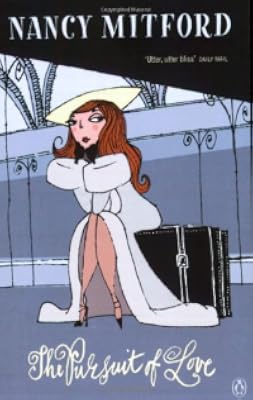
















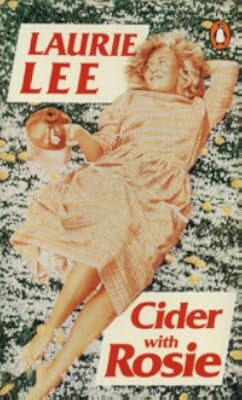
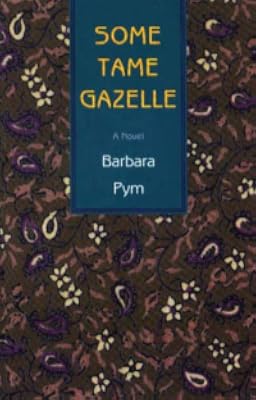

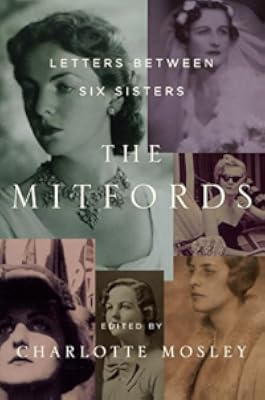


Member Recommendations

Member Reviews
Sometimes a book need be nothing more than just ‘rollicking good fun!’ (as the British upper classes might say) and a perfect description of this month’s classic read Love in a Cold Climate by Nancy Mitford. The over-drawn, preposterous characters had many of us laughing out loud, and once the small but conscious jump is made into Mitford’s writing style, there is nothing but fun to had within the lives of these satirical upper-crust characters.
We all had our favourites … Polly, Lady Montdore, Davey, Cedric, Aunt Emily … the cast is a wonderful mixture of crazy eccentrics that go about their business, never seeing or believing in the absurdity of their world or their part in it. Some of us were able to see people we know show more (or have known) within the characters, which always brings some enjoyment and a little more perspective to the reading.
We couldn’t find too much to be serious about with this novel. If there was a sober side it was the questionable fact that Polly needed only her beauty to happily exist. Although, we did end up having an interesting conversation on women’s education and marriage in the early 1900s, and the Mitford girls and their rather dubious relationship choices.
To finish, we all agreed with Nancy that Cedric’s parting comment summed up much of the book and was a classic worth noting …
‘So here we all are, my darling, having our lovely cake and eating it too. One’s great aim in life.’ show less
We all had our favourites … Polly, Lady Montdore, Davey, Cedric, Aunt Emily … the cast is a wonderful mixture of crazy eccentrics that go about their business, never seeing or believing in the absurdity of their world or their part in it. Some of us were able to see people we know show more (or have known) within the characters, which always brings some enjoyment and a little more perspective to the reading.
We couldn’t find too much to be serious about with this novel. If there was a sober side it was the questionable fact that Polly needed only her beauty to happily exist. Although, we did end up having an interesting conversation on women’s education and marriage in the early 1900s, and the Mitford girls and their rather dubious relationship choices.
To finish, we all agreed with Nancy that Cedric’s parting comment summed up much of the book and was a classic worth noting …
‘So here we all are, my darling, having our lovely cake and eating it too. One’s great aim in life.’ show less
A wickedly funny story about the aristocracy in the years between the wars before the decline of that echelon. Mitford's characters are delightfully eccentric. When heiress Polly marries someone regarded as unsuitable she is banished and the Montdores search out the next in line who is found in Nova Scotia, Canada. He turns out to be not a lumberjack but a colourful gay man. Just right. This was wonderful! I enjoyed it even more than The Pursuit of Love.
Some favourite quotes:
"Sea breezes, in so far as they are good for the complexion, were regarded by us as a means and not an end, for at that time it was our idea to live in capital cities and go to the Opera alight with diamonds, 'Who is that lovely woman?' and Nova Scotia was clearly show more not a suitable venue for such doings."
"Lady Montdore loved anybody royal. It was a genuine emotion, quite disinterested, since she loved them as much in exile as in power, and the act of curtsying was the consummation of this love. Her curtsies, owing to the solid quality of her frame, did not recall the graceful movement of wheat before the wind. She scrambled down like a camel, rising again backside foremost like a cow, a strange performance, painful it might be supposed to the performer, the expression on whose face, however, belied this thought. Her knees cracked like revolver shots but her smile was heavenly."
Fanny worried that Uncle Matthew, who brought her up, held little hope for Alfred, her new husband - "the fella reads books". show less
Some favourite quotes:
"Sea breezes, in so far as they are good for the complexion, were regarded by us as a means and not an end, for at that time it was our idea to live in capital cities and go to the Opera alight with diamonds, 'Who is that lovely woman?' and Nova Scotia was clearly show more not a suitable venue for such doings."
"Lady Montdore loved anybody royal. It was a genuine emotion, quite disinterested, since she loved them as much in exile as in power, and the act of curtsying was the consummation of this love. Her curtsies, owing to the solid quality of her frame, did not recall the graceful movement of wheat before the wind. She scrambled down like a camel, rising again backside foremost like a cow, a strange performance, painful it might be supposed to the performer, the expression on whose face, however, belied this thought. Her knees cracked like revolver shots but her smile was heavenly."
Fanny worried that Uncle Matthew, who brought her up, held little hope for Alfred, her new husband - "the fella reads books". show less
This was a surprise. I was expecting something more Wildean or Wodehousean. Instead I got something funny and poignant. Mitford mixes insight into human character with gently mocking observations on her social class. It wasn't uproariously funny, but I laughed a couple of times. I enjoyed the observations made about love, marriage and family, and the acknowledgement that we put up with monstrous people within our closest circles in order to keep family life on an even keel. The families in the book might be exaggerated, and their social existence alien to most of us, but they face the same issues of being human as anyone else.
Reminiscent of Cold Comfort Farm, this satire of the snobbery and foibles of upper-class society is as delightful as it is wickedly delicious, with biting barbs and zestful zingers abound from its hilariously badly-behaved cast.
The highlights of the novel are definitely its fantastically self-absorbed characters: the narcissistic Suaveterre who ends everything he says with "isn't my English/poetry/taste exquisite", whose appearance allowed for one of the more outrageous, surprisingly sexy-for-1949, non-followed-up eventthe robbery which occurred because everyone assumed Suaveterre was prowling for sex, husbands just turned over mumbling "wrong room" while the wives tingled and waited ; the bulldozing, passive-aggressive Lady Montdore show more with snobbish social aspirations is occasionally tripped up by her malapropisms whose best line has to be when she called Polly "you incestuous little trollop" ; the lecherous Boy who is accepted for his lechery and does excellent needlepoint; the secondary characters who exclaims or is described thus "oh, what a pity it happens to be Davey's day for getting drunk."; Jassy and Victoria who are just all-round excellent trouble-making hyperactive effusive children.
As the scandalous event which is advertised so prominently in the blurb doesn't occur until halfway, it is best to not read the blurb at all and let the witty catalogue of disparagements of each character wash over you. Recommended if you enjoy comedy of manners where people are outrageous but no one really suffers for it. show less
The highlights of the novel are definitely its fantastically self-absorbed characters: the narcissistic Suaveterre who ends everything he says with "isn't my English/poetry/taste exquisite", whose appearance allowed for one of the more outrageous, surprisingly sexy-for-1949, non-followed-up event
As the scandalous event which is advertised so prominently in the blurb doesn't occur until halfway, it is best to not read the blurb at all and let the witty catalogue of disparagements of each character wash over you. Recommended if you enjoy comedy of manners where people are outrageous but no one really suffers for it. show less
Not nearly as good as The Pursuit of Love, mainly because it spent far too much time focussed on boring, sulky Polly and her literal paedophile uncle; "incestuous little trollop" indeed! As soon as Cedric came along though, it was amazing. My only other complaint is not enough Uncle Matthew, his drawers full of bits of paper had me crying with laughter, and this passage was the best bit in the entire book:
There was a terrible scene on Oxford platform one day. Cedric went to the bookstall to buy Vogue, having mislaid his own copy. Uncle Matthew, who was waiting there for a train, happened to notice that the seams of his coat were piped in a contrasting shade. This was simply too much for his self control. He fell upon Cedric and began toshow more
shake him like a rat; just then, very fortunately, the train came in, whereupon my uncle, who suffered terribly from train fever dropped Cedric and rushed to catch it. 'You'd never think,' as Cedric said afterwards, 'that buying Vogue magazine could be so dangerous. It was well worth it though, lovely Spring modes.'show less
Love in a Cold Climate by Nancy Mitford was a simple, charming story that started off with a delightful introduction written by Alan Cumming in which he sets the stage for the narrator, Fanny, to tell the story of the Hampton family, the perfect father, husband and host, Lord Montdore, his fearsome wife, Sonia, a social motivator who is looked up to by just about everyone, and their lovely daughter, Polly, an only child, who had been groomed her whole life to make the perfect marriage but instead throws herself away by declaring herself engaged to an undesirable suitor. Of course this unsuitable marriage clears the way for the arrival of Lord Montdore’s colourful heir, Cedric. We are lucky enough to be given a front seat in the show more drawing room in order to watch this family drama play out in this irresistible, witty satire on upper class society.
This was my first book written by Nancy Mitford, and I understand now that I have read this volume out of order and should have read The Pursuit of Love first, but this was such a fun read. The author effortlessly recreates the foibles of the English upper class of the 1930’s and obviously relishes pointing out each flaw or defect but always in a gentle sophisticated way. This was just the perfect book to curl up with on a winter’s afternoon and knowing that Nancy Mitford was a member of the very society that she is lampooning makes it all the more fun. show less
This was my first book written by Nancy Mitford, and I understand now that I have read this volume out of order and should have read The Pursuit of Love first, but this was such a fun read. The author effortlessly recreates the foibles of the English upper class of the 1930’s and obviously relishes pointing out each flaw or defect but always in a gentle sophisticated way. This was just the perfect book to curl up with on a winter’s afternoon and knowing that Nancy Mitford was a member of the very society that she is lampooning makes it all the more fun. show less
(37) This was a great little novel. I thought the characterizations were great and the subtle biting satire was brilliant. Fanny is the quintessential demure plain well-bred orphan cipher through which we see the lives of the Mondore family, English nobility between the 2 World Wars. Lady Mondore, a self-centered unapologetic snob, is doing all she can to make her only beautiful daughter Polly a good marriage. But Polly won't cooperate and has other shocking ideas of her own resulting in disinheritance. In comes the heir - Cedric Hampton - all I will say is hilarious. And Cedric and his ways are able to lay the hypocrisy bare.
I thought the writing was almost flawless. Some of the lines! - Polly like a cow who has been separated from show more its calf after her stillbirth. Acceptable solidarity with a child molester! Beyond the pale! But because of the ground work laid down by the author in terms of tone and norms (with the little Greek chorus of Jassy and Vict) the reader accepted this hook line and sinker. Is it even satire? Anyway, brilliant.
My only criticism is the ending was way too rushed - Cedric's illness, Polly's return and eventual disposition was 2 or 3 lines compared with lots of detail about seemingly mundane visits and dinner parties at the beginning. The pacing was definitely off for me and this prevented a higher rating.
I will definitely read the other related books by this author. Highly recommended for lovers of Jane Austen, Elizabeth Jane Howard, 'The Forsyte Saga,' Downton Abbey, etc. show less
I thought the writing was almost flawless. Some of the lines! - Polly like a cow who has been separated from show more its calf after her stillbirth. Acceptable solidarity with a child molester! Beyond the pale! But because of the ground work laid down by the author in terms of tone and norms (with the little Greek chorus of Jassy and Vict) the reader accepted this hook line and sinker. Is it even satire? Anyway, brilliant.
My only criticism is the ending was way too rushed - Cedric's illness, Polly's return and eventual disposition was 2 or 3 lines compared with lots of detail about seemingly mundane visits and dinner parties at the beginning. The pacing was definitely off for me and this prevented a higher rating.
I will definitely read the other related books by this author. Highly recommended for lovers of Jane Austen, Elizabeth Jane Howard, 'The Forsyte Saga,' Downton Abbey, etc. show less
Members
- Recently Added By
Lists

1001 Books You Must Read Before You Die
1,448 works; 1,134 members

The Guardian's 1000 Novels Everyone Must Read
1,005 works; 550 members

Folio Society
831 works; 53 members

Classic British Humor
41 works; 8 members
20th Century Literature
1,161 works; 55 members

Books Set in Great Britain
191 works; 13 members

1,001 BYMRBYD Concensus
723 works; 27 members

My E-Book Collection - Opinions Welcome
92 works; 10 members

One Book, Many Authors
441 works; 40 members

50 Books by Women Authors
50 works; 10 members

Houses and Buildings as Characters in Fiction
182 works; 29 members

Books Read in 2023
5,547 works; 145 members

Books Read in 2020
4,379 works; 124 members

Books Read in 2018
4,360 works; 110 members

Allie's Wishlist
217 works; 2 members

Books With Winter Words in the Title
42 works; 6 members

Books Read in 2024
4,623 works; 126 members

Books Read in 2025
4,091 works; 97 members

Retrospective of 20th- and 21st-century literature
154 works; 1 member

Books Read in 2026
1,930 works; 66 members
Author Information

33+ Works 13,527 Members
Some Editions
Awards and Honors
Series

Belongs to Publisher Series
Work Relationships
Is contained in
Has the adaptation
Has as a supplement
Common Knowledge
- Canonical title*
- L'amore in un clima freddo
- Original title
- Love in a Cold Climate
- Original publication date
- 1949
- People/Characters
- Fanny Wincham (née Logan); Alfred Wincham; Polly Hampton; Cedric Hampton; Boy Dougdale; Lady Montdore (show all 14); Lord Montdore; Lord Alconleigh (Uncle Matthew); Lady Alconleigh (Aunt Sadie); Lord Merlin; Davey Warbeck; Emily Warbeck (Aunt Emily); Jassy Radlett; Matt Radlett
- Important places
- Alconleigh, England, UK (fictional); Hampton Park (fictional); London, England, UK; United Kingdom
- Related movies
- Love in a Cold Climate (2001 | IMDb); Love in a Cold Climate (1980 | IMDb)
- Dedication
- To Lord Berners
- First words
- I am obliged to begin this story with a brief acount of the Hampton family, because it is necessary to emphasize the fact once and for all that the Hamptons were very grand as well as very rich.
- Quotations
- Whoever invented love ought to be shot.
- Last words
- (Click to show. Warning: May contain spoilers.)"Yes, I know,"I said, "the Boreleys think it's simply terrible."
- Original language*
- Inglese
*Some information comes from Common Knowledge in other languages. Click "Edit" for more information.
Classifications
- Genres
- General Fiction, Fiction and Literature, Romance
- DDC/MDS
- 823.914 — Literature & rhetoric English & Old English literatures English fiction 1900- 1901-1999 1945-1999
- LCC
- PZ3 .M6972 .L — Language and Literature Fiction and juvenile belles lettres Fiction and juvenile belles lettres Fiction in English
- BISAC
Statistics
- Members
- 1,863
- Popularity
- 11,572
- Reviews
- 49
- Rating
- (3.83)
- Languages
- 8 — Danish, Dutch, English, Estonian, French, German, Italian, Spanish
- Media
- Paper, Audiobook, Ebook
- ISBNs
- 49
- UPCs
- 1
- ASINs
- 36