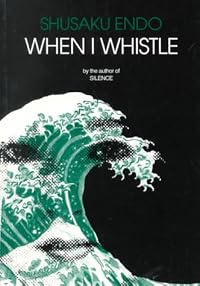
When I Whistle
by Shusaku Endo
On This Page
Description
One of Endo's most unusual and powerful novels is set largely in a modern hospital, with themes and scenes that eerily seem to predate Never Let Me Go A jaded businessman has a chance encounter with the doctor son of his best friend at school, Ozu, and memories are stirred of a former love interest of Ozu's, Aiko. The son of his friend proves to be contemptuous of the outmoded values of his father's world and ruthless in pursuit of success at his hospital. The story reaches a terrible show more climax when Aiko, now a middle-aged cancer-sufferer, is admitted to the hospital and Ozu leads the way in experimenting on her with dangerous drugs. show lessTags
Recommendations














Member Recommendations
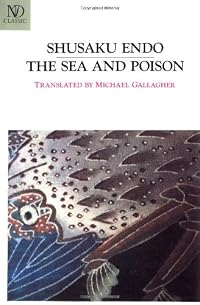
lilisin Similar themes that work well together. I would read "Sea and Poison" first followed by "When I Whistle".
Member Reviews
This novel was easier to read than most of the other works by Endō that I've read, and was extremely moving, perhaps more so for me than the more overtly religiously themed novels. Nonetheless, it deals with the issue that should be at the heart of any religion -- how we treat each other.
The novel contrasts a father and a son, in more or less alternating chapters. As the story begins, a chance encounter with a former schoolmate on a train reminds middle-aged Ozu, the father, of his years in semi-rural Nada Middle School (which was really what we would call a high school) just before World War II began, and in particular of a strange boy who became his best friend, nicknamed Flatfish. This part of the novel then consists of Ozu and show more Flatfish's experiences in school, where they were in a class for less motivated students, continuing after their graduation when Ozu goes to college and Flatfish to work, and then into the years when both are drafted into the Japanese army. At the same time, Flatfish becomes enamored of a girl he cannot bring himself to talk to, Aiko. He yearns to impress her, and remains touchingly devoted to her, from afar, after he moves away and goes to war. He even entrusts Ozu with a mission to bring her money when he learns that she is married and pregnant. The story of the lifelong friendship between these two boys and then young men not only captures a time in Japanese history but also vividly depicts the values of friendship and loyalty.
Contrasted with this is the story of Ozu's son, Eiichi, a doctor at a hospital (called a dispensary) in presumably 1970s Tokyo. Although Eiichi still lives with his family, he stays away from home as much as possible. He is eager to get ahead at all costs, schemes constantly, uses people to meet his own needs, and resents his father for not being ambitious and successful and helping him out, as the father of one of his colleagues has done. He doesn't hesitate to follow the orders and perceived wishes of his superiors, who have ulterior financial and professional motives, even when these clearly interfere with the needs of the patients. In fact, he doesn't care about the patients at all, and belittles and plots against a doctor who does; he cares only about his own success. I must say I found him an extremely unpleasant character.
In the end, the two strands of the novel intersect in what is perhaps a difficult-to-believe plot point. Nonetheless, I found this a lovely novel. Like The Sea and Poison, it deals with medical ethics, but not in nearly so horrific a way. More importantly, it illustrates what Endō may have believed were lost values: respect and love for our fellow human beings. show less
The novel contrasts a father and a son, in more or less alternating chapters. As the story begins, a chance encounter with a former schoolmate on a train reminds middle-aged Ozu, the father, of his years in semi-rural Nada Middle School (which was really what we would call a high school) just before World War II began, and in particular of a strange boy who became his best friend, nicknamed Flatfish. This part of the novel then consists of Ozu and show more Flatfish's experiences in school, where they were in a class for less motivated students, continuing after their graduation when Ozu goes to college and Flatfish to work, and then into the years when both are drafted into the Japanese army. At the same time, Flatfish becomes enamored of a girl he cannot bring himself to talk to, Aiko. He yearns to impress her, and remains touchingly devoted to her, from afar, after he moves away and goes to war. He even entrusts Ozu with a mission to bring her money when he learns that she is married and pregnant. The story of the lifelong friendship between these two boys and then young men not only captures a time in Japanese history but also vividly depicts the values of friendship and loyalty.
Contrasted with this is the story of Ozu's son, Eiichi, a doctor at a hospital (called a dispensary) in presumably 1970s Tokyo. Although Eiichi still lives with his family, he stays away from home as much as possible. He is eager to get ahead at all costs, schemes constantly, uses people to meet his own needs, and resents his father for not being ambitious and successful and helping him out, as the father of one of his colleagues has done. He doesn't hesitate to follow the orders and perceived wishes of his superiors, who have ulterior financial and professional motives, even when these clearly interfere with the needs of the patients. In fact, he doesn't care about the patients at all, and belittles and plots against a doctor who does; he cares only about his own success. I must say I found him an extremely unpleasant character.
In the end, the two strands of the novel intersect in what is perhaps a difficult-to-believe plot point. Nonetheless, I found this a lovely novel. Like The Sea and Poison, it deals with medical ethics, but not in nearly so horrific a way. More importantly, it illustrates what Endō may have believed were lost values: respect and love for our fellow human beings. show less
Those who have followed my threads (particularly the Club Read 2011 thread) will remember my great praise for Endo's [Sea and Poison]. His writing style, for one, and his uncomfortable plot about Japanese doctor's performing vivisections on American soldiers. His take on right or wrong morality in the face of potential medical progress was fascinating as was his focus on the concept of rank and talking out in Japanese society.
[When I Whistle] takes on a similar role and is similarly fascinating.
Dr. Ozu is a doctor ready to do whatever it takes to get ahead in the medical world. He is quick to follow his superviser's orders and will never question a doctor of higher rank if he thinks it'll put him under a weary eye. Despite knowing show more that a better treatment could be at hand. He is manipulative of his peers and will downplay others to cast a "good" light on himself. His scheming brang out disgust as I read on.
But the book isn't actually about Dr. Ozu, but instead about Dr. Ozu's father, Ozu. (Distinction between Dr. Ozu and Ozu is important hence the "Dr." notation.) The book focuses on Ozu and his relationship with a childhood friend named Flatfish as they grow up during military time. Unlike his son, Ozu was a poor student growing up and didn't care about making it in life, and his friend Flatfish wasn't any better. But the two of them were able to form this friendship that helped better themselves in a better way. Flatfish's affections for this one girl and how he continues to prize his memories of her is amazing and something that is truly lost in this world.
This discrepancy between Ozu's world and Dr. Ozu's world is quite jarring but it's what makes the book so lovely and thus highly recommended. If only I hadn't waited so long to write a review; it might have come out a little better. In any case, this is a wonderful "sequel" to [Sea and Poison]. show less
[When I Whistle] takes on a similar role and is similarly fascinating.
Dr. Ozu is a doctor ready to do whatever it takes to get ahead in the medical world. He is quick to follow his superviser's orders and will never question a doctor of higher rank if he thinks it'll put him under a weary eye. Despite knowing show more that a better treatment could be at hand. He is manipulative of his peers and will downplay others to cast a "good" light on himself. His scheming brang out disgust as I read on.
But the book isn't actually about Dr. Ozu, but instead about Dr. Ozu's father, Ozu. (Distinction between Dr. Ozu and Ozu is important hence the "Dr." notation.) The book focuses on Ozu and his relationship with a childhood friend named Flatfish as they grow up during military time. Unlike his son, Ozu was a poor student growing up and didn't care about making it in life, and his friend Flatfish wasn't any better. But the two of them were able to form this friendship that helped better themselves in a better way. Flatfish's affections for this one girl and how he continues to prize his memories of her is amazing and something that is truly lost in this world.
This discrepancy between Ozu's world and Dr. Ozu's world is quite jarring but it's what makes the book so lovely and thus highly recommended. If only I hadn't waited so long to write a review; it might have come out a little better. In any case, this is a wonderful "sequel" to [Sea and Poison]. show less
DNF 21%
No me engancho la historia. Los personajes me parecieron sosos.
No me engancho la historia. Los personajes me parecieron sosos.
Jan 30, 2026Spanish
Ratings
Members
- Recently Added By
Talk Discussions
Past Discussions
When I Whistle by Shusaku Endo. in Author Theme Reads (December 2012)
Author Information

164+ Works 9,031 Members
Shusaku Endo was born in Tokyo in 1923 and, with his family, converted to Catholicism while he was still a child. Much of his writing centers on the conflict this conversion engendered as he struggled to develop faith in a deity foreign to Japanese culture. His writings also reflect on his experiences during World War II during the bombings and show more the subsequent shortage of basic human necessities for the Japanese people. He explores the suffering endured and the inevitable shock wave upon human relationships and the human psyche. Endo graduated from Keio University and then journeyed to France after the war to continue his studies, but was forced to return to Japan because of illness. After a period of convalescence Endo decided on a writing career, publishing his first novel, Shiroihito, in 1955. His novel The Samurai, published in the United States in 1996, is considered one of his finest works. His novel Silence, was made into a major motion picture and premiered in November 2016. Endo's reputation is due in part to his exploration of moral dilemma as it relates to divergent cultures. Endo has won many literary awards. In 1982 he was elected to the Japan Arts Academy. Shusaku Endo died in 1996. (Bowker Author Biography) show less
Some Editions
Series
Belongs to Publisher Series
Common Knowledge
- Canonical title
- When I Whistle
- Original title
- 口笛をふく時
- Original publication date
- 1974
Classifications
- Genres
- Fiction and Literature, General Fiction
- DDC/MDS
- 895.6 — Literature & rhetoric Literatures of other languages Literatures of East and Southeast Asia Japanese
- LCC
- PL849 .N4 .K7813 — Language and Literature Languages and literatures of Eastern Asia, Africa, Oceania Languages of Eastern Asia, Africa, Oceania Japanese language and literature Japanese literature Individual authors and works
- BISAC
Statistics
- Members
- 236
- Popularity
- 137,168
- Reviews
- 3
- Rating
- (3.92)
- Languages
- 7 — English, Finnish, French, German, Japanese, Slovak, Spanish
- Media
- Paper, Ebook
- ISBNs
- 14
- ASINs
- 1