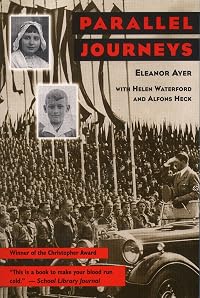
Parallel Journeys
by Eleanor H. Ayer
On This Page
Description
An account of World War II in Germany as told from the viewpoints of a former Nazi soldier and a Jewish Holocaust survivor.Tags
Recommendations

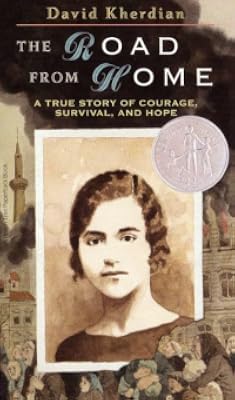

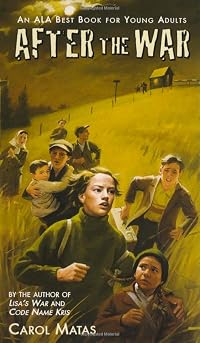
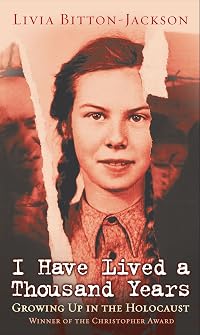
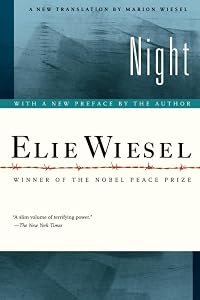













Member Recommendations
Member Reviews
When World War II began in 1939, Alfons was 11 years old and a member of the Hitler Youth. Helen was a young Jewish wife and mother living in the Netherlands. Helen and her husband had fled to the Netherlands from Germany as the Nazis rose to power, mistakenly believing that they would be safe in the Netherlands. When the war ended, 16-year-old Alfons had risen in the ranks of the Hitler Youth to an unbelievable status for a teenager, while Helen was barely alive in a concentration camp. Years later, Alfons and Helen would partner to tell their stories in hopes of keeping history from repeating itself.
Award-winning author Ayer tells Alfons and Helen’s stories in much the same way the pair told them in their joint public appearances, show more chronologically through the war in alternating voices, a “parallel journey.” Both Alfons and Helen have published memoirs, and Ayer blends excerpts from these memoirs with additional context. The result is difficult to put down. I’ve read quite a few accounts of Holocaust survivors. This is the first insider account of the Hitler Youth movement that I’ve read. I don’t think I can summarize it any better than the words a German Luftwaffe major spoke to Alfons near the end of the war. Upon learning that Alfons was not yet seventeen, the officer said “What have we done to our children?” show less
Award-winning author Ayer tells Alfons and Helen’s stories in much the same way the pair told them in their joint public appearances, show more chronologically through the war in alternating voices, a “parallel journey.” Both Alfons and Helen have published memoirs, and Ayer blends excerpts from these memoirs with additional context. The result is difficult to put down. I’ve read quite a few accounts of Holocaust survivors. This is the first insider account of the Hitler Youth movement that I’ve read. I don’t think I can summarize it any better than the words a German Luftwaffe major spoke to Alfons near the end of the war. Upon learning that Alfons was not yet seventeen, the officer said “What have we done to our children?” show less
This is an interesting parallel story by two people who were on opposite sides of the German wartime experience. Helen Waterford is Jewish and hid out in Amsterdam until she was taken to Auschwitz. Alfons Heck was in the Hitler Youth and was a teenage commander of frontline troops. They both survived the war to tell their tale and in fact told their tale together for a while which has led to questions but they thought it would be best to actually face up to the issues.
Compelling read. The aftermath is almost more interesting than the war time years.
Compelling read. The aftermath is almost more interesting than the war time years.
This is a hard book to rate, so I think I am going to skip the rating and just review it.
This was a very accurate, real life, and therefore sometimes slightly gruesome account of a young boy in the Hitler Youth, and a Jewish girlwoman in her fight for her life, and the lives of her husband and daughter. It was very fascinating and made me want to keep reading. But at the same time, it was very hard to get through because of the sheer bleakness portrayed. WWII was not a happy time for many people in Europe, to put it mildly. The desperation and fear of these times for people like the Jews, and yet the exhilaration and thrilling excitement for followers of Hitler, particularly the Hitler Youth. It's just mind-blowing, really. show more Surprisingly, throughout most of the book, I felt a compassion and sympathy for Alfons. It is so sad that someone can be so brainwashed and blinded by the lies of the Enemy that they would blindly follow such a person as Hitler, and give their whole-hearted dedication to said person. And, of course, Helen's story also broke my heart.
I loved how the author included frequent snippets from both of the character's autobiographies. It lent a more personal aspect to the otherwise simple relaying of facts.
Not recommended for anyone under the age of 15 or for sensitive persons. I was in tears numerous times just at the numbers. It was a very good and well written account, but definitely not something I would read again! show less
This was a very accurate, real life, and therefore sometimes slightly gruesome account of a young boy in the Hitler Youth, and a Jewish girlwoman in her fight for her life, and the lives of her husband and daughter. It was very fascinating and made me want to keep reading. But at the same time, it was very hard to get through because of the sheer bleakness portrayed. WWII was not a happy time for many people in Europe, to put it mildly. The desperation and fear of these times for people like the Jews, and yet the exhilaration and thrilling excitement for followers of Hitler, particularly the Hitler Youth. It's just mind-blowing, really. show more Surprisingly, throughout most of the book, I felt a compassion and sympathy for Alfons. It is so sad that someone can be so brainwashed and blinded by the lies of the Enemy that they would blindly follow such a person as Hitler, and give their whole-hearted dedication to said person. And, of course, Helen's story also broke my heart.
I loved how the author included frequent snippets from both of the character's autobiographies. It lent a more personal aspect to the otherwise simple relaying of facts.
Not recommended for anyone under the age of 15 or for sensitive persons. I was in tears numerous times just at the numbers. It was a very good and well written account, but definitely not something I would read again! show less
Parallel Journeys by Eleanor Ayers, Alfons Heck, and Helen Waterford is a devastating book that will make you wonder how people could have possibly been so evil, stupid, and strong. It is a narration through the two books Commitment to the Dead by Helen Waterford and A Child of Hitler by Alfons Heck. Parallel Journeys tells the stories of both Alfons and Helen’s lives. Helen was a married Jewish woman by the time World War II began. At that same time, Alfons was a proud young member of the Hitler Youth.
Throughout and long after the war, they both suffered because of Adolf Hitler. Helen suffered from starvation and the fear of dying in a concentration camp. Alfons suffered from having his childhood taken away from him at the tender show more age of ten. He grew up believing Hitler was a god and he would do anything to help that god. Heck’s friends and family where killed sacrificing themselves for the Fatherland. Alfons Heck suffered the most after the war. He had to carry the burden of his “god” who had tricked him into believing he was a great, wonderful, innocent man. His situation was very similar to many other Hitler Youth members.
When I read about Alfons Heck carrying the burden of Hitler and receiving hatred from lots of people because of his membership in the Hitler Youth, I had to stop reading to try to figure out this question. Are Alfons and other Hitler Youth members guilty of the crimes they committed during World War II, or are they innocent because of their age? This is a very hard question, but I would consider them to be guilty. Even though they were young, they knew they were killing people. They certainly shouldn’t be as harshly sentenced or blamed as those who tried to convince these Hitler Youth members to commit these crimes.
To try to lessen the burden he had to carry, Alfons fled Germany and moved to Canada. Eventually he would move out of Canada and into the United States. After Heck moved to America, he started writing articles for newspapers and magazines about his membership in the Hitler Youth. Helen Waterford read one of these articles and then did the unthinkable. She called Alfons to ask him if he would want to start lecturing with her about World War II. Heck agreed, and soon they were speaking to hundreds of high school and college students.
After they had each told their story, they would allow the audience to ask them questions. Many of these questions where very hard for them to answer. One student even asked Alfons if he would have shot Helen if he was told to. Heck told the truth; yes he would have killed her, because he was taught to follow any order no matter how absurd or evil. Helen and Alfons had a very fragile and strange relationship.
Because of her friendship with a German, Helen received more nasty remarks and questions then Alfons. Many of those questions where similar to, “When did you stop hating Alfons?” to this Helen replied that she had never hated him. That shocked many people. They then wanted to know what she expected to gain from not hating him. She explained that, “I had learned only too well that hate is a boomerang that only destroys the sender. I wanted to build peace, not feed the flame of a never-ending destruction."
Parallel Journeys does a great job of explaining the tragedy of World War II. It is a wonderful, informational comparison of two memoirs. Surprisingly, it is one of the best books I have ever read. I recommend this book to anyone over the age of twelve, because for younger kids this might be a little too scary. For everyone else, this is an excellent read if you want to learn about World War II. ( ) show less
Throughout and long after the war, they both suffered because of Adolf Hitler. Helen suffered from starvation and the fear of dying in a concentration camp. Alfons suffered from having his childhood taken away from him at the tender show more age of ten. He grew up believing Hitler was a god and he would do anything to help that god. Heck’s friends and family where killed sacrificing themselves for the Fatherland. Alfons Heck suffered the most after the war. He had to carry the burden of his “god” who had tricked him into believing he was a great, wonderful, innocent man. His situation was very similar to many other Hitler Youth members.
When I read about Alfons Heck carrying the burden of Hitler and receiving hatred from lots of people because of his membership in the Hitler Youth, I had to stop reading to try to figure out this question. Are Alfons and other Hitler Youth members guilty of the crimes they committed during World War II, or are they innocent because of their age? This is a very hard question, but I would consider them to be guilty. Even though they were young, they knew they were killing people. They certainly shouldn’t be as harshly sentenced or blamed as those who tried to convince these Hitler Youth members to commit these crimes.
To try to lessen the burden he had to carry, Alfons fled Germany and moved to Canada. Eventually he would move out of Canada and into the United States. After Heck moved to America, he started writing articles for newspapers and magazines about his membership in the Hitler Youth. Helen Waterford read one of these articles and then did the unthinkable. She called Alfons to ask him if he would want to start lecturing with her about World War II. Heck agreed, and soon they were speaking to hundreds of high school and college students.
After they had each told their story, they would allow the audience to ask them questions. Many of these questions where very hard for them to answer. One student even asked Alfons if he would have shot Helen if he was told to. Heck told the truth; yes he would have killed her, because he was taught to follow any order no matter how absurd or evil. Helen and Alfons had a very fragile and strange relationship.
Because of her friendship with a German, Helen received more nasty remarks and questions then Alfons. Many of those questions where similar to, “When did you stop hating Alfons?” to this Helen replied that she had never hated him. That shocked many people. They then wanted to know what she expected to gain from not hating him. She explained that, “I had learned only too well that hate is a boomerang that only destroys the sender. I wanted to build peace, not feed the flame of a never-ending destruction."
Parallel Journeys does a great job of explaining the tragedy of World War II. It is a wonderful, informational comparison of two memoirs. Surprisingly, it is one of the best books I have ever read. I recommend this book to anyone over the age of twelve, because for younger kids this might be a little too scary. For everyone else, this is an excellent read if you want to learn about World War II. ( ) show less
Parallel Journeys by Eleanor Ayers, Alfons Heck, and Helen Waterford is a devastating book that will make you wonder how people could have possibly been so evil, stupid, and strong. It is a narration through the two books Commitment to the Dead by Helen Waterford and A Child of Hitler by Alfons Heck. Parallel Journeys tells the stories of both Alfons and Helen’s lives. Helen was a married Jewish woman by the time World War II began. At that same time, Alfons was a proud young member of the Hitler Youth.
Throughout and long after the war, they both suffered because of Adolf Hitler. Helen suffered from starvation and the fear of dying in a concentration camp. Alfons suffered from having his childhood taken away from him at the tender show more age of ten. He grew up believing Hitler was a god and he would do anything to help that god. Heck’s friends and family where killed sacrificing themselves for the Fatherland. Alfons Heck suffered the most after the war. He had to carry the burden of his “god” who had tricked him into believing he was a great, wonderful, innocent man. His situation was very similar to many other Hitler Youth members.
When I read about Alfons Heck carrying the burden of Hitler and receiving hatred from lots of people because of his membership in the Hitler Youth, I had to stop reading to try to figure out this question. Are Alfons and other Hitler Youth members guilty of the crimes they committed during World War II, or are they innocent because of their age? This is a very hard question, but I would consider them to be guilty. Even though they were young, they knew they were killing people. They certainly shouldn’t be as harshly sentenced or blamed as those who tried to convince these Hitler Youth members to commit these crimes.
To try to lessen the burden he had to carry, Alfons fled Germany and moved to Canada. Eventually he would move out of Canada and into the United States. After Heck moved to America, he started writing articles for newspapers and magazines about his membership in the Hitler Youth. Helen Waterford read one of these articles and then did the unthinkable. She called Alfons to ask him if he would want to start lecturing with her about World War II. Heck agreed, and soon they were speaking to hundreds of high school and college students.
After they had each told their story, they would allow the audience to ask them questions. Many of these questions where very hard for them to answer. One student even asked Alfons if he would have shot Helen if he was told to. Heck told the truth; yes he would have killed her, because he was taught to follow any order no matter how absurd or evil. Helen and Alfons had a very fragile and strange relationship.
Because of her friendship with a German, Helen received more nasty remarks and questions then Alfons. Many of those questions where similar to, “When did you stop hating Alfons?” to this Helen replied that she had never hated him. That shocked many people. They then wanted to know what she expected to gain from not hating him. She explained that, “I had learned only too well that hate is a boomerang that only destroys the sender. I wanted to build peace, not feed the flame of a never-ending destruction."
Parallel Journeys does a great job of explaining the tragedy of World War II. It is a wonderful, informational comparison of two memoirs. Surprisingly, it is one of the best books I have ever read. I recommend this book to anyone over the age of twelve, because for younger kids this might be a little too scary. For everyone else, this is an excellent read if you want to learn about World War II. show less
Throughout and long after the war, they both suffered because of Adolf Hitler. Helen suffered from starvation and the fear of dying in a concentration camp. Alfons suffered from having his childhood taken away from him at the tender show more age of ten. He grew up believing Hitler was a god and he would do anything to help that god. Heck’s friends and family where killed sacrificing themselves for the Fatherland. Alfons Heck suffered the most after the war. He had to carry the burden of his “god” who had tricked him into believing he was a great, wonderful, innocent man. His situation was very similar to many other Hitler Youth members.
When I read about Alfons Heck carrying the burden of Hitler and receiving hatred from lots of people because of his membership in the Hitler Youth, I had to stop reading to try to figure out this question. Are Alfons and other Hitler Youth members guilty of the crimes they committed during World War II, or are they innocent because of their age? This is a very hard question, but I would consider them to be guilty. Even though they were young, they knew they were killing people. They certainly shouldn’t be as harshly sentenced or blamed as those who tried to convince these Hitler Youth members to commit these crimes.
To try to lessen the burden he had to carry, Alfons fled Germany and moved to Canada. Eventually he would move out of Canada and into the United States. After Heck moved to America, he started writing articles for newspapers and magazines about his membership in the Hitler Youth. Helen Waterford read one of these articles and then did the unthinkable. She called Alfons to ask him if he would want to start lecturing with her about World War II. Heck agreed, and soon they were speaking to hundreds of high school and college students.
After they had each told their story, they would allow the audience to ask them questions. Many of these questions where very hard for them to answer. One student even asked Alfons if he would have shot Helen if he was told to. Heck told the truth; yes he would have killed her, because he was taught to follow any order no matter how absurd or evil. Helen and Alfons had a very fragile and strange relationship.
Because of her friendship with a German, Helen received more nasty remarks and questions then Alfons. Many of those questions where similar to, “When did you stop hating Alfons?” to this Helen replied that she had never hated him. That shocked many people. They then wanted to know what she expected to gain from not hating him. She explained that, “I had learned only too well that hate is a boomerang that only destroys the sender. I wanted to build peace, not feed the flame of a never-ending destruction."
Parallel Journeys does a great job of explaining the tragedy of World War II. It is a wonderful, informational comparison of two memoirs. Surprisingly, it is one of the best books I have ever read. I recommend this book to anyone over the age of twelve, because for younger kids this might be a little too scary. For everyone else, this is an excellent read if you want to learn about World War II. show less
Parallel Journeys tells the stories of a Jewish woman, Helen Waterford, and a young boy, Alfons Heck, during WWII. The two never meet during the war, but meet after in the US and lecture together about their experiences. Helen's reason for lecturing about her experiences is to warn people that minor harassment and prejudice, if it is not stopped immediately, grows, and you become the perpetrator. Alfons' reason for telling people his story is so people understand that it can happen anywhere, and people are capable for truly horrible acts in any country. Eleanor Ayer uses narrative interspersed with excerpts from Alfons' two autobiographies and Helen's autobiography. This book gives readers in depth perspectives of the two lives. I will show more say this, people must keep an open mind when reading about Alfons. I also would have liked it if the author included more about how they met, and the struggles they went through continuing their lives after the war. I think it would have added more to the book if the author had interviewed them instead of taking excerpts from their autobiographies. The pictures are useful, but some do not correspond to the text. For example, there is of Jo Vis before he is mentioned in the text. The most fascinating part of the book was when Alfons has to come to terms with what he did and what his leaders did. I would have liked to know more about it, but I guess I should read his two autobiographies or the documentary about him. I think this book should be in every classroom. The stories are incredibly powerful and eye opening, and leaves a lasting impression. show less
"Parallel Journeys" by Eleanor Ayer, is the story of two young Germans during WWII. The girl (Helen Waterford) was Jewish and fled to Amsterdam to escape the Nazi's only to get captured there and end up at the Auschwitz concentration camp. The boy (Alfons Heck) was an avid member of the Hitler Youth, and by the time he was 16 (16!) had achieved a rank equivalent to a major general just before the war ended - he commanded 6,000 Hitler Youth troops.
Although the two never met during the war (they were about 19 years apart in age), the story unfolds by chronologically switching back in forth between their perspectives, so the reader gets to see what each was doing at the same points in time. It is geared toward teenagers because the author show more describes in detail the adolescence of both individuals, and how the choices they made during that time effected the rest of their lives. There is a lot of discussion about the Hitler Youth as well, and how many young kids died for the Nazis. There are a lot of quotes taken directly from their respective biographies included in the narrative.
I enjoyed the book not only because of these individuals' huge part in history (she actually knew the Frank family; he once met Hitler in person) but because it goes on to tell how the lives of all the people panned out. Unbelievably, they actually met in 1980 and did a series of lectures together. Very interesting stuff! show less
Although the two never met during the war (they were about 19 years apart in age), the story unfolds by chronologically switching back in forth between their perspectives, so the reader gets to see what each was doing at the same points in time. It is geared toward teenagers because the author show more describes in detail the adolescence of both individuals, and how the choices they made during that time effected the rest of their lives. There is a lot of discussion about the Hitler Youth as well, and how many young kids died for the Nazis. There are a lot of quotes taken directly from their respective biographies included in the narrative.
I enjoyed the book not only because of these individuals' huge part in history (she actually knew the Frank family; he once met Hitler in person) but because it goes on to tell how the lives of all the people panned out. Unbelievably, they actually met in 1980 and did a series of lectures together. Very interesting stuff! show less
Members
- Recently Added By
Published Reviews
ThingScore 100
one of the best book on the halocaust/hitler youth
added by name1029
Lists

Sonlight Books
1,487 works; 25 members

Authors from uncertain country
14 works; 1 member

2021 Christmas Gifts
66 works; 13 members
Author Information
50 Works 1,194 Members
Awards and Honors
Awards
Distinctions
Common Knowledge
- Canonical title
- Parallel Journeys
- Original publication date
- 1995
- People/Characters
- Helen Waterford; Alfons Heck; Arthur Axmann; Sergeant Baum; Herr Becker; Anton Blum (show all 67); Martin Bormann; Margaret Bourke-White; Eva Braun; Neville Chamberlain; Winston Churchill; Karl Dönitz; Gre Driessen; Adolf Eichmann; Dwight D. Eisenhower; Frau Ermann; Heinz Ermann; Roman Follman; Anne Frank; Hans Frank; Margot Frank; Adolph Galland; Joseph Goebbels; Johann Wolfgang von Goethe; Hermann Göring; Herschel Grynszpan; Franz Halder; Rudolf Heck; Ben Helfgott; Rudolf Hess; Reinhard Heydrich; Rinus Hille; Heinrich Himmler; Adolf Hitler; Andreas Kaspar; Helmut Kohl; Hans Leiwitz; Robert Ley; Charles A. Lindbergh; Luther, Martin, 1483-1546; Frau Marks; Anthony McAuliffe; Josef Mengele; Monika Mohn; Bernard Law Montgomery; Heinrich Muller; George S. Patton; Friedrich von Paulus; Ernst vom Rath; Ab Reusink; Baron von Richthofen; Erwin Rommel; Franklin Delano Roosevelt; Baldur von Schirach; Albert Speer; Joseph Stalin; Claus Schenk Graf von Stauffenberg; Julius Streicher; Harry S. Truman; Agaat Vis; Jo Vis; Kurt Vonnegut; Fred Waterford; Robert Waterford; Doris Wohlfarth; Siegfried Wohlfarth; Paul Wolff
- Important places
- Auschwitz concentration camp
- Important events
- World War II (1939 | 1945); Holocaust
- Dedication
- Parallel Journeys is dedicated to the two people whose courage and candor in telling their very personal stories--publicly and from the same stage--have made this book possible. -E.H.A.
LJCRS Book Fair Selection 5761 - First words
- Truth can be stranger than fiction.
- Quotations
- 'Tis strange, but true; for truth is always strange, -- Stranger than fiction.
Classifications
- Genres
- Nonfiction, Teen
- DDC/MDS
- 943.086 — History & geography History of Europe Central Europe: Germany, Austria, Switzerland, Czech, Poland, Hungary Historical periods of Germany Germany 1866- Third Reich 1933-1945
- LCC
- D804.3 .A98 — History of Europe, Asia, Africa and Oceania History (General) World War II (1939-1945)
- BISAC
Statistics
- Members
- 755
- Popularity
- 37,445
- Reviews
- 12
- Rating
- (4.16)
- Languages
- English
- Media
- Paper, Ebook
- ISBNs
- 8
- ASINs
- 2