On This Page
Description
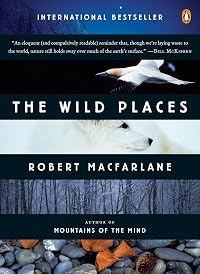
Explores the changing ideas of the wild in Great Britain and Ireland, from the cliffs of Cape Wrath and the storm-beaches of Norfolk to the saltmarshes and estuaries of Essex and the moors of Rannoch and the Pennines.Tags
Recommendations

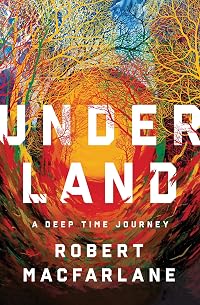
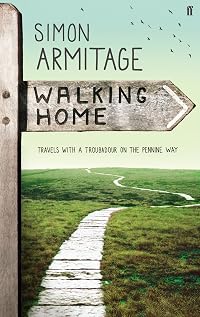
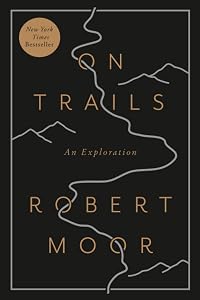
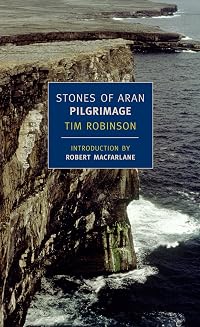

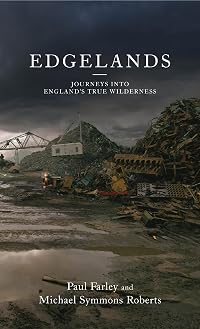
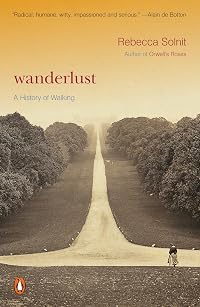

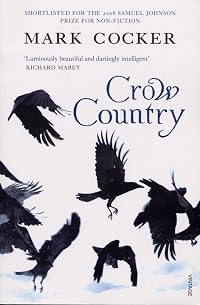
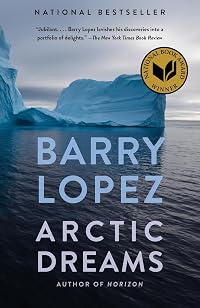
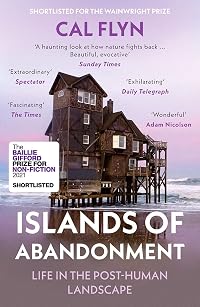
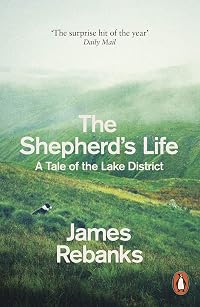
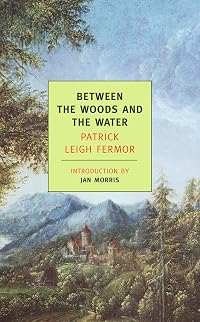

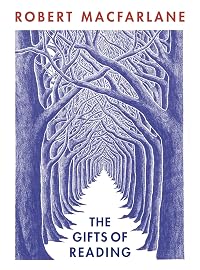




Member Recommendations

Member Reviews
In The Wild Places, Robert MacFarlane sets out to find if there are any such environments left within the British Isles. The book begins contemplatively, with the author journeying to one of his favourite local places, a beech wood outside the city of Cambridge where he lives, climbing a tree as is his wont, so he can sit and observe, and be part of, this sylvan idyll.
This sets the tone wonderfully. From the very first sentence, you realise that you are in for a special experience; the quality of MacFarlane’s prose is quietly spectacular, largely understated but with the rhythms of good poetry and this, combined with his eye for detail and a mind that connects the landscape and the animals and our inhabitation along with more personal show more experiences, make the book extraordinary.
Over fifteen chapters MacFarlane travels across Britain, and to Ireland, to experience the places he considers most “wild” and natural, initially using as a guide the travels of the legendary Irish King Sweeney, who was made to wander the wild places as a beast following an act of betrayal.
From the island of Ynys Enlii, off the Lleyn Peninsula, where Wales reaches it most Western point toward Ireland, on to Scotland - to Coriusk on Skye, Rannoch Moor, Coille Dubh ( The Black Wood ), Strathnaver and Ben Klibreck, Cape Wrath and Ben Hope before crossing the Irish Sea to the desolation of the Burren. MacFarlane finds even more poetry in these places than their evocative names suggest - along with the rest of his journey, to the high ridges of the Lakeland fells, the Kentish Holloways, the storm-lashed beaches of Norfolk, Essex saltmarshes and, finally, my own back yard, the moors above Hope Valley in the High Peak. His writing conjures the landscape like nobody I’ve read, the individual feel and sense and rhythm of each place, drawing the reader to it - even when, as in attempting to spend the night on the frozen Ben Hope in Northern Scotland, for the first time he feels how truly hostile a place can be and is genuinely afraid.
Each section of travelogue is also woven through with skeins of history - both of the regions, and more personal history. This becomes more pointed when MacFarlane’s friend Roger, with whom he has discussed many of his trips, have shared ideas and thoughts like the oldest of friends, who has accompanied him on several excursions, falls suddenly ill.
The final trip to the Peak District brings the book full circle, as he is shown where to find snow hares by John, who had piloted the boat out to Ynys Enlii, and then a final coda where MacFarlane returns once more to the beech wood. He may have found that there is, perhaps, no true wilderness in the British Isles, in that there is no land that has not been shaped by humanity and our works, but that the wild is still there to be appreciated and respected, should we wish to look for it, that we need to protect it for our own health and benefit, but it the wild places will be there long after we have gone.
5/5, and an instant addition to the Favourites shelf show less
This sets the tone wonderfully. From the very first sentence, you realise that you are in for a special experience; the quality of MacFarlane’s prose is quietly spectacular, largely understated but with the rhythms of good poetry and this, combined with his eye for detail and a mind that connects the landscape and the animals and our inhabitation along with more personal show more experiences, make the book extraordinary.
Over fifteen chapters MacFarlane travels across Britain, and to Ireland, to experience the places he considers most “wild” and natural, initially using as a guide the travels of the legendary Irish King Sweeney, who was made to wander the wild places as a beast following an act of betrayal.
From the island of Ynys Enlii, off the Lleyn Peninsula, where Wales reaches it most Western point toward Ireland, on to Scotland - to Coriusk on Skye, Rannoch Moor, Coille Dubh ( The Black Wood ), Strathnaver and Ben Klibreck, Cape Wrath and Ben Hope before crossing the Irish Sea to the desolation of the Burren. MacFarlane finds even more poetry in these places than their evocative names suggest - along with the rest of his journey, to the high ridges of the Lakeland fells, the Kentish Holloways, the storm-lashed beaches of Norfolk, Essex saltmarshes and, finally, my own back yard, the moors above Hope Valley in the High Peak. His writing conjures the landscape like nobody I’ve read, the individual feel and sense and rhythm of each place, drawing the reader to it - even when, as in attempting to spend the night on the frozen Ben Hope in Northern Scotland, for the first time he feels how truly hostile a place can be and is genuinely afraid.
Each section of travelogue is also woven through with skeins of history - both of the regions, and more personal history. This becomes more pointed when MacFarlane’s friend Roger, with whom he has discussed many of his trips, have shared ideas and thoughts like the oldest of friends, who has accompanied him on several excursions, falls suddenly ill.
The final trip to the Peak District brings the book full circle, as he is shown where to find snow hares by John, who had piloted the boat out to Ynys Enlii, and then a final coda where MacFarlane returns once more to the beech wood. He may have found that there is, perhaps, no true wilderness in the British Isles, in that there is no land that has not been shaped by humanity and our works, but that the wild is still there to be appreciated and respected, should we wish to look for it, that we need to protect it for our own health and benefit, but it the wild places will be there long after we have gone.
5/5, and an instant addition to the Favourites shelf show less
Moving from truly remote and relatively untouched corners of Scotland to the Burren in Ireland and on to the English countryside, Robert Macfarlane discovers and describes wild places in all their many manifestations –
'Certainly, these islands possessed wild places on massive scales ... but my original idea that a wild place had to be somehow outside history, which had failed to fit the complicated pasts of the Scottish and Irish landscapes, seemed even more improper in an English context. English wildness existed in the main as Nash's 'unseen landscapes': it was there, if carefully looked for, in the bend of a stream valley, in the undercut of a riverbank, in copses and peat hags, hedgerows and quicksand pools. And it was there in show more the margins, interzones, and rough cusps of the country: quarry rim, derelict factory, and motorway verge.'
The writing is poetic, lyrical, erudite and often all of these in a paragraph or less. The extract below, explaining how physics and climatic conditions combine to make the air in certain locations particularly clear, is a wonderful example:
'On the north-western coasts of Britain and Ireland, the air has a remarkable transparency, for it is almost free of particulate matter. Little loose dust rises from the wet land, and the winds blow prevailingly off the sea. Through such air, photons can proceed without obstacle. The light moves, unscattered, and falls upon the forms and objects of those regions with candour.'
Other passages that particularly touched me were his description of squirrels creating their own electric blankets using phone lines near his friend Roger Deakin's home; the explanation of how human eyes work at night and his descriptions of sleeping outside in various locations. The latter bringing back memories of a soft, warm August night spent sleeping on a bed of heather in the middle of the Cairngorms and a snug but damp snow cave near the summit of Ben Lawers.
Constantly thought-provoking, near the end he touches upon the wild places which have been reclaimed by nature from man's clutches and presciently notes that:
'Abandoned places such as these provide us not only with images of the past but also with visions of the future. As the climate warms, and as human populations begin to fall, increasing numbers of settlements will be abandoned. Inland drought and rising sea-levels on the coasts will force exoduses. And wildness will return to these forsaken places.' show less
'Certainly, these islands possessed wild places on massive scales ... but my original idea that a wild place had to be somehow outside history, which had failed to fit the complicated pasts of the Scottish and Irish landscapes, seemed even more improper in an English context. English wildness existed in the main as Nash's 'unseen landscapes': it was there, if carefully looked for, in the bend of a stream valley, in the undercut of a riverbank, in copses and peat hags, hedgerows and quicksand pools. And it was there in show more the margins, interzones, and rough cusps of the country: quarry rim, derelict factory, and motorway verge.'
The writing is poetic, lyrical, erudite and often all of these in a paragraph or less. The extract below, explaining how physics and climatic conditions combine to make the air in certain locations particularly clear, is a wonderful example:
'On the north-western coasts of Britain and Ireland, the air has a remarkable transparency, for it is almost free of particulate matter. Little loose dust rises from the wet land, and the winds blow prevailingly off the sea. Through such air, photons can proceed without obstacle. The light moves, unscattered, and falls upon the forms and objects of those regions with candour.'
Other passages that particularly touched me were his description of squirrels creating their own electric blankets using phone lines near his friend Roger Deakin's home; the explanation of how human eyes work at night and his descriptions of sleeping outside in various locations. The latter bringing back memories of a soft, warm August night spent sleeping on a bed of heather in the middle of the Cairngorms and a snug but damp snow cave near the summit of Ben Lawers.
Constantly thought-provoking, near the end he touches upon the wild places which have been reclaimed by nature from man's clutches and presciently notes that:
'Abandoned places such as these provide us not only with images of the past but also with visions of the future. As the climate warms, and as human populations begin to fall, increasing numbers of settlements will be abandoned. Inland drought and rising sea-levels on the coasts will force exoduses. And wildness will return to these forsaken places.' show less
I very much enjoyed the combination of geography, history and culture that Robert Macfarlane pulls together to describe the wild places that he visits and writes about for this book. Starting and ending in his local beech wood, he suggests a frustration with the lack of wildness around his home town of Cambridge and begins a search for 'the wild', visiting 'unbound forests', 'frost-shattered summits' and 'lochs of great depth'. Robert Macfarlane takes his readers on a journey of beautiful words to find this wildness in extensive and intensive ways and in surprising places. Many of his readers will be ahead of him in this pilgrimage, already appreciating luxuriant wild places, not just the austere and wild places with a history, not just show more untouched. Robert Macfarlane muses on the unsatisfactory nature of grid maps to describe places and the need to recognise maps that tell stories. An interesting read that will make you want to sleep outside very soon. show less
"Are there any genuinely wild places left in England, Scotland, Ireland, and Wales? That is the question that writer Robert Macfarlane poses to himself as he embarks on a series of breathtaking and beautifully described journeys through some of the archipelago's most remarkable landscapes. As he climbs, walks, and swims in all manner of weather -- sleeping on cliff tops and remote beaches, deep in snowy wildwoods and ancient meadows, and bathing in phosphorescent seas or hiking frozen rivers at night -- his understanding of nature is transformed. With lyrical elegance and passion, he entwines history and landscape in a bewitching evocation of wildness and its vital importance."
~~back cover
This is an absolutely exquisite book! The show more writing itself is intricate and sweet, and the author's love and compulsion for nature in all her faces and moods is compelling. I was overwhelmed to find that the author was close friends with Roger Deakin, with whom he spent many hours journeying through the wild areas of Britain. His recounting of Roger's last illness and death had me in tears as though his dying was news to me -- a heartfelt eulogy for a dear friend.
This book will not only take you to "remarkable landscapes" and lonely beautiful places, it will burnish a love of the natural world and of friends and family. Definitely a keeper! show less
~~back cover
This is an absolutely exquisite book! The show more writing itself is intricate and sweet, and the author's love and compulsion for nature in all her faces and moods is compelling. I was overwhelmed to find that the author was close friends with Roger Deakin, with whom he spent many hours journeying through the wild areas of Britain. His recounting of Roger's last illness and death had me in tears as though his dying was news to me -- a heartfelt eulogy for a dear friend.
This book will not only take you to "remarkable landscapes" and lonely beautiful places, it will burnish a love of the natural world and of friends and family. Definitely a keeper! show less
The Wild Places by Robert Macfarlane Ostensibly about his endeavour to find the wild places that still exist in the UK staring from Scotland and kind of working his way down to end up in Essex where I think the BBC made a TV program about him wandering through Essex discovering wonders of wildlife hidden in plain sight throughout the industrial wastelands.
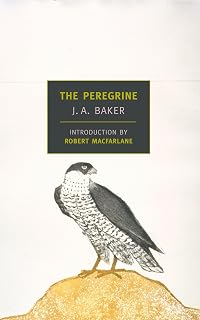
Anyway, he is in Essex on the trail of J.A. Baker who wrote The Peregrine, one of my all time favourite non-fiction books. It is interesting to note that like J.A. Baker he seems to exist in world devoid of all the trivialities that consume ours.
He did mention working (just once) and having a daughter (about 3 times) but outside of that he seems to exist only on this metaphysical show more journey where he is ping-ponging around the UK, hooking up with other men and disappearing into crags, gullies, downs, moors, mountains, islands, lochs and god know where else for periods of time.
He certainly never seemed to have to be anywhere else. That's why I found the irony of him doing a TV program kinda surreal because he appears to live in a world that doesn't have one. I don't have a TV but I certainly live in this world. Was I jealous I wondered?
Definitely impressed, to say the least.Also based on the premise that "to wander is to wonder" and the link between roving and reflection being described in many books each of which he quotes. A landscape walked and history filled in as you go.
Much off it sad, especially when he deals with (just one part) of the highland clearances. Do they teach that stuff in schools? I loved and struggled with this book at the same time. This is the second of his books that I have read and I warmed to him on this one. At the end of every chapter I wanted to get in my car and drive to these places and I would have, had it not been for the 19,000 Kms between him and me and the fact that I have a job to go to, but all the same.....Another of his themes was about how close all this is to what we call reality and what he calls roads and housing estates. How all this stuff is simply still there if you are willing to get out of the car and walk for a bit. Incredibly true it appears.This is one book that I wished was on my Kindle instead of the mass of paper that it was.
Why so? Well there were so many words that I didn't recognise and on the Kindle you simply point to the word and the definition pops up at the top or bottom of the screen.
Not just old fashioned arcane words but beautiful poetic descriptive words. Lots of them. I used the Kindle's dictionary instead realising that it has been a while since I came across so many hitherto unknown words.
He may have been writing about Essex but he certainly never went to school there, that's for sure. show less
Anyway, he is in Essex on the trail of J.A. Baker who wrote The Peregrine, one of my all time favourite non-fiction books. It is interesting to note that like J.A. Baker he seems to exist in world devoid of all the trivialities that consume ours.
He did mention working (just once) and having a daughter (about 3 times) but outside of that he seems to exist only on this metaphysical show more journey where he is ping-ponging around the UK, hooking up with other men and disappearing into crags, gullies, downs, moors, mountains, islands, lochs and god know where else for periods of time.
He certainly never seemed to have to be anywhere else. That's why I found the irony of him doing a TV program kinda surreal because he appears to live in a world that doesn't have one. I don't have a TV but I certainly live in this world. Was I jealous I wondered?
Definitely impressed, to say the least.Also based on the premise that "to wander is to wonder" and the link between roving and reflection being described in many books each of which he quotes. A landscape walked and history filled in as you go.
Much off it sad, especially when he deals with (just one part) of the highland clearances. Do they teach that stuff in schools? I loved and struggled with this book at the same time. This is the second of his books that I have read and I warmed to him on this one. At the end of every chapter I wanted to get in my car and drive to these places and I would have, had it not been for the 19,000 Kms between him and me and the fact that I have a job to go to, but all the same.....Another of his themes was about how close all this is to what we call reality and what he calls roads and housing estates. How all this stuff is simply still there if you are willing to get out of the car and walk for a bit. Incredibly true it appears.This is one book that I wished was on my Kindle instead of the mass of paper that it was.
Why so? Well there were so many words that I didn't recognise and on the Kindle you simply point to the word and the definition pops up at the top or bottom of the screen.
Not just old fashioned arcane words but beautiful poetic descriptive words. Lots of them. I used the Kindle's dictionary instead realising that it has been a while since I came across so many hitherto unknown words.
He may have been writing about Essex but he certainly never went to school there, that's for sure. show less
I enjoyed The Wild Places. It occasionally dragged and at other times I thought he was daft for sleeping out in the cold at places like Ben Hope in Scotland. However, on balance, The Wild Places is a deep and moving account of the UK's and Ireland's wilderness. Macfarlane's prose is often lovely. It is a shame there were so few photographs in the book and I hope at future edition will include more photographs.
I read this as prep for a trip to England and Wales because it was on Road Scholar's recommended reading lists. I found this to be one of the better books and I'm glad they list it. I hope to be able to see some of the marvelous landscapes Macfarlane describes, especially a holloway.
I read this as prep for a trip to England and Wales because it was on Road Scholar's recommended reading lists. I found this to be one of the better books and I'm glad they list it. I hope to be able to see some of the marvelous landscapes Macfarlane describes, especially a holloway.
The wild places of the title are all in Britain and Ireland and are areas that Macfarlane regards as possibly dangerous and yet full of energy. He chose them to reflect a variety of landscapes, such as “Island”, “Moor” and “Summit” and devotes a chapter to each. Each place is described in eloquent, almost poetic language and prompts recollections of his visits to similar locations, but also he reflects on the fact that often, even in remote areas, the landscape has been changed by humans. His tour takes place in just over a year, which is mirrored in the changing seasons in which his visits are undertaken. During the course of his travels, his thoughts and writing, Macfarlane comes to realise that his initial definition of show more wild needs revising. He appreciates that wildness can also be found in small, uncared-for patches that may be discovered on our doorstep and not necessarily in remote regions. show less
Members
- Recently Added By
Published Reviews
ThingScore 75
It is in the end a deeply stirring book, in being able to find the vivid wild in places that are so trammelled with our sterile banks of knowledge about them. In using the body to step beyond the ironic into an immediacy of a tangible, audible, testable world. In reversing what Macfarlane calls "the retreat from the real". Wildness becomes not some fragmentary thing surviving in scraps and show more fragments which have to be fenced around with a busy protectiveness. It is much much more than that. show less
added by steevohenderson
Macfarlane also feels on the outside of things. This is partly because wildness in early 21st-century Britain is a hard thing to find - pushed to the margins (or so he begins by thinking), where it has not been entirely vanquished by pollution and modern farming and population growth. Then there are the difficulties created by the shortcomings of language to express what he feels, and the show more problems of containing a proper emotional response to a landscape within a more analytic appreciation of its qualities. "I could not explain what it really looked like," he says early in the book, when visiting an island cave, "certainly not what I was doing there, among the red and purple basalts." Later, the same note returns: "Open spaces bring to the mind something which is difficult to express"; "we find it hard to make language grip landscapes that are close-toned". show less
added by John_Vaughan — edited by steevohenderson
Lists

Recommended Nature Writing
346 works; 180 members

Nature Writing
33 works; 3 members

Top Five Books of 2020
982 works; 348 members

Best Literary Walks
35 works; 7 members

BBC Radio 4 Bookclub
341 works; 13 members

Books Read in 2017
4,249 works; 130 members

Mind Expanding Books by hackerkid
581 works; 8 members
Author Information

28+ Works 10,113 Members
Robert Macfarlane is the author of Landmarks which made the Samuel Johnson Prize 2015 shortlist. (Bowker Author Biography)
Some Editions
Awards and Honors
Awards
Distinctions
Notable Lists
Series

Belongs to Publisher Series
Naturkunden (18)
Work Relationships
Is contained in
Common Knowledge
- Canonical title*
- De laatste wildernis
- Original title
- The wild places
- Original publication date
- 2007
- Important places
- Scotland, UK; Wales, UK
- Epigraph
- I only went out for a walk, and finally concluded to stay out till sundown, for going out, I found, was really going in. —JOHN MUIR
- Dedication
- For my parents and in memory of Roger Deakin (1943- 2006)
9 - Quotations
- oak trees; how when one of their number was under stress they would share nutrients via their root systems.
Autumn leaf colour is an expression of a death which is also a renewal. Through spring and summer, green chlorophyll is the dominant leaf pigment. But as day-length decreases and temperatures fall, chlorophyll production is r... (show all)educed, eventually to the point of extinction. As the chlorophyll content declines, other pigments begin to shine through: carotenoids - sunlight-capturing chemicals that flame orange, yellow and gold - brown tannins and the rarer redder anthocyanins. The anthocyanins are produced by the action of sustained strong light upon the sugars which get trapped in leaves as the tree’s vascular system prepares for leaf-drop.
Ishmael had said in Moby-Dick about the island of Kokovoko: ‘It is not down in any map; true places never are.’ - Original language
- English
*Some information comes from Common Knowledge in other languages. Click "Edit" for more information.
Classifications
- Genres
- Travel, Science & Nature, Nonfiction, General Nonfiction, Biography & Memoir
- DDC/MDS
- 914.10486 — History & geography Geography & travel Geography of and travel in Europe British Isles, UK, Great Britain, Scotland, Ireland subdivisions and modified standard subdivisions Travel; guidebooks 1837- Victoria & Windsors 2000-
- LCC
- DA632 .M33 — History of Europe, Asia, Africa and Oceania Great Britain History of Great Britain England Description and travel. Guidebooks
- BISAC
Statistics
- Members
- 1,137
- Popularity
- 22,317
- Reviews
- 30
- Rating
- (4.03)
- Languages
- 6 — Dutch, English, German, Italian, Polish, Spanish
- Media
- Paper, Audiobook, Ebook
- ISBNs
- 22
- ASINs
- 5