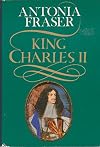
King Charles II
by Antonia Fraser
On This Page
Description
A biography of Charles II, 17th century British king whose reign after Cromwell's death brought about a return to peace and order.Tags
Recommendations










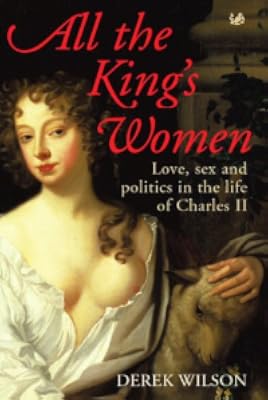
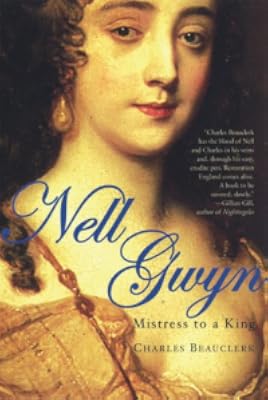

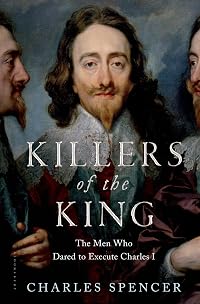
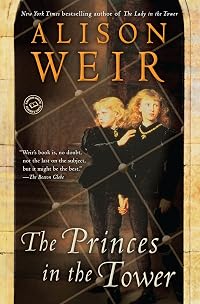
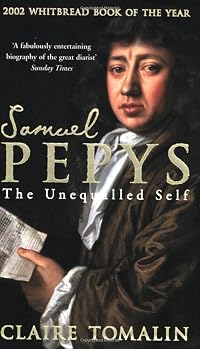
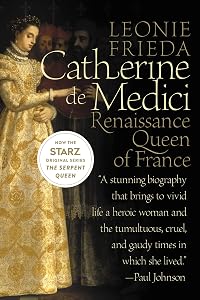




Member Recommendations
Member Reviews
The great danger for a biographer is to become too fond of her subject. I can't help but feel that that happened to Antonia Fraser here.
There is no question but that the future King Charles II had a difficult upbringing -- caught up while still a teenager in the Civil War, with his father executed when he was 18, leaving Charles a king in exile, trying to find a way to survive with no money and no real friends and no obvious prospects, Then, suddenly, restored to the throne as he entered his thirties. A less resilient man would have surely become far more neurotic, likely seeing threats everywhere. Charles, instead, became a courageous, affable, personally tolerant man.
He was also lazy, a determined liar, a cheat, and a man with little show more willingness to plan for the future. And, at a time when Louis XIV of France was threatening to take over Europe, he largely aided and abetted the efforts -- a failing that would leave his successors fighting against Louis for a third of a century.
And there were the mistresses, and the bastards. This is not me getting holier-than-Charles. English kings had had bastard children before -- Henry I was said to have some three dozen illegitimate children, and Edward IV kept a rotating stable of three mistresses. Charles was relatively restrained; he usually had only one woman-on-the-side at a time. But Henry and Edward hadn't raised their mistresses to the upper peerage -- hadn't even done particularly much for their children. Charles made several of his mistresses duchesses, and their children dukes. This represented a big strain on an over-extended treasury, and it didn't really do anyone any good. It also did long-term damage to the House of Lords. Had Charles just given them a few manors and made them gentry, the kids would still have been ahead of the game and England would have had a lot more money for useful projects.
And Charles's treatment of Scotland and Ireland was simply bad, forcing the Duke of Lauderdale on the former and trying to use the latter as a source of money and land when there just wasn't any available. Having spent time in Scotland at the beginning of his exile, he clearly wanted as little as possible to do with it thereafter.
But Charles's worst failing regarded the succession. Charles had no legitimate children, so his heir was his brother, the future James II. Who was Catholic, which was bad enough, but who was also (much, much worse) Ye Standard Stuart -- i.e. very stupid, very bigoted, and very convinced that he was neither and that he had the divine right of kings. James was, predictably, overthrown three years after Charles II died. Charles could have prevented it -- Parliament had repeatedly tried to take up Exclusion, to try to keep James off the throne, and Charles had prorogued or dissolved the parliament, and taken a subsidy from Louis XIV, to prevent Exclusion from happening. Maybe Charles's tricks would have been worth it had James II been a better man -- but, remember, James was overthrown in 1688, and the very Exclusion law that Charles had opposed became a major part of the Glorious Revolution of 1688-1689. The Glorious Revolution was unquestionably good -- a second Magna Carta, in a way. But Charles could have brought much of it about without the bloodshed, if he'd been willing to do the work.
There are good things about him -- e.g. he founded the Royal Society (a fact that Fraser perhaps under-plays -- at least, it seems so to me as someone with scientific training). And his faults don't change the fact that Charles was mostly loved by the people, and came to look even better in hindsight, given that his successors were the tyrant James II, the dour William III, the neurotic Anne, and the lumpish George I. But, remember, Charles could have short-cut around all that agony. And this book never really addresses his failure to do so.
There are other ways in which this book is too prone to accept the common opinion. Take the oldest of Charles's illegitimate sons, who eventually became the Duke of Monmouth. Monmouth opposed Charles's pro-James policies (in other words, was on the right side of history), was pushed into rebellion against James II in 1685, and was defeated and executed. Fraser takes the view that Monmouth was a handsome, shallow, useless tool of others. It is certainly true that he was manipulated into his rebellion. But, prior to that, he had undertaken useful military reforms, and had crushed a Scottish rebellion at Bothwell Bridge with both firmness and leniency. I've read three different studies of Monmouth's life and rebellion, and every one of them finds him to have been a better man than Fraser makes him.
Charles II was a very good man during the first half of his life -- the years of adversity. He lost much of that virtue in his years of prosperity. And Fraser never seems to notice the change. show less
There is no question but that the future King Charles II had a difficult upbringing -- caught up while still a teenager in the Civil War, with his father executed when he was 18, leaving Charles a king in exile, trying to find a way to survive with no money and no real friends and no obvious prospects, Then, suddenly, restored to the throne as he entered his thirties. A less resilient man would have surely become far more neurotic, likely seeing threats everywhere. Charles, instead, became a courageous, affable, personally tolerant man.
He was also lazy, a determined liar, a cheat, and a man with little show more willingness to plan for the future. And, at a time when Louis XIV of France was threatening to take over Europe, he largely aided and abetted the efforts -- a failing that would leave his successors fighting against Louis for a third of a century.
And there were the mistresses, and the bastards. This is not me getting holier-than-Charles. English kings had had bastard children before -- Henry I was said to have some three dozen illegitimate children, and Edward IV kept a rotating stable of three mistresses. Charles was relatively restrained; he usually had only one woman-on-the-side at a time. But Henry and Edward hadn't raised their mistresses to the upper peerage -- hadn't even done particularly much for their children. Charles made several of his mistresses duchesses, and their children dukes. This represented a big strain on an over-extended treasury, and it didn't really do anyone any good. It also did long-term damage to the House of Lords. Had Charles just given them a few manors and made them gentry, the kids would still have been ahead of the game and England would have had a lot more money for useful projects.
And Charles's treatment of Scotland and Ireland was simply bad, forcing the Duke of Lauderdale on the former and trying to use the latter as a source of money and land when there just wasn't any available. Having spent time in Scotland at the beginning of his exile, he clearly wanted as little as possible to do with it thereafter.
But Charles's worst failing regarded the succession. Charles had no legitimate children, so his heir was his brother, the future James II. Who was Catholic, which was bad enough, but who was also (much, much worse) Ye Standard Stuart -- i.e. very stupid, very bigoted, and very convinced that he was neither and that he had the divine right of kings. James was, predictably, overthrown three years after Charles II died. Charles could have prevented it -- Parliament had repeatedly tried to take up Exclusion, to try to keep James off the throne, and Charles had prorogued or dissolved the parliament, and taken a subsidy from Louis XIV, to prevent Exclusion from happening. Maybe Charles's tricks would have been worth it had James II been a better man -- but, remember, James was overthrown in 1688, and the very Exclusion law that Charles had opposed became a major part of the Glorious Revolution of 1688-1689. The Glorious Revolution was unquestionably good -- a second Magna Carta, in a way. But Charles could have brought much of it about without the bloodshed, if he'd been willing to do the work.
There are good things about him -- e.g. he founded the Royal Society (a fact that Fraser perhaps under-plays -- at least, it seems so to me as someone with scientific training). And his faults don't change the fact that Charles was mostly loved by the people, and came to look even better in hindsight, given that his successors were the tyrant James II, the dour William III, the neurotic Anne, and the lumpish George I. But, remember, Charles could have short-cut around all that agony. And this book never really addresses his failure to do so.
There are other ways in which this book is too prone to accept the common opinion. Take the oldest of Charles's illegitimate sons, who eventually became the Duke of Monmouth. Monmouth opposed Charles's pro-James policies (in other words, was on the right side of history), was pushed into rebellion against James II in 1685, and was defeated and executed. Fraser takes the view that Monmouth was a handsome, shallow, useless tool of others. It is certainly true that he was manipulated into his rebellion. But, prior to that, he had undertaken useful military reforms, and had crushed a Scottish rebellion at Bothwell Bridge with both firmness and leniency. I've read three different studies of Monmouth's life and rebellion, and every one of them finds him to have been a better man than Fraser makes him.
Charles II was a very good man during the first half of his life -- the years of adversity. He lost much of that virtue in his years of prosperity. And Fraser never seems to notice the change. show less
If I had to pick out an English monarch to hang out with, I think I would choose Charles II. The medieval kings are – well – too medieval. Henry V is a possibility but I suspect his reputation owes too much to Shakespeare. The Tudors are all a little dicey; Henry VIII and Elizabeth I were both intelligent and talented but you’d have to watch what you said carefully or you’d end up on Tower Hill staring at a big black block. Lady Jane Grey was reputed to be the smartest woman in England but didn’t last long enough to confirm that. The Hanoverians/Battenburgs/Windsors are just too dull, and the rest of the Stuarts too religious. Charles II had grown up in adversity and it gave him an appreciation for how the other half lives; he show more was famously polite to all he met, whether whores or duchesses (often both at once, in his case); had a dry sense of self-deprecating humor; and was highly interested in science (founder of the Royal Society). And, of course, there’s always a chance you might be able to pick up a discarded mistress.
Charles II has been resting below the pavement of the Henry VII chapel at Westminster Abbey for 300+ years now, and therefore can’t comment himself; therefore, Antonia Fraser’s Royal Charles has to speak for him. This is one of Fraser’s excellent, straightforward biographies, just reporting the facts with just enough speculation on motives and psychology to make it interesting.
Charles II had the pampered youth of a royal heir until everything blew up in the English Civil War. His most famous exploit in the conflict consisted of escaping from the rout of the Royalists at Worchester; he was already technically king then, since his father had been executed two years earlier. At various times he hid in an oak tree and a priest hole; pretended to be a common servant, and somehow managed to avoid suspicion despite being a head taller than the average Englishman until he could be smuggled to France. In exile he was impoverished and wandered around the Continent, watched by Parliamentary spies, until his surprising recall by General Monck after Cromwell’s death (at one point there was a semiserious suggestion that he marry one of Cromwell’s daughters, which would have made future English politics interesting). He was surprisingly (for the time) tolerant of his former opponents (although 13 of the men who had signed his father’s death warrant were hanged, drawn and quartered, those who fled to the Continent or the Colonies were generally left alone; I suppose I somebody had beheaded my father I would be equally or more severe). In terms of religion, he pressed for toleration for Catholics and Dissenters but was rebuffed by Parliament.
In foreign policy he allied with France, resulting in a humiliating war with the Netherlands in which the Dutch regained their valuable colony of Surinam while the English were only allowed to keep worthless New York. Charles received a subsidy from France that allowed him to dismiss Parliament (otherwise his source of finances).
A lot of Charles’ fame comes from his bevy of mistresses; at least fifteen, with fourteen illegitimate children (and no legitimate ones). His first, Lucy Walter, was a contributor to the “Exclusion Crisis” that complicated the end of Charles’ reign. With no legitimate children his successor would be his brother James, who was Catholic; there were various claims that Charles had actually married Lucy Walter and thus their son, James, Duke of Monmouth, was legitimate and the Protestant heir to the throne. Charles signed a formal document disavowing this but the 17th- century equivalent of “birthers” kept at it; Monmouth eventually met his end in 1685 after an abortive rebellion against James II (if you’re an old movie fan, the Duke of Monmouth’s Rebellion is the event that starts the Errol Flynn pirate film, Captain Blood; it’s also the driver for the novel Lorna Doone, which spawned some films as well). Charles appears in some recent movies himself, notably Restoration (played by Sam Neill) and Stage Beauty (Rupert Everett). Interestingly enough, although Fraser wasn’t aware of it at the 1979 date of this biography, Princess Diana was descended from two different sons of Charles II – Henry Fitzroy (by Barbara Villiers) and Charles Lennox (by Louise de Kérouaille); thus if Prince William ever takes the throne he’ll be a Stuart descendant.
The biography gives good explanations of various events in Charles’ reign that I’d run across in readings but never understood – the Popish Plot; the Rye House Plot; and the Exclusion Crisis. All of these were concerned ensuring there was a Protestant on the throne of England. It’s a repeated reminder that religion was once vastly more important in politics than it is today; historical novelists often treat their subjects as if they were atheists and it’s disconcerting to see the extent that differences of religion influenced life and death in the past. While I am respectful of all religions sometimes I think we don’t realize how lucky we have it; people who want more religion in politics seem not to realize that there’s no guarantee their beliefs will come out on top.
A well done biography of an interesting if flawed man. Good pictures of the participants, and well referenced and index. show less
Charles II has been resting below the pavement of the Henry VII chapel at Westminster Abbey for 300+ years now, and therefore can’t comment himself; therefore, Antonia Fraser’s Royal Charles has to speak for him. This is one of Fraser’s excellent, straightforward biographies, just reporting the facts with just enough speculation on motives and psychology to make it interesting.
Charles II had the pampered youth of a royal heir until everything blew up in the English Civil War. His most famous exploit in the conflict consisted of escaping from the rout of the Royalists at Worchester; he was already technically king then, since his father had been executed two years earlier. At various times he hid in an oak tree and a priest hole; pretended to be a common servant, and somehow managed to avoid suspicion despite being a head taller than the average Englishman until he could be smuggled to France. In exile he was impoverished and wandered around the Continent, watched by Parliamentary spies, until his surprising recall by General Monck after Cromwell’s death (at one point there was a semiserious suggestion that he marry one of Cromwell’s daughters, which would have made future English politics interesting). He was surprisingly (for the time) tolerant of his former opponents (although 13 of the men who had signed his father’s death warrant were hanged, drawn and quartered, those who fled to the Continent or the Colonies were generally left alone; I suppose I somebody had beheaded my father I would be equally or more severe). In terms of religion, he pressed for toleration for Catholics and Dissenters but was rebuffed by Parliament.
In foreign policy he allied with France, resulting in a humiliating war with the Netherlands in which the Dutch regained their valuable colony of Surinam while the English were only allowed to keep worthless New York. Charles received a subsidy from France that allowed him to dismiss Parliament (otherwise his source of finances).
A lot of Charles’ fame comes from his bevy of mistresses; at least fifteen, with fourteen illegitimate children (and no legitimate ones). His first, Lucy Walter, was a contributor to the “Exclusion Crisis” that complicated the end of Charles’ reign. With no legitimate children his successor would be his brother James, who was Catholic; there were various claims that Charles had actually married Lucy Walter and thus their son, James, Duke of Monmouth, was legitimate and the Protestant heir to the throne. Charles signed a formal document disavowing this but the 17th- century equivalent of “birthers” kept at it; Monmouth eventually met his end in 1685 after an abortive rebellion against James II (if you’re an old movie fan, the Duke of Monmouth’s Rebellion is the event that starts the Errol Flynn pirate film, Captain Blood; it’s also the driver for the novel Lorna Doone, which spawned some films as well). Charles appears in some recent movies himself, notably Restoration (played by Sam Neill) and Stage Beauty (Rupert Everett). Interestingly enough, although Fraser wasn’t aware of it at the 1979 date of this biography, Princess Diana was descended from two different sons of Charles II – Henry Fitzroy (by Barbara Villiers) and Charles Lennox (by Louise de Kérouaille); thus if Prince William ever takes the throne he’ll be a Stuart descendant.
The biography gives good explanations of various events in Charles’ reign that I’d run across in readings but never understood – the Popish Plot; the Rye House Plot; and the Exclusion Crisis. All of these were concerned ensuring there was a Protestant on the throne of England. It’s a repeated reminder that religion was once vastly more important in politics than it is today; historical novelists often treat their subjects as if they were atheists and it’s disconcerting to see the extent that differences of religion influenced life and death in the past. While I am respectful of all religions sometimes I think we don’t realize how lucky we have it; people who want more religion in politics seem not to realize that there’s no guarantee their beliefs will come out on top.
A well done biography of an interesting if flawed man. Good pictures of the participants, and well referenced and index. show less
A colourful, well written and comprehensive biography. However, the author comes across as very pro-Charles and pro-Royalist, sometimes to the point of sycophancy. That said, I understand that she is also quite sympathetic to Cromwell in her biography of him (though not here), so maybe in part at least her attitude reflects a close identification with a subject she must spend a lot of time focusing on, given the length and thoroughness of her works.
Fairly thorough overview of the monarch's life. Certainly a very favourably biography; Fraser rebuffs almost all criticisms of Charles. She also has a funny way of writing about the major events, kind of talking around them more than about them. Perhaps its out of the assumption that we already know what these major events are? Which of course is not going to be the case for all readers and certainly not for me. Still, a pretty informative overview of Charles' life nonetheless.
Comprehensive biography, although maybe not the most exciting writing. It is very 'pro Charles II', and I have read before accounts that are not that one sided. Still, I have to say that author provides very convincing arguments in Charles favor.
"Read" or, rather, "gave up on."
I liked Fraser's "Mary Queen of Scots" and since then have been working thru English royalty in order, by various authors. After reading bio's of James I and Charles I, the next topic was to be Fraser's "Cromwell," but I couldn't get far before abandoning that book -- just too tedious, with way more details then I wanted.
Next in line was Charles II, and I was glad to see Fraser had a bio. Charles II seems like such a colorful character and I was eager to learn about the Restoration. But the writing is so hard to get thru. There are *so* many details. And the text is so tiny that I'm getting eye strain. Can't do this for 469 pages.
I made it to Page 34 with glassy eyes and quit. Will look for other bio's show more of Charles II, and maybe try some documentaries. show less
I liked Fraser's "Mary Queen of Scots" and since then have been working thru English royalty in order, by various authors. After reading bio's of James I and Charles I, the next topic was to be Fraser's "Cromwell," but I couldn't get far before abandoning that book -- just too tedious, with way more details then I wanted.
Next in line was Charles II, and I was glad to see Fraser had a bio. Charles II seems like such a colorful character and I was eager to learn about the Restoration. But the writing is so hard to get thru. There are *so* many details. And the text is so tiny that I'm getting eye strain. Can't do this for 469 pages.
I made it to Page 34 with glassy eyes and quit. Will look for other bio's show more of Charles II, and maybe try some documentaries. show less
Charles II was born while his father was still king of England, but before he was fully grown England had revolted. First Charles I was dethroned, and then he was beheaded. Charles II spent his youth in exile, often narrowly escaping capture, always indebted to others. The constant danger and espionage turned him from a hot-headed prince into a tightly controlled man.
review tbc
review tbc
Members
- Recently Added By
Lists

Books bought at library sales
98 works; 4 members

In Our Time books
4,934 works; 2 members
Author Information

83+ Works 22,603 Members
Antonia Fraser is the author of numerous internationally bestselling biographies, including "The Six Wives of Henry VIII" and "Cromwell: Our Chief of Men". (Publisher Provided)
Awards and Honors
Distinctions
Work Relationships
Is contained in
Common Knowledge
- Canonical title
- King Charles II
- Alternate titles
- Royal Charles: Charles II and the Restoration; Charles II: His Life and Times
- Original publication date
- 1979
- People/Characters
- Charles II, King of England, Scotland, and Ireland; Catherine of Braganza; Oliver Cromwell; Richard Cromwell; Nell Gwynne; Louise de Kerouaille, duchess of Portsmouth (show all 13); James II and VII, King of England, Ireland, and Scotland; Barbara Palmer, duchess of Cleveland; Samuel Pepys; James Scott, 1st Duke of Monmouth and 1st Duke of Buccleuch; John Wilmot, 2nd Earl of Rochester; Frances Stuart, Duchess of Richmond and Lennox; Anna Maria Talbot, Countess of Shrewsbury
- Important places
- London, England, UK
- Important events
- Great Fire of London (1666); English Civil War; Restoration of the Monarchy
- Dedication
- For my mother and Harold
the first readers
with love - First words
- When in the summer of 1630 a healthy son was born to the King and Queen of England, it seemed their happiness was complete.
- Last words
- (Click to show. Warning: May contain spoilers.)Let his royal ashes lie soft upon King Charles II.
Classifications
- Genres
- History, Nonfiction, Biography & Memoir, General Nonfiction
- DDC/MDS
- 941.06 — History & geography History of Europe British Isles Historical periods of British Isles 1603-1714, House of Stuart and Commonwealth periods
- LCC
- DA445 .F68 — History of Europe, Asia, Africa and Oceania Great Britain History of Great Britain England History By period Modern, 1485- Later Stuarts
- BISAC
Statistics
- Members
- 879
- Popularity
- 30,887
- Reviews
- 9
- Rating
- (3.98)
- Languages
- English
- Media
- Paper, Ebook
- ISBNs
- 13
- ASINs
- 13