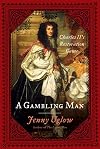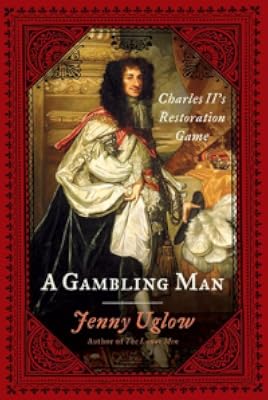
A Gambling Man: Charles II's Restoration Game
by Jenny Uglow
On This Page
Description
The Restoration was a decade of experimentation: from the founding of the Royal Society for investigating the sciences to the startling role of credit and risk; from the shocking licentiousness of the court to failed attempts at religious tolerance. Negotiating all these, Charles II, the slippery sovereign, laid odds and took chances, dissembling and manipulating his followers. The theaters may have been restored, but the king himself was the supreme actor. Yet while his grandeur, his court, show more and his colorful sex life were on display, his true intentions lay hidden.Charles II was thirty when he crossed the English Channel in fine May weather in 1660. His Restoration was greeted with maypoles and bonfires, as spring after the long years of Cromwells rule. But there was no way to turn back, no way he could restore the old dispensation. Certainty had vanished. The divinity of kingship had ended with his fathers beheading. Honor was now a word tossed around in duels. Providence could no longer be trusted. As the country was rocked by plague, fire, and war, people searched for new ideas by which to live. And exactly ten years after he arrived, Charles would again stand on the shore at Dover, this time placing the greatest bet of his life in a secret deal with his cousin, Louis XIV of France.Jenny Uglows previous biographies have won the James Tait Black Memorial Prize and International PENs Hessell-Tiltman Prize for History. A Gambling Man is Uglow at her best: both a vivid portrait of Charles II that explores his elusive nature and a spirited evocation of a vibrant, violent, pulsing world on the brink of modernity. show lessTags
Recommendations













Member Recommendations

Member Reviews
Charles II is, in many ways, both too easy and too difficult a subject for a biography. He is one of those great defining characters of the British monarchy - like Henry VIII, Elizabeth I and Victoria - whose reigns stand out in our collective memory for one or two well-known events, and about whom most people think they know plenty.
So Jenny Uglow takes a different approach in ‘A Gambling Man’. The book is indeed a biography of the Merry Monarch, but it focuses on the crucial first ten years of his reign, and on Charles’s many gambles to stabilise his three kingdoms during this period.
Her task is helped by the events of the period – restoration, war, plague, fire and constant sexual intrigue – which in themselves make for a show more rollicking good read. It is further illuminated by Pepys, whose voice, through his diary, offers us a ringside seat. (It’s astonishing how much he managed to witness first hand).
Given these ingredients, the greatest risk is that the author will over-simplify for the sake of populism. The greatest strength of ‘A Gambling Man’ is that Mrs. Uglow does not do this. She presents the politics, society, religion and intellectual life of 1660s England as a rich tapestry - complex, often paradoxical, sometimes frayed at the edges. And she is a meticulous chronicler of that complexity, whether it is the political manoeuvring of the King’s ministers or mistresses; the fine balancing act that Charles was forced to play between Royalists and former Cromwellian sympathisers; or above all the religious factionalism that threatened to destabilise the Kingdom from the moment Charles landed at Dover.
This last, so crucial to an understanding of the period, yet so often over-simplified or marginalized by historians (perhaps the worst example being Edward Dolnick’s ‘The Clockwork Universe’), is handled with particular thoroughness and insight. Freedom of religion was, of course, one of the first things offered by Charles on his return to power in 1660; his Declaration of Breda promised ‘liberty to tender consciences’. It was Parliament, and not the King, who forced religious conformity on the nation, outlawing both Catholics and nonconformist Protestants from worshipping in public and from holding public office. The effects would be felt for another 150 years or more; some would argue they are still in evidence today.
Also very much in evidence today, not just in Britain but throughout western democracy, is another and more profound legacy of Charles’s reign. Uglow reveals the very foundation of the relationship between government, parliament and private enterprise. (She even traces the origins of the two-party system, which crystallised in the later part of Charles’s reign.)
Government in the seventeenth century was still in the King’s personal control, but this King had been invited to rule by Parliament – by the common consent of the governed – and Parliament was his paymaster. The idea of monarchical rule by the explicit consent of the governed would, of course, be dramatically underscored by the events of 1688 - the enforced abdication of James II, the accession of William and Mary, the Glorious Revolution. It’s hereditary monarchy, Jim, but not as we know it – or not as we’d known it up to that point.
We see too the birth of commerce as a political force. The wars with the Dutch and the French were not fundamentally about political or dynastic control, nor about religion and ideology, but about control over trade routes. The City and her merchants, the generators of the nation’s wealth and prosperity, emerge as a political force in their own right.
(Niall Ferguson, in his recent book ‘Civilisation – The West and the Rest’, identifies private property rights as one of the six ‘killer apps’ which have allowed the West to dominate global civilisation for the last 500 years. 1660s London was that ‘killer app’ in action; the City would dominate world trade for the best part of the next three centuries.)
The book is structured broadly chronologically, but with a sensible thematic sub-structure. Thus politics, economics, foreign affairs, society and scientific innovation are depicted as separate, parallel strands of the tapestry, making for a whole that is coherent and digestible. Wisely, Uglow does not over-reach: it is a biography of Charles II, not a study of 1660s society. Equally wisely, she focuses on England, although she regularly refers to domestic events in Charles’s other kingdoms of Scotland and Ireland.
This is serious history, full of names and events and facts, but it is by no means po-faced. We get to have a lot of fun. The intrigues of Charles’s various mistresses make today’s headline-chasing celebrities look like unimaginative amateurs. It is amusing, too, to discover that the property speculator Nicholas Barbon, who rebuilt areas of London after the Great Fire, was in fact christened If-Jesus-Had-Not-Died-For-Thee-Thou-Had’st-Been-Damned Barebones. (His father, the preacher Praise-God Barebones, had a walk-on part in Neal Stephenson’s novel ‘Quicksilver’.)
But towering above all the ministers and mistresses and merchants, above the scientists and the architects and the playwrights and poets, his loyal subjects and strident critics, is the character of Charles himself – the dazzling monarch with the popular touch, the man who gambled everything to hold his nation together at this time of tumult. show less
So Jenny Uglow takes a different approach in ‘A Gambling Man’. The book is indeed a biography of the Merry Monarch, but it focuses on the crucial first ten years of his reign, and on Charles’s many gambles to stabilise his three kingdoms during this period.
Her task is helped by the events of the period – restoration, war, plague, fire and constant sexual intrigue – which in themselves make for a show more rollicking good read. It is further illuminated by Pepys, whose voice, through his diary, offers us a ringside seat. (It’s astonishing how much he managed to witness first hand).
Given these ingredients, the greatest risk is that the author will over-simplify for the sake of populism. The greatest strength of ‘A Gambling Man’ is that Mrs. Uglow does not do this. She presents the politics, society, religion and intellectual life of 1660s England as a rich tapestry - complex, often paradoxical, sometimes frayed at the edges. And she is a meticulous chronicler of that complexity, whether it is the political manoeuvring of the King’s ministers or mistresses; the fine balancing act that Charles was forced to play between Royalists and former Cromwellian sympathisers; or above all the religious factionalism that threatened to destabilise the Kingdom from the moment Charles landed at Dover.
This last, so crucial to an understanding of the period, yet so often over-simplified or marginalized by historians (perhaps the worst example being Edward Dolnick’s ‘The Clockwork Universe’), is handled with particular thoroughness and insight. Freedom of religion was, of course, one of the first things offered by Charles on his return to power in 1660; his Declaration of Breda promised ‘liberty to tender consciences’. It was Parliament, and not the King, who forced religious conformity on the nation, outlawing both Catholics and nonconformist Protestants from worshipping in public and from holding public office. The effects would be felt for another 150 years or more; some would argue they are still in evidence today.
Also very much in evidence today, not just in Britain but throughout western democracy, is another and more profound legacy of Charles’s reign. Uglow reveals the very foundation of the relationship between government, parliament and private enterprise. (She even traces the origins of the two-party system, which crystallised in the later part of Charles’s reign.)
Government in the seventeenth century was still in the King’s personal control, but this King had been invited to rule by Parliament – by the common consent of the governed – and Parliament was his paymaster. The idea of monarchical rule by the explicit consent of the governed would, of course, be dramatically underscored by the events of 1688 - the enforced abdication of James II, the accession of William and Mary, the Glorious Revolution. It’s hereditary monarchy, Jim, but not as we know it – or not as we’d known it up to that point.
We see too the birth of commerce as a political force. The wars with the Dutch and the French were not fundamentally about political or dynastic control, nor about religion and ideology, but about control over trade routes. The City and her merchants, the generators of the nation’s wealth and prosperity, emerge as a political force in their own right.
(Niall Ferguson, in his recent book ‘Civilisation – The West and the Rest’, identifies private property rights as one of the six ‘killer apps’ which have allowed the West to dominate global civilisation for the last 500 years. 1660s London was that ‘killer app’ in action; the City would dominate world trade for the best part of the next three centuries.)
The book is structured broadly chronologically, but with a sensible thematic sub-structure. Thus politics, economics, foreign affairs, society and scientific innovation are depicted as separate, parallel strands of the tapestry, making for a whole that is coherent and digestible. Wisely, Uglow does not over-reach: it is a biography of Charles II, not a study of 1660s society. Equally wisely, she focuses on England, although she regularly refers to domestic events in Charles’s other kingdoms of Scotland and Ireland.
This is serious history, full of names and events and facts, but it is by no means po-faced. We get to have a lot of fun. The intrigues of Charles’s various mistresses make today’s headline-chasing celebrities look like unimaginative amateurs. It is amusing, too, to discover that the property speculator Nicholas Barbon, who rebuilt areas of London after the Great Fire, was in fact christened If-Jesus-Had-Not-Died-For-Thee-Thou-Had’st-Been-Damned Barebones. (His father, the preacher Praise-God Barebones, had a walk-on part in Neal Stephenson’s novel ‘Quicksilver’.)
But towering above all the ministers and mistresses and merchants, above the scientists and the architects and the playwrights and poets, his loyal subjects and strident critics, is the character of Charles himself – the dazzling monarch with the popular touch, the man who gambled everything to hold his nation together at this time of tumult. show less
enny Uglow has produced an absorbing flowing narrative that covers the first decade of Charles II's reign following the Restoration. The book is themed around a card game and cleverly reflects both Charles' own love of gambling and the chances he took in re-establishing the monarchy and entrenching his own personal power. This theme also reflects the many chances Charles took with his own personal standing, both with the populace and with parliament, as he engaged in many affairs, including fathering several bastard children.
Uglow has used many contemporary documents and writings to reveal the historical narrative and to expose the character of the king. As a man Charles comes across as very likeable. Of course he had to make show more difficult choices at times and he was clearly no saint, but his honest desire top be a 'good' king and to cement the monarchy back into the foundations of English culture shine through and allow us to, perhaps, forgive his misdemeanors and mistakes. His personal bravery in helping to tackle the Great Fire in 1666 was new to me.
This is an engaging and engaged history focusing on a time of great risk for the monarchy that urges the reader to try just one more chapter before bed. show less
Uglow has used many contemporary documents and writings to reveal the historical narrative and to expose the character of the king. As a man Charles comes across as very likeable. Of course he had to make show more difficult choices at times and he was clearly no saint, but his honest desire top be a 'good' king and to cement the monarchy back into the foundations of English culture shine through and allow us to, perhaps, forgive his misdemeanors and mistakes. His personal bravery in helping to tackle the Great Fire in 1666 was new to me.
This is an engaging and engaged history focusing on a time of great risk for the monarchy that urges the reader to try just one more chapter before bed. show less
Jenny Uglow's A Gambling Man: Charles II's Restoration Game (Farrar, Straus and Giroux, 2009) is a fast-paced, expertly-crafted biography of Charles II during the first ten years of his reign (1660-1670), with brief telescopic looks at the periods before and after that decade. With the same writerly touch she brought to the life of Thomas Bewick in her last major biography, Uglow delves deeply into the gambles of the king during the early years of the Restoration.
Capturing the scale of the difficulties Charles faced when he returned to England in 1670 to mount the throne is a task and a half, but Uglow does so with ease, deftly explaining the delicate balance beam the new king was forced to walk as he sought to bring stability back to show more his kingdom. Religion, finance, military power, government power structure and responsibilities: all these and more had to be negotiated, discussed, ironed out. And then there were the advisors, and the women, and the relatives, all to be dealt with.
But this is much more than a biography of Charles II's first decade on the throne. As in her other works, Uglow pulls in the atmosphere of the time - significant space is devoted here to the founding and early years of the Royal Society, the Great Fire and rebuilding of London, the theater scene, the plague, &c. And the politics, oh the politics! An in-depth but well-explained primer on the machinations of Charles' court, too.
A fine read. Highly recommended.
http://philobiblos.blogspot.com/2010/01/book-review-gambling-man.html show less
Capturing the scale of the difficulties Charles faced when he returned to England in 1670 to mount the throne is a task and a half, but Uglow does so with ease, deftly explaining the delicate balance beam the new king was forced to walk as he sought to bring stability back to show more his kingdom. Religion, finance, military power, government power structure and responsibilities: all these and more had to be negotiated, discussed, ironed out. And then there were the advisors, and the women, and the relatives, all to be dealt with.
But this is much more than a biography of Charles II's first decade on the throne. As in her other works, Uglow pulls in the atmosphere of the time - significant space is devoted here to the founding and early years of the Royal Society, the Great Fire and rebuilding of London, the theater scene, the plague, &c. And the politics, oh the politics! An in-depth but well-explained primer on the machinations of Charles' court, too.
A fine read. Highly recommended.
http://philobiblos.blogspot.com/2010/01/book-review-gambling-man.html show less
An excellent chronological history of Charles II reign from 1660 to 1670 following his return to England/Britain and the restoration of the monarchy.
Having recently read Peter Ackroyd's wonderfully readable narrative history of England in the seventeenth century, which dealt with the Stuarts and Cromwell, and which provides an overview of the period, I subsequently read Adrian Tinniswood's detailed history of the Great Fire of London.
A Gambling Man provided me with a greater understanding of the approach that Charles took to ruling the country, which was very pragmatic, contrasting with the apparent single-mindedness of his father and Oliver Cromwell.
Although clearly very charismatic in person, Charles does not come across as a show more good man; he is complicated.
He is a pleasure seeker, with numerous mistresses and a passion for gambling. But he treats his mistresses, even when they are ex-mistresses, and his illegitimate children well.
Charles provided royal patronage and showed interest (in the early days) in the Royal Society (a forum for scientists). Following the Fire of London, when he comes across as extremely hard working and able, he promotes the rebuilding of London. But it appears that his attention was not held for long once the novelty wears off, so he moved on.
I found the insights into why the English went to war with the Dutch very interesting, as well as the political maneuvering, both foreign and domestic, as I knew next to nothing about this before I read this book.
For me, Jenny Uglow persuasively explains how and why Charles continually modified his rule.
At the same time Uglow provides details of contemporary society and Charles' interaction with it, especially his many mistresses, court life and the theatre, which became both a social and political forum.
This is a very rich and readable history, although at times it provided a little too little analysis for me. show less
Having recently read Peter Ackroyd's wonderfully readable narrative history of England in the seventeenth century, which dealt with the Stuarts and Cromwell, and which provides an overview of the period, I subsequently read Adrian Tinniswood's detailed history of the Great Fire of London.
A Gambling Man provided me with a greater understanding of the approach that Charles took to ruling the country, which was very pragmatic, contrasting with the apparent single-mindedness of his father and Oliver Cromwell.
Although clearly very charismatic in person, Charles does not come across as a show more good man; he is complicated.
He is a pleasure seeker, with numerous mistresses and a passion for gambling. But he treats his mistresses, even when they are ex-mistresses, and his illegitimate children well.
Charles provided royal patronage and showed interest (in the early days) in the Royal Society (a forum for scientists). Following the Fire of London, when he comes across as extremely hard working and able, he promotes the rebuilding of London. But it appears that his attention was not held for long once the novelty wears off, so he moved on.
I found the insights into why the English went to war with the Dutch very interesting, as well as the political maneuvering, both foreign and domestic, as I knew next to nothing about this before I read this book.
For me, Jenny Uglow persuasively explains how and why Charles continually modified his rule.
At the same time Uglow provides details of contemporary society and Charles' interaction with it, especially his many mistresses, court life and the theatre, which became both a social and political forum.
This is a very rich and readable history, although at times it provided a little too little analysis for me. show less
Wandered off and won't be back for now. I skipped through about the first third of this. The start was rocky because I don't remember much about the Charles I era and the names and places and events were flying at me. The author clearly thinks she has a handle on Charles II's personality. Some of that came through and it was very interesting contemplating the Restoration which was less bloody than you might expect. The new king's early morning tennis playing was new to me. I may need a more stripped down book examining one aspect of the period. English historians of this time are so spoiled for choice with the letter writing.
This book covers mainly ten years of Charles II, from 1660 when he was restored to the throne, to 1670 when a secret treaty with Louis XIV was signed. I am no expert in this history at all, so I can't really judge how balanced, accurate, etc. the book might be. There are lots of names and all kinds of plots and intrigues. Uglow does a good job of helping the poor reader keep track, but still it is a bit overwhelming. Anyway it is a great kind of bath in the royal court affairs of the time.
I'm not sure there was a real organizing theme to the book. Why did Uglow write it? She says late in the book that Charles was the first king of the coming Age of Reason, while Louis was the last king of ... hmmm, I can't find that sentence, but maybe show more the last absolute monarch.
Myself, I am interested in early modern history because it's really the birth of our present age, international corporations and materialism and consumerism etc. How did we get here? This book didn't really address that perspective, but it certainly fleshed out a key piece of the story. show less
I'm not sure there was a real organizing theme to the book. Why did Uglow write it? She says late in the book that Charles was the first king of the coming Age of Reason, while Louis was the last king of ... hmmm, I can't find that sentence, but maybe show more the last absolute monarch.
Myself, I am interested in early modern history because it's really the birth of our present age, international corporations and materialism and consumerism etc. How did we get here? This book didn't really address that perspective, but it certainly fleshed out a key piece of the story. show less
An up-close look at all elements of Charles's first 10 years on the throne, from the political to the (very) personal.
I enjoyed the use of lines from Restoration poetry and plays, and illustrations from contemporary playing cards, all used to re-create the largely overlooked time period.
But, Uglow's writing was often difficult to follow in this book. Especially with the frequent name changes, it was tough to remember who was who, and Uglow didn't provide many hints to jog the reader's memory. For example, it can be tough to remember exactly which Duke Monmouth is when we haven't heard about him for 10 chapters. A small reminder that he was the king's son would have cleared up quite a bit of confusion for me.
I enjoyed the use of lines from Restoration poetry and plays, and illustrations from contemporary playing cards, all used to re-create the largely overlooked time period.
But, Uglow's writing was often difficult to follow in this book. Especially with the frequent name changes, it was tough to remember who was who, and Uglow didn't provide many hints to jog the reader's memory. For example, it can be tough to remember exactly which Duke Monmouth is when we haven't heard about him for 10 chapters. A small reminder that he was the king's son would have cleared up quite a bit of confusion for me.
Members
- Recently Added By
Published Reviews
ThingScore 88
While her literary talents are everywhere evident in her exuberant prose, with “A Gambling Man” Jenny Uglow proves she is as much historian as biographer. She writes here in the grand tradition of historical pageant, albeit with a 21st-century canniness, and as an heir of much-admired popularizers like Barbara Tuchman and Antonia Fraser — whose own 1979 volume, “Royal Charles,” still show more stands up, companionably, to Uglow’s thoroughly engaging Restoration drama. show less
added by bongiovi
Uglow concentrates on the modes of Charles's performance, his virtuoso way of being everything to everyone.
added by Shortride
Uglow concentrates on the crucial first 10 years of Charles' reign, portraying the king as judicious and well-intended, playing a canny game against a tightfisted Parliament and the repressive religious orthodoxy of the time.
added by private library
Lists

Club Read's Recommended Nonfiction Written by Women
618 works; 30 members

In Our Time books
4,934 works; 2 members
Author Information

26+ Works 3,397 Members
Jenny Uglow is an editor at Chatto & Windus and lives in Canterbury, England
Awards and Honors
Common Knowledge
- Original publication date
- 2009
- People/Characters
- Charles II, King of England, Scotland, and Ireland; Barbara Palmer, duchess of Cleveland; Isabelle Angelique de Montmorency, duchesse de Châtillon; Catherine of Braganza; Louis XIV, 1638-1715
- Epigraph
- A king in a Commonwealth is like a heart in a body, the root in the tree...the sun in the firmament. Thomas Reeve, 'England's beauty in seeing King Charles restored', 1661.
A pox on all kings! An old woman, watching Charles's entry into London, 1660.
It is in the Lawes of a Commonwealth, as in the Lawes of Gameing; whatsoever the Gamesters all agree on, is injustice to none of them.' Thomas Hobbes, 'Leviathan', 1651. - First words
- Charles II was a gambling man.
- Blurbers
- Seymour, Miranda; Holroyd, Michael; Spalding, Frances; MacCarthy, Fiona
Classifications
- Genres
- History, Nonfiction, Biography & Memoir, General Nonfiction
- DDC/MDS
- 941.066092 — History & geography History of Europe British Isles Historical periods of British Isles 1603-1714, House of Stuart and Commonwealth periods 1660-1685, Reign of Charles II, Restoration History, geographic treatment, biography Biography
- LCC
- DA445 .U45 — History of Europe, Asia, Africa and Oceania Great Britain History of Great Britain England History By period Modern, 1485- Later Stuarts
- BISAC
Statistics
- Members
- 312
- Popularity
- 102,627
- Reviews
- 15
- Rating
- (3.90)
- Languages
- English
- Media
- Paper, Ebook
- ISBNs
- 5
- ASINs
- 5