On This Page
Description
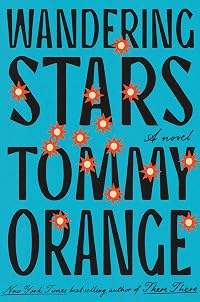
"Wandering Stars traces the legacies of the Sand Creek Massacre of 1864 and the Carlisle Industrial School for Indians through to the shattering aftermath of Orvil Redfeather's shooting in There There"--Tags
Recommendations
















Member Reviews
Wandering Stars, Tommy Orange, author; Shaun Taylor-Corbett, MacLeod Andrews, Alma Cuervo, Curtis Michael Holland, Calivn Joyal, Phil Ava, Emmanuel Chumaceiro, Christian Young, Charley Flyte, narrators
The gift of this author is his ability to make the reader think, regardless of whether or not you agree with his political views. Although sometimes it is hard to follow the threads, they are knitted together and clearer in the end.
In 1864, when the Indians were brutally murdered in the Sand Creek Massacre in Colorado, life changed for Jude Star. He was a wandering star, broken off from his universe and condemned to search for and adjust to his new home. Alone, he is sent to a prison where he is forced to learn about Christianity and show more encouraged to give up his Indian ways which are believed to be savage, although in his previous life, the entire boundary-free frontier had been available to him to explore and enjoy. It was a peaceful and happy life as they traveled according to need and lived in harmony, according to their customs. After the massacre in Colorado, generations followed that were unable to achieve success and contentment, and instead, they descended into lives of crime, addiction and failure. Can this trend be stopped? Can the trajectory for these Indians turn in a positive direction?
This book explored the generations of a family that survived the brutality our country is guilty of, regarding the population of Indians that were here long before we were. It is a book that highlights the horrible consequences of the heinous behavior of one human being toward another, sometimes using false excuses and accusations to justify their actions.
The frustration and rage that hopelessness and powerlessness cause is universal and not only in the Indian population. Anyone who feels they have no options can become self-destructive. Until the injustice can be reversed, it will continue, but perhaps, we will begin to go in the right direction. The one codicil is that we should not over correct and throw the baby out with the bath water.
Addiction, crime, homelessness, hunger, poverty and even suicide, are evidence of the abuse of an entire population of Indians that once flourished in America. As we took over the land and forced them to move to smaller and smaller areas of habitation, their means of survival and their economy changed. We killed the innocent buffalo to try to eliminate them. We used our knowledge and skills to defeat an innocent population that did not deserve the treatment they received. This is not to say that they never warred amongst themselves, for they did. There were tribal wars, but the playing field was more equal before we arrived. They roamed more freely and enjoyed a simpler way of life. Our advanced society did not advance their lives, but rather shortened them. We brought disease, imprisonment, captivity, hunger, drugs and alcohol to an innocent population unable to handle our lifestyle because of a population unwilling to absorb them.
We witness the devastation caused by the misuse of authority and power everywhere today. Racism and antisemitism are resurging because of divisive politics and rhetoric. Each side blames the other, but the one in control is guiltier, since they make the policies and enforce them. Unless we wake up and face reality, and not the political picture we are forced to envision, even in this book, we are not going to survive as a free country that is the envy of the world. show less
The gift of this author is his ability to make the reader think, regardless of whether or not you agree with his political views. Although sometimes it is hard to follow the threads, they are knitted together and clearer in the end.
In 1864, when the Indians were brutally murdered in the Sand Creek Massacre in Colorado, life changed for Jude Star. He was a wandering star, broken off from his universe and condemned to search for and adjust to his new home. Alone, he is sent to a prison where he is forced to learn about Christianity and show more encouraged to give up his Indian ways which are believed to be savage, although in his previous life, the entire boundary-free frontier had been available to him to explore and enjoy. It was a peaceful and happy life as they traveled according to need and lived in harmony, according to their customs. After the massacre in Colorado, generations followed that were unable to achieve success and contentment, and instead, they descended into lives of crime, addiction and failure. Can this trend be stopped? Can the trajectory for these Indians turn in a positive direction?
This book explored the generations of a family that survived the brutality our country is guilty of, regarding the population of Indians that were here long before we were. It is a book that highlights the horrible consequences of the heinous behavior of one human being toward another, sometimes using false excuses and accusations to justify their actions.
The frustration and rage that hopelessness and powerlessness cause is universal and not only in the Indian population. Anyone who feels they have no options can become self-destructive. Until the injustice can be reversed, it will continue, but perhaps, we will begin to go in the right direction. The one codicil is that we should not over correct and throw the baby out with the bath water.
Addiction, crime, homelessness, hunger, poverty and even suicide, are evidence of the abuse of an entire population of Indians that once flourished in America. As we took over the land and forced them to move to smaller and smaller areas of habitation, their means of survival and their economy changed. We killed the innocent buffalo to try to eliminate them. We used our knowledge and skills to defeat an innocent population that did not deserve the treatment they received. This is not to say that they never warred amongst themselves, for they did. There were tribal wars, but the playing field was more equal before we arrived. They roamed more freely and enjoyed a simpler way of life. Our advanced society did not advance their lives, but rather shortened them. We brought disease, imprisonment, captivity, hunger, drugs and alcohol to an innocent population unable to handle our lifestyle because of a population unwilling to absorb them.
We witness the devastation caused by the misuse of authority and power everywhere today. Racism and antisemitism are resurging because of divisive politics and rhetoric. Each side blames the other, but the one in control is guiltier, since they make the policies and enforce them. Unless we wake up and face reality, and not the political picture we are forced to envision, even in this book, we are not going to survive as a free country that is the envy of the world. show less
A generational story that connects to Orange's previous novel, There, There, but stands alone. Starting with Bird, who witnesses the Sand Creek Massacre in 1924 and escapes and is renamed Jude Star, we follow characters swiftly down the generations and see how quickly, effectively, and violently white people - including Richard Henry Pratt, of Carlisle - attempt to erase and eradicate Native American tribes, culture, and individuals, and assimilate those they don't kill. Yet Star and his descendants survive massacre, prison, boarding schools, childbirth, transracial adoption, alcoholism, addiction, a powwow shooting (from There, There) and its aftermath, and still strive to stay connected to each other and learn more about their show more Cheyenne tribe.
Quotes
Sometimes it seemed like the world had ended, and we were waiting for the next one to come. (Jude Star, 11)
Hunger seemed to be keeping us alive while also threatening to kill us. (11)
...I'd taken an idea about second wind for myself. That if you could last through what seemed hardest, you got more, and that there lived somewhere in the body the ability to keep going even though it felt like you no longer could... (27)
Stories do more than comfort. They take you away and bring you back better made. (35)
It is the end of a world out there. (on the train to boarding school, 54)
He was once a child, an Indian child in Indian country, then his people put him on a train to the school, then the school took him further past himself and left him somewhere he couldn't find his way back from. (Charles Star, 71)
...white men in this country, they come to take everything, even themselves, they have taken so much they have lost themselves in the taking, and what will be left of such a nation once they are done? (Opal Viola, 83)
[what does it mean] to live on the land that was taken from you, to have to still live on the land that was taken and keeps being taken. Did it feel like it kept happening in present time, not in the past but perpetually...? (Victoria Bear Shield, 102)
Know that it was always true that you were the only one seeing the world the way you were seeing the world. (Victoria Bear Shield, 113)
"The next part is the part where we live like we've been given a second chance, and not like something's already been taken away from us." (Opal to Orvil, 171)
I hadn't considered everything that had happened. How far back it had been happening to us....But surviving wasn't enough....Simply lasting was great for a wall, for a fortress, but not for a person.
And yes it would be nice if the rest of the country understood that not all of us have our culture or language intact directly because of what happened to our people, how we were systematically wiped out from the outside in and then the inside out, and consistently dehumanized and misrepresented in the media and in educational institutions, but we needed to understand it for ourselves. The extent we made it through. (Opal, 2447-248)
I tend to intellectualize in order to compartmentalize a feeling....Intellectualizing as a way to cope and control trauma-response. (Sean Price, 279)
I'm being asked to understand that with some people you love, they just won't end up being a part of your life. I'm being asked a question that it seems I can answer only by living. (282)
Maybe that's what we're all doing here. Alive long enough to get that when we die it's home we're going back to, and that we came here to know that when we die it isn't an end but a return. (Lony, 315) show less
Quotes
Sometimes it seemed like the world had ended, and we were waiting for the next one to come. (Jude Star, 11)
Hunger seemed to be keeping us alive while also threatening to kill us. (11)
...I'd taken an idea about second wind for myself. That if you could last through what seemed hardest, you got more, and that there lived somewhere in the body the ability to keep going even though it felt like you no longer could... (27)
Stories do more than comfort. They take you away and bring you back better made. (35)
It is the end of a world out there. (on the train to boarding school, 54)
He was once a child, an Indian child in Indian country, then his people put him on a train to the school, then the school took him further past himself and left him somewhere he couldn't find his way back from. (Charles Star, 71)
...white men in this country, they come to take everything, even themselves, they have taken so much they have lost themselves in the taking, and what will be left of such a nation once they are done? (Opal Viola, 83)
[what does it mean] to live on the land that was taken from you, to have to still live on the land that was taken and keeps being taken. Did it feel like it kept happening in present time, not in the past but perpetually...? (Victoria Bear Shield, 102)
Know that it was always true that you were the only one seeing the world the way you were seeing the world. (Victoria Bear Shield, 113)
"The next part is the part where we live like we've been given a second chance, and not like something's already been taken away from us." (Opal to Orvil, 171)
I hadn't considered everything that had happened. How far back it had been happening to us....But surviving wasn't enough....Simply lasting was great for a wall, for a fortress, but not for a person.
And yes it would be nice if the rest of the country understood that not all of us have our culture or language intact directly because of what happened to our people, how we were systematically wiped out from the outside in and then the inside out, and consistently dehumanized and misrepresented in the media and in educational institutions, but we needed to understand it for ourselves. The extent we made it through. (Opal, 2447-248)
I tend to intellectualize in order to compartmentalize a feeling....Intellectualizing as a way to cope and control trauma-response. (Sean Price, 279)
I'm being asked to understand that with some people you love, they just won't end up being a part of your life. I'm being asked a question that it seems I can answer only by living. (282)
Maybe that's what we're all doing here. Alive long enough to get that when we die it's home we're going back to, and that we came here to know that when we die it isn't an end but a return. (Lony, 315) show less
This is Tommy Orange's sequel to his debut novel, There There, about Native Americans living in Oakland, California. Orange first takes the story back in time, into the lives of the grandparents, great-grandparents, and further back, all the way to the Sand Creek Massacre, and then forward through the years of incarceration, exile and loss, to the years of struggling to make new lives without the foundations of the old in Oklahoma and on to California. Then the novel moves forward, to after the events of There There, following Orvil, Opal, Jackie and others as they deal with what happens after.
Orange's second novel is more assured but no less pointed than his first. Providing the background makes what follows more understandable and show more harder to deal with. It also focuses on the aftermath of a shooting, the part that isn't newsworthy, the painful recovery into a new normal with the trauma of the event left for the survivors to come to terms with, or not, with the help of weekly therapy sessions, or not. And when a family is already struggling in other ways, someone who is quiet about their pain and the ways they find to address it can go a long time without being noticed. By tying this second novel so tightly to his first, Orange has written something that will be treasured by those who read There There, but inaccessible to those who didn't. Go read There There, then come back for this one. You will not be disappointed. show less
Orange's second novel is more assured but no less pointed than his first. Providing the background makes what follows more understandable and show more harder to deal with. It also focuses on the aftermath of a shooting, the part that isn't newsworthy, the painful recovery into a new normal with the trauma of the event left for the survivors to come to terms with, or not, with the help of weekly therapy sessions, or not. And when a family is already struggling in other ways, someone who is quiet about their pain and the ways they find to address it can go a long time without being noticed. By tying this second novel so tightly to his first, Orange has written something that will be treasured by those who read There There, but inaccessible to those who didn't. Go read There There, then come back for this one. You will not be disappointed. show less
I thought There There was one of the best novels I’ve read in years and was exited to here this was both a prequel and a companion piece to the event of his first book. That book ended tragically with one of the characters getting shot while dancing at a powwow in Oakland, California. However, it takes a while to get to the period of time that we see Orville recovering from the bullet that cannot be removed.
This novel begins with his ancestors who survived the Sand Creek massacre and were imprisoned in Saint Augustine, Florida, where the warden was the famous Charles Pratt, who went onto run the infamous Carlisle Indian Industrial school, where the theme was to kill the Indian to save the man. Pratt is one of the many characters that show more are historically accurate. He was described as a well meaning lunatic who firmly believed that the Indians were worth saving by turning them into soldiers.
I was at first disappointed that the historical passages were so briefly described, but realized that the genealogy was just to put a perspective for the reader on the characters that we got to know in his first novel. Opal and Jackie are the grandmothers of the three boys. They attempt to keep up a family hub and support them through their various addictions and trials. Mostly the book seems to center around Orville who recovers from the bullet wound only to enjoy the numbness of the painkillers, which leads him down a lost path of looking for the continual high. His journey is a desperate one, but one well worth reading because of the descriptiveness of the language used, for continually wanting to fill that empty void.
I would recommend listening to a couple of the podcast that Tommy Orange gives with both the LA review of books and the Barnes & Noble podcast called Poured Over. It provides some good insights into his thoughts and the research that he intertwined into a book that he knew he was going to write shortly after the last one ended.
Lines:
America’s longest war. More years at war with Indians than as a nation. Three hundred and thirteen.
After all the killing and removing, scattering and rounding up of Indian people to put them on reservations, and after the buffalo population was reduced from about thirty million to a few hundred in the wild, the thinking being “Every buffalo dead is an Indian gone,” there came another campaign-style slogan directed at the Indian problem: “Kill the Indian, Save the Man.”
But before the boarding schools, in 1875, seventy-one Indian men and one Indian woman were taken as prisoners of war in Oklahoma and put on a train to St. Augustine, Florida, where they were jailed in a star-shaped prison-castle—a star fort.
Birds see the best of any creature with a spine, are sacred because they soar the heavens, and with just one of their feathers, and some smoke, prayers make it to God.
Raging waves of the sea, foaming out their own shame, wandering stars, to whom is reserved the blackness of darkness forever.
The Buffalo Wars, they called it. I’d heard about why they were doing it. Every buffalo dead was an Indian gone.
Stories do more than comfort. They take you away and bring you back better made.
And wasn’t this idea of shooting the birds out of the trees and then keeping them, hadn’t it come from Theodore Roosevelt?
Charles Star’s memories come and go as they please. They are a broken mirror, through which he only ever sees himself in pieces. He doesn’t know that it is true of everyone, of memory itself, that it is a centerless map and, for those who risk too much looking back at their lives, a trap.
But surviving wasn’t enough. To endure or pass through endurance test after endurance test only ever gave you endurance test passing abilities. Simply lasting was great for a wall, for a fortress, but not for a person.”
Jacquie smokes cigarettes like it’s her job.
the milk-white narrative calm of NPR, like some sonic indication of sophistication.
When I looked up how many there were it was five hundred and seventy-six federally recognized ones, and four hundred that weren’t recognized.
Then I wondered how many states were named after tribes, or were words in Native languages. It was twenty-six states. show less
This novel begins with his ancestors who survived the Sand Creek massacre and were imprisoned in Saint Augustine, Florida, where the warden was the famous Charles Pratt, who went onto run the infamous Carlisle Indian Industrial school, where the theme was to kill the Indian to save the man. Pratt is one of the many characters that show more are historically accurate. He was described as a well meaning lunatic who firmly believed that the Indians were worth saving by turning them into soldiers.
I was at first disappointed that the historical passages were so briefly described, but realized that the genealogy was just to put a perspective for the reader on the characters that we got to know in his first novel. Opal and Jackie are the grandmothers of the three boys. They attempt to keep up a family hub and support them through their various addictions and trials. Mostly the book seems to center around Orville who recovers from the bullet wound only to enjoy the numbness of the painkillers, which leads him down a lost path of looking for the continual high. His journey is a desperate one, but one well worth reading because of the descriptiveness of the language used, for continually wanting to fill that empty void.
I would recommend listening to a couple of the podcast that Tommy Orange gives with both the LA review of books and the Barnes & Noble podcast called Poured Over. It provides some good insights into his thoughts and the research that he intertwined into a book that he knew he was going to write shortly after the last one ended.
Lines:
America’s longest war. More years at war with Indians than as a nation. Three hundred and thirteen.
After all the killing and removing, scattering and rounding up of Indian people to put them on reservations, and after the buffalo population was reduced from about thirty million to a few hundred in the wild, the thinking being “Every buffalo dead is an Indian gone,” there came another campaign-style slogan directed at the Indian problem: “Kill the Indian, Save the Man.”
But before the boarding schools, in 1875, seventy-one Indian men and one Indian woman were taken as prisoners of war in Oklahoma and put on a train to St. Augustine, Florida, where they were jailed in a star-shaped prison-castle—a star fort.
Birds see the best of any creature with a spine, are sacred because they soar the heavens, and with just one of their feathers, and some smoke, prayers make it to God.
Raging waves of the sea, foaming out their own shame, wandering stars, to whom is reserved the blackness of darkness forever.
The Buffalo Wars, they called it. I’d heard about why they were doing it. Every buffalo dead was an Indian gone.
Stories do more than comfort. They take you away and bring you back better made.
And wasn’t this idea of shooting the birds out of the trees and then keeping them, hadn’t it come from Theodore Roosevelt?
Charles Star’s memories come and go as they please. They are a broken mirror, through which he only ever sees himself in pieces. He doesn’t know that it is true of everyone, of memory itself, that it is a centerless map and, for those who risk too much looking back at their lives, a trap.
But surviving wasn’t enough. To endure or pass through endurance test after endurance test only ever gave you endurance test passing abilities. Simply lasting was great for a wall, for a fortress, but not for a person.”
Jacquie smokes cigarettes like it’s her job.
the milk-white narrative calm of NPR, like some sonic indication of sophistication.
When I looked up how many there were it was five hundred and seventy-six federally recognized ones, and four hundred that weren’t recognized.
Then I wondered how many states were named after tribes, or were words in Native languages. It was twenty-six states. show less
What does it mean to be an oppressed minority in a land where your people have lived for centuries? How can you contend with a government bent on your extermination and stealing your homeland? How can you define an identity when the dominant group fails to recognize your culture and traditions or sentimentalizes them for entertainment? Can you attain a sense of belonging from family ties and ancestral connections? Should you actively rebel or passively check out with substance abuse? Echoes of these questions arise repeatedly in places where versions of genocide have been practiced. In this remarkable novel, Tommy Orange focuses on how these questions reverberate in the Native American community.
He views the issues through the lens of show more one indigenous lineage—Star/Bear Shield/Red Feather—and follows it over a century and a half. He begins with the unprovoked and brutal massacre of indigenous people by US troops in 1864 at Sand Creek in Colorado Territory. He follows this atrocity by telling of the unjust incarceration of Indians under inhumane conditions in St. Augustine, Florida, and their re-education at Indian schools, where Native children often were physically, sexually, and emotionally abused under the guise of forced assimilation. Although the telling of these events is important for understanding the historical context of the story, this half of the book is less nuanced than the latter that deals with descendants living in Oakland, California. This part takes up where Orange’s previous novel ended—with the random shooting of Orvil while dancing at a powwow. The matriarch, Opal, is now caring for her ne’er-do-well half-sister, Jacquie and her three grandsons, Orvil, Loother, and Lony. This part of the novel follows these characters as they contend with the myriad of issues facing indigenous people today.
Orange uses a non-linear structure with frequent shifts in narrative style and perspective. Moreover, he reiterates his themes in multiple contexts. Although these approaches can be unsettling for readers, Orange succeeds in creating fully formed and nuanced characters along with enough action to be fully engaging. One can’t help but leave this novel with new insights into the complex nature of life as a Native American in the United States today. show less
He views the issues through the lens of show more one indigenous lineage—Star/Bear Shield/Red Feather—and follows it over a century and a half. He begins with the unprovoked and brutal massacre of indigenous people by US troops in 1864 at Sand Creek in Colorado Territory. He follows this atrocity by telling of the unjust incarceration of Indians under inhumane conditions in St. Augustine, Florida, and their re-education at Indian schools, where Native children often were physically, sexually, and emotionally abused under the guise of forced assimilation. Although the telling of these events is important for understanding the historical context of the story, this half of the book is less nuanced than the latter that deals with descendants living in Oakland, California. This part takes up where Orange’s previous novel ended—with the random shooting of Orvil while dancing at a powwow. The matriarch, Opal, is now caring for her ne’er-do-well half-sister, Jacquie and her three grandsons, Orvil, Loother, and Lony. This part of the novel follows these characters as they contend with the myriad of issues facing indigenous people today.
Orange uses a non-linear structure with frequent shifts in narrative style and perspective. Moreover, he reiterates his themes in multiple contexts. Although these approaches can be unsettling for readers, Orange succeeds in creating fully formed and nuanced characters along with enough action to be fully engaging. One can’t help but leave this novel with new insights into the complex nature of life as a Native American in the United States today. show less
Tommy Orange’s follow-up to his debut novel, There, There, depicts the numerous current issues being faced by people of indigenous heritage. It starts after the Sand Creek Massacre (1864) with one of the Red Feather ancestors and moves through the many types of assimilation techniques undertaken by those in power to eradicate the cultures of the indigenous tribes. It is told in two parts. The first takes the historical timeline from 1864 to the 1960s, and the second takes place in the present in the immediate aftermath of the final violent scenes in There, There, and relates what happened to Orvil Red Feather, his brothers, and great aunt Opal Viola Victoria Bear Shield.
The storyline provides the historical background through a show more wonderful prologue and vignettes narrated by different voices. Each voice provides a piece of the larger picture. It addresses various forms of addiction and helps the reader understand why these addictions are so widespread in the indigenous community. I believe it provides a richer experience to have read There, There beforehand (or, at the very least, be familiar with how it ended). It is a little fragmented due to the multiple POV structure but is also effective in portraying the broader impact of multi-generational trauma. I am sure that this book will linger in my thoughts. show less
The storyline provides the historical background through a show more wonderful prologue and vignettes narrated by different voices. Each voice provides a piece of the larger picture. It addresses various forms of addiction and helps the reader understand why these addictions are so widespread in the indigenous community. I believe it provides a richer experience to have read There, There beforehand (or, at the very least, be familiar with how it ended). It is a little fragmented due to the multiple POV structure but is also effective in portraying the broader impact of multi-generational trauma. I am sure that this book will linger in my thoughts. show less
Due to family history, I have a knee-jerk negative attitude toward any book that spends too much time mired in substance abuse, especially when there are strains of glorification running through all the explanation, realization, condemnation, rehabilitation, and forgiveness. I certainly don't want to spend multiple chapters in the minds of various people who are drunk or high.
It also doesn't help that this feels less like a novel and more like a series of short stories or vignettes. The first half of the book traces through the ancestors of the family at the center of There There while the second half follows up on that amazing book's aftermath. There's a thematic through-line, but no forward momentum as we skip around between people show more who seem at times to be wallowing more than living. The episodic nature made it very easy for me to set the book aside and a little reluctant to pick it up again.
Very disappointing. show less
It also doesn't help that this feels less like a novel and more like a series of short stories or vignettes. The first half of the book traces through the ancestors of the family at the center of There There while the second half follows up on that amazing book's aftermath. There's a thematic through-line, but no forward momentum as we skip around between people show more who seem at times to be wallowing more than living. The episodic nature made it very easy for me to set the book aside and a little reluctant to pick it up again.
Very disappointing. show less
Members
- Recently Added By
Published Reviews
A lyrical, multigenerational exploration of Native American oppression.... “Everyone only thinks we’re from the past, but then we’re here, but they don’t know we’re still here,” as Orvil’s brother Lony puts it. Orange is gifted at elevating his characters without romanticizing them, and though the cast is smaller than in There There, the sense of history is deeper. And the timbre show more of individual voices is richer, from Orvil’s streetwise patter to the officiousness of Carlisle founder Richard Henry Pratt, determined to send “the vanishing race off into final captivity before disappearing into history forever.” He failed, but this is a powerful indictment of his—and America’s—efforts. A searing study of the consequences of a genocide. show less
added by Lemeritus
Orange follows up his PEN/Hemingway-winning There There with a stirring portrait of the fractured but resilient Bear Shield-Red Feather family in the wake of the Oakland powwow shooting that closed out the previous book. The sequel is wider in scope, beginning with stories of the family’s ancestors before catching up to the present....With incandescent prose and precise insights, Orange show more mines the gaps in his characters’ memories and finds meaning in the stories of their lives. This devastating narrative confirms Orange’s essential place in the canon of Native American show less
added by Lemeritus
Lists

Phi Beta Kappa reading list
260 works; 8 members

Fiction: Historical
288 works; 3 members

Books Read in 2024
4,623 works; 126 members

Indie Next Picks
196 works; 4 members

New Books March
15 works; 1 member

Booker Prize Longlist 2024
13 works; 5 members
2025 Notable Books for Adults
26 works; 1 member

LIT - Il Bookclub Della McMusa
51 works; 1 member

Indigenous Peoples: Nonfiction & Fiction
50 works; 1 member

WBS - Book Club
71 works; 1 member
Author Information

6+ Works 7,304 Members
Some Editions
Awards and Honors
Series

Common Knowledge
- Canonical title
- Wandering Stars
- Original title
- Wandering Stars
- Original publication date
- 2024; 2114
- People/Characters
- Jude Star (f/k/a Bird); Richard Henry Pratt; Spotted Hawk (grandmother of Jude Star); Victor Bear Shield (father of Opal Viola Bear Shield); Bird Woman (wife of Victor Bear Shield, mother of Opal Viola Bear Shield); Opal Viola Bear Shield (daughter of Victor Bear Shield and Bird Woman, a/k/a Little Bird Woman) (show all 24); Charles Star (son of Hannah Star and Jude Star); Theodore Roosevelt; Victoria Bear Shield (mother of Opal Viola Victoria Bear Shield and Jacquie Red Feather, called "Vicky"); Mr. Haven (adoptive father of Victoria Bear Shield); Mrs. Haven (adoptive mother of Victoria Bear Shield); Melvin Red Feather (father of Jacquie Red Feather); Junis (father of Opal Violoa Victoria Bear Shield); Opal Viola Victoria Bear Shield; Jacquie Red Feather (mother of Jamie Red Feather); Loother Red Feather (son of Jamie Red Feather); Orvil Red Feather (son of Jamie Red Feather); Lony Red Feather (son of Jamie Red Feather); Vee (partner of Lony Red Feather); Opal Red Feather (daughter of Vee and Lony Red Feather); Sean Price; Mike Price (adoptive brother of Sean Price); Tom Price (adoptive father of Sean Price); Grace Price (adoptive mother of Sean Price)
- Important places
- Fort Marion, Florida, USA; Carlisle Indian School, Carlisle, Pennsylvania, USA; Carlisle Indian Industrial School, Carlisle, Pennsylvania, USA; Oklahoma, USA
- Dedication
- For anyone surviving and not surviving this thing called and not called addiction
- First words
- There were children, and then there were the children of Indians, because the merciless savage inhabitants of these American lands did not make children but nits, and nits make lice, or so it was said by the man who meant to ... (show all)make a massacre feel like killing bugs at Sand Creek, when seven hundred drunken men came at dawn with cannons, and then again four years later almost to the day the same way at the Washita River, where afterward, seen hundred Indian horses were rounded up and shot in the head. -Prologue
I thought I heard birds that morning time just before the morning light, after I shot up scared of men so white they were blue. I'd been having dreams of blue men with blue breath, and the sound of birds was the slow squeakin... (show all)g of wheels, the rolling of mountain howitzers approaching our camp at down. -Chapter One, Young Ghosts - Quotations
- Stories do more than comfort. They take you away and bring you back better made.
- Last words
- (Click to show. Warning: May contain spoilers.)Most of all I just hope you're all there.
LONY - Blurbers
- Laymon, Kiese; Adjei-Brenyah, Nana Kwame; Talty, Morgan; Akbar, Kaveh; Erdrich, Louise; Gunty, Tess
- Original language
- English
- Canonical DDC/MDS
- 813.6
- Canonical LCC
- PS3615.R32
Classifications
Statistics
- Members
- 1,187
- Popularity
- 21,040
- Reviews
- 41
- Rating
- (3.77)
- Languages
- 5 — Dutch, English, French, German, Spanish
- Media
- Paper, Audiobook, Ebook
- ISBNs
- 21
- ASINs
- 6