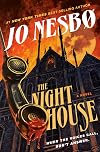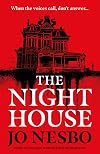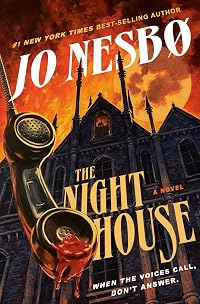
The Night House
by Jo Nesbo
On This Page
Description
From the internationally best-selling author, a chilling fresh spin on the classic horror novel • When the voices call, don't answer."In The Night House, the horror begins immediately. And it only keeps calling from there."--Josh Malerman, New York Times best-selling author of Bird Box and Spin a Black YarnIn the wake of his parents' tragic deaths in a house fire, fourteen-year-old Richard Elauved has been sent to live with his aunt and uncle in the remote, insular town of Ballantyne. show more Richard quickly earns a reputation as an outcast, and when a classmate named Tom goes missing, everyone suspects the new, angry boy is responsible for his disappearance. No one believes him when he says the telephone booth out by the edge of the woods sucked Tom into the receiver like something out of a horror movie. No one, that is, except Karen, a beguiling fellow outsider who encourages Richard to pursue clues the police refuse to investigate. He traces the number that Tom prank-called from the phone booth to an abandoned house in the Mirror Forest. There he catches a glimpse of a terrifying face in the window. And then the voices begin to whisper in his ear . . . She's going to burn. The girl you love is going to burn. There's nothing you can do about it. When another classmate disappears, Richard must find a way to prove his innocence--and preserve his sanity--as he grapples with the dark magic that is possessing Ballantyne and pursuing his destruction.Then again, Richard may not be the most reliable narrator of his own story . . . show lessTags
Recommendations

Member Reviews
Well, this was utterly dreadful, wasn't it? And I don't mean that in a good way.
There's so much wrong with this, that the somewhat slightly coherent wrap-up in no way justifies the crap the reader has to wade through in the first 90% to get there.
I don't want to spoil anything for anyone wanting to read this, so I'll just say this: The book is split into three parts, the first being about 75% of the book, and, while it starts with a bang, it swiftly goes down the nonsensical hill from there, hitting every bump and pothole along the way.
There was a social media post that went around a year or two ago where the poster said something along the lines of, "this book feels like the writer was making up as they went along" and there's some show more sort of sarcastic response from a big name author that basically says, "Ummm...who's gonna tell him?" It's played for laughs, and it is rather humorous. However, I understand exactly what that original poster was saying now.
By the end of this first section, it feels like Nesbo literally had no plan, no plot, no idea of what he was going to write next and so just barfed out whatever showed up in his noggin at that particular moment. The plot holds no logic, it's just a mess of "this happens, then this happens, then this"... Characters change their minds too easily. Things happen that are utterly ridiculous.
But wait, you think that's bad? Wait'll you hit the section section. It's far shorter, but it's even more ridiculous. I don't know that I've ever got to within 30 pages of the end of a book and decided it wasn't worth finishing, but I've never come closer to doing it than with this book. As bad as the first section was, the second was far worse. Nesbo piles ridiculousness on top of ridiculousness until it's a teetering tower that he really doesn't have any way out of.
Instead, he jumps to the third and final section, which appears to be the justification for the previous two bits.
I understand what he was trying to do, but the experiment was an abject and utter failure. If you're going to go the route this book went, then you have to build a strong, coherent, and frankly brilliant story to build up to it.
Something along the lines of what was done in The Usual Suspects is my first thought.
Nesbo...did not do this. He had elements that he slapped together. He moved the characters from one element to the next. But it was not an entertaining story, it was not a coherent story, and it was not a good story.
This was awful.
Last year, it took until August to find the worst book I read all the way through. This year, it happened within the first three days of April. show less
There's so much wrong with this, that the somewhat slightly coherent wrap-up in no way justifies the crap the reader has to wade through in the first 90% to get there.
I don't want to spoil anything for anyone wanting to read this, so I'll just say this: The book is split into three parts, the first being about 75% of the book, and, while it starts with a bang, it swiftly goes down the nonsensical hill from there, hitting every bump and pothole along the way.
There was a social media post that went around a year or two ago where the poster said something along the lines of, "this book feels like the writer was making up as they went along" and there's some show more sort of sarcastic response from a big name author that basically says, "Ummm...who's gonna tell him?" It's played for laughs, and it is rather humorous. However, I understand exactly what that original poster was saying now.
By the end of this first section, it feels like Nesbo literally had no plan, no plot, no idea of what he was going to write next and so just barfed out whatever showed up in his noggin at that particular moment. The plot holds no logic, it's just a mess of "this happens, then this happens, then this"... Characters change their minds too easily. Things happen that are utterly ridiculous.
But wait, you think that's bad? Wait'll you hit the section section. It's far shorter, but it's even more ridiculous. I don't know that I've ever got to within 30 pages of the end of a book and decided it wasn't worth finishing, but I've never come closer to doing it than with this book. As bad as the first section was, the second was far worse. Nesbo piles ridiculousness on top of ridiculousness until it's a teetering tower that he really doesn't have any way out of.
Instead, he jumps to the third and final section, which appears to be the justification for the previous two bits.
I understand what he was trying to do, but the experiment was an abject and utter failure. If you're going to go the route this book went, then you have to build a strong, coherent, and frankly brilliant story to build up to it.
Something along the lines of what was done in The Usual Suspects is my first thought.
Nesbo...did not do this. He had elements that he slapped together. He moved the characters from one element to the next. But it was not an entertaining story, it was not a coherent story, and it was not a good story.
This was awful.
Last year, it took until August to find the worst book I read all the way through. This year, it happened within the first three days of April. show less
I've always liked Jo Nesbo's writing style and the way that great imagination can create a story that stays with the reader long after the book is closed. Sometimes it stays TOO much:)...but to be honest...with this one I am still very much confused, and it hurts my head to try...so I stopped trying. We find ourselves in the town of Ballantyne, and we meet Richard Elauved. Richard is a 14-year-old boy who takes a great deal of pleasure in bulling his classmates. He tricks Tom into going into a phone booth and gets him to call Imu Jonasson. Neither boy knows Imu Jonasson...it's part of Richrd's fun...a random person whose name he picks out of the phone book. Now the story begins to become strange as the phone takes a mind of its own and show more digs into Imu's flesh and eats him alive until all traces disappear. I don't think that phones are supposed to behave like this and neither does Richard...so he goes to the police. Of course, they don't take him seriously, and he can't persuade them that he's telling the truth. First of all, they can’t even find Jonasson’s name in the phone book...and they come to the conclusion that Tom must have drowned in the river. In the first part of the story, all the main characters are teens. Then as it moves along, fifteen years have passed, and we find Richard attending a class reunion. Now he is also the author of the novel, The Night House... the story of himself and Tom. He says that it is “the teenage horror novel that changed my life.” He tells people at the reunion that he came to apologize for having bullied everyone, yet all his fellow classmates insist he’d always been a good kid...not the nasty bully he’d portrayed in his famous book. Now we have the problem of determining what is going on and who is right. Creepy things continue to happen, a death by hanging, blood seeping down a car window, and even someone transforming into a cockroach...you know, all the standard horror fare.... though the cockroach is a new one for me. What adds to this bewilderment, is when we learn that Richard had invented the surname “Elauved” for some strange reason. Now we don't know if anything he has told us is true or is the detritus of his obviously fevered brain. Could it be a dream within a dream? Some of the evil comes from a surprising source, who advises young Richard, “If you really want to kill them, you have to do it twice. If you don’t, they come back.” I thought that an ill-fated fiend named Jack had the best line: “We’d actually prefer it if you tried to escape. It’s a well-known fact that adrenaline gives meat a bit of extra flavor.” I don't know any more than I did in the beginning, and I'm not at all sure that I really want to know. show less
I read the other reviews for this book after I had bought it, so when I picked it up to start reading, I did so with considerable trepidation. People either loved this book, with no reasons given, or they panned it as absolute garbage.
I actually enjoyed it and read it in just a couple of days. I don't think I could classify it into any particular genre. There are three parts. The first is essentially a horror story, written almost in a YA style- quite light on the horror, but very imaginative. The second part undoes that narrative somewhat and then delivers a big twist which takes us back into horror. The third part provides an explanation for what has gone before and takes us into the realm of mental health issues.
So, three distinct show more parts which were all very different, but which worked as an ensemble. show less
I actually enjoyed it and read it in just a couple of days. I don't think I could classify it into any particular genre. There are three parts. The first is essentially a horror story, written almost in a YA style- quite light on the horror, but very imaginative. The second part undoes that narrative somewhat and then delivers a big twist which takes us back into horror. The third part provides an explanation for what has gone before and takes us into the realm of mental health issues.
So, three distinct show more parts which were all very different, but which worked as an ensemble. show less
3.5 stars
I received this book for free, this does not affect my opinion of the book or the content of my review
“H-h-h-he said that you and I . . .” He cupped his hand over the speaking end of the receiver to stop the person at the other end from hearing. “W-w-w-we’re going to—”
“Tom!” I cried. “Your hand! Drop the phone!” Tom looked down and only now realized that his fingers were halfway through the holes in the receiver.
The Night House was a standalone story with horror and psychological thriller elements divided up into three parts. Told all from Richard's point-of-view, the first part brings readers in when he's fourteen and has recently moved in with his aunt and uncle, now his foster parents, from a big city show more to small town Ballantyne. He's not part of the popular crowd and as such, has a bit of edge to him, where he does a little bullying himself, except with classmate Karen, who he has a bit of a crush on. When him and Tom, a boy who is on the outskirts himself because of his stuttering, come upon a phone booth on the edge of the woods, the story takes a horrific turn as Tom is gruesomely sucked into the phone receiver after dialing the number for a Imu Jonasson.
“I know. But sometimes if you tell a lie enough times, it becomes a bit true anyway.”
This first part takes up more than half the book and follows Tom as he's accused and looked upon as Tom's murderer and when another classmate goes missing, an FBI agent becomes involved. The only one who believes Tom is Karen and she starts her own investigation into what is happening. Tom goes from finding Imu Jonasson's “Night House” in the woods to ending up at a correctional facility for young people, where he learns that Imu Jonasson was also a patient, learning about black word and white word magic, and then eventually escaping with a set of psychotic twins. The first part wraps up with a battle scene to save Karen's life and sort of happy ending that leaves you wondering where the next forty percent of the book is going to go.
Something moved up by the window. I looked up. A face. Pale. The expressionless face of a man, as motionless as a painting. A face I had never seen before, yet which still gave me a strange feeling of looking in a mirror.
The second part spins the whole story on it's head and jumps fifteen years in the future to Richard coming back to Ballantyne for his highschool reunion. He's a famous young adult author after the great success of one of his books “The Night House”, which has also been optioned as a movie. Readers start to get a sense of unreliable narrator with a little bit of Wizard of Oz-ness, as characters appear with slightly different roles than had been presented in, what we now know, was Richard's book we were reading. There's a break through scene where Richard has an emotional breakdown with Karen and he tells her about why he was sent to live with his aunt and uncle, his parents died in a fire. After this story and the reunion party moves to a new Night House, the story starts to spin back to where readers thought it originally was and I got a sense of King's It and the horror comes back into play, only to be spun once again in part three.
“As far as I know, Imu Jonasson hasn’t lived in Ballantyne since he was committed to an institution. And that was decades ago.”
“Did he do something wrong?”
“Oh yes, but not before something wrong was done to him.”
There were a couple clues in part two about where part three was headed and the story ultimately turns into more of an emotional psychological thriller. The last fifteen percent was more emotional than I expected and I want to say that if you find yourself getting very dizzy from the first two parts, hang on because the third part will complement the first two and make the ride worth while (I can see some horror readers being disappointed). I did feel myself gripping the sides of the book, ready to be spun again, but the ending left with a looking good moment, for now. The first part's horror was engrossing even when it felt the wheels were coming off and the second part's wheels did come off but spun just in time to the emotional third and last part ending. I enjoyed the meaning behind the name Imu and the context of how it ultimately tied into Richard's character and once again, the story reminding us that true horror comes from human nature.
He laughed. “You should never trust your memory. It only ever gives you what it thinks you need. So . . . well, in that sense maybe it’s just as well to trust it after all.” He laughed again. show less
I received this book for free, this does not affect my opinion of the book or the content of my review
“H-h-h-he said that you and I . . .” He cupped his hand over the speaking end of the receiver to stop the person at the other end from hearing. “W-w-w-we’re going to—”
“Tom!” I cried. “Your hand! Drop the phone!” Tom looked down and only now realized that his fingers were halfway through the holes in the receiver.
The Night House was a standalone story with horror and psychological thriller elements divided up into three parts. Told all from Richard's point-of-view, the first part brings readers in when he's fourteen and has recently moved in with his aunt and uncle, now his foster parents, from a big city show more to small town Ballantyne. He's not part of the popular crowd and as such, has a bit of edge to him, where he does a little bullying himself, except with classmate Karen, who he has a bit of a crush on. When him and Tom, a boy who is on the outskirts himself because of his stuttering, come upon a phone booth on the edge of the woods, the story takes a horrific turn as Tom is gruesomely sucked into the phone receiver after dialing the number for a Imu Jonasson.
“I know. But sometimes if you tell a lie enough times, it becomes a bit true anyway.”
This first part takes up more than half the book and follows Tom as he's accused and looked upon as Tom's murderer and when another classmate goes missing, an FBI agent becomes involved. The only one who believes Tom is Karen and she starts her own investigation into what is happening. Tom goes from finding Imu Jonasson's “Night House” in the woods to ending up at a correctional facility for young people, where he learns that Imu Jonasson was also a patient, learning about black word and white word magic, and then eventually escaping with a set of psychotic twins. The first part wraps up with a battle scene to save Karen's life and sort of happy ending that leaves you wondering where the next forty percent of the book is going to go.
Something moved up by the window. I looked up. A face. Pale. The expressionless face of a man, as motionless as a painting. A face I had never seen before, yet which still gave me a strange feeling of looking in a mirror.
The second part spins the whole story on it's head and jumps fifteen years in the future to Richard coming back to Ballantyne for his highschool reunion. He's a famous young adult author after the great success of one of his books “The Night House”, which has also been optioned as a movie. Readers start to get a sense of unreliable narrator with a little bit of Wizard of Oz-ness, as characters appear with slightly different roles than had been presented in, what we now know, was Richard's book we were reading. There's a break through scene where Richard has an emotional breakdown with Karen and he tells her about why he was sent to live with his aunt and uncle, his parents died in a fire. After this story and the reunion party moves to a new Night House, the story starts to spin back to where readers thought it originally was and I got a sense of King's It and the horror comes back into play, only to be spun once again in part three.
“As far as I know, Imu Jonasson hasn’t lived in Ballantyne since he was committed to an institution. And that was decades ago.”
“Did he do something wrong?”
“Oh yes, but not before something wrong was done to him.”
There were a couple clues in part two about where part three was headed and the story ultimately turns into more of an emotional psychological thriller. The last fifteen percent was more emotional than I expected and I want to say that if you find yourself getting very dizzy from the first two parts, hang on because the third part will complement the first two and make the ride worth while (I can see some horror readers being disappointed). I did feel myself gripping the sides of the book, ready to be spun again, but the ending left with a looking good moment, for now. The first part's horror was engrossing even when it felt the wheels were coming off and the second part's wheels did come off but spun just in time to the emotional third and last part ending. I enjoyed the meaning behind the name Imu and the context of how it ultimately tied into Richard's character and once again, the story reminding us that true horror comes from human nature.
He laughed. “You should never trust your memory. It only ever gives you what it thinks you need. So . . . well, in that sense maybe it’s just as well to trust it after all.” He laughed again. show less
Alright so…. I enjoyed this book. It’s divided into three events over the course of the narrator's life, and admittedly the first section is the strongest. It starts with the MC as a kid. He's a bit of a bully, no less, which may make him a little unsympathetic at the beginning. But a couple of kids last seen with him go missing, and his account of what actually happened to them is too bizarre to sound true. Hence, he’s shipped off to an institution for troubled young teens. The bizarre nature of everything that happens because of a connection to a man we never really meet in a house in the middle of a forest (his name is Imu Jonasson) is what really pulls the reader into the story.
Part Two revisits the kid as an adult upon his show more return home for a school reunion. He proves that, as the kid, maybe he was an unreliable narrator, but he's come to terms with that, and he wants to make amends for his bullying ways. Except things go awry—because of that house again, and maybe he wasn’t as unreliable a narrator as we thought.
Part three flips the narrative again in an interesting turn, though maybe not in the same horrific way that the first two thirds of the book play out. I think some readers might find the ending to be a letdown because maybe it doesn’t hold the same horrific tone. For me though, it was satisfying enough. As far as a character arc goes, it works..
Thank you NetGalley, and the publisher, for the ARC. show less
Part Two revisits the kid as an adult upon his show more return home for a school reunion. He proves that, as the kid, maybe he was an unreliable narrator, but he's come to terms with that, and he wants to make amends for his bullying ways. Except things go awry—because of that house again, and maybe he wasn’t as unreliable a narrator as we thought.
Part three flips the narrative again in an interesting turn, though maybe not in the same horrific way that the first two thirds of the book play out. I think some readers might find the ending to be a letdown because maybe it doesn’t hold the same horrific tone. For me though, it was satisfying enough. As far as a character arc goes, it works..
Thank you NetGalley, and the publisher, for the ARC. show less
Nach dem Tod seiner Eltern kommt Richard aus der Großstadt in das beschauliche Ballantyne. Doch bald schon ist es dort mit der Ruhe vorbei, denn zwei Jugendliche verschwinden auf mysteriöse Weise. Die Polizei hat Richard im Verdacht, etwas mit den Vorfällen zu tun zu haben, doch dieser erzählt schier unglaubliche Geschichten über den Verbleib seiner Klassenkameraden. Warum will ihm niemand glauben, dass auch das Böse in Ballantyne ist und dort Dinge geschehen, die über den menschlichen Verstand hinausgehen?
Seit vielen Jahren schon begeistert mich Jo Nesbø mit seinen Krimis und Thrillern, weshalb die Erwartungen an „Das Nachthaus“ hoch waren. Leider wurden sie so gar nicht erfüllt. Selbstverständlich kann ein Autor ganz show more neue Wege gehen, jedoch fallen dann unter Umständen Ergebnis und Erwartung weit auseinander und lassen Leser enttäuscht zurück. Es hat mich sehr viel Motivation gekostet, das Buch immer wieder aufzunehmen und zu Ende zu lesen, weil es mich immer wieder verloren hat.
Ohne Frage hat sich das Durchhalten bis zur letzten Seite trotz aller Anstrengung gelohnt, da Nesbø alle fantastischen Elemente klärt und in ein in sich logisches Gesamtgerüst packt. Rein literarisch ist der Aufbau sogar sehr gelungen und überzeugend. Leider fehlt der Geschichte jedoch jede Spannung und die erste Hälfte ist insbesondere ziemlich zäh, vor allem im Vergleich zu anderen Romanen des Autors, die sofort fesseln und die man kaum weglegen kann. Wenn man zudem kein Fan von Fantasy-Literatur ist, fällt das Weiterlesen zudem schwer, weil einfach weite Teile der Handlung zunächst sehr realitätsfern sind.
Jo Nesbø mag neue Leser mit dem Buch gewinnen können, mich konnte er leider gar nicht erreichen, im Gegenteil, bei seinen nächsten Romanen werde ich vorher intensiver recherchieren, welche Richtung er einschlägt: Experimente in anderen Genres oder wieder die bekannten Krimi-Strukturen, die mich so oft begeistern konnten. show less
Seit vielen Jahren schon begeistert mich Jo Nesbø mit seinen Krimis und Thrillern, weshalb die Erwartungen an „Das Nachthaus“ hoch waren. Leider wurden sie so gar nicht erfüllt. Selbstverständlich kann ein Autor ganz show more neue Wege gehen, jedoch fallen dann unter Umständen Ergebnis und Erwartung weit auseinander und lassen Leser enttäuscht zurück. Es hat mich sehr viel Motivation gekostet, das Buch immer wieder aufzunehmen und zu Ende zu lesen, weil es mich immer wieder verloren hat.
Ohne Frage hat sich das Durchhalten bis zur letzten Seite trotz aller Anstrengung gelohnt, da Nesbø alle fantastischen Elemente klärt und in ein in sich logisches Gesamtgerüst packt. Rein literarisch ist der Aufbau sogar sehr gelungen und überzeugend. Leider fehlt der Geschichte jedoch jede Spannung und die erste Hälfte ist insbesondere ziemlich zäh, vor allem im Vergleich zu anderen Romanen des Autors, die sofort fesseln und die man kaum weglegen kann. Wenn man zudem kein Fan von Fantasy-Literatur ist, fällt das Weiterlesen zudem schwer, weil einfach weite Teile der Handlung zunächst sehr realitätsfern sind.
Jo Nesbø mag neue Leser mit dem Buch gewinnen können, mich konnte er leider gar nicht erreichen, im Gegenteil, bei seinen nächsten Romanen werde ich vorher intensiver recherchieren, welche Richtung er einschlägt: Experimente in anderen Genres oder wieder die bekannten Krimi-Strukturen, die mich so oft begeistern konnten. show less
This is horror in the vein of Catriona Ward, with things starting off definitely spooky but maybe a young adult spooky? And then taking so many turns you can't keep up into a spiral of madness that by the end you're left dizzy and unsettled. It's short but doesn't feel like anything is missing.
Members
- Recently Added By
Published Reviews
ThingScore 75
While comparisons with Stephen King might be premature, this is quite an effective chiller. The central character is engaging, the suspense is well handled, and there are scary moments, some of which come with an element of humour.
The tripartite structure of the book works well, and if it moves in a somewhat predictable direction, there is enough going on here to keep the casual reader show more entertained for the duration. show less
The tripartite structure of the book works well, and if it moves in a somewhat predictable direction, there is enough going on here to keep the casual reader show more entertained for the duration. show less
added by ShelfMonkey
Scary fun that won’t cause nightmares—or will it?
added by ShelfMonkey
Lists

READ in 2023
244 works; 1 member

Which house?
423 works; 16 members

Books Read in 2024
4,623 works; 126 members
Author Information

85+ Works 51,391 Members
Jo Nesbø was born on March 29, 1960 in Molde, Norway. He graduated from the Norwegian School of Economics with a degree in economics and business administration. He worked as a freelance journalist and a stockbroker before he began his writing career. He is the author of The Harry Hole series and The Doctor Proctor series. The 2011 film show more Headhunters is based on his novel Hodejegerne (The Headhunters). In 2017 he made The New York Times Best Seller List with his title, The Thirst. He is also the main vocalist and songwriter for the Norwegian rock band Di Derre. (Bowker Author Biography) show less
Some Editions
Series
Belongs to Publisher Series
A tot vent (798)
Common Knowledge
- Canonical title
- The Night House
- Original title
- Natthuset; La Casa de la Noche
- Original publication date
- 2023
- People/Characters
- Richard Elauved; Imu Jonasson; Karen Taylor; Jack "Fatso" Ruud
- Important places
- Ballantyne
- First words
- "Y-y-y-you're crazy," Tom said, and I could tell he was scared seeing as he stammered one more time than he usually does.
- Last words
- (Click to show. Warning: May contain spoilers.)"Y-y-y-you're crazy," Tom said, and I could tell he was scared seeing as he stammered one more time than he usually does.
- Blurbers
- Malerman, Josh; Child, Lee
- Original language
- Norwegian
Classifications
- Genres
- Fiction and Literature, Horror
- DDC/MDS
- 839.823 — Literature & rhetoric German & related literatures Other Germanic literatures Danish and Norwegian literatures Norwegian literature Norwegian Bokmål fiction
- LCC
- PT8951.24 .E83 .N3813 — Language and Literature German, Dutch and Scandinavian literatures Norwegian literature Individual authors or works 1961-2000
- BISAC
Statistics
- Members
- 464
- Popularity
- 65,619
- Reviews
- 22
- Rating
- (3.14)
- Languages
- 16 — Catalan, Danish, Dutch, English, Estonian, Finnish, French, German, Hungarian, Italian, Norwegian (Bokmål), Norwegian, Polish, Portuguese, Spanish, Swedish
- Media
- Paper, Audiobook, Ebook
- ISBNs
- 40
- ASINs
- 9