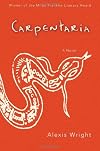
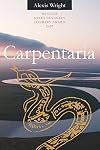
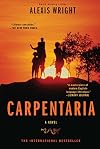
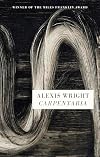
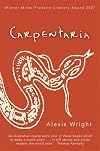
Carpentaria
by Alexis Wright
On This Page
Description
Centred on the precariously settled coastal town of Desperance, a township shaped by cyclones, monsoonal floods and a river that spurns human endeavour with its incomprehensible tides, it tells the story of the powerful Phantom family. Led by Norm Phantom, the great fish-embalming king of time, legendary storyteller, suspected murderer and leader of the Pricklebush people, the Phantoms battle to retain sovereignty over a country where "legends and ghosts live side by side". Sovereignty show more depends on stories. The official version of the region's history makes no mention of the Phantoms or the Great War of the Dump that burst the Pricklebush people apart and set Eastsider against Westsider. Nor does it mention the old tribal tensions that resurfaced and the search for lost ancestral stories that lay claim to traditional ownership. show lessTags
Recommendations






















Member Reviews
This is a difficult novel to parse, but it is well worth the effort. Wright has done something truly unique here, bridging the "White" Australian world with the "Waanyi" Australian world. Individual sentences will simultaneously check every box of beautifully written Western literary fiction and plop readers into the dream world of Waanyi magical realism. Vocabulary of both, worldviews of both, combine into a saga not only of a family but of a town caught between cultures. There's a lot here; it's long, and it's a slow read. It's also truly immersive. I learned a lot about the unique Australian postcolonial landscape and the Waanyi culture's experience contemplating (white) modernity. I also enjoyed the story.
This baffling, dreamlike epic rushes you up in a semi-conscious swirl of language into the wild tropical north of Australia, where Queensland sweeps round to cradle an armful of the Pacific in the form of the Gulf of Carpentaria – a land of savannas and tropical cyclones, of eucalypts and estuary streams, melaleucas, songlines, unscrupulous mining corporations, and back-country bogan settlements.
The Gulf country is also the homeland of the Waanyi people, from whom Alexis Wright is descended on her mother's side, and what Carpentaria is most obviously and essentially is a hymn to her people and to her home. It seems necessary to establish this, because it can be difficult to work out what else it might be. Postcolonial epic? show more Magic-realist fantasy? Indigenous polemic?
The book doesn't present itself as a simple proposition. At more than 500 pages, it feels, just from heaving the thing up in front of your face, like something that will require some work. And the language is constantly wrong-footing you as a reader – like something that's been run through Google Translate and back twice, full of not-quite-right constructions (‘for no good rhyme or reason’), redundancies (‘it fell down, descended down’), misused verbs (‘the thought abhorred him’), even apparent spelling mistakes (‘the mother load’) which might just be editorial slips but which nevertheless contribute to a general sense that language here is unstable, not always to be trusted.
When you read Wright's sentences, you do it gingerly, feeling ahead with your toes, not wanting to put your full weight on a phrase until you're sure it will hold. It reminded me a bit of reading Steve Aylett, though the tone couldn't be more different. Here the method is a kind of Aboriginal English that dares you to think of it as ‘broken’, mixing myth, jokes, and natural history. And then – every now and again – it will suddenly explode into some long, flawlessly poetic excursion positively drenched in the local landscape:
Thousands of dry balls of lemon-coloured spinifex, uprooted by the storm, rolled into town and were swept out to sea. From the termite mounds dotting the old country the dust storm gathered up untold swarms of flying ants dizzy with the smell of rain and sent them flying with the wind. Dead birds flew past. Animals racing in frightened droves were left behind in full flight, impaled on barbed-wire spikes along the boundary fences. In the sheddings of the earth's waste, plastic shopping bags from the rubbish dump rose up like ghosts into the troposphere of red skies to be taken for a ride, far away. Way out above the ocean, the pollution of dust and wind-ripped pieces of plastic gathered, then dropped with the salty humidity and sank in the waters far below, to become the unsightly decoration of a groper's highway deep in the sea.
The nearest thing we have to a hero is the patriarch Normal Phantom, who lives in an indigenous settlement outside the town of Desperance. Norm's community is in a long-running feud with another Aboriginal group on the other side of the village; and between them are the whitefellas of Uptown, run by the violent Mayor Bruiser, policed by the corrupt Officer Truthful, and inhabited by a roster of colourful characters like Lloydie, who runs the pub and is in love with a mermaid trapped in the wood of his bar. Meanwhile Norm's partner, Angel Day, has run off with the religious zealot Mozzie Fishman, who leads a convoy endlessly following the Dreaming tracks, while his son Will Phantom is mounting a violent resistance against the local mining corporation…
These are figures that at times seem like characters in a joke (‘An Englishman, and Irishman and an Australian walked into a bar…’), and at other times assume the epic quality of mythic archetypes. Their stories blur into one another, with narratives that follow multiple timelines simultaneously, or loop back on themselves without warning. This is not a case of ‘magic realism’ (an unsatisfactory term), performed for metaphorical effect; rather, it deliberately reflects, I think, a completely different view of the world, one in which time and individuals are not especially important, and where the events of distant myth play an active role in current relationships and causalities.
The language of the novel is richly localised, busy with snappy gums, spearwood, eskies, myalls, skerricks, whirly-winds, gibber stones, sooty grunters, min min lights, big bikkies and a host of other Australianisms that pushed my [book:Australian National Dictionary|31867703] to the limits. Not to mention the many Aboriginal terms. The last time the Waanyi language was surveyed, in the early 80s, researchers found ‘about ten’ native speakers, so it's doubtless extinct by now; Carpentaria is, in this as in other things, an act of preservation as well as of modernisation.
I just don't know who to recommend it to. After a hundred pages I didn't understand it at all. After two hundred pages I thought I understood it, and didn't like it. I might easily have ditched it there, but the book review hanging over my head induced me to carry on – fortunately. After three hundred pages I was gripped, and by the time I finished I was deeply moved. Since then it's only kept expanding in my head, so that I now feel it's one of the most extraordinary books I've read in a long time. Lyrical, passionate, and seemingly detached from all the usual artistic traditions, it feels like you're hearing the genuine voice of a strange and distant land that has not been shown in literature before. show less
The Gulf country is also the homeland of the Waanyi people, from whom Alexis Wright is descended on her mother's side, and what Carpentaria is most obviously and essentially is a hymn to her people and to her home. It seems necessary to establish this, because it can be difficult to work out what else it might be. Postcolonial epic? show more Magic-realist fantasy? Indigenous polemic?
The book doesn't present itself as a simple proposition. At more than 500 pages, it feels, just from heaving the thing up in front of your face, like something that will require some work. And the language is constantly wrong-footing you as a reader – like something that's been run through Google Translate and back twice, full of not-quite-right constructions (‘for no good rhyme or reason’), redundancies (‘it fell down, descended down’), misused verbs (‘the thought abhorred him’), even apparent spelling mistakes (‘the mother load’) which might just be editorial slips but which nevertheless contribute to a general sense that language here is unstable, not always to be trusted.
When you read Wright's sentences, you do it gingerly, feeling ahead with your toes, not wanting to put your full weight on a phrase until you're sure it will hold. It reminded me a bit of reading Steve Aylett, though the tone couldn't be more different. Here the method is a kind of Aboriginal English that dares you to think of it as ‘broken’, mixing myth, jokes, and natural history. And then – every now and again – it will suddenly explode into some long, flawlessly poetic excursion positively drenched in the local landscape:
Thousands of dry balls of lemon-coloured spinifex, uprooted by the storm, rolled into town and were swept out to sea. From the termite mounds dotting the old country the dust storm gathered up untold swarms of flying ants dizzy with the smell of rain and sent them flying with the wind. Dead birds flew past. Animals racing in frightened droves were left behind in full flight, impaled on barbed-wire spikes along the boundary fences. In the sheddings of the earth's waste, plastic shopping bags from the rubbish dump rose up like ghosts into the troposphere of red skies to be taken for a ride, far away. Way out above the ocean, the pollution of dust and wind-ripped pieces of plastic gathered, then dropped with the salty humidity and sank in the waters far below, to become the unsightly decoration of a groper's highway deep in the sea.
The nearest thing we have to a hero is the patriarch Normal Phantom, who lives in an indigenous settlement outside the town of Desperance. Norm's community is in a long-running feud with another Aboriginal group on the other side of the village; and between them are the whitefellas of Uptown, run by the violent Mayor Bruiser, policed by the corrupt Officer Truthful, and inhabited by a roster of colourful characters like Lloydie, who runs the pub and is in love with a mermaid trapped in the wood of his bar. Meanwhile Norm's partner, Angel Day, has run off with the religious zealot Mozzie Fishman, who leads a convoy endlessly following the Dreaming tracks, while his son Will Phantom is mounting a violent resistance against the local mining corporation…
These are figures that at times seem like characters in a joke (‘An Englishman, and Irishman and an Australian walked into a bar…’), and at other times assume the epic quality of mythic archetypes. Their stories blur into one another, with narratives that follow multiple timelines simultaneously, or loop back on themselves without warning. This is not a case of ‘magic realism’ (an unsatisfactory term), performed for metaphorical effect; rather, it deliberately reflects, I think, a completely different view of the world, one in which time and individuals are not especially important, and where the events of distant myth play an active role in current relationships and causalities.
The language of the novel is richly localised, busy with snappy gums, spearwood, eskies, myalls, skerricks, whirly-winds, gibber stones, sooty grunters, min min lights, big bikkies and a host of other Australianisms that pushed my [book:Australian National Dictionary|31867703] to the limits. Not to mention the many Aboriginal terms. The last time the Waanyi language was surveyed, in the early 80s, researchers found ‘about ten’ native speakers, so it's doubtless extinct by now; Carpentaria is, in this as in other things, an act of preservation as well as of modernisation.
I just don't know who to recommend it to. After a hundred pages I didn't understand it at all. After two hundred pages I thought I understood it, and didn't like it. I might easily have ditched it there, but the book review hanging over my head induced me to carry on – fortunately. After three hundred pages I was gripped, and by the time I finished I was deeply moved. Since then it's only kept expanding in my head, so that I now feel it's one of the most extraordinary books I've read in a long time. Lyrical, passionate, and seemingly detached from all the usual artistic traditions, it feels like you're hearing the genuine voice of a strange and distant land that has not been shown in literature before. show less
"One evening in the driest grasses in the world, a child who was no stranger to her people, asked if anyone could find hope. The people of parable and prophecy pondered what was hopeless and finally declared they no longer knew what hope was. The clocks, tick-a-ty tock, looked as though they might run out of time. Luckily, the ghosts in the memories of the old folk were listening, and said anyone can find hope in the stories: the big stories and the little ones in between."
Carpentaria is a stunning novel in all senses of the word: astounding in the complexity and concentrated energy of its prose, and at times almost overwhelmingly challenging to read, given the originality of her prose style. Wright is an Aboriginal Australian, a member show more of the Waanyi nation, and she draws on the history and the oral tradition of her people to create a novel which is an incredible evocation of their way of life and which is written almost defiantly outside of the conventions of the Western literary canon. This tale of Normal Phantom and Joseph Midnight and their families is terrifying and sad and funny and surreal all at once, embracing everything from the Aboriginal conception of the world around them to the appalling effects of colonialism. Wright's torrent of language demands a lot of the reader, but if you're willing to invest your time in Carpentaria, it's well worth the read. show less
Alexis Wright's Carpentaria is masterful. Her voice is singular yet easily understandable—provided one's comfortable with point-of-view shifts and nonlinear narratives.
The story largely centers around the Phantom family, Norm and Will, father and son respectively, who are aboriginals living on the peripheral of a rural Australian settler town. A mining concern invades and the novel's literal conflict begins here.
While there's much that can and should be said about this novel, I'll bring up several aspects that I found especially noteworthy.
Dreamtime metaphysics infuse the novel's narrative consciousness. (In fact, were I forced to declare 'what does this novel tell us,' it might be something like, it's high time to wake up for show more dreamtime.) What's especially excellent about Wright's book is one does not need much knowledge, if any at all, about dreamtime to get an idea of how it works, at least on something of an intuitive level.
With the possible exception of William Faulkner's work, I've rarely read fiction that explains small town life with such deft precision, with such lack of self-congratulatory folksiness. If you live in the sticks, you'll find this book provides great solace.
Her style is also similar to that of Faulkner—though a bit less dense and more clearly post-colonial in its orientation.
If you like highly-stylized, multicultural books that force reflection, this is a must read. show less
The story largely centers around the Phantom family, Norm and Will, father and son respectively, who are aboriginals living on the peripheral of a rural Australian settler town. A mining concern invades and the novel's literal conflict begins here.
While there's much that can and should be said about this novel, I'll bring up several aspects that I found especially noteworthy.
Dreamtime metaphysics infuse the novel's narrative consciousness. (In fact, were I forced to declare 'what does this novel tell us,' it might be something like, it's high time to wake up for show more dreamtime.) What's especially excellent about Wright's book is one does not need much knowledge, if any at all, about dreamtime to get an idea of how it works, at least on something of an intuitive level.
With the possible exception of William Faulkner's work, I've rarely read fiction that explains small town life with such deft precision, with such lack of self-congratulatory folksiness. If you live in the sticks, you'll find this book provides great solace.
Her style is also similar to that of Faulkner—though a bit less dense and more clearly post-colonial in its orientation.
If you like highly-stylized, multicultural books that force reflection, this is a must read. show less
Carpenteria paints a picture of life in Desperance, a small town on Australia’s Gulf of Carpentaria. The town is struggling with its isolation and grasping to the hope of revival offered by the development of mining in the region. Most of the story is told through the eyes of the Phantom clan, living marginialised on the edge of town yet possessing a spiritual connection with the land that far predates the existence of Desperance.
Through a series of vignettes, some humourous others shocking, but all powerful, the story builds to a dramatic but seemingly inevitable climax. Recurring themes throughout the book explore the effects of the infringement of industry on traditional land, and the massive gap between the rhetoric of the show more reconcilliation process and the reality.
It is difficult to do justice to such a remarkable book in a review. The author’s use of language is unconventional. Standard conventions of chronology, grammar, punctuation and causality are continually violated as the story unfolds in an incredibly powerful voice. The only way to read it is to just dive in and let the words wash over you as if they were being spoken out loud.
It is worth the leap of faith, as to be caught up in the book is to be drawn into a world that is so vivid you can feel the humidity, see the heavy sky, hear the whispering of the invisible people of the Pricklebush. Yet despite the power of the words, there is always an uneasy sense of slight alienation created for many of the book’s readers. The author blends the spiritual with the tangible throughout the book, steeping the story and everything that unfolds in the mythology of the Gulf country. For this reader at least, it left the feeling that I had been privileged to have been shown something important even though I will never completely understand it.
It is a long book written in a decidedly unfamiliar voice. It demands some work on the reader’s behalf but it is definitely worth the effort. My recommendation would be not to pick up the book until you can dedicate some time to it. Its power is in its ability to immerse the reader and it is not a book that lends itself to being read in small snippets. show less
Through a series of vignettes, some humourous others shocking, but all powerful, the story builds to a dramatic but seemingly inevitable climax. Recurring themes throughout the book explore the effects of the infringement of industry on traditional land, and the massive gap between the rhetoric of the show more reconcilliation process and the reality.
It is difficult to do justice to such a remarkable book in a review. The author’s use of language is unconventional. Standard conventions of chronology, grammar, punctuation and causality are continually violated as the story unfolds in an incredibly powerful voice. The only way to read it is to just dive in and let the words wash over you as if they were being spoken out loud.
It is worth the leap of faith, as to be caught up in the book is to be drawn into a world that is so vivid you can feel the humidity, see the heavy sky, hear the whispering of the invisible people of the Pricklebush. Yet despite the power of the words, there is always an uneasy sense of slight alienation created for many of the book’s readers. The author blends the spiritual with the tangible throughout the book, steeping the story and everything that unfolds in the mythology of the Gulf country. For this reader at least, it left the feeling that I had been privileged to have been shown something important even though I will never completely understand it.
It is a long book written in a decidedly unfamiliar voice. It demands some work on the reader’s behalf but it is definitely worth the effort. My recommendation would be not to pick up the book until you can dedicate some time to it. Its power is in its ability to immerse the reader and it is not a book that lends itself to being read in small snippets. show less
I read this book, by a member of the Waanyi nation, for the Reading Globally Aboriginal Authors theme read. It takes place in the remote Gulf of Carpentaria region of northern Australia, and merges aboriginal origin myths with the lives and history of contemporary aboriginal people and their interactions with the nearby white town, especially when an international mining company brings the "largest mine of its kind" to the area. What I found most interesting was the portrait of the harsh climate and ecology of the region and the people's deep connections with and knowledge of both the land and the sea, as well as the look at how they live now. The aboriginal people, many members of one family, are vividly characterized. Ultimately, show more though, I was a little frustrated by it: it starts out slowly, introducing a variety of seemingly unconnected people/stories; after the plot picks up, it moves along more rapidly, but the ending was a little too melodramatic and fantastical for me. It is a very worthwhile read, though, for the wonderful portrait of place, myth, and people. show less
An amazing epic novel about isolated communities near Carpentaria Bay on the northern coast of Australia: feuding Aboriginals, vindictive Anglos, and destructive employees of an international mine, as well as the sea, ancestors, birds, storms and the Great Serpent pulsing through the earth.
Alexis Wright is herself an Aboriginal and draws on her own traditions. I don’t know enough about those traditions to do more than note a few observations. The book opens with the Great Serpent moving over and under and through the region south of Carpentaria Bay, shaping it, depositing minerals in its ground and digging out its winding river channels. In a similar manner, Wright swirls together people, events, and words within circles that keep show more returning to key figures. Events move with the grace and terror of the Great Serpent with individuals guiding or passive in their wake. Mysticism in woven into sheer page-turning adventure. You don’t have to be an Aboriginal to resonant with the human distress, terror, and joy which this book conveys. At another level this is a richly human book, full of characters who think and feel.
Read more on my blog: me, you and books
http://mdbrady.wordpress.com/2012/04/05/carpentaria-by-alexis-wright/ show less
Alexis Wright is herself an Aboriginal and draws on her own traditions. I don’t know enough about those traditions to do more than note a few observations. The book opens with the Great Serpent moving over and under and through the region south of Carpentaria Bay, shaping it, depositing minerals in its ground and digging out its winding river channels. In a similar manner, Wright swirls together people, events, and words within circles that keep show more returning to key figures. Events move with the grace and terror of the Great Serpent with individuals guiding or passive in their wake. Mysticism in woven into sheer page-turning adventure. You don’t have to be an Aboriginal to resonant with the human distress, terror, and joy which this book conveys. At another level this is a richly human book, full of characters who think and feel.
Read more on my blog: me, you and books
http://mdbrady.wordpress.com/2012/04/05/carpentaria-by-alexis-wright/ show less
Members
- Recently Added By
Lists

Recommend the 20 best books you've read in the last five years
2,168 works; 606 members

Australian Women's Writing 2003 - 2014
49 works; 3 members

Not the NYT list of top 100 21st century books
100 works; 6 members
Best Australian Books of the 21st Century
88 works; 2 members

Travel Reading List
5 works; 1 member

.
184 works; 1 member
Author Information

11+ Works 1,234 Members
Alexis Wright is the author of Carpentaria which won a Northern Territory Literary Award in the Essay category 2015. She also won a 2015 Sidney Myer Creative Fellowship worth $160,000 over two years for this same title. She made the finalist for the Melbourne Prize for Literature 2015. Her title The Swan Book made the shortlist for the 2016 show more Adelaide Festival Awards for Literature in the fiction category. Her collective memoir, Tracker (2017), won the 2018 Stella Prize and 2018 Magarey Medal. (Bowker Author Biography) show less
Some Editions
Awards and Honors
Awards
Notable Lists
Common Knowledge
- Original publication date
- 2006
- People/Characters
- Normal Phantom; Will Phantom; Angel Day; Joseph Midnight; Elias Smith
- Important places
- Desperance; Australia; Gulf of Carpentaria; Northern Territory, Australia
- Dedication
- For Toly. Inspired by all of the beauty that comes from having an ancient homeland that is deeply loved by those who guard it, and especially by my countrymen, Murrandoo Yanner and Clarence Waldon.
- Original language
- English
Classifications
Statistics
- Members
- 589
- Popularity
- 49,606
- Reviews
- 14
- Rating
- (3.54)
- Languages
- Chinese, English, French, Italian
- Media
- Paper, Audiobook, Ebook
- ISBNs
- 28
- ASINs
- 7