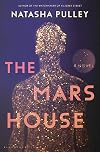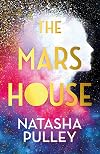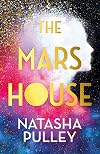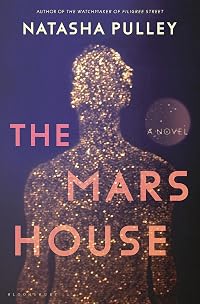
The Mars House
by Natasha Pulley
On This Page
Description
In the wake of environmental catastrophe, January, once a principal in London's Royal Ballet, has become a refugee on Tharsis, the terraformed colony on Mars. In Tharsis, January's life is dictated by his status as an Earthstronger, a person whose body is not adjusted to Mars's lower gravity and so poses a danger to those born on, or naturalized to, Mars. January's job choices, housing and even transportation options are dictated by this second-class status and now a xenophobic politician show more named Aubrey Gale is running on a platform that would make it all worse: Gale wants all Earthstrongers to be surgically naturalized, a process that is always disabling and can be deadly. When Gale chooses January for an on-the-spot press junket interview that goes horribly awry, January's life is thrown into chaos but Gale's political fortunes are damaged, too. Gale proposes a solution to both their problems: a five year made-for-the-press marriage that would secure January's future without immediate naturalization and ensure Gale's political future. But when January accepts the offer, he discovers that Gale is not at all like they appear in the press. They're kind, compassionate, and much more difficult to hate than January would wish. But as their romantic relationship develops, the political situation worsens, and January discovers Gale has an enemy, someone willing to destroy all of Tharsis to make them pay and January may be the only person standing in the way. show lessTags
Recommendations
























Member Reviews
Real Rating: 4.8* of five
The Publisher Says: From the author of The Watchmaker of Filigree Street, a queer sci-fi novel about an Earth refugee and a Mars politician who fake marry to save their reputations—and their planet.
In the wake of environmental catastrophe, January, once a principal in London’s Royal Ballet, has become a refugee on Tharsis, the terraformed colony on Mars. In Tharsis, January’s life is dictated by his status as an Earthstronger—a person whose body is not adjusted to Mars’s lower gravity and so poses a danger to those born on, or naturalized to, Mars. January’s job choices, housing, and even transportation options are dictated by this second-class status, and now a xenophobic politician named Aubrey show more Gale is running on a platform that would make it all worse: Gale wants all Earthstrongers to be surgically naturalized, a process that can be anything from disabling to deadly.
When Gale chooses January for an on-the-spot press junket interview that goes horribly awry, January’s life is thrown into chaos, but Gale’s political fortunes are damaged, too. Gale proposes a solution to both their problems: a five-year made-for-the-press marriage that would secure January’s financial future without naturalization and ensure Gale’s political future. But when January accepts the offer, he discovers that Gale is not at all like they appear in the press. And worse, soon, January finds himself entangled in political and personal events well beyond his imagining. Gale has an enemy, someone willing to destroy all of Tharsis to make them pay—and January may be the only person standing in the way.
I RECEIVED A DRC FROM THE PUBLISHER VIA NETGALLEY. THANK YOU.
My Review: Comme d'habitude, Author Pulley has taken multiple strands of today's hellscape and woven them into a clever, involving story. January is a ballet dancer...lean, lithe, and muscular even by Earth standards...and a refugee from the sinking of his home, London, due to climate change. No worries, it isn't a big deal in the story, just the way he gets to colonial Mars.
Where he, because he grew up on a high-gravity planet, is an "Earthstronger" and a terrible threat to the naturalized Martians. This condemns him to a life of menial labor where his freakish strength is an actual advantage not a threat.
Does this anti-immigrant rhetoric sound familiar? Start from actual differences, create threats, and stigmatize the Other with the largely imaginary threats and violent rhetoric?
The story is about all that and more. January is the only one who is referred to by the masculine pronoun. All the Martians are "they." No more information is given than that...and Gale, the senator whose careless seeking for a soundbite in their campaign to forcibly "naturalize" the Earthstrongers...a procedure with a horrific death rate, and ugly medical side-effects for those it does not kill...as the external suits that cause the Earthstrongers not to be able to exert themselves to capacity are defeatable. Gale's effort to get a political advantage blows up badly and causes them, as well as January, terrible problems.
Their solution is to offer January a five-year fake marriage contract that will give them good political optics, and him a way out of the endless drudgery and second-class citizenship of being in a suit or, far worse, beinf forcibly "naturalized." So, as always in Author Pulley's work, there is a slow...slooow...burn into True Love. That the relationship is so suitable is weird. January had to travel to another planet to find True Love...and the balance of power, also as always in Author Pulley's work, is even but in a completely unexpected way.
What makes me happy when I know there is a new book coming from Author Pulley is that I know what I will get...musings on interpersonal dynamics, commentary on injustices that clearly cause her outrage and pain, the somewhat unrealistic Love Conquers All resolutions...but have not clue the first how she will take me where I already know we're going.
*happy sigh*
So, I hear you wonder, since you got exactly what you wanted, and enjoyed the trip to get it, where's that fifth star? The one thing I was a lot less than thrilled with was the bizarre and offputting de-extinction of wooly mammoths as part of the Martian terraforming because it felt uncharacteristically gee-whiz neato-keeno it's my book and I'll do it because I can legerdemain. It did not make any sense to me, though clearly there is a narrative srand to explain it. I just did not buy it. I was also not entirely convinced by the time it was set in...the kinds of changes on Earth seemed to be unusually late, for what I expect to happen based on current trends and on Mars way too soon. So, not quite able to ignore and go on with my suspension of disbelief.
These were not terrible sins...this is a novel, not a counterfactual scientific paper...and they are in service of telling a cracking good story. Very much a good place to start reading Natasha Pulley's work if you haven't already; and a great treat for your season of reading if you have. show less
The Publisher Says: From the author of The Watchmaker of Filigree Street, a queer sci-fi novel about an Earth refugee and a Mars politician who fake marry to save their reputations—and their planet.
In the wake of environmental catastrophe, January, once a principal in London’s Royal Ballet, has become a refugee on Tharsis, the terraformed colony on Mars. In Tharsis, January’s life is dictated by his status as an Earthstronger—a person whose body is not adjusted to Mars’s lower gravity and so poses a danger to those born on, or naturalized to, Mars. January’s job choices, housing, and even transportation options are dictated by this second-class status, and now a xenophobic politician named Aubrey show more Gale is running on a platform that would make it all worse: Gale wants all Earthstrongers to be surgically naturalized, a process that can be anything from disabling to deadly.
When Gale chooses January for an on-the-spot press junket interview that goes horribly awry, January’s life is thrown into chaos, but Gale’s political fortunes are damaged, too. Gale proposes a solution to both their problems: a five-year made-for-the-press marriage that would secure January’s financial future without naturalization and ensure Gale’s political future. But when January accepts the offer, he discovers that Gale is not at all like they appear in the press. And worse, soon, January finds himself entangled in political and personal events well beyond his imagining. Gale has an enemy, someone willing to destroy all of Tharsis to make them pay—and January may be the only person standing in the way.
I RECEIVED A DRC FROM THE PUBLISHER VIA NETGALLEY. THANK YOU.
My Review: Comme d'habitude, Author Pulley has taken multiple strands of today's hellscape and woven them into a clever, involving story. January is a ballet dancer...lean, lithe, and muscular even by Earth standards...and a refugee from the sinking of his home, London, due to climate change. No worries, it isn't a big deal in the story, just the way he gets to colonial Mars.
Where he, because he grew up on a high-gravity planet, is an "Earthstronger" and a terrible threat to the naturalized Martians. This condemns him to a life of menial labor where his freakish strength is an actual advantage not a threat.
Does this anti-immigrant rhetoric sound familiar? Start from actual differences, create threats, and stigmatize the Other with the largely imaginary threats and violent rhetoric?
The story is about all that and more. January is the only one who is referred to by the masculine pronoun. All the Martians are "they." No more information is given than that...and Gale, the senator whose careless seeking for a soundbite in their campaign to forcibly "naturalize" the Earthstrongers...a procedure with a horrific death rate, and ugly medical side-effects for those it does not kill...as the external suits that cause the Earthstrongers not to be able to exert themselves to capacity are defeatable. Gale's effort to get a political advantage blows up badly and causes them, as well as January, terrible problems.
Their solution is to offer January a five-year fake marriage contract that will give them good political optics, and him a way out of the endless drudgery and second-class citizenship of being in a suit or, far worse, beinf forcibly "naturalized." So, as always in Author Pulley's work, there is a slow...slooow...burn into True Love. That the relationship is so suitable is weird. January had to travel to another planet to find True Love...and the balance of power, also as always in Author Pulley's work, is even but in a completely unexpected way.
What makes me happy when I know there is a new book coming from Author Pulley is that I know what I will get...musings on interpersonal dynamics, commentary on injustices that clearly cause her outrage and pain, the somewhat unrealistic Love Conquers All resolutions...but have not clue the first how she will take me where I already know we're going.
*happy sigh*
So, I hear you wonder, since you got exactly what you wanted, and enjoyed the trip to get it, where's that fifth star? The one thing I was a lot less than thrilled with was the bizarre and offputting de-extinction of wooly mammoths as part of the Martian terraforming because it felt uncharacteristically gee-whiz neato-keeno it's my book and I'll do it because I can legerdemain. It did not make any sense to me, though clearly there is a narrative srand to explain it. I just did not buy it. I was also not entirely convinced by the time it was set in...the kinds of changes on Earth seemed to be unusually late, for what I expect to happen based on current trends and on Mars way too soon. So, not quite able to ignore and go on with my suspension of disbelief.
These were not terrible sins...this is a novel, not a counterfactual scientific paper...and they are in service of telling a cracking good story. Very much a good place to start reading Natasha Pulley's work if you haven't already; and a great treat for your season of reading if you have. show less
This is a Natasha Pulley novel so if you're a Natasha Pulley fan you know what to expect. A strange mystery, a lonely man and an older maybe evil/maybe amazing love interest. At least one of them is going to be autistic. You will not be disappointed in any of that here. Where it differs from the rest of her books up until now is that instead of being sort of historical fiction, it is several hundred years in the future sci-fi, and takes place almost entirely on Mars, where the main character, January, has fled as a refugee from a dying Earth.
I will say that one thing that affected my opinion of this book is how incredibly depressing and infuriating it was to have such a bleak future for our planet. A lot of really bad things are going show more on right now but I do hope we will be able to pull together before we doom ourselves and our planet. I was so angry while reading this fictional book about a fictional future with fictional politicians who had clearly made the selfish choice and now the planet is all fire and flooding and war and famine and aaaaaaargh spending a ton of money on a Mars colony when they could have spent that money finding alternates to fossil fuels etc- it's fine. This is a fictional book and this is not a real future.
I really enjoyed reading about the Martian culture. It was founded primarily by China so has a language based on Mandarin with a lot of Chinese cultural components but with many other cultures mixed in as well. The Martian colony has genetically modified its people so that everyone is androgynous in appearance, extra suited to the cold atmosphere and huge elevation shifts on a lower gravity planet. They have also over seven generations become an average of six feet tall, but more slender than their Earth ancestors. The refugees from Earth by contrast are much shorter but also much, much stronger, used to three times the gravitational pull. This is where the central conflict arises and where the love interest makes me want to shake them until their teeth rattle when they say things like, but this is like the draft and people don't oppose the draft, they know its a necessity and argh yeah they do oppose the draft you numbskull, people literally go to jail for refusing to go off and kill for their government all the time. If I shook them until their teeth rattled though I'd probably kill them by accident since I'm Earthstrong and they are a sad weak Martian person. This was supposed to be a paragraph of things I *liked* about the book, I think I got off topic. I do really like that there is discussion and acknowledgment that physical strength is not the only type of power, and that issues can be really complicated and still have options that are simply wrong, and also have solutions that are not perfect but cause the least harm.
I liked the second half of the book much better than the first, when we are past the infuriating politicians and horrible views of the dying Earth. There is a lot of good character interactions and a strange little mystery with a heartbreaking ending and mammoths. Seriously, there are woolly mammoths in this book and that might be my favorite part.
This is a super ramble-y review. In conclusion, if you are a Natasha Pulley fan, definitely pick this one up. If you haven't read her before however, I might not start here. Thanks to NetGalley and the publisher for the eARC in exchange for an honest and hopefully at least somewhat coherent review. show less
I will say that one thing that affected my opinion of this book is how incredibly depressing and infuriating it was to have such a bleak future for our planet. A lot of really bad things are going show more on right now but I do hope we will be able to pull together before we doom ourselves and our planet. I was so angry while reading this fictional book about a fictional future with fictional politicians who had clearly made the selfish choice and now the planet is all fire and flooding and war and famine and aaaaaaargh spending a ton of money on a Mars colony when they could have spent that money finding alternates to fossil fuels etc- it's fine. This is a fictional book and this is not a real future.
I really enjoyed reading about the Martian culture. It was founded primarily by China so has a language based on Mandarin with a lot of Chinese cultural components but with many other cultures mixed in as well. The Martian colony has genetically modified its people so that everyone is androgynous in appearance, extra suited to the cold atmosphere and huge elevation shifts on a lower gravity planet. They have also over seven generations become an average of six feet tall, but more slender than their Earth ancestors. The refugees from Earth by contrast are much shorter but also much, much stronger, used to three times the gravitational pull. This is where the central conflict arises and where the love interest makes me want to shake them until their teeth rattle when they say things like, but this is like the draft and people don't oppose the draft, they know its a necessity and argh yeah they do oppose the draft you numbskull, people literally go to jail for refusing to go off and kill for their government all the time. If I shook them until their teeth rattled though I'd probably kill them by accident since I'm Earthstrong and they are a sad weak Martian person. This was supposed to be a paragraph of things I *liked* about the book, I think I got off topic. I do really like that there is discussion and acknowledgment that physical strength is not the only type of power, and that issues can be really complicated and still have options that are simply wrong, and also have solutions that are not perfect but cause the least harm.
I liked the second half of the book much better than the first, when we are past the infuriating politicians and horrible views of the dying Earth. There is a lot of good character interactions and a strange little mystery with a heartbreaking ending and mammoths. Seriously, there are woolly mammoths in this book and that might be my favorite part.
This is a super ramble-y review. In conclusion, if you are a Natasha Pulley fan, definitely pick this one up. If you haven't read her before however, I might not start here. Thanks to NetGalley and the publisher for the eARC in exchange for an honest and hopefully at least somewhat coherent review. show less
Natasha Pulley's The Mars House is, like everything she writes, and absolute show-stopper. I start reading her work and very little else matters. I just want to stay in her world of complex challenges and gentle, timid hopes as long as I can.
I've started this review several times and found myself caught up in complex and lengthy summary, so I'm going to forgo the summary almost completely. I'll just say, imagine January, an Earth refugee, a former dancer with the Royal Ballet, who moves to Tharsis, a Mars colony, and experiences all kinds of physical and cultural shocks. (Most of the other reviews of this title include such summary, so you'll have no trouble finding some.)
I'd like to highlight the points of contact and tension that show more drive this novel.
• Miscommunication between a gender-neutral Tharsis culture and a highly gendered Earth approach to identity
• Huge differences in physical strength between recent Earth arrivals (strong, having lived at a gravity three times that on Mars) and Tharsises (fragile bones and reduced strength as a result of generations of life on lower-gravity Mars)
• Lots and lots of difficulties concerning the costs and benefits of assimilation
• A possibility of physical assimilation, "naturalization," that risks the health and lives of the Earth refugees
• Complicated and bloody political manoeuvering among Tharsis politicians
• An uneasy arrangement between a Tharsis politician determined to make naturalization mandatory, and January, who is looking for a way of moving beyond the poverty and exclusion he's experienced on Tharsis
• And the possibility of an awkward, near-impossible budding romance.
So that's
√ The climate crisis on earth
√ Climate refugees on Mars
√ State-sponsored disabling of arriving refugees
√ Colonial tensions as Earth nations attempt to maintain control over Tharsis
√ Awkward non-binary/binary attraction
Pulley is gathering up the foibles of our own time and holding up a mirror to our biases and incompleteness via a space colony 200 years in the future. As always, the prose is exquisite, the plotting full of twists, and the central characters emotionally engaging. Bonus: woolly mammoths (yep, those, too).
I received a free electronic review copy of this title from the publisher via Edelweiss; the opinions are my own. show less
I've started this review several times and found myself caught up in complex and lengthy summary, so I'm going to forgo the summary almost completely. I'll just say, imagine January, an Earth refugee, a former dancer with the Royal Ballet, who moves to Tharsis, a Mars colony, and experiences all kinds of physical and cultural shocks. (Most of the other reviews of this title include such summary, so you'll have no trouble finding some.)
I'd like to highlight the points of contact and tension that show more drive this novel.
• Miscommunication between a gender-neutral Tharsis culture and a highly gendered Earth approach to identity
• Huge differences in physical strength between recent Earth arrivals (strong, having lived at a gravity three times that on Mars) and Tharsises (fragile bones and reduced strength as a result of generations of life on lower-gravity Mars)
• Lots and lots of difficulties concerning the costs and benefits of assimilation
• A possibility of physical assimilation, "naturalization," that risks the health and lives of the Earth refugees
• Complicated and bloody political manoeuvering among Tharsis politicians
• An uneasy arrangement between a Tharsis politician determined to make naturalization mandatory, and January, who is looking for a way of moving beyond the poverty and exclusion he's experienced on Tharsis
• And the possibility of an awkward, near-impossible budding romance.
So that's
√ The climate crisis on earth
√ Climate refugees on Mars
√ State-sponsored disabling of arriving refugees
√ Colonial tensions as Earth nations attempt to maintain control over Tharsis
√ Awkward non-binary/binary attraction
Pulley is gathering up the foibles of our own time and holding up a mirror to our biases and incompleteness via a space colony 200 years in the future. As always, the prose is exquisite, the plotting full of twists, and the central characters emotionally engaging. Bonus: woolly mammoths (yep, those, too).
I received a free electronic review copy of this title from the publisher via Edelweiss; the opinions are my own. show less
The deliberate pace of this novel is necessary to keep it from being another poor girl/boy gets taken in by the super rich. January was a principle dancer with the Ballet in a flooded out London and is a refugee on Mars, where the "earthstrong" live under strict limitations to minimize the physical harm they can do to "natural" Martians. The problems are indeed often ones with no good answers, but the characters, and the whimsical touches such as snide matriarchal mammoths give it sufficient lift not to bear down too heavily.
The premise of The Mars House--a refugee from Earth, discriminated against for being too physically strong, enters into an arranged marriage with a xenophobic nonbinary Martian politican--is more than a little ridiculous, and I hope I might be forgiven for entering into it with an expectation for campy silliness. What I ended up reading is a novel with very little silliness at all--a novel that puts everything it has into making the reader take the problems it investigates seriously on an personal and political level. It doesn't entirely succeed. But although The Mars House isn't what I consider a good novel, I can't help admiring it being weird, interesting, and ambitious nonetheless.
The Mars House is dense. The setting is more than show more set dressing: the politics, infrastructure, and culture of the Martian colony of Tharsis are central concerns for the main characters, constantly elaborated upon throughout the novel in dialogue, descriptions, and wordy footnotes. Clearly, the author put an enormous amount of thought into this society, the people it would produce, and the problems it would have, and it pays off. Tharsis is an extraordinarily distinctive and intriguing location. Because Tharsis so extensively described, the socioeconomic imbalance between the two main characters and their opposing political views become the most interesting parts of their relationship. The ways in which they differ from with one another in their views of society are numerous, specific, and grounded in their respective investments in different political goals, so that their conversations are lively and high stakes. Everything that's cool or interesting about the world, from the tech to the fauna (there are mammoths!) to the weather, also matters to the main characters and the overall plot, which is no small feat for a novel as dense with information as this one.
At the same time, the novel's density works against it. Over and over again, the novel would introduce something intensely implausible about the world, and I would have to stop in my tracks to think about how it could possibly work. Take the Earthstrongers for example: the statistic is thrown out a person who hasn't naturalized to Martian gravity have a one-in-four chance over the course of their life of accidentally killing someone who has naturalized. And that's absolutely insane! Though this danger is central to the plot and a constant topic over the course of the novel, I can never quite make myself believe that it's true. Earthstrongers being three times as strong as naturalized Tharsese people isn't enough of a justification for them being so dangerous. As a counterexample, humans are way more than three times bigger and stronger than housecats, but there just isn't a major risk of humans accidentally killing their pet cats--or even mice or small birds--with physical force. If the naturalized are that fragile, it seems like a lot of other things should also be problematic for them, like carrying heavy objects or tripping and falling. In fact, this is what we see with people with bone problems like osteoperosis on Earth. Because the idea that the Earthstrong are dangerous is central to the novel's political questions, the fact that it doesn't make any sense is a constant distraction. The text is riddled with implausibilities, which makes maintaining suspension of disbelief and keeping track of information while reading a constant struggle. I can't remember reading a less immersive book in my life.
The most complex, interesting, and puzzling part of the novel, its treatment of prejudice, deserves special attention. Discrimination against the Earthstrong runs through Tharsis and enormously restricts January's options in life. In various ways, anti-Earthstrong sentiment resembles xenophobia, racism, sexism, transphobia, and ableism; and in a couple important ways, it resembles none of them. The most critical difference is that, as previously mentioned, the Earthstrong (unlike real marginalized groups) are enormously dangerous to the naturalized, so the fear the naturalized feel towards them is totally justified. Theoretically, this nuance is what allows Aubrey Gale's anti-Earthstrong views to feel reasonable rather than repugnant, making it palatable for January to fall in love with them. For me, this distinction unmoored the novel from reality, making me dubious of its representation of society and the power relations that structure it.
Aubrey Gale is a type of person that is difficult to find in the real world: a political elite who is kind, charming, thoughtful, educated, and understanding, and yet still chooses to promote a platform of horrific treatment of a marginalized group that would result in most of its members losing decades off their lifespans. January chooses to believe that Gale's numerous positive qualities outweigh that single negative one, and is ultimately rewarded for it. Within the novel, the fact that Gale listens to and cares about January and other marginalized people necessarily means that they can be convinced to change their mind. Once they has the right information about this complicated situation, they will certainly do the right thing. Through this logic, Gale's abhorrent plans for the Earthstrong are turned into a much smaller part of their overall character, minimized by January and the novel as a whole long before they are completely overturned. Gale is the embodiment of a peculiar progressive fantasy, the wishful belief that if only the people that feared, hated, and oppressed you had the facts, if only they listened to you, they would change their minds. Even the wrong opinions in this world are based on facts: people discriminate against the Earthstrong because they believe, correctly, that they are dangerous. Their views will change when they get to know the Earthstrong as people, when they learn that there are other solutions to the danger the Earthstrong pose. Tharsis is a fantasy of a world without ideology, where people don't stubbornly cling to beliefs rooted in irrational anxieties and lies, where communication can solve any problem and knowledge doesn't has as much power to entrap people as it does to set them free.
This is all to say that the novel's politics are distinctive and surprisingly deep, and they're what make the novel fun for me. At the same time, I can't help feeling that they let the novel down. As thought-provoking as the novel is, I don't think I could ever take it as seriously as it wants me to. show less
The Mars House is dense. The setting is more than show more set dressing: the politics, infrastructure, and culture of the Martian colony of Tharsis are central concerns for the main characters, constantly elaborated upon throughout the novel in dialogue, descriptions, and wordy footnotes. Clearly, the author put an enormous amount of thought into this society, the people it would produce, and the problems it would have, and it pays off. Tharsis is an extraordinarily distinctive and intriguing location. Because Tharsis so extensively described, the socioeconomic imbalance between the two main characters and their opposing political views become the most interesting parts of their relationship. The ways in which they differ from with one another in their views of society are numerous, specific, and grounded in their respective investments in different political goals, so that their conversations are lively and high stakes. Everything that's cool or interesting about the world, from the tech to the fauna (there are mammoths!) to the weather, also matters to the main characters and the overall plot, which is no small feat for a novel as dense with information as this one.
At the same time, the novel's density works against it. Over and over again, the novel would introduce something intensely implausible about the world, and I would have to stop in my tracks to think about how it could possibly work. Take the Earthstrongers for example: the statistic is thrown out a person who hasn't naturalized to Martian gravity have a one-in-four chance over the course of their life of accidentally killing someone who has naturalized. And that's absolutely insane! Though this danger is central to the plot and a constant topic over the course of the novel, I can never quite make myself believe that it's true. Earthstrongers being three times as strong as naturalized Tharsese people isn't enough of a justification for them being so dangerous. As a counterexample, humans are way more than three times bigger and stronger than housecats, but there just isn't a major risk of humans accidentally killing their pet cats--or even mice or small birds--with physical force. If the naturalized are that fragile, it seems like a lot of other things should also be problematic for them, like carrying heavy objects or tripping and falling. In fact, this is what we see with people with bone problems like osteoperosis on Earth. Because the idea that the Earthstrong are dangerous is central to the novel's political questions, the fact that it doesn't make any sense is a constant distraction. The text is riddled with implausibilities, which makes maintaining suspension of disbelief and keeping track of information while reading a constant struggle. I can't remember reading a less immersive book in my life.
The most complex, interesting, and puzzling part of the novel, its treatment of prejudice, deserves special attention. Discrimination against the Earthstrong runs through Tharsis and enormously restricts January's options in life. In various ways, anti-Earthstrong sentiment resembles xenophobia, racism, sexism, transphobia, and ableism; and in a couple important ways, it resembles none of them. The most critical difference is that, as previously mentioned, the Earthstrong (unlike real marginalized groups) are enormously dangerous to the naturalized, so the fear the naturalized feel towards them is totally justified. Theoretically, this nuance is what allows Aubrey Gale's anti-Earthstrong views to feel reasonable rather than repugnant, making it palatable for January to fall in love with them. For me, this distinction unmoored the novel from reality, making me dubious of its representation of society and the power relations that structure it.
Aubrey Gale is a type of person that is difficult to find in the real world: a political elite who is kind, charming, thoughtful, educated, and understanding, and yet still chooses to promote a platform of horrific treatment of a marginalized group that would result in most of its members losing decades off their lifespans. January chooses to believe that Gale's numerous positive qualities outweigh that single negative one, and is ultimately rewarded for it. Within the novel, the fact that Gale listens to and cares about January and other marginalized people necessarily means that they can be convinced to change their mind. Once they has the right information about this complicated situation, they will certainly do the right thing. Through this logic, Gale's abhorrent plans for the Earthstrong are turned into a much smaller part of their overall character, minimized by January and the novel as a whole long before they are completely overturned. Gale is the embodiment of a peculiar progressive fantasy, the wishful belief that if only the people that feared, hated, and oppressed you had the facts, if only they listened to you, they would change their minds. Even the wrong opinions in this world are based on facts: people discriminate against the Earthstrong because they believe, correctly, that they are dangerous. Their views will change when they get to know the Earthstrong as people, when they learn that there are other solutions to the danger the Earthstrong pose. Tharsis is a fantasy of a world without ideology, where people don't stubbornly cling to beliefs rooted in irrational anxieties and lies, where communication can solve any problem and knowledge doesn't has as much power to entrap people as it does to set them free.
This is all to say that the novel's politics are distinctive and surprisingly deep, and they're what make the novel fun for me. At the same time, I can't help feeling that they let the novel down. As thought-provoking as the novel is, I don't think I could ever take it as seriously as it wants me to. show less
When London finally floods completely, January Stirling, principal dancer with the Royal Ballet, finds himself a refugee on Tharsis, the human colony on Mars. There, he's "Earthstrong," required to wear a resistance cage in public because people used to Earth's greater gravitational pull are three times stronger than natural-born Mars citizens. As a non-citizen, January works a dangerous menial job. When a senator tours the plant where he works and January is selected for a live interview, January makes an unfortunate joke which gets him sent to prison. His sentence is short, but with a record he can't get any job, much less his old job back. Then, the senator arrives with an apology -- and a proposition. Or rather, a proposal. If show more January will enter into a five-year arranged marriage with Senator Gale, they will provide him with enough money to live comfortably for the rest of his life. Sure, January is completely opposed to the senator's politics -- but he can't really afford to make any other choice...
This book is about all sorts of interesting social and political questions and issues, and it's full of stress and tension and life-or-death struggles -- and it just gives me all of the warm fuzzies; you have no idea. There is the most tentative romance ever between two delightfully complex characters. There's witty dialogue and dark humor and an adorable dog. The science is explained enough that it didn't feel too hand-wavy (though I'm still trying to figure out where the wild animals get their water), and all in all, I just found this such an enjoyable read. Definitely one of my top books so far this year. show less
This book is about all sorts of interesting social and political questions and issues, and it's full of stress and tension and life-or-death struggles -- and it just gives me all of the warm fuzzies; you have no idea. There is the most tentative romance ever between two delightfully complex characters. There's witty dialogue and dark humor and an adorable dog. The science is explained enough that it didn't feel too hand-wavy (though I'm still trying to figure out where the wild animals get their water), and all in all, I just found this such an enjoyable read. Definitely one of my top books so far this year. show less
Natasha Pulley specializes in quiet, odd mysteries, imaginary politics, and love stories less about romance than about the human craving for connection and understanding—and that holds true here, even with "alien" humans who have designed themselves into a very different species from our current understanding. Though with these very specific focuses, and with a more fantastical than scientific basis, it's a bit like the superb Translation State (a standout from last year and possibly for all time): an exploration of the edges of what makes a person "human" and how to communicate and compromise over seemingly untraversable gaps.
I found the main mechanism for a big mystery far, far too obvious. It's always tough to stay tranquil show more reading a mystery where you've figured out something on page 30 and it takes the characters at least ten times as long! So many characters were being way too oblivious to be either realistic or bearable. show less
I found the main mechanism for a big mystery far, far too obvious. It's always tough to stay tranquil show more reading a mystery where you've figured out something on page 30 and it takes the characters at least ten times as long! So many characters were being way too oblivious to be either realistic or bearable. show less
Members
- Recently Added By
Lists

Recommend the 20 best books you've read in the last five years
2,168 works; 606 members

LGBTQ+ Speculative Fiction
821 works; 51 members

Good LGBT fiction for LGBT folk and friends
551 works; 55 members

Books Read in 2024
4,623 works; 126 members

Books Set on Mars
22 works; 7 members

Houses and Buildings as Characters in Fiction
182 works; 28 members

Top Five Books of 2024
795 works; 264 members

Which house?
423 works; 16 members
Fiction Published in 2024
14 works; 1 member

Poly Sci Fi
23 works; 2 members
Top Five Books of 2025
954 works; 303 members

Favorite Science Fiction
456 works; 218 members
Author Information

10+ Works 5,111 Members
Some Editions
Awards and Honors
Awards
Distinctions
Notable Lists
Common Knowledge
- Canonical title
- The Mars House
- Original publication date
- 2024-03-19
- People/Characters
- January; Aubrey Gale
- Important places
- Tharsis, Mars; London, England, UK
- Dedication
- To Jacob, my annoyingly multi-talented brother, who always tells me when I've written a big pile of rubbish.
- First words
- London almost always flooded, had done for decades.
- Last words
- (Click to show. Warning: May contain spoilers.)He breathed in, hoping.
- Publisher's editor
- McNamee, Grace; Redfearn, Gillian
Classifications
Statistics
- Members
- 289
- Popularity
- 111,429
- Reviews
- 17
- Rating
- (4.10)
- Languages
- English
- Media
- Paper, Audiobook, Ebook
- ISBNs
- 8
- ASINs
- 4