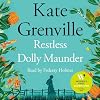
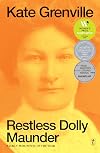
Restless Dolly Maunder
by Kate Grenville
On This Page
Description
An exquisite fictional portrait of Kate Grenville's complex, conflicted grandmother--a woman Kate feared as a child, and only came to understand in adulthood. Dolly Maunder was born at the end of the nineteenth century, when society's long-locked doors were finally starting to creak ajar for women. Born into a poor farming family in country New South Wales but clever, energetic and determined, she spent her restless life pushing at those doors. Most women like Dolly have more or less show more disappeared from view, remembered only in a family photo album as a remote figure in impossible clothes, and maybe for a lemon-pudding recipe. Restless Dolly Maunder brings one of them to life as a person we can recognise and whose struggles we can empathise with. As she did for her mother in One Life, Kate Grenville uses family memories and research to imagine her way into the life of her grandmother. This is the story of a woman born into a world of limits and obstacles who was able--though at a cost--to make a life for herself. Her battles and triumphs helped to open doors for the women who came after. show lessTags
Recommendations















Member Reviews
I picked up this novel because it appeared on the shortlist of the 2024 Women’s Prize for Fiction. As I read, I kept wondering why it had been given that honour.
The protagonist is based on the author’s grandmother, a smart and ambitious woman thwarted by the societal restrictions imposed on her gender. Born in 1881 on a sheep farm in New South Wales, Australia, she loves school and wants to be a teacher, but her dreams are crushed by her father. Marriage can get her away from the drudgery of the family farm “where everything was rough, coarse, dirty, half-broken, a life of hard work and nothing to show for it.” Of course she discovers that marriage is just another form of servitude. She urges her husband to become a businessman, show more not a farmer, and is happy when he agrees. Quickly however, she becomes restless and is looking for something else to achieve. And determined to give her children, especially her daughter, the opportunities she didn’t have, she becomes a demanding mother whose relationship with her children suffers.
I found the book repetitive. Dolly opens a business but gets bored once it’s a success. She uproots her family and moves on to a new place with another business and the pattern repeats again and again. She is never satisfied, endlessly pursuing the next challenge.
There is much to admire about Dolly. She is smart, determined, and resourceful. It is not difficult to sympathize with her because of her limited options: “She just wanted to be a woman with the same freedom to choose that a man had.” Of course her dominant trait is her restlessness: “The craving for a new place, a new venture, a new set of challenges to meet and conquer – once that craving gripped her she couldn’t ignore it.”
What is missing is some self-reflection, any real attempt to understand the impact of her single-minded restlessness on her children. Over and over again, her children must leave behind friends. Dolly even forces her daughter to pursue a career she doesn’t want, justifying her actions with “A parent knew better than a child what was best for the child.” Never does Dolly realize that she is behaving like her own mother. Dolly has been scarred by her childhood but she behaves in a way that scars her children.
Because the novel appeared on the shortlist of a prestigious literary prize, I was expecting so much more. This story is like so many I’ve read. The book is superficial in many ways; it explains everything so the reader doesn’t have to engage. There are passages like “a world of small thinking . . . was all most women had access to. They’d never been told they could do anything bigger, and they’d been blocked if they tried. Finally, like a broken-in horse, they’d forgotten their real natures. They’d gone on and made a life out of the tame things they were allowed. Clever women, so many of them, bust shrunken because they were women.” I prefer being shown, not told.
The book is the author’s attempt to understand her grandmother who was described as cold and dominating and uncaring and selfish and unloving. What the author imagines for her grandmother is a plausible explanation for Dolly’s behaviour, but as a work of literature, the book is unremarkable.
Note: Please check out my reader's blog (https://schatjesshelves.blogspot.com/) or substack (https://substack.com/@doreenyakabuski) for over 1,100 of my book reviews. show less
The protagonist is based on the author’s grandmother, a smart and ambitious woman thwarted by the societal restrictions imposed on her gender. Born in 1881 on a sheep farm in New South Wales, Australia, she loves school and wants to be a teacher, but her dreams are crushed by her father. Marriage can get her away from the drudgery of the family farm “where everything was rough, coarse, dirty, half-broken, a life of hard work and nothing to show for it.” Of course she discovers that marriage is just another form of servitude. She urges her husband to become a businessman, show more not a farmer, and is happy when he agrees. Quickly however, she becomes restless and is looking for something else to achieve. And determined to give her children, especially her daughter, the opportunities she didn’t have, she becomes a demanding mother whose relationship with her children suffers.
I found the book repetitive. Dolly opens a business but gets bored once it’s a success. She uproots her family and moves on to a new place with another business and the pattern repeats again and again. She is never satisfied, endlessly pursuing the next challenge.
There is much to admire about Dolly. She is smart, determined, and resourceful. It is not difficult to sympathize with her because of her limited options: “She just wanted to be a woman with the same freedom to choose that a man had.” Of course her dominant trait is her restlessness: “The craving for a new place, a new venture, a new set of challenges to meet and conquer – once that craving gripped her she couldn’t ignore it.”
What is missing is some self-reflection, any real attempt to understand the impact of her single-minded restlessness on her children. Over and over again, her children must leave behind friends. Dolly even forces her daughter to pursue a career she doesn’t want, justifying her actions with “A parent knew better than a child what was best for the child.” Never does Dolly realize that she is behaving like her own mother. Dolly has been scarred by her childhood but she behaves in a way that scars her children.
Because the novel appeared on the shortlist of a prestigious literary prize, I was expecting so much more. This story is like so many I’ve read. The book is superficial in many ways; it explains everything so the reader doesn’t have to engage. There are passages like “a world of small thinking . . . was all most women had access to. They’d never been told they could do anything bigger, and they’d been blocked if they tried. Finally, like a broken-in horse, they’d forgotten their real natures. They’d gone on and made a life out of the tame things they were allowed. Clever women, so many of them, bust shrunken because they were women.” I prefer being shown, not told.
The book is the author’s attempt to understand her grandmother who was described as cold and dominating and uncaring and selfish and unloving. What the author imagines for her grandmother is a plausible explanation for Dolly’s behaviour, but as a work of literature, the book is unremarkable.
Note: Please check out my reader's blog (https://schatjesshelves.blogspot.com/) or substack (https://substack.com/@doreenyakabuski) for over 1,100 of my book reviews. show less
Restless Dolly Maunder is just that, restless. She is born in the 1880's in New South Wales, Australia. Her family is poor, and she has five older sisters and brothers, and another baby is on the way. They are a farming family , and their father is an angry, sometimes violent man, her mom unhappy and grim most of the time. Dolly does well in school, but but when she tells her parents that she wants to become a teacher, her father says " over my dead body". Dolly continues to work on the farm, and loathes the repetitive hard work, but sees no way out except to eventually marry.
A woman cannot sign for a loan, purchase a piece of property and has few options. Eventually at her parents urging , she settles for a man named Bert Russell. The show more marriage is no especially happy, but the couple have three children. Dolly finds she is not much for mothering, and quickly grows restless with their farm. With Dolly's urging and planning, the family moves around frequently, purchasing and running shops, pubs, hotels and a beach house.
p6 " Girls were of no account, you learned early on. Good enough to make bread and milk the cow, and later on you'd look after children . But no woman was ever going to a part of the real business of this world ." Dolly rails against this for the rest of her life. We often forget how difficult life was for women in days gone by, and this story illustrates that well. I recall my maternal grandmother wanting to purchase a house during WW11 , and having to get her father to sign the purchase for her, as my grandfather was at war. My paternal grandmother hid her marriage for several years so that she could continue to work, as married working women were not allowed to keep jobs.
At times I felt that story was a bit repetitive as the family moved from place to place, but overall a very thought provoking read. show less
A woman cannot sign for a loan, purchase a piece of property and has few options. Eventually at her parents urging , she settles for a man named Bert Russell. The show more marriage is no especially happy, but the couple have three children. Dolly finds she is not much for mothering, and quickly grows restless with their farm. With Dolly's urging and planning, the family moves around frequently, purchasing and running shops, pubs, hotels and a beach house.
p6 " Girls were of no account, you learned early on. Good enough to make bread and milk the cow, and later on you'd look after children . But no woman was ever going to a part of the real business of this world ." Dolly rails against this for the rest of her life. We often forget how difficult life was for women in days gone by, and this story illustrates that well. I recall my maternal grandmother wanting to purchase a house during WW11 , and having to get her father to sign the purchase for her, as my grandfather was at war. My paternal grandmother hid her marriage for several years so that she could continue to work, as married working women were not allowed to keep jobs.
At times I felt that story was a bit repetitive as the family moved from place to place, but overall a very thought provoking read. show less
I greatly enjoyed this aptly entitled novel. It proceeds in linear fashion, not quite cradle to grave, but very close. It focuses on Dolly, who’s born to a poor Australian farming family in 1880 and tells her story into the 1950s. Dolly is a bright little girl and dreams of becoming a teacher. Over my dead body is her father’s harsh response. Educating children beyond the absolute basics is simply not part of the culture. After finishing at the one-room rural school, a girl is expected to stay on the farm and help her mother until she’s married off. Dolly chafes against this fate, but recognizing that the lives of most spinsters are pitiable, she resigns herself to it.
Dolly does experience some romance as a young woman. She falls show more in love with one Catholic boy, and then another, but such relationships can go nowhere: Dolly’s a “proddy”, Church of England, and the denominations don’t mix. One of the poorest and grubbiest of Dolly’s schoolmates, Bert Russell, ends up becoming a hired man on Dolly’s father’s farm. She has an aversion to him. Her mother, on the other hand, becomes fixated on the young man and determines he’ll be the one to save her restless, difficult daughter from spinsterhood. Mrs. Maunder keeps a terrible secret about Bert from Dolly, which the young woman discovers only after her marriage and the two have settled on a farm. Although Dolly typically looks ahead, this secret, her mother’s betrayal, and her own feelings of humiliation haunt her through the years.
There is no love lost between Bert and Dolly, but both have been formed by difficult circumstances, and they stay together, producing three children. Dolly has considerable drive. She’s the one who gets her family off a farm that fails to produce for several years in a row, due to the merciless elements: drought, wind, rain, and hail.
Grenville tells of their adventures moving to first to the outskirts of Sydney to run a shop and then to a series of small towns where they run pubs, hotels, and a beach house. In spite of her ongoing problems with Bert, she acknowledges that the two of them make good business partners, largely because her husband, for all his faults, respects her intelligence. Motherhood, however, is a tremendous challenge for her. She is not fulfilled by it and is often harsh with her children. She wishes she could be different, and is not without self-awareness. Nevertheless, she cannot take herself in hand. She’s quick to anger, dictatorial, and controlling. The kids are regularly uprooted, as Dolly’s restlessness inevitably kicks in. Everything changes, of course, with the Wall Street Crash of 1929, the effects of which ripple across the world. Strangely, it is only when all the Russell family has worked for is lost that Dolly becomes most free.
We tend to forget just how restricted women’s lives were, not even a hundred years ago. This simply told story reminds us. As I was reading the novel I was aware of echoes of Dolly’s problems in my grandmother’s, mother’s, and my own life. Some of the attitudes addressed here are still with us. The world still isn’t as tolerant as it might be of women who choose unconventional paths.
While there’s a certain repetitiveness to Dolly and Bert’s many moves, I still enjoyed the book and recommend it. show less
Dolly does experience some romance as a young woman. She falls show more in love with one Catholic boy, and then another, but such relationships can go nowhere: Dolly’s a “proddy”, Church of England, and the denominations don’t mix. One of the poorest and grubbiest of Dolly’s schoolmates, Bert Russell, ends up becoming a hired man on Dolly’s father’s farm. She has an aversion to him. Her mother, on the other hand, becomes fixated on the young man and determines he’ll be the one to save her restless, difficult daughter from spinsterhood. Mrs. Maunder keeps a terrible secret about Bert from Dolly, which the young woman discovers only after her marriage and the two have settled on a farm. Although Dolly typically looks ahead, this secret, her mother’s betrayal, and her own feelings of humiliation haunt her through the years.
There is no love lost between Bert and Dolly, but both have been formed by difficult circumstances, and they stay together, producing three children. Dolly has considerable drive. She’s the one who gets her family off a farm that fails to produce for several years in a row, due to the merciless elements: drought, wind, rain, and hail.
Grenville tells of their adventures moving to first to the outskirts of Sydney to run a shop and then to a series of small towns where they run pubs, hotels, and a beach house. In spite of her ongoing problems with Bert, she acknowledges that the two of them make good business partners, largely because her husband, for all his faults, respects her intelligence. Motherhood, however, is a tremendous challenge for her. She is not fulfilled by it and is often harsh with her children. She wishes she could be different, and is not without self-awareness. Nevertheless, she cannot take herself in hand. She’s quick to anger, dictatorial, and controlling. The kids are regularly uprooted, as Dolly’s restlessness inevitably kicks in. Everything changes, of course, with the Wall Street Crash of 1929, the effects of which ripple across the world. Strangely, it is only when all the Russell family has worked for is lost that Dolly becomes most free.
We tend to forget just how restricted women’s lives were, not even a hundred years ago. This simply told story reminds us. As I was reading the novel I was aware of echoes of Dolly’s problems in my grandmother’s, mother’s, and my own life. Some of the attitudes addressed here are still with us. The world still isn’t as tolerant as it might be of women who choose unconventional paths.
While there’s a certain repetitiveness to Dolly and Bert’s many moves, I still enjoyed the book and recommend it. show less
I loved this book as it so clearly depicted the reality of life for these women in the early 1900's. A recommended read and one to remind us of the physical hardships our forbears endured and their grit and determination to build a better more fulfilling life for future generations.
Although the story is clearly told, the telling is repetitive and the reader is spoon-fed the details of Dolly's life. Somewhat underwhelmed, I was expecting more of a WPFF shortlisted book.
Pretty good.
Ratings
Members
- Recently Added By
Lists

Women's Prize Longlist 2024
16 works; 8 members
Author Information

25+ Works 7,574 Members
Kate Grenville was born in Sydney on October 14, 1950. She is a graduate of the University of Sydney with a BA (Honours), the University of Colorado with a MA and a PhD in Creative Arts from the University of Technology, Sydney. She is one of Australia's best-known authors. She is the winner of the Orange Prize for Fiction, the Commonwealth show more Writers' Prize, and shortlisted for the Man Booker Prize. She will be at the Oz, New Zealand festival of literature and arts program in London in 2015. She also made the Indie Awards 2016 shortlists in the Nonfiction category with her title One Life. (Publisher Fact Sheets) show less
Awards and Honors
Awards
Distinctions
Common Knowledge
- Original language
- English
Classifications
Statistics
- Members
- 146
- Popularity
- 224,837
- Reviews
- 6
- Rating
- (3.82)
- Languages
- English
- Media
- Paper, Audiobook, Ebook
- ISBNs
- 11
- ASINs
- 2