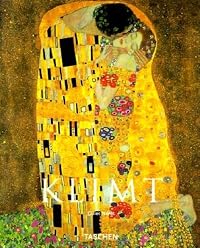
Klimt
by Gilles Néret (Author), Elke Doelman (Editor), Peter Feierabend (Editor), Gustav Klimt (Illustrator)
On This Page
Description
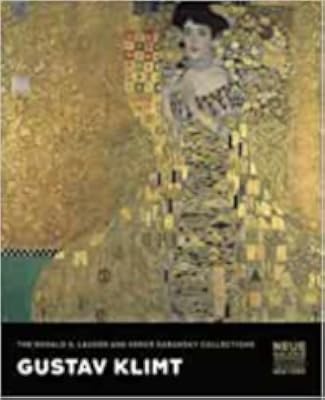
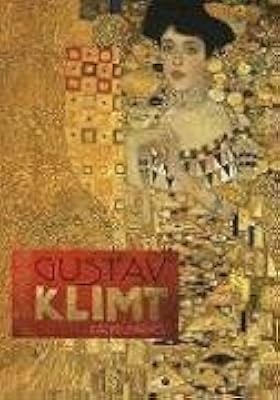
Gold, flowers and female beauty: the work of the great Austrian symbolist Gustav Klimt's ornate art expresses the apocalyptic atmosphere of Vienna's upper middle-class society around the turn of the 20th century--a society devoted to the cultivation of aesthetic awareness and the cult of pleasure. The joy which Klimt (1862-1918) and his contemporaries found--or hoped to find--in beauty was constantly overshadowed by death. And death therefore plays an important role in Klimt's art. Klimt's show more fame, however, rests on his reputation as one of the greatest erotic painters and graphic artists of his times. His drawings in particular, which have been widely admired for their artistic excellence, are dominated by the sensual portrayal of women. show lessTags
Recommendations






















Member Reviews
I’ve read enough publications from Taschen’s art portfolio that I’ve become incredibly sceptical about the authorial quality, but I was happy to not find myself immediately annoyed with this book. It’s much smaller in volume than most of the other art books I’ve read, so the temptation to skip reading in lieu of absorbing strictly the artwork was much lessened and I was determined to read the book cover to cover. I did achieve this goal, but unfortunately found myself frustrated again due to the author’s hyper-focus on the aspects of sexuality that he perceived in Klimt’s work. Obviously there are many aspects of his interpretations that I agree with (for example that Klimt’s women were extremely forward in their aspect show more for the time period, and the way that he presented nude figures was certainly unique), but his over-use of certain terminology became tedious and at times seemed to imply a sense of disdain for female sexuality and the female form as presented by Klimt. Obviously Néret’s academic subject when it came to art critique was centered around eroticism, but I came into this book expecting an broad (but brief) overview of Klimt’s work not a detailed critique of a singular theme. Taschen may know how to style and print beautiful books, but the recurrent theme of inadequate authors seriously gets on my nerves. show less
Klimt, 19th-20th century, Austrian art - Vienna
Dit boekje over Klimt is het eerste deeltje uit de serie "Moderne meesters" die de Volkskrant in samenwerking met Taschen heeft uitgegeven als cadeau bij een abonnement op de krant.
De deeltjes hebben een uniforme stijl, het zijn gebonden boekjes van ongeveer 96 blz, waarin een inleiding wordt gegeven op het werk van een 20-tal moderne schilders. Op de voorzijde van de omslag staat steeds een van de bekendste schilderijen en op de achterkant meestal een foto van de schilder.
De deeltjes zijn vlot geschreven, met uitleg bij de getoonde werken. Handig voor een eerste kennismaking, maar doet bij een aantal kunstenaars (voor iedereen andere vermoed ik) naar meer smaken.
De deeltjes hebben een uniforme stijl, het zijn gebonden boekjes van ongeveer 96 blz, waarin een inleiding wordt gegeven op het werk van een 20-tal moderne schilders. Op de voorzijde van de omslag staat steeds een van de bekendste schilderijen en op de achterkant meestal een foto van de schilder.
De deeltjes zijn vlot geschreven, met uitleg bij de getoonde werken. Handig voor een eerste kennismaking, maar doet bij een aantal kunstenaars (voor iedereen andere vermoed ik) naar meer smaken.
Jan 22, 2013Dutch
De werken van Gustav Klimt worden goed uitgelegd en de afbeeldingen passen daar ook goed bij. Wel is de uitleg wat summier, het boek mocht duidelijk niet te dik worden.
Aug 27, 2011Dutch
Ratings
Members
- Recently Added By
Author Information


Some Editions
Series
Belongs to Publisher Series
Common Knowledge
- Canonical title*
- Gustav Klimt
- Original publication date
- 1993 (Duits) (Duits); 1993 (Nederlands) (Nederlands)
- People/Characters
- Gustav Klimt
- Important places
- Vienna, Austria
- First words
- Gustav Klimt's home city was the fascinating turn-of-the-century Vienna of the belle époque.
- Last words
- (Click to show. Warning: May contain spoilers.)The beauty of woman, magnified by the golden splendour of aestheticism and its colours, allowed Klimt to re-create the glory of a lost paradise where man, condemned to a transient flowering, can experience moments of supreme bliss before he fades once more in nature's eternal cycle.
- Publisher's editor*
- Lohrmann, Inka
*Some information comes from Common Knowledge in other languages. Click "Edit" for more information.
Classifications
Statistics
- Members
- 997
- Popularity
- 26,365
- Reviews
- 5
- Rating
- (3.96)
- Languages
- 15 — Chinese, Czech, Dutch, English, French, German, Greek, Hungarian, Italian, Polish, Portuguese, Russian, Croatian, Spanish, Turkish
- Media
- Paper
- ISBNs
- 51
- ASINs
- 7