On This Page
Description
In 1949, eight years after the "Peace with Honor" was negotiated between Great Britain and Nazi Germany by the Farthing Set, England has completed its slide into fascist dicatorship. Then a bomb explodes in a London suburb.The brilliant but politically compromised Inspector Carmichael of Scotland Yard is assigned the case. What he finds leads him to a conspiracy of peers and communists, of staunch King-and- Country patriots and hardened IRA gunmen, to murder Britain's Prime Minister and show more his new ally, Adolf Hitler.
Against a background of increasing domestic espionage and the suppression of Jews and homosexuals, an ad-hoc band of idealists and conservatives blackmail the one person they need to complete their plot, an actress who lives for her art and holds the key to the Fuhrer's death. From the ha'penny seats in the theatre to the ha'pennies that cover dead men's eyes, the conspiracy and the investigation swirl around one another, spinning beyond anyone's control.
In this brilliant companion to Farthing, Welsh-born World Fantasy Award winner Jo Walton continues her alternate history of an England that could have been, with a novel that is both an homage of the classic detective novels of the thirties and forties, and an allegory of the world we live in today.
. show less
Tags
Recommendations




Member Recommendations
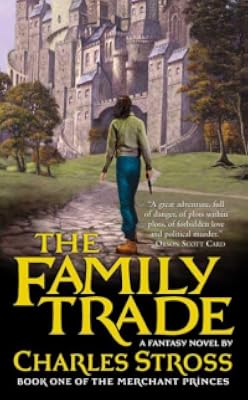
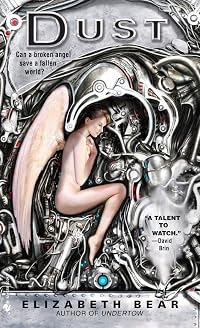
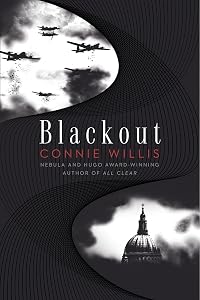
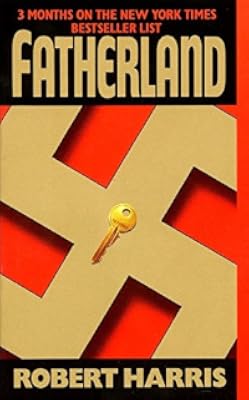
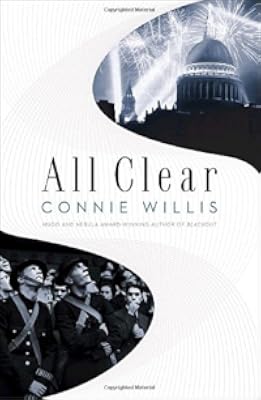
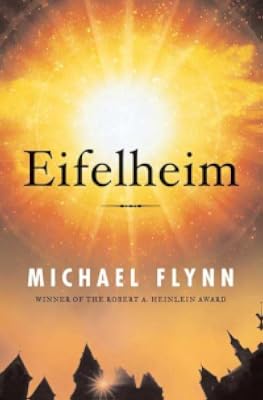
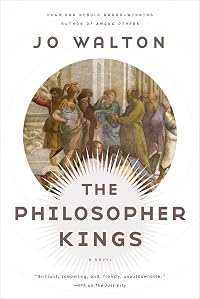
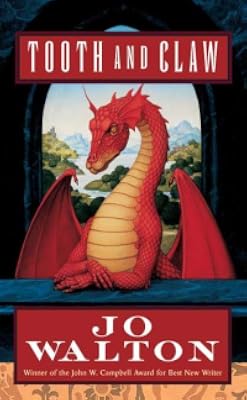
sturlington Both set in World War II-era London, one an alternate history and the other incorporating time travel.
Member Reviews
In an England that not only made peace with Nazi Germany but, is also about to welcome Hitler and some of his henchmen at the heart of London, lurks an underground and terrorist plot involving a mismatch of idealists that inspector Carmichael is assigned to uncover.
Sure, Walton takes here some easy liberty (e.g. the sister of one of the main plotters is married to Himmler, another to a physicist working on atoms...). It's a bit disappointing because too obvious a thing to do but, by contrast, her main protagonist -inspector Carmichael, the real hero of the trilogy- takes on a new depth that is chilling for being so relatable. Why individuals can act the way they do, supporting evil even against their own morale, in such extreme show more circumstances? Here's a fascinating take, giving an insightful extra-layer to an already very good plot.
'Ha'penny' is not as twisted as 'Farthing' (the first tome in this trilogy) yet, because more fast-paced and focused it is, I think, a better read. Haunting, it surely is a smart and gripping page-turner.
There's something rotten in the kingdom of Britain indeed, and this Small Change trilogy seems to get better and better book after book. I can't wait to read the last one ('Half a crown')! show less
Sure, Walton takes here some easy liberty (e.g. the sister of one of the main plotters is married to Himmler, another to a physicist working on atoms...). It's a bit disappointing because too obvious a thing to do but, by contrast, her main protagonist -inspector Carmichael, the real hero of the trilogy- takes on a new depth that is chilling for being so relatable. Why individuals can act the way they do, supporting evil even against their own morale, in such extreme show more circumstances? Here's a fascinating take, giving an insightful extra-layer to an already very good plot.
'Ha'penny' is not as twisted as 'Farthing' (the first tome in this trilogy) yet, because more fast-paced and focused it is, I think, a better read. Haunting, it surely is a smart and gripping page-turner.
There's something rotten in the kingdom of Britain indeed, and this Small Change trilogy seems to get better and better book after book. I can't wait to read the last one ('Half a crown')! show less
In 1949 in an alternate England where the government made peace with Hitler’s Germany following the Blitz, a young actress gets caught up in a plot to kill Hitler. It’s Inspector Carmichael of Scotland Yard’s job to foil the assassination plot, even though the fascist government threatens his private life with his partner, Jack, and the lives of his Jewish colleagues. Walton imagines a theatre world where cross-casting is in fashion, and the actress at the heart of the plot has been cast as Hamlet in a production that Hitler and the Prime Minister will attend on opening night. The actress, Violet Lark, is one of the six Larkin sisters, who bear more than a slight resemblance to the real-life Mitford sisters. The unpredictable plot show more kept me in suspense right up to the final page. show less
http://nwhyte.livejournal.com/1809634.html
I was riveted by this tale of an assassination plot against Hitler and the British prime minister, in an alternate 1949 eight years after the war ended in a sordid compromise. Walton's two protagonists are the gay policeman from the previous book and an aristocratic actress whose family are closely modelled on the Mitford sisters (with the further development that one of them has actually married Himmler), neither of them completely believing in their own role in the story. While I loved almost all the detail (especially spotting the parallels between the Larkins and the Mitfords), I boggled a bit at an Ulster baronet and landed gent who is also an IRA agent, but I suppose the little-known case show more of Eric "Chink" Dorman-Smith is not that dissimilar. Anyway, this is very very highly recommended, and I will not leave it so long until I read Half a Crown. show less
I was riveted by this tale of an assassination plot against Hitler and the British prime minister, in an alternate 1949 eight years after the war ended in a sordid compromise. Walton's two protagonists are the gay policeman from the previous book and an aristocratic actress whose family are closely modelled on the Mitford sisters (with the further development that one of them has actually married Himmler), neither of them completely believing in their own role in the story. While I loved almost all the detail (especially spotting the parallels between the Larkins and the Mitfords), I boggled a bit at an Ulster baronet and landed gent who is also an IRA agent, but I suppose the little-known case show more of Eric "Chink" Dorman-Smith is not that dissimilar. Anyway, this is very very highly recommended, and I will not leave it so long until I read Half a Crown. show less
I'm used to trilogies being fairly uniform in style, so I was expecting Ha'penny to be a second Farthing. Well, no, not so much. Farthing is a classic murder-at-the-ancestral-family-estate mystery, even as it depicts an alternate Britain's slide into fascism. Ha'penny is a political thriller. It starts as a mystery, but you find out soon enough who died and how, and the focus of the story quickly shifts to a plot to kill Britain's prime minister and his political ally, Hitler. Set about two weeks after the end of Farthing, the atmosphere has changed noticeably. Instead of fascism quietly, stealthily lurking in the background of the story, it's an active concern for the characters, who discuss it, argue about it, and try to fit their show more lives around it.
Like Farthing, the narration in Ha'penny alternates between a woman (stage actress Viola Lark) and Inspector Peter Carmichael. I had a slightly harder time believing in Viola than in Lucy Kahn, mainly because of Viola's compliance/infatuation with Devlin, which seemed more convenient for the plot than realistic . Aside from that, though, I think Walton did a fine job with her character. Both she and Lucy are first-person narrators, but they "sound" different. Unlike Lucy, Viola is a fine example of someone who doesn't care what the government is up to as long as it leaves her alone. And it was good to see Carmichael again, definitely shaken after the events of Farthing, and trying to find his way. We see more of his personal life here (and finally get to meet Jack!).
The conspiracy in Ha'penny is no secret except to Carmichael and the police. In most thrillers, you'd be in suspense, wondering if the conspirators would be able to pull off their plan before the police figured it out. But here, you know they'll fail because this is the middle book of a trilogy, and if they succeeded, we wouldn't need the third book. Despite knowing all that, I still found myself wondering if they'd manage it anyway, which I figured was a sign of good writing.
The core of Ha'penny, though, is the increasingly poisonous atmosphere. Walton does an excellent job of showing how characters willingly contribute to their own oppression, in the hopes of saving themselves or their loved ones. As is usual in real life, there aren't any unfailingly heroic characters. Even while I was rooting for the conspirators (they're trying to kill Hitler; how could you not cheer them on?), it's clear that if the assassination is successful, bystanders will die as well. It's plausible that the conspirators would be seen as terrorists, not only by a government happy to have scapegoats at hand, but by everyday people.
So, yeah, read Ha'penny. Just don't expect it to be Farthing Redux.
P.S. I'd love to see the cross-cast version of Hamlet that Viola was starring in. show less
Like Farthing, the narration in Ha'penny alternates between a woman (stage actress Viola Lark) and Inspector Peter Carmichael. I had a slightly harder time believing in Viola than in Lucy Kahn
The conspiracy in Ha'penny is no secret except to Carmichael and the police. In most thrillers, you'd be in suspense, wondering if the conspirators would be able to pull off their plan before the police figured it out. But here, you know they'll fail because this is the middle book of a trilogy, and if they succeeded, we wouldn't need the third book. Despite knowing all that, I still found myself wondering if they'd manage it anyway, which I figured was a sign of good writing.
The core of Ha'penny, though, is the increasingly poisonous atmosphere. Walton does an excellent job of showing how characters willingly contribute to their own oppression, in the hopes of saving themselves or their loved ones. As is usual in real life, there aren't any unfailingly heroic characters. Even while I was rooting for the conspirators (they're trying to kill Hitler; how could you not cheer them on?), it's clear that if the assassination is successful, bystanders will die as well. It's plausible that the conspirators would be seen as terrorists, not only by a government happy to have scapegoats at hand, but by everyday people.
So, yeah, read Ha'penny. Just don't expect it to be Farthing Redux.
P.S. I'd love to see the cross-cast version of Hamlet that Viola was starring in. show less
Somewhat less depressing than Farthing, but only just. Two stories - two viewpoints - eventually converging in the climactic event. Inspector Carmichael is investigating an explosion that killed two people; Viola Lark(in) is getting caught up in a conspiracy to place a bomb to kill Hitler and Prime Minister Normanby. Carmichael's investigation keeps getting closer, but the final discovery is pretty much accidental. A good deal more about the casual racism and constant paranoia that permeates this alternate England, and about the levers Carmichael's superiors have on him. Not many escapees this time, and a lot of people dead, but Carmichael thinks he has a lever to push back now. And maybe he does, but it's going to be nasty using it. show more I'd started the book at least twice before, and could never force myself into continuing; this time I pushed through. I'm glad I read it, but I have no intention of ever reading it again. I suppose I will read the next one, though. Eventually. Something light right now, though, to take the nasty taste out of my mind. show less
These books blow my mind. I read FARTHING recently and immediately ordered the next two in the trilogy. Each book can stand alone but is interconnected. While HA'PENNY wasn't as good as its predecessor--the first person perspective just isn't quite as gripping and sympathetic--it's still a darn good book. I read it over a day and a half, and found many excuses to pause for a while and read more. Walton has created a world that's terrifying because it's so convincing: Britain and Germany, stopping World War II early, and Britain's slide into fascism. The racism is particularly appalling.
The real skill of Walton's writing is how she depicts the two perspective: Violet, an actress who's snared in a bomb plot she really has no invested show more interest in, and Inspector Carmichael of Scotland Yard, a truly good man who is truly caught in the new Prime Minister's terrible web. It's a book that makes you cheer for the terrorists, as appalling as that is, because you want Hitler dead, too.
I already started the third book. show less
The real skill of Walton's writing is how she depicts the two perspective: Violet, an actress who's snared in a bomb plot she really has no invested show more interest in, and Inspector Carmichael of Scotland Yard, a truly good man who is truly caught in the new Prime Minister's terrible web. It's a book that makes you cheer for the terrorists, as appalling as that is, because you want Hitler dead, too.
I already started the third book. show less
I read Farthing last month, and straight away I added the next book to Mount TBR. Well, the second I finished this I almost grabbed the third in the series to start reading it. In fact, had it not been for the fact that I didn’t have it with me, and had time left on my lunch for reading, I would probably have dived right into the third book. Because I loved this one. I mean, I really liked Farthing, it was great, but this one is even better in some respects.
It is certainly darker.
And yet despite the darkness and the horror it is an incredibly easy book to read and to enjoy. Also, when I say dark and horror, I don’t mean that there this is anything like a torture-porn story or a ghost story. Instead it is a social and political show more horror story, the erosion of democracy and the formation of a fascist society. And how easy it seems to happen.
I hadn’t read the blurb on the back, of this, or any of the other books in the series, so I thought this might be a continuation of Lucy and David’s story. So I was a bit thrown to have a different first person narrator. But only initially. After a paragraph or too I could see why Walton chose to centre the story on a different woman. She’s from a similar class and status to Lucy, but she has a very different outlook to her.
Inspector Carmichael is the returning central character here, and after how Farthing ended for him, he has serious soul searching to do. His story is so important. A good man, in terrible times, with a secret that those in power are all too willing to use to keep him in line. His story is heart-breaking.
I found that I kept wanting to keep reading this book. It’s certainly a tense, atmospheric page-turner of a book. Makes for compulsive reading. show less
It is certainly darker.
And yet despite the darkness and the horror it is an incredibly easy book to read and to enjoy. Also, when I say dark and horror, I don’t mean that there this is anything like a torture-porn story or a ghost story. Instead it is a social and political show more horror story, the erosion of democracy and the formation of a fascist society. And how easy it seems to happen.
I hadn’t read the blurb on the back, of this, or any of the other books in the series, so I thought this might be a continuation of Lucy and David’s story. So I was a bit thrown to have a different first person narrator. But only initially. After a paragraph or too I could see why Walton chose to centre the story on a different woman. She’s from a similar class and status to Lucy, but she has a very different outlook to her.
Inspector Carmichael is the returning central character here, and after how Farthing ended for him, he has serious soul searching to do. His story is so important. A good man, in terrible times, with a secret that those in power are all too willing to use to keep him in line. His story is heart-breaking.
I found that I kept wanting to keep reading this book. It’s certainly a tense, atmospheric page-turner of a book. Makes for compulsive reading. show less
Members
- Recently Added By
Lists

Best Science Fiction Novels
816 works; 430 members

Best Alternate History
111 works; 60 members

Favorite Science Fiction by Women Authors
737 works; 202 members

Dystopian and Apocalyptic Literature
350 works; 74 members

Alternate Englands
34 works; 7 members

Books Set in Great Britain
191 works; 13 members

Genre Benders: Alternate History + Crime
10 works; 4 members

Prometheus Award Winners
16 works; 1 member

Speculative Fiction to Read
706 works; 32 members

Conspiracies
2 works; 2 members

Books Read in 2012
816 works; 34 members

Books about World War II
241 works; 22 members

Novels Featuring Actors and the Theater
4 works; 1 member

Books Read in 2021
5,361 works; 114 members

Books Read in 2015
3,299 works; 129 members

Books Read in 2017
4,249 works; 129 members
Author Information

61+ Works 14,699 Members

Jo Walton is a LibraryThing Author, an author who lists their personal library on LibraryThing.
Some Editions
Awards and Honors
Awards
Series

Belongs to Publisher Series
Gallimard, Folio SF (582)
Common Knowledge
- Canonical title*
- Hamlet au paradis
- Original title
- Ha'penny
- Original publication date
- 2007
- People/Characters
- Viola Larkin; Mark Normanby; Adolf Hitler; Lauria Gilmore; Sergeant Royston; Peter Anthony Carmichael
- Important places
- London, England, UK; England, UK
- Important events
- World War II (1939 | 1945)
- Epigraph
- Christmas is coming, the goose is getting fat
Please put a penny in the old man's hat.
If you haven't got a penny, a ha'penny will do,
If you haven't got a ha'penny, then God bless you!
-Tradition... (show all)al British children's rhyme
"When I was a lad," replied the foreman, "young ladies was young ladies. And young gentleman was young gentlemen. If you get my meaning."
"What this country wants" said Padgett "is a 'Itler."
- Dorothy L. Sayers... (show all), Gaudy Night (1935) - Dedication
- This is for Tom Womack, of Winchester, Oxford, and Ploktacon, who has the courage of his convictions.
- First words
- They don't hang people like me. They don't want the embarrassment of a trial, and besides, Pappa is who he is. Like it or not, I'm a Larkin. They don't want the headline "Peer's Daughter Hanged." So much easier to shut me awa... (show all)rd and promise that if I keep very quiet they'll release me a cured into my family's custody in a year or two. Well, I may have been an awful fool, but I've never been saner, and besides I can't stand most of my family. I've never had the slightest intention of keeping quiet. That's why I'm writing this. I hope someone someday might get the chance to read it. Pay attention. I'm going to tell you the important things, in order. -Chapter One
- Quotations
- He had learned from the Farthing Set that you couldn't just change things from the outside, you had to change how people felt. If people stopped being afraid, they'd get rid of the dictators for themselves.
- Last words
- (Click to show. Warning: May contain spoilers.)'Beggar that I am, I am even poor in thanks; but I thank you, and sure dear friends, my thanks are too dear a ha'penny.'
- Publisher's editor
- Nielsen Hayden, Patrick
- Blurbers
- Doctorow, Cory; Wilson, Robert Charles; Turtledove, Harry; Goldstein, Lisa
- Original language
- English
- Canonical DDC/MDS
- 823.914
- Canonical LCC
- PR6073.A448
*Some information comes from Common Knowledge in other languages. Click "Edit" for more information.
Classifications
Statistics
- Members
- 830
- Popularity
- 33,210
- Reviews
- 56
- Rating
- (3.86)
- Languages
- English, French, German, Spanish
- Media
- Paper, Audiobook, Ebook
- ISBNs
- 13
- ASINs
- 6