On This Page
Description
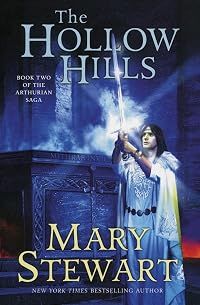
The spellbinding, suspenseful story of how Merlin, the Enchanter, helped Arthur become the king of all Britain—a magnificent novel set in a time when no life is safe, no law stableKeeping watch over the young Arthur Pendragon, the prince and prophet Merlin Ambrosius is haunted by dreams of the magical sword Caliburn, which has been hidden for centuries. When Uther Pendragon is killed in battle, the time of destiny is at hand, and Arthur must claim the fabled sword to become the true High show more King of Britain.
The prophetic voice of Merlin communicates not only the bristling atmosphere of the story's ancient setting but also its profound relevance to our own time. Once again, as she did in her bestselling The Crystal Cave, Mary Stewart provides a glowing re-creation of pre-Camelot England.
. show less
Tags
Recommendations




















Member Reviews
Arthurian legends usually bore me, but not this one. Mary Stewart writes in a mature style here, creating an older YA-adult narrative. Her descriptive passages were evocative, bringing in such atmospheric details that I 'lived the story'.
I preferred this "Sword in the Stone" telling so much more than other authors' versions.
Dropped 1/2 a star because occasionally some of the details seemed repetitive. However, the characterizations of a very young Arthur, his companions, and Merlin's adventures plus the whirling politics around both lead characters were so engaging = Highly Recommended.
I preferred this "Sword in the Stone" telling so much more than other authors' versions.
Dropped 1/2 a star because occasionally some of the details seemed repetitive. However, the characterizations of a very young Arthur, his companions, and Merlin's adventures plus the whirling politics around both lead characters were so engaging = Highly Recommended.
It makes no sense that a book I have read this many times could still make me thrill with anticipation,
bask in the beauty of the language, and cry with genuine emotion; but it does. I could not have chosen anything better to read in these dark days--there is always the promise of light. 4/9/20
-----------------
After the thrills of The Crystal Cave, we pick Merlin up, bleeding on the side of the road out of Tintagel, and watch as he begins his journey into the life of the boy who will be King Arthur. One of literature’s great characters, Merlin is the bridge between Ambrosius and Arthur--the once and future kings, and for my money he embodies all that is fine about both of them.
Mary Stewart's Merlin appeals to me mostly because of his show more humanity. He pays a high price for his powers, and they are granted to him only at the whim and determination of his god. Thus, it is not Merlin who controls events or chooses history, but Merlin who works on earth to bring about a plan clearly forged in heaven. By that same token, he cannot always prevent tragedy, and he must bear, as all men do, his share of regret and disappointment. He states, “I was the god’s instrument, but I was not the god’s hand.” He knows his role and it prevents his being arrogant or self-important and makes him lovable and real. We are able to see him as a man who is given the difficult role of shaping the right future for a nation by trusting that God is behind him in whatever he must do. A pretty heavy burden.
In The Crystal Cave, we see Merlin as a boy and a youth, learning about his god and how to wield his powers. In The Hollow Hills, we see Merlin the man, who understands and has confidence in himself and what he can and should accomplish for his god. And, we see Merlin as a father-figure, with Arthur as his child, his progeny, his legacy.
Even the legend of Arthur is enhanced by Stewart’s presentation of Arthur as a boy rather than as we usually see him, a full-grown King. He is shaped by his foster family into a person of values and we see how he comes to rely on Merlin for both love and guidance. For anyone who has only the image of Merlin as a wizard in flowing robes, self-assured and able to command the thunder when he desires, I submit that this image is an empty jug compared to this Merlin of flesh and blood who must think and feel his way toward the purpose that lies in front of him, a purpose that is passed to him as a sacred duty by his own father.
There are moments of descriptive beauty that are awe-inspiring. There are moments of sentiment that bring tears to my eyes (even after multiple readings). There are moments of intelligent humor that make me smile and which give the characters who speak the lines depth and tangibility. Stewart is a masterful storyteller, with the wisdom and skills of Homer. She transports us. The only thing that makes coming to the end of this book tolerable is knowing that The Last Enchantment lies ahead! show less
bask in the beauty of the language, and cry with genuine emotion; but it does. I could not have chosen anything better to read in these dark days--there is always the promise of light. 4/9/20
-----------------
After the thrills of The Crystal Cave, we pick Merlin up, bleeding on the side of the road out of Tintagel, and watch as he begins his journey into the life of the boy who will be King Arthur. One of literature’s great characters, Merlin is the bridge between Ambrosius and Arthur--the once and future kings, and for my money he embodies all that is fine about both of them.
Mary Stewart's Merlin appeals to me mostly because of his show more humanity. He pays a high price for his powers, and they are granted to him only at the whim and determination of his god. Thus, it is not Merlin who controls events or chooses history, but Merlin who works on earth to bring about a plan clearly forged in heaven. By that same token, he cannot always prevent tragedy, and he must bear, as all men do, his share of regret and disappointment. He states, “I was the god’s instrument, but I was not the god’s hand.” He knows his role and it prevents his being arrogant or self-important and makes him lovable and real. We are able to see him as a man who is given the difficult role of shaping the right future for a nation by trusting that God is behind him in whatever he must do. A pretty heavy burden.
In The Crystal Cave, we see Merlin as a boy and a youth, learning about his god and how to wield his powers. In The Hollow Hills, we see Merlin the man, who understands and has confidence in himself and what he can and should accomplish for his god. And, we see Merlin as a father-figure, with Arthur as his child, his progeny, his legacy.
Even the legend of Arthur is enhanced by Stewart’s presentation of Arthur as a boy rather than as we usually see him, a full-grown King. He is shaped by his foster family into a person of values and we see how he comes to rely on Merlin for both love and guidance. For anyone who has only the image of Merlin as a wizard in flowing robes, self-assured and able to command the thunder when he desires, I submit that this image is an empty jug compared to this Merlin of flesh and blood who must think and feel his way toward the purpose that lies in front of him, a purpose that is passed to him as a sacred duty by his own father.
There are moments of descriptive beauty that are awe-inspiring. There are moments of sentiment that bring tears to my eyes (even after multiple readings). There are moments of intelligent humor that make me smile and which give the characters who speak the lines depth and tangibility. Stewart is a masterful storyteller, with the wisdom and skills of Homer. She transports us. The only thing that makes coming to the end of this book tolerable is knowing that The Last Enchantment lies ahead! show less
The book picks up right where the first left off and shows once again that no good deed goes unpunished: Uther is not at all grateful that Merlin has finagled him a way into the bedchamber of Ygraine. Merlin finds himself in disgrace and banished from court.
So now the waiting begins: waiting for Arthur to be born, to grow to a reasonable age. Merlin spends this time far away, and that is one of my favourite sections of the book: travelling across the former Roman empire, collecting the frayed strands of oral and written tradition and finally discovering THE sword, bringing it home to a place where it can wait its turn...
And then there's Arthur's education, preparing a boy for kingdom. It is enchanting and intriguing in turn, and very show more down-to-earth in parts. It makes for a very satisfying read. show less
So now the waiting begins: waiting for Arthur to be born, to grow to a reasonable age. Merlin spends this time far away, and that is one of my favourite sections of the book: travelling across the former Roman empire, collecting the frayed strands of oral and written tradition and finally discovering THE sword, bringing it home to a place where it can wait its turn...
And then there's Arthur's education, preparing a boy for kingdom. It is enchanting and intriguing in turn, and very show more down-to-earth in parts. It makes for a very satisfying read. show less
Merlin Ambrosius as written by Mary Stewart may be one of my favorite narrators. There is immense pleasure in how calm, intense, and sharp he is, and it gives an interesting edge to the narrative, because he isn't the type to spill his secrets in the narration. There is plenty of suspense in how he will solve each seemingly impossible conundrum as it comes his way. This sequel to "The Crystal Cave" picks up almost immediately after the events of the first book, with Merlin making his way back to his home and nursing his wounds from the fight at Tintagel. Once again there is incredible attention to period detail, which suffuses the entire book with a sense of authenticity. The Dark Ages of Britain are brought to roiling life once show more again.
What I really enjoy about Stewart's writing is that even though I am fairly familiar with the events of Arthurian legend (especially all of the tragic twists and turns), she puts her own spin on them to make sense for her narrative, and still manages to imbue the book and characters with a strong sense of hope in the future. When Arthur takes an accidental step that seals his fate, it twists in the reader like a knife, even though we all know how the story has to end, and we all know what has to happen for the story to be an adequate interpretation of Arthurian legend. The author's skill is in making us come along for the ride, invested with all our heart, despite our knowledge of legend. show less
What I really enjoy about Stewart's writing is that even though I am fairly familiar with the events of Arthurian legend (especially all of the tragic twists and turns), she puts her own spin on them to make sense for her narrative, and still manages to imbue the book and characters with a strong sense of hope in the future. When Arthur takes an accidental step that seals his fate, it twists in the reader like a knife, even though we all know how the story has to end, and we all know what has to happen for the story to be an adequate interpretation of Arthurian legend. The author's skill is in making us come along for the ride, invested with all our heart, despite our knowledge of legend. show less
This is a product of its times so content warning for some troubling attitudes about sexuality and women. That said, I loved this series when I first read it in high school and I'm still loving it as I revisit as an adult. I love how Stewart provides non-magical explanations for most of the legendary aspects of the story without completely eliminating Merlin's power. It makes for a world that feels simultaneously real and magical.
So we're carrying on with the Arthurian legend in elegant Mary-Stewart style. The Hollow Hills picks up where The Crystal Cave left off; Merlin, having maneuvered Uther and Ygraine into conceiving Arthur, is nursing wounds both physical and psychic. The mystical force that drove him seems to have deserted him, but much remains to be done if young Arthur is to survive and become King. As always, Stewart manages the magical elements of the Arthurian legend (Arthur's fostering with Count Ector, the Lake which holds the great sword Excalibur, and the mystical Sword in the Stone) with great skill, giving them plausibility without either making them ridiculous or stripping them of magic altogether - a tricky tightrope to walk.
And also as show more always, her characters are engaging and believable, their actions making far more sense in Stewart's world than in Malory's. show less
And also as show more always, her characters are engaging and believable, their actions making far more sense in Stewart's world than in Malory's. show less
This is the sequel to The Crystal Cave, and just as finely written. It deals with what Merlin did during Arthur’s childhood, how he found the sword Excalibur and put it somewhere safe and mysterious for Arthur to find. I like the way that Mary Stewart paints the Arthurian story against a believable sixth century backdrop, showing a time of upheaval after the departure of the Romans, and the lingering remnants of Paganism set against the backdrop of the rise of Christianity.
Members
- Recently Added By
Lists

Best Historical Fiction
620 works; 261 members

Best Arthurian Fiction
104 works; 33 members

Historical Fiction
889 works; 90 members

Celtic Fiction
26 works; 10 members

1970s
657 works; 23 members

Books Read in 2023
5,547 works; 145 members

Historical Fantasy
93 works; 14 members

Publisher's Weekly Bestsellers - Part II - 1940 - 1979
355 works; 5 members

Books to buy
8 works; 1 member

Carole's List
445 works; 13 members
Modern Arthurian Fiction
237 works; 16 members

Books Read in 2021
5,361 works; 114 members

Books Read in 2019
4,052 works; 108 members

Swinging Seventies
255 works; 18 members

Books Read in 2003
257 works; 7 members

EGBERTINA'S List of childhood books worthy of merit or unspeakable delight
155 works; 6 members

Books Read in 2024
4,623 works; 126 members

Read in 2003
81 works; 1 member

Books We Want To Read Again For The First Time
384 works; 160 members

Favorite Fairy Tales
269 works; 103 members
Author Information

51+ Works 40,210 Members
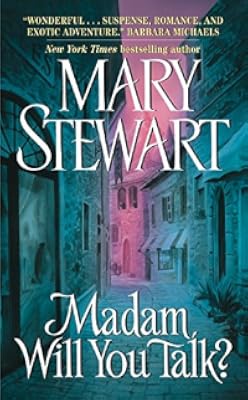
Mary Stewart was born on September 17, 1916 in Sunderland, County Durham, England. She received a First Class Honours B.A. in English from Durham University in 1938 and a teaching certificate in 1939. She taught in elementary school until 1941 when she was offered a post at Durham University. She taught there until 1945 and received a M.A. in show more English during that time. Her first book, Madam, Will You Talk?, was published in 1955. Her other works included My Brother Michael, Touch Not the Cat, This Rough Magic, Nine Coaches Waiting, Thornyhold, Rose Cottage, and the Merlin Trilogy. She also wrote children's books including Ludo and the Star Horse and A Walk in Wolf Wood. She died on May 9, 2014 at the age of 97. (Bowker Author Biography) show less
Some Editions
Awards and Honors
Awards
Distinctions
Notable Lists
Series

Belongs to Publisher Series
Work Relationships
Common Knowledge
- Canonical title
- The Hollow Hills
- Original title
- The Hollow Hills
- Original publication date
- 1973
- People/Characters
- Merlin Ambrosius (Myrddin Emrys); Uther Pendragon; Ygraine; Sir Ector; Morgause; Sir Ector (show all 7); Bedwer
- Important places
- Tintagel, Cornwall, England, UK; Lake District, Cumbria, England, UK; London, England, UK; Benoic
- Important events
- Coronation of King Arthur
- Dedication
- To the memory of my father
- First words
- There was a lark singing somewhere high above.
- Quotations
- To remember love after long sleep; to turn again to poetry after a year in the market place, or to youth after resignation to drowsy and stiffening age; to remember what once you thought life could hold, after telling over wi... (show all)th muddied and calculating fingers what it has offered; this is music, made after long silence.
- Last words
- (Click to show. Warning: May contain spoilers.)All it held now was the hilt of the carved sword standing in the stone like a cross, and the letters still deep and distinct above it: TO HIM UNCONQUERED.
- Original language
- English
Classifications
Statistics
- Members
- 4,516
- Popularity
- 3,250
- Reviews
- 61
- Rating
- (4.10)
- Languages
- 10 — Czech, Dutch, English, French, German, Italian, Portuguese, Russian, Spanish, Swedish
- Media
- Paper, Audiobook, Ebook
- ISBNs
- 57
- ASINs
- 36