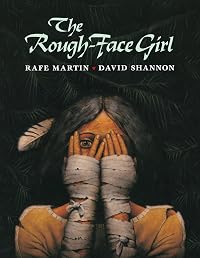
The Rough-Face Girl
by Rafe Martin
On This Page
Description
In this Algonquin Indian version of the Cinderella story, the Rough-Face Girl and her two beautiful but heartless sisters compete for the affections of the Invisible Being.Tags
Recommendations


Member Recommendations
Member Reviews
The finest clothes, jewelry, and looks, all external elements, do not compare to the importance of a pure and kind heart. In other words, it is what’s inside that matters most, not the outside. I enjoyed how the book pushes the reader to think beyond their own perspective. For example, when we find out that the Rough Face girl is the only one who can see the Invisible being, I was confronted with many perspectives and questions - Is she the only one who sees the invisible being because there is something magical and good inside her? Is the invisible man a real man or is there spiritual meaning here? Is the invisible man a past-life lover of the rough face girl, reflecting that we always will find the ones we love? The book leaves the show more end up for many posing questions and interpretations which foster critical thinking. I also enjoyed how well-developed the characters were, for example, it was clear that the two sisters of rough face girl were very cruel, such as forcing her to feed the flames which contributed to the burned scars on her face and arms. This gives the reader a sense of remorse for the protagonist. But we also get a sense of bravery of the rough face girl who, despite being teased and laughed at for making her own clothes to marry the invisible man, she stood tall – “The rough face girl had faith in herself and she had courage. She didn’t turn back. She just kept walking right through the village.” These well-developed characters helped give greater impact to the theme of the book. show less
Mistreated by her two older sisters, and made to do all of the work, a young Algonquin girl becomes so singed and covered with scars that she is called Rough-Face Girl in this Native American variant of the 'persecuted heroine' tale-type, sometimes called the Cinderella story. When her sisters visit the wigwam of the Invisible Being who lives in their village, each hoping to become his wife, they use all of the family's finery, but find that after telling lies, and pretending to see the great hunter, they are sent home in disgrace. Rough-Face Girl then sets out, clothed in the finery provided by the forest, but unlike her sisters her kind heart allows her to truly see the Invisible Being...
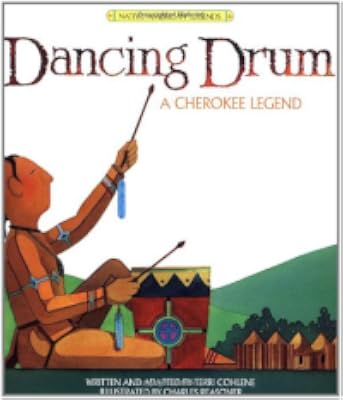
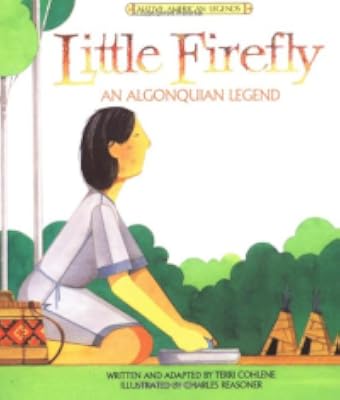
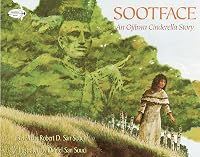
Rafe Martin's The Rough-Face Girl is the third show more retelling of this seemingly widespread tale from the Algonquin peoples of native North America, following upon Terri Cohlene's Little Firefly: An Algonquian Legend and Robert D. San Souci's Sootface: An Ojibwa Cinderella Story, that I have read. I found Martin's telling engaging, and David Shannon's accompanying artwork beautiful, although I think I prefer the San Souci, by just a margin. I do find it interesting, when considering this story, that the heroine's prospective bridegroom seems supernatural, with his bow made of the rainbow, and his sled made of the Milky Way. Is he meant to be a spirit being? Does Rough-Face Girl's union with him have some greater significance, beyond the usual 'kindness is rewarded with connubial bliss' that one sees in this kind of story? I'd love to know more about Martin's specific sources for this telling, but unlike San Souci, he does not provide that information. Still, leaving aside these questions, this is an enjoyable story, one that is paired with strikingly beautiful artwork. Recommended to young folklore enthusiasts, and to readers interested in worldwide variants of the Cinderella story. show less
Rafe Martin's The Rough-Face Girl is the third show more retelling of this seemingly widespread tale from the Algonquin peoples of native North America, following upon Terri Cohlene's Little Firefly: An Algonquian Legend and Robert D. San Souci's Sootface: An Ojibwa Cinderella Story, that I have read. I found Martin's telling engaging, and David Shannon's accompanying artwork beautiful, although I think I prefer the San Souci, by just a margin. I do find it interesting, when considering this story, that the heroine's prospective bridegroom seems supernatural, with his bow made of the rainbow, and his sled made of the Milky Way. Is he meant to be a spirit being? Does Rough-Face Girl's union with him have some greater significance, beyond the usual 'kindness is rewarded with connubial bliss' that one sees in this kind of story? I'd love to know more about Martin's specific sources for this telling, but unlike San Souci, he does not provide that information. Still, leaving aside these questions, this is an enjoyable story, one that is paired with strikingly beautiful artwork. Recommended to young folklore enthusiasts, and to readers interested in worldwide variants of the Cinderella story. show less
Native American version of the Cinderella story from the Algonquin tradition. As a teacher, I love sharing this story because it opens up discussions about cultural perspectives, inner beauty, and resilience. The language is rich and poetic, making it an excellent read-aloud that keeps students engaged. The story follows a girl who is scarred by fire while tending to her sisters' needs, yet her courage and honesty help her see the Invisible Being and win his love. I appreciate how this tale contrasts with the more familiar European Cinderella stories, providing students with a broader worldview and deeper appreciation for oral traditions. The illustrations are dramatic and help visualize the natural and spiritual elements of the story. show more It’s a powerful way to discuss storytelling across cultures and the importance of kindness and strength. show less
Summary: A young Native American woman lives in the village with her father and two sisters. Her sisters are very unkind to her and call her Rough-Face Girl from where she has been burned tending to the fire. But when her sisters try to marry the invisible being, a powerful hunter who can only be seen by those pure of heart. The sisters cannot see him of course, but the Rough-Face girl in her bark dress and over-sized moccasins proves that a beautiful heart means more than a beautiful face.
Review: I really enjoyed this story. It is a familiar trope that many are familiar with, a Cinderella-esque tale. But even better than Cinderella for the girl is not virtuous by way of her beauty, but beautiful by way of her virtues.
Craft show more Elements/Lesson: Compare and contrast the Rough-Face Girl with another Cinderella story. show less
Review: I really enjoyed this story. It is a familiar trope that many are familiar with, a Cinderella-esque tale. But even better than Cinderella for the girl is not virtuous by way of her beauty, but beautiful by way of her virtues.
Craft show more Elements/Lesson: Compare and contrast the Rough-Face Girl with another Cinderella story. show less
I was prepared to dislike this but I liked it very much. The illustrations are incredible, I cannot believe this is the same illness strator as the No, David books.
Content Concern- if you prefer to search out voices that are Native American for these folktales- this is not that. But it is beautiful.
Content Concern- if you prefer to search out voices that are Native American for these folktales- this is not that. But it is beautiful.
Heart-breakingly beautiful. This, Ms. Meyer, is how you write about "ugly" people.
Summary:
"The Rough-Face Girl" by Rafe Martin and illustrated by David Shannon is the Cinderella story with a Native American twist. In a village there is the Invisible-Being and no one can see him except his sister. All of the young women of the village want to marry him but it is only the young woman who can truly see him that can do so. However, there is a young woman with scarred hands and burnt hair who claims that she can see him, the Rough-Face Girl.
Personal Reaction:
I loved this book! I have always enjoyed traditional fairy-tales and this book is one of my new favorites. I am part Native American so it was really nice to see the incorporation of Native American culture into the traditional Cinderella story. I also loved the show more artwork in the book. The colors have the neutral tan colors with a little vivid color that most Native American art has. The one thing that I don't like about this book is the length; it's too short! I wanted more of this story.
Extension Ideas:
1.) This book is a great why to introduce Native American culture into learning especially since it has that typical Cinderella story line. This means that the majority of children will already be familiar with the story but they will get to hear it from a different cultural standpoint.
2.) This story also teaches the value of internal beauty and not judging a book by its cover. show less
"The Rough-Face Girl" by Rafe Martin and illustrated by David Shannon is the Cinderella story with a Native American twist. In a village there is the Invisible-Being and no one can see him except his sister. All of the young women of the village want to marry him but it is only the young woman who can truly see him that can do so. However, there is a young woman with scarred hands and burnt hair who claims that she can see him, the Rough-Face Girl.
Personal Reaction:
I loved this book! I have always enjoyed traditional fairy-tales and this book is one of my new favorites. I am part Native American so it was really nice to see the incorporation of Native American culture into the traditional Cinderella story. I also loved the show more artwork in the book. The colors have the neutral tan colors with a little vivid color that most Native American art has. The one thing that I don't like about this book is the length; it's too short! I wanted more of this story.
Extension Ideas:
1.) This book is a great why to introduce Native American culture into learning especially since it has that typical Cinderella story line. This means that the majority of children will already be familiar with the story but they will get to hear it from a different cultural standpoint.
2.) This story also teaches the value of internal beauty and not judging a book by its cover. show less
Members
- Recently Added By
Published Reviews
ThingScore 75
Based on an Algonquian legend, this Cinderella story is, "in its original form, actually part of a longer and more complex traditional story." Three sisters compete for the love of the Invisible Hunter, who rejects the two beautiful but cruel and hard-hearted sisters for the scarred sister who is beautiful inside. Illustrated with striking full-page, full-color paintings.
added by CourtyardSchool
Lists

Favorite Childhood Books
1,651 works; 519 members

Youth: DEI
296 works; 2 members

The Story of the World: History for the Classical Child: Activity Book Two
415 works; 2 members

Favorite Fairy Tales
269 works; 103 members
Author Information

34+ Works 5,762 Members
Rafe Martin is a lay teacher in the Harada-Yasutani koan line. He is founding teacher of Endless Path Zendo, Rochester, New York, and is also an award-winning author and storyteller whose work has been cited in Time, Newsweek, the New York Times and USA Today.
All Editions
Awards and Honors
Awards
Common Knowledge
- Canonical title
- The Rough-Face Girl
- Original publication date
- 1992
- People/Characters
- Rough-Face Girl; Invisible Being; Sister of the Invisible Being; Two older sisters of the Rough-Face Girl; Rough-Face Girl’s father
- Important places
- Lake Ontario, North America
- Epigraph
- AUTHOR’S NOTE
To see good rewarded and evil punished, or justice, is rare. Stories, however, pass on the realities not of the everyday world but of the human heart. One way in which the universal yearning for justice ha... (show all)s been kept alive is by the many tales of Cinderella. Indeed, some 1,500 or so versions of the basic Cinderella story-type have been recorded so far. In each, the cruel and thoughtless at last get their just reward, as do those who are kind and good.
The Rough-Face Girl, an Algonquin Indian Cinderella, is, in its original form, actually part of a longer and more complex traditional story. Brief as it is, however, The Rough-Face Girl remains one of the most magical, mysterious, and beautiful of all Cinderellas. Grown on native soil, its mystery is rooted in our own place. I am happy to pass it on to children and parents today. - Dedication
- To the enduring vision of the earth’s traditional peoples. —R. M.
To Heidi, Bonne Bonne, and Donny. —D. S. - First words
- Once, long ago, there was a village by the shores of Lake Ontario.
- Last words
- (Click to show. Warning: May contain spoilers.)They lived together in great gladness and were never parted.
Classifications
- Genres
- Children's Books, Picture Books
- DDC/MDS
- 398.2089973 — Society, government, & culture Customs, etiquette & folklore Folklore & Folktales Folk literature Groups of people Folklore by ethnic group Native Americans
- LCC
- E99 .A349 .M37 — History of the United States America Indians of North America Indian tribes and cultures
- BISAC
Statistics
- Members
- 3,118
- Popularity
- 5,649
- Reviews
- 132
- Rating
- (4.33)
- Languages
- English, French
- Media
- Paper, Audiobook, Ebook
- ISBNs
- 13
- UPCs
- 2
- ASINs
- 7