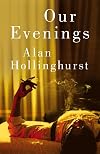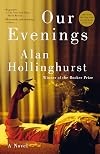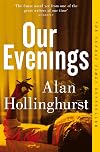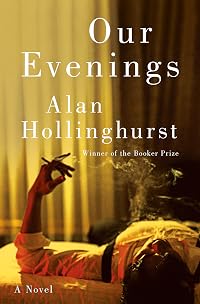
Our Evenings
by Alan Hollinghurst
On This Page
Description
From the internationally acclaimed winner of the Booker Prize, a piercing novel of modern England through the lens of one man’s acutely observed experiences“Our Evenings is a truly astonishing novel, by turns delicate and ferocious, radical in the way it explores questions of race, class, sexuality, and origins.”—Tash Aw, author of Five Star Billionaire
Did I have a grievance? Most of us, without looking far, could find something that had harmed us, and oppressed us, and unfairly show more held us back. I tried not to dwell on it, thought it healthier not to, though I’d lived my short life so far in a chaos of privilege and prejudice.
Dave Win, the son of a a Burmese man he’s never met and a British dressmaker, is thirteen years old when he gets a scholarship to a top boarding school. With the doors of elite English society cracked open for him, heady new possibilities emerge, even as Dave is exposed to the envy and viciousness of his wealthy classmates.
Alan Hollinghurst’s new novel follows Dave from the 1960s on—through the possibilities that remained open for him, and others that proved to be illusory: as a working-class brown child in a decidedly white institution; a young man discovering queer culture and experiencing his first, formative love affairs; a talented but often overlooked actor, on the road with an experimental theater company; and an older Londoner whose late-in-life marriage fills his days with an unexpected sense of happiness and security.
From “one of our most gifted writers” (The Boston Globe), Our Evenings sweeps readers from our past to our present through the beauty, pain, and joy of one deeply observed life. show less
Tags
Recommendations




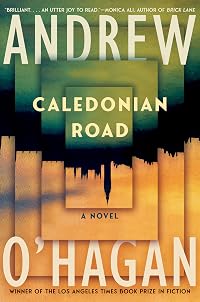

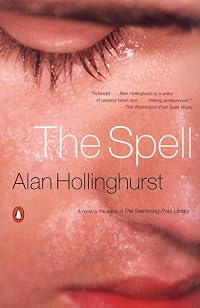
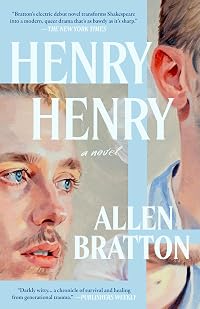
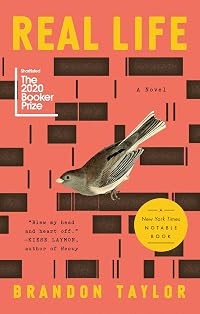
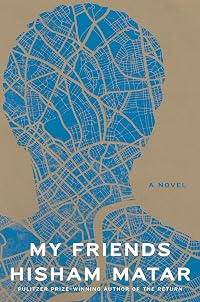

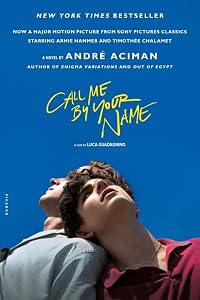
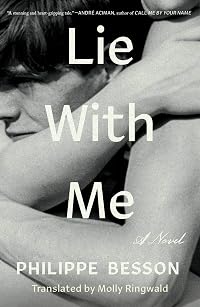
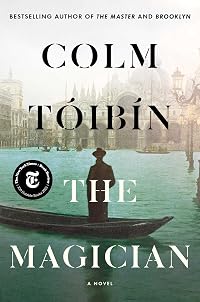
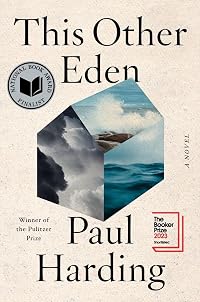
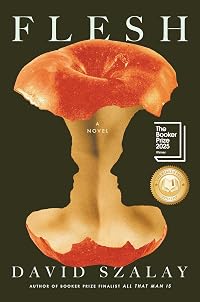
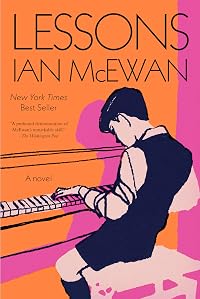
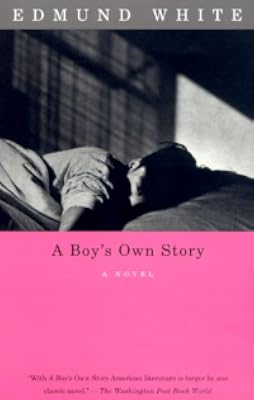

Member Recommendations
Member Reviews
Great writers leave you with the sensation of having witnessed a magic trick. Just as the magician shows you the empty box, the lack of strings, and manages to conjure a dove or levitate an apple, you go into a novel believing that you know the author's toolset--the English language, the same language you grew up with and know intimately--and they conjure something seemingly impossible before your very eyes. You can string a sentence together, you're watching them do it, and yet there it somehow springs into being: The Great Novel.
Our Evenings is a great novel. It is, more than anything, absorbing. It is perhaps the most vivid book I've ever read, despite not being particularly flashy or bold. Every time I picked it up, I felt that I show more was dropping into the life of the narrator, David Win, who is so three-dimensional you can practically shake his hand. Hollinghurst is just so exceptionally skilled at capturing the texture of spaces and the way things and people stand out in memory because of the time we encountered them.
I am also very impressed by the way Hollinghurst deals with time. Ultimately this is a novel in vignettes, but it isn't at all choppy. Though we often start a new chapter of David's life in media res without immediate clarity on the setting or the major players, the author never keeps us in the dark for too long and smartly clues us in (via details that can seem minor at first) to the fates of other characters and arcs. Long periods of David's life are skipped over in the way we might skip over uneventful periods of our own lives when telling our life story to a stranger--and, keeping the thematic thread and the same protagonist, it works.
This sort of sweeping odyssey feels almost anachronistic in 2024. Unfortunately, its radiance is undercut by the final few pages. That is what ultimately prevented me from giving this five stars. The ending was bungled. By which I mean, there's a good, quiet ending, and then a loud, not-very-good ending right after it. No spoilers, and I understand why Hollinghurst made this decision, but if I were his editor I would have argued mightily against it. To me, it feels a bit shallow and brash and gets overly meta where the meta aspects had been managed quite beautifully and subtly up to that point. show less
Our Evenings is a great novel. It is, more than anything, absorbing. It is perhaps the most vivid book I've ever read, despite not being particularly flashy or bold. Every time I picked it up, I felt that I show more was dropping into the life of the narrator, David Win, who is so three-dimensional you can practically shake his hand. Hollinghurst is just so exceptionally skilled at capturing the texture of spaces and the way things and people stand out in memory because of the time we encountered them.
I am also very impressed by the way Hollinghurst deals with time. Ultimately this is a novel in vignettes, but it isn't at all choppy. Though we often start a new chapter of David's life in media res without immediate clarity on the setting or the major players, the author never keeps us in the dark for too long and smartly clues us in (via details that can seem minor at first) to the fates of other characters and arcs. Long periods of David's life are skipped over in the way we might skip over uneventful periods of our own lives when telling our life story to a stranger--and, keeping the thematic thread and the same protagonist, it works.
This sort of sweeping odyssey feels almost anachronistic in 2024. Unfortunately, its radiance is undercut by the final few pages. That is what ultimately prevented me from giving this five stars. The ending was bungled. By which I mean, there's a good, quiet ending, and then a loud, not-very-good ending right after it. No spoilers, and I understand why Hollinghurst made this decision, but if I were his editor I would have argued mightily against it. To me, it feels a bit shallow and brash and gets overly meta where the meta aspects had been managed quite beautifully and subtly up to that point. show less
OUR EVENINGS BY ALAN HOLLINGHURST.
It means a great deal to me, as I’m sure it does to others, to read a novel that tells the story of a queer life as ordinary. The world feels built to accommodate a certain perspective, a certain mode of life, despite the human experience being endlessly complex and vastly different between one person and the next. It feels like such a victory, then, to read about a life that doesn’t fit neatly into the limiting view that people are one of a few things. This is a celebration of queerness as being normal, which it of course it is.
This is the story of a life, just like any other, filled with beauty and sadness and change. There’s a sincerity in the writing here that makes David’s story as gripping show more as anything I’ve ever read. I crave connection - to people, to the world - and this book provides just as much insight into David’s life as it highlights how little I know about those around me. Reading this felt like a command, a challenge to make a concerted effort to imagine the world and the people in it from a different vantage point than my own.
I almost feel as though David is a real person, and as I approached the end of the novel, I felt like I was witnessing a life ending. My throat squeezed as I flipped through those final pages, as people important to him passed on, as he himself reached the final stage of life. I came to love him, in the end.
I think, ultimately, that’s the beauty of stories. To know someone, whether it’s a fictional character or the author who created them, is to love them. I’m happy I know David’s story, and I’m happy that, through David, I learned a bit more about Alan Hollinghurst. His writing is a gift I feel lucky to have received.
Go read this book. show less
It means a great deal to me, as I’m sure it does to others, to read a novel that tells the story of a queer life as ordinary. The world feels built to accommodate a certain perspective, a certain mode of life, despite the human experience being endlessly complex and vastly different between one person and the next. It feels like such a victory, then, to read about a life that doesn’t fit neatly into the limiting view that people are one of a few things. This is a celebration of queerness as being normal, which it of course it is.
This is the story of a life, just like any other, filled with beauty and sadness and change. There’s a sincerity in the writing here that makes David’s story as gripping show more as anything I’ve ever read. I crave connection - to people, to the world - and this book provides just as much insight into David’s life as it highlights how little I know about those around me. Reading this felt like a command, a challenge to make a concerted effort to imagine the world and the people in it from a different vantage point than my own.
I almost feel as though David is a real person, and as I approached the end of the novel, I felt like I was witnessing a life ending. My throat squeezed as I flipped through those final pages, as people important to him passed on, as he himself reached the final stage of life. I came to love him, in the end.
I think, ultimately, that’s the beauty of stories. To know someone, whether it’s a fictional character or the author who created them, is to love them. I’m happy I know David’s story, and I’m happy that, through David, I learned a bit more about Alan Hollinghurst. His writing is a gift I feel lucky to have received.
Go read this book. show less
There’s a closeness in watching a kid grow up over the course of a book, but I didn’t have to get far into it to start caring for this character. What struck me most wasn’t the plot or characters, but the way Hollinghurst draws out those thoughts between thoughts, those feelings you can’t name; a perspective hard to find outside of poetry or maybe Virginia Woolf. I felt I was in the midst of a classic but found few met-expectations or tropes along the way. This was my introduction to the wonderful Hollinghurst, and I can’t wait for more.
Rating: 4.5* of five
The Publisher Says: From the internationally acclaimed winner of the Booker Prize, a piercing novel that envisions modern England through the lens of one man’s acutely observed and often unnerving experience, as he struggles with class and race, art and sexuality, love and violence.
Did I have a grievance? Most of us, without looking far, could find something that had harmed us, and oppressed us, and unfairly held us back. I tried not to dwell on it, thought it healthier not to, though I’d lived my short life so far in a chaos of privilege and prejudice.
Dave Win, the son of a British dressmaker and a Burmese man he’s never met, is thirteen years old when he gets a scholarship to a top boarding school. With the show more doors of elite English society cracked open for him, heady new possibilities lie before Dave, even as he is exposed to the envy and viciousness of his wealthy classmates, above all that of Giles Hadlow, whose worldly parents sponsored the scholarship and who find in Dave someone they can more easily nurture than their brutish son.
Our Evenings follows Dave from the 1960s on—through the possibilities that remained open for him, and others that proved to be illusory: as a working-class brown child in a decidedly white institution; a young man discovering queer culture and experiencing his first, formative love affairs; a talented but often overlooked actor, on the road with an experimental theater company; and an older Londoner whose late-in-life marriage fills his days with an unexpected sense of happiness and security.
Moving in and out of Dave’s orbit are the Hadlows. Estranged from his parents, who remain close to Dave, Giles directs his privilege into a career as a powerful right-wing politician, whose reactionary vision for England pokes perilous holes in Dave’s stability. And as the novel accelerates towards the present day, the two men’s lives and values will finally collide in a cruel shock of violence.
This is “one of our most gifted writers” (The Boston Globe) sweeping readers from our past to our present through the beauty, pain, and joy of one deeply observed life.
I RECEIVED A DRC FROM THE PUBLISHER VIA NETGALLEY. THANK YOU.
My Review: Vignettes from the privileged and fortunate life of a mixed-"race" (useless term, divisive and ill-defined, but lacking an appropriate alternative one here) queer man and his circle of friends of his youth as they move through the stages of life, change partners, grow, and grow old, in the UK of our recent past.
Details are as synopsized by the publisher above; my reading of it was undertaken because Author Hollinghurst has never failed to give me the very agreeable experience of following him through a logical and internally consistent plot led by the loveliest sentences creating relatable, heightened-into-beauty situations and images.
Job done again. I'm in the contented majority of readers who felt well-served by this outing (!) into Hollinghurst's familiar-but-better reality. I even had the thoroughly unpleasant duty of feeling the humanity of a political-right radical and Brexiteer.
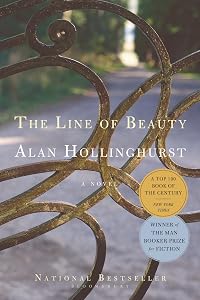
Enjoyable, all of it, but not new or freshly imagined by the author of The Line of Beauty, hence that missing half-star. show less
The Publisher Says: From the internationally acclaimed winner of the Booker Prize, a piercing novel that envisions modern England through the lens of one man’s acutely observed and often unnerving experience, as he struggles with class and race, art and sexuality, love and violence.
Did I have a grievance? Most of us, without looking far, could find something that had harmed us, and oppressed us, and unfairly held us back. I tried not to dwell on it, thought it healthier not to, though I’d lived my short life so far in a chaos of privilege and prejudice.
Dave Win, the son of a British dressmaker and a Burmese man he’s never met, is thirteen years old when he gets a scholarship to a top boarding school. With the show more doors of elite English society cracked open for him, heady new possibilities lie before Dave, even as he is exposed to the envy and viciousness of his wealthy classmates, above all that of Giles Hadlow, whose worldly parents sponsored the scholarship and who find in Dave someone they can more easily nurture than their brutish son.
Our Evenings follows Dave from the 1960s on—through the possibilities that remained open for him, and others that proved to be illusory: as a working-class brown child in a decidedly white institution; a young man discovering queer culture and experiencing his first, formative love affairs; a talented but often overlooked actor, on the road with an experimental theater company; and an older Londoner whose late-in-life marriage fills his days with an unexpected sense of happiness and security.
Moving in and out of Dave’s orbit are the Hadlows. Estranged from his parents, who remain close to Dave, Giles directs his privilege into a career as a powerful right-wing politician, whose reactionary vision for England pokes perilous holes in Dave’s stability. And as the novel accelerates towards the present day, the two men’s lives and values will finally collide in a cruel shock of violence.
This is “one of our most gifted writers” (The Boston Globe) sweeping readers from our past to our present through the beauty, pain, and joy of one deeply observed life.
I RECEIVED A DRC FROM THE PUBLISHER VIA NETGALLEY. THANK YOU.
My Review: Vignettes from the privileged and fortunate life of a mixed-"race" (useless term, divisive and ill-defined, but lacking an appropriate alternative one here) queer man and his circle of friends of his youth as they move through the stages of life, change partners, grow, and grow old, in the UK of our recent past.
Details are as synopsized by the publisher above; my reading of it was undertaken because Author Hollinghurst has never failed to give me the very agreeable experience of following him through a logical and internally consistent plot led by the loveliest sentences creating relatable, heightened-into-beauty situations and images.
Job done again. I'm in the contented majority of readers who felt well-served by this outing (!) into Hollinghurst's familiar-but-better reality. I even had the thoroughly unpleasant duty of feeling the humanity of a political-right radical and Brexiteer.
Enjoyable, all of it, but not new or freshly imagined by the author of The Line of Beauty, hence that missing half-star. show less
A new Hollinghurst is always something to look forward to — he hasn’t exactly been cranking them out. This is his seventh novel since he started with The swimming-pool library in 1988, and it’s been seven years since The Sparsholt affair.
Our evenings takes us back to something like the structure of The line of beauty, with an outsider granted a glimpse into the world of English privilege over the shoulders of a grand family who take him in. We follow the career of gay, mixed-race actor David Win from his teens in the early 1960s through to Covid and Brexit. In the background we follow his friendship with the wealthy Mark and Cara Hadlow, who have endowed the scholarship that allows David to progress from a modest Home Counties show more background via public school and Oxford into the world of seventies avant-garde theatre. And we see the parallel advance of the Hadlows’ dreadful son Giles, who emerges (to the horror of his sophisticated parents) as a high-profile figure on the philistine, eurosceptic Tory right.
As you would expect, there’s a lot of beautiful detail along the way, revealing all kinds of fascinatingly complicated nuances in the development of English society over the last sixty years, including a delightfully unexpected dive into the genteel lesbian underground of sixties small-town Buckinghamshire. Of course there’s also a lot of very interesting stuff about acting and the theatre. Besides the inevitable Shakespeare we also get into modern playwrights, real and invented, and of course Racine, whose plays Hollinghurst has translated.
A true delight, even if it does turn out to be another book about the nastiness of now. show less
Our evenings takes us back to something like the structure of The line of beauty, with an outsider granted a glimpse into the world of English privilege over the shoulders of a grand family who take him in. We follow the career of gay, mixed-race actor David Win from his teens in the early 1960s through to Covid and Brexit. In the background we follow his friendship with the wealthy Mark and Cara Hadlow, who have endowed the scholarship that allows David to progress from a modest Home Counties show more background via public school and Oxford into the world of seventies avant-garde theatre. And we see the parallel advance of the Hadlows’ dreadful son Giles, who emerges (to the horror of his sophisticated parents) as a high-profile figure on the philistine, eurosceptic Tory right.
As you would expect, there’s a lot of beautiful detail along the way, revealing all kinds of fascinatingly complicated nuances in the development of English society over the last sixty years, including a delightfully unexpected dive into the genteel lesbian underground of sixties small-town Buckinghamshire. Of course there’s also a lot of very interesting stuff about acting and the theatre. Besides the inevitable Shakespeare we also get into modern playwrights, real and invented, and of course Racine, whose plays Hollinghurst has translated.
A true delight, even if it does turn out to be another book about the nastiness of now. show less
This is my sixth Hollinghurst novel (out of seven), and I'm delighted that this is up there with some of his strongest work, especially since it's been a wait - 7 years - since his last book.
As always to be expected in a Hollinghurst novel, his protagonist is a gay man navigating the trials of living life as a gay man in modern Britain, but the main character in this novel is decidedly more lower middle class than many of his previous protagonists, although a scholarship to a public boarding school and onward education at Oxford keeps him circling around the fringes of the upper class echelons which is usual Hollinghurst territory.
Our Evenings is expansive, both in terms of size (nearly 500 pages) and the breadth of the life period of show more the protagonist it covers, from the 1960s right up to the pandemic. New territory in this novel is Hollinghurst's extra 'outsider' dimension of the main character being mixed-race (half Burmese), encountering racism from his castings as an actor in plays to misplaced comments by friends and family, as well as in-your-face racism from strangers. Another interesting element is the development of his mother's sexuality. One senses from Hollinghurst a feeling that it was perhaps easier for lesbians to remain quietly 'non-outed' during the same period when two men living together would have raised questions.
A constant thread in this life story is the family who are the benefactors of the scholarship the protagonist wins to boarding school. The son - also at the same school - is a detestable bully who grows up to be an equally detestable senior Tory cabinet member, and Hollinghurst masterfully deals with him as a side character.
It's an enjoyable novel, thought-provoking and quite moving at times. Hollinghurst writes honest and complex characters, which is probably the draw for me to his novels, although somehow I never entirely emotionally commit to them. Aside from Hollinghurst carrying the flag for writing about homosexual characters, I draw many parallels between his style of writing and Ian McEwan's. Both are masters of prose and born storytellers, but somehow, although I enjoy both their work, I never quite fall in love with it,
4 stars - a sweeping and engaging whole life novel. show less
As always to be expected in a Hollinghurst novel, his protagonist is a gay man navigating the trials of living life as a gay man in modern Britain, but the main character in this novel is decidedly more lower middle class than many of his previous protagonists, although a scholarship to a public boarding school and onward education at Oxford keeps him circling around the fringes of the upper class echelons which is usual Hollinghurst territory.
Our Evenings is expansive, both in terms of size (nearly 500 pages) and the breadth of the life period of show more the protagonist it covers, from the 1960s right up to the pandemic. New territory in this novel is Hollinghurst's extra 'outsider' dimension of the main character being mixed-race (half Burmese), encountering racism from his castings as an actor in plays to misplaced comments by friends and family, as well as in-your-face racism from strangers. Another interesting element is the development of his mother's sexuality. One senses from Hollinghurst a feeling that it was perhaps easier for lesbians to remain quietly 'non-outed' during the same period when two men living together would have raised questions.
A constant thread in this life story is the family who are the benefactors of the scholarship the protagonist wins to boarding school. The son - also at the same school - is a detestable bully who grows up to be an equally detestable senior Tory cabinet member, and Hollinghurst masterfully deals with him as a side character.
It's an enjoyable novel, thought-provoking and quite moving at times. Hollinghurst writes honest and complex characters, which is probably the draw for me to his novels, although somehow I never entirely emotionally commit to them. Aside from Hollinghurst carrying the flag for writing about homosexual characters, I draw many parallels between his style of writing and Ian McEwan's. Both are masters of prose and born storytellers, but somehow, although I enjoy both their work, I never quite fall in love with it,
4 stars - a sweeping and engaging whole life novel. show less
Our Evenings is a quintessential English novel and gay novel, with a feeling of the 20th century so thick it's impossible to not get lost in its nostalgia, philosophy, and longing. It has some of the richest, most exquisite language I have read of a contemporary writer and seems, wistfully, conscious of the loss of this style of writing in the modern age. This is a novel of inaction: our characters almost never take the action we desire of them on page, and instead, linger on the changes wrought to them through the slow and inevitable passage time. Don't let the Oxbridge homosexuality fool you—this is neither a love story nor (necessarily) an aesthetic affair—but an old man's novel of the journey of life itself.
A perfect show more contemporary counterpart for fans of Evelyn Waugh and Forster show less
A perfect show more contemporary counterpart for fans of Evelyn Waugh and Forster show less
Members
- Recently Added By
Lists

Unread books
1,063 works; 87 members

Netgalley Reads
468 works; 3 members

Books Read in 2024
4,727 works; 128 members

Top Five Books of 2024
795 works; 264 members

Books Read in 2025
4,128 works; 98 members
Top Five Books of 2025
954 works; 303 members

The LonesomeReader Book Club
36 works; 1 member

Books Read in 2026
2,036 works; 68 members
Author Information

17+ Works 12,316 Members
Some Editions
Awards and Honors
Awards
Distinctions
The Guardian Book of the Day (2024-09-25)
Common Knowledge
- Canonical title
- Our Evenings
- Original title
- Our Evenings
- Original publication date
- 2024
- Dedication*
- E.L.H.
1919-2016 - First words*
- Geen repetitie die morgen, dus we bleven in bed liggen.
- Last words*
- (Click to show. Warning: May contain spoilers.)Ik weet niet zeker of het bezittelijke voornaamwoord een troost is, of een hinderlaag.
- Blurbers*
- Aw, Tash
- Original language
- English
*Some information comes from Common Knowledge in other languages. Click "Edit" for more information.
Classifications
Statistics
- Members
- 510
- Popularity
- 59,027
- Reviews
- 29
- Rating
- (3.91)
- Languages
- Dutch, English, French
- Media
- Paper, Audiobook, Ebook
- ISBNs
- 15
- ASINs
- 8