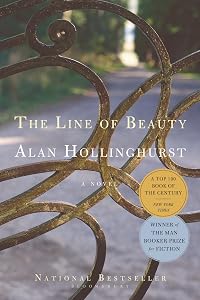
The Line of Beauty
by Alan Hollinghurst
On This Page
Description
Winner of the Man Booker PrizeNamed a Best Book of the Century by The New York Times Book Review
International Bestseller
From acclaimed author Alan Hollinghurst, a sweeping novel about class, sex, and money during four extraordinary years of change and tragedy.
In the summer of 1983, twenty-year-old Nick Guest moves into an attic room in the Notting Hill home of the Feddens: conservative Member of Parliament Gerald, his wealthy wife Rachel, and their two children, Toby-whom Nick had show more idolized at Oxford-and Catherine, who is highly critical of her family's assumptions and ambitions.
As the boom years of the eighties unfold, Nick, an innocent in the world of politics and money, finds his life altered by the rising fortunes of this glamorous family. His two vividly contrasting love affairs, one with a young black man who works as a clerk and one with a Lebanese millionaire, dramatize the dangers and rewards of his own private pursuit of beauty, a pursuit as compelling to Nick as the desire for power and riches among his friends. Richly textured, emotionally charged, disarmingly comic, this is a major work by one of our finest writers. LGBTQIA+ (Fiction.) Literature. Fiction. show less
Tags
Recommendations




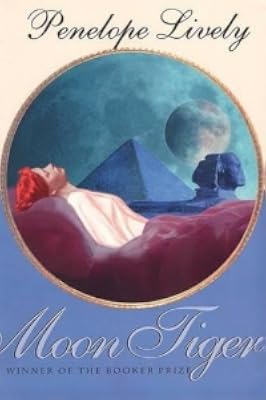
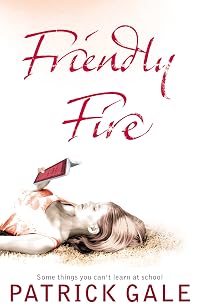

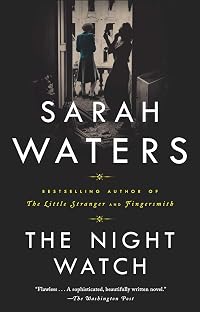
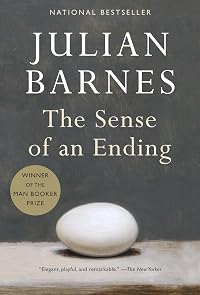



Member Recommendations
djmccord73 british families, class divisions, being an outsider, envy
80

pingdjip Sex and class divisions, and a diabolically clever narrator.
Member Reviews
This is the first Alan Hollinghurst I've read, having picked it up as a recommendation, probably because of the Booker Prize link. I will go on to read more - his style so elegant and economical, it did not surprise me when I later learned that he is also a poet and a close friend of Andrew Motion; the poetry beats through the prose.
We experience everything through the eyes and thoughts of the central character Nick Guest. His surname is appropriate in that throughout the four-year time-frame of the novel (1983-1987) Nick is living as a guest in the family home of his well-to-do friend from Oxford days, Toby, and it is in this environment that he and we meet most of the other characters, including Toby's father, the ambitious junior show more Tory minister Gerald Fedden. There is even a memorable encounter (and a dance, no less) with Mrs Thatcher, referred to within the family as 'The Lady'.
Nick does have a secret life too; we follow him from innocence through to a series of casual homosexual encounters as well as a longer-term gay relationship, sometimes fuelled by cocaine, and shadowed by the then-new threat of Aids. Nick is a libertine but no hell-raiser; he is known by the family as 'the aesthete' and spends most of his time in quiet observation or hardly-noticed participation in the family affairs, until events conspire to provide him with a more dramatic and unwanted role in proceedings as the story moves to its climax.
'The Line of Beauty' works on many levels. It's a superbly-nuanced study of manners in Thatcher's Britain; it's stiletto-stealth satire; it's revealing and frank about the lifestyle adopted by some members of the gay community (though I wearied of the sex, if I may say that without sounding like an over-worked prostitute); and it's an aesthetic delight.
The narrative interiority is for me both a strength and a weakness. Hollinghurst's presentation of the emotional depths and shallow insights of Nick is faultless but Nick's inadequacies in human understanding become ours too - so many of his otherwise brilliant character expositions fail to penetrate to the heart. As a result we get to know Nick inside out, but the supporting cast only outside in. Hollinghurst's intense, masterful use of his chosen narrative device is, paradoxically, what prevents 'The Line of Beauty' claiming an unarguable place as a great book; but it gets close. show less
We experience everything through the eyes and thoughts of the central character Nick Guest. His surname is appropriate in that throughout the four-year time-frame of the novel (1983-1987) Nick is living as a guest in the family home of his well-to-do friend from Oxford days, Toby, and it is in this environment that he and we meet most of the other characters, including Toby's father, the ambitious junior show more Tory minister Gerald Fedden. There is even a memorable encounter (and a dance, no less) with Mrs Thatcher, referred to within the family as 'The Lady'.
Nick does have a secret life too; we follow him from innocence through to a series of casual homosexual encounters as well as a longer-term gay relationship, sometimes fuelled by cocaine, and shadowed by the then-new threat of Aids. Nick is a libertine but no hell-raiser; he is known by the family as 'the aesthete' and spends most of his time in quiet observation or hardly-noticed participation in the family affairs, until events conspire to provide him with a more dramatic and unwanted role in proceedings as the story moves to its climax.
'The Line of Beauty' works on many levels. It's a superbly-nuanced study of manners in Thatcher's Britain; it's stiletto-stealth satire; it's revealing and frank about the lifestyle adopted by some members of the gay community (though I wearied of the sex, if I may say that without sounding like an over-worked prostitute); and it's an aesthetic delight.
The narrative interiority is for me both a strength and a weakness. Hollinghurst's presentation of the emotional depths and shallow insights of Nick is faultless but Nick's inadequacies in human understanding become ours too - so many of his otherwise brilliant character expositions fail to penetrate to the heart. As a result we get to know Nick inside out, but the supporting cast only outside in. Hollinghurst's intense, masterful use of his chosen narrative device is, paradoxically, what prevents 'The Line of Beauty' claiming an unarguable place as a great book; but it gets close. show less
A very good novel, well paced and stylish writing. What kept me enthusiastic too, was the merciless depiction of the Conservative Party milieu as evil, unintelligent, irredeemable.
The one character who I found sympathetic was Catherine the perverse, but more likely bi-polar, daughter of grotesque Tory, Gerald Fedden. She has the insight to appreciate the catastrophe of her family, the directness to ask the questions and the destructive urge to blow the fatuous edifice apart, with the help of her boyfriend, Jasper.
The protagonist, Nick Guest, having been invited to live with the family to keep an eye on Catherine, is free to pursue his own obsessions in this privileged world - sex with beautiful men, words, objects and cocaine. show more
Brilliant wit and delicious insight permeate this book. show less
The one character who I found sympathetic was Catherine the perverse, but more likely bi-polar, daughter of grotesque Tory, Gerald Fedden. She has the insight to appreciate the catastrophe of her family, the directness to ask the questions and the destructive urge to blow the fatuous edifice apart, with the help of her boyfriend, Jasper.
The protagonist, Nick Guest, having been invited to live with the family to keep an eye on Catherine, is free to pursue his own obsessions in this privileged world - sex with beautiful men, words, objects and cocaine. show more
Brilliant wit and delicious insight permeate this book. show less
This novel begins in 1983 when middle-class Nick Guest has just graduated from Oxford. He comes down to London and is given a room in the prosperous home of one of his classmates. The father, Gerald Fedden, is a conservative MP, and the mother, Rachel, comes from a wealthy banking family. Nick makes himself useful to the family in one way or another over the next several years. He becomes an inside observer of the workings of the upper classes, the wealthy and the politically connected during the Thatcher years. As an observer, Nick basically remains an outsider (though he doesn't always recognize this himself), and never really becomes a full participant in the goings-on. And since Nick is gay, the book is also the story of gay life in show more London during the onset of the AIDS epidemic.
The novel is divided into three parts. The first part takes place in 1983 when Nick has just come down to London and has his first love affair with Leo, a young but more experienced civil servant. The second part takes place in 1986 when Nick is both working for and having an affair with Wani, a former Oxford classmate. In the last part, in 1987, AIDS is ravaging Nick's social group, and disasters of other sorts are befalling one after another of the other characters.
Hollinghurst writes beautifully, and I was always fully engaged in this book. The book is full of insightful and perceptive observations about the time, the place, culture, and the society in which these characters move. (One reviewer compared the book and its social observations to Proust). The book serves both as a very personal story of one man and his friends, and as a political and societal history of the Thatcher years. I highly recommend it.
4 1/2 stars show less
The novel is divided into three parts. The first part takes place in 1983 when Nick has just come down to London and has his first love affair with Leo, a young but more experienced civil servant. The second part takes place in 1986 when Nick is both working for and having an affair with Wani, a former Oxford classmate. In the last part, in 1987, AIDS is ravaging Nick's social group, and disasters of other sorts are befalling one after another of the other characters.
Hollinghurst writes beautifully, and I was always fully engaged in this book. The book is full of insightful and perceptive observations about the time, the place, culture, and the society in which these characters move. (One reviewer compared the book and its social observations to Proust). The book serves both as a very personal story of one man and his friends, and as a political and societal history of the Thatcher years. I highly recommend it.
4 1/2 stars show less
“The pursuit of love seemed to need the cultivation of indifference.”
It is 1983, London. The Thatcher years. Nick Guest is a twenty year old gay man living in an attic bedroom of the Feddens, a wealthy influential family. Gerald Fedden is a Member of Parliament. Nick and their son Toby were friends at Oxford. Nick comes from a more modest background, but is smart and cultured and fits in well with this top-tier family. As the narrative moves through the 80s, cracks begin to appear in and scandals are looming, threatening to break this family apart and Nick finds himself in the middle of it.
This was my introduction to Hollinghurst and this Booker Prize-winning ended up being the perfect place to start. The writing is excellent and show more so is the story-tellling. This does deal with gay culture in the 1980s, which of course includes the AIDs crisis. It makes the perfect companion piece to The Great Believers. Highly recommended. show less
It is 1983, London. The Thatcher years. Nick Guest is a twenty year old gay man living in an attic bedroom of the Feddens, a wealthy influential family. Gerald Fedden is a Member of Parliament. Nick and their son Toby were friends at Oxford. Nick comes from a more modest background, but is smart and cultured and fits in well with this top-tier family. As the narrative moves through the 80s, cracks begin to appear in and scandals are looming, threatening to break this family apart and Nick finds himself in the middle of it.
This was my introduction to Hollinghurst and this Booker Prize-winning ended up being the perfect place to start. The writing is excellent and show more so is the story-tellling. This does deal with gay culture in the 1980s, which of course includes the AIDs crisis. It makes the perfect companion piece to The Great Believers. Highly recommended. show less
The protagonist of The Line of Beauty, Nick Guest, is aptly named: he reminds us of Nick Carraway, the middle-class observer of Gatsby's high life; and he is a guest, at the home of a Member of Parliament. He is also a gay man in the 80s, anxiously pursuing sex for the first time in the years just before AIDS rears its ugly head.
Nick has been invited to the conservative MP's home ostensibly as a friend of their son's, but his secret mission is to keep an eye on their mentally unbalanced daughter. Our protagonist pursues beauty and romance, while the straight and respected around him have affairs and hide mental illness. The hypocrisy is glaring, as well as a setup for heartbreak: the lower class but well-educated loyal dependent comes show more to think he is part of the family; sadly, blood and money turn out to be much thicker than water. The novel explores gay love and lust, Thatcherism, and social prejudice in England.
Hollinghurst's writing is beautiful, including the graphic sex scenes. I was reminded of the understated sophistication of Claire Messud's The Emperor's Children.
I'm reading all the Booker Prize winners since 1968 this year. Follow me at www.methodtohermadness.com. show less
Nick has been invited to the conservative MP's home ostensibly as a friend of their son's, but his secret mission is to keep an eye on their mentally unbalanced daughter. Our protagonist pursues beauty and romance, while the straight and respected around him have affairs and hide mental illness. The hypocrisy is glaring, as well as a setup for heartbreak: the lower class but well-educated loyal dependent comes show more to think he is part of the family; sadly, blood and money turn out to be much thicker than water. The novel explores gay love and lust, Thatcherism, and social prejudice in England.
Hollinghurst's writing is beautiful, including the graphic sex scenes. I was reminded of the understated sophistication of Claire Messud's The Emperor's Children.
I'm reading all the Booker Prize winners since 1968 this year. Follow me at www.methodtohermadness.com. show less
Sometimes one has to admit that one's preconceptions about a book are entirely wrong. Despite having read most of the Booker winners I had been oddly reluctant to tackle this one, partly because I had heard about its graphic descriptions of gay sex and that is just not a subject that interests me. This book confounded such baseless expectations, and the final part in particular is very moving. I can't really do justice to the book in a short review, for which I apologise.
This story of Nick Guest, a young man whose position as a lodger in the house of a Tory MP in Kensington puts him at the periphery of various powerful circles at the height of the Thatcher government in the 80s, works on many different levels. On the surface it is a show more study of these elites, how they operate and how ruthlessly they ditch those who no longer serve them, on another it is a gay coming of age story, in which the shadow of AIDS inevitabily looms, and a third is as a tribute to Henry James.
I was struck by a paragraph where Nick is trying to justify his vision of an artistic film of a James book (The Spoils of Poynton) to a rich but philistine potential backer who has just told him that the story "kinda sucks":
"'Does it...?' said Nick; and, trying to be charming, 'It's just like life, though, isn't it - maybe too like life for a ... conventional movie. It's about someone who loves things more than people. And who ends up with nothing, of course. I know it's bleak, but then I think it's probably a very bleak book, even though it's essentially a comedy.".
Nick could equally be talking about the book in which he is the central character, which does contain some brilliant satire, but is ultimately rather tragic. show less
This story of Nick Guest, a young man whose position as a lodger in the house of a Tory MP in Kensington puts him at the periphery of various powerful circles at the height of the Thatcher government in the 80s, works on many different levels. On the surface it is a show more study of these elites, how they operate and how ruthlessly they ditch those who no longer serve them, on another it is a gay coming of age story, in which the shadow of AIDS inevitabily looms, and a third is as a tribute to Henry James.
I was struck by a paragraph where Nick is trying to justify his vision of an artistic film of a James book (The Spoils of Poynton) to a rich but philistine potential backer who has just told him that the story "kinda sucks":
"'Does it...?' said Nick; and, trying to be charming, 'It's just like life, though, isn't it - maybe too like life for a ... conventional movie. It's about someone who loves things more than people. And who ends up with nothing, of course. I know it's bleak, but then I think it's probably a very bleak book, even though it's essentially a comedy.".
Nick could equally be talking about the book in which he is the central character, which does contain some brilliant satire, but is ultimately rather tragic. show less
Really wonderful.
It's beautifully written. Some of its sentences stop you in your tracks, compelling you to reread and savor. Hollinghurst has a gift for sketching memorable supporting characters in a few lines or paragraphs, but he doesn't settle for that always. His main players develop complexity and nuance, as he returns to them over time. Character reveals itself, through words, tone of voice, and even pauses, quick glances, glimpses through windows, and things left said.
The novel takes us back 20 years or more, to portray the heady years of the early 1980s among the privileged and powerful at Oxford and in Thatcherite London. It starts as a gay coming-of-age story and ends five years later in the early days of the AIDS crisis, as show more it unspools a story of friendship, family and youth.
Paying homage to, or raising parallels to Henry James and F. Scott Fitzgerald, it dares comparison to some great novels. It rises to that challenge, I think. show less
It's beautifully written. Some of its sentences stop you in your tracks, compelling you to reread and savor. Hollinghurst has a gift for sketching memorable supporting characters in a few lines or paragraphs, but he doesn't settle for that always. His main players develop complexity and nuance, as he returns to them over time. Character reveals itself, through words, tone of voice, and even pauses, quick glances, glimpses through windows, and things left said.
The novel takes us back 20 years or more, to portray the heady years of the early 1980s among the privileged and powerful at Oxford and in Thatcherite London. It starts as a gay coming-of-age story and ends five years later in the early days of the AIDS crisis, as show more it unspools a story of friendship, family and youth.
Paying homage to, or raising parallels to Henry James and F. Scott Fitzgerald, it dares comparison to some great novels. It rises to that challenge, I think. show less
Members
- Recently Added By
Published Reviews
ThingScore 100
But the plot isn’t the point. This novel’s pleasures are thick and deep, growing out of the brilliant observational powers of the main character.
added by paradoxosalpha
Lists

1001 Books You Must Read Before You Die
1,448 works; 1,134 members

The Guardian's 1000 Novels Everyone Must Read
1,005 works; 549 members

Best Contemporary Literary Fiction (Around the Last 30 Years)
388 works; 124 members

The Top Ten: Writers Pick Their Favorite Books
240 works; 31 members
Booker Prize
491 works; 62 members

Recommend the 20 best books you've read in the last five years
2,168 works; 601 members

The Guardian's 100 best books of the 21st century
100 works; 21 members

Best 21st Century Books (So Far)
670 works; 86 members

Unread books
1,063 works; 87 members

Vulture's 100 Best Books of the 21st Century (So Far)
98 works; 9 members

100 New Classics
101 works; 13 members
Blue Pyramid 1,276 Best Books of All Time
1,248 works; 32 members

A Novel Cure
742 works; 23 members

BBC Radio 4 Bookclub
341 works; 13 members
Contemporary Fiction
109 works; 7 members

Books Read in 2023
5,638 works; 147 members

2000s decade
85 works; 7 members

Man Booker Prize Longlist 2004
22 works; 2 members

Good LGBT fiction for LGBT folk and friends
551 works; 51 members

Booker Prize Shortlist: Titles Not Yet Read
161 works; 4 members

in pursuit of power
17 works; 2 members

Books Read in 2004
210 works; 7 members

Books Read in 2021
5,361 works; 114 members

Great Films Based on Books
319 works; 140 members
NYT 100 best books of 21st C
100 works; 31 members

BBC World Book Club
265 works; 5 members

Retrospective of 20th- and 21st-century literature
154 works; 1 member

.
184 works; 1 member

World Book Club (BBC World Service)
212 works; 1 member
Author Information

17+ Works 12,316 Members
Some Editions
Awards and Honors
Awards
Distinctions
Notable Lists
Work Relationships
Common Knowledge
- Canonical title
- The Line of Beauty
- Original title
- The Line of Beauty
- Original publication date
- 2004
- People/Characters
- Nick Guest; Margaret Thatcher; Gerald Feddon; Rachel Feddon; Catherine Feddon; Toby Fedon (show all 7); (Antoine) Wani Ouradi (Antoine)
- Important places
- London, England, UK
- Related movies
- The Line of Beauty (2006 | IMDb)
- Epigraph*
- 'What do you know about this business?' the King said to Alice. 'Nothing', said Alice. 'Nothing whatever?', persisted the King. 'Nothing whatever', said Alice. 'That's very important', the King said, turning to the jury. They... (show all) were just beginning to write down on their slates, when the White Rabbit interrupted: 'Unimportant, your Majesty means, of course', he said in a very respectful tone, but frowning and making faces at him as he spoke. 'Unimportant, of course, I meant', the King hastily said, and went on to himself in an undertone, 'important - unimportant - unimporant - important -' as if he were trying which word sounded best. - Alice's Adventures in Wonderland, chapter 12
- Dedication
- For Francis Wyndham
- First words
- Peter Crowther's book on the election was already in the shops. It was called Landslide!, and the witty assistant at Dillon's had arranged the window in a scaled-down version of that natural disaster. -Chapter I
- Last words
- (Click to show. Warning: May contain spoilers.)It wasn't just this street corner but the fact of a street corner at all that seemed, in light of the moment, so beautiful.
- Blurbers
- Dyer, Geoff; White, Edmund; Smith, Zadie
- Original language
- English
- Canonical DDC/MDS
- 823.914
- Canonical LCC
- PR6058.O4467
- Disambiguation notice
- ISBN 1582346100 is for The Line of Beauty NOT Invincible: The Ultimate Collection Volume 3: The Ultimate Collection.
*Some information comes from Common Knowledge in other languages. Click "Edit" for more information.
Classifications
Statistics
- Members
- 5,016
- Popularity
- 2,787
- Reviews
- 117
- Rating
- (3.62)
- Languages
- 16 — Chinese, Czech, Danish, Dutch, English, Estonian, French, German, Greek, Italian, Norwegian (Bokmål), Polish, Portuguese, Croatian, Spanish, Swedish
- Media
- Paper, Audiobook, Ebook
- ISBNs
- 55
- ASINs
- 20