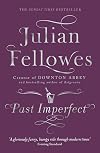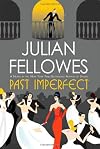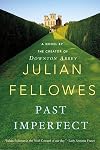
Past Imperfect
by Julian Fellowes
On This Page
Description
Wishing to track down a past girlfriend who claims he had fathered her child, the rich and dying Damian Baxter contacts an old friend from his days at Cambridge. The search takes the narrator back to 1960s London, where everything is changing--just not always quite as expected.Tags
Recommendations
















Member Recommendations
Member Reviews
Fabulously wealthy Damian Baxter, once a social climber, is dying without family or heir. He contacts the narrator, the best friend of his youth before they crossed swords, to task him with finding the mother of a child he believes he fathered in the sixties. Armed with the names of possible mothers, the narrator sets out to meet and interview them. The situation is tricky because they were all one-time friends, aristocrats and debutants hobnobbing at Britain's grand houses. Naturally, memories and frictions of the past are rekindled for the narrator, the potential mothers, as well as for Damian.
As a social historian Fellowes is unmatched. He is remarkably astute when examining changing generational attitudes and trends and his show more attention to detail is flawless.
This is neither a lament for times past, nor a criticism of the culture but a sociological study in the style of Downton Abbey, illustrating the cultural changes for the British upper classes (Fellowes calls them "toffs") in the second half of the 20th century. Very well done, beautifully written. show less
As a social historian Fellowes is unmatched. He is remarkably astute when examining changing generational attitudes and trends and his show more attention to detail is flawless.
This is neither a lament for times past, nor a criticism of the culture but a sociological study in the style of Downton Abbey, illustrating the cultural changes for the British upper classes (Fellowes calls them "toffs") in the second half of the 20th century. Very well done, beautifully written. show less
Absolutely loved this. Fellowes knows his territory and is a gifted observer of people and relationships. Amusing and arresting descriptions - a small princess is described as looking more like a boy-scout during bob-a-job week. And the structure was compelling, jumping from the narrator's youth during 'the season' in the 60's, and revisiting those acquaintances over 30 years later. It gave a chance for Fellowes to ruminate about how society and our lives have changed in that time, for both good and bad. Although a social satire, focusing on the upper-middles and aristocracy, his observations transcend that elite.
This is a beautifully written and thoughtful book. It was a pleasure to read not only for its prose and its careful observation and humor, but for its humanity. Perhaps I am reaching a similar stage in my life as the narrator (who bears remarkable similarities to the author) who leads us through the book. A comparison between those heady times when ones life is before you and the possibilities are seemingly endless and the days when the vast majority of ones life is receding into the distance and the possibilities more proscribed by choice and circumstance.
The narrator reluctantly takes on Damian Baxter's dying request to determine whether he had fathered a child by one of his many past girlfriends so he may leave his legacy to an heir. show more The narrator and Damian had a notorious falling out 40 years previously.
The book is a record of that journey, and an interesting comment on the interpretation and perception of ones self and of others. It is also a meditation on the overarching effect of the choices made or avoided and where those decisions have taken us and the consequences thereof (a consistent theme for Fellowes, as this was the profound message of his excellent first novel, "Snobs").
The books also speaks to the great dilemma of the young in balancing whether to commit to personal visions, possibilities, and desires despite youthful inexperience, or to be overrun by the expectations and projections of parents and others who allegedly have experience and wisdom, yet are bound by the myopia of their time and their own regrets.
There are many interesting and often poignant juxtapositions of well drawn characters, such as between the two "self made" outsiders, Damian Baxter and Kieran de Yong, and again, most touchingly, between the widow and widower in the story.
While "Past Imperfect" is neither an elegiac lament for departed youth or bygone era, it nonetheless has a subdued and elegiac tone, with the conclusion calling to mind the penultimate lines of Thomas Gray's "Elegy Written in a Country Churchyard": "He gave to Mis'ry all he had, a tear, / He gain'd from Heav'n ('twas all he wish'd) a friend." show less
The narrator reluctantly takes on Damian Baxter's dying request to determine whether he had fathered a child by one of his many past girlfriends so he may leave his legacy to an heir. show more The narrator and Damian had a notorious falling out 40 years previously.
The book is a record of that journey, and an interesting comment on the interpretation and perception of ones self and of others. It is also a meditation on the overarching effect of the choices made or avoided and where those decisions have taken us and the consequences thereof (a consistent theme for Fellowes, as this was the profound message of his excellent first novel, "Snobs").
The books also speaks to the great dilemma of the young in balancing whether to commit to personal visions, possibilities, and desires despite youthful inexperience, or to be overrun by the expectations and projections of parents and others who allegedly have experience and wisdom, yet are bound by the myopia of their time and their own regrets.
There are many interesting and often poignant juxtapositions of well drawn characters, such as between the two "self made" outsiders, Damian Baxter and Kieran de Yong, and again, most touchingly, between the widow and widower in the story.
While "Past Imperfect" is neither an elegiac lament for departed youth or bygone era, it nonetheless has a subdued and elegiac tone, with the conclusion calling to mind the penultimate lines of Thomas Gray's "Elegy Written in a Country Churchyard": "He gave to Mis'ry all he had, a tear, / He gain'd from Heav'n ('twas all he wish'd) a friend." show less
I expected this book to be a fun, insubstantial bit of fluff. Boy, was I surprised.
Mr. Fellowes wrote the screenplay for Gosford Park and is the author of another novel that I haven't read, but now will. He's working in P.G. Wodehouse/Evelyn Waugh territory - an English novel of manners - a mix of novel and ethnography of the upper crust with plenty of humor thrown in.
The premise is a lovely one. The narrator's decidedly former friend, Damien, is dying. The quest: to find Damien's hitherto unknown and unidentified illegitimate child. The prize: a life-changing inheritance for the to be designated heir.
It would have been easy to write something bitchy and erudite about this journey into the end of the sixties - the Season of 1968 - and show more the various where are they now stories this journey naturally elicits and that would have been a fine book. Instead, Fellowes has painstakingly and rather beautifully described a world in transition and captured the tension and ambiguity of the time. These are not rebellious flower children heading for Carnaby Street to smoke dope with the Beatles. These are debutantes and their escorts, still in thrall to their parents, and with relatively few options. The novel is rich in period detail and observation, sumptuous in language, and strangely kind in its judgments of its characters.
I liked almost everyone in this novel and even the characters that I didn't like were worth reading. I appreciate that Fellowes manages to avoid most stereotypes and to make even the worst sort of gorgon a human being. This was a lovely read and a nice way to end the year. show less
Mr. Fellowes wrote the screenplay for Gosford Park and is the author of another novel that I haven't read, but now will. He's working in P.G. Wodehouse/Evelyn Waugh territory - an English novel of manners - a mix of novel and ethnography of the upper crust with plenty of humor thrown in.
The premise is a lovely one. The narrator's decidedly former friend, Damien, is dying. The quest: to find Damien's hitherto unknown and unidentified illegitimate child. The prize: a life-changing inheritance for the to be designated heir.
It would have been easy to write something bitchy and erudite about this journey into the end of the sixties - the Season of 1968 - and show more the various where are they now stories this journey naturally elicits and that would have been a fine book. Instead, Fellowes has painstakingly and rather beautifully described a world in transition and captured the tension and ambiguity of the time. These are not rebellious flower children heading for Carnaby Street to smoke dope with the Beatles. These are debutantes and their escorts, still in thrall to their parents, and with relatively few options. The novel is rich in period detail and observation, sumptuous in language, and strangely kind in its judgments of its characters.
I liked almost everyone in this novel and even the characters that I didn't like were worth reading. I appreciate that Fellowes manages to avoid most stereotypes and to make even the worst sort of gorgon a human being. This was a lovely read and a nice way to end the year. show less
I truly enjoyed this book and it surprised me. I’m not sure why, but I was expecting a bit of a silly romp which it really wasn’t; it was thoughtful and thought-provoking and deeper than I expected. I found myself reflecting on my own youth vs later maturity and youth in general. I’ve had a long-standing fascination with British literature and novels and this book gave a good view into what it must have been like in the UK before the class old structures disintegrated. Something I knew very little about.
The narration was excellent and well matched to the style of the narrative.
The narration was excellent and well matched to the style of the narrative.
Starts well, with sharp observations and dry wit, but finishes poorly. Julian Fellowes examines the forced modernisation of the upper crust - the 'toffs' - either subjectively as an insider, or critically removed from the periphery of their world (I was never totally sure). The device he employs to contrast the classes - the dying request of a self-made man who insinuated himself into the exclusive clique of a group of debutantes in the 1960s - is cleverly played throughout most of the book, but the tension is not maintained into a suitably climactic revelation. The infamous 'Portugal Incident' which parts the group of friends for forty years is actually rather pathetic when finally disclosed - the 'greasy oik' who charmed his way into show more the hearts and lives of the privileged few is publically rebuffed, and turns on the others in a fit of wounded pride - and the search for his heir is similarly unassuming.
Fellowes' tangents on the loss of certain traditions and modes of etiquette throughout the book are informative if nostalgic, but his constant harping on the evolution of the toffs as almost a separate species grows old quickly. Damian Baxter, as the interloper drawn to and then repulsed by the old ways, is praised for succeeding on his own merits, and eclipsing the passive achievments of the titled set who spurned him. Those born to wealth and advantage are doomed to unhappy, unproductive and unfulfilled lives - until Baxter's millions empowers them to take charge of their lives. The message is rather heavy-handed, and Damian does not convince as a hero or a catalyst - we are told, repeatedly, of his great charisma, but only in contrast to the negative portrayal of old money does he stand out as anything special.
Part social commentary from a Grumpy Old Man, part metaphor, this is standard fare from Fellowes, but still amusing and well written (apart from the excessive comma use between adjectives!) show less
Fellowes' tangents on the loss of certain traditions and modes of etiquette throughout the book are informative if nostalgic, but his constant harping on the evolution of the toffs as almost a separate species grows old quickly. Damian Baxter, as the interloper drawn to and then repulsed by the old ways, is praised for succeeding on his own merits, and eclipsing the passive achievments of the titled set who spurned him. Those born to wealth and advantage are doomed to unhappy, unproductive and unfulfilled lives - until Baxter's millions empowers them to take charge of their lives. The message is rather heavy-handed, and Damian does not convince as a hero or a catalyst - we are told, repeatedly, of his great charisma, but only in contrast to the negative portrayal of old money does he stand out as anything special.
Part social commentary from a Grumpy Old Man, part metaphor, this is standard fare from Fellowes, but still amusing and well written (apart from the excessive comma use between adjectives!) show less
The narrator of Past Imperfect accepts an unexpected invitation from Damian Baxter, a one-time friend and Cambridge classmate that he now considers an enemy. Back in the 1960s, the narrator, who had lived on the fringe of posh society, opened the door for Damian, who was of an even lower social status, but something pushed them apart. Damian is now filthy rich, alone, and dying. He had received an unsigned note telling him that he had fathered a child back in the day but never bothered to pursue the claim. Now, he asks the narrator to find out which of the seven women he had bedded back in the debutante season of 1968 had borne his child. The chance to see how his old companions had turned out is too much to resist.
Fellowes moves us show more back and forth from the swinging 60s to the present day, exploring the complexities of class, friendship, and love along the way. Two events are pivotal: a debutante ball where someone serves hashish brownies, and the picnic that blew apart the narrator’s friendship with Damian and left them both expelled from their social circle. The narrator’s quest is sometimes amusing, often bittersweet. show less
Fellowes moves us show more back and forth from the swinging 60s to the present day, exploring the complexities of class, friendship, and love along the way. Two events are pivotal: a debutante ball where someone serves hashish brownies, and the picnic that blew apart the narrator’s friendship with Damian and left them both expelled from their social circle. The narrator’s quest is sometimes amusing, often bittersweet. show less
Members
- Recently Added By
Published Reviews
Embedded in the detailed descriptions of how the upper classes lived 40 years ago is a slimline plot. Damian Baxter, old, rich and lonely, is dying. Summoning an old enemy (once his closest friend) he concocts a Recherche du Temps Perdu mission among the debs he once slept with to find a child he may have fathered. His final act will be a coup de foudre for the family of this child, but Baxter show more plans to cushion the blow by leaving his fortune to his only offspring.
There are five ex-debs with children of the right age and the hapless narrator finds them one by one. What he discovers is that their lives now highlight the ways the world has changed, and they all seem to have a soft spot for Baxter. This is gruelling as he nurses a resentment against the man himself, the cause of which is revealed only at the end.
This is a book for a hot winter beach, an escape from life as we know it. Fellowes does us a huge favour in chronicling the world of class-bound aristocrats and their arcane snobbery. But in revealing their priorities, he gives us much to be grateful for in our own society now. show less
There are five ex-debs with children of the right age and the hapless narrator finds them one by one. What he discovers is that their lives now highlight the ways the world has changed, and they all seem to have a soft spot for Baxter. This is gruelling as he nurses a resentment against the man himself, the cause of which is revealed only at the end.
This is a book for a hot winter beach, an escape from life as we know it. Fellowes does us a huge favour in chronicling the world of class-bound aristocrats and their arcane snobbery. But in revealing their priorities, he gives us much to be grateful for in our own society now. show less
added by VivienneR
Lists

Top Five Books of 2023
767 works; 317 members
Author Information

75+ Works 7,920 Members
Common Knowledge
- Original publication date
- 2009
- People/Characters
- Damian Baxter; Serena Gresham
- Important places
- London, England, UK
- Dedication
- To Emma and Peregrine without whom nothing at all would ever get written
- First words
- London is a haunted city for me now and I am the ghost that haunts it.
- Quotations
- there is something about a party on a warm summer night that always seems to promise much. Usually more than it delivers.
For such a consideration to have been raised by anyone in 1968 would have been regarded as quirky, eccentric, and very middle class. Looking back, I realize there was hardly a parent there who thought their daughters' future ... (show all)would be anything more than an extended repeat of their own present. How can they have been so secure in their expectations? Didn't it occur to them more change might be on its way? After all, their generation had lived through enough of it to push the world off its axis.
After leaving, a girl might spend a year at a finishing school where she could polish her languages and her skiing, then another year would pass in coming out, after which she would get a job arranging flowers in a boardroom ... (show all)or cooking lunches for directors or working for her father, until she discovered Mr Right who, with any luck, would be the heir to Lord Right. And that would be that. Hopefully, the Hon. John Right would be right for Mummy and Daddy, too, since they, like their own parents, would expect to approve the choice. Our mothers may not have been pushed into their marriages in the Thirties and Forties, but they had certainly been kept out of any marriages their parents disapproved of. We all had stories of aunts and great-aunts who had been sent to study painting in Florence, or to live with a grandmother in Scotland, or to improve their French at some mountainous chateau in the Swiss Alps, to break them of a bad love habit and, lest those Barbara Cartland addicts think differently, usually it worked.
The Countess of Belton was not generally liked, probably because she was not at all likeable.
In fact, it looked as if a terrorist bomb had just exploded in the hall, blowing every possession of the family into a new and illogical place.
Damian had given the impression of a one-night stand, but, for Dagmar it was Tristan and Isolde. How often it seems a pair of lovers can be engaged in two entirely different relationships.
Not, at any rate, what Nanny would describe as in that way, she was too much of a waif, too much the loveless, pitiful child, but at her words I was struck with a wave of pity for our younger selves, bursting with unre... (show all)quited love, as all we plain ones had been. Aching to tell, somehow believing that if only the object of our passions could be brought to understand the force of our love, they would yield to it, yet knowing all the time that this is not so and they would not.
"Never mind all that," she said gaily and slipped her arm through mine. This simple action in itself was a marker of how much had vanished from the world in the years since we last met.
Mrs Langley always treated the man I came to know as her husband and Joanna's father with an odd and quite unusual mixture of deference and contempt. She needed to keep him in his place, but she also needed to keep him.
Joanna slipped her arm through her father's. She always loved him best and she made no secret of it, but it somehow never empowered either of them to resist her mother's demands. It was an odd, uncomfortable set-up.
There was something curiously unembroidered about his manner, which I had come to see as endlessly calculated.
Looking back, I realise it was a key moment for me, though I wasn't aware of it at the time, in that it was one of the first instances when I came to appreciate the insidious poison of snobbery, the tyranny of it, the meaning... (show all)less values that made me reject their friendly overtures, that had made Damian hide these two, pleasant, intelligent people because he was ashamed of them.
He had wanted to move into a different world and he felt part of that would be shedding his background. He'd managed the transition, but on this particular morning I think he was ashamed of his ambition, ashamed of rejecting ... (show all)his own past. The truth is we should all have been ashamed in having played along with it without question. - Last words
- (Click to show. Warning: May contain spoilers.)With that we shook hands and I walked away down Brook Street.
Classifications
Statistics
- Members
- 802
- Popularity
- 34,668
- Reviews
- 31
- Rating
- (3.53)
- Languages
- 8 — English, Estonian, Finnish, French, German, Italian, Portuguese, Spanish
- Media
- Paper, Audiobook, Ebook
- ISBNs
- 35
- ASINs
- 13