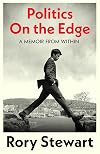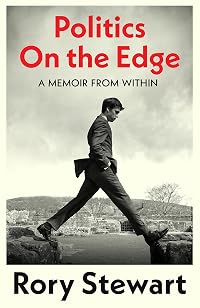
Politics On the Edge
by Rory Stewart
On This Page
Description
Over the course of a decade from 2010, Rory Stewart went from being a political outsider to standing for prime minister - before being sacked from a Conservative Party that he had come to barely recognise. Tackling ministerial briefs on flood response and prison violence, engaging with conflict and poverty abroad as a foreign minister, and Brexit as a Cabinet minister, Stewart learned first-hand how profoundly hollow and inadequate our democracy and government had become. Cronyism, ignorance show more and sheer incompetence ran rampant. Around him, individual politicians laid the foundations for the political and economic chaos of today. Stewart emerged battered but with a profound affection for his constituency of Penrith and the Border, and a deep direct insight into the era of populism and global conflict. Politics On the Edge invites us into the mind of one of the most interesting actors on the British political stage. Uncompromising, candid and darkly humorous, this is his story of the challenges, absurdities and realities of political life, a new classic of political memoir and a remarkable portrait of our age. show lessTags
Recommendations





Member Reviews
Anyone who has ever met me, knows that I am about as far from being a Conservative as it is possible to be: that's one thing that I seem to have in common with Rory Stewart.
I started this book quite liking Mr Stewart; by the time that I was thirty pages in, I wanted to say some exceedingly rude things to him then, by the time I got to the last page, I felt sorry for him.
The reason for my initial ire was the immense air of righteous deservedness about his ascension to Parliament and his expectation to enter the cabinet: didn't these people know who his people were? It eventually dawned upon me that the Houses of Parliament are filled with two types of people. There are the sons (and it is still mainly males in the top echelons) of show more Colonels or the Duke of... who expect the old boys (see previous parentheses) network to lead to instant installation at the top of government, and the ordinary Joe (and now Jane) Bloggs who are overawed by the stench of privilege: how does one react when the peg for your coat has a hanger for a sword next to it? (Remember, the vast majority of the House is not nearly as old as it pretends.)
Stewart, by his own admission, enters into politics with no knowledge of the game, just a feeling that he ought to give something back and he, of course, knows what the proles need! Stewart illuminates a stage filled with like minded players. He confirms the belief that most politicians have an incredibly light grasp of any concept of truth - always tell people what they want to hear and then, do what you want.
By the end of the book, I realised that Stewart was one of the good guys (for a Tory!); he can't help his education any more than anyone else, and I think that he really wanted to make things better. The second thing that I realised was that the arrival of Boris Johnson, a poor man's Donald Trump, was inevitable in a system that encourages bravado and testosterone filled antics. I am more certain than ever, that we need a new political system. show less
I started this book quite liking Mr Stewart; by the time that I was thirty pages in, I wanted to say some exceedingly rude things to him then, by the time I got to the last page, I felt sorry for him.
The reason for my initial ire was the immense air of righteous deservedness about his ascension to Parliament and his expectation to enter the cabinet: didn't these people know who his people were? It eventually dawned upon me that the Houses of Parliament are filled with two types of people. There are the sons (and it is still mainly males in the top echelons) of show more Colonels or the Duke of... who expect the old boys (see previous parentheses) network to lead to instant installation at the top of government, and the ordinary Joe (and now Jane) Bloggs who are overawed by the stench of privilege: how does one react when the peg for your coat has a hanger for a sword next to it? (Remember, the vast majority of the House is not nearly as old as it pretends.)
Stewart, by his own admission, enters into politics with no knowledge of the game, just a feeling that he ought to give something back and he, of course, knows what the proles need! Stewart illuminates a stage filled with like minded players. He confirms the belief that most politicians have an incredibly light grasp of any concept of truth - always tell people what they want to hear and then, do what you want.
By the end of the book, I realised that Stewart was one of the good guys (for a Tory!); he can't help his education any more than anyone else, and I think that he really wanted to make things better. The second thing that I realised was that the arrival of Boris Johnson, a poor man's Donald Trump, was inevitable in a system that encourages bravado and testosterone filled antics. I am more certain than ever, that we need a new political system. show less
A magnificent read, just like everything else that Rory Stewart has turned out - this is the third of his that I've read, and each one has left me with the unmistakable impression of being in the company of a writer whose work will be fit for posterity.
In this book, Rory summarises his political career, from the decision to run for office through to his withdrawal from this side of public life after failing to become the next Prime Minister. It is a book of honesty - and at times, about Rory's startling naivety, such as when he agreed to meet the unreliable Michael Gove around the time of the leadership contest, as if he though anything could come of that... - and one that paints a brighter picture of some political figures, while show more simultaneously suggesting that the whole system is broken. show less
In this book, Rory summarises his political career, from the decision to run for office through to his withdrawal from this side of public life after failing to become the next Prime Minister. It is a book of honesty - and at times, about Rory's startling naivety, such as when he agreed to meet the unreliable Michael Gove around the time of the leadership contest, as if he though anything could come of that... - and one that paints a brighter picture of some political figures, while show more simultaneously suggesting that the whole system is broken. show less
I don’t often read the memoirs of politicians. One thinks of those invariably huge and unbelievably tedious books written by former prime ministers which are little more than extended essays in self-justification. Every ex-PM gets one, but who reads them? Rory Stewart isn’t a former prime minister, though not for want of trying. His book is certainly not short on self-justification but is also reflective, passionate and unusually frank.
Stewart was, in many ways, a Tory politician from central casting: a patriotic Old Etonian who revered the monarchy and the military, and believed in limited government, tradition and slow change. His pro-European views and mild social liberalism, not to mention his intelligence and charm, would once show more have placed him at the head of his party. That he was eventually expelled from the parliamentary Conservative Party, along with twenty other MPs for voting against a no-deal Brexit, tells you nothing about him, but a great deal about the Conservative Party’s reinvention as a populist party of the right.
Stewart spent nearly ten years in Parliament. What he has to say about it has been said many times before by others, though not usually - with the notable exception of Tony Benn - by former cabinet ministers. He portrays a parliamentary system in which loyalty to the leader is rewarded and independent thought and action punished. A politics dominated by empty slogans and party self-interest. Senior civil servants who stand in the way of change and a highly centralised system in which all power flows downwards from the prime minister. Ministers appointed to departments they have little knowledge of and then quickly reshuffled to new ones before they can learn. As Stewart observes, some of the appointments themselves look to the innocent eye wilfully perverse: doctors appointed to the Department of Justice and lawyers to the Department of Health. A little learning in a minister evidently being regarded as a dangerous thing. Stewart himself served in six different ministerial positions in four departments in less than four years. Before becoming an MP he had extensive experience as a diplomat in the Middle East and Asia, but in the Foreign Office he was made Minister for Africa (despite protesting to the Foreign Secretary, Boris Johnson, that he knew nothing about Africa). After that, having by his own admission never given a thought to the subject of prisons, he was put in charge of all the prisons in England and Wales. Still, Prisons Minister was a role he came to love and have some success at.
Stewart emerges from his own account as a complex, self-divided, and even paradoxical figure. His disillusionment with Parliament started not long after entering its hallowed portals. ‘Parliament’, he writes, ‘increasingly reminded me of a boarding school, stripped by scarlet fever of most of the responsible adults and all the nicer and kinder pupils’. Yet he remained politically ambitious. He was, it seems, simultaneously sceptical of power and desirous of it; appalled by the reality of Parliament, he nonetheless remained spellbound by the idea of Parliament and the political life. He admits that, as a backbencher, he usually towed the party line and didn’t speak out publicly about things he privately disagreed with. He was deeply serious with a strong self-publicising streak. He also combined formidable intellect with a capacity for breathtaking naivety which sometimes landed him in trouble. He once told a tabloid journalist that parts of his rural constituency were ‘pretty primitive’ and some of the old farmers held their trousers up with twine. He genuinely meant no offence and was horrified by the entirely predictable media storm in a teacup which followed (he reveals in the book that he briefly contemplated suicide).
He writes affectionately about his Cumbrian constituents and admiringly of Ken Clarke, David Gauke and Theresa May. Most of the Conservative big hitters he encountered during his parliamentary career, however, are summarily dispatched in elegant yet lethal prose: David Cameron, Liz Truss and, of course, Boris Johnson. But, although it contains a great deal of anger, frustration and sadness, Politics on the Edge is remarkably free of bitterness. Stewart’s critique is essentially of structures and culture. The individual actors enabled by the system are almost incidental and certainly interchangeable. Stewart is writing about a Conservative administration but most of what he has to say about it would also apply to a Labour one. And, although his personal political drama took place in Britain, it has much wider relevance. This is the story of a moderate and rational politician gradually being engulfed by the rising tide of populism, fantasising demagogues, and the polarising tendencies of social media. He also writes well about print and broadcast journalists obsessed with political trivia. All these themes come together in the gripping final chapters which deal with his 2019 leadership bid.
I’m not now, nor have I ever been, a member of the Conservative Party, but I admired Rory Stewart even when he was an MP and, after reading this powerful and thoughtful memoir, I admired him even more. show less
Stewart was, in many ways, a Tory politician from central casting: a patriotic Old Etonian who revered the monarchy and the military, and believed in limited government, tradition and slow change. His pro-European views and mild social liberalism, not to mention his intelligence and charm, would once show more have placed him at the head of his party. That he was eventually expelled from the parliamentary Conservative Party, along with twenty other MPs for voting against a no-deal Brexit, tells you nothing about him, but a great deal about the Conservative Party’s reinvention as a populist party of the right.
Stewart spent nearly ten years in Parliament. What he has to say about it has been said many times before by others, though not usually - with the notable exception of Tony Benn - by former cabinet ministers. He portrays a parliamentary system in which loyalty to the leader is rewarded and independent thought and action punished. A politics dominated by empty slogans and party self-interest. Senior civil servants who stand in the way of change and a highly centralised system in which all power flows downwards from the prime minister. Ministers appointed to departments they have little knowledge of and then quickly reshuffled to new ones before they can learn. As Stewart observes, some of the appointments themselves look to the innocent eye wilfully perverse: doctors appointed to the Department of Justice and lawyers to the Department of Health. A little learning in a minister evidently being regarded as a dangerous thing. Stewart himself served in six different ministerial positions in four departments in less than four years. Before becoming an MP he had extensive experience as a diplomat in the Middle East and Asia, but in the Foreign Office he was made Minister for Africa (despite protesting to the Foreign Secretary, Boris Johnson, that he knew nothing about Africa). After that, having by his own admission never given a thought to the subject of prisons, he was put in charge of all the prisons in England and Wales. Still, Prisons Minister was a role he came to love and have some success at.
Stewart emerges from his own account as a complex, self-divided, and even paradoxical figure. His disillusionment with Parliament started not long after entering its hallowed portals. ‘Parliament’, he writes, ‘increasingly reminded me of a boarding school, stripped by scarlet fever of most of the responsible adults and all the nicer and kinder pupils’. Yet he remained politically ambitious. He was, it seems, simultaneously sceptical of power and desirous of it; appalled by the reality of Parliament, he nonetheless remained spellbound by the idea of Parliament and the political life. He admits that, as a backbencher, he usually towed the party line and didn’t speak out publicly about things he privately disagreed with. He was deeply serious with a strong self-publicising streak. He also combined formidable intellect with a capacity for breathtaking naivety which sometimes landed him in trouble. He once told a tabloid journalist that parts of his rural constituency were ‘pretty primitive’ and some of the old farmers held their trousers up with twine. He genuinely meant no offence and was horrified by the entirely predictable media storm in a teacup which followed (he reveals in the book that he briefly contemplated suicide).
He writes affectionately about his Cumbrian constituents and admiringly of Ken Clarke, David Gauke and Theresa May. Most of the Conservative big hitters he encountered during his parliamentary career, however, are summarily dispatched in elegant yet lethal prose: David Cameron, Liz Truss and, of course, Boris Johnson. But, although it contains a great deal of anger, frustration and sadness, Politics on the Edge is remarkably free of bitterness. Stewart’s critique is essentially of structures and culture. The individual actors enabled by the system are almost incidental and certainly interchangeable. Stewart is writing about a Conservative administration but most of what he has to say about it would also apply to a Labour one. And, although his personal political drama took place in Britain, it has much wider relevance. This is the story of a moderate and rational politician gradually being engulfed by the rising tide of populism, fantasising demagogues, and the polarising tendencies of social media. He also writes well about print and broadcast journalists obsessed with political trivia. All these themes come together in the gripping final chapters which deal with his 2019 leadership bid.
I’m not now, nor have I ever been, a member of the Conservative Party, but I admired Rory Stewart even when he was an MP and, after reading this powerful and thoughtful memoir, I admired him even more. show less
I generally get angry when I think about the Tory party and Brexit over the past 15 years in the UK but Rory Stewart does at least seem like a Tory with a brain and sense. Which is probably why he didn't get very far. This memoir is very entertaining and as he is no longer in politics he doesn't hold back at times when it comes to sticking the knife in to his colleagues. I never expected to laugh but I did laugh out loud at some bits. So this was much better than I expected.
Illuminating and frustrating, but a good read.
I enjoyed this book, which provides some insight into Rory Stewart’s time as a member of the UK’s parliament. Stewart comes from a very privileged background and fits easily into my image of a typical Conservative Member of Parliament, benefiting from not being a career MP, and being an ex-MP now allowing him to be reasonably candid in his views.
I found myself skipping through the Brexit negotiations chapter, not because it was uninteresting, but because I am still so angry at the economic and social shortsightedness of the “hard Brexit” gamblers.
But then the chapters about Stewart’s attempt to become the leader of the Conservative Party (and Prime Minister), primarily against show more Boris Johnson, were fascinating and gripping, as I had not followed this at the time. These chapters of course also have the inevitability of Greek tragedy, as we know that Johnson wins the leadership contest (and the almost complete mess that followed). show less
I enjoyed this book, which provides some insight into Rory Stewart’s time as a member of the UK’s parliament. Stewart comes from a very privileged background and fits easily into my image of a typical Conservative Member of Parliament, benefiting from not being a career MP, and being an ex-MP now allowing him to be reasonably candid in his views.
I found myself skipping through the Brexit negotiations chapter, not because it was uninteresting, but because I am still so angry at the economic and social shortsightedness of the “hard Brexit” gamblers.
But then the chapters about Stewart’s attempt to become the leader of the Conservative Party (and Prime Minister), primarily against show more Boris Johnson, were fascinating and gripping, as I had not followed this at the time. These chapters of course also have the inevitability of Greek tragedy, as we know that Johnson wins the leadership contest (and the almost complete mess that followed). show less
Although not a Conservative supporter I have always had a respect for Rory Stewart.
Here in his political memoir he confirms much of my suspicions about our Parliamentary system and its lack of democratic behaviour. Prime Ministers use the party whips to control how its Members vote, and as Stewart found to his cost, choosing to go against the whip will send you into the weeds for years (5 in his case) where you will be given no promotion to any kind of Cabinet position.
He did good work as Minister for prisons, in International Development and the Foreign office, as well as for his constituency.
Despite his honesty about the negative aspects of certain individuals, and the system, he has a generosity of spirit towards many of those he has show more worked with: MPs, Civil Servants and others. show less
Here in his political memoir he confirms much of my suspicions about our Parliamentary system and its lack of democratic behaviour. Prime Ministers use the party whips to control how its Members vote, and as Stewart found to his cost, choosing to go against the whip will send you into the weeds for years (5 in his case) where you will be given no promotion to any kind of Cabinet position.
He did good work as Minister for prisons, in International Development and the Foreign office, as well as for his constituency.
Despite his honesty about the negative aspects of certain individuals, and the system, he has a generosity of spirit towards many of those he has show more worked with: MPs, Civil Servants and others. show less
Horrifying revelation of the world of politics. People obsessed with their careers, who will say anything to preserve them. People all completely unreliable.
The fiendish difficulty of getting things done, sometimes in the face of the civil servants, who listen politely then do nothing really unless the permanent secretary agrees.
The fiasco of Brexit, and the bungled drop out.
The book ends rather abruptly after his failed leadership campaign. I should have liked his response to Boris's take over of the Tories, and s
The fiendish difficulty of getting things done, sometimes in the face of the civil servants, who listen politely then do nothing really unless the permanent secretary agrees.
The fiasco of Brexit, and the bungled drop out.
The book ends rather abruptly after his failed leadership campaign. I should have liked his response to Boris's take over of the Tories, and s
Members
- Recently Added By
Published Reviews
ThingScore 100
They [moderation over extremism. Reason over irrationality. Optimism and resilience, tempered by the memory of dictatorship and oppression but never overwhelmed by it] are values the former Tory minister-turned-podcaster Rory Stewart doubtless shares, but in Politics on the Edge (Jonathan Cape) he offers a more disillusioned if equally beautifully written take on putting them into practice, show more reflecting with "a sense of shame" on a frustrating Westminster career. Defiantly burning bridges as he goes – Michael Gove, George Osborne, Boris Johnson and Liz Truss all come off memorably badly – Stewart lists everything he thinks ails conventional politics: over-mighty party members, the prizing of simplicity over complexity, the way ministers are never in a job long enough to master either the brief or their civil servants. show less
added by Cynfelyn
Lists

Books Read in 2024
4,727 works; 128 members
Author Information

13+ Works 4,292 Members
Rory Stewart is a former infantry officer, diplomat in Indonesia and Yugoslavia, and fellow at Harvard's John F. Kennedy School of Government
Some Editions
Awards and Honors
Awards
Distinctions
Common Knowledge
- Alternate titles
- How not to be a politician
Classifications
- Genres
- Biography & Memoir, General Nonfiction, Politics and Government, Nonfiction, History
- DDC/MDS
- 941.0861092 — History & geography History of Europe British Isles Historical periods of British Isles 1837- Period of Victoria and House of Windsor 2000-
- LCC
- DA594.1 .S74 .A3 — History of Europe, Asia, Africa and Oceania Great Britain History of Great Britain England
- BISAC
Statistics
- Members
- 475
- Popularity
- 64,154
- Reviews
- 11
- Rating
- (4.14)
- Languages
- Dutch, English
- Media
- Paper, Audiobook, Ebook
- ISBNs
- 11
- ASINs
- 7