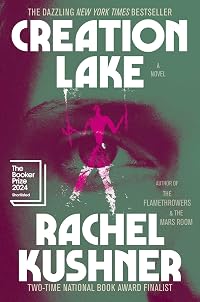
Creation Lake
by Rachel Kushner
On This Page
Description
This is a novel about a freelance agent, a 34-year-old American woman of ruthless tactics and bold opinions and clean beauty, who is sent to do dirty work in France. "Sadie Smith" is how the narrator introduces herself to her lover, to the rural commune of French subversives on whom she is keeping tabs, and to the reader. We never learn her real name. Sadie has met her lover, Lucien, a young and well-born Parisian, by "cold bump"-- making him believe the encounter was accidental. And like show more everyone she chooses to interact with, Lucien is useful to her, used by her. Sadie operates on strategy and dissimulation, based on what her "contacts," shadowy figures in business and government, instruct. First, these contacts want her to incite provocation. Then they want more. In this region of centuries-old farms and ancient caves, Sadie becomes entranced by a mysterious figure named Bruno Lacombe, a mentor to the young activists, who lives in a vast network of underground caves on his daughter's land and communicates only by email. Bruno believes that the path to emancipation from what ails modern life is not revolt, but a return to the ancient past before civilization. Just as Sadie is certain she's the seductress and puppet master of those whom she surveils, Bruno Lacombe is seducing her with his ingenious counter-histories, his artful laments, his own tragic story. Written in short, vaulting sections, Rachel Kushner's rendition of "noir" is taut, propulsive, and dazzling. Creation Lake is Kushner's finest achievement yet as a novelist, a work of high art, high comedy, keen insights, and unforgettable pleasure. From Rachel Kushner on the title: My character Bruno refers to "a deep cistern of voices, the lake of our creation" -- meaning all of human history, the whole struggle in which chains of civilizations try to figure out how to live. He believes he can hear these voices underground. To me, "Creation Lake" suggests intrigue. Creation of what? In Sadie's case, a persona, a feint, a manipulation. But also in her case, the creation possibly of her own soul. -- show lessTags
Recommendations



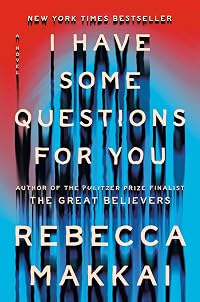
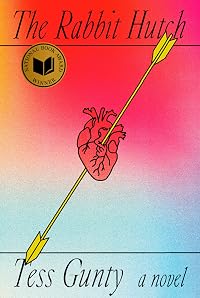
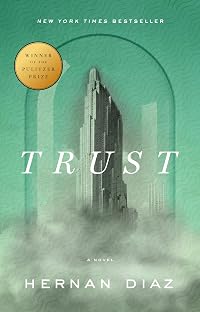

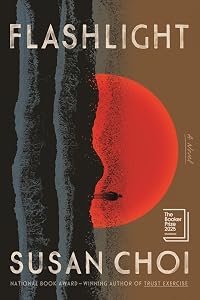
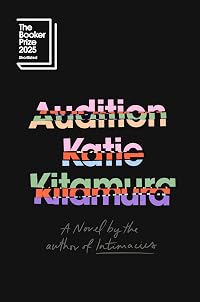



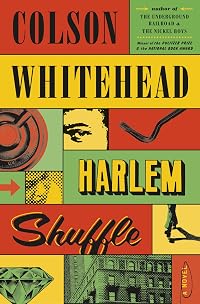
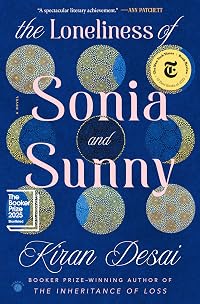

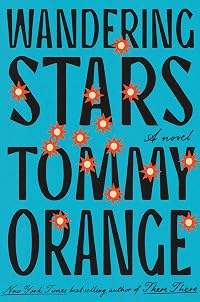




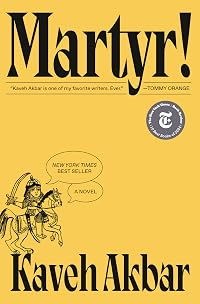

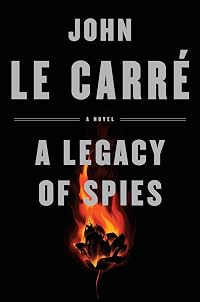
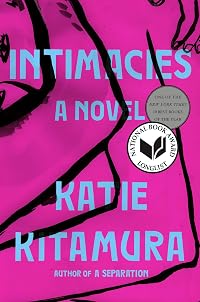



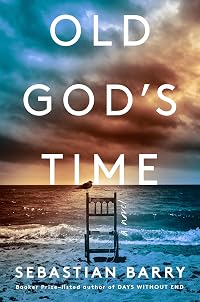



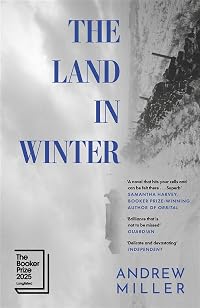




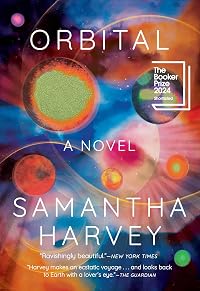
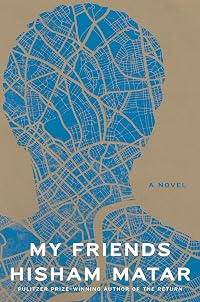
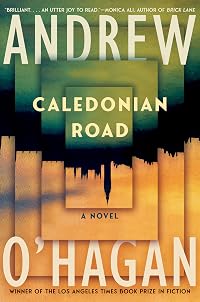

Member Recommendations

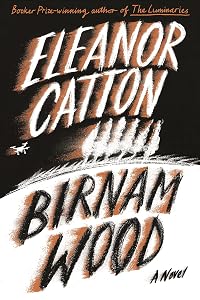
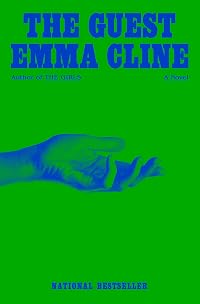
susanbooks I can as easily see the protagonists in these novels befriending as blackmailing each other. I mean that in the best possible way.
susanbooks Though so different in plot, both books feature (not necessarily primary) characters concerned with ontological questions, the exploration of which undergird their respective novels. Which is a long way of saying, whatever else is great about the books — & there’s a lot — they got me thinking about the meaning of life.
Member Reviews
You say you want a revolution
Narrated by: Rachel Kushner
Length: 11 hrs and 10 mins
Any book that starts off with a Beat generation veteran sending out email blasts from his cave dwelling in France in order to educate his followers about cigarette-smoking Neanderthals, just has to grab one’s attention.
It also should let the reader know that what follows is going to be fiction rather than fact.
With her sharp dead-pan wit and her incredible powers of observation Kushner has managed to craft an intelligent novel where her imagination examines human behavior, especially its fallibilities.
The heroine is a sexy young American who goes by the name of Sadie Smith. Sadie is a spy who will work for anyone. She is not only intelligent but she’s show more sexy, a ruthless seductress capable of pulling off both espionage and counter-espionage with ease. Or so she tells us.
The story uses a loose plot of Sadie’s assignments in order to comment on modern society and its critics. Her projects are a: to have a sub-minister of the French government assassinated, and b: to infiltrate a commune of eco-warrior wannabes. She manages to combine these two projects so that both aims are achieved simultaneously.
The commune - Moulin is set somewhere in southern France. Its people are adherents of the pseudo-philosophies of the old Beat Bruno - the one who sends out emails about Neanderthals - and a couple of his cronies. Their aim is to destroy “the system”, and they go about this by persuading young eco-protesters to form a commune to implement their ideas, which of course, as is the practice of so many revolutions, recreates the very things that they are destroying.
The Les Moulinards turn out to be a vacant lot, only too wiling to believe that the Neanderthals were a superior type of human, prone to depression and easily addicted. They had big noses and brains and were tall. Bruno liked to refer to them as The Talls. The members of the commune believe their leaders, partly because they were morally hampered by their parents who grew up in the culturally-dead eighties. Or are they are those parents? In the commune of the Moulinards anything is posible.
The idea of the leaders of the commune is that by looking to the distant past, modern humans could live in harmony blah blah. Sadie takes all this nonsense in her stride, and as the novel progreses she plans her two projects - the assassination and the infiltration of the Moulinages, on the fly in situ. She improvises, has sex, drinks fine and not so fine wine, all the while observing wryly the actions of those who will believe.
I enjoyed Creation Lake. It’s sharp, witty and does not lecture. show less
Narrated by: Rachel Kushner
Length: 11 hrs and 10 mins
Any book that starts off with a Beat generation veteran sending out email blasts from his cave dwelling in France in order to educate his followers about cigarette-smoking Neanderthals, just has to grab one’s attention.
It also should let the reader know that what follows is going to be fiction rather than fact.
With her sharp dead-pan wit and her incredible powers of observation Kushner has managed to craft an intelligent novel where her imagination examines human behavior, especially its fallibilities.
The heroine is a sexy young American who goes by the name of Sadie Smith. Sadie is a spy who will work for anyone. She is not only intelligent but she’s show more sexy, a ruthless seductress capable of pulling off both espionage and counter-espionage with ease. Or so she tells us.
The story uses a loose plot of Sadie’s assignments in order to comment on modern society and its critics. Her projects are a: to have a sub-minister of the French government assassinated, and b: to infiltrate a commune of eco-warrior wannabes. She manages to combine these two projects so that both aims are achieved simultaneously.
The commune - Moulin is set somewhere in southern France. Its people are adherents of the pseudo-philosophies of the old Beat Bruno - the one who sends out emails about Neanderthals - and a couple of his cronies. Their aim is to destroy “the system”, and they go about this by persuading young eco-protesters to form a commune to implement their ideas, which of course, as is the practice of so many revolutions, recreates the very things that they are destroying.
The Les Moulinards turn out to be a vacant lot, only too wiling to believe that the Neanderthals were a superior type of human, prone to depression and easily addicted. They had big noses and brains and were tall. Bruno liked to refer to them as The Talls. The members of the commune believe their leaders, partly because they were morally hampered by their parents who grew up in the culturally-dead eighties. Or are they are those parents? In the commune of the Moulinards anything is posible.
The idea of the leaders of the commune is that by looking to the distant past, modern humans could live in harmony blah blah. Sadie takes all this nonsense in her stride, and as the novel progreses she plans her two projects - the assassination and the infiltration of the Moulinages, on the fly in situ. She improvises, has sex, drinks fine and not so fine wine, all the while observing wryly the actions of those who will believe.
I enjoyed Creation Lake. It’s sharp, witty and does not lecture. show less
I really enjoyed this novel. Kushner has got France right - which was lovely after reading bland novels or, worse, ones that got the culture wrong (looking at you, Kristin Hannah). I loved the mix of philosophy and action, the meanderings of the story and the slow unveiling of Sadie who, in the end, remains rather a mystery. The plot becomes increasingly uncomfortable when it becomes clear that Sadie is unravelling and is perhaps not as good at her job as she thinks she is. The peripheral characters are also much more complex than they appear and glimpses into their personalities grab the attention. Overall, it is a creative and interesting novel even if it did leave me a bit hungry for more depth - Sadie does remain very elusive.
A rich romp that's part spy novel, part treatise on human evolution, part dark workplace comedy, part takedown of police tactics. My favourite thing Kushner's done yet.
"Sadie" (not her real name) worked undercover for the government, infiltrating groups to see whether they are planning any terrorist acts, and sometimes encouraging them to do so. When a job goes badly, she works as a private contractor, doing the bidding of corporations or unknown groups. In Creation Lake, she works her way into a secretive cult/environmental group living in an obscure corner of France. To do so, she moves to the area and insinuates her way into the group and as she does so, she is taken with the writings of a man corresponding with the group, with ideas about Neanderthal society. The goals of the people who hired her have nothing to do with finding out the truth, and more to do about protecting powerful corporate show more interests and Sadie will have to decide what she wants.
Creation Lake is superficially an undercover thriller where the protagonist is possibly the bad guy, possibly just interested in collecting her fee, and the novel is told entirely from her point of view. Rachel Kushner isn't writing genre fiction, though, so while the scaffolding is there, you won't find much in the way of adventurous chases or even a propulsive plot, as Kushner casts her eye on how societies and groups structure themselves and what can cause them to change. I'm still figuring out what I think about this books, which contains some interesting ideas but also seemed to get so dragged down in ideas and the narrator's cynical ennui that it forgot that a book with a set up like this should also be full of tension and forward momentum. show less
Creation Lake is superficially an undercover thriller where the protagonist is possibly the bad guy, possibly just interested in collecting her fee, and the novel is told entirely from her point of view. Rachel Kushner isn't writing genre fiction, though, so while the scaffolding is there, you won't find much in the way of adventurous chases or even a propulsive plot, as Kushner casts her eye on how societies and groups structure themselves and what can cause them to change. I'm still figuring out what I think about this books, which contains some interesting ideas but also seemed to get so dragged down in ideas and the narrator's cynical ennui that it forgot that a book with a set up like this should also be full of tension and forward momentum. show less
Creation Lake was definitely one of the more interesting and thought provoking novels that I have read in quite some time despite the fact that it took me more than half the book to get hooked. Although it wove together philosophy, eco-terrorism, and a spy plot, I thought that it was more tightly woven than The Flamethrowers, and had a well-defined character arc at the same time. The protagonist is amoral and anti-social, but clearly suffers from anxiety and insomnia that she fights in a fairly controlled way with drugs and alcohol. I loved her cynically wry asides. The philosophical part of the novel sets out the emails of a depressed character living in a cave who is sort of an enlightenment thinker like Rousseau in the beginning but show more who finally seems to ascribe to a more modern French existentialism that searches for personal meaning outside of, and in spite of, society. There are many more things to notice such as the examination of modernity and progress, as well as the observation of entrenched and changing French culture and how it differs (or not) from Italian culture. show less
Sadie Smith is deep undercover. She barely knows who she is anymore. She’s a bit like Bruno Lacombe, the enigmatic and secretive inspirational leader of an anti-capitalist movement, who has found himself in the deep dark of caves he believes were once frequented by Neanderthals. Sadie has unobserved access to his emails. She submerges herself in his meandering thoughts on life, work, and meaning. But is he really leading the Moulinardians or is he merely an obsolete jester on the sidelines? Sadie doesn’t know. Yet. Just as she doesn’t know precisely whom she is working for. She has a primary objective, to implicate the group in an unlawful action that will get them arrested. But there may be secondary or tertiary objectives that show more arise. If she chooses. If choice is a factor. If it isn’t all just written in the stars.
Rachel Kushner creates a remarkable tenuous narrative voice in “Sadie,” whomever she might be. Her journey becomes our journey as together we attempt to fathom what is really at stake. And her escape, if it occurs, will be the same one we take to the non-existent Priest Valley, California: population 0.
Certainly recommended. show less
Rachel Kushner creates a remarkable tenuous narrative voice in “Sadie,” whomever she might be. Her journey becomes our journey as together we attempt to fathom what is really at stake. And her escape, if it occurs, will be the same one we take to the non-existent Priest Valley, California: population 0.
Certainly recommended. show less
Of all things that I have read about this fabulous novel, the most fitting was: "Think Kill Bill written by John le Carré". It is as entertaining and funny as it is thoughtful, sometimes even quite philosophical. A story about espionage that slowly builds up over hundreds of pages, right until the unexpected showdown, some ten pages from the end.
We follow Sadie Smith, a nihilistic but self-confident young Californian woman, to rural south-western France, into a region called Guyenne. The Guyenne is known for its ancient cave art and traces of prehistoric humans (both modern Homo sapiens and - arguably - not so modern Neanderthals). Otherwise it is unspectacular due to its plain agricultural life, far away from trendy cities. Since show more governmental development plans triggered resistance by the environmentalist commune "Les Mulinards", Sadie has been hired to infiltrate this commune as an undercover agent, without a clue about who actually hired her (it's just "her contacts"). The book begins with Sadie driving from Marseille to the Guyenne, where she moves into the deserted family home of her current partner's aunt. She got involved with this partner, Lucien - a wealthy young Parisian intellectual and movie director - only to get in contact with his childhood friend Pascal, the charismatic leader of Les Mulinards. For several weeks, she takes on translation work in the commune, getting acquainted with their life style, families and various member biographies.
All of this is told in many, seemingly unrelated text passages that jump between memories of former cases and partners, communications with Lucien and his team, stories about youth sexuality, observations of the Mulinard commune life (including a commune bathing event), acquaintances with political activists that were rejected by the Mulinards, or sexual encounters with one of the Mulinard workers. These episodes mix beautifully entertaining stories, sensual descriptions of Sadie's experience, with bizarre logic and/or hilarious thoughts about her personal way to manage life (apparently always feeling in control, yet hardly controlling anything).
In another story line, Sadie reads the (hacked) email correspondence between the Mulinards and the aged naturalist Bruno, a man who has retired from modern society, in search of the pure natural life of the Neanderthals. These episodes are often poetic, sometimes absurd, but always thoughtful and often philosophical, ranging from descriptions of hallucinations in the dark, to the sensual experience of catching fish by hand, to the navigational skills of polynesian seafarers. Amongst the chaotic mix of experiences and happenings in Sadie's real life, Bruno's thoughts provide her with spiritual guidance. She gets on best with the one person she will never meet.
In summary, it is pretty hard to summarize what this book is about, perhaps because it describes the search of a young nihilist and individualist for guidance and for a firm place in life. show less
We follow Sadie Smith, a nihilistic but self-confident young Californian woman, to rural south-western France, into a region called Guyenne. The Guyenne is known for its ancient cave art and traces of prehistoric humans (both modern Homo sapiens and - arguably - not so modern Neanderthals). Otherwise it is unspectacular due to its plain agricultural life, far away from trendy cities. Since show more governmental development plans triggered resistance by the environmentalist commune "Les Mulinards", Sadie has been hired to infiltrate this commune as an undercover agent, without a clue about who actually hired her (it's just "her contacts"). The book begins with Sadie driving from Marseille to the Guyenne, where she moves into the deserted family home of her current partner's aunt. She got involved with this partner, Lucien - a wealthy young Parisian intellectual and movie director - only to get in contact with his childhood friend Pascal, the charismatic leader of Les Mulinards. For several weeks, she takes on translation work in the commune, getting acquainted with their life style, families and various member biographies.
All of this is told in many, seemingly unrelated text passages that jump between memories of former cases and partners, communications with Lucien and his team, stories about youth sexuality, observations of the Mulinard commune life (including a commune bathing event), acquaintances with political activists that were rejected by the Mulinards, or sexual encounters with one of the Mulinard workers. These episodes mix beautifully entertaining stories, sensual descriptions of Sadie's experience, with bizarre logic and/or hilarious thoughts about her personal way to manage life (apparently always feeling in control, yet hardly controlling anything).
In another story line, Sadie reads the (hacked) email correspondence between the Mulinards and the aged naturalist Bruno, a man who has retired from modern society, in search of the pure natural life of the Neanderthals. These episodes are often poetic, sometimes absurd, but always thoughtful and often philosophical, ranging from descriptions of hallucinations in the dark, to the sensual experience of catching fish by hand, to the navigational skills of polynesian seafarers. Amongst the chaotic mix of experiences and happenings in Sadie's real life, Bruno's thoughts provide her with spiritual guidance. She gets on best with the one person she will never meet.
In summary, it is pretty hard to summarize what this book is about, perhaps because it describes the search of a young nihilist and individualist for guidance and for a firm place in life. show less
Members
- Recently Added By
Published Reviews
ThingScore 100
Sadie is a triumph of character – not quite fully self-deceived, not even entirely corrupted by the barely controlled confusions, emotional complications and near-disasters of the deep-cover agent’s life. She’s a satire, but she’s also being straight with us. She’s not quite a sensationist, although the world pours in on her senses, and through hers into ours.
added by gypsysmom
“Creation Lake” ... consolidates Kushner’s status as one of the finest novelists working in the English language. You know from this book’s opening paragraphs that you are in the hands of a major writer, one who processes experience on a deep level. Kushner has a gift for almost effortless intellectual penetration.
She moves easily from the abstract to the concrete, and her themes show more overlap and bleed into one another without seeming forced. show less
She moves easily from the abstract to the concrete, and her themes show more overlap and bleed into one another without seeming forced. show less
added by timtom
Lists

Recommend the 20 best books you've read in the last five years
2,168 works; 601 members

Booker Prize Longlist 2024
13 works; 5 members

National Book Award Finalists - Fiction
377 works; 12 members

Indie Next Picks
196 works; 4 members

Books Read in 2024
4,623 works; 126 members

Top Five Books of 2024
795 works; 264 members

Book Club read
9 works; 1 member

2025
42 works; 1 member
Top Five Books of 2025
954 works; 303 members

WBS - Book Club
71 works; 1 member

The LonesomeReader Book Club
36 works; 1 member

Books Read in 2026
1,942 works; 66 members

Take Four Books
130 works; 1 member
Author Information

17+ Works 6,292 Members
Rachel Kushner's debut novel, Telex from Cuba, was a finalist for the 2008 National Book Award and the Dayton Literary Peace Prize. Her second novel, The Flamethrowers, was a finalist for the 2013 National Book Award. She was awarded a Guggenheim Fellowship in 2013. Her fiction and essays have appeared in numerous publications including The New show more York Times, The Paris Review, The Believer, and Grand Street. She made the Bestseller List in 2018 with her title, The Mars Room. (Bowker Author Biography) show less
Some Editions
Awards and Honors
Awards
Distinctions
The Guardian Book of the Day (2024-09-04)
Observer Book of the Week (2024-08-25)
Notable Lists
Common Knowledge
- Canonical title
- Creation Lake
- Original title
- Creation Lake
- Original publication date
- 2024-09-03
- People/Characters
- Sadie Smith; Bruno Lacombe; Pascal; Vito; Nancy; Rene (show all 7); Brudmoor
- Important places
- France
- Epigraph
- Close, in the name of jesting!
Lie thou there,
for her comes the trout that must be caught with tickling
--Maria, from Twelfth Night - Dedication
- For Jason
- First words
- Neanderthals were prone to depression, he said.
- Last words
- (Click to show. Warning: May contain spoilers.)Exactly, I replied.
- Blurbers
- Diaz, Hernan; Erdrich, Louise; Ellis, Bret Easton
- Original language
- English
Classifications
Statistics
- Members
- 1,264
- Popularity
- 19,382
- Reviews
- 66
- Rating
- (3.47)
- Languages
- 6 — Dutch, English, Finnish, French, German, Spanish
- Media
- Paper, Audiobook, Ebook
- ISBNs
- 19
- ASINs
- 9