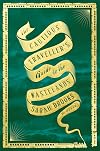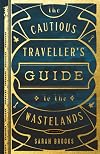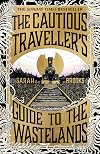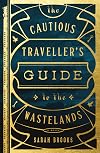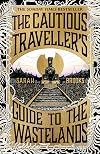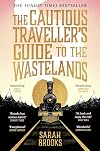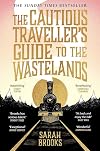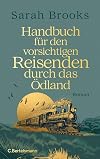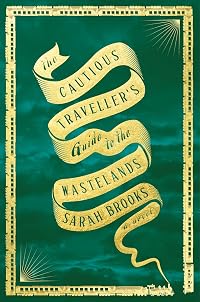
The Cautious Traveller's Guide to the Wastelands: A Novel
by Sarah Brooks
On This Page
Description
"For fans of Piranesi and The Midnight Library, a stunning historical fantasy novel set on a grand express train, about a group of passengers on a dangerous journey across a magical landscape It is said there is a price that every passenger must pay. A price beyond the cost of a ticket. There is only one way to travel across the Wastelands: on the Trans-Siberian Express, a train as famous for its luxury as for its danger. The train is never short of passengers, eager to catch sight of show more Wastelands creatures more miraculous and terrifying than anything they could imagine. But on the train's last journey, something went horribly wrong, though no one seems to remember what exactly happened. Not even Zhang Weiwei, who has spent her life onboard and thought she knew all of the train's secrets. Now, the train is about to embark again, with a new set of passengers. Among them are Marya Petrovna, a grieving woman with a borrowed name; Henry Grey, a disgraced naturalist looking for redemption; and Elena, a beguiling stowaway with a powerful connection to the Wastelands itself. Weiwei knows she should report Elena, but she can't help but be drawn to her. As the girls begin a forbidden friendship, there are warning signs that the rules of the Wastelands are changing, and the train might once again be imperiled. Can the passengers trust each other, as the wildness outside threatens to consume them all?"-- show lessTags
Recommendations






Member Reviews
Series Info/Source: This is a stand alone book. I got this on ebook through Netgalley to review.
Thoughts: I ended up really enjoying this. The premise is that an area of "other" that is deadly to humans has developed in the tundra between China and Russia. Walls were built to protect humanity but the only way to traverse this wilderness is the Train which is owned by The Company. However, the last journey of the train went wrong and people don't remember what happened. The Company must thrive though, so the Train must keep running.
Yes, you do spend most of the time on this mysterious train traveling through the Wastelands. However, that is the point of the story...this is a bunch of humans stuck in a very stressful situation traveling show more through a dangerous region with only the walls of the train to protect them.
The story does spend a lot of time dealing with the passengers and their secrets. The POV rotates between three main passengers: a young woman trying to find the truth behind her father's prosecution, a young woman known as "the child of the train" who was born on the train, and an older professor who is looking for his next big scientific finding.
The Wastelands themselves are fascinating but never fully explained. We see them mostly through the glass of the train, just like our protagonists. It is when the truth of the Wastelands and the train begins to be revealed that things get really interesting.
The story is more slow burn than action packed. However the constant tension of the danger outside the thin train walls, the mystery of the truths behind the train, and the intriguing characters on the train really kept me engaged in the story.
The story has very Lovecraftian vibes to it. You have the theme of an otherness, a darkness, a madness taking over this portion of the land. I love stories that explore this mythos.
The written is beautifully done and very lyrical. I loved the world-building, the intriguing characters, and the constant mysterious tension. I also thought the ending of the book was absolutely fantastic and completely fitting with the rest of the story.
My Summary (5/5) :Overall I thought this was fantastic. I believe this is debut novel for Brooks and I am eager to see what she comes up with next. This was incredibly creative and very engaging. It does move at more of a slow, mysterious burn. This is not an action packed adventure. However, the intriguing characters and landscape, coupled with the tension of constant danger really pulled me in to the story. show less
Thoughts: I ended up really enjoying this. The premise is that an area of "other" that is deadly to humans has developed in the tundra between China and Russia. Walls were built to protect humanity but the only way to traverse this wilderness is the Train which is owned by The Company. However, the last journey of the train went wrong and people don't remember what happened. The Company must thrive though, so the Train must keep running.
Yes, you do spend most of the time on this mysterious train traveling through the Wastelands. However, that is the point of the story...this is a bunch of humans stuck in a very stressful situation traveling show more through a dangerous region with only the walls of the train to protect them.
The story does spend a lot of time dealing with the passengers and their secrets. The POV rotates between three main passengers: a young woman trying to find the truth behind her father's prosecution, a young woman known as "the child of the train" who was born on the train, and an older professor who is looking for his next big scientific finding.
The Wastelands themselves are fascinating but never fully explained. We see them mostly through the glass of the train, just like our protagonists. It is when the truth of the Wastelands and the train begins to be revealed that things get really interesting.
The story is more slow burn than action packed. However the constant tension of the danger outside the thin train walls, the mystery of the truths behind the train, and the intriguing characters on the train really kept me engaged in the story.
The story has very Lovecraftian vibes to it. You have the theme of an otherness, a darkness, a madness taking over this portion of the land. I love stories that explore this mythos.
The written is beautifully done and very lyrical. I loved the world-building, the intriguing characters, and the constant mysterious tension. I also thought the ending of the book was absolutely fantastic and completely fitting with the rest of the story.
My Summary (5/5) :Overall I thought this was fantastic. I believe this is debut novel for Brooks and I am eager to see what she comes up with next. This was incredibly creative and very engaging. It does move at more of a slow, mysterious burn. This is not an action packed adventure. However, the intriguing characters and landscape, coupled with the tension of constant danger really pulled me in to the story. show less
**Warning: the following review contains spoilers**
As the Trans-Siberian Express makes its return journey to Moscow after a lengthy enforced break, the reader follows three people on board: Marya Petrovna, who travels with an agenda of her own and under an assumed name; Zhang Weiwei, who was born on the train and has never known life outside it; and Dr Henry Grey, a naturalist desperate to rescue his professional reputation. Along with the rest of the passengers and crew, they must traverse the dangerous Wastelands, but the usual rules no longer apply.
I so wanted to love this book – it seemed to tick all the right boxes – and for the first half it was just what I was hoping for; however, the feeling I'm left with after finishing the show more story is one of mild annoyance. I love a surprising twist, but it has to be convincing, which I thought wasn't the case here. But there is still lots to enjoy and admire.
The author creates tension and suspense through the skilful juxtaposition of opposites. On the one hand, there is the train itself, which can be seen as the embodiment of order and rules, humanity's success at subduing nature – the inside; on the other hand, there are the Wastelands, chaotic and dangerous, nature that has thrown off any attempt by humanity to control it – the outside. Both are running strictly parallel to each other, a fact represented – in what I thought was incredibly striking imagery – by the train tracks. But as the story progresses, the border between the two becomes porous, resulting in the Wastelands gaining a foothold inside the train, with consequences for the train and everyone on board.
The atmosphere is tense and filled with a sense of unease and foreboding, the more the train leaves the safety of Beijing, and the Chinese Wall, behind. From the beginning the reader is told that the outside is dangerous and mustn't be allowed in, and that even watching it for too long has a detrimental effect on one's health; it is better to draw the curtains.
The first half of the book reads like a cautionary environmental tale, highlighting that the changes in the Wastelands are the result of mankind's over-exploitation and subsequent destruction of the natural environment, of bleeding it dry to gain access to the natural resources (p. 87): 'It is said that so much had been taken from the land that it was always hungry. It had been feeding off the blood spilt by the empires, and by the bones of the animals and people they left behind. It gained a taste for death.' Nature has grown teeth and is fighting back and, one can't help feeling, actively throwing obstacles in the train's way so the crossing will fail.
Both Dr Grey, who manages to get outside after the train has stopped to take on more water and bring back several specimen jars, and Weiwei, who goes after him and brings back a piece of lichen, are labelled thieves, for taking something that is not theirs to take.
However, in the last half or so of the book, the reader's assumptions are turned on their head and we are supposed to be glad of the changes the Wastelands have brought to the train, both outside and inside, and some of those on board. The reader is expected to welcome the fact that the train has escaped its confinement and is bringing the wind of change to the world, with the novel even suggesting that the transformed train aids female empowerment when the formerly timid wife decides to stay on board, while her somewhat domineering husband gets off.
I'm sorry, but I can't believe that a novel of such sophistication carries the rather simplistic message that humanity must only make peace with nature, and form a connection with it, in order to benefit, and I'm left with a very unsatisfying ending. This grates even more considering that we're living in very troublesome times, where habitat loss is accelerating across the globe and more than 45,000 species are currently threatened with extinction, and so a sobering and thought-provoking message would have been far more appropriate. I know it sounds strange, but I somehow feel cheated of the story I was enjoying so much. I hope that when I pick up the book again, in a couple of years' time, I will be able to appreciate it more. show less
As the Trans-Siberian Express makes its return journey to Moscow after a lengthy enforced break, the reader follows three people on board: Marya Petrovna, who travels with an agenda of her own and under an assumed name; Zhang Weiwei, who was born on the train and has never known life outside it; and Dr Henry Grey, a naturalist desperate to rescue his professional reputation. Along with the rest of the passengers and crew, they must traverse the dangerous Wastelands, but the usual rules no longer apply.
I so wanted to love this book – it seemed to tick all the right boxes – and for the first half it was just what I was hoping for; however, the feeling I'm left with after finishing the show more story is one of mild annoyance. I love a surprising twist, but it has to be convincing, which I thought wasn't the case here. But there is still lots to enjoy and admire.
The author creates tension and suspense through the skilful juxtaposition of opposites. On the one hand, there is the train itself, which can be seen as the embodiment of order and rules, humanity's success at subduing nature – the inside; on the other hand, there are the Wastelands, chaotic and dangerous, nature that has thrown off any attempt by humanity to control it – the outside. Both are running strictly parallel to each other, a fact represented – in what I thought was incredibly striking imagery – by the train tracks. But as the story progresses, the border between the two becomes porous, resulting in the Wastelands gaining a foothold inside the train, with consequences for the train and everyone on board.
The atmosphere is tense and filled with a sense of unease and foreboding, the more the train leaves the safety of Beijing, and the Chinese Wall, behind. From the beginning the reader is told that the outside is dangerous and mustn't be allowed in, and that even watching it for too long has a detrimental effect on one's health; it is better to draw the curtains.
The first half of the book reads like a cautionary environmental tale, highlighting that the changes in the Wastelands are the result of mankind's over-exploitation and subsequent destruction of the natural environment, of bleeding it dry to gain access to the natural resources (p. 87): 'It is said that so much had been taken from the land that it was always hungry. It had been feeding off the blood spilt by the empires, and by the bones of the animals and people they left behind. It gained a taste for death.' Nature has grown teeth and is fighting back and, one can't help feeling, actively throwing obstacles in the train's way so the crossing will fail.
Both Dr Grey, who manages to get outside after the train has stopped to take on more water and bring back several specimen jars, and Weiwei, who goes after him and brings back a piece of lichen, are labelled thieves, for taking something that is not theirs to take.
However, in the last half or so of the book, the reader's assumptions are turned on their head and we are supposed to be glad of the changes the Wastelands have brought to the train, both outside and inside, and some of those on board. The reader is expected to welcome the fact that the train has escaped its confinement and is bringing the wind of change to the world, with the novel even suggesting that the transformed train aids female empowerment when the formerly timid wife decides to stay on board, while her somewhat domineering husband gets off.
I'm sorry, but I can't believe that a novel of such sophistication carries the rather simplistic message that humanity must only make peace with nature, and form a connection with it, in order to benefit, and I'm left with a very unsatisfying ending. This grates even more considering that we're living in very troublesome times, where habitat loss is accelerating across the globe and more than 45,000 species are currently threatened with extinction, and so a sobering and thought-provoking message would have been far more appropriate. I know it sounds strange, but I somehow feel cheated of the story I was enjoying so much. I hope that when I pick up the book again, in a couple of years' time, I will be able to appreciate it more. show less
The Cautious Traveller's Guide to the Wastelands is one of those books that delights simply because of its originality. It has its weak moments, but the overall concept and narrative arc more than compensate for those and earn it a five-star rating.
Imagine: the book is set on a Trans-Siberian Express, but not the Trans-Siberian Express and not the Siberia we're familiar with. This Siberia started to "go wrong" in the mid-19th Century. People were going mad and disappearing in Siberia; plant and animal life was transforming at well beyond the usually stately evolutionary pace. So, wall it off, but run a train through it that begins in China and ends in Russia. Makes everyone who rides on it sign a waiver indemnifying the show more British-East-India-like company running the train from any loss of mind or bodily injury. The only other China-Moscow route involves sea travel and takes months, so there are plenty of people willing to take their chances.
Something odd, however, happened on the last run of the train. Things went wrong in a way no one can remember exactly—a breakdown of minds as well as the train itself. The current run comes after a particularly large time gap and everyone is on edge worried that the thing-no-one-remembers will occur again.
The train's passengers and crew on this run include
• An Erasmus Darwin-like scientist hoping to capture some of the bizarre life forms in the Wastelands in order to use them to prove that the drive behind evolution is an effort to reach perfection, to become more like God.
• A young woman whose father purportedly caused the disaster (the one no one remembers) on the last run—she's determined to clear his name.
• Wealthy businessmen smuggling contraband.
• The train's mapmaker whose own body seems to be becoming an increasingly complex map itself.
• A young girl born and raised on the train who longs for a friend and for a more responsible position on the train.
The pace here is slow, which takes a bit of getting used to, but actually works well. Progress across the wastelands is slow—and time stretches out even further as minds become fixated on potential disaster.
Let yourself take the unsettling (trippy, even) ride across the Wastelands and find out for yourself what happens next.
I received a free electronic review copy of this title from the publisher via Edelweiss; the opinions are my own. show less
Imagine: the book is set on a Trans-Siberian Express, but not the Trans-Siberian Express and not the Siberia we're familiar with. This Siberia started to "go wrong" in the mid-19th Century. People were going mad and disappearing in Siberia; plant and animal life was transforming at well beyond the usually stately evolutionary pace. So, wall it off, but run a train through it that begins in China and ends in Russia. Makes everyone who rides on it sign a waiver indemnifying the show more British-East-India-like company running the train from any loss of mind or bodily injury. The only other China-Moscow route involves sea travel and takes months, so there are plenty of people willing to take their chances.
Something odd, however, happened on the last run of the train. Things went wrong in a way no one can remember exactly—a breakdown of minds as well as the train itself. The current run comes after a particularly large time gap and everyone is on edge worried that the thing-no-one-remembers will occur again.
The train's passengers and crew on this run include
• An Erasmus Darwin-like scientist hoping to capture some of the bizarre life forms in the Wastelands in order to use them to prove that the drive behind evolution is an effort to reach perfection, to become more like God.
• A young woman whose father purportedly caused the disaster (the one no one remembers) on the last run—she's determined to clear his name.
• Wealthy businessmen smuggling contraband.
• The train's mapmaker whose own body seems to be becoming an increasingly complex map itself.
• A young girl born and raised on the train who longs for a friend and for a more responsible position on the train.
The pace here is slow, which takes a bit of getting used to, but actually works well. Progress across the wastelands is slow—and time stretches out even further as minds become fixated on potential disaster.
Let yourself take the unsettling (trippy, even) ride across the Wastelands and find out for yourself what happens next.
I received a free electronic review copy of this title from the publisher via Edelweiss; the opinions are my own. show less
Mesmerizing build of atmosphere in the first part, at least, and I love the whole idea. Great build of atmosphere. Maybe something a bit off in the latter part, pacing or clarity or tone? I don't know quite what. It's somehow too specific and not specific enough? Maybe I wanted different parts of the story to be highlighted. It seems many readers were frustrated by the slower parts. I wanted more of those; more ambiguity with nonetheless more specificity.
Still lovely and worthwhile, I love this anti-capitalist embracing of wildness.
Still lovely and worthwhile, I love this anti-capitalist embracing of wildness.
A great steam train prepares to make an epic journey from Beijing to Moscow at the turn of the twentieth century. But this is not the world that we know as the land between the two cities has somehow been transformed into something evil and populated by monsters and spirits, requiring that the train is sealed and the passengers and crew constantly monitored for signs of insanity or infection. Such is the threat that each journey ends with a Vigil, effectively a period of quarantine before it is allowed to pass through the mighty Walls which protect the civilised world from the wasteland evil. Should the train be found contaminated, it will be sealed forever and passengers and crew left to die.
This is a great premise for a book and we show more embark on a journey seen from the viewpoint of three characters; a young girl who was born and raised on the train, a woman who has lost her father and a scientist seeking redemption after ridicule by his peers. I found the opening a bit slow as the backstories of those characters was only slowly unveiled. It was only midway through the book that the nature of the wastelands began to be fully unveiled and the nature of the place and the associated danger was manifested. I enjoyed the characters of Marya and Weiwei, but Henry Grey the disgraced scientist was less interesting- the archetypal Englishman abroad- and I enjoyed his chapters a lot less. It would have been more interesting to have the Professor, the Cartographer or the Captain as main characters instead as Grey is simply a vehicle to take the action outside the train.
Generally speaking the crew of the train were less well drawn than the passengers, though the sinister company men (the Crows) were a nice, dark presence on board. I enjoyed the way in which they developed and became more threatening through the book. There is a point of transition where the reader wonders what the greater threat is, the Wasteland or the Company.
Overall, once it had built up a head of steam, this was a decent read even if it didn’t quite hit the potential of the premise. The writing was of high quality with some lovely descriptions of life on the train, the contrasts between First (where the passengers could be the characters in an Agatha Christie novel) and Third Class (there is no Second), and the wasteland passing by as the train made the tortuous trek across Siberia. I suppose you might call it fantasy, but I don’t really like fantasy so the label doesn’t quite fit- I enjoyed this one (though the ending could have been stronger). It’s not horror, but there is an element of the supernatural at work. show less
This is a great premise for a book and we show more embark on a journey seen from the viewpoint of three characters; a young girl who was born and raised on the train, a woman who has lost her father and a scientist seeking redemption after ridicule by his peers. I found the opening a bit slow as the backstories of those characters was only slowly unveiled. It was only midway through the book that the nature of the wastelands began to be fully unveiled and the nature of the place and the associated danger was manifested. I enjoyed the characters of Marya and Weiwei, but Henry Grey the disgraced scientist was less interesting- the archetypal Englishman abroad- and I enjoyed his chapters a lot less. It would have been more interesting to have the Professor, the Cartographer or the Captain as main characters instead as Grey is simply a vehicle to take the action outside the train.
Generally speaking the crew of the train were less well drawn than the passengers, though the sinister company men (the Crows) were a nice, dark presence on board. I enjoyed the way in which they developed and became more threatening through the book. There is a point of transition where the reader wonders what the greater threat is, the Wasteland or the Company.
Overall, once it had built up a head of steam, this was a decent read even if it didn’t quite hit the potential of the premise. The writing was of high quality with some lovely descriptions of life on the train, the contrasts between First (where the passengers could be the characters in an Agatha Christie novel) and Third Class (there is no Second), and the wasteland passing by as the train made the tortuous trek across Siberia. I suppose you might call it fantasy, but I don’t really like fantasy so the label doesn’t quite fit- I enjoyed this one (though the ending could have been stronger). It’s not horror, but there is an element of the supernatural at work. show less
Exactly what I wanted. Reads a great deal like [b:Annihilation|17934530|Annihilation (Southern Reach, #1)|Jeff VanderMeer|https://i.gr-assets.com/images/S/compressed.photo.goodreads.com/books/1403941587l/17934530._SX50_.jpg|24946895] with plot.
If you've read more than one of my reviews, you've probably gathered I'm not a fan of most multi-view narratives. This uses the framing device of an opening from The Wasteland book, followed by a limited-person view: Marya Antonovna Fyodorova, seeking answers to her father's death; WeiWei, a sixteen year-old born on the train; and Henry Grey, a disgraced scientist with a plan to redeem himself. Nonetheless, it largely works.
"'How do you bear it?' The widow’s voice is unsteady. 'Working here, show more being forced to see it. How do you keep coming back?' The steward scratches his chin but he doesn’t look out the window. 'You get used to it,' he says, unconvincingly."
They are travelling on the Great Trans-Siberia Train from Beijing to Moscow, through the Wastelands of Greater Siberia. It isn't entirely clear what happened in this version of history, but the Wastelands is full of wildness. Marya brings her Guide to help navigate the perils of the journey.
"He is speaking of the affliction they call Wastelands sickness—of symptoms and signs. She is familiar with them from Rostov’s book—they may start with a lack of vigor, a feeling of lassitude, then develop into hallucinations. The afflicted may be convinced they are pursued, or that they must immediately exit the train."
The side characters are interesting; often briefly drawn but playing their roles well. The Countess, attended by her maid, Vera, serves as an amusing comic relief:
"A very tedious man, you see. So unmemorable he makes me forget an entire city. Please stage a fainting fit if he approaches, Vera.”
I thought Brooks did a great job with building atmosphere. Judging by the other reviews, for some it was too slow. I enjoyed the pacing and the slow escalation, and how ambivalent the strangeness is. For the longest time, I couldn't tell if Brooks was going for horror or weird, and I enjoyed the anticipation it gave me.
"—and the shadows rearrange themselves into arms and legs, the face into high cheekbones and watchful eyes, the slithering sound into the rustle of silk."
Eventually, unlike Annihilation, it solidifies. Brooks writes like a visual artist that loves language. My biggest problem was the last quarter of the book, which abandoned subtlety for obvious allegory and a hasty wrap-up. Occasionally the writing slides into heavy-handed, but I found it overall forgivable.
"A traveler should know the truth of where they are going, or they should at least be allowed to see for themselves.” She hears the sincerity in his voice, but something else, as well; a faint echo of words left unsaid. “I think perhaps that is what Rostov wanted, in the end.” show less
If you've read more than one of my reviews, you've probably gathered I'm not a fan of most multi-view narratives. This uses the framing device of an opening from The Wasteland book, followed by a limited-person view: Marya Antonovna Fyodorova, seeking answers to her father's death; WeiWei, a sixteen year-old born on the train; and Henry Grey, a disgraced scientist with a plan to redeem himself. Nonetheless, it largely works.
"'How do you bear it?' The widow’s voice is unsteady. 'Working here, show more being forced to see it. How do you keep coming back?' The steward scratches his chin but he doesn’t look out the window. 'You get used to it,' he says, unconvincingly."
They are travelling on the Great Trans-Siberia Train from Beijing to Moscow, through the Wastelands of Greater Siberia. It isn't entirely clear what happened in this version of history, but the Wastelands is full of wildness. Marya brings her Guide to help navigate the perils of the journey.
"He is speaking of the affliction they call Wastelands sickness—of symptoms and signs. She is familiar with them from Rostov’s book—they may start with a lack of vigor, a feeling of lassitude, then develop into hallucinations. The afflicted may be convinced they are pursued, or that they must immediately exit the train."
The side characters are interesting; often briefly drawn but playing their roles well. The Countess, attended by her maid, Vera, serves as an amusing comic relief:
"A very tedious man, you see. So unmemorable he makes me forget an entire city. Please stage a fainting fit if he approaches, Vera.”
I thought Brooks did a great job with building atmosphere. Judging by the other reviews, for some it was too slow. I enjoyed the pacing and the slow escalation, and how ambivalent the strangeness is. For the longest time, I couldn't tell if Brooks was going for horror or weird, and I enjoyed the anticipation it gave me.
"—and the shadows rearrange themselves into arms and legs, the face into high cheekbones and watchful eyes, the slithering sound into the rustle of silk."
Eventually, unlike Annihilation, it solidifies. Brooks writes like a visual artist that loves language. My biggest problem was the last quarter of the book, which abandoned subtlety for obvious allegory and a hasty wrap-up. Occasionally the writing slides into heavy-handed, but I found it overall forgivable.
"A traveler should know the truth of where they are going, or they should at least be allowed to see for themselves.” She hears the sincerity in his voice, but something else, as well; a faint echo of words left unsaid. “I think perhaps that is what Rostov wanted, in the end.” show less
I don’t read fantasy so when I do read it and it is entertaining and wonderful I wonder why I don’t read more. A train full of passengers, rail workers, some unpleasant people makes a journey from China, through Russia to Europe in 1899. I loved the parts about the waste land and the amazing things. Great ending.
Members
- Recently Added By
Lists

Books Read in 2024
4,623 works; 126 members

Books Read in 2025
4,091 works; 97 members

Library Fantasy/Science Fiction
159 works; 2 members

Books Read in 2026
1,951 works; 66 members
Author Information

2+ Works 610 Members
Some Editions
Awards and Honors
Awards
Distinctions
Common Knowledge
- Original title
- The Cautious Traveller's Guide to the Wastelands
- Original publication date
- 2024-06-18
- People/Characters
- Marya Petrovna; Zhang Weiwei; Dr Henry Grey
- Dedication
- For my family
- First words
- The train itself – a marvel of the age, a monument to the ingenuity of Man and to his ceaseless striving for mastery over the earth. -Introduction
I resolved to begin my journey in Beijing, on the one-year anniversary of the line's opening. -Part One, Days 1-2 - Last words
- (Click to show. Warning: May contain spoilers.)We stand at the open window and we watch the horizon approaching.
- Publisher's editor
- Federico Adornino; Alexa von Hirschberg; Caroline Bleeke
- Original language
- English UK
- Canonical DDC/MDS
- 823.92
- Canonical LCC
- PR6102.R6646 C38
Classifications
Statistics
- Members
- 640
- Popularity
- 45,378
- Reviews
- 23
- Rating
- (3.65)
- Languages
- 7 — Chinese, English, Finnish, French, German, Italian, Spanish
- Media
- Paper, Audiobook, Ebook
- ISBNs
- 18
- ASINs
- 7