On This Page
Description
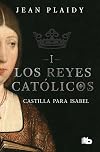
Fifteenth-century Spain is rent with intrigue and threatened by civil war. Here, the young Isabella becomes the pawn of her half-crazed mother and a virtual prisoner at the licentious court of her half-brother, Henry IV.At just sixteen years old, is she already fated to be the victim of the Queen's revenge, the Archbishop's ambition and the lust of lecherous Don Pedro Gir=n? Numbed by grief and fear, Isabella remains steadfast in her determination to marry Ferdinand, the handsome young show more Prince of Aragon, her only true betrothed. show lessTags
Recommendations














Member Reviews
Anybody who said the Borgias had a penchant for poisons hadn't met the Castilians. In this first installation of the Isabella and Ferdinand trilogy, we follow Isabella as she grows up in a dangerous court where loyalties constantly shift between kings, queens, and heirs. Castile and Aragon are falling into anarchy and civil war while hurtling towards the great unification of their territories, symbolized by Isabella doggedly pursuing her betrothal with Ferdinand despite many plots and obstacles.
What continually surprises me about Plaidy's writing is her ability to take years of dense, historical information and to create a cohesive narrative where the reader isn't too overwhelmed while still being entertained. I knew next to nothing show more about Isabella of Castile before reading this book, and she's the only figure from Spanish history that I'm familiar with at all. Coming away from Castile for Isabella, however, I'm a lot more informed about what led to her ascension. It was a battle of wills and arsenic.
Readers are first introduced to Isabella at four years old, but while we grow up with her, we don't follow solely her journey. We met King Henry. We meet his first wife Blanche, his second wife Joanna from Portugal. We meet a couple of court ministers like Villena, Don Pedro Giron, the Archbishop of Toledo, and Beltran de la Cueva. While the different viewpoints helped me understand what was happening politically, from a narrative standpoint, I personally think novels work better if only a few people are chosen to narrate the story. The voice is more consistent, and it makes the scenes easier to unpack. This novel would've been strongest if Isabella, Villena, Blanche, and Henry were the narrators instead of having half a dozen people all talking at once. Because Plaidy's POV jumps from person to person, often in the same paragraph, it can cause readers whiplash, if they're not paying attention.
That said, all of these characters are really interesting, and Plaidy does a superb job of characterizing each individual. Plaidy has a distinct writing style, so once you get used to it, it's a wild ride. Highly recommend to any historical fiction lover. show less
What continually surprises me about Plaidy's writing is her ability to take years of dense, historical information and to create a cohesive narrative where the reader isn't too overwhelmed while still being entertained. I knew next to nothing show more about Isabella of Castile before reading this book, and she's the only figure from Spanish history that I'm familiar with at all. Coming away from Castile for Isabella, however, I'm a lot more informed about what led to her ascension. It was a battle of wills and arsenic.
Readers are first introduced to Isabella at four years old, but while we grow up with her, we don't follow solely her journey. We met King Henry. We meet his first wife Blanche, his second wife Joanna from Portugal. We meet a couple of court ministers like Villena, Don Pedro Giron, the Archbishop of Toledo, and Beltran de la Cueva. While the different viewpoints helped me understand what was happening politically, from a narrative standpoint, I personally think novels work better if only a few people are chosen to narrate the story. The voice is more consistent, and it makes the scenes easier to unpack. This novel would've been strongest if Isabella, Villena, Blanche, and Henry were the narrators instead of having half a dozen people all talking at once. Because Plaidy's POV jumps from person to person, often in the same paragraph, it can cause readers whiplash, if they're not paying attention.
That said, all of these characters are really interesting, and Plaidy does a superb job of characterizing each individual. Plaidy has a distinct writing style, so once you get used to it, it's a wild ride. Highly recommend to any historical fiction lover. show less
Smart, nicely written and well-done history of Isabella. The novel begins with a very young Isabella right after her father's death. The telling of her mother's impending madness was spot on. We follow Isabella's history to the beginning of her marriage with Ferdinand and the birth of their first child. Very reminiscent of the struggles of Queen Victoria as a child - plotting and backstabbing all around. It is amazing that these women survive childhood to become rulers of their prospective countries. Will be reading the next two follow up volumes in short order.
This book follows Isabella from childhood to her being crowned queen. I really enjoy reading about Isabella and Ferdinand and this book did not disappoint as a good historical fiction book about them. While some reviewers have found this to be very dry, I thought it was very interesting (but maybe that is because I do enjoy dry biographies as well). I liked that Jean Plaidy didn't go over-the-top with the fictionalization. I would definitely recommend this book if you are looking for a solid historical fiction book about Isabella and Ferdinand. I look forward to reading the rest of the series.
As the title suggests, this historical fiction novel is based on the real life of one of – if not *the* – most famous Spanish queens.
Set in the mid-1400s, “Castile for Isabella” follows Isabella from the age of four up until her late teens, when she becomes Queen.
Ferdinand, the man she expected to marry since infanthood, does not appear in her life for over a decade. He also doesn’t feature in the book until near the end of the story.
This is the first book I’ve read by Jean Plaidy and I am very impressed with her writing style and ability to present a work of fiction based on fact. She uses no unnecessary digressions, thus the narrative keeps moving forwards, with the only asides being relevant to the story. Nothing is show more wasted. The characters are believable, the plot easy to follow.
A very good read. show less
Set in the mid-1400s, “Castile for Isabella” follows Isabella from the age of four up until her late teens, when she becomes Queen.
Ferdinand, the man she expected to marry since infanthood, does not appear in her life for over a decade. He also doesn’t feature in the book until near the end of the story.
This is the first book I’ve read by Jean Plaidy and I am very impressed with her writing style and ability to present a work of fiction based on fact. She uses no unnecessary digressions, thus the narrative keeps moving forwards, with the only asides being relevant to the story. Nothing is show more wasted. The characters are believable, the plot easy to follow.
A very good read. show less
This book covers the time period between Isabella's Father's death and her ascension to the Queen. I love the characterization, it makes the royalty seem normal and easy to relate to.
This book covers the time period between Isabella's Father's death and her ascension to the Queen. I love the characterization, it makes the royalty seem normal and easy to relate to.
This novel begins the story of a young Isabella, born in 1451 to daughter to King John II of Castile & Isabella of Portugal. She is older sister to Alfonso, who is in his cradle at the opening of this novel. She has a great sisterly love for her older brother Henry IV of Castile, who became King of Castile after John died in 1454. The novel revolves around Isabella and her mother who is mentally unstable; and the court of Henry, with the drama resulting in certain factions and their choice as the proper heir of Castile. Isabella and Ferdinand are betrothed early on, and Isabella only has prayers and thoughts for that day they are to be together. She recognizes him as her saviour from an unfortunate life where she can be used as a pawn show more by rebellious factions of her older brother Henry's court. Isabella stays true to herself and her upbringing and does not let others persuade her into an otherwise unhealthy alliance with anyone but her betrothed, Ferdinand. What were interesting were the characters surrounding Isabella, and the myriad of unworthy people prying their way into Isabella's life. She has an unstable mother, a younger brother who is docile and loving, and an older brother who is King of Castile but who is pretty much useless in all ways.Plaidy stays the course in this novel and is not as gripping as some of her other novels, yet Isabella as a young girl is not all that extraordinary, yet rather pious (her nickname is Isabella the Catholic). The character of Isabella is that of practically a saint, and her main focus is her betrothal and her vision of the alliance of Castile and Aragon. It will be interesting to see how Ferdinand and Isabella strategize for power both in state matters and marriage with the next novel of the trilogy. I'll give this one 3.5 stars. show less
Members
- Recently Added By
Lists

infjsarah's wishlist
408 works; 2 members
Author Information

258+ Works 37,544 Members
Jean Plaidy was a British writer who wrote under various pen names. Her real name is Eleanor Alice Burford Hibbert. She was born in London on September 1, 1906. Most of the books written as Jean Plaidy are historical romances based on English history featuring historical figures. The first, Beyond the Blue Mountains, was published in 1947. Hibbert show more also wrote five nonfiction histories and two children's books. Besides Jean Plaidy, Hibbert wrote under Victoria Holt, Phillipa Carr, Elbur Ford, Kathleen Kellow, Ellalice Tate, and her maiden name, Eleanor Burford. Hibbert died on January 18, 1993. (Bowker Author Biography) show less
Some Editions
Series

Work Relationships
Common Knowledge
- Original publication date
- 1960
- People/Characters
- Isabella I, Queen of Castile and León; Ferdinand II of Aragon; Isabella of Portugal; Henry IV, King of Castile; Don Pedro Giron
- Important places
- Portugal; Spain
Classifications
Statistics
- Members
- 162
- Popularity
- 199,265
- Reviews
- 10
- Rating
- (3.88)
- Languages
- English, Spanish
- Media
- Paper, Audiobook, Ebook
- ISBNs
- 22
- ASINs
- 5