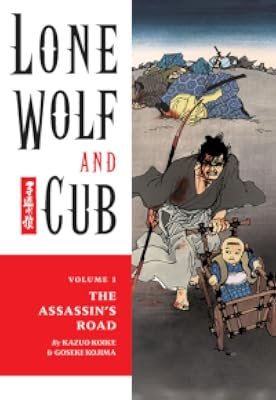
Lone Wolf and Cub, Vol. 1: The Assassin's Road
by Kazuo Koike (Author), Goseki Kojima (Illustrator)
Lone Wolf and Cub (1)
On This Page
Description
Dark Horse Comics is proud to present one of the authentic landmarks in graphic fiction, Lone Wolf and Cub, to be published in its entirety for the first time in America. An epic samurai adventure of staggering proportions - over 7000 pages - Lone Wolf and Cub (Kozure Okami in Japan) is acknowledged worldwide for the brilliant writing of series creator Kazuo Koike and the groundbreaking cinematic visuals of the late Goseki Kojima, creating unforgettable imagery of stark beauty, kinetic fury, show more and visceral thematic power that influenced a generation of visual storytellers both in Japan and in the West. show lessTags
Recommendations

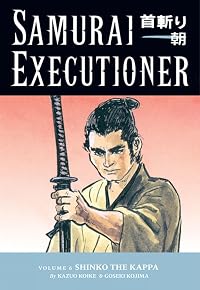
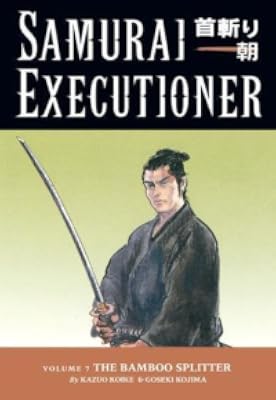
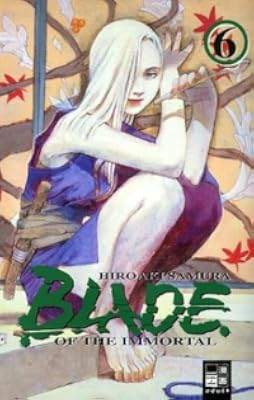
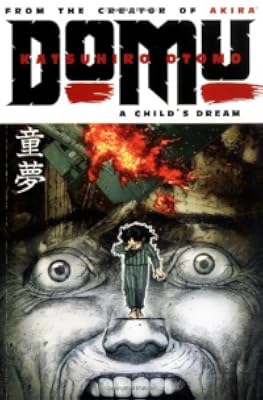


Member Recommendations
Member Reviews
I have to say that it might be time to come out and admit that I really like Kazuo Koike. There is a lot to the pulpiness of his work, created in the 70's, which is emblematic of the times. That is to say, maybe some of it hasn't aged well. But the rest of it, immensely entertaining. Really dug this.
The fight scenes are gnarly in the best way possible, the central conceit is compelling, and the characters manage to draw you in. I used to complain why there wasn't more manga out there like Vagabond, and I had no right to when I wasn't reading Lone Wolf and Cub.
There is a riveting intensity to the series that I admire, and so far, while the episodic nature of the story means that consistently introducing characters who have no idea what show more they are up against can be repetitive, the stories manage to be distinct and compelling. show less
The fight scenes are gnarly in the best way possible, the central conceit is compelling, and the characters manage to draw you in. I used to complain why there wasn't more manga out there like Vagabond, and I had no right to when I wasn't reading Lone Wolf and Cub.
There is a riveting intensity to the series that I admire, and so far, while the episodic nature of the story means that consistently introducing characters who have no idea what show more they are up against can be repetitive, the stories manage to be distinct and compelling. show less
The first time I read Lone Wolf and Cub, by Kazuo Koike and Goseki Kojima, I devoured the whole series - thrilled by the swordfights, touched by the codes of honour it depicts and fascinated by the insight I felt it gave me into the history and culture of Japan.
Rereading it after spending a little time in Japan myself was a different experience.
Lone Wolf and Cub is one of the very best expressions of a very powerful /idea/ of Japan. Outside the country this idea is one of the most popular, concerning as it does samurai, ninja and spectacular violence, often strikingly contrasted with long moments of stillness and beauty. Inside Japan the idea is popular too: since reaching instant classic status on publication in 1970 Lone Wolf and Cub show more has remained a towering (if unfashionable) influence on manga, and samurai dramas - whether directly inspired by it or by the wider idea it represents - are on Japanese tv every night. But it's only one idea of Japan: a noble, thrilling idea but also one that is harsh, hidebound and largely humourless. With this in my mind as I reread the series I wasn't carried along for the ride in quite the same way.
But I still loved it.
If you're searching for a wandering hero story - and I'm a total sucker for those - then Lone Wolf and Cub is pretty much the ultimate. The archetype of the lone swordsman pursuing a path of vengeance leaving rivers of blood behind him is given a classic twist here by the fact that he's accompanied by his baby son. Is implacable vengeance compatible with caring fatherhood? Does the father's rigid code of behaviour, inherited by his son, have any place in a world that is changing around them both? And just how could a kid survive all those swordfights and assassinations anyway? Read and see.
Lone Wolf and Cub is full-on, masterfully paced, epic storytelling, with a cast of unforgettable characters (heh, especially the poisoner). I still think (and I'm not alone; there are people all over the world who will agree with me on this) that Lone Wolf and Cub is one of the very greatest works of graphic literature in existence on this planet. Matter of fact it's one of my favourite works of literature full stop: these twenty-eight volumes have given me some of the best, most thrilling reading experiences of my life so far.
My only hesitation in recommending Lone Wolf and Cub isn't, I realise, a criticism so much as an opportunity. It's simply that - as I'm thrilled and awed to begin to discover - Japan has many, many other stories to tell, too. show less
Rereading it after spending a little time in Japan myself was a different experience.
Lone Wolf and Cub is one of the very best expressions of a very powerful /idea/ of Japan. Outside the country this idea is one of the most popular, concerning as it does samurai, ninja and spectacular violence, often strikingly contrasted with long moments of stillness and beauty. Inside Japan the idea is popular too: since reaching instant classic status on publication in 1970 Lone Wolf and Cub show more has remained a towering (if unfashionable) influence on manga, and samurai dramas - whether directly inspired by it or by the wider idea it represents - are on Japanese tv every night. But it's only one idea of Japan: a noble, thrilling idea but also one that is harsh, hidebound and largely humourless. With this in my mind as I reread the series I wasn't carried along for the ride in quite the same way.
But I still loved it.
If you're searching for a wandering hero story - and I'm a total sucker for those - then Lone Wolf and Cub is pretty much the ultimate. The archetype of the lone swordsman pursuing a path of vengeance leaving rivers of blood behind him is given a classic twist here by the fact that he's accompanied by his baby son. Is implacable vengeance compatible with caring fatherhood? Does the father's rigid code of behaviour, inherited by his son, have any place in a world that is changing around them both? And just how could a kid survive all those swordfights and assassinations anyway? Read and see.
Lone Wolf and Cub is full-on, masterfully paced, epic storytelling, with a cast of unforgettable characters (heh, especially the poisoner). I still think (and I'm not alone; there are people all over the world who will agree with me on this) that Lone Wolf and Cub is one of the very greatest works of graphic literature in existence on this planet. Matter of fact it's one of my favourite works of literature full stop: these twenty-eight volumes have given me some of the best, most thrilling reading experiences of my life so far.
My only hesitation in recommending Lone Wolf and Cub isn't, I realise, a criticism so much as an opportunity. It's simply that - as I'm thrilled and awed to begin to discover - Japan has many, many other stories to tell, too. show less
Lone Wolf and Cub are a disgraced samurai and his adopted infant son traveling through Edo-period Japan (sometime between 1603 and 1868) working as a sword-for-hire. He kills lots of people, some of them try to kill him and his boy and fail (that’s not a spoiler, there are several more books after this so of course, he’s in no real danger), and that’s about it! And while it might be episodic, it is hard to not enjoy this work for its historical accuracy, its brilliant paneling, and frenetic action sequences, its occasional humor, and just how darn influential it has been on the medium of graphic novels and storytelling in general. For instance, The Mandalorian owes a great debt to Lone Wolf and Cub.
Ogami Itto was the shogun’s show more executioner and has chosen to live the path of an assassin, offering his sword and son, Daigoro, to anyone willing to pay for his services. Itto has more than enough skill to deal with the most feared foes, armed with his dotanuki sword and expert tactics. He does whatever it takes to get the job done, even if it means appearing weak. One case has him allowing himself to be captured by the enemy, dismantling them from the inside out once he’s in their lair. Another has him entering prison with some of the toughest criminals out there, getting unceremoniously beaten, then allowing himself to get put on death row after he kills a few of the guys that beat him after he gets the info he needs. The funny thing is, with all these dangerous situations, the guy’s rarely in any serious trouble because he’s just -that- good. This first volume of the Lone Wolf and Cub Omnibus contains 16 chapters in the series, with each chapter showing why Ogami Itto is probably the baddest fictional dude to grace any form of media.
But it's really the groundbreaking cinematic visuals of Goseki Kojima that make this work a major work of manga history. Powerful artistry is contained within these pages. show less
Ogami Itto was the shogun’s show more executioner and has chosen to live the path of an assassin, offering his sword and son, Daigoro, to anyone willing to pay for his services. Itto has more than enough skill to deal with the most feared foes, armed with his dotanuki sword and expert tactics. He does whatever it takes to get the job done, even if it means appearing weak. One case has him allowing himself to be captured by the enemy, dismantling them from the inside out once he’s in their lair. Another has him entering prison with some of the toughest criminals out there, getting unceremoniously beaten, then allowing himself to get put on death row after he kills a few of the guys that beat him after he gets the info he needs. The funny thing is, with all these dangerous situations, the guy’s rarely in any serious trouble because he’s just -that- good. This first volume of the Lone Wolf and Cub Omnibus contains 16 chapters in the series, with each chapter showing why Ogami Itto is probably the baddest fictional dude to grace any form of media.
But it's really the groundbreaking cinematic visuals of Goseki Kojima that make this work a major work of manga history. Powerful artistry is contained within these pages. show less
Great slice of Manga.
It's quite dark in tone but the violence, like the lone wolf himself, is quite restrained which helps build the tension towards the swordplay. The first volume opens with a series of self contained episodes but with a hint of a story arc at the end. A superb start to the Lone Wolf and Cub. Although the series is based on Ogami Itto being an assassin there is enough variety on this to keep it fresh, with Japanish cultural references such as Sun Tzu to aid his work. We'll need to see how Kazuo Koike can keep this format from going stale or how he develops it but this is one assassin's road I fancy travelling down.
Great writing and some fine black and white artwork.
It's quite dark in tone but the violence, like the lone wolf himself, is quite restrained which helps build the tension towards the swordplay. The first volume opens with a series of self contained episodes but with a hint of a story arc at the end. A superb start to the Lone Wolf and Cub. Although the series is based on Ogami Itto being an assassin there is enough variety on this to keep it fresh, with Japanish cultural references such as Sun Tzu to aid his work. We'll need to see how Kazuo Koike can keep this format from going stale or how he develops it but this is one assassin's road I fancy travelling down.
Great writing and some fine black and white artwork.
Only the expense of buying many volumes have kept me from finishing this series. These stories are short and self-contained, with crafty twists and a "statement" to be found in each. This ronin and his son serve as critics of the social order of the time and expose the distance between claimed values and practiced ones. I don't tend to enjoy the art style of a lot of manga, but I found these quite pleasing to the eye. Children and those seeking kawaii/cute should steer clear, but those mature readers with a bit of understanding of the culture should find the series enjoyable.
I actually read the 1st omnibus, which includes the first three books in the series. Not sure why its not on goodreads.
Took about a third of the book before we got backstory or a plot that was not self-contained in a chapter, but once we did I really started looking forward to those. The one-off plots are hit or miss for me. Some are like zen koans, but some are just gratuitous violence. This is not a manga that is for teens. This is bloody and extremely violent. Also quite compelling, and I'll be looking for the next issue(s) right away.
Took about a third of the book before we got backstory or a plot that was not self-contained in a chapter, but once we did I really started looking forward to those. The one-off plots are hit or miss for me. Some are like zen koans, but some are just gratuitous violence. This is not a manga that is for teens. This is bloody and extremely violent. Also quite compelling, and I'll be looking for the next issue(s) right away.
I'd actually read Kazuo Koike's and Goseki Kojima's The Assassin's Road, volume 1 of Lone Wolf and Cub, with a cover by Frank Miller, back in the late 80's. I had a friend that introduced me to Frank Miller's Dark Knight, and ended up checking this out as well, probably due to the cover; but I'd also actually already seen one of the Lone Wolf and Cub movies years before.
I was trying to think of a good way to describe the main character in Kazuo Koike's Lone Wolf and Cub series, and of course it's pretty obvious to me that there's a reflection of Dark Knight here, which probably explains the attraction for Frank Miller and perhaps some influence as well. The main character is an über-mench who outsmarts, out-fights, and out-darks show more everyone he comes to face; and he's got hidden tricky gadgets. Cub is even a parentless side-kick who sometimes helps out in a minimal and comedic way.
But, either way, whether there's an overall similarity for you as there is for me, the specifics are the story. The main character is an anti-hero. He doesn't really start that way, but it sure turns out that way as this volume progresses. He's a mary-sue of appearing to be an anonymous underdog but turning out to have been a better prepared and better skilled veiled personage than anyone that mistakes his reserve and self-control for weakness instead of cold and tempered steel revenge. He'll fuck you up, son. He'll also let you die if you're a complication or not worth his notice, so that sucks for you. He's a right shit at only putting effort into getting to his goal, and you're in the way today which means it's your time to die. He'll stand by while that happens because you're not important to his story. You got what you deserved, apparently, for being meaningless in his scheme of things.
I don't know if the language in the original Japanese was compelling, but it's pretty minimal and not a reason to pick this series up. The story is good, the art is better, but the dialog is underwhelming in translation. The dialog services the story and plot, but that's about all. It's not literature, at least, not in English as it appears here.
The art is surprisingly minimal and folksy, but really does something amazing about providing details of environment and expressions; simplicity that provides complexity. There's plenty of those peculiar moments of non-action action that I love much in other Japanese art and anime, and seems only to be found delivered with confidence there.
All in all, a worthy reputation was earned by this work of art, and I find myself with renewed interest in the following volumes, which I didn't ever read, as well as not only my beloved Kurosawa movies, but also interest in even re-approaching things like Sakai's Usagi Yojimbo, which I also read one volume of and then lost interest, I know not why.
Where is this Eight Gates of Deceit? Looks like a ritual! I want to go to there. Someone needs to write this ritual so I can go to it.
Hey, I wonder if O-nibawan (meaning Spy, or "government-employed undercover agents established by the 8th Tokugawa shogun, Tokugawa Yoshimune (1684–1751). They are sometimes described as 'ninja'.") is where Obi-wan Kenobi's name comes from?
show less
I was trying to think of a good way to describe the main character in Kazuo Koike's Lone Wolf and Cub series, and of course it's pretty obvious to me that there's a reflection of Dark Knight here, which probably explains the attraction for Frank Miller and perhaps some influence as well. The main character is an über-mench who outsmarts, out-fights, and out-darks show more everyone he comes to face; and he's got hidden tricky gadgets. Cub is even a parentless side-kick who sometimes helps out in a minimal and comedic way.
But, either way, whether there's an overall similarity for you as there is for me, the specifics are the story. The main character is an anti-hero. He doesn't really start that way, but it sure turns out that way as this volume progresses. He's a mary-sue of appearing to be an anonymous underdog but turning out to have been a better prepared and better skilled veiled personage than anyone that mistakes his reserve and self-control for weakness instead of cold and tempered steel revenge. He'll fuck you up, son. He'll also let you die if you're a complication or not worth his notice, so that sucks for you. He's a right shit at only putting effort into getting to his goal, and you're in the way today which means it's your time to die. He'll stand by while that happens because you're not important to his story. You got what you deserved, apparently, for being meaningless in his scheme of things.
I don't know if the language in the original Japanese was compelling, but it's pretty minimal and not a reason to pick this series up. The story is good, the art is better, but the dialog is underwhelming in translation. The dialog services the story and plot, but that's about all. It's not literature, at least, not in English as it appears here.
The art is surprisingly minimal and folksy, but really does something amazing about providing details of environment and expressions; simplicity that provides complexity. There's plenty of those peculiar moments of non-action action that I love much in other Japanese art and anime, and seems only to be found delivered with confidence there.
All in all, a worthy reputation was earned by this work of art, and I find myself with renewed interest in the following volumes, which I didn't ever read, as well as not only my beloved Kurosawa movies, but also interest in even re-approaching things like Sakai's Usagi Yojimbo, which I also read one volume of and then lost interest, I know not why.
Where is this Eight Gates of Deceit? Looks like a ritual! I want to go to there. Someone needs to write this ritual so I can go to it.
Hey, I wonder if O-nibawan (meaning Spy, or "government-employed undercover agents established by the 8th Tokugawa shogun, Tokugawa Yoshimune (1684–1751). They are sometimes described as 'ninja'.") is where Obi-wan Kenobi's name comes from?
show less
Members
- Recently Added By
Lists

Recommended Comics / Graphic Novels
595 works; 122 members

Classic Manga
31 works; 4 members
Author Information

Kazuo Koike was born on May 8, 1936 in Akita, Japan. He is the co-creator and writer of the Lone Wolf and Cub and Crying Freeman manga. He adapted the Lone Wolf and Cub manga into a series of six films which gained him recognition for his screenwriting. He started the Gekiga Sonjuku, a college course to assist talented writers and artists break show more into the comic book field. He also hosted television programs, founded a golf magazine, produced movies, and has written popular fiction, poetry, and screenplays. His work has earned him many awards including two Harvey Awards and an Eisner Award. (Bowker Author Biography) show less

Some Editions
Awards and Honors
Awards
Notable Lists
Series

Belongs to Publisher Series
Work Relationships
Is contained in
Common Knowledge
- Canonical title
- Lone Wolf and Cub, Vol. 1: The Assassin's Road
- Original title
- Kozure Okami
- Original publication date
- 2000 (US ed.) (US ed.); 1970 (Japanese ed.) (Japanese ed.)
- People/Characters
- Ogami Itto; Ogami Daigoro
- Important places
- Japan
- Important events
- Edo period or Tokugawa period
- Original language
- Japanese
- Disambiguation notice
- This series was issued in a small size totaling 28 volumes, and later in a larger omnibus edition; the stories contained in the respective volume numbers of the two sets are not the same. Please do not combine.
The First Classics volumes of "Lone Wolf and Cub" have different content than the Dark Horse volumes. Do not combine the two together.
Classifications
- Genre
- Graphic Novels & Comics
- DDC/MDS
- 741.5952 — Arts & recreation Drawing & decorative arts Drawing Comic books, graphic novels, fotonovelas, cartoons, caricatures, comic strips History, geographic treatment, biography Asian Japanese
- LCC
- PN6790 .J34 — Language and Literature Literature (General) Literature (General) Collections of general literature Comic books, strips, etc.
- BISAC
Statistics
- Members
- 1,050
- Popularity
- 24,499
- Reviews
- 24
- Rating
- (4.16)
- Languages
- 6 — English, French, German, Japanese, Turkish, Portuguese (Brazil)
- Media
- Paper, Ebook
- ISBNs
- 12
- ASINs
- 2