On This Page
Description
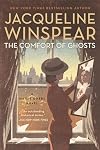
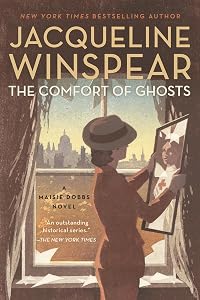
"London, 1945: Four adolescent orphans with a dark wartime history are squatting in a vacant Belgravia mansion - the owners having fled London under heavy Luftwaffe bombing. Soon after a demobilized British soldier, ill and reeling from his experiences overseas, takes shelter with the group, Maisie Dobbs visits the mansion on behalf of the owners. Maisie is deeply puzzled by the children's reticence. Their stories are evasive and, more mysteriously, they appear to possess self-defense skills show more one might expect of trained adults in wartime. Her quest to bring comfort and the promise of a future to the youngsters and to the ailing soldier brings to light a decades-old mystery concerning Maisie's first husband, James Compton, who was killed while piloting an experimental aircraft. As Maisie picks apart the threads of her dead husband's life, she is forced to examine her own painful past and question beliefs she has always accepted as true. The award-winning Maisie Dobbs series has garnered hundreds of thousands of followers around the world, readers who are drawn to a woman who is of her time, yet familiar in ours - and who inspires with her resilience and capacity for endurance at the worst of times. This final assignment of her own choosing not only opens a new future for Maisie Dobbs and her family, but serves as a fascinating portrayal of the challenges facing the people of Britain at the close of the Second World War"-- show lessTags
Recommendations










Member Reviews
The eighteenth and final book in the [[[Maisie Dobbs]]] series of historical novels, [The Comfort of Ghosts] wraps up the story in a satisfying way. Maisie is called upon to deal with some squatters that have moved the Compton family's empty London home and discovers that she knows one of them. The demobilized soldier is at death's door, having survived Changi Prison and forced labor on the Burmese railroad. The other squatters are at the heart of a mystery that Maisie determines to resolve.
The epigraph of the book is a line from one of her previous books in the series, [Birds of a Feather] (2004):
That's one more thing that I detest about war. It's not over when it ends...It still lives inside the living, doesn't it?
And that sums up show more the main theme of this book (and one of the themes of the series) perfectly. The war may have ended, but for everyone who lived through it, whether as a soldier, spy, scientist, civilian defense worker, or someone whose home was destroyed in the Blitz, it never really ends. Yet life goes on, and everyone must find a way to get on with it. I loved this series, despite not being a mystery reader, because the characters are all dealing with war trauma in some fashion, and they all muddle through in a very human way, shepherded by a compassionate author. Although I was sad when I learned that the series was ending, I am very happy with this final book and how things were wrapped up. Kudos, Ms. Winspear. show less
The epigraph of the book is a line from one of her previous books in the series, [Birds of a Feather] (2004):
That's one more thing that I detest about war. It's not over when it ends...It still lives inside the living, doesn't it?
And that sums up show more the main theme of this book (and one of the themes of the series) perfectly. The war may have ended, but for everyone who lived through it, whether as a soldier, spy, scientist, civilian defense worker, or someone whose home was destroyed in the Blitz, it never really ends. Yet life goes on, and everyone must find a way to get on with it. I loved this series, despite not being a mystery reader, because the characters are all dealing with war trauma in some fashion, and they all muddle through in a very human way, shepherded by a compassionate author. Although I was sad when I learned that the series was ending, I am very happy with this final book and how things were wrapped up. Kudos, Ms. Winspear. show less
I'm done with the series, and would certainly not wish to return to any of the books therein.
This series is the literary equivalent of the television series "The Crown". It is plodding but overwrought, and entirely devoid of humor. The conversations are riddled with anachronisms. Why, you may ask, did I then listen to every single book in the series? Well, I think the appeal is in the details, for example the meticulous recreation of the process of dialing a number from a London call box in 1922. "The Crown" offered the same: careful recreations of enormous rooms in Buckingham Palace, or that remarkable polo pony driving range box that Prince Philip is shown using in one particular scene. The other appeal is that the books offer a kind show more of history self-check exercise, as the reader can relate the events in the novel to their memory of known historical events, a sort of historical mental calisthenics.
The contrast between a Maisie Dobbs book and a Lord Peter Wimsey novel is stark. Although their time periods overlap, the Wimsey novels are contemporary detective fiction whereas the Maisie Dobbs books are historical detective fiction. First and foremost, the Wimsey books are just much better written, with wonderfully lively and entertaining dialogue and court transcripts, and a vivid narrative. Second, the incidents and the conversations in the Wimsey novels all drive the plot; the books are surprisingly economical. Third, the Wimsey books have a hero, a sensitive but courageous man who struggles gamely with his PTSD partly via self-mockery, but who takes his moral responsibilities very seriously. While Maisie Dobbs is portrayed as brave, and as suffering from her WWI experiences, as is her assistant, they are never portrayed as heroes, because heroism is not the fashion in most contemporary literature.
I was struck by a passage in this last novel. Maisie sets out for some destination in her car and the narrative painstakingly explains how she brings a map, has to stop twice and ask people for directions, etc. This is the careful reconstruction of the past, but it is not at all interesting. Whenever Lord Peter consults a map, he has something, generally caustic, to say about the map and his efforts at way finding, usually to Bunter. If he stops the car to speak to anyone, for any reason, there is description, dialogue, an observation. A Wimsey novel feels like reality, albeit romanticized; a Maisie Dobbs novel like a museum, with preachy placards everywhere.
When one reads a series like this, one gets the feeling, reinforced by the news, that the UK is declining with extraordinary rapidity, that it has become a navel-gazing, backward looking mediocrity, with no prospects and no hope for the future.
"Goodbye to all That" as Robert Graves once said, a bit prematurely. show less
This series is the literary equivalent of the television series "The Crown". It is plodding but overwrought, and entirely devoid of humor. The conversations are riddled with anachronisms. Why, you may ask, did I then listen to every single book in the series? Well, I think the appeal is in the details, for example the meticulous recreation of the process of dialing a number from a London call box in 1922. "The Crown" offered the same: careful recreations of enormous rooms in Buckingham Palace, or that remarkable polo pony driving range box that Prince Philip is shown using in one particular scene. The other appeal is that the books offer a kind show more of history self-check exercise, as the reader can relate the events in the novel to their memory of known historical events, a sort of historical mental calisthenics.
The contrast between a Maisie Dobbs book and a Lord Peter Wimsey novel is stark. Although their time periods overlap, the Wimsey novels are contemporary detective fiction whereas the Maisie Dobbs books are historical detective fiction. First and foremost, the Wimsey books are just much better written, with wonderfully lively and entertaining dialogue and court transcripts, and a vivid narrative. Second, the incidents and the conversations in the Wimsey novels all drive the plot; the books are surprisingly economical. Third, the Wimsey books have a hero, a sensitive but courageous man who struggles gamely with his PTSD partly via self-mockery, but who takes his moral responsibilities very seriously. While Maisie Dobbs is portrayed as brave, and as suffering from her WWI experiences, as is her assistant, they are never portrayed as heroes, because heroism is not the fashion in most contemporary literature.
I was struck by a passage in this last novel. Maisie sets out for some destination in her car and the narrative painstakingly explains how she brings a map, has to stop twice and ask people for directions, etc. This is the careful reconstruction of the past, but it is not at all interesting. Whenever Lord Peter consults a map, he has something, generally caustic, to say about the map and his efforts at way finding, usually to Bunter. If he stops the car to speak to anyone, for any reason, there is description, dialogue, an observation. A Wimsey novel feels like reality, albeit romanticized; a Maisie Dobbs novel like a museum, with preachy placards everywhere.
When one reads a series like this, one gets the feeling, reinforced by the news, that the UK is declining with extraordinary rapidity, that it has become a navel-gazing, backward looking mediocrity, with no prospects and no hope for the future.
"Goodbye to all That" as Robert Graves once said, a bit prematurely. show less
The war is finally over - the second world war to shape Maisie Dobbs and her career as a psychologist and investigator - but the peace offers new challenges. The government has no money to rebuild, the city of London needs housing after the sustained bombing campaigns, and the social order is fraying.
Four orphans have taken up residence in Maisie's wealthy patron's London home, scrounging for food and hiding from some unnamed danger. When Maisie encounters them, and decides to help (because, after all, she's Masie) she begins to untangle a complicated web of lies, spies, and eventually murder. In the meantime, Billy's son has returned from the Burma Road, near death but reluctant to go home, knowing his father also suffers the show more psychological and physical scars of war. And then there's the man who opens the book, carrying some deep wound from wartime, along with the fear that a new form of warfare hangs over the world.
This is a busy book with a lot of ground to cover. Not only does Maisie investigate a murder that is shrouded in state secrecy and entangled with Nazi sympathizers, she has to help her circle of friends and family members to overcome their problems, all while she plans for a future with her American diplomat husband, her adopted daughter, and the dowager who adopted her as a young servant. The thread tying it all together, a thread running through the series, is the destructiveness of war and the long-lasting psychological toll it takes, redeemed by Maisie's belief that kindness and care can go a long way toward healing.
Maisie and the circle of people around her will be missed, but I'm looking forward to wherever the author decides to take her talents next. show less
Four orphans have taken up residence in Maisie's wealthy patron's London home, scrounging for food and hiding from some unnamed danger. When Maisie encounters them, and decides to help (because, after all, she's Masie) she begins to untangle a complicated web of lies, spies, and eventually murder. In the meantime, Billy's son has returned from the Burma Road, near death but reluctant to go home, knowing his father also suffers the show more psychological and physical scars of war. And then there's the man who opens the book, carrying some deep wound from wartime, along with the fear that a new form of warfare hangs over the world.
This is a busy book with a lot of ground to cover. Not only does Maisie investigate a murder that is shrouded in state secrecy and entangled with Nazi sympathizers, she has to help her circle of friends and family members to overcome their problems, all while she plans for a future with her American diplomat husband, her adopted daughter, and the dowager who adopted her as a young servant. The thread tying it all together, a thread running through the series, is the destructiveness of war and the long-lasting psychological toll it takes, redeemed by Maisie's belief that kindness and care can go a long way toward healing.
Maisie and the circle of people around her will be missed, but I'm looking forward to wherever the author decides to take her talents next. show less
I have been a Maisie Dobbs fan from the first book in 2003, anticipating and enjoying each novel, cheering Maisie on through all her ups and downs, tragedies and happiness, mysteries and romances. Author Jacqueline Winspear says it best in her letter to the reader: “I have come to the end of the story, having taken a young woman called Maisie Dobbs from girlhood to middle age, and through two world wars with another conflict in between. Along the way I’ve endeavored to create a body of work that is in equal measure a family saga and mystery series.”
Now here we are with the final story, and it’s bittersweet. So happy for all that Maisie now has in her life, but feeling sad that I will never know more than what was written in show more those final pages.
I thought Winspear did an excellent job in “The Comfort of Ghosts” of wrapping up some loose ends in Maisie’s life and bringing back so many characters from the earlier novels. There were several moving and tender moments and as always, the historical facts were smoothly infused into the story.
Winspear skillfully included background of earlier plots and characters so that if this is your first Maisie Dobbs, you can read it easily and then go back and start with the first novel.
I’m going to miss you, Maisie! show less
Now here we are with the final story, and it’s bittersweet. So happy for all that Maisie now has in her life, but feeling sad that I will never know more than what was written in show more those final pages.
I thought Winspear did an excellent job in “The Comfort of Ghosts” of wrapping up some loose ends in Maisie’s life and bringing back so many characters from the earlier novels. There were several moving and tender moments and as always, the historical facts were smoothly infused into the story.
Winspear skillfully included background of earlier plots and characters so that if this is your first Maisie Dobbs, you can read it easily and then go back and start with the first novel.
I’m going to miss you, Maisie! show less
I did it, Beth. I finished the series. Thanks to one of my oldest (we knew each other for a full 60 years) and dearest, closest friends I read this series. She wanted me to read to her during her chemo treatments and two people she knew highly recommended this series. I don’t know if I would have ever read it otherwise. We read the first five books together, first during her chemo treatments and then, when covid kept me out of the infusion center, emergency room and hospital, over the phone or over Zoom. I continued to read on, alone. I wish that Beth could have also read the entire series. I thought of her often as I read the books she could no longer enjoy.
I wanted more. More scenes. I thought of so much more about I wanted to keep show more reading. My guess though is that even if all those things had been included I would still want more. More books. I am sad that this is the end of the series but I’m grateful for getting to read the series in its entirety and I do understand it ending after 18 books. The author worked on this series for 24 years, and during that time wrote a few other books too. The first book was published in 2003, the last in 2024. I will miss this series. The last three books all ended in a lovely manner and each could have been satisfying ends to this series.
I’m always worried I won’t like the next series book but I sink in as soon as Maisie appears, usually not in the prologue but in chapter 1. She’s one of my favorite literary characters.
Maisie and the gang exude such goodness, I always feel comforted in their presence. Maisie and the people in her life are so goodhearted and I love spending time with them. There are many memorable characters.
There is some wonderful, mostly subtle, humor.
This series is heartwarming but it also gets very, very dark. The characters and the relationships are what matter in these books and the mysteries hardly matter in the most of them. What is dark is that there are a lot of losses/deaths and wartime events. After all the story-line goes from 1910-1945, from Maisie at 13 to about 48, and what happens in the world wars, especially WWI, is described in some detail, as are the problems some people have after those wars because of the trauma they experienced during them.
She did a good job of mentioning events that happened in the previous 17 books. I'm glad because I'd forgotten some things. She did a great job of tying up everything and almost everybody. I love how a few characters reappeared and had some time on the pages of this book. I appreciate where Maisie is in her life by the end of this book; it was hard-earned and deserved.
I think that what turned out to be only the first “mystery” in this one is a bit ridiculous (though I suppose it's plausible even though a bit far-fetched) but I don’t read this series for the mysteries. I mostly read them for the characters and the relationships and secondarily for the events and the settings and the history. The first (and what I thought would be the only) mystery wasn’t my favorite part of the book although being introduced to four great new characters made the scenario completely worth it. The second mystery, which happened after the first one was resolved, was much more interesting to me. It was wonderful and it was a great way to end this series.
This is a page from her website with her outline of some issues in each of the books. It is listed in the author’s note, and has some very mild spoilers: http://jacquelinewinspear.com/wars-and-moments-in-time.pdf
Her webpage and social media have a lot of content about the Maisie series and her own life and those and her occasional emails enriched my reading experience of this book and some of the previous books.
It’s a fine ending but I can envision lots more books and I wish there were going to be more. I completely understand why Winspear wanted to stop now but I want to know more about these things: Maisie & Mark & Anna’s new house, Anna’s teenage and adult years, the children that are coming who were from Theresienstadt, a lot more about Mary, Archie, Jim and especially Grace and what happens with them in the future, what happens with Maisie’s father & Brenda and Lady Rowen, more about Theo and Anna and Little Em, what happens with Robin and Rowen and Robin & his family, and more about how they all do in the decades to come. Yes, I could see this going until Maisie’s final days. Then again, I’m glad that I don’t have to worry about missing any books in this series and I don’t usually care about everything being wrapped up nice & tidy at the end of books and series. This is one of my favorite series and it’s simply that I would always want more.
This series is a great coming of age tale, and a story of pain and loss, and love and friendship and hope, and growth and change and it is full of kindness and generosity and compassion.
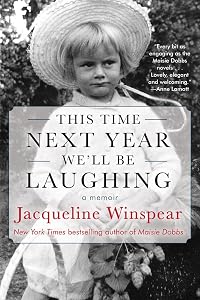
I look forward to reading future books by this author and I want to read her memoir This Time Next Year We’ll Be Laughing but I can’t imagine loving any as much as I love the Maisie Dobbs books. So far, in addition to the Maisie series, I’ve read The White Lady and What Would Maisie Do?
I read the hardcover edition of this 18th book but I also listened to the audiobook part of the time as I was reading. The narrator is excellent.
Apologies for some repetitiveness in this review. I included parts of my status updates and also it is incredibly hard for me to write decent reviews of books that I love.
I highly recommend this series to anyone who’s ever liked historical fiction, coming of age stories, orphan stories, character driven fiction, psychologically minded fiction, stories about England, WWI, WWII, friendship stories and love stories. I’d say these books would be appreciated by a majority of readers. It took me a bit of time to love them but I’m so glad that I kept reading. A LOT happens in the 18 books! show less
I wanted more. More scenes. I thought of so much more about I wanted to keep show more reading. My guess though is that even if all those things had been included I would still want more. More books. I am sad that this is the end of the series but I’m grateful for getting to read the series in its entirety and I do understand it ending after 18 books. The author worked on this series for 24 years, and during that time wrote a few other books too. The first book was published in 2003, the last in 2024. I will miss this series. The last three books all ended in a lovely manner and each could have been satisfying ends to this series.
I’m always worried I won’t like the next series book but I sink in as soon as Maisie appears, usually not in the prologue but in chapter 1. She’s one of my favorite literary characters.
Maisie and the gang exude such goodness, I always feel comforted in their presence. Maisie and the people in her life are so goodhearted and I love spending time with them. There are many memorable characters.
There is some wonderful, mostly subtle, humor.
This series is heartwarming but it also gets very, very dark. The characters and the relationships are what matter in these books and the mysteries hardly matter in the most of them. What is dark is that there are a lot of losses/deaths and wartime events. After all the story-line goes from 1910-1945, from Maisie at 13 to about 48, and what happens in the world wars, especially WWI, is described in some detail, as are the problems some people have after those wars because of the trauma they experienced during them.
She did a good job of mentioning events that happened in the previous 17 books. I'm glad because I'd forgotten some things. She did a great job of tying up everything and almost everybody. I love how a few characters reappeared and had some time on the pages of this book. I appreciate where Maisie is in her life by the end of this book; it was hard-earned and deserved.
I think that what turned out to be only the first “mystery” in this one is a bit ridiculous (though I suppose it's plausible even though a bit far-fetched) but I don’t read this series for the mysteries. I mostly read them for the characters and the relationships and secondarily for the events and the settings and the history. The first (and what I thought would be the only) mystery wasn’t my favorite part of the book although being introduced to four great new characters made the scenario completely worth it. The second mystery, which happened after the first one was resolved, was much more interesting to me. It was wonderful and it was a great way to end this series.
This is a page from her website with her outline of some issues in each of the books. It is listed in the author’s note, and has some very mild spoilers: http://jacquelinewinspear.com/wars-and-moments-in-time.pdf
Her webpage and social media have a lot of content about the Maisie series and her own life and those and her occasional emails enriched my reading experience of this book and some of the previous books.
It’s a fine ending but I can envision lots more books and I wish there were going to be more. I completely understand why Winspear wanted to stop now but I want to know more about these things:
This series is a great coming of age tale, and a story of pain and loss, and love and friendship and hope, and growth and change and it is full of kindness and generosity and compassion.
I look forward to reading future books by this author and I want to read her memoir This Time Next Year We’ll Be Laughing but I can’t imagine loving any as much as I love the Maisie Dobbs books. So far, in addition to the Maisie series, I’ve read The White Lady and What Would Maisie Do?
I read the hardcover edition of this 18th book but I also listened to the audiobook part of the time as I was reading. The narrator is excellent.
Apologies for some repetitiveness in this review. I included parts of my status updates and also it is incredibly hard for me to write decent reviews of books that I love.
I highly recommend this series to anyone who’s ever liked historical fiction, coming of age stories, orphan stories, character driven fiction, psychologically minded fiction, stories about England, WWI, WWII, friendship stories and love stories. I’d say these books would be appreciated by a majority of readers. It took me a bit of time to love them but I’m so glad that I kept reading. A LOT happens in the 18 books! show less
The Comfort of Ghosts - Winspear
Audio performance by Orlagh Cassidy
4 stars
I’ve enjoyed this historical mystery series, but I agree completely with Winspear’s decision to end it. In my opinion, the explanation of this book’s murder wasn’t remotely believable. It was also completely unimportant to the plot of this book.
This book was meant as a final roundup of the entire series. There was a great deal of looking back. It seemed Maize and her cohorts couldn’t have a conversation without telling each other background information that no one involved in previous episodes could have possibly forgotten. I’ve always had a bit of a problem with the stilted conversations in this series.
On the other hand, Winspear gets the historical show more details exactly right. In this book, with the war over, she is very clear about the ongoing, devastating after effects of the world war. There’s a sense that Maizie, her family, and friends will continue to cope. I enjoyed getting a last look into the lives of these characters, but I’m happy for them to continue without me. show less
Audio performance by Orlagh Cassidy
4 stars
I’ve enjoyed this historical mystery series, but I agree completely with Winspear’s decision to end it. In my opinion, the explanation of this book’s murder wasn’t remotely believable. It was also completely unimportant to the plot of this book.
This book was meant as a final roundup of the entire series. There was a great deal of looking back. It seemed Maize and her cohorts couldn’t have a conversation without telling each other background information that no one involved in previous episodes could have possibly forgotten. I’ve always had a bit of a problem with the stilted conversations in this series.
On the other hand, Winspear gets the historical show more details exactly right. In this book, with the war over, she is very clear about the ongoing, devastating after effects of the world war. There’s a sense that Maizie, her family, and friends will continue to cope. I enjoyed getting a last look into the lives of these characters, but I’m happy for them to continue without me. show less
My thanks to the Author publisher's and NetGalley for providing me with a Kindle version of this book to read and honestly review.
This is the eighteenth book in The Maisie Dobbs series, and I am ashamed to say the first I have read, however it will not be the last. Quality writing and superb characterisation throughout, atmospheric clever descriptive intelligent storytelling with a real feel for time and place. As a somewhat grumpy sixty six year Yorkshireman I don't mind admitting towards the end this story brought a lump to my throat and tears to my eyes. Whilst there are numerous references to previous stories this book can be read standalone after all I did.
Completely and utterly recommended.
This is the eighteenth book in The Maisie Dobbs series, and I am ashamed to say the first I have read, however it will not be the last. Quality writing and superb characterisation throughout, atmospheric clever descriptive intelligent storytelling with a real feel for time and place. As a somewhat grumpy sixty six year Yorkshireman I don't mind admitting towards the end this story brought a lump to my throat and tears to my eyes. Whilst there are numerous references to previous stories this book can be read standalone after all I did.
Completely and utterly recommended.
Members
- Recently Added By
Lists

LoanStars | Adult List: June 2024
10 works; 1 member

Books Read in 2024
4,727 works; 128 members

Top Five Books of 2024
795 works; 264 members
Author Information

33+ Works 32,592 Members
Jacqueline Winspear was born in the county of Kent, England. She was educated at the University of London's Institute of Education. After graduation, she worked in academic publishing, in higher education, and in marketing communications in the UK. In 1990, she emigrated to the United States. She was working in business and as a show more personal/professional coach when she decided to try writing. Her first novel, Maisie Dobbs, won the Agatha Award for Best First novel, the Macavity Award for Best First Novel, and the Alex Award. She is the author of the Maisie Dobbs Mystery series. She has also won the Agatha Award for Best Novel, the inaugural Sue Feder/Macavity Award for Best Historical Mystery, and the Bruce Alexander Award for Best Historical Mystery. Her title, A Dangerous Place, made The New York Times High Profile titles list. Journey to Munich, a book in the Maisie Dobbs Series, made the New York Times bestseller list in 2016. (Bowker Author Biography) show less
Awards and Honors
Distinctions
Notable Lists
Series

Common Knowledge
- Canonical title
- The Comfort of Ghosts
- Original publication date
- 2024
- People/Characters
- Maisie Dobbs
- Important places
- Kent, England, UK
- Important events
- World War II
- Epigraph
- That's one more thing that I detest about war. It's not over when it ends...It still lives inside the living, doesn't it?
—Birds of a Feather, 2004 - Dedication
- To the memory of my first editor, Laura Hruska (1935-2010).
- First words
- The man caught a glimpse of his reflection in a shop window as he walked away from Victoria railway station.
- Last words
- (Click to show. Warning: May contain spoilers.)In that moment, she felt lighter, leaving the past behind, as if Fate had asked her to take one final look across the landscape of years, before turning her head toward the future and the building of a new house.
- Original language
- English
Classifications
Statistics
- Members
- 505
- Popularity
- 59,708
- Reviews
- 25
- Rating
- (4.19)
- Languages
- English
- Media
- Paper, Audiobook, Ebook
- ISBNs
- 21
- ASINs
- 4