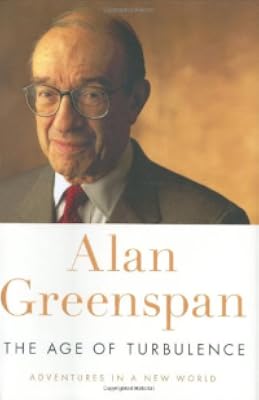
The Age of Turbulence: Adventures in a New World
by Alan Greenspan
On This Page
Description
After 9/11, Alan Greenspan, Chairman of the Federal Reserve Board, knew, if he needed any further reinforcement, that we're living in a new world--the world of a global capitalist economy that is vastly more flexible, resilient, open, self-directing, and fast-changing than it was even 20 years ago. It's a world that presents us with enormous new possibilities but also enormous new challenges. This book is Alan Greenspan's reckoning with the nature of this new world--how we got here, what show more we're living through, and what lies over the horizon, for good and for ill--channeled through his own experiences working in the command room of the global economy for longer and with greater effect than any other single living figure.--From publisher description. show lessTags
Recommendations
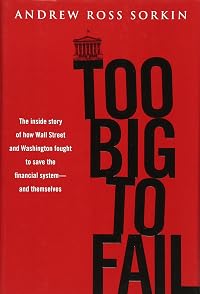
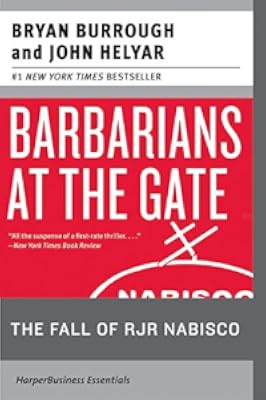
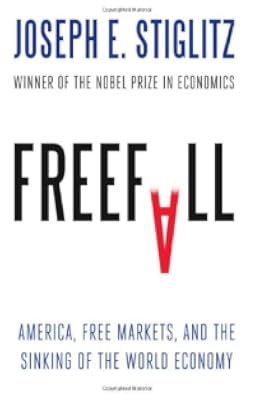
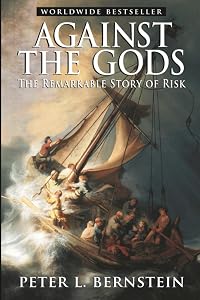
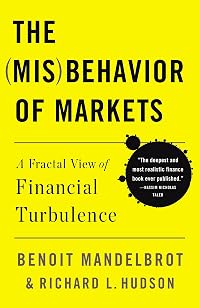
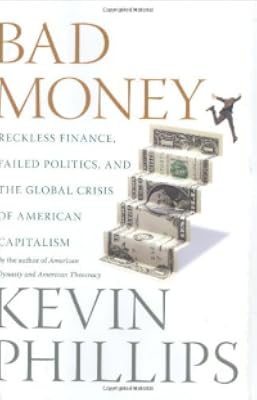
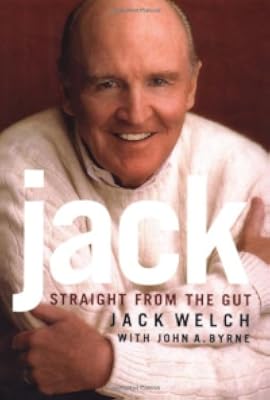
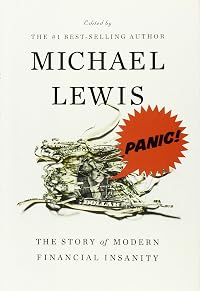
Member Recommendations
mercure Alan Greenspan practiced what Milton Freedman preached.

Member Reviews
I have spent the past week reading and pondering Alan Greenspan’s memoirs, The Age of Turbulence. It is a troubling read.
As a person who deeply believes that the more voices added to a debate: the better the resulting decision, it is difficult to excuse the former Federal Reserve Board Chairman’s flip-flops.
Granted during his terms as chairman, Greenspan was known for his opaque and unparsable language. He writes the War on Terror is all about oil, that he opposed the Bush 2001 tax cuts or that the pork spree of the first years of the 21st century was “wrong.” I follow the Fed. I will admit. I never understood Greenspan’s statements while Chairman. He was the master of the compound, complex. I never divined those conclusions show more from his public utterances.
In his memoirs, these statements are delivered in strong and clear language. Of course, an $8.5 million advance allows for consultation with top-flight ghost writing and editing talent. Still, the picture that emerges is of a Fed Chairman who is either a weasel or the lowest of political hacks. I am not willing to accept either. I watched the Fed’s moves during his 18-year term. They were bold. They were intuitive. I believe they were the result of the collaboration of brilliant minds grappling with complex and often random events.
Why weren’t the American people entitled to the same? If Greenspan believes what he has written in his memoirs, then we were severely short-charged by his public pronouncements as Chairman. If we, as taxpayers, elevate someone to the pinnacle of his profession, we are entitled to wisdom unshaded by political cross-currents.
Greenspan’s memoir says we are not. Unfortunately that forces me to re-evaluate 18 years of thinking.
Penned by the Pointed Pundit
September 26, 2007
10:08:37 AM show less
As a person who deeply believes that the more voices added to a debate: the better the resulting decision, it is difficult to excuse the former Federal Reserve Board Chairman’s flip-flops.
Granted during his terms as chairman, Greenspan was known for his opaque and unparsable language. He writes the War on Terror is all about oil, that he opposed the Bush 2001 tax cuts or that the pork spree of the first years of the 21st century was “wrong.” I follow the Fed. I will admit. I never understood Greenspan’s statements while Chairman. He was the master of the compound, complex. I never divined those conclusions show more from his public utterances.
In his memoirs, these statements are delivered in strong and clear language. Of course, an $8.5 million advance allows for consultation with top-flight ghost writing and editing talent. Still, the picture that emerges is of a Fed Chairman who is either a weasel or the lowest of political hacks. I am not willing to accept either. I watched the Fed’s moves during his 18-year term. They were bold. They were intuitive. I believe they were the result of the collaboration of brilliant minds grappling with complex and often random events.
Why weren’t the American people entitled to the same? If Greenspan believes what he has written in his memoirs, then we were severely short-charged by his public pronouncements as Chairman. If we, as taxpayers, elevate someone to the pinnacle of his profession, we are entitled to wisdom unshaded by political cross-currents.
Greenspan’s memoir says we are not. Unfortunately that forces me to re-evaluate 18 years of thinking.
Penned by the Pointed Pundit
September 26, 2007
10:08:37 AM show less
Greenspan's mechanical and mathematical insight into the clockwork American and world financial system is impressive if occasionally impenetrable and dry reading when approached lightly. I especially liked his insight when he admittedly went out of his area of expertise to recommend a renewed focus on math and science in el-hi education (I agree) and a vigorous extraction from American territory for oil and natural gas (I can see his point).
Inside Alan's brain
With the timing of a senior trader in financial markets, Alan Greenspan chose both the moment of his retirement and the publication of this memoir perfectly. This book was published when confidence in financial markets was slowly eroding, but had not yet led to the demise of Lehman, or the massive support actions for AIG and other financial institutions across much of the Western world (strangely, no Asian or Southern European institutions were affected).
As chairman of the Federal Reserve, Mr. Greenspan presided over the Great Moderation, one of the longest economic expansions in modern history. The self-proclaimed libertarian Republican shared a well-accepted opinion that we should allow for creative destruction as show more much as society accepts, as it is good for economic growth, which is good for society. With the tool-set of the neoclassical Chicago School he cared mainly about inflation and the money supply. Debt levels, exchange rates, and current account deficits are basically ignored, as markets will correct them automatically.
The book chronicles Mr. Greenspan's development from nerdy business economist to head of the FED with dozens of friends in high places, plus a description of those parameters of the global economy he deems important for the coming decades. The first part is relatively short and sympathetic. I found the part about his years at the helm of the FED somewhat disappointing. We learn little about the inner workings of this organisation of global importance, as if Mr. Greenspan was only busy with inflation and trying to convince the Washington political machine to implement healthy long-term economic policies instead of pork (Congress and the Bush Administration are not spared). The part about future developments is interesting, as we see Mr. Greenspan at work, fitting real world developments into his theoretical framework. Compared to an article in the FT or the Economist, it is a relatively slow and somewhat cumbersome process, but depending on how well you read the financial press, you may find more or less new information here.
However, in 2010 we cannot but see this book in light of the developments of 2008 and 2009. In later interviews Mr. Greenspan has expressed his “shocked disbelief” in the behaviour of those playing the markets (his nerdy character has definitely been a disadvantage here, and I doubt if he had put so much trust in markets had he been experienced as a trader or a banker).
While Mr. Greenspan thought he could keep interest rates low and the money supply high at the same time, because globalisation and Chinese factory workers kept inflation in check, an 800-pound gorilla was maturing right under his eyes: the easy availability of money reduced the returns on traditional financial instruments and was an important reason for investors to accept high risk propositions (and it also reduced the rational for saving by private citizens). Mr. Greenspan argued that "real" prices of financial assets cannot be known, which is true to a large extend, but turned lethal .
Mr. Greenspan expanded his benign neglect to financial market supervision, where risky behaviour was slowly creating the conditions for an old-fashioned Kladeradatsch. He states in his book that supervisors cannot assess a counterparty as well as other market participants, a claim he does not substantiate. A supervisor has an asymmetric information advantage versus market participants, who base themselves upon reading financial statements, credit value at risk calculations, and ticking boxes like “under supervision [Y/N]”. Only the number and quality of staff (which is partly based upon the salaries the supervisors pay) can give supervisors such adisadvantage. Given his trust in market participants’ common sense and long-term outlook, the FED did not advocate any restrictions on mortgage quality requirements, executive pay structures or centralised clearing of standardised over-the-counter derivative trades.
So all-in-all it is an interesting book, but overtaken by a new reality that you can find explained much better by the likes of Paul Krugman (thanks for the link, Proximity1)or William White.
Mr. Greenspan responded to criticism here. show less
With the timing of a senior trader in financial markets, Alan Greenspan chose both the moment of his retirement and the publication of this memoir perfectly. This book was published when confidence in financial markets was slowly eroding, but had not yet led to the demise of Lehman, or the massive support actions for AIG and other financial institutions across much of the Western world (strangely, no Asian or Southern European institutions were affected).
As chairman of the Federal Reserve, Mr. Greenspan presided over the Great Moderation, one of the longest economic expansions in modern history. The self-proclaimed libertarian Republican shared a well-accepted opinion that we should allow for creative destruction as show more much as society accepts, as it is good for economic growth, which is good for society. With the tool-set of the neoclassical Chicago School he cared mainly about inflation and the money supply. Debt levels, exchange rates, and current account deficits are basically ignored, as markets will correct them automatically.
The book chronicles Mr. Greenspan's development from nerdy business economist to head of the FED with dozens of friends in high places, plus a description of those parameters of the global economy he deems important for the coming decades. The first part is relatively short and sympathetic. I found the part about his years at the helm of the FED somewhat disappointing. We learn little about the inner workings of this organisation of global importance, as if Mr. Greenspan was only busy with inflation and trying to convince the Washington political machine to implement healthy long-term economic policies instead of pork (Congress and the Bush Administration are not spared). The part about future developments is interesting, as we see Mr. Greenspan at work, fitting real world developments into his theoretical framework. Compared to an article in the FT or the Economist, it is a relatively slow and somewhat cumbersome process, but depending on how well you read the financial press, you may find more or less new information here.
However, in 2010 we cannot but see this book in light of the developments of 2008 and 2009. In later interviews Mr. Greenspan has expressed his “shocked disbelief” in the behaviour of those playing the markets (his nerdy character has definitely been a disadvantage here, and I doubt if he had put so much trust in markets had he been experienced as a trader or a banker).
While Mr. Greenspan thought he could keep interest rates low and the money supply high at the same time, because globalisation and Chinese factory workers kept inflation in check, an 800-pound gorilla was maturing right under his eyes: the easy availability of money reduced the returns on traditional financial instruments and was an important reason for investors to accept high risk propositions (and it also reduced the rational for saving by private citizens). Mr. Greenspan argued that "real" prices of financial assets cannot be known, which is true to a large extend, but turned lethal .
Mr. Greenspan expanded his benign neglect to financial market supervision, where risky behaviour was slowly creating the conditions for an old-fashioned Kladeradatsch. He states in his book that supervisors cannot assess a counterparty as well as other market participants, a claim he does not substantiate. A supervisor has an asymmetric information advantage versus market participants, who base themselves upon reading financial statements, credit value at risk calculations, and ticking boxes like “under supervision [Y/N]”. Only the number and quality of staff (which is partly based upon the salaries the supervisors pay) can give supervisors such adisadvantage. Given his trust in market participants’ common sense and long-term outlook, the FED did not advocate any restrictions on mortgage quality requirements, executive pay structures or centralised clearing of standardised over-the-counter derivative trades.
So all-in-all it is an interesting book, but overtaken by a new reality that you can find explained much better by the likes of Paul Krugman (thanks for the link, Proximity1)or William White.
Mr. Greenspan responded to criticism here. show less
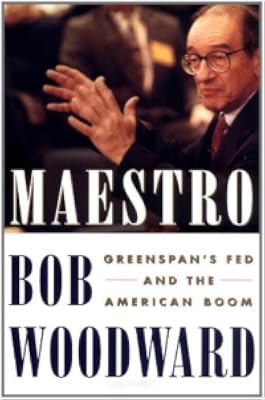
Audio. This massive tome is actually two books in one. The first is his autobiography, a great look at his career and his views of several White Houses. I found most interesting how his own thoughts contradicted Bob Woodward's late 90's account, Maestro, which I read in college. I remember Woodward writing that Greenspan was complimentary of George H.W. Bush's knowledge of economics via his Yale degree. Greenspan isn't very complimentary of Bush '41 in his own memoir, and calls Nixon and Clinton the smartest presidents he ever knew (he's extremely complimentary of Clinton).
The second book is basically composed of essays ranging from the history of economic thought to his views on Latin America, Russia, India, and China, to his show more predictions of the coming decades. It's this part that Greenspan's book fell flat to critics. Greenspan doesn't forsee any financial crisis, and sees inflation in 2008 as the biggest potential threat. Here's the guy credited with seeing so much and yet he clearly saw so little.
Greenspan thinks that the benefits of government housing policies (subsidizing mortgages, tax breaks, etc.) outweigh the risks (which he viewed as rather minimal). Not sure if he's changed his tune, but recent Congressional testimony illustrated that he'd changed his tune about his confidence in market players to regulate themselves and avoid taking on too much risk.
In all, this book is too verbose. His economic writings are fantastic for a student who wants an intro into basic economics & finance, but his thoughts are quite droll by the end when he delves into climate change, and other things he knows little about. Given the gravity of the approaching crisis when the book was published in 2007, it's hard to take some of his feigned expertise seriously.
3.5 stars out of 5. show less
The second book is basically composed of essays ranging from the history of economic thought to his views on Latin America, Russia, India, and China, to his show more predictions of the coming decades. It's this part that Greenspan's book fell flat to critics. Greenspan doesn't forsee any financial crisis, and sees inflation in 2008 as the biggest potential threat. Here's the guy credited with seeing so much and yet he clearly saw so little.
Greenspan thinks that the benefits of government housing policies (subsidizing mortgages, tax breaks, etc.) outweigh the risks (which he viewed as rather minimal). Not sure if he's changed his tune, but recent Congressional testimony illustrated that he'd changed his tune about his confidence in market players to regulate themselves and avoid taking on too much risk.
In all, this book is too verbose. His economic writings are fantastic for a student who wants an intro into basic economics & finance, but his thoughts are quite droll by the end when he delves into climate change, and other things he knows little about. Given the gravity of the approaching crisis when the book was published in 2007, it's hard to take some of his feigned expertise seriously.
3.5 stars out of 5. show less
The book is interesting, but tepid. Economics is actually gripping stuff -- people lose their homes in foreclosure; ordinary people in India find that they can afford two meals per day instead of one; white-collar criminals find themselves in prison. We are living in a turbulent age and Greenspan's overarching view does nothing to convey this. He left to Fed to join a firm that made its fortune betting the real estate market would collapse. The real estate bubble is barely suggested in the book. This is a book you want to argue with!
Capitalism is a lousy system. It's just the best one out there. Everything is in a state of destruction in order to build something new; thus creative destruction. Globalism and the exchange of labor, capital and goods in the most efficient way wins out in the end. Greenspan explains a little bit of his learnings & inspirations for his decades long contribution to the American (and global) economy. Interesting his rise from Ayn Rand. His views on Nixon and Reagan. This book is a must read for insights into the pinnacles of domestic political power. Continually bashes populist politicians who can be dangerous.Ends with a review linking oil to the Iraq war (an 800 pound gorilla) and stock market crashes caused by irrational exuberance and show more the contrarians that try to predict the psychology of the dumpers. His solutions lie in global free markets, rule of law supporting private property rights, education and treating the ills of our time: global warming & terrorism. show less
Initially I thought this would be rather dry but it was very interesting to get some of the details behind the decisions of The Fed for so many years. It was particularly valuable to learn of Mr. Greenspan's impressions of many modern Presidents. This guy Greenspan was around for a long time.
Members
- Recently Added By
Published Reviews
ThingScore 75
For a memoir from such a high-profile figure, it is surprisingly frank. Large parts of the book are downright entertaining. Its biggest failing — the reason it isn’t a great memoir — is Mr. Greenspan’s reluctance to be as forthright and penetrating about himself as he is about others.
added by mikeg2
Author Information

18+ Works 2,542 Members
Awards and Honors
Distinctions
Work Relationships
Contains
Has as a reference guide/companion
Common Knowledge
- Canonical title
- The Age of Turbulence: Adventures in a New World
- Original title
- The Age of Turbulence: Adventures in a New World
- Alternate titles
- Η εποχή των αναταράξεων: Περιπέτειες σε ένα νέο κόσμο
- Original publication date
- 2007
- People/Characters
- Alan Greenspan; George W. Bush; Bill Clinton; George H. W. Bush; Ronald Reagan; Jimmy Carter (show all 8); Gerald Ford; Richard M. Nixon
- Important places
- New York, USA; Washington, D.C., USA
- Important events
- Great Moderation
- Dedication
- FOR MY BELOVED ANDREA
- First words
- On the afternoon of September 11, 2001, I was flying back to Washington on Swissair Flight 128, returning home from a routine international bankers' meeting in Switzerland.
- Last words
- (Click to show. Warning: May contain spoilers.)Progress is not automatic, however; it will demand future adaptations as yet unimaginable. But the frontier of hope that we all innately pursue will never close.
- Original language
- English
Classifications
- Genres
- Business, Nonfiction, General Nonfiction, Biography & Memoir, History
- DDC/MDS
- 332.11092 — Society, government, & culture Economics Banking & Money Banking Central Banking Biography And History Biography
- LCC
- HB119 .G74 .A3 — Social sciences Economic theory. Demography Economic theory. Demography History of economics. History of economic
- BISAC
Statistics
- Members
- 2,080
- Popularity
- 9,967
- Reviews
- 34
- Rating
- (3.64)
- Languages
- 16 — Danish, Dutch, English, French, German, Greek, Hungarian, Italian, Japanese, Polish, Portuguese, Russian, Spanish, Swedish, Turkish, Chinese, traditional
- Media
- Paper, Audiobook, Ebook
- ISBNs
- 39
- UPCs
- 1
- ASINs
- 13