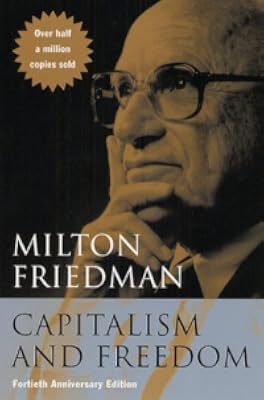
Capitalism and Freedom
by Milton Friedman
On This Page
Description
How can we benefit from the promise of government while avoiding the threat it poses to individual freedom? In this classic book, Milton Friedman provides the definitive statement of his immensely influential economic philosophy-one in which competitive capitalism serves as both a device for achieving economic freedom and a necessary condition for political freedom. The result is an accessible text that has sold well over half a million copies in English, has been translated into eighteen show more languages, and shows every sign of becoming more and more influential as time goes on. This updated edition includes a new preface by the author. show lessTags
Recommendations

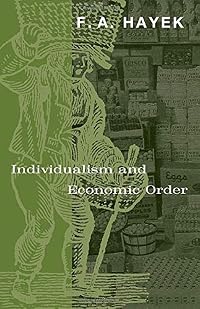
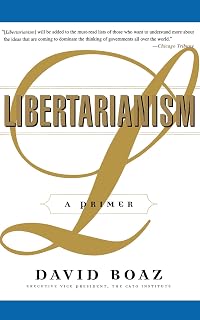
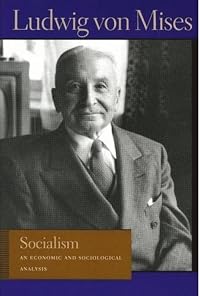
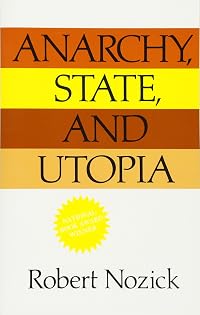



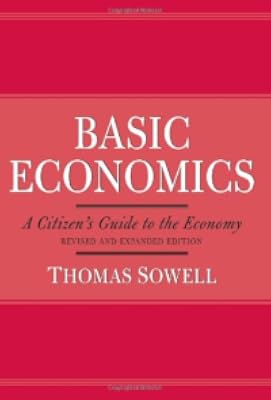
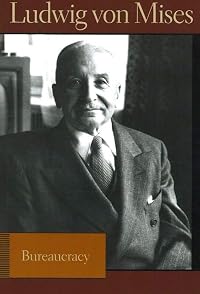

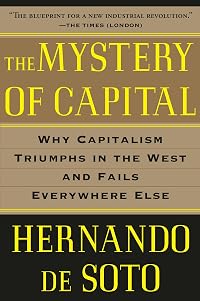
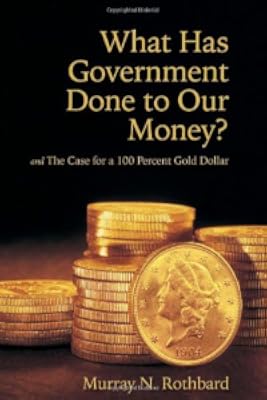

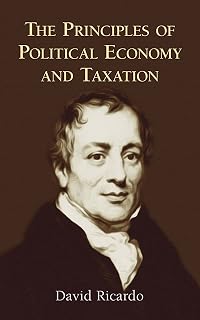
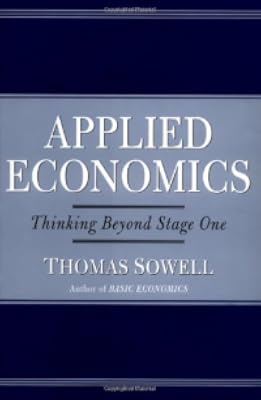
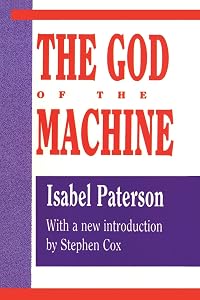
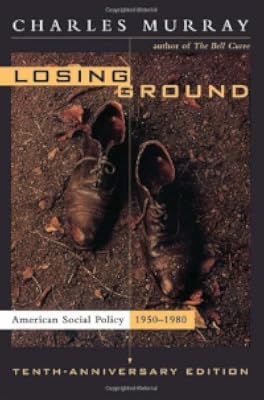


Member Recommendations
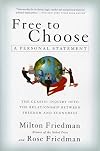
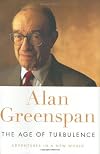
mercure Alan Greenspan practiced what Milton Freedman preached.

Member Reviews
This is a very well written, carefully considered and concise defense of competitive free market capitalism, and a well-supported argument for minimizing government involvement in the economy and the size and scope of government in the absence of a very compelling argument in support of that government activity. The first chapter is essentially a synopsis of Friedrich Hayek's The Road to Serfdom, arguing that economic liberty is inseparable from individual liberty; that allowing free individuals to pursue self-interest in a free market leads to more productivity, prosperity and creativity than is possible otherwise; and that central control stifles that fecundity along with individual freedoms. The next couple chapters deal with what I show more found to be Hayek's most significant omissions: delineation of the legitimate roles of the state and discussion of appropriate (and inappropriate) monetary policy and fiscal policy.
Friedman then discusses several important areas in which government involvement in the market has been both harmful in terms of misallocation of resources, creating disincentives and the like; and by having consequences that are the opposite of those purportedly intended. He's convinced, and convincing, that monetary policy since creation of the Federal Reserve, and the Fed itself, are net negatives. Various government sanctioned monopolies and similar arrangements are condemned, including professional licensure; minimum wage laws; labor unions; and not having stock dividends taxed as income of the stockholders, thereby encouraging reinvestment in the corporation, making it larger than otherwise while that capital is unavailable for and even diverted from new enterprises/competitors (sounds a bit like too big to fail; combined with his monetary arguments, the result is there. No doubt Friedman would say Dodd-Frank compounds the problem while expanding government bureaucracy, when changes in tax and monetary policy would help or solve the problem; if not adequately, it's probably a monopolistic problem that needs to be addressed as such. Several other topics and arguments in the book are highly relevant today). Other items pretty convincingly critiqued are government-run education, social security, the graduated tax with high nominal rates but riddled with loopholes, farm support, and public housing.
Simply listing these hardly makes Friedman's cases against them, which he does well. He notes a particular problem which may be more true today than when the book was published in 1962: the "tyranny of the status quo" - e.g. we tend to accept social security and the education system as they are since we're accustomed to them and haven't experienced alternatives. But there's no reason, for example, that a government requirement that we save for retirement involve a government run insurance program (which is really just a transfer program rather than a trust, and one that depends on demographics for its solvency). As with auto insurance, we can simply be required by government to have something provided by the market that meets minimum requirements (if the program is even legitimate, which Friedman doesn't believe).
The one serious flaw I find with Friedman's overall argument is that, like other strong defenders of laissez faire, he seems to treat the idea of free individuals making free exchanges in a competitive marketplace as a first principle. But he, like Hayek, notes that it's critical that the state establish the rule of law, and in particular ensure that contracts are enforced, for the market to work. That's necessary because people can't be trusted to honor their commitments. The point is that there's a broader and more fundamental ethical system prior to the free market principle. And besides our moral flaws, our knowledge is limited. And there are limits to the good that can be done through everyone pursuing self-interest. The market knows how to value the lumber in tropical rain forests, but it doesn't seem capable of adequately valuing unknown benefits that might come from new medicinal discoveries, much less does it seem able to even address the inherent value in biological diversity. The market can value cod, crabs and oysters as food commodities, but due to a lack of knowledge, or to concern only for present income regardless of whether productive fisheries will continue to exist in the future, capitalism clearly hasn't prevented us from decimating some "commercial fisheries" (otherwise known as components of ecosystems).
This critique could be taken into other areas, but that should suffice. I do generally agree with Friedman, and in fact I think we're getting into dangerous territory by moving in a direction opposite the one he would have us take. But I do think he has a blind spot (while admitting that, in the absence of widespread consensus regarding traditional Judeo-Christian ethics, that's a contentious area without a very clear foundation or way to establish widespread consensus). show less
Friedman then discusses several important areas in which government involvement in the market has been both harmful in terms of misallocation of resources, creating disincentives and the like; and by having consequences that are the opposite of those purportedly intended. He's convinced, and convincing, that monetary policy since creation of the Federal Reserve, and the Fed itself, are net negatives. Various government sanctioned monopolies and similar arrangements are condemned, including professional licensure; minimum wage laws; labor unions; and not having stock dividends taxed as income of the stockholders, thereby encouraging reinvestment in the corporation, making it larger than otherwise while that capital is unavailable for and even diverted from new enterprises/competitors (sounds a bit like too big to fail; combined with his monetary arguments, the result is there. No doubt Friedman would say Dodd-Frank compounds the problem while expanding government bureaucracy, when changes in tax and monetary policy would help or solve the problem; if not adequately, it's probably a monopolistic problem that needs to be addressed as such. Several other topics and arguments in the book are highly relevant today). Other items pretty convincingly critiqued are government-run education, social security, the graduated tax with high nominal rates but riddled with loopholes, farm support, and public housing.
Simply listing these hardly makes Friedman's cases against them, which he does well. He notes a particular problem which may be more true today than when the book was published in 1962: the "tyranny of the status quo" - e.g. we tend to accept social security and the education system as they are since we're accustomed to them and haven't experienced alternatives. But there's no reason, for example, that a government requirement that we save for retirement involve a government run insurance program (which is really just a transfer program rather than a trust, and one that depends on demographics for its solvency). As with auto insurance, we can simply be required by government to have something provided by the market that meets minimum requirements (if the program is even legitimate, which Friedman doesn't believe).
The one serious flaw I find with Friedman's overall argument is that, like other strong defenders of laissez faire, he seems to treat the idea of free individuals making free exchanges in a competitive marketplace as a first principle. But he, like Hayek, notes that it's critical that the state establish the rule of law, and in particular ensure that contracts are enforced, for the market to work. That's necessary because people can't be trusted to honor their commitments. The point is that there's a broader and more fundamental ethical system prior to the free market principle. And besides our moral flaws, our knowledge is limited. And there are limits to the good that can be done through everyone pursuing self-interest. The market knows how to value the lumber in tropical rain forests, but it doesn't seem capable of adequately valuing unknown benefits that might come from new medicinal discoveries, much less does it seem able to even address the inherent value in biological diversity. The market can value cod, crabs and oysters as food commodities, but due to a lack of knowledge, or to concern only for present income regardless of whether productive fisheries will continue to exist in the future, capitalism clearly hasn't prevented us from decimating some "commercial fisheries" (otherwise known as components of ecosystems).
This critique could be taken into other areas, but that should suffice. I do generally agree with Friedman, and in fact I think we're getting into dangerous territory by moving in a direction opposite the one he would have us take. But I do think he has a blind spot (while admitting that, in the absence of widespread consensus regarding traditional Judeo-Christian ethics, that's a contentious area without a very clear foundation or way to establish widespread consensus). show less
Milton Friedman died in 2006, and his teachings live on. The economist as demagogue, preaching all will be subordinate to the Market, all-powerful, all-knowing. It giveth and taketh away.
I admit freely for the purposes of bias that I lean to the left. But I recognize that the market is a powerful force for innovation, for growth and change. I am willing to recognize that at times, the market can be too constrictive, and that there are times where we must carefully examine the situation and determine which policies are best. Milton Friedman, despite his efforts here, is an intelligent man, and recognizes the subtleties of economics.
However, this book discards all subtlety and offers only one solution to all problems. Deregulation, show more lowering taxes, lowering them again, cutting out social aid networks, and doing so again. Deregulation of public education, leading to fundamentalist and revisionist curricula, and poor performing charter schools. Removal of all worker's rights, making them relatively powerless against corporations. He even goes so far as to suggest the removal of medical licensing to alleviate a doctor shortage, and let the market act, leaving bodies in its wake.
Speaking of bodies, the name of Milton Friedman is still widely reviled in Latin America, most notably due to his advice to the Pinochet dictatorship in Chile, which adopted many of his policies as a national experiment. Dictatorship and bloodbaths aside, the economic gains from those years are fragmentary at best - Chile's privatized pension system was in a state of disrepair.
And what of his belief that unions or minimum wages were not necessary for all to share in the growth that free markets provide? The past thirty years have been an extended counter-example to him, with corporations achieving record profits after the recession, and the wages of the lower and middle classes barely rising to make pace with inflation. Perhaps now the pendulum of history and policy will swing another way. show less
I admit freely for the purposes of bias that I lean to the left. But I recognize that the market is a powerful force for innovation, for growth and change. I am willing to recognize that at times, the market can be too constrictive, and that there are times where we must carefully examine the situation and determine which policies are best. Milton Friedman, despite his efforts here, is an intelligent man, and recognizes the subtleties of economics.
However, this book discards all subtlety and offers only one solution to all problems. Deregulation, show more lowering taxes, lowering them again, cutting out social aid networks, and doing so again. Deregulation of public education, leading to fundamentalist and revisionist curricula, and poor performing charter schools. Removal of all worker's rights, making them relatively powerless against corporations. He even goes so far as to suggest the removal of medical licensing to alleviate a doctor shortage, and let the market act, leaving bodies in its wake.
Speaking of bodies, the name of Milton Friedman is still widely reviled in Latin America, most notably due to his advice to the Pinochet dictatorship in Chile, which adopted many of his policies as a national experiment. Dictatorship and bloodbaths aside, the economic gains from those years are fragmentary at best - Chile's privatized pension system was in a state of disrepair.
And what of his belief that unions or minimum wages were not necessary for all to share in the growth that free markets provide? The past thirty years have been an extended counter-example to him, with corporations achieving record profits after the recession, and the wages of the lower and middle classes barely rising to make pace with inflation. Perhaps now the pendulum of history and policy will swing another way. show less
Interesting for historical reasons. Of course I feel kinda sad for him now, his thinking was so cute and ... hmmm... dishonest, but still the unusual ideas were good. It was refreshing and there were good things in it.
But really, his pretended blissful ignorance of vast & fundamental inequalities in information, market behaviors, access to corruption, class, wealth, access to tools and resources, a properly operating justice system, ability to use the state, the allocation of the state's collections.
In a way, this is the Tea Party: pretend that there should be no state, that is, except for the vast, unregulated, uncontrolled state supporting the military industrial complex, and that support's Mr Friedman's university.
Some quotes:
" a show more black man in a city can get the same services as a rich white person by saving, and the same for all other items"
"Various emperical studies have demonstrated that the return on investment in education far exceeds the return on other forms of capital. This implies a problem with capital markets"
" [if there were school vouchers then ] all kinds of schools would spring up" show less
But really, his pretended blissful ignorance of vast & fundamental inequalities in information, market behaviors, access to corruption, class, wealth, access to tools and resources, a properly operating justice system, ability to use the state, the allocation of the state's collections.
In a way, this is the Tea Party: pretend that there should be no state, that is, except for the vast, unregulated, uncontrolled state supporting the military industrial complex, and that support's Mr Friedman's university.
Some quotes:
" a show more black man in a city can get the same services as a rich white person by saving, and the same for all other items"
"Various emperical studies have demonstrated that the return on investment in education far exceeds the return on other forms of capital. This implies a problem with capital markets"
" [if there were school vouchers then ] all kinds of schools would spring up" show less
First written in 1962, this book is at least as relevant now as it was then. An excellent review of the ways in which government often harms whilst acting in the belief it is doing the right thing. I particularly enjoyed the chapters on the control of money, on international trade, and on licensing. The book contains interesting observations on the way in which the FED greatly exacerbated the Great Depression. The last chapters on social welfare and on poverty present some interesting arguments why typical measures taken by governments are ineffective. Echos here from Henry Hazlitt on the necessity on accounting for the unseen effects.
Milton Friedman is a Nobel Prize-winning economist associated with the "Chicago School" of free-market theorists. But it's not so simple to just peg Friedman as this man of the right. For one, he refuses to call himself a conservative. He points out that classically, it was defenders of the market that called themselves liberals--that the root word of liberal is "free" and it's hardly appropriate for a defender of dynamism over the status quo to call himself conservative. He and his wife Rose were responsible for a very popular PBS series "Free to Choose" which became a bestselling book. Although as he says in his introduction, Capitalism and Freedom is also "directed at the general public" it is "more philosophical and abstract." It is show more very readable--some parts are dry, and a bit difficult, but nothing that makes you reach for an unabridged dictionary or that isn't comprehensible with a little work.
This was first published in 1962. So this is over 50 years old. Outdated? Irrelevant? No, I found it scarily topical. Scary, because you would think its lessons would have long been learned. Granted, in me Friedman had a friendly audience who is sympathetic to free market arguments and solutions, I'm not sure his arguments would be as persuasive to those hostile to capitalism. But you can't say you can't see the implications, the relevance, to his taking on Keynesian economics and it's so-called multiplier effect and the argument government spending can act as a "balance wheel" on the economy. (*cough* "Stimulus" *cough*). Or the wasteful distortions of the economy caused by the tax evasion and tax avoidance of soak the rich taxing schemes and the case for a flat tax. Or the reasons why a commodity monetary standard such as gold is unfeasible but why the Federal Reserve is problematical. Why medical licensing may have prevented innovations in how to deliver medicine still relevant to the debate today. The argument for school vouchers and against minimum wage if you want to help the poor. And so on.
If anything this is all the more timely and relevant. In his 2002 preface Friedman points out that federal, state, and local government spending took up 26 percent of the national income in 1956, the year he gave the lectures on which this book was based. That was then. From what I just goggled, it's was at 61 percent in 2009. God knows where it stands now in 2012 after our spending binges. So yes, still very much worth reading. Some of the examples are dated (for instance, the United States now allows people to buy gold) but the principles are not. show less
This was first published in 1962. So this is over 50 years old. Outdated? Irrelevant? No, I found it scarily topical. Scary, because you would think its lessons would have long been learned. Granted, in me Friedman had a friendly audience who is sympathetic to free market arguments and solutions, I'm not sure his arguments would be as persuasive to those hostile to capitalism. But you can't say you can't see the implications, the relevance, to his taking on Keynesian economics and it's so-called multiplier effect and the argument government spending can act as a "balance wheel" on the economy. (*cough* "Stimulus" *cough*). Or the wasteful distortions of the economy caused by the tax evasion and tax avoidance of soak the rich taxing schemes and the case for a flat tax. Or the reasons why a commodity monetary standard such as gold is unfeasible but why the Federal Reserve is problematical. Why medical licensing may have prevented innovations in how to deliver medicine still relevant to the debate today. The argument for school vouchers and against minimum wage if you want to help the poor. And so on.
If anything this is all the more timely and relevant. In his 2002 preface Friedman points out that federal, state, and local government spending took up 26 percent of the national income in 1956, the year he gave the lectures on which this book was based. That was then. From what I just goggled, it's was at 61 percent in 2009. God knows where it stands now in 2012 after our spending binges. So yes, still very much worth reading. Some of the examples are dated (for instance, the United States now allows people to buy gold) but the principles are not. show less
I recently saw an encore presentation of a classic interview of Milton Friedman by Brian Lamb on Booknotes. This interview reminded me that this book is one of the most important books I have ever read. Capitalism and Freedom was a primary contributor to my decision to major in Economics in college. As a freshman in the fall of 1967 I was privileged to be part of the "Honors" program and one of the courses I took as part of that program of studies was Economics. One of our readings was this little (it is relatively short) book by Milton Friedman. It is a powerful little book full of exciting ideas about the power of capitalism and the importance of free market and the fundamental premise that freedom is the foundation for prosperity. I show more was moved to read and discover more about the science of economics and now, more than forty years later, I still consider the lessons of Milton Friedman, who would be awarded the Nobel Prize for Economics in 1976, in this book, and in his many others including the great Free to Choose, to be foundational for my view of the world. show less
Milton Friedman's builds his case from Freedom, He makes interesting case about a lot of different things in society. His example of Medical school unions are thought provoking, I really loved this book, there were a lot of big ideas on this book. I feel there is no simple answer but only continuous dialogue. I felt when power gets concentrated somewhere, there is a high chance of corruption, misuse of it. I think if someone starts from Man is perfect and is able to build a perfect system, he would differ from Friedman and other followers of him. It seems that, you can easily find out the differences from each person's premise on which he build the whole model. Friedman argues a lot for freedom and says, Men ought to have freedom to show more prosper, they will achieve better. In this book, he goes through a lot of things, I was surprised to find schooling system, unions included.
If you like big ideas, you like enjoy this book. However, you won't find solutions but just know his outline.
"Men are born of equal rights, not equal things." - Edmund Burke show less
If you like big ideas, you like enjoy this book. However, you won't find solutions but just know his outline.
"Men are born of equal rights, not equal things." - Edmund Burke show less
Members
- Recently Added By
Published Reviews
ThingScore 100
In this classic book, Capitalism and Freedom, Friedman presents his case for capitalism and why it's the best type of economic system for both freedom and prosperity.
added by mikeg2
Lists

Libertarian Books
102 works; 19 members

Economics
12 works; 1 member

Read These Too
458 works; 9 members

My List
302 works; 1 member

My wishlist
85 works; 1 member
Author Information

89+ Works 6,976 Members
Milton Friedman (1912-2006), Nobel Prize winner for excellence in economics, was a senior research fellow at the Hoover Institution at Stanford University and the Paul Snowden Distinguished Service Professor Emeritus of Economics at the University of Chicago. His many published books include Essays in Positive Economics, Monetary Trends in the show more United States and the United Kingdom, and Milton Friedman on Economics, all published by the University of Chicago Press. show less
Awards and Honors
Series
Belongs to Publisher Series
Common Knowledge
- Canonical title
- Capitalism and Freedom
- Alternate titles
- Capitalism and Freedom: A Leading Economist's View of the Proper Role of Competitive Capitalism
- Original publication date
- 1962
- Epigraph
- To Janet and David and their contemporaries, who must carry the torch of liberty on its next lap
- First words
- In my preface to the 1982 edition of this book, I documented a dramatic shift in the climate of opinion, manifested in the difference between the way this book was treated when it was first published in 1962, and the way my w... (show all)ife's and my subsequent book, Free to Choose, presenting the same philosophy, was treated when it was published in 1980.
- Last words
- (Click to show. Warning: May contain spoilers.)The glimmerings of change that are already apparent in the intellectual climate are a hopeful augury.
- Blurbers
- Hazlitt, Henry; Samuelson, Robert J.
- Original language*
- Inglese
*Some information comes from Common Knowledge in other languages. Click "Edit" for more information.
Classifications
- Genres
- Economics, Politics and Government, General Nonfiction, Nonfiction, Philosophy, Business
- DDC/MDS
- 330.122 — Society, government, & culture Economics Jobs & Careers Theory Systems Capitalism
- LCC
- HB501 .F7 — Social sciences Economic theory. Demography Economic theory. Demography Capital. Capitalism
- BISAC
Statistics
- Members
- 2,767
- Popularity
- 6,639
- Reviews
- 31
- Rating
- (3.88)
- Languages
- 14 — Chinese, Czech, English, Estonian, French, German, Greek, Italian, Korean, Polish, Portuguese, Spanish, Swedish, Turkish
- Media
- Paper, Audiobook, Ebook
- ISBNs
- 45
- ASINs
- 26