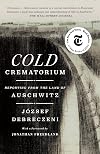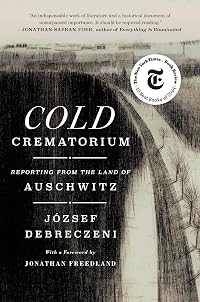
Cold Crematorium: Reporting from the Land of Auschwitz
by József Debreczeni
On This Page
Description
"The first English language edition of a lost memoir by an Auschwitz survivor, offering a shocking and deeply moving perspective on life within the camps. When József Debreczeni, a prolific Hungarian-language journalist and poet, arrived in Auschwitz in 1944, his life expectancy was forty-five minutes. This was how long it took for the half-dead prisoners to be sorted into groups, stripped, and sent to the gas chambers. He beat the odds and survived the "selection," which led to twelve show more horrifying months of incarceration and slave labor in a series of camps, ending in the "Cold Crematorium"-the so-called hospital of the forced labor camp Dörnhau, where prisoners too weak to work awaited execution. But as Soviet and Allied troops closed in on the camps, local Nazi commanders-anxious about the possible consequences of outright murder-decided to leave the remaining prisoners to die. Debreczeni survived the liberation of Auschwitz and immediately recorded his experiences in Cold Crematorium, one of the harshest, most merciless indictments of Nazism ever written. This haunting memoir, rendered in the precise and unsentimental prose of an accomplished journalist, is an eyewitness account of incomparable literary quality. It was published in the Hungarian language in 1950, but it was never translated, due to Cold War hostilities and rising antisemitism. More than 70 years later, this masterpiece that was nearly lost to time is now being published in more than 15 different languages for the first time, and will finally take its rightful place among the greatest works of Holocaust literature"-- show lessTags
Recommendations



















Member Reviews
The author, who was Hungarian, was taken to Auschwitz in May 1944, after having spent the previous three years in various work camps. In civilian life, he was a journalist and a writer. This book is a memoir of his time in Auswitz. It was first published in Yugoslavia in 1950, and has only been recently published in English translation. He is an excellent writer, and it shows in this book. It is full of shocking and closely observed details, yet the writing is often poetic, even lyrical. He observes and the describes the characters he comes across, the hopeful and the despondent, all of them near death. And he spares not sympathy for those who went along with the Nazis, even the prisoners who collaborated to survive:
"With systematic show more resourcefulness the Nazis created in their death camps a subtle hierarchy of the pariahs. The Germans themselves remained mostly invisible behind the barbed wire. The allocation of food, the discipline, the direct supervision of work, and the first degree of terror--in sum, executive power--were in fact entrusted to slave drivers chosen randomly from among the deportees."
He continues:
"Consciously or not, millions here are accomplices to a crime.Why does it occur to so few of them that they are committing a crime?"
Initially, he spent his time at auxiliary camps to Auschwitz working harsh slave labor while slowly starving to death. As the war began to turn bad for the Nazis, fears arose among the prisoners that the Nazis would kill them all to cover up their crimes.
"The mills of God grind slowly--those of the death camps, faster. The ask of this bitter recognition quickly extinguishes the flame of hope that burns in more tranquil moments. All around me are examples of reality: lice larvae, bunker soup, corpses flung on the trash heap, swollen living dead, rubber truncheons, and revolvers. Days of despondency, of lethargy, then came again, those days from which I had once roused myself."
Ultimately the author ended up a camp Dornhau, aka, "The Cold Crematorium"--where those too weak to die lay in bunks amid their own bodily excretions, until they take their last breath--slower than the gas chambers, but just as deadly.
"Dornhau has become a hub. It is here that the land of the camps has poured its expended manpower. Pariahs drained of their strength and whom the Nazis, in the grips of the psychosis of anxiety that comes with sensing the end, did not dare or did not want to put to death on the spot, according to their time-tested method."
At the time that this book was originally published, one commentator called it, "the harshest, most merciless indictment of Nazism ever written." I think that praise still applies 75 years later.
4 1/2 stars show less
"With systematic show more resourcefulness the Nazis created in their death camps a subtle hierarchy of the pariahs. The Germans themselves remained mostly invisible behind the barbed wire. The allocation of food, the discipline, the direct supervision of work, and the first degree of terror--in sum, executive power--were in fact entrusted to slave drivers chosen randomly from among the deportees."
He continues:
"Consciously or not, millions here are accomplices to a crime.Why does it occur to so few of them that they are committing a crime?"
Initially, he spent his time at auxiliary camps to Auschwitz working harsh slave labor while slowly starving to death. As the war began to turn bad for the Nazis, fears arose among the prisoners that the Nazis would kill them all to cover up their crimes.
"The mills of God grind slowly--those of the death camps, faster. The ask of this bitter recognition quickly extinguishes the flame of hope that burns in more tranquil moments. All around me are examples of reality: lice larvae, bunker soup, corpses flung on the trash heap, swollen living dead, rubber truncheons, and revolvers. Days of despondency, of lethargy, then came again, those days from which I had once roused myself."
Ultimately the author ended up a camp Dornhau, aka, "The Cold Crematorium"--where those too weak to die lay in bunks amid their own bodily excretions, until they take their last breath--slower than the gas chambers, but just as deadly.
"Dornhau has become a hub. It is here that the land of the camps has poured its expended manpower. Pariahs drained of their strength and whom the Nazis, in the grips of the psychosis of anxiety that comes with sensing the end, did not dare or did not want to put to death on the spot, according to their time-tested method."
At the time that this book was originally published, one commentator called it, "the harshest, most merciless indictment of Nazism ever written." I think that praise still applies 75 years later.
4 1/2 stars show less
József Debreczeni was a Hungarian journalist who spent most of World War II in four different labor camps. His memoir begins, however, with his being rounded up in Serbia and stuffed into a cattle car. His first stop was Auschwitz, but only long enough to survive a selection and be stripped of personality (belongings, clothes, hair, name). The next day he is back on a train headed for the archipelago of subcamps of Gross-Rosen, itself a subcamp of Sachsenhausen. While in the "Land of Auschwitz", he works clearing land, mining, and building tunnels, in which the Nazis hope to find refuge as the war turns against them. Finally he is selected to be sent to Dornhau, a supposed hospital camp, which the Nazis could point to as a humanitarian show more counter to their mass murder, but in actuality was the most brutal and deadly of all.
In 1950, Debreczeni was able to publish his novel in Yugoslavia, where Hungarian was a minority language, and where he had taken refuge after the war. The West wanted nothing to do with his memoir, claiming it was too soft on Red Army liberators, and the East disliked Debreczeni's insistence that the Jews were the main target of Nazi extermination, not the more generic "victims of fascism". Thus it wasn't until 70 years after the war that his memoir was broadly translated and made available.
I found Cold Crematorium exceptional for a few reasons. For one, Debreczeni was a journalist with a keen eye for observation and a concise, clear writing style. The level of detail, aided by the fact that it was written right after the war, not decades later, is impressive. For another, Debreczeni not only recounts what he saw and experienced, but he places these events in a bigger picture: the economics that drove the camp system (much like Anne Applebaum does for the Gulag in a scholarly way), the conflict of the Nazi's scientific reasoning (the exact number of calories needed to sustain life) vs the utter chaos and unpredictability of violence, and Hitler's understanding of human nature that devised a system of control based on a hierarchy of slaves. "...the best slave driver is a slave accorded a privileged position."
I highly recommend this book for its clarity, analysis, and glimpse of the broader camp system. show less
In 1950, Debreczeni was able to publish his novel in Yugoslavia, where Hungarian was a minority language, and where he had taken refuge after the war. The West wanted nothing to do with his memoir, claiming it was too soft on Red Army liberators, and the East disliked Debreczeni's insistence that the Jews were the main target of Nazi extermination, not the more generic "victims of fascism". Thus it wasn't until 70 years after the war that his memoir was broadly translated and made available.
I found Cold Crematorium exceptional for a few reasons. For one, Debreczeni was a journalist with a keen eye for observation and a concise, clear writing style. The level of detail, aided by the fact that it was written right after the war, not decades later, is impressive. For another, Debreczeni not only recounts what he saw and experienced, but he places these events in a bigger picture: the economics that drove the camp system (much like Anne Applebaum does for the Gulag in a scholarly way), the conflict of the Nazi's scientific reasoning (the exact number of calories needed to sustain life) vs the utter chaos and unpredictability of violence, and Hitler's understanding of human nature that devised a system of control based on a hierarchy of slaves. "...the best slave driver is a slave accorded a privileged position."
I highly recommend this book for its clarity, analysis, and glimpse of the broader camp system. show less
I gave this long lost memoir of life in the Auschwitz camps 5 stars but, if I could, I'd give it 10 stars!!
This memoir by the Hungarian journalist and poet who arrived in Auschwitz in 1944 and was put to work as a slave laborer is brutal, painful to read, and yet important to read. Incredible detail about daily life in several of the camps, including, for his final months in camp, living in a hospital camp where prisoners too weak to work awaited death on extremely limited rations.
It's a haunting eyewitness account with details about the harsh treatment by fellow Jews in positions of authority and about food, bartering, diseases, and the deaths he saw.
Though painful to read, this book is riveting. I've read quite a few books about life show more in the camps and I can't recall any better than this. It should be a classic.
(I received a copy of this book from the publisher, via Net Galley, in exchange for a fair and honest review.) show less
This memoir by the Hungarian journalist and poet who arrived in Auschwitz in 1944 and was put to work as a slave laborer is brutal, painful to read, and yet important to read. Incredible detail about daily life in several of the camps, including, for his final months in camp, living in a hospital camp where prisoners too weak to work awaited death on extremely limited rations.
It's a haunting eyewitness account with details about the harsh treatment by fellow Jews in positions of authority and about food, bartering, diseases, and the deaths he saw.
Though painful to read, this book is riveting. I've read quite a few books about life show more in the camps and I can't recall any better than this. It should be a classic.
(I received a copy of this book from the publisher, via Net Galley, in exchange for a fair and honest review.) show less
Cold Crematorium is moving, thought-provoking and heart-breaking. It’s chilling. Especially since author József Debreczeni describes his experiences – his horrifying, terrifying, tragic, unbelievable, hard-to-read, impossible to fully image experiences – in such a direct, matter-of-fact way. His writing is excellent, his journalistic background shines through. The subject matter is never easy to read, but Debreczeni’s prose is. It’s ironic, sarcastic, and even humorous at times. It flows like good fiction. But it’s not fiction, it’s real. Debreczeni captures the initial bewilderment at finding himself a prisoner, snatched from his ordinary life. He makes you feel the futility, the resignation, the hopelessness. Hope never show more really creeps in but some times are more bearable than others. He makes you realize how nonsensical it all was at the beginning, how certain this wouldn’t, couldn’t last. All would be back to normal soon. And he makes you shudder to realize this could be any one of us, plucked out of our lives without warning or preparation, and never to return to them as they were.
Cold Crematorium is riveting. It’s dreadful and you have to look away, take a breath, but then you can’t help but look back. Everyone – or everyone of a certain age at least – knows about the concentration camps in World War II and the horrors inflicted and endured. Debreczeni brings it up close. While reading I found myself looking for someone to blame, even while realizing they are all dead by now, even if they lived beyond the end of the war, and knowing you can’t just hate “all Germans.” But Debreczeni’s words bring up so much emotion they make you want to do something, to prevent what has sadly already happened.
Thanks to St. Martin’s Press and NetGalley for providing an advance copy of Cold Crematorium. Powerful, a read not to be missed. I voluntarily leave this review; all opinions are my own. show less
Cold Crematorium is riveting. It’s dreadful and you have to look away, take a breath, but then you can’t help but look back. Everyone – or everyone of a certain age at least – knows about the concentration camps in World War II and the horrors inflicted and endured. Debreczeni brings it up close. While reading I found myself looking for someone to blame, even while realizing they are all dead by now, even if they lived beyond the end of the war, and knowing you can’t just hate “all Germans.” But Debreczeni’s words bring up so much emotion they make you want to do something, to prevent what has sadly already happened.
Thanks to St. Martin’s Press and NetGalley for providing an advance copy of Cold Crematorium. Powerful, a read not to be missed. I voluntarily leave this review; all opinions are my own. show less
Occasionally I like to intersperse my fiction reading with some non-fiction so I chose this memoir which was recommended to me.
This book was first published in 1950 but was only translated into English last year. József Debreczeni was a Hungarian poet and journalist. After three years as a forced labourer, he was deported to Auschwitz in May of 1944. As prisoner 33031, he spent twelve months of incarceration and slave labour in a series of camps, ending in the Cold Crematorium, the so-called hospital where prisoners too weak to work awaited execution or death.
I’ve read Holocaust literature in the past but found this book offers a unique perspective: it was written soon after the war by an adult journalist and focuses not on death show more camps but on the slave-labor camps. As Jonathan Freedland writes in the Foreword, József’s “are the recollections of a fully conscious adult . . . [and] he writes as a professional, highly skilled observer . . . with a journalist’s eye for the telling, human detail.”
The book may not have new information for students of history, but I certainly learned things I did not know. For instance, I had never heard of the network of sub camps around “the capital of the Great Land of Auschwitz.” I had never heard of Dörnhau which Debreczeni calls a cold crematorium. I also did not know that the Nazis began construction of an underground city in Lower Silesia.
Of course what stands out is the unimaginably horrific suffering of the prisoners, the häftlinge: dehumanization, starvation, beatings, backbreaking labour in dangerous working conditions, disease, mental illness, etc. Even if a häftling worked hard, he might not escape death. After a group’s best worker was identified, a German officer shot him: “’A little demonstration . . . an example of how even the best Jew must croak.’”
It is descriptions of conditions in Dörnhau that I cannot forget: “The November cold pours in through the broken windows, and yet the stench is unbearable all the same. A suffocating stink oozes from the walls. Rising between the rows of bunks, several centimeters high, is an odious yellowish slurry of dung. Naked skeletons are sloshing through the putrid river. . . . Everyone has diarrhea. Hence the horrid yellow streams along the rows of beds.” Beds are shared: “Two or even three half- or completely naked men occupy each bunk. Only a few have blankets.” Debreczeni comments, “No tranquility here, that’s for sure. . . . A dizzying cacophony of moaning, whimpering, shrieking, whining, and delirious snarling.” Dörnhau is a death factory: “In Dörnhau, those whose turn has come depart mostly after dark. The nights belong to struggling moans, screaming farewells and delirious wails for homes.” Sometimes, “The nights drag off forty or fifty every twenty-four hours.” Debreczeni estimates, “I’ve passed eight nights pressed up against a cooling cadaver.”
What is also emphasized is “the camp aristocracy, the wretched gods of this wretched world.” The Nazis created a hierarchy among the inmates, those entitled to better food, better clothes, the opportunity to steal, including gold teeth from corpses, which can be traded for food, and “that most intoxicating opiate of all. Boundless power over life and death.” Debreczeni understands the reasoning: “the best slave driver is a slave accorded a privileged position” and “This aristocratic hierarchy reflected the Nazis’ modern interpretation of the concept ‘divide and conquer’.”
This book is a very difficult read but a very necessary one. The suffering endured by Nazi victims must not be forgotten. And there’s the aphorism that “Those who cannot remember the past are condemned to repeat it.” Debreczeni is convinced “that the average Nazi who had dealings with us imagines, more or less, that standing there before them are a bunch of ex-convicts, common criminals, and that every Jew had notched up at least one murder. . . . they had been taught to believe exactly this sort of thing.” Current events – rounding up of immigrants in the U.S., Russian justification for its war on Ukraine, and the indiscriminate killings in Gaza – suggest we have forgotten what can happen when those who are different from us or do not share our beliefs are vilified and dehumanized.
Note: Please check out my reader's blog (https://schatjesshelves.blogspot.com/) or substack (https://doreenyakabuski.substack.com/) for over 1,100 of my book reviews. show less
This book was first published in 1950 but was only translated into English last year. József Debreczeni was a Hungarian poet and journalist. After three years as a forced labourer, he was deported to Auschwitz in May of 1944. As prisoner 33031, he spent twelve months of incarceration and slave labour in a series of camps, ending in the Cold Crematorium, the so-called hospital where prisoners too weak to work awaited execution or death.
I’ve read Holocaust literature in the past but found this book offers a unique perspective: it was written soon after the war by an adult journalist and focuses not on death show more camps but on the slave-labor camps. As Jonathan Freedland writes in the Foreword, József’s “are the recollections of a fully conscious adult . . . [and] he writes as a professional, highly skilled observer . . . with a journalist’s eye for the telling, human detail.”
The book may not have new information for students of history, but I certainly learned things I did not know. For instance, I had never heard of the network of sub camps around “the capital of the Great Land of Auschwitz.” I had never heard of Dörnhau which Debreczeni calls a cold crematorium. I also did not know that the Nazis began construction of an underground city in Lower Silesia.
Of course what stands out is the unimaginably horrific suffering of the prisoners, the häftlinge: dehumanization, starvation, beatings, backbreaking labour in dangerous working conditions, disease, mental illness, etc. Even if a häftling worked hard, he might not escape death. After a group’s best worker was identified, a German officer shot him: “’A little demonstration . . . an example of how even the best Jew must croak.’”
It is descriptions of conditions in Dörnhau that I cannot forget: “The November cold pours in through the broken windows, and yet the stench is unbearable all the same. A suffocating stink oozes from the walls. Rising between the rows of bunks, several centimeters high, is an odious yellowish slurry of dung. Naked skeletons are sloshing through the putrid river. . . . Everyone has diarrhea. Hence the horrid yellow streams along the rows of beds.” Beds are shared: “Two or even three half- or completely naked men occupy each bunk. Only a few have blankets.” Debreczeni comments, “No tranquility here, that’s for sure. . . . A dizzying cacophony of moaning, whimpering, shrieking, whining, and delirious snarling.” Dörnhau is a death factory: “In Dörnhau, those whose turn has come depart mostly after dark. The nights belong to struggling moans, screaming farewells and delirious wails for homes.” Sometimes, “The nights drag off forty or fifty every twenty-four hours.” Debreczeni estimates, “I’ve passed eight nights pressed up against a cooling cadaver.”
What is also emphasized is “the camp aristocracy, the wretched gods of this wretched world.” The Nazis created a hierarchy among the inmates, those entitled to better food, better clothes, the opportunity to steal, including gold teeth from corpses, which can be traded for food, and “that most intoxicating opiate of all. Boundless power over life and death.” Debreczeni understands the reasoning: “the best slave driver is a slave accorded a privileged position” and “This aristocratic hierarchy reflected the Nazis’ modern interpretation of the concept ‘divide and conquer’.”
This book is a very difficult read but a very necessary one. The suffering endured by Nazi victims must not be forgotten. And there’s the aphorism that “Those who cannot remember the past are condemned to repeat it.” Debreczeni is convinced “that the average Nazi who had dealings with us imagines, more or less, that standing there before them are a bunch of ex-convicts, common criminals, and that every Jew had notched up at least one murder. . . . they had been taught to believe exactly this sort of thing.” Current events – rounding up of immigrants in the U.S., Russian justification for its war on Ukraine, and the indiscriminate killings in Gaza – suggest we have forgotten what can happen when those who are different from us or do not share our beliefs are vilified and dehumanized.
Note: Please check out my reader's blog (https://schatjesshelves.blogspot.com/) or substack (https://doreenyakabuski.substack.com/) for over 1,100 of my book reviews. show less
5-2024
Cuando crees que sabes mucho sobre la 2°guerra mundial y sobre el holocausto, lees algo que te abre los ojos sobre lo mucho que ignoras.
La narración del protagonista es estremecedora, sin entrar en detalles morbosos.
El último año de guerra (1944), llega a Auschwitz, contando el viaje en tren, las condiciones y los días que dura.
Lo novedoso de la narración es cuando te detalla la vida en los campos, "las clases sociales", la supervivencia del día a día, las enfermedades, los trabajos, la falta de empatía... De humanidad. Y no hablo de los mandos nazis, sino de los propios prisioneros. Y hay que recordar que los campos de concentración no solo había judíos.
Crematorio frio es el lugar donde termina el protagonista. Todos show more conocemos las duchas de gas y los hornos crematorios, pero no siempre se deshacían de los seres humanos allí. Y en este libro te lo cuentan.
De forma fluida, amena (pese a la dureza), Jofsef cuenta sus vivencias. Es sorprendente que alguien pudiera sobrevivir a semejantes condiciones. Y lo más repugnante, es que entre los propios prisioneros, los que lograban algún poder/privilegio, se dedicarán a machacar a los compañeros, en vez de echar una mano. show less
Cuando crees que sabes mucho sobre la 2°guerra mundial y sobre el holocausto, lees algo que te abre los ojos sobre lo mucho que ignoras.
La narración del protagonista es estremecedora, sin entrar en detalles morbosos.
El último año de guerra (1944), llega a Auschwitz, contando el viaje en tren, las condiciones y los días que dura.
Lo novedoso de la narración es cuando te detalla la vida en los campos, "las clases sociales", la supervivencia del día a día, las enfermedades, los trabajos, la falta de empatía... De humanidad. Y no hablo de los mandos nazis, sino de los propios prisioneros. Y hay que recordar que los campos de concentración no solo había judíos.
Crematorio frio es el lugar donde termina el protagonista. Todos show more conocemos las duchas de gas y los hornos crematorios, pero no siempre se deshacían de los seres humanos allí. Y en este libro te lo cuentan.
De forma fluida, amena (pese a la dureza), Jofsef cuenta sus vivencias. Es sorprendente que alguien pudiera sobrevivir a semejantes condiciones. Y lo más repugnante, es que entre los propios prisioneros, los que lograban algún poder/privilegio, se dedicarán a machacar a los compañeros, en vez de echar una mano. show less
forced-labor, WW2, Hungary, Germany, starvation, cruelty, infectious-disease, forced-imprisonment, death-camps, crematoria, cultural-diversity, cultural-heritage, culture-of-fear, historical-places-events, historical-setting, history-and-culture, human-rights, mass-murder, violence, victimization, inhumane*****
I was so revolted by the author's descriptions that I kept wanting to stop reading and skip right to the review. I did not. I took a (relatively) short break from the horrors and read on through to the end.
Remember those photos repeated in history books and TV where they show the living skeletons of men hanging onto the wire fences watching the allies enter the camps? Joseph was one of those men and, as a journalist, he wrote his show more memoir in his native language in 1950. This is a clear condemnation of man's inhumanity to man, diarrhea and all.
Well worth everyone's time to read and be repulsed. Never forget. Never again.
Paul Olchváry tackled the unbearable task of translating the author's 1950 original memoir into English.
I requested and received an EARC from St. Martin's Press via NetGalley. Thank you. show less
I was so revolted by the author's descriptions that I kept wanting to stop reading and skip right to the review. I did not. I took a (relatively) short break from the horrors and read on through to the end.
Remember those photos repeated in history books and TV where they show the living skeletons of men hanging onto the wire fences watching the allies enter the camps? Joseph was one of those men and, as a journalist, he wrote his show more memoir in his native language in 1950. This is a clear condemnation of man's inhumanity to man, diarrhea and all.
Well worth everyone's time to read and be repulsed. Never forget. Never again.
Paul Olchváry tackled the unbearable task of translating the author's 1950 original memoir into English.
I requested and received an EARC from St. Martin's Press via NetGalley. Thank you. show less
Members
- Recently Added By
Lists

Books Read in 2025
4,091 works; 97 members

Top Five Books of 2025
954 works; 303 members
Author Information
1 Work 281 Members
Some Editions
Awards and Honors
Awards
Distinctions
Common Knowledge
- Canonical title
- Cold Crematorium: Reporting from the Land of Auschwitz
- Original title
- Hideg krematorium
- Original publication date
- 1950
- Important places
- Auschwitz concentration camp, Oświęcim, Lesser Poland, Poland
- Important events
- Holocaust
- First words
- The long train, comprised of low boxcars with German insignia, was grinding to a halt.
- Publisher's editor*
- De Arbeiderspers
- Original language
- Hungarian
*Some information comes from Common Knowledge in other languages. Click "Edit" for more information.
Classifications
- Genres
- Nonfiction, Biography & Memoir, History, General Nonfiction
- DDC/MDS
- 940.5318092 — History & geography History of Europe History of Europe 1918- World War II, 1939-1945 Social, political, economic history; Holocaust Holocaust Standard subdivisions History, geographic treatment, biography Biography
- LCC
- DS135 .H93 .D43 — History of Europe, Asia, Africa and Oceania Asia History of Asia Israel (Palestine). The Jews Jews outside of Palestine
- BISAC
Statistics
- Members
- 287
- Popularity
- 112,141
- Reviews
- 11
- Rating
- (4.52)
- Languages
- 7 — Dutch, English, Finnish, French, German, Hungarian, Spanish
- Media
- Paper, Audiobook, Ebook
- ISBNs
- 16
- ASINs
- 6