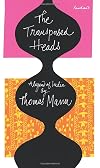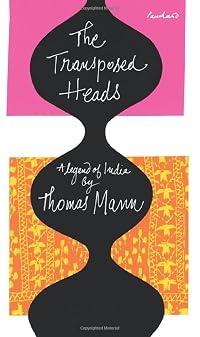
The Transposed Heads: A Legend of India
by Thomas Mann 
On This Page
Description
From a Nobel Prize for Literature winner and one of the most iconic German writers of the 20th century, Transposed Heads is a beautiful story that explores the complex relationship between the spirit, body, and mind. Inspired by an ancient Hindu legend, Mann's writes about two Indian friends, Shridaman and Nanda, whom together, decide to decapitate themselves. However, they awaken from their attempted suicides to find their heads restored, but to the wrong body. Now, Sita, the wife of show more Shridaman must determine the true meaning of identity as she navigates her own feelings as to which representation is her actual husband. As the love-triangle carries on, Mann shows just how entwined our mind, body, and spirit are. "The Transposed Heads is altogether delightful . . . It is certainly the most charming of Mann's works . . . in short, a restatement in parable form of Mann's intransigent faith in the human intellect. It is also a rich and subtle analysis of the psychology of friendship and love."--Sewanee Review show lessTags
Recommendations





















Member Reviews
So much to contemplate in such a slender volume, ‘The Transposed Heads’ retells an Indian myth of lust and desire and love and identity. Two men fall for a beautiful woman - the intellectual one becomes love-sick' and takes her as his bride.
The philosophical core of the book is the dilemma of choice and desire, ‘brawn’ versus ‘brain’ in this instance, where the woman falls for both men, one for his body and the other his ‘head’.
Visiting a temple, the men cut of their heads and the Goddess of the temple instructs the woman to reattach them, making sure that the heads are facing the right way. However the heads are mixed up and become attached to the wrong bodies – perhaps slightly intentionally as Mann hints later. show more
The rest of the fable deals with the moral dilemmas of monogamy, friendship, identity and lust. Who is her husband? What are her loyalties and responsibilities? What are her desires? Read this book and find out how it plays out. show less
The philosophical core of the book is the dilemma of choice and desire, ‘brawn’ versus ‘brain’ in this instance, where the woman falls for both men, one for his body and the other his ‘head’.
Visiting a temple, the men cut of their heads and the Goddess of the temple instructs the woman to reattach them, making sure that the heads are facing the right way. However the heads are mixed up and become attached to the wrong bodies – perhaps slightly intentionally as Mann hints later. show more
The rest of the fable deals with the moral dilemmas of monogamy, friendship, identity and lust. Who is her husband? What are her loyalties and responsibilities? What are her desires? Read this book and find out how it plays out. show less
This folkloric, Hindu-light treatment of desire, loyalty and identity lacks the craft, gravity and heft of other Thomas Mann novels. His few prose outbursts in description of beauty or deity seem strained in their efforts to sound like products of a different literary tradition. Yes, the philosophy of India was exercising a noticeable pull on German thinkers around the time of Mann's composition and experimentation is fun; but Mann's homage doesn't seem particularly well informed or well executed. For someone with Mann's gift for creating memorable characters to provide us with just three wafer-thin creations, mostly for the purpose of spouting used-up meditations on ways of living in the world, was rather disappointing. However, the show more physicality of the book, its beheadings and transformations make it a rather quick read. Fans of Mann won't be that impressed and junkies of all things India probably won't be that satisfied either. show less
Few pages, leaving the reader with much to think about. What is attraction? What is beauty? What is the role of love and lust in a relationship? What is, ultimately, morality? Written with a light, humorous touch, the book is unforgettable.
A short novella dealing with some of the most basic human conflicts and the most fundamental question of identity. Magical realism be damned. And where's the sixth star?
> Babelio : https://www.babelio.com/livres/Mann-Les-Tetes-interverties/365419
> LES TÊTES INTERVERTIES, de Thomas Mann. — Il était une fois deux beaux jeunes gens, fort dissemblables en tous points et, néanmoins amis ; assis au bord d'une rivière dans un décor de miniature, ils assistent, malgré eux, au bain de Sita aux belles hanches. Tiraillés entre désirs et insatisfactions, ils seront manipulés par un destin qui a le visage de Kâli, dont la mansuétude a des limites !!! Comme Hermann Hesse à la même époque, Thomas Mann s'est intéressé à l'Inde et fait une description d'une grande justesse du caractère des personnages, de leur vie religieuse, du climat et du mode de vie. L’écriture est moderne et le ton est si show more sobre, qu'il convient tout à fait pour décrire une Inde de l'Age d'Or, des temps mythiques où les Dieux s'adressaient aux hommes. Ce livre mériterait une réédition dans la collection « Les introuvables »… En attendant (on peut rêver !) les amateurs de « chine » peuvent se lancer sur la piste des bouquinistes. Éditions Albin Michel, 1949. (Françoise BLÉVÔT).
—Carnets du Yoga, oct. 1988
> INTERVERTION ET RECONVERSION : LES TÊTES INTERVERTIES de Thomas Mann. trad. de Louise Servicen.
Les têtes interverties est un recueil de nouvelles dont l’action se situe aux Indes. Thomas Mann s’y amuse, dans une sorte de conte philosophique, à opposer qualités et lacunes chez ses deux personnages principaux, qui trouvent toujours chez l’autre ce qu'ils estiment leur faire défaut.
—(1988). Compte rendu de [En poche]. Nuit blanche, (31), 65–65. show less
> LES TÊTES INTERVERTIES, de Thomas Mann. — Il était une fois deux beaux jeunes gens, fort dissemblables en tous points et, néanmoins amis ; assis au bord d'une rivière dans un décor de miniature, ils assistent, malgré eux, au bain de Sita aux belles hanches. Tiraillés entre désirs et insatisfactions, ils seront manipulés par un destin qui a le visage de Kâli, dont la mansuétude a des limites !!! Comme Hermann Hesse à la même époque, Thomas Mann s'est intéressé à l'Inde et fait une description d'une grande justesse du caractère des personnages, de leur vie religieuse, du climat et du mode de vie. L’écriture est moderne et le ton est si show more sobre, qu'il convient tout à fait pour décrire une Inde de l'Age d'Or, des temps mythiques où les Dieux s'adressaient aux hommes. Ce livre mériterait une réédition dans la collection « Les introuvables »… En attendant (on peut rêver !) les amateurs de « chine » peuvent se lancer sur la piste des bouquinistes. Éditions Albin Michel, 1949. (Françoise BLÉVÔT).
—Carnets du Yoga, oct. 1988
> INTERVERTION ET RECONVERSION : LES TÊTES INTERVERTIES de Thomas Mann. trad. de Louise Servicen.
Les têtes interverties est un recueil de nouvelles dont l’action se situe aux Indes. Thomas Mann s’y amuse, dans une sorte de conte philosophique, à opposer qualités et lacunes chez ses deux personnages principaux, qui trouvent toujours chez l’autre ce qu'ils estiment leur faire défaut.
—(1988). Compte rendu de [En poche]. Nuit blanche, (31), 65–65. show less
Jun 1, 2020 (Edited)French
Ratings
Members
- Recently Added By
Lists

German Literature
518 works; 56 members
Author Information

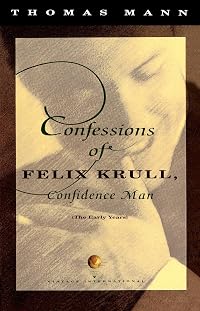
Thomas Mann was born into a well-to-do upper class family in Lubeck, Germany. His mother was a talented musician and his father a successful merchant. From this background, Mann derived one of his dominant themes, the clash of views between the artist and the merchant. Mann's novel, Buddenbrooks (1901), traces the declining fortunes of a merchant show more family much like his own as it gradually loses interest in business but gains an increasing artistic awareness. Mann was only 26 years old when this novel made him one of Germany's leading writers. Mann went on to write The Magic Mountain (1924), in which he studies the isolated world of the tuberculosis sanitarium. The novel was based on his wife's confinement in such an institution. Doctor Faustus (1947), his masterpiece, describes the life of a composer who sells his soul to the devil as a price for musical genius. Mann is also well known for Death in Venice (1912) and Mario the Magician (1930), both of which portray the tensions and disturbances in the lives of artists. His last unfinished work is The Confessions of Felix Krull, Confidence Man (1954), a brilliantly ironic story about a nineteenth-century swindler. An avowed anti-Nazi, Mann left Germany and lived in the United States during World War II. He returned to Switzerland after the war and became a celebrated literary figure in both East and West Germany. In 1929 he was awarded the Nobel Prize for literature. (Bowker Author Biography) show less
Thomas Mann has a Legacy Library. Legacy libraries are the personal libraries of famous readers, entered by LibraryThing members from the Legacy Libraries group.
Some Editions
Series
Belongs to Publisher Series
Work Relationships
Common Knowledge
- Canonical title*
- De verwisselde hoofden
- Original title
- Die vertauschten Köpfe – Eine indische Legende
- Original publication date
- 1940 (original German) (original German)
- Original language
- German
*Some information comes from Common Knowledge in other languages. Click "Edit" for more information.
Classifications
Statistics
- Members
- 353
- Popularity
- 89,624
- Reviews
- 5
- Rating
- (3.68)
- Languages
- 12 — Catalan, Dutch, English, French, German, Greek, Hebrew, Italian, Portuguese, Spanish, Swedish, Turkish
- Media
- Paper, Ebook
- ISBNs
- 16
- ASINs
- 14