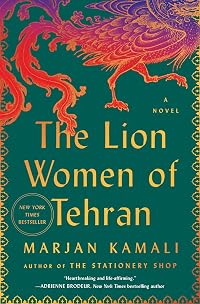
The Lion Women of Tehran
by Marjan Kamali
On This Page
Description
From the nationally bestselling author of the "powerful, heartbreaking" (Shelf Awareness) The Stationery Shop, a heartfelt, epic new novel of friendship, betrayal, and redemption set against three transformative decades in Tehran, Iran.In 1950s Tehran, seven-year-old Ellie lives in grand comfort until the untimely death of her father, forcing Ellie and her mother to move to a tiny home downtown. Lonely and bearing the brunt of her mother's endless grievances, Ellie dreams of a friend to show more alleviate her isolation.
Luckily, on the first day of school, she meets Homa, a kind, passionate girl with a brave and irrepressible spirit. Together, the two girls play games, learn to cook in the stone kitchen of Homa's warm home, wander through the colorful stalls of the Grand Bazaar, and share their ambitions for becoming "lion women."
But their happiness is disrupted when Ellie and her mother are afforded the opportunity to return to their previous bourgeois life. Now a popular student at the best girls' high school in Iran, Ellie's memories of Homa begin to fade. Years later, however, her sudden reappearance in Ellie's privileged world alters the course of both of their lives.
Together, the two young women come of age and pursue their own goals for meaningful futures. But as the political turmoil in Iran builds to a breaking point, one earth-shattering betrayal will have enormous consequences.
Written with Marjan Kamali's signature "evocative, devastating, and hauntingly beautiful" (Whitney Scharer, author of The Age of Light) prose, The Lion Women of Tehran is a sweeping exploration of how profoundly we are shaped by those we meet when we are young, and the way love and courage transforms our lives. show less
Tags
Recommendations









Member Reviews
Wow, this was a powerful and educational piece of historical fiction. Like many North Americans, I had only a vague understanding of the Iranian Revolution and the rise of the Islamic Republic. I was guilty of seeing only the waves near the shore, unaware of the deep currents that began in the ocean, thousands of miles away. Kamali contextualizes the classism and inequalities under the previous monarchy through the eyes of young girls as they form their identities and understand their place in society. This perspective was perfect for educating a reader like me, who was less informed. In her author’s note, Kamali explains how she began this book in 2019, before the pandemic and the more recent feminist protests sparked by Mahsa show more Amini’s death at the hands of the “morality police”. Still, she captures the pain of it all so movingly. The story is heartfelt and surprising, and the creative exploration of how different generations of Iranians have perceived the last seventy years is deeply moving. I spent my final hours reading through tears. This feels like essential, mind-expanding reading. Grab it immediately. show less
I loved this beautiful story of two friends growing up in Iran in the ‘70s. Ellie and Homa bond when they are young and then reconnect in high school. Their earnest friendship is so relatable. As they change and grow, that connection remains a part of who they are despite the revolution and family changes happening around them. The book deals with big issues like women’s rights and immigration, but it is so character driven that the issues never feel heavier than their connection. Their story broke my heart and gave me hope. It also had an incredibly satisfying ending.
I chose this book as my birthday gift from Book of the Month Club. I knew little of the Iranian culture and wasn't sure that I wanted to know. However, this book held my interest from beginning to end and I finished it in a day and a half. It starts in Tehran in the 1950s with the friendship between Ellie and Homa when they are seven. We follow them through their grade school years. When Ellie moves away during high school, they lose touch until their senior year. While the girls come of age, the politics of Iran are happening in the background. A fascinating book, I am so glad that I read it. I've also ordered her other two books as well, The Stationery Shop and Together Tea.
The Lion Women of Tehran by Marjan Kamali was one of my most anticipated reads of 2024 and I'm glad to say that I was not disappointed.
“Shir zan. Lionesses. Us. Can’t you just see it, Ellie? Someday, you and me—we’ll do great things. We’ll live life for ourselves. And we will help others. We are cubs now, maybe. But we will grow to be lionesses. Strong women who make things happen.”
Written in beautiful prose, this evocative story spans the 1950s through the 70s and 80s to the present day and follows Elaheh “Ellie” Soltani and Homa Roozbeh – girls from completely different backgrounds who meet in Tehran as seven-year-olds who become fast friends but drift apart - a cycle that continues as their lives intersect time and show more time again and their fates intertwine against the volatile backdrop of the Iranian Revolution and the decades that follow. The author addresses several important themes, including social class, feminism, women’s rights and political activism, and the immigrant experience, while also giving us a glimpse into Iranian life and culture. The story is set in Tehran for most of the 50s and 60s and both the United States and Tehran for the remainder of the novel.
The narrative is presented predominantly from Ellie’s perspective, though we do get a few segments from Homa’s perspective. Both main characters are well fleshed out and their dynamic as it evolves over decades is realistically depicted, but I wish we could have explored a few of the crucial secondary characters in more depth. I also wish Homa’s perspective had been in more detail and that her story had been told with less telling and more showing particularly toward the end of the novel.
The themes in Marjan Kamali’s latest novel are realistic, relatable and most importantly, timely and relevant. The author’s portrayal of the changing socio-political landscape of Iran during the Iranian revolution and its aftermath with emphasis on women’s rights will inspire reflection. We can’t help but ponder over the fact that many of us have been afforded freedoms that others do not enjoy - freedoms that we often take for granted and rights that women all over the world have fought for in their own time and continue to do so today.
“That’s how losses of rights build. They start small. And then soon, the rights are stripped in droves.”
Overall, I found this to be an immersive and thought-provoking story about friendship, courage, healing, empathy and acceptance, forgiveness and redemption, with characters who will stay with you long after you have turned the last page.
I paired my reading with the audiobook brilliantly narrated by Mozhan Navabi and Nikki Massoud.
“In my women’s organization and our activism, one thing that we're trying to uphold is that feminism comes in many shapes. We should not shame women who choose to take care of home and family. As long as it’s the woman’s choice. I don’t mean to imply that your job now, or even if you chose in the past or later choose to stay home, is in any way antifeminist. Because all of it has a place in true feminism. A woman has a right to live a life of intense career ambition or one of more mellow ambition or what have you. As I say, whatever she chooses.”
I couldn’t agree more. What could be more important to a woman than her right to choose? show less
“Shir zan. Lionesses. Us. Can’t you just see it, Ellie? Someday, you and me—we’ll do great things. We’ll live life for ourselves. And we will help others. We are cubs now, maybe. But we will grow to be lionesses. Strong women who make things happen.”
Written in beautiful prose, this evocative story spans the 1950s through the 70s and 80s to the present day and follows Elaheh “Ellie” Soltani and Homa Roozbeh – girls from completely different backgrounds who meet in Tehran as seven-year-olds who become fast friends but drift apart - a cycle that continues as their lives intersect time and show more time again and their fates intertwine against the volatile backdrop of the Iranian Revolution and the decades that follow. The author addresses several important themes, including social class, feminism, women’s rights and political activism, and the immigrant experience, while also giving us a glimpse into Iranian life and culture. The story is set in Tehran for most of the 50s and 60s and both the United States and Tehran for the remainder of the novel.
The narrative is presented predominantly from Ellie’s perspective, though we do get a few segments from Homa’s perspective. Both main characters are well fleshed out and their dynamic as it evolves over decades is realistically depicted, but I wish we could have explored a few of the crucial secondary characters in more depth. I also wish Homa’s perspective had been in more detail and that her story had been told with less telling and more showing particularly toward the end of the novel.
The themes in Marjan Kamali’s latest novel are realistic, relatable and most importantly, timely and relevant. The author’s portrayal of the changing socio-political landscape of Iran during the Iranian revolution and its aftermath with emphasis on women’s rights will inspire reflection. We can’t help but ponder over the fact that many of us have been afforded freedoms that others do not enjoy - freedoms that we often take for granted and rights that women all over the world have fought for in their own time and continue to do so today.
“That’s how losses of rights build. They start small. And then soon, the rights are stripped in droves.”
Overall, I found this to be an immersive and thought-provoking story about friendship, courage, healing, empathy and acceptance, forgiveness and redemption, with characters who will stay with you long after you have turned the last page.
I paired my reading with the audiobook brilliantly narrated by Mozhan Navabi and Nikki Massoud.
“In my women’s organization and our activism, one thing that we're trying to uphold is that feminism comes in many shapes. We should not shame women who choose to take care of home and family. As long as it’s the woman’s choice. I don’t mean to imply that your job now, or even if you chose in the past or later choose to stay home, is in any way antifeminist. Because all of it has a place in true feminism. A woman has a right to live a life of intense career ambition or one of more mellow ambition or what have you. As I say, whatever she chooses.”
I couldn’t agree more. What could be more important to a woman than her right to choose? show less
Marjan Kamali's "The Lion Women of Tehran" is a poignant and sweeping tale of friendship, resilience, and the transformative power of love and courage set against the backdrop of three tumultuous decades in Tehran, Iran.
The story follows Ellie, a young girl whose life takes a drastic turn following the untimely death of her father. Forced to move to a humble home downtown with her mother, Ellie longs for companionship and finds it in the spirited Homa. Together, they navigate the colorful streets of Tehran, dreaming of becoming "lion women" and defying societal expectations.
Kamali expertly captures the essence of Iranian society during pivotal historical periods, from the opulent 1950s to the upheaval of the Shah's regime and the show more Iranian Revolution. Through Ellie and Homa's intertwined lives, readers gain insight into the challenges faced by women in Iran, including issues of class, identity, and social injustice.
What sets this novel apart is Kamali's evocative prose and her ability to delve into the complexities of human relationships. The friendship between Ellie and Homa is depicted with warmth and authenticity, making it a central and compelling aspect of the narrative.
As the story unfolds, Kamali skillfully weaves together themes of friendship, betrayal, and redemption, culminating in a powerful exploration of how the people we meet shape our lives. Despite their flaws and differences, Ellie and Homa emerge as resilient and courageous women who defy societal constraints and forge their own paths.
"The Lion Women of Tehran" is a captivating and emotionally resonant novel that will stay with readers long after they turn the final page. Kamali's rich storytelling, combined with her deep understanding of Iranian culture and history, makes this book a must-read for anyone interested in compelling narratives and thought-provoking themes.
I received an advance copy of this book. Opinions expressed here are my own. show less
The story follows Ellie, a young girl whose life takes a drastic turn following the untimely death of her father. Forced to move to a humble home downtown with her mother, Ellie longs for companionship and finds it in the spirited Homa. Together, they navigate the colorful streets of Tehran, dreaming of becoming "lion women" and defying societal expectations.
Kamali expertly captures the essence of Iranian society during pivotal historical periods, from the opulent 1950s to the upheaval of the Shah's regime and the show more Iranian Revolution. Through Ellie and Homa's intertwined lives, readers gain insight into the challenges faced by women in Iran, including issues of class, identity, and social injustice.
What sets this novel apart is Kamali's evocative prose and her ability to delve into the complexities of human relationships. The friendship between Ellie and Homa is depicted with warmth and authenticity, making it a central and compelling aspect of the narrative.
As the story unfolds, Kamali skillfully weaves together themes of friendship, betrayal, and redemption, culminating in a powerful exploration of how the people we meet shape our lives. Despite their flaws and differences, Ellie and Homa emerge as resilient and courageous women who defy societal constraints and forge their own paths.
"The Lion Women of Tehran" is a captivating and emotionally resonant novel that will stay with readers long after they turn the final page. Kamali's rich storytelling, combined with her deep understanding of Iranian culture and history, makes this book a must-read for anyone interested in compelling narratives and thought-provoking themes.
I received an advance copy of this book. Opinions expressed here are my own. show less
My book club is reading this for April 2026. It was my suggestion since I enjoyed The Stationery Shop by this same author so much. Little did I know that our news feeds would be filled with stories about Iran. It did give an extra dose of interest but, really, this is such a great book it doesn't need that.
The book begins in New York City in the 1980s but most of the tale is set in Tehran, capital of Iran, from the 1950s on. Two young girls, Elaheh (Ellie) and Homa, meet at school. Ellie is from the upper class but when her father died, she and her mother had to move to a poor neighbourhood for financial reasons. Homa befriends Ellie at school and soon they are inseparable. Ellie always goes to Homa's place when they get together show more because Ellie's mother does not approve of her friendship with Homa. On the other hand, Homa's mother, Maman Joon, is welcoming and is soon teaching Ellie how to cook. Homa wishes to be a lawyer and judge and she studies hard and encourages Ellie, also, to take school seriously. Ellie's mother agrees to marry her deceased husband's brother although she resisted him initially. She probably is motivated to do so in order to get away from the slums and separate Ellie and Homa. For a number of years, the two girls are separated but, one day, Homa shows up in Ellie's posh high school. Homa has recognized that she can get a better university placement if she graduates from there so with hard work and extra jobs she has managed to get accepted. Soon the two are confiding in each other. Ellie tells Homa about the boy she is attracted to and Homa insists on meeting him. Mehrdad brings a friend, Abdul, with him when they meet at an inn in the mountains. Homa approves of Mehrdad and Abdul becomes smitten with Homa. Homa is an outspoken opponent of the Shah's regime and it was probably inevitable that she would be arrested but Ellie blames herself because she revealed things about Homa to someone she should not have. Later, when Homa is released from prison she is pregnant, having been raped by her captors. Abdul has married Homa and is raising her daughter, Bahar, as his own. Ellie and Mehrdad also marry and after the overthrow of the Shah, Mehrdad and Ellie move to New York City where he has been offered a research position. Although Ellie and Homa have been estranged since her imprisonment, Ellie tells Homa that if she ever needs anything she can always reach her through her mother. The time comes when Homa takes Ellie up on this offer and asks if Bahar can come live with them in New York City. The Iran-Iraq war has made living in Tehran very dangerous. As well, Homa is fighting against the fundamentalist regime for women's rights and she thinks she could be imprisoned again. Abdul was killed in a bomb blast while visiting a cousin. Ellie, childless herself, take in Bahar who is in high school. When she graduates, Homa comes for a visit but returns to Iran without Bahar. She is immediately arrested but she knows she can count on Ellie to look after her daughter.
The Farsi word shir-zan is what the author uses to describe Homa and Ellie. According to a review by an Iranian-American woman, Yasi Agah, the phrase is used colloquially to mean "a fierce, courageous, and brave woman." We need more shir-zan in this world. show less
The book begins in New York City in the 1980s but most of the tale is set in Tehran, capital of Iran, from the 1950s on. Two young girls, Elaheh (Ellie) and Homa, meet at school. Ellie is from the upper class but when her father died, she and her mother had to move to a poor neighbourhood for financial reasons. Homa befriends Ellie at school and soon they are inseparable. Ellie always goes to Homa's place when they get together show more because Ellie's mother does not approve of her friendship with Homa. On the other hand, Homa's mother, Maman Joon, is welcoming and is soon teaching Ellie how to cook. Homa wishes to be a lawyer and judge and she studies hard and encourages Ellie, also, to take school seriously. Ellie's mother agrees to marry her deceased husband's brother although she resisted him initially. She probably is motivated to do so in order to get away from the slums and separate Ellie and Homa. For a number of years, the two girls are separated but, one day, Homa shows up in Ellie's posh high school. Homa has recognized that she can get a better university placement if she graduates from there so with hard work and extra jobs she has managed to get accepted. Soon the two are confiding in each other. Ellie tells Homa about the boy she is attracted to and Homa insists on meeting him. Mehrdad brings a friend, Abdul, with him when they meet at an inn in the mountains. Homa approves of Mehrdad and Abdul becomes smitten with Homa. Homa is an outspoken opponent of the Shah's regime and it was probably inevitable that she would be arrested but Ellie blames herself because she revealed things about Homa to someone she should not have. Later, when Homa is released from prison she is pregnant, having been raped by her captors. Abdul has married Homa and is raising her daughter, Bahar, as his own. Ellie and Mehrdad also marry and after the overthrow of the Shah, Mehrdad and Ellie move to New York City where he has been offered a research position. Although Ellie and Homa have been estranged since her imprisonment, Ellie tells Homa that if she ever needs anything she can always reach her through her mother. The time comes when Homa takes Ellie up on this offer and asks if Bahar can come live with them in New York City. The Iran-Iraq war has made living in Tehran very dangerous. As well, Homa is fighting against the fundamentalist regime for women's rights and she thinks she could be imprisoned again. Abdul was killed in a bomb blast while visiting a cousin. Ellie, childless herself, take in Bahar who is in high school. When she graduates, Homa comes for a visit but returns to Iran without Bahar. She is immediately arrested but she knows she can count on Ellie to look after her daughter.
The Farsi word shir-zan is what the author uses to describe Homa and Ellie. According to a review by an Iranian-American woman, Yasi Agah, the phrase is used colloquially to mean "a fierce, courageous, and brave woman." We need more shir-zan in this world. show less
June 3, 2024
I have never read anything else by this author, nor have I ever read anything about Iranian culture. I found myself at first mesmerized by this novel. Unfortunately, it seems written more for the young adult crowd than for anyone else. Let me amend that last sentence: MOST of the novel seems written for Y/A's.
It is a fascinating look into a culture I know little about, and it is a captivating history of Iranian women, politics, and the deep and abiding friendship of two women who met when they were 7 years old and kept their friendship going for most of a lifetime.
This was a fast and engrossing read, perfect for those who want to know more about the culture and what women have gone through and are going through now.
*ARC was show more supplied by the publisher Gallery Books/Simon & Schuster, the author, and NetGalley. show less
I have never read anything else by this author, nor have I ever read anything about Iranian culture. I found myself at first mesmerized by this novel. Unfortunately, it seems written more for the young adult crowd than for anyone else. Let me amend that last sentence: MOST of the novel seems written for Y/A's.
It is a fascinating look into a culture I know little about, and it is a captivating history of Iranian women, politics, and the deep and abiding friendship of two women who met when they were 7 years old and kept their friendship going for most of a lifetime.
This was a fast and engrossing read, perfect for those who want to know more about the culture and what women have gone through and are going through now.
*ARC was show more supplied by the publisher Gallery Books/Simon & Schuster, the author, and NetGalley. show less
Members
- Recently Added By
Lists

ALA Reading List: Historical Fiction 2021-2026
30 works; 4 members

Fiction: Historical
288 works; 3 members

Book of the Month Selections 2016 to Present
130 works; 5 members

Books Read in 2025
4,091 works; 97 members

Islam & the Middle East
127 works; 1 member

Books Read 2026
21 works; 1 member
Author Information

5+ Works 3,065 Members
Some Editions
Awards and Honors
Awards
Distinctions
Notable Lists
Common Knowledge
- People/Characters
- Ellie; Homa
- Important places
- Tehran, Iran
- Epigraph
- When my life was no longer anything,
Nothing but the tick-tock of a wall clock,
I discovered that I must,
That I absolutely had to
Love madly.
-Forugh Farrkhzad, The Window
Ocean waves begin their journey thousands of miles out at sea. Their form, size, and shape come from the speed of prevailing winds in the atmosphere, the power of currents hidden beneath the sea, and their "long fetch" - the ... (show all)distance between the wave's point of origin and its point of arrival... Evens that seem to appear in the present from out of nowhere in actuality have a long history behind them.
-George Lipsitz, Footsteps in the Dark - Dedication
- Dedicated to the brave women of Iran
- First words
- December 1981
I stood on the lacquered floor - a small woman in black with a rectangular name badge on my chest. My coiffed, contented look was calculated so I'd appear not just satisfied but quietly superior. In America, ... (show all)I'd learned the secret the being a successful salesperson was the act like one of the elite, as if spritzing perfume on customers' blue-veined wrists were doing them a favor. -Chapter One - Canonical DDC/MDS
- 813.6
- Canonical LCC
- PS3611.A4645
Classifications
Statistics
- Members
- 1,340
- Popularity
- 17,888
- Reviews
- 40
- Rating
- (4.21)
- Languages
- 5 — Arabic, English, Italian, Croatian, Spanish
- Media
- Paper, Audiobook, Ebook
- ISBNs
- 15
- ASINs
- 5