On This Page
Description
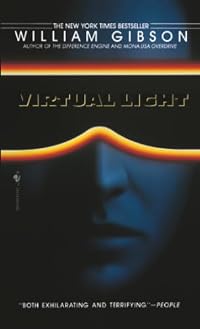
NEW YORK TIMES bestseller * 2005: Welcome to NoCal and SoCal, the uneasy sister-states of what used to be California. The millennium has come and gone, leaving in its wake only stunned survivors. In Los Angeles, Berry Rydell is a former armed-response rentacop now working for a bounty hunter. Chevette Washington is a bicycle messenger turned pickpocket who impulsively snatches a pair of innocent-looking sunglasses. But these are no ordinary shades. What you can see through show more these high-tech specs can make you rich--or get you killed. Now Berry and Chevette are on the run, zeroing in on the digitalized heart of DatAmerica, where pure information is the greatest high. And a mind can be a terrible thing to crash. . . . Praise for Virtual Light "Both exhilarating and terrifying . . . Although considered the master of 'cyberpunk' science fiction, William Gibson is also one fine suspense writer."--People "A stunner . . . A terrifically stylish burst of kick-butt imagination."--Entertainment Weekly "Convincing . . . frightening . . . Virtual Light is written with a sense of craft, a sense of humor and a sense of the ultimate seriousness of the problems it explores."--Chicago Tribune "In the emerging pop culture of the information age, Gibson is the brightest star."--The San Diego Union-Tribune show lessTags
Recommendations






Member Recommendations
Member Reviews
The negotiations were not going well. He offered "Stephenson" and I countered with "Bester". He suggested "Ellison" and I returned with "Jeter". Frustrated by his reluctance, I whispered "Dick". He smiled, shook his head and uttered "Gibson" and then I knew that we should have stuck to movie recommendations. We had a good thing going there. I guess both of us wanted to take our relationship to the next level. But Gibson? Gibson? I hadn't liked anything I had read by Gibson and I said so. He told me I wasn't reading the right Gibson. That I had started with the wrong books. So the next day he deftly slipped the small softcover to me while the boss looked the other way, like it was some kind of illicit drug. Or maybe he didn't want the show more other guys to see that he actually reads. "You'll like it, I promise." he said as I put it in my bag.
Virtual Light sat in virtual darkness for nearly two weeks. I did my best to ignore it, tossing it in corners, piling my coat over it so I wouldn't have to see the cover. Finally I could not keep the guilt at bay. I sat down and opened the front cover. Late that evening I closed the back cover, having finished it all in one go. I did like it. Very much.
Gibson deserved his second, well actually, third chance. The characters were rich and vivid and memorable. Rydell, the ex-cop trying to get out from under a frame-up. Chevette, the pick-pocket bike messenger who reminded me of Max in the Dark Angel series (even though Chevette came first). I could almost see the Golden Gate Bridge as Gibson describes it, earthquake-damaged, a shanty-town where the rough and tumble make their existence. One more thing I liked about it. Gibson didn't try to do too much with the material - there was just enough plot with all that awesome scenery.
So I was wrong. There, I've said it. show less
Virtual Light sat in virtual darkness for nearly two weeks. I did my best to ignore it, tossing it in corners, piling my coat over it so I wouldn't have to see the cover. Finally I could not keep the guilt at bay. I sat down and opened the front cover. Late that evening I closed the back cover, having finished it all in one go. I did like it. Very much.
Gibson deserved his second, well actually, third chance. The characters were rich and vivid and memorable. Rydell, the ex-cop trying to get out from under a frame-up. Chevette, the pick-pocket bike messenger who reminded me of Max in the Dark Angel series (even though Chevette came first). I could almost see the Golden Gate Bridge as Gibson describes it, earthquake-damaged, a shanty-town where the rough and tumble make their existence. One more thing I liked about it. Gibson didn't try to do too much with the material - there was just enough plot with all that awesome scenery.
So I was wrong. There, I've said it. show less
I have a couple of distinct memories of this book from the first time I read it: the cop getting into trouble and then getting involved with a TV show about cops who get in trouble; and the vision of the city building itself when Chevette puts on the glasses. What I didn't notice, or don't remember noticing at the time, is that Gibson, compared frequently to Chandler for reasons I never quite cottoned to, is clearly doing Elmore Leonard. It's slightly easier to spot now, because Rydell immediately appears on page as Timothy Olyphaunt playing a younger, rawer Raylan Givens, so that was a bit of a joy to behold.
Published in 1993 and set in 2005, Virtual Light knows it's going to be passed out by the present, and is very much about the show more late eighties, early nineties. Haunted by the secular ghost Shapley, martyred to cure AIDS, or, no, who helped cure AIDS and was martyred: AIDS hysteria would have been just past its height, and was probably AT its height when Gibson was writing it. What else? There's nanotech, bicycle couriers, a kind of reality TV that seems like an offshoot of COPS, balkanisation, the huddled masses of the poor, earthquakes, the rise of private security, crazy religions and a black president.
So much for the future. Story wise: a courier impulsively steals a pair of glasses and bad people chase her. Rydell, ex-cop-in-trouble and now ex-private security is hired to drive for a man looking for a missing pair of glasses. It's all go from there, but centre stage is Virtual Light's great image of the Golden Gate bridge wrapped and encrusted with the shops and shelters of the poor and the homeless who took it over and made it their own. show less
Published in 1993 and set in 2005, Virtual Light knows it's going to be passed out by the present, and is very much about the show more late eighties, early nineties. Haunted by the secular ghost Shapley, martyred to cure AIDS, or, no, who helped cure AIDS and was martyred: AIDS hysteria would have been just past its height, and was probably AT its height when Gibson was writing it. What else? There's nanotech, bicycle couriers, a kind of reality TV that seems like an offshoot of COPS, balkanisation, the huddled masses of the poor, earthquakes, the rise of private security, crazy religions and a black president.
So much for the future. Story wise: a courier impulsively steals a pair of glasses and bad people chase her. Rydell, ex-cop-in-trouble and now ex-private security is hired to drive for a man looking for a missing pair of glasses. It's all go from there, but centre stage is Virtual Light's great image of the Golden Gate bridge wrapped and encrusted with the shops and shelters of the poor and the homeless who took it over and made it their own. show less
William Gibson is the Raymond Chandler of sci-fi for me: I might lose the plot, but stay on for the characters and the sheer joy of reading his books. Virtual Light, about a pair of virtual reality (or perhaps that should be realty) glasses and San Francisco after the next big quake, lost me towards the end, but Rydell and Chevette are brilliant inventions, and a near-future world where people live in shanty towns on the ruins of the Golden Gate Bridge and vehicles have alarms that tell people to 'back the f**k off' is why it is so easy to become immersed in Gibson's books.
Dystopic details (“Fine, dry, flakes of fecal snow”), language with attitude, techy goodies, a god-awful font and page layout, and anti-nostalgic looks at defunct San Francisco, LA, and Mexico City, all woven into a mashup of current historical forces pushed out twenty plus years: privatization (Golden Gate Park is now the gated SkyWalker), militarization, globalization (Singapore runs things) in a coming-of-age thriller showcasing the naïve, tough bike messenger, her senile old fart roomie, the young, ex-cop/ex-private security hero? who believes in doing right, and his buddy, an apostate from the powerful movie-Jesus sect.
Halt—this is too much (But it’s always that way with Gibson) and it works.
Halt—this is too much (But it’s always that way with Gibson) and it works.
Virtual Light is the first in the Bridge Trilogy, and sets the stage for the series arc more than it sets up any central conflict playing out over the three books. Each novel focuses on its own story, the series arc plays out in the background -- especially in the first two books.
In book one, the staging is simple: the Bridge itself, a few hints surrounding AIDS Saint JD Shapeley, and the Yamazaki subplot are enticingly there, but only just. The setting is the aftermath of two cataclysms, one more evident to the reader (at first) than the other: an earthquake crippling the San Francisco - Oakland Bay Bridge, and a pandemic evidently largely responsible for society not fully rebuilding. The Bay Bridge itself is a stark illustration of show more the haves & have-nots in this US society, with global trends following closely in the wake of US developments. Interestingly, denizens of the Bridge appear more vibrant & creative than rest of culture despite their subalternity. Dominant culture is tired, mechanized, efficient, and pushing society toward disruption, but all of this is recognizable mostly after reading the other two books. The novel's main plot doesn't involve any of these in any significant way.
Curious book design, the font almost a bold typeface and more suitable for captions or titles than narrative text. Chapter pages take a full facing page, in greyscale, with design reminiscent of a graphic novel. Section breaks within a chapter signaled by a horizontal rectangle, almost Prairie Style and at odds with the font and chapter design. Even the pagination and author / title repeated in upper corners seem more appropriate to an OMNI magazine layout than a hardbound novel. I wonder how much the publisher allowed this because the novel seems short, and all this busy-ness helped "fill it out" for the marketing department. Disappointingly, several typos not caught in copyediting: its / it's, Elliot / Elliott. I don't fault or credit Gibson for any of this, of course.
A solid book and a fun read. Taken alone upon publication, quite satisfying. This second reading I read it in one go with the remaining novels. I was pleased to find the shadowy hints took on a bit more solidity and shape in the context of the whole. The theme of global disruption from pandemic was especially interesting, with COVID-19 fully disrupting human civilisation at the time of reading.
//
synopsis | Chevette impulsively steals a pair of sunglasses after an encounter with an entitled misogynist, setting in motion several parties intent on retrieving the glasses and erasing all knowledge of them. Rydell shifts from a job at one subsidiary of DatAmerica to a different job in another, unknowingly moving closer to the center of a private business deal with global implications. There is more than one shadow government pulling strings, however, and evidently most are unaware of (or underestimate) the Republic of Desire. show less
In book one, the staging is simple: the Bridge itself, a few hints surrounding AIDS Saint JD Shapeley, and the Yamazaki subplot are enticingly there, but only just. The setting is the aftermath of two cataclysms, one more evident to the reader (at first) than the other: an earthquake crippling the San Francisco - Oakland Bay Bridge, and a pandemic evidently largely responsible for society not fully rebuilding. The Bay Bridge itself is a stark illustration of show more the haves & have-nots in this US society, with global trends following closely in the wake of US developments. Interestingly, denizens of the Bridge appear more vibrant & creative than rest of culture despite their subalternity. Dominant culture is tired, mechanized, efficient, and pushing society toward disruption, but all of this is recognizable mostly after reading the other two books. The novel's main plot doesn't involve any of these in any significant way.
Curious book design, the font almost a bold typeface and more suitable for captions or titles than narrative text. Chapter pages take a full facing page, in greyscale, with design reminiscent of a graphic novel. Section breaks within a chapter signaled by a horizontal rectangle, almost Prairie Style and at odds with the font and chapter design. Even the pagination and author / title repeated in upper corners seem more appropriate to an OMNI magazine layout than a hardbound novel. I wonder how much the publisher allowed this because the novel seems short, and all this busy-ness helped "fill it out" for the marketing department. Disappointingly, several typos not caught in copyediting: its / it's, Elliot / Elliott. I don't fault or credit Gibson for any of this, of course.
A solid book and a fun read. Taken alone upon publication, quite satisfying. This second reading I read it in one go with the remaining novels. I was pleased to find the shadowy hints took on a bit more solidity and shape in the context of the whole. The theme of global disruption from pandemic was especially interesting, with COVID-19 fully disrupting human civilisation at the time of reading.
//
synopsis | Chevette impulsively steals a pair of sunglasses after an encounter with an entitled misogynist, setting in motion several parties intent on retrieving the glasses and erasing all knowledge of them. Rydell shifts from a job at one subsidiary of DatAmerica to a different job in another, unknowingly moving closer to the center of a private business deal with global implications. There is more than one shadow government pulling strings, however, and evidently most are unaware of (or underestimate) the Republic of Desire. show less
I have somewhat ambivalent feelings towards the work of William Gibson, for reasons which are likely not the fault of his novels or stories at all. I read Neuromancer when it was first released in German translation; by then, the novel had accumulated quite a bit of hype from all kinds of sources and I was young and naive and still prone to give credence to cover blurbs from famous people. In consequence, I was very disappointed to find that Neuromancer wasn’t what I thought it was, rather unfairly blamed the novel for it, and did not read anything else by William Gibson for quite a while.
Being somewhat older now, generally mellower but rather cynical about anything that gets put on book covers, I gave the novel another shot, and this show more time round enjoyed it for what it is, namely a well-written sci-fi thriller with a ton of cool ideas. After reading the rest of the trilogy, I moved on to Virtual Light, which looked like more of the same. As it turned out, however, appearances can be deceptive.
On the surface, Virtual Light does indeed appear rather similar to the Sprawl trilogy – set closer to the present than the earlier novels, but still Science Fiction, and another fast-moving thriller. Which I suppose is almost true. Except for the “fast-moving” bit. And if you think about it, the novel is not really a thriller either (or a novel, for that matter, but I will return to that farther down). It does use some traditional plot trappings of that genre, but does so in a way that makes it clear that in reality it is not interested in those at all. The action, such as it is, kicks off with an utterly implausible coincidence (even with an intersection of several of them), and the ensuing plot coughs and stutters into life like the ancient motor of an ancient car and moves ahead with about just as much speed.
There is not much in the way of an unfolding narrative, instead there are some people looking for some McGuffin that the female protagonist accidentally acquired (is there a more tired plot device?), they show up and shoot people, female and male protagonist flee together, bad guy turns up and more shooting ensues, male protagonist pulls off clever trick with the help of a convenient deus ex machina (a bunch of them, in fact), the end.
It’s all beyond ridiculous and the only purpose this sad excuse for a plot seems to serve is to show Gibson’s deep disdain for such silly things as a story. I’m not sure why Gibson decided to write this as a thriller, as it is quite obvious that (at least at this point in his career) he had no interest in the form whatsover. In fact, I can’t help the impression that he didn’t even really want to write a novel, but would likely have been much more happy with an extended essay or even better, a piece of fictional journalism describing what his idea of the near future would look like. And it is as this that Virtual Light has some value and is not a complete waste of time – the world building here is brilliant and by far more interesting than the trite plot and its cardboard characters; lots and lots of cool and colourful ideas get juggled by Gibson, forming a dazzling display of fascinating concepts, eliciting frequent Ahhhs and Ooohs from the reader.
Even so, this remains a strange book – overall Virtual Light does not seem so much an intentional structure but something that has grown and agglomerated, much like the Bridge that Yamizaki waxes enthusiastic about (a character, by the way, whose only purpose seems to be to provide the novel with that meta-level, or rather to make it so blatantly obvious that nobody could possibly miss it). It is like had Gibson had started with some small kernel, a basic idea and then kept adding things to it as they occurred to him, maybe some things he read, heard, or picked up in some other way, and ended up with a piece of art trouvé rather than a work of literature, something very uneven but also quite fascinating. show less
Being somewhat older now, generally mellower but rather cynical about anything that gets put on book covers, I gave the novel another shot, and this show more time round enjoyed it for what it is, namely a well-written sci-fi thriller with a ton of cool ideas. After reading the rest of the trilogy, I moved on to Virtual Light, which looked like more of the same. As it turned out, however, appearances can be deceptive.
On the surface, Virtual Light does indeed appear rather similar to the Sprawl trilogy – set closer to the present than the earlier novels, but still Science Fiction, and another fast-moving thriller. Which I suppose is almost true. Except for the “fast-moving” bit. And if you think about it, the novel is not really a thriller either (or a novel, for that matter, but I will return to that farther down). It does use some traditional plot trappings of that genre, but does so in a way that makes it clear that in reality it is not interested in those at all. The action, such as it is, kicks off with an utterly implausible coincidence (even with an intersection of several of them), and the ensuing plot coughs and stutters into life like the ancient motor of an ancient car and moves ahead with about just as much speed.
There is not much in the way of an unfolding narrative, instead there are some people looking for some McGuffin that the female protagonist accidentally acquired (is there a more tired plot device?), they show up and shoot people, female and male protagonist flee together, bad guy turns up and more shooting ensues, male protagonist pulls off clever trick with the help of a convenient deus ex machina (a bunch of them, in fact), the end.
It’s all beyond ridiculous and the only purpose this sad excuse for a plot seems to serve is to show Gibson’s deep disdain for such silly things as a story. I’m not sure why Gibson decided to write this as a thriller, as it is quite obvious that (at least at this point in his career) he had no interest in the form whatsover. In fact, I can’t help the impression that he didn’t even really want to write a novel, but would likely have been much more happy with an extended essay or even better, a piece of fictional journalism describing what his idea of the near future would look like. And it is as this that Virtual Light has some value and is not a complete waste of time – the world building here is brilliant and by far more interesting than the trite plot and its cardboard characters; lots and lots of cool and colourful ideas get juggled by Gibson, forming a dazzling display of fascinating concepts, eliciting frequent Ahhhs and Ooohs from the reader.
Even so, this remains a strange book – overall Virtual Light does not seem so much an intentional structure but something that has grown and agglomerated, much like the Bridge that Yamizaki waxes enthusiastic about (a character, by the way, whose only purpose seems to be to provide the novel with that meta-level, or rather to make it so blatantly obvious that nobody could possibly miss it). It is like had Gibson had started with some small kernel, a basic idea and then kept adding things to it as they occurred to him, maybe some things he read, heard, or picked up in some other way, and ended up with a piece of art trouvé rather than a work of literature, something very uneven but also quite fascinating. show less
Okay, so this was basically just a McGuffin chase. It doesn't really matter to the story what the X-Ray binoculars or whatever were for. I was mainly here for the description of near-future Los Angeles and San Francisco, which are all too believable, and for the characters: including a Flawed Ex Cop and a heroine who isn't a Strong Woman, but makes a mean can of coke. It's a great story and it kept me turning the pages.
Maybe 5 stars is generous but I'm sticking with it. I certainly preferred it to the similar Snow Crash because it's more tightly written, more believable and has much better characterisation.
Maybe 5 stars is generous but I'm sticking with it. I certainly preferred it to the similar Snow Crash because it's more tightly written, more believable and has much better characterisation.
Members
- Recently Added By
Published Reviews
ThingScore 100
From a thematic point of view, Virtual Light was perhaps the most overt of Gibson’s oeuvre at the time it was written. Leaving little doubt as to his aims, fundamentalist religions, the rudiments of cyberspace, economics’ nexus with society, and the influence of entertainment are all presented in one form or another. The climax of the story, while perhaps confusing for some given the show more oblique commentary, is nevertheless a punch square in the nose of media sensationalism and its effects on modern humanity. show less
added by elenchus
Lists

Dystopian and Apocalyptic Literature
350 works; 74 members

Books tagged unread
41 works; 1 member

Unread books
1,063 works; 82 members

Top Five Books of 2023
767 works; 317 members

Reading Queue
15 works; 1 member
Author Information

82+ Works 95,912 Members
William Gibson was born on March 17, 1948 in Conway, South Carolina. He dropped out of high school and moved to Canada, where he eventually graduated from the University of British Columbia in 1977. He is the author of Mona Lisa Overdrive, The Peripheral, and Neuromancer, which won the Phillip K. Dick Award, the Hugo Award, and the Nebula Award. show more He also wrote the screenplay for the film Johnny Mnemonic. (Bowker Author Biography) show less
Some Editions
Awards and Honors
Awards
Distinctions
Notable Lists
Series

Work Relationships
Is contained in
Has as a commentary on the text
Common Knowledge
- Canonical title
- Virtual Light
- Original title
- Virtual Light
- Alternate titles*
- Виртуальный свет
- Original publication date
- 1993
- People/Characters
- Stephen Berry Rydell; Chevette Washington; Skinner; Fontaine; Yamazaki ("Scooter"); Joel Sublett (show all 39); Lt. Arkady Svobodov (SFPD Homicide); Lt. Orlovsky (SFPD Homicide); Karen Mendelsohn (Cops In Trouble); Aaron Pursley (Cops In Trouble); Juanito Hernandez (IntenSecure); Chrome Koran (band); Lucius Warbaby; Freddie; Bunny Malatesta (Allied Messengers); Samuel Saladin DuPree ("Sammy Sal", Allied Messengers); Loveless; Hans Rutger Blix; Cody Harwood (NHK | Sunflower Corporation); Lowell (Cognitive Dissidents); Codes (Cognitive Dissidents); Nigel; Wellington Ma (Cops In Trouble); Josie (Cognitive Dissidents); James Delmore Shapeley ("AIDS Saint"); Danica Elliott (IntenSecure); Rev. Fallon (Fallonites); Dora Sublett (Fallonites); Buddy (Fallonites); God-eater (Republic of Desire); Lo/Rez (band); Anderson; Kenneth Turvey; Maria; Sonya; Justine Cooper; Eddie the Shit; Laurie; Wally Divac
- Important places
- Los Angeles, California, USA; San Francisco, California, USA
- Dedication
- To Gary Gaetano Bandiera,
major dude, our friend - First words
- The courier presses his forehead against layers of glass, argon, high-impact plastic.
- Last words
- (Click to show. Warning: May contain spoilers.)He stood in the smell of fresh-ground coffee, awaiting his turn.
- Blurbers
- Robbins, Tom; Coupland, Douglas; Hauptman, William; Crais, Robert
- Original language
- English
*Some information comes from Common Knowledge in other languages. Click "Edit" for more information.
Classifications
Statistics
- Members
- 6,098
- Popularity
- 2,055
- Reviews
- 53
- Rating
- (3.65)
- Languages
- 16 — Czech, Danish, Dutch, English, Finnish, French, German, Greek, Hungarian, Italian, Japanese, Norwegian (Bokmål), Polish, Russian, Spanish, Swedish
- Media
- Paper, Audiobook, Ebook
- ISBNs
- 51
- ASINs
- 18