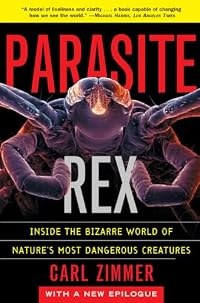
Parasite Rex: Inside the Bizarre World of Nature's Most Dangerous Creatures
by Carl Zimmer 
On This Page
Description
For centuries, parasites have lived in nightmares, horror stories, and the darkest shadows of science. In Parasite Rex, Carl Zimmer takes listeners on a fantastic voyage into the secret universe of these extraordinary life-forms-which are not only among the most highly evolved on Earth, but make up the majority of life's diversity. Traveling from the steamy jungles of Costa Rica to the parasite-riddled war zone of southern Sudan, Zimmer introduces an array of amazing creatures that invade show more their hosts, prey on them from within, and control their behavior. He also vividly describes parasites that can change DNA, rewire the brain, make men more distrustful and women more outgoing, and turn hosts into the living dead. This comprehensive, gracefully written book brings parasites out into the open and uncovers what they can teach us all about the most fundamental survival tactics in the universe-the laws of Parasite Rex. show lessTags
Recommendations





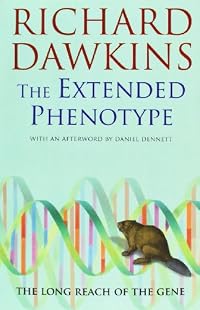

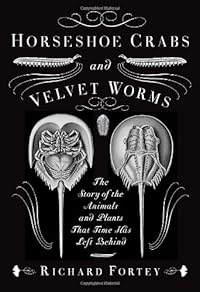
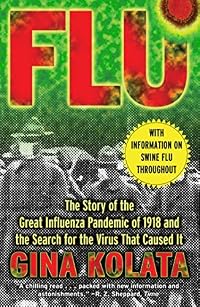
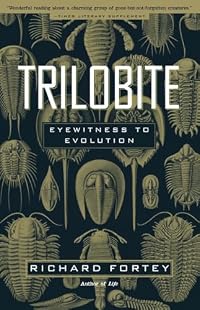


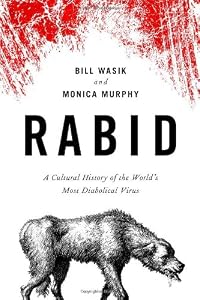
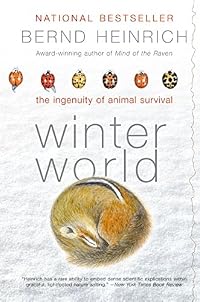


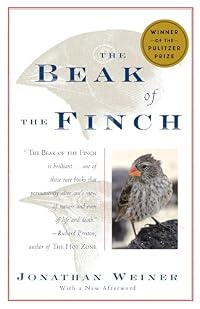
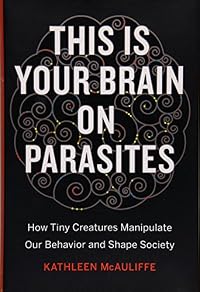



Member Recommendations

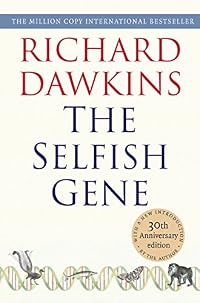
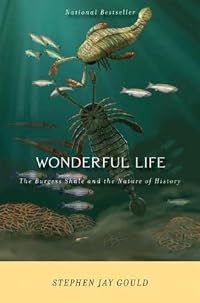
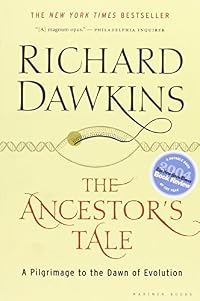
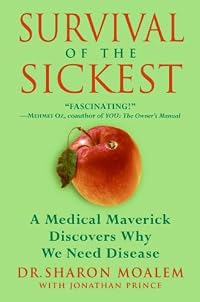
fyrefly98 Peeps is a fun novel that makes vampirism into a parasitic infection, based on the biology presented in Parasite Rex.
Member Reviews
They blossom out of insects' bodies, turn their hosts into zombies or, again, travel from one organism to another in a frantic race to survive. Behind the discoveries of some major vaccines they are, paradoxically, also able to fool very complex immune systems, sometimes even hijacking them against their poor victims. Microscopic but absolutely fascinating, they change our look upon life -we own them, for instance, some ground-breaking theories from the selfish gene to the Red Queen. Lethal and of an extreme virulence, they also help to maintain some ecosystems... In a word, parasites (yes! parasites!) are the real kings of the Earth and, after having for too long a bad press, it was about time to pay them our due respect!
Carl Zimmer show more has done just that here in a brilliant book which is, honestly, breath-taking. Telling the epic tales of the invisible world, 'Parasite Rex' became in fact one my top favourite read ever! Imagine, like Russian dolls we ourselves are vast ecosystems that are part of another ecosystem. Here's a terrifying yet enthralling vision but which is the key rendering this book absolutely superb: more that leading us into a microscopic world and its weird inhabitants, it humbles us by offering a new look upon nature. Fascinating, if you are even slightly interested in biology you MUST read this one. It is fascinating from beginning to end.
A marvel of pop science. show less
Carl Zimmer show more has done just that here in a brilliant book which is, honestly, breath-taking. Telling the epic tales of the invisible world, 'Parasite Rex' became in fact one my top favourite read ever! Imagine, like Russian dolls we ourselves are vast ecosystems that are part of another ecosystem. Here's a terrifying yet enthralling vision but which is the key rendering this book absolutely superb: more that leading us into a microscopic world and its weird inhabitants, it humbles us by offering a new look upon nature. Fascinating, if you are even slightly interested in biology you MUST read this one. It is fascinating from beginning to end.
A marvel of pop science. show less
I picked up this book, not expecting much. The book was written in 2000, and these types of books tend to be hit or miss, mostly miss. Instead what I found was a very well written book, that will creep a reader out, as well as keep a reader fascinated. The history of parasite research (Darwin thought they were the lowest of the low) was something I never considered before.
What I found amazing is just how modern this book is. It was written 20 years ago, and parasitology has advanced, but it covered many things that are only now been completely understood (such as immune response to parasites might cure certain types of diseases).
The author clearly did his research. The interviews with various scientists, from parasite catalogers to show more geneticists, cover the spectrum of researchers studying parasites. And some of the parasite techniques, such as changing fish behavior to be more noticeable to birds, is downright scary. This is NOT a book for the squeamish, but give this 20 year old book a chance, it has stood the test of time. show less
What I found amazing is just how modern this book is. It was written 20 years ago, and parasitology has advanced, but it covered many things that are only now been completely understood (such as immune response to parasites might cure certain types of diseases).
The author clearly did his research. The interviews with various scientists, from parasite catalogers to show more geneticists, cover the spectrum of researchers studying parasites. And some of the parasite techniques, such as changing fish behavior to be more noticeable to birds, is downright scary. This is NOT a book for the squeamish, but give this 20 year old book a chance, it has stood the test of time. show less
Yes, it's a book about parasites. Many of which are bizarre and fascinating, going through convoluted life cycles you could never in a million years have imagined if they didn't exist and beautifully demonstrating the endless, freaky inventiveness of evolution. Zimmer also makes the point that parasites, which were unfairly neglected by biologists for far too long, are actually an incredibly important, even a dominant feature of Earth's ecosystems, and a driving force in the evolutionary history of their hosts. It's interesting stuff, and it does give one quite a new perspective on the subject of life on Earth. But it has also made me want to go and spend the rest of my life in a sterile bubble somewhere, because these things are show more horrifying. show less
I wanted my insides scraped until I reached the end. Zimmer begins by horrifying you with parasites' pervasiveness and longevity as a species; their ability to manipulate their hosts; and the painful, ugly, debilitating/fatal effects of their infiltration. Then he blows your mind with the idea that they may be responsible for the development of sex. And finally he appeases you by presenting evidence that they may prevent your immune system from killing/harming you, can be used to combat invasive species (if you're super careful), and are overall a sign of a healthy ecosystem. Crazy interesting. I don't, however, recommend having Google image on standby as you read.
While I admit I've never sat down and watched the Alien movies from beginning to end, it's hard to forget about the way the aliens reproduce. After being attacked by an egg-laying alien, a person's body becomes a reproductive sac of sorts, providing a source of nourishment for the growing monster inside them. After being agonizingly devoured from the inside, the aliens bursts out of its host and leaves them dead, their duty finished. The worst part is, this isn't entire fiction. It's pretty much how parasitic wasps work.
Parasites Rex is filled with all manners of ickiness, but it's not intended to simply creep the reader out. It advocates parisitology as a study and examines the roles of parasites in a world where most people would show more sooner see them extinct. You might not know that the absence of parasites has caused diseases like Crohn's disease and colitis in the same way that under-exposure to bacteria can cause allergies, or that the discovery of parasites' ecological effect might throw our entire concept of the food chain and predator/prey dynamics out of whack.
The book was fascinating, enlightening, and very fun to read. I will say that the book dipped into molecular biology for a short while, and that this subject is always a bit difficult for me to get interested in, but aside from this tiny segment the book was eye-opening. I've read one other book by Carl Zimmer, Microcosm, and it was just the same. He does a great job of making science readable without sacrificing depth (or vice versa) and I look forward to reading his other books. 4 stars. show less
Parasites Rex is filled with all manners of ickiness, but it's not intended to simply creep the reader out. It advocates parisitology as a study and examines the roles of parasites in a world where most people would show more sooner see them extinct. You might not know that the absence of parasites has caused diseases like Crohn's disease and colitis in the same way that under-exposure to bacteria can cause allergies, or that the discovery of parasites' ecological effect might throw our entire concept of the food chain and predator/prey dynamics out of whack.
The book was fascinating, enlightening, and very fun to read. I will say that the book dipped into molecular biology for a short while, and that this subject is always a bit difficult for me to get interested in, but aside from this tiny segment the book was eye-opening. I've read one other book by Carl Zimmer, Microcosm, and it was just the same. He does a great job of making science readable without sacrificing depth (or vice versa) and I look forward to reading his other books. 4 stars. show less
One of the year's most fascinating works of popular science is also its most disgusting. From tapeworms to isopods to ichneumon wasps, "parasites are complex, highly adapted creatures that are at the heart of the story of life." Zimmer (At the Water's Edge) devotes his second book to the enormous variety of one- and many-celled organisms that live on and inside other animals and plants. The gruesome trypanosomes that cause sleeping sickness had nearly been routed from Sudan when the country's civil war began: now they're back. Costa Rican researcher Daniel Brooks has discovered dozens of parasites, including flies that lay eggs in deer noses: "snot bots." And those are only the creatures from the prologue. Zimmer discusses how the study show more of parasites began, with 19th-century discoveries about their odd life cycles. (Many take on several forms in several generations, so that a mother worm may resemble her granddaughter, but not her daughter.) He looks at how parasites pass from host to host, and how they defeat immune systems and vice versa. Many parasites alter their hosts' behavior: Toxoplasma makes infected rats fearless, thus more likely to be eaten by cats, who will then pick up the microbe. Quantifiable "laws of virulence" lead parasites to become nasty enough to spread, yet not so nasty as to wipe out all their hosts. And eons of coevolution can affect both partners: howler monkeys may avoid violent fights because screwworms can render the least scratch fatal. Two final chapters address parasites in human medicine and agriculture. Not only are parasites not all bad, Zimmer concludes in this exemplary work of popular science, but we may be parasites, tooDand we have a lot to learn from them about how to manage earth, the host we share show less
This could be the most frightening book ever written. It is also the most eye-opening and educational I've ever experienced. Zimmer seems to pick book topics that people don't ponder in their everyday lives, but should upon deep reflection. A spectacular aspect of this book is the sheer amount of information and knowledge crammed in, which Zimmer relays breezily, as if it's second nature to him, which is admirable and awesome. The research is extensive, yet he distills it all beautifully. Marvelous writing.
Members
- Recently Added By
Lists

Top Five Books of 2013
1,564 works; 722 members

Read These Too
458 works; 9 members

Favorite Animal Non-Fiction
293 works; 144 members

In Our Time books
4,934 works; 2 members
Author Information

118+ Works 6,119 Members
Carl Zimmer is a columnist for the New York Times. His most recent books are Life's Edge and She Has Her Mother's Laugh, the latter named the best science book of 2018 by the Guardian. He is professor adjunct of bio-physics and biochemistry and a lecturer in English at Yale University.
Carl Zimmer is a LibraryThing Author, an author who lists their personal library on LibraryThing.
Awards and Honors
Common Knowledge
- Original title
- Parasite Rex: Inside the Bizarre World of Nature's Most Dangerous Creatures
- Original publication date
- 2000
- First words
- The boy in the bed in front of me was named Justin, and he didn't want to wake up.
- Last words
- (Click to show. Warning: May contain spoilers.)If we want to succeed as parasites, we need to learn from the masters.
- Blurbers
- Ridley, Mark; Adams, Susan
Classifications
Statistics
- Members
- 1,144
- Popularity
- 21,895
- Reviews
- 37
- Rating
- (4.16)
- Languages
- 9 — Chinese, Czech, Dutch, English, German, Hebrew, Korean, Russian, Spanish
- Media
- Paper, Audiobook, Ebook
- ISBNs
- 16
- UPCs
- 1
- ASINs
- 10