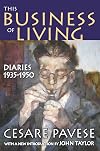
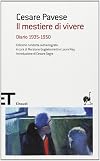
This Business of Living
by Cesare Pavese
On This Page
Description
On June 23rd, 1950, Pavese, Italy's greatest modern writer received the coveted Strega Award for his novel Among Women Only. On August 26th, in a small hotel in his home town of Turin, he took his own life. Shortly before his death, he methodically destroyed all his private papers. His diary is all that remains and for this the contemporary reader can be grateful. Contemporary speculation attributed this tragedy to either an unhappy love aff air with the American film star Constance Dawling show more or his growing disillusionment with the Italian Communist Party. His Diaries, however, reveal a man whose art was his only means of repressing the specter of suicide which had haunted him since childhood: an obsession that finally overwhelmed him. As John Taylor notes, he possessed something much more precious than a political theory: a natural sensitivity to the plight and dignity of common people, be they bums, priests, grape-pickers, gas station attendants, office workers, or anonymous girls picked up on the street (though to women, the author could--as he admitted--be as misogynous as he was affectionate). Bitter and incisive, This Business of Living, is both moving and painful to read and stands with James Joyce's Letters and Andre Gide's Journals as one of the great literary testaments of the twentieth century. show lessTags
Recommendations






















Member Recommendations

Member Reviews
"Verrà la morte e avrà i tuoi occhi".
Diário do Pavese. Com essa leitura, o leitor pode aprender muito sobre suas leituras, seus pensamentos (inclusive sua obsessão com o suicídio).
«16 agosto 1950. La mia parte pubblica l’ho fatta — ciò che potevo. Ho lavorato, ho dato poesia agli uomini, ho condiviso le pene di molti […] Tutto questo fa schifo. Non una parola. Un gesto. Non scriverò più».
Diário do Pavese. Com essa leitura, o leitor pode aprender muito sobre suas leituras, seus pensamentos (inclusive sua obsessão com o suicídio).
«16 agosto 1950. La mia parte pubblica l’ho fatta — ciò che potevo. Ho lavorato, ho dato poesia agli uomini, ho condiviso le pene di molti […] Tutto questo fa schifo. Non una parola. Un gesto. Non scriverò più».
The only Suicidals who ever interested me: Virginia Woolf, Cesare Pavese.... and, of course, Werther.
Cesare started trying to kill himself at 18 - and succeeded at 48; good works he wrote in those 30 years.
Cesare started trying to kill himself at 18 - and succeeded at 48; good works he wrote in those 30 years.
Iniciado el 6 de octubre de 1935 durante su encierro por motivos políticos, este diario acompañó a Cesare Pavese hasta el 18 de agosto de 1950, nueve días antes de su muerte, y se convirtió gradualmente en el lugar en el que confiar pensamientos sobre el universo del escritor y del hombre. Amargo, irónico, pocas veces sereno, ofrece al lector una meditación sobre la vida, la soledad, los recuerdos y el arte conducida con un enorme rigor intelectual. Al mismo tiempo, página a página, deja constancia de su incesante desarrollo poético-literario, la evolución, en suma, de un personal oficio de vivir.
Pavese dejó un testamento vital que con el tiempo se engrandece aún más y que como el traductor y poeta Ángel Crespo describía show more soberbiamente “posee la virtud de los grandes clásicos, esto es, convertir una existencia íntima en algo universal, pues la vida que Pavese escribe en El oficio de vivir es la del hombre contemporáneo, el del siglo XX, atado a las dudas y a la angustia permanente, un hombre que pregunta todo el tiempo: ¿pero qué hacemos aquí?”
Una de las grandes figuras literarias e intelectuales de la primera mitad de siglo, su carrera como novelista, poeta y crítico contribuyó decisivamente a definir tanto la cultura de la época como la de generaciones sucesivas, entre las que sigue resonando de modo extraordinario el diario en el que destiló una manera única de entender y reflexionar sobre el mundo. show less
Pavese dejó un testamento vital que con el tiempo se engrandece aún más y que como el traductor y poeta Ángel Crespo describía show more soberbiamente “posee la virtud de los grandes clásicos, esto es, convertir una existencia íntima en algo universal, pues la vida que Pavese escribe en El oficio de vivir es la del hombre contemporáneo, el del siglo XX, atado a las dudas y a la angustia permanente, un hombre que pregunta todo el tiempo: ¿pero qué hacemos aquí?”
Una de las grandes figuras literarias e intelectuales de la primera mitad de siglo, su carrera como novelista, poeta y crítico contribuyó decisivamente a definir tanto la cultura de la época como la de generaciones sucesivas, entre las que sigue resonando de modo extraordinario el diario en el que destiló una manera única de entender y reflexionar sobre el mundo. show less
Dec 16, 2022Spanish
No sé por qué sigo leyendo estos diarios. En general, no me gustan. No creo que ningún autor sea tan competente en todos los aspectos de la vida como para que me tengan que interesar sus pajas mentales. Supongo que me los recomiendan, o leo alguna buena crítica, o algo así. Algo de postureo hay en ello, es verdad.
Dentro de todo, este no es de los peores. Una vez que Pavese consigue hablar de algo que no sean sus problemas amorosos, uno puede encontrarse con acertadas reflexiones literarias, incluso mini-críticas de libros, y con algún que otro destello sobre cuestiones más generales. Hay una época en que parece que el autor ha conseguido cierta estabilidad vital, y escribe sobre lo que mejor sabe hacer: literatura. Esta parte show more es lo mejor del libro. El resto, interesante para sus devotos, pero no tanto para mí. show less
Dentro de todo, este no es de los peores. Una vez que Pavese consigue hablar de algo que no sean sus problemas amorosos, uno puede encontrarse con acertadas reflexiones literarias, incluso mini-críticas de libros, y con algún que otro destello sobre cuestiones más generales. Hay una época en que parece que el autor ha conseguido cierta estabilidad vital, y escribe sobre lo que mejor sabe hacer: literatura. Esta parte show more es lo mejor del libro. El resto, interesante para sus devotos, pero no tanto para mí. show less
May 27, 2017Spanish
È difficile dare un voto al diario di Pavese, che arriva fino alla decisione di suicidarsi: è solo in parte un'opera letteraria, per cui il voto va considerato riferirsi solo a questo aspetto e non, per esempio, alla "storia".
È una specie di diario, dedicato soprattutto a riflessioni sulla poetica e sull'essere scrittore, inframmezzato soprattutto nei primi anni di brevi e violente invettive misogine; sinceramente non ne esce la figura di un grand'uomo, piuttosto quella di un uomo consapevole di avere qualche inguaribile male oscuro nella sua psicologia; e qui sta la tragicità della lettura di questo diario, perché Pavese era consapevole che sarebbe stato trovato, letto e pubblicato, eppure non si è presentato in modo meno show more scostante. Non è una lettura "piacevole". show less
È una specie di diario, dedicato soprattutto a riflessioni sulla poetica e sull'essere scrittore, inframmezzato soprattutto nei primi anni di brevi e violente invettive misogine; sinceramente non ne esce la figura di un grand'uomo, piuttosto quella di un uomo consapevole di avere qualche inguaribile male oscuro nella sua psicologia; e qui sta la tragicità della lettura di questo diario, perché Pavese era consapevole che sarebbe stato trovato, letto e pubblicato, eppure non si è presentato in modo meno show more scostante. Non è una lettura "piacevole". show less
Dec 2, 2012 (Edited)Italian
Le 27 août 1950, dans une chambre de l'hôtel Roma, à Turin, Cesare Pavese se tuait en absorbant une vingtaine de cachets de somnifère. Sur ce suicide, il n'y a pas de meilleure explication que le journal intime découvert après sa mort : Le métier de vivre. Les réflexions sur le « métier de vivre » qu'on lira ici sont d'une qualité exceptionnelle. L'homme était vraiment à la mesure de l'écrivain, lequel est reconnu comme l'un des plus grands.
Jun 7, 2011French
"Leven als ambacht " is het dagboek dat Cesare Pavese bijhield vanaf 1935 tot aan zijn dood in 1950. Ik heb de eerste 10 bladzijden en het nawoord gelezen en wat door het boek heen gebladerd. Ik vind er weinig aan.
Jan 19, 2011Dutch
Members
- Recently Added By
Lists

Italian Literature
558 works; 43 members
Author Information

316+ Works 8,104 Members
In Torino in his native Piedmont, Pavese studied English and American literature and wrote a dissertation on Walt Whitman. He read and translated Defoe, Dickens, Joyce , Dos Passos, Stein and Faulkner and his version of Melville's , Moby Dick is a classic. Except for his book of poems Lavorare stanca (Work Wearies) (1936), Pavese's chief works are show more the novels The Comrade (1948), La Casa in Collina (The House on the Hill) (1949), Prima che il gallo canti (Before the Cock Crows) (1949), La bella estate (The Beautiful Summer) (1949), and his last and best, The Moon and the Bonfire (1952). During World War II, he was head of the Rome office of the publishing house of Einaudi and, with Elio Vittorini, did much to encourage young writers. Although a member of the Communist Party, he had not joined the anti-Fascist resistance. Unhappy in love, unable to believe in Christ, and disappointed with things in postwar Italy, he finally made good on what he had often urged as the finest of "final solutions" for himself, committing suicide after winning the coveted Strega Prize, for La bella estate. (Bowker Author Biography) show less
Some Editions
Series
Belongs to Publisher Series
Llibres Anagrama (30)
Work Relationships
Common Knowledge
Classifications
- Genres
- Biography & Memoir, Fiction and Literature
- DDC/MDS
- 858.914 — Literature & rhetoric Italian, Romanian & related literatures Italian miscellaneous writings 20th Century 1945-1999
- LCC
- PQ4835 .A846 .Z533 — Language and Literature French, Italian, Spanish and Portuguese literatures Italian literature Individual authors, 1900-1960
- BISAC
Statistics
- Members
- 644
- Popularity
- 45,250
- Reviews
- 11
- Rating
- (3.63)
- Languages
- 9 — Catalan, Dutch, English, French, German, Italian, Portuguese, Spanish, Turkish
- Media
- Paper, Audiobook, Ebook
- ISBNs
- 43
- ASINs
- 12