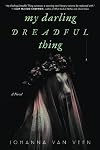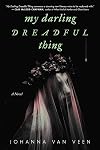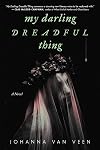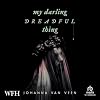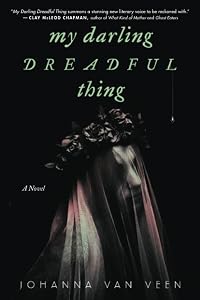
My Darling Dreadful Thing: A Novel
by Johanna van Veen
On This Page
Description
"If the dead can wake and walk among us, how can we know what is truly real? Roos Beckman has a spirit companion only she can see. Ruth-strange, corpse-like, and dead for centuries-is the light of Roos' life. That is, until the wealthy young widow Agnes Knoop visits one of Roos' backroom seances, and the two strike up a connection. Soon, Roos is whisked away to the crumbling estate Agnes inherited upon the death of her husband, where an ill woman haunts the halls, strange smells drift show more through the air at night, and mysterious stone statues reside in the family chapel. Something dreadful festers in the manor, but still, the attraction between Roos and Agnes is undeniable. Then, someone is murdered. Poor, alone, and with a history of 'hysterics', Roos is the obvious culprit. With her sanity and innocence in question, she'll have to prove who-or what-is at fault or lose everything she holds dear"-- show lessTags
Recommendations

Member Recommendations
Member Reviews
The Publisher Says: In a world where the dead can wake and walk among us, what is truly real?
Roos Beckman has a spirit companion only she can see. Ruth—strange, corpse-like, and dead for centuries—is the only good thing in Roos’ life, which is filled with sordid backroom séances organized by her mother. That is, until wealthy young widow Agnes Knoop attends one of these séances and asks Roos to come live with her at the crumbling estate she inherited upon the death of her husband. The manor is unsettling, but the attraction between Roos and Agnes is palpable. So how does someone end up dead?
Roos is caught red-handed, but she claims a spirit is the culprit. Doctor Montague, a psychologist tasked with finding out whether Roos can show more be considered mentally fit to stand trial, suspects she’s created an elaborate fantasy to protect her from what really happened. But Roos knows spirits are real; she's loved one of them. She'll have to prove her innocence and her sanity, or lose everything.
I RECEIVED A DRC FROM THE PUBLISHER VIA NETGALLEY. THANK YOU.
My Review: Satisfying sapphic romantic story of a woman who uses legit psychic powers in service of a horrible, harridanly charlatan. Or the story of an impressionable mentally ill young woman in thrall to a horrible, harridanly charlatan who grabs hold of sapphic love to effect her escape from abuse.
Either one fits. Both take us down the very dark, quite chilling paths that Author Johanna ushers the reader down. Roos, our PoV, has never experienced a normal life. It's the second culturally Dutch novel I've read this month that paints a very bleak picture of Dutch life after WWII, though I suppose that isn't exactly a shock is it. What does surprise me is the deeply homophopbic atmosphere Author Johanna portrays...I suppose the patriarchal horror of the world she's limned before our utterly appalled eyes is a big part of that, as the homophobia in question is directed at sapphic lovers.
If I'm to offer you one inducement to exceed all the others to get this book into y'all's hands, I'm going with: Dutch Author Johanna wrote this book in English, about lesbian survivors of a horrifying war in the Netherlands, because she's Dutch, because she's lesbian, and because she's clearly not quite right. How many people can accrete so many out-of-mainstream identities, write a story directly centered in them all, and get it published in the insular US market? And then, topping the high-calorie literary sundae with its obligatory gorgeously red cherry, create the undead/zombie character that twangs your readerly heartstrings with her fullness and pathos? Sweet, dead Ruth...my favorite zombie!
There are no others, just this one.
You can read, and there's a synopsis above this, so you know what's going on. I'm here to tell you if I think Author Johanna did the job of convincing me to invest in her world: Yes. Did she make me think long and hard about how the transactional world cheapens, while defining, human relationships: Better than the Southern Gothics. Roos is a classic Tennessee Williams character, a Blanche Dubois plus agency, with the psychic fragility and serious Love problems; Ruth puts me in mind of a gender-flipped Darl Bundren, articulate, doomed. Did her writing cause me to sit quiet for long moments, committing parts to memory: once, which is once more than most books I read. (It's a spoiler, so I daren't share; the Spoiler Stasi are ever vigilant and quick with their truncheons.)
The unique quality I literally never expect from horror, especially Gothic horror, novels is, here, the pervasive Dutchness of the story. It could not be reset in the US, or England, without losing the special something that kept luring me past my usual guardrails against con-artist faux psychics and fantastical stories of spirit lovers. These are usually the tropes I use as reminders that I have compararively few eyeblinks left and don't want to waste them. Author Johanna, in using postwar, post-Occupation Netherlandish settings, convinced me not to pre-judge these characters. Their long national trauma, their dark personal traumas, their battles faught against real cultural horrors, all formed a gestalt of world and people that convinced me to set my usual intolerance for these ideas aside and consider them as real...to the characters, thus opening the door to my belief as well.
That's a huge achievement for an author I'm unfamiliar with. I'm really pleased to say that I felt the ending was indeed a payoff commensurate with my investment of care and attention.
Brava, Johanna van Veen. Clearly your genesis as the odd-triplet-out was predictive of your sui generis selfhood. I'm eager for more from you. show less
Roos Beckman has a spirit companion only she can see. Ruth—strange, corpse-like, and dead for centuries—is the only good thing in Roos’ life, which is filled with sordid backroom séances organized by her mother. That is, until wealthy young widow Agnes Knoop attends one of these séances and asks Roos to come live with her at the crumbling estate she inherited upon the death of her husband. The manor is unsettling, but the attraction between Roos and Agnes is palpable. So how does someone end up dead?
Roos is caught red-handed, but she claims a spirit is the culprit. Doctor Montague, a psychologist tasked with finding out whether Roos can show more be considered mentally fit to stand trial, suspects she’s created an elaborate fantasy to protect her from what really happened. But Roos knows spirits are real; she's loved one of them. She'll have to prove her innocence and her sanity, or lose everything.
I RECEIVED A DRC FROM THE PUBLISHER VIA NETGALLEY. THANK YOU.
My Review: Satisfying sapphic romantic story of a woman who uses legit psychic powers in service of a horrible, harridanly charlatan. Or the story of an impressionable mentally ill young woman in thrall to a horrible, harridanly charlatan who grabs hold of sapphic love to effect her escape from abuse.
Either one fits. Both take us down the very dark, quite chilling paths that Author Johanna ushers the reader down. Roos, our PoV, has never experienced a normal life. It's the second culturally Dutch novel I've read this month that paints a very bleak picture of Dutch life after WWII, though I suppose that isn't exactly a shock is it. What does surprise me is the deeply homophopbic atmosphere Author Johanna portrays...I suppose the patriarchal horror of the world she's limned before our utterly appalled eyes is a big part of that, as the homophobia in question is directed at sapphic lovers.
If I'm to offer you one inducement to exceed all the others to get this book into y'all's hands, I'm going with: Dutch Author Johanna wrote this book in English, about lesbian survivors of a horrifying war in the Netherlands, because she's Dutch, because she's lesbian, and because she's clearly not quite right. How many people can accrete so many out-of-mainstream identities, write a story directly centered in them all, and get it published in the insular US market? And then, topping the high-calorie literary sundae with its obligatory gorgeously red cherry, create the undead/zombie character that twangs your readerly heartstrings with her fullness and pathos? Sweet, dead Ruth...my favorite zombie!
There are no others, just this one.
You can read, and there's a synopsis above this, so you know what's going on. I'm here to tell you if I think Author Johanna did the job of convincing me to invest in her world: Yes. Did she make me think long and hard about how the transactional world cheapens, while defining, human relationships: Better than the Southern Gothics. Roos is a classic Tennessee Williams character, a Blanche Dubois plus agency, with the psychic fragility and serious Love problems; Ruth puts me in mind of a gender-flipped Darl Bundren, articulate, doomed. Did her writing cause me to sit quiet for long moments, committing parts to memory: once, which is once more than most books I read. (It's a spoiler, so I daren't share; the Spoiler Stasi are ever vigilant and quick with their truncheons.)
The unique quality I literally never expect from horror, especially Gothic horror, novels is, here, the pervasive Dutchness of the story. It could not be reset in the US, or England, without losing the special something that kept luring me past my usual guardrails against con-artist faux psychics and fantastical stories of spirit lovers. These are usually the tropes I use as reminders that I have compararively few eyeblinks left and don't want to waste them. Author Johanna, in using postwar, post-Occupation Netherlandish settings, convinced me not to pre-judge these characters. Their long national trauma, their dark personal traumas, their battles faught against real cultural horrors, all formed a gestalt of world and people that convinced me to set my usual intolerance for these ideas aside and consider them as real...to the characters, thus opening the door to my belief as well.
That's a huge achievement for an author I'm unfamiliar with. I'm really pleased to say that I felt the ending was indeed a payoff commensurate with my investment of care and attention.
Brava, Johanna van Veen. Clearly your genesis as the odd-triplet-out was predictive of your sui generis selfhood. I'm eager for more from you. show less
One of the best modern Gothic horror novels I have ever read!
It takes place in 1958, but you wouldn't know it by the way Roos Beckman describes the world as she knows it. Her life is pain, blood, salt and tears from the beginning. The narrative follows her vivid thoughts, which are unabstract due to a rudimentary education but not stupid or foolish. Hers is based in the organic, and the way she smells, tastes and feels everything draws you in immediately. She is direct, candid, but interestingly, codependent. The latter is due to her upbringing, but also the fact that she is bound to an old spirit named Ruth.
Roos came upon Ruth quite accidentally, but in Ruth she found the love and support she dreadfully needed. Ruth knew pain, blood show more and tears, long before she had been drowned in that bog. Ruth's broken jaw clacks, she is icy cold with black eyes, and smells of earthy rot and peat. But when widow Agnes Knoop enters both their lives, everything changes for the better. Agnes brings Roos to her seemingly rich estate, to live as companions and with her own spirit Peter. As a result, Roos convinces herself that she will do anything to keep Agnes happy. Even if that happiness strikes at Ruth or raises something dangerous and cruel from the dead.
This novel is like a combination of Crimson Peak, the Monkey's Paw, and The Turn of the Screw. There were scenes in this book where you could almost feel the mud or smell the bog. Roos claims throughout the book that she is not mad, but this is true at least when pertaining to Ruth's existence. Her dark, desperate actions for Agnes though? No sane woman could do what she did, mentally or physically. That was honestly the best part of the book. Watching how far Roos was willing to go for the woman she loved. This one is definitely sticking with me. show less
It takes place in 1958, but you wouldn't know it by the way Roos Beckman describes the world as she knows it. Her life is pain, blood, salt and tears from the beginning. The narrative follows her vivid thoughts, which are unabstract due to a rudimentary education but not stupid or foolish. Hers is based in the organic, and the way she smells, tastes and feels everything draws you in immediately. She is direct, candid, but interestingly, codependent. The latter is due to her upbringing, but also the fact that she is bound to an old spirit named Ruth.
Roos came upon Ruth quite accidentally, but in Ruth she found the love and support she dreadfully needed. Ruth knew pain, blood show more and tears, long before she had been drowned in that bog. Ruth's broken jaw clacks, she is icy cold with black eyes, and smells of earthy rot and peat. But when widow Agnes Knoop enters both their lives, everything changes for the better. Agnes brings Roos to her seemingly rich estate, to live as companions and with her own spirit Peter. As a result, Roos convinces herself that she will do anything to keep Agnes happy. Even if that happiness strikes at Ruth or raises something dangerous and cruel from the dead.
This novel is like a combination of Crimson Peak, the Monkey's Paw, and The Turn of the Screw. There were scenes in this book where you could almost feel the mud or smell the bog. Roos claims throughout the book that she is not mad, but this is true at least when pertaining to Ruth's existence. Her dark, desperate actions for Agnes though? No sane woman could do what she did, mentally or physically. That was honestly the best part of the book. Watching how far Roos was willing to go for the woman she loved. This one is definitely sticking with me. show less
A truly satisfying Gothic horror novel. The story is engaging, the characters are well developed, and the atmosphere is wonderfully disturbing. I would have rated this five stars except I felt the end became a little overstuffed Gothic tropes; however, it's a great read and Johanna van Veen is a writer I will be reading again.
Received via NetGalley.
Received via NetGalley.
This book provides the clinical notes of the doctor evaluating Roos for sanity to determine if she can stand trial for the murder of Agnes, the woman she was living with after being essentially purchased from her séance-running mother. These notes punctuate Roos's own tale of her spirit companion Ruth, as well as Agnes, Agnes's spirit companion Peter, and Agnes's consumptive sister-in-law. There's an isolated, run-down manor, body horror and remembered abuse, and racism because Agnes's mother was Indochinese and the story takes place in 1950s Netherlands. The reader gets to decide whether Roos is delusional.
i think on an emotional reaction level, this is like a 3-3.5 for me, but the writing and language of some of the visual descriptions were so solidly great throughout, that it gets that half star bump for that alone. this is a visual treat (well... lol actually a lot of it is visual descriptions of dead ghosts gross bodies, but like, in an awesome and achingly beautiful way). and roos as a pov is lovely. this is def sapphic, but do not go in for the romance--this is a tragic, horror novel, first. like... you know from page (idk exactly which but very early on) that agnes is dead from the first jump. but... this is also a novel very ghost focused. so. ya know. there are possibilties still in the end, bittersweet and horrific tho they show more maybe are.
i had a really great time with this overall. i enjoyed alternating between the audio and my kindle, which i've never rlly done before much. the narrator was wonderful, and i'll absolutely look out for more from this author in the future, bc queer horror is one of my fav things ever, and we need more of them.
(i would say trigger warnings for: child abuse, rape, incest, domestic abuse, and... like, mental health being potentially weaponized? none of this is explicit or particularly graphic, some is only mentioned but def peppered through the novel, so go in with that in mind). show less
i had a really great time with this overall. i enjoyed alternating between the audio and my kindle, which i've never rlly done before much. the narrator was wonderful, and i'll absolutely look out for more from this author in the future, bc queer horror is one of my fav things ever, and we need more of them.
(i would say trigger warnings for: child abuse, rape, incest, domestic abuse, and... like, mental health being potentially weaponized? none of this is explicit or particularly graphic, some is only mentioned but def peppered through the novel, so go in with that in mind). show less
Please note that I received this book via NetGalley. This did not affect my rating or review.
The author, Johanna van Veen gives us a a trigger warning to start the book, so suggest people read that and see if they want to move forward. From there we talk about Henry James "The Turn of the Screw" and Gothic novels. That sets the stage for "My Darling Dreadful Thing."
Taking place in the Netherlands after War World II and in the 1960s and beyond, we follow Roos Beckman. Roos and her mother have a business allowing the living to still be visited by the dead. Roos has a spirit companion Ruth that allows to let go so that Ruth can take over and allow others to be visited by their dead loved ones. Until the day that Roos meets Ms. Agnes show more Knoop. Agnes is a widow and Roos thinks that Agnes wants word of her recently dead husband Thomas. When Roos is taken over by something else during the session, that leads to Agnes buying Roos and taking her back to her moldering estate.
So, there are a lot of Gothic elements at play. Scary old house that used to be the very thing, but is decaying. Dying relative with a lot of say, who may be up to some mischief. Roos and Agnes are both keeping secrets too. Combine that with us knowing that people died and Roos stands accused of it, you read the book to figure out who did what to whom and why.
What I thought really worked was that the book follows Roos point of view, but we also get interviews that are being conducted by a doctor along with case notes. Just like "The Turn of the Screw" you are left wondering about what is real, what is not, and whether Roos is insane or not.
I thought Roos was a great character who even at the end, does not seem to understand herself or even Agnes. I felt nothing but pity for her. I thought Agnes remained elusive to the very end. You also had to wonder about her and the stories she told. I liked the character of Doctor Montague who definitely wants to find out the truth.
The flow of the book though was up and down after we get to a key point of the book. After that I don't know, I just didn't think things hung together very well. Maybe because it just felt like at that point you had to wonder if Roos was telling us and even herself the truth. I think that's the main point of this book so I just went with it and let it go, but it was enough to have me just give this four stars.
The setting of old and decaying house reminded me so much of the home in the "Fall of the House of Usher".
The ending though I think did a great job of giving us that flavor of Henry James. You are left wondering who was telling the truth, if anyone, and if all the parties mentioned, outside of the doctor, were insane. show less
The author, Johanna van Veen gives us a a trigger warning to start the book, so suggest people read that and see if they want to move forward. From there we talk about Henry James "The Turn of the Screw" and Gothic novels. That sets the stage for "My Darling Dreadful Thing."
Taking place in the Netherlands after War World II and in the 1960s and beyond, we follow Roos Beckman. Roos and her mother have a business allowing the living to still be visited by the dead. Roos has a spirit companion Ruth that allows to let go so that Ruth can take over and allow others to be visited by their dead loved ones. Until the day that Roos meets Ms. Agnes show more Knoop. Agnes is a widow and Roos thinks that Agnes wants word of her recently dead husband Thomas. When Roos is taken over by something else during the session, that leads to Agnes buying Roos and taking her back to her moldering estate.
So, there are a lot of Gothic elements at play. Scary old house that used to be the very thing, but is decaying. Dying relative with a lot of say, who may be up to some mischief. Roos and Agnes are both keeping secrets too. Combine that with us knowing that people died and Roos stands accused of it, you read the book to figure out who did what to whom and why.
What I thought really worked was that the book follows Roos point of view, but we also get interviews that are being conducted by a doctor along with case notes. Just like "The Turn of the Screw" you are left wondering about what is real, what is not, and whether Roos is insane or not.
I thought Roos was a great character who even at the end, does not seem to understand herself or even Agnes. I felt nothing but pity for her. I thought Agnes remained elusive to the very end. You also had to wonder about her and the stories she told. I liked the character of Doctor Montague who definitely wants to find out the truth.
The flow of the book though was up and down after we get to a key point of the book. After that I don't know, I just didn't think things hung together very well. Maybe because it just felt like at that point you had to wonder if Roos was telling us and even herself the truth. I think that's the main point of this book so I just went with it and let it go, but it was enough to have me just give this four stars.
The setting of old and decaying house reminded me so much of the home in the "Fall of the House of Usher".
The ending though I think did a great job of giving us that flavor of Henry James. You are left wondering who was telling the truth, if anyone, and if all the parties mentioned, outside of the doctor, were insane. show less
Please note that I received this book via NetGalley. This did not affect my rating or review.
The author, Johanna van Veen gives us a a trigger warning to start the book, so suggest people read that and see if they want to move forward. From there we talk about Henry James "The Turn of the Screw" and Gothic novels. That sets the stage for "My Darling Dreadful Thing."
Taking place in the Netherlands after War World II and in the 1960s and beyond, we follow Roos Beckman. Roos and her mother have a business allowing the living to still be visited by the dead. Roos has a spirit companion Ruth that allows to let go so that Ruth can take over and allow others to be visited by their dead loved ones. Until the day that Roos meets Ms. Agnes show more Knoop. Agnes is a widow and Roos thinks that Agnes wants word of her recently dead husband Thomas. When Roos is taken over by something else during the session, that leads to Agnes buying Roos and taking her back to her moldering estate.
So, there are a lot of Gothic elements at play. Scary old house that used to be the very thing, but is decaying. Dying relative with a lot of say, who may be up to some mischief. Roos and Agnes are both keeping secrets too. Combine that with us knowing that people died and Roos stands accused of it, you read the book to figure out who did what to whom and why.
What I thought really worked was that the book follows Roos point of view, but we also get interviews that are being conducted by a doctor along with case notes. Just like "The Turn of the Screw" you are left wondering about what is real, what is not, and whether Roos is insane or not.
I thought Roos was a great character who even at the end, does not seem to understand herself or even Agnes. I felt nothing but pity for her. I thought Agnes remained elusive to the very end. You also had to wonder about her and the stories she told. I liked the character of Doctor Montague who definitely wants to find out the truth.
The flow of the book though was up and down after we get to a key point of the book. After that I don't know, I just didn't think things hung together very well. Maybe because it just felt like at that point you had to wonder if Roos was telling us and even herself the truth. I think that's the main point of this book so I just went with it and let it go, but it was enough to have me just give this four stars.
The setting of old and decaying house reminded me so much of the home in the "Fall of the House of Usher".
The ending though I think did a great job of giving us that flavor of Henry James. You are left wondering who was telling the truth, if anyone, and if all the parties mentioned, outside of the doctor, were insane. show less
The author, Johanna van Veen gives us a a trigger warning to start the book, so suggest people read that and see if they want to move forward. From there we talk about Henry James "The Turn of the Screw" and Gothic novels. That sets the stage for "My Darling Dreadful Thing."
Taking place in the Netherlands after War World II and in the 1960s and beyond, we follow Roos Beckman. Roos and her mother have a business allowing the living to still be visited by the dead. Roos has a spirit companion Ruth that allows to let go so that Ruth can take over and allow others to be visited by their dead loved ones. Until the day that Roos meets Ms. Agnes show more Knoop. Agnes is a widow and Roos thinks that Agnes wants word of her recently dead husband Thomas. When Roos is taken over by something else during the session, that leads to Agnes buying Roos and taking her back to her moldering estate.
So, there are a lot of Gothic elements at play. Scary old house that used to be the very thing, but is decaying. Dying relative with a lot of say, who may be up to some mischief. Roos and Agnes are both keeping secrets too. Combine that with us knowing that people died and Roos stands accused of it, you read the book to figure out who did what to whom and why.
What I thought really worked was that the book follows Roos point of view, but we also get interviews that are being conducted by a doctor along with case notes. Just like "The Turn of the Screw" you are left wondering about what is real, what is not, and whether Roos is insane or not.
I thought Roos was a great character who even at the end, does not seem to understand herself or even Agnes. I felt nothing but pity for her. I thought Agnes remained elusive to the very end. You also had to wonder about her and the stories she told. I liked the character of Doctor Montague who definitely wants to find out the truth.
The flow of the book though was up and down after we get to a key point of the book. After that I don't know, I just didn't think things hung together very well. Maybe because it just felt like at that point you had to wonder if Roos was telling us and even herself the truth. I think that's the main point of this book so I just went with it and let it go, but it was enough to have me just give this four stars.
The setting of old and decaying house reminded me so much of the home in the "Fall of the House of Usher".
The ending though I think did a great job of giving us that flavor of Henry James. You are left wondering who was telling the truth, if anyone, and if all the parties mentioned, outside of the doctor, were insane. show less
Members
- Recently Added By
Lists

Books Read in 2024
4,727 works; 128 members

2024 Horror Books
121 works; 1 member
Author Information

7 Works 1,162 Members
Awards and Honors
Awards
Common Knowledge
- Original publication date
- 2024-05-14
- People/Characters
- Roosje Beckman; Mama Beckman; Agnes Knoop; Ruth; Peter Quint; Willemijn Knoop (show all 9); Thomas Knoop; Mr. Mesman; Dr. A.M. Montague
- Important places
- Rozentuin, Amsterdam, North Holland, Netherlands
- Epigraph
- No, no - there are depths, depths! The more I go over it, the more I see in it, and the more I see in it, the more I fear. I don't know what I don't see - what I don't hear! - Henry James, The Turn of the Screw
- Dedication
- For Hilke, who has read it all before, for Lieke, who has part of it still to go, and for Corinna, who has it all yet to come.
- First words
- This book is a work of fiction. Above all, it is a work of Gothic fiction, that most slippery of genres. To be Gothic means to refuse to be easily defined. That being said, Gothic novels generally have, at their... (show all) heart, at least one secret so gruesome it has been dropped down a well, locked away in the attic, or buried somewhere in the garden. Left alone in the dark, this secret festers, until everything around it is infected with its rot and it has become impossible to ignore, forcing us to witness the most depraved sides of humanity. -Author's Note
Every seance I conducted with Mama followed a pattern.
In the small room at the front of the house, we - the clients, Mama, and I - would sit with linked hands around a table covered in dark velvet. The only light woul... (show all)d come from the cheap candles she had lit before. They were crumbly, and the wicks often spluttered, throwing fantastic shadows on the wallpaper. As the candles burned, the wax tended to run dreadfully, staining the sideboards as it congealed. It was for this reason that she kept buying them She said it created the right sort of ambiance. -Prologue
I was never a happy child. I think that, if I had been, things would have gone very differently with me. For one, I don't think Ruth would have become my constant companion. Spirits like her are not drawn to the happy and car... (show all)efree; they want salt, be it blood or be it tears. -Chapter 1 - Last words
- (Click to show. Warning: May contain spoilers.)Until then, I'll let the memory of her possess me.
- Canonical DDC/MDS
- 823.914
- Canonical LCC
- PR9130.V44
Classifications
Statistics
- Members
- 481
- Popularity
- 63,274
- Reviews
- 19
- Rating
- (3.80)
- Languages
- English
- Media
- Paper, Audiobook, Ebook
- ISBNs
- 6
- ASINs
- 4