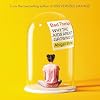
Bad Therapy: Why the Kids Aren't Growing Up
by Abigail Shrier
On This Page
Description
From the author of Irreversible Damage, an investigation into a mental health industry that is harming, not healing, American children In virtually every way that can be measured, Gen Z's mental health is worse than that of previous generations. Youth suicide rates are climbing, antidepressant prescriptions for children are common, and the proliferation of mental health diagnoses has not helped the staggering number of kids who are lonely, lost, sad and fearful of growing up. What's gone show more wrong with America's youth? In Bad Therapy, bestselling investigative journalist Abigail Shrier argues that the problem isn't the kids-it's the mental health experts. Drawing on hundreds of interviews with child psychologists, parents, teachers, and young people, Shrier explores the ways the mental health industry has transformed the way we teach, treat, discipline, and even talk to our kids. She reveals that most of the therapeutic approaches have serious side effects and few proven benefits. Among her unsettling findings: Talk therapy can induce rumination, trapping children in cycles of anxiety and depression Social Emotional Learning handicaps our most vulnerable children, in both public schools and private "Gentle parenting" can encourage emotional turbulence - even violence - in children as they lash out, desperate for an adult in charge Mental health care can be lifesaving when properly applied to children with severe needs, but for the typical child, the cure can be worse than the disease. Bad Therapy is a must-read for anyone questioning why our efforts to bolster America's kids have backfired-and what it will take for parents to lead a turnaround. show lessTags
Recommendations






























Member Reviews
Wow! I don't know where to start! I have probably over a hundred stickies in the pages of this book. First let me say I would probably give it 4.5. There were a few things that I didn't totally agree with but for the most part the author is bang on.
She starts the book with an authors note explaining that there are two groups of young people, one group suffers from profound mental illness and requires medication and the care of psychiatrists. They are not the subject of the book. I think this is a really important distinction. She's not saying that therapy and medication is always bad.
She begins by talking about how sometimes therapy can actually make things worse. She talks about her own personal journey with a therapist
"She helped me show more realize that I wasn't so bad. Most things were someone else's fault...in quick order, my therapist became a really expensive friend, one who agreed with me about almost everything and liked to talk smack about people we (sort of) knew in common." She also talks about how people can come to rely on their therapist and are uncomfortable making decisions without checking in with them first.
"Individual therapy can intensify bad feelings, too. Psychiatrist Samantha Boardman wrote candidly about a patient who quit therapy after a few weeks of treatment. 'All we do is talk about the bad stuff in my life,' the patient told Boardman. 'I sit in your office and complain for 45 minutes straight. Even if I am having a good day, coming here makes me think about all the negative things.'" She says a good therapist should talk about how to end the relationship at the first visit.
She talks about how "nearly 40 percent of the rising generation has received treatment from a mental health professional compared with 26 percent of gen Xers." "42 percent of the rising generation currently has a mental health diagnosis, rendering "normal" increasingly abnormal." "More than 10 percent of American kids have an ADHD diagnosis - double the expected prevalence rate based on population surveys in other countries." I would even guess that this number is rising quickly. I was recently at an extended family gathering and was amazed at how many of the parents were throwing around labels for their children.
She gives us some examples of disorders that seem to me were just normal childhood behaviour. "Every weird or awkward teen was 'on the spectrum'... Loners had 'depression.' Clumsy kids had 'dyspraxia'. Parents ceased to chide 'picky eaters' and instead diagnosed and accommodated the 'food avoidant'...No chiding kids for messy handwriting (that was 'dysgraphia'). No telling kids with the blues that it takes time to adjust to a new town or new school (they have 'relocation depression'). No reassuring them that it's normal to miss their friends over the summer ('summer anxiety'). " Isn't some of this just normal behaviour? Why do we have to put a label on everything? Then she talks about how even though treatment has become more available the rates are still going up. This should make anyone pause and ask why. If we're better able to treat these issues then the rates of anxiety and depression should be going down. Interestingly she references an article that seems to indicate depression is worse in liberal teens than in conservative teens.
She delves more deeply into therapy and how it can make a child feel like there is something wrong with them that their parents can't handle. She discusses 10 indicators of "bad therapy".
1. Putting too much emphasis on their emotions. It's good to be able to describe your feelings but "Emotions are not only unstable, they're also highly manipulable."
2. Spending too much time ruminating "...And rumination is the major predictor for depression."
3. "Make Happiness a goal but reward emotional suffering
4. "Affirm and Accommodate Kids Worries" "We purchase plastic visors so bathwater never runs over our toddlers' eyes, and carefully remove sesame seeds from their hamburger buns." How far should we be going to accommodate children's fears?
5. Kids are monitored constantly.
6. Give everyone a diagnosis. "But obtaining a diagnosis for your kid is not a neutral act. It's not nothing for a kid to grow up believing there's something wrong with his brain." Now she does talk here about how sometimes a diagnosis can be important and gives the example of dyslexia.
7. Prescribe drugs.
8. Encourage kids to talk about trauma. "One of the most significant failings of psychotherapy, Byng says, is its refusal to acknowledge that not everyone is helped by talking about their problems. Many patients, he says, are harmed by it."
9. "Encourage young adults to break contact with 'toxic' family. "Children learn that all relationships are expendable - even within the parent-child dyad. Mom cut off her own parents. There's just no good reason to believe she wouldn't do the same to me if I did something to upset her too."
10. Dependency on treatment.
She talks about social-emotional learning. Teachers aren't trained therapists and yet they are often taking on that role.
She looks at how accommodations can be damaging for students and for teachers. She references a high school teacher who is required to accept late homework from students as long as it's submitted by the end of the year. "I had a multitude of kids trying to turn in 18 weeks' worth of work right before the semester ended." How is this fair to teachers? A parent got an accommodation for her son to take untimed tests for the last three years of high school. "I really regret it because he used it as a crutch. Like, 'Oh, I can't turn the paper in on time because I have a 504. We thought we were helping, and I realized all these things are not helpful." How is this fair to students?
She talks about how schools are becoming more violent and the problem with "restorative justice" and how it's destroying schools. If kids know they can do something and not get punished of course they are going to do it.
There's a chapter on trauma and she tells her grandmothers story. Then says "My motherless grandmother endured poverty, polio, and world war. And yet it would have never occurred to her to respond to a survey in the way an apparently typical American young man born in 1990 recently did. 'I've grown up in he 21st century, where disasters happen every 20 minutes.'" We are raising a generation of victims. Finding our trauma explains why we can't function as adults. It's a way to place blame.
She talks about how studies that ask people that are struggling if they've had trauma can be inaccurate and instead you would need to observe people who have had trauma and follow them through adulthood to see if the trauma does indeed cause these same results. She discusses false memories which I find a truly fascinating subject.
She addresses gentle parenting. "A therapy-infused model that requires parents to give choices instead of orders." She discusses the book Raising Raffi by Keith Gessen that had me shaking my head. "Fed up with Raffi's penchant for hitting his parents and other kids and throwing his food on the floor, Gessen and his wife make a "sticker chart" to reward Raffi for the times when he does NOT hit others. But this kid was not born yesterday. Raffi insists that Gessen and his wife also make a sticker chart for themselves, and they dutifully comply...". I'm sorry but who is raising who here?
She references a study by Diana Baumrind who found that "authoritative parenting styles produced the most successful, independent, self-reliant, and best emotionally regulated kids; it also produced the happiest kids - those less likely to report suffering from anxiety and depression."
She talks about how ADHD doesn't actually meet the standard definition of a disorder and talks about Yaakov Ophir who decided not to medicate his child after researching what the drugs did - they can become addictive (or didn't do as they become less effective over time). Instead they give him chores, discipline and structure.
We're not giving our kids the independence they need. We're not letting them make decision for themselves or doing things on their own. We need to stop micro-managing our kids. Other parts of the world are doing this better. She talks about her sister-in-law who moved to Israel "When she tried to hire a driving instructor for her sixteen-year-old son, she was told: no dice. 'Sorry, but your son needs to hire me. He is my client,' the man said."
She talks about the dangers of technology. "The slower pace of richer, more meaningful life, the moments that tee up conversation - an elevator ride, a waiting room, a checkout line, a bike ride - became all but intolerable." "Your kids don't require an iPad to survive a dinner or car trip any more than you did. Teens manage fine with flip phones. They aren't weaker than you-unless you make them so."
Basically at the end she says we need to get out of our kids way.
I think everyone should read this book, you may not agree with all of it but people need to be thinking more carefully about these issues and not just listening to the "experts" because they may not have your child's best interests in mind.
There was some language in some of the quotes. The F-word once, 3 uses of blasphemy and 8 other mild profanities.
This book was reviewed on the Literary Club Podcast episode 83
https://www.buzzsprout.com/1984185 show less
She starts the book with an authors note explaining that there are two groups of young people, one group suffers from profound mental illness and requires medication and the care of psychiatrists. They are not the subject of the book. I think this is a really important distinction. She's not saying that therapy and medication is always bad.
She begins by talking about how sometimes therapy can actually make things worse. She talks about her own personal journey with a therapist
"She helped me show more realize that I wasn't so bad. Most things were someone else's fault...in quick order, my therapist became a really expensive friend, one who agreed with me about almost everything and liked to talk smack about people we (sort of) knew in common." She also talks about how people can come to rely on their therapist and are uncomfortable making decisions without checking in with them first.
"Individual therapy can intensify bad feelings, too. Psychiatrist Samantha Boardman wrote candidly about a patient who quit therapy after a few weeks of treatment. 'All we do is talk about the bad stuff in my life,' the patient told Boardman. 'I sit in your office and complain for 45 minutes straight. Even if I am having a good day, coming here makes me think about all the negative things.'" She says a good therapist should talk about how to end the relationship at the first visit.
She talks about how "nearly 40 percent of the rising generation has received treatment from a mental health professional compared with 26 percent of gen Xers." "42 percent of the rising generation currently has a mental health diagnosis, rendering "normal" increasingly abnormal." "More than 10 percent of American kids have an ADHD diagnosis - double the expected prevalence rate based on population surveys in other countries." I would even guess that this number is rising quickly. I was recently at an extended family gathering and was amazed at how many of the parents were throwing around labels for their children.
She gives us some examples of disorders that seem to me were just normal childhood behaviour. "Every weird or awkward teen was 'on the spectrum'... Loners had 'depression.' Clumsy kids had 'dyspraxia'. Parents ceased to chide 'picky eaters' and instead diagnosed and accommodated the 'food avoidant'...No chiding kids for messy handwriting (that was 'dysgraphia'). No telling kids with the blues that it takes time to adjust to a new town or new school (they have 'relocation depression'). No reassuring them that it's normal to miss their friends over the summer ('summer anxiety'). " Isn't some of this just normal behaviour? Why do we have to put a label on everything? Then she talks about how even though treatment has become more available the rates are still going up. This should make anyone pause and ask why. If we're better able to treat these issues then the rates of anxiety and depression should be going down. Interestingly she references an article that seems to indicate depression is worse in liberal teens than in conservative teens.
She delves more deeply into therapy and how it can make a child feel like there is something wrong with them that their parents can't handle. She discusses 10 indicators of "bad therapy".
1. Putting too much emphasis on their emotions. It's good to be able to describe your feelings but "Emotions are not only unstable, they're also highly manipulable."
2. Spending too much time ruminating "...And rumination is the major predictor for depression."
3. "Make Happiness a goal but reward emotional suffering
4. "Affirm and Accommodate Kids Worries" "We purchase plastic visors so bathwater never runs over our toddlers' eyes, and carefully remove sesame seeds from their hamburger buns." How far should we be going to accommodate children's fears?
5. Kids are monitored constantly.
6. Give everyone a diagnosis. "But obtaining a diagnosis for your kid is not a neutral act. It's not nothing for a kid to grow up believing there's something wrong with his brain." Now she does talk here about how sometimes a diagnosis can be important and gives the example of dyslexia.
7. Prescribe drugs.
8. Encourage kids to talk about trauma. "One of the most significant failings of psychotherapy, Byng says, is its refusal to acknowledge that not everyone is helped by talking about their problems. Many patients, he says, are harmed by it."
9. "Encourage young adults to break contact with 'toxic' family. "Children learn that all relationships are expendable - even within the parent-child dyad. Mom cut off her own parents. There's just no good reason to believe she wouldn't do the same to me if I did something to upset her too."
10. Dependency on treatment.
She talks about social-emotional learning. Teachers aren't trained therapists and yet they are often taking on that role.
She looks at how accommodations can be damaging for students and for teachers. She references a high school teacher who is required to accept late homework from students as long as it's submitted by the end of the year. "I had a multitude of kids trying to turn in 18 weeks' worth of work right before the semester ended." How is this fair to teachers? A parent got an accommodation for her son to take untimed tests for the last three years of high school. "I really regret it because he used it as a crutch. Like, 'Oh, I can't turn the paper in on time because I have a 504. We thought we were helping, and I realized all these things are not helpful." How is this fair to students?
She talks about how schools are becoming more violent and the problem with "restorative justice" and how it's destroying schools. If kids know they can do something and not get punished of course they are going to do it.
There's a chapter on trauma and she tells her grandmothers story. Then says "My motherless grandmother endured poverty, polio, and world war. And yet it would have never occurred to her to respond to a survey in the way an apparently typical American young man born in 1990 recently did. 'I've grown up in he 21st century, where disasters happen every 20 minutes.'" We are raising a generation of victims. Finding our trauma explains why we can't function as adults. It's a way to place blame.
She talks about how studies that ask people that are struggling if they've had trauma can be inaccurate and instead you would need to observe people who have had trauma and follow them through adulthood to see if the trauma does indeed cause these same results. She discusses false memories which I find a truly fascinating subject.
She addresses gentle parenting. "A therapy-infused model that requires parents to give choices instead of orders." She discusses the book Raising Raffi by Keith Gessen that had me shaking my head. "Fed up with Raffi's penchant for hitting his parents and other kids and throwing his food on the floor, Gessen and his wife make a "sticker chart" to reward Raffi for the times when he does NOT hit others. But this kid was not born yesterday. Raffi insists that Gessen and his wife also make a sticker chart for themselves, and they dutifully comply...". I'm sorry but who is raising who here?
She references a study by Diana Baumrind who found that "authoritative parenting styles produced the most successful, independent, self-reliant, and best emotionally regulated kids; it also produced the happiest kids - those less likely to report suffering from anxiety and depression."
She talks about how ADHD doesn't actually meet the standard definition of a disorder and talks about Yaakov Ophir who decided not to medicate his child after researching what the drugs did - they can become addictive (or didn't do as they become less effective over time). Instead they give him chores, discipline and structure.
We're not giving our kids the independence they need. We're not letting them make decision for themselves or doing things on their own. We need to stop micro-managing our kids. Other parts of the world are doing this better. She talks about her sister-in-law who moved to Israel "When she tried to hire a driving instructor for her sixteen-year-old son, she was told: no dice. 'Sorry, but your son needs to hire me. He is my client,' the man said."
She talks about the dangers of technology. "The slower pace of richer, more meaningful life, the moments that tee up conversation - an elevator ride, a waiting room, a checkout line, a bike ride - became all but intolerable." "Your kids don't require an iPad to survive a dinner or car trip any more than you did. Teens manage fine with flip phones. They aren't weaker than you-unless you make them so."
Basically at the end she says we need to get out of our kids way.
I think everyone should read this book, you may not agree with all of it but people need to be thinking more carefully about these issues and not just listening to the "experts" because they may not have your child's best interests in mind.
There was some language in some of the quotes. The F-word once, 3 uses of blasphemy and 8 other mild profanities.
This book was reviewed on the Literary Club Podcast episode 83
https://www.buzzsprout.com/1984185 show less
I am a sucker for books about parenting, kids and their challenges and this one was another winner along with [Generations], [Coddling of the American MInd], [Anxious Generation] (and more). When our kids were little I read [Siblings without Rivalry] and was teased that it was "Earth without Gravity"! Also years ago I read [Bringing up Bebe] about a mom moving to France and describing the difference between American and French childrearing and the ensuing results. Fascinating and very good to know! So this book looks at the very challenged present generation of children who are experiencing very significant mental health concerns and she examines parenting, education and therapeutic approaches.There are so many children diagnosed, in show more therapy and on heavy duty medications. She has a lot to say and really we must find the "adult in the room" to do a better job as children are not being managed well. The book is well researched with many interviews of experts in their fields and with further book recommendations and references to academic research. show less
I believe this is one of the most important books for parents to read. The book addresses the growth industry of putting kids into therapy in the schools, with individuals trying to do the therapy having absolutely NO qualifications. This is not necessarily talking about licensed therapists, although there are plenty of them who have no business getting anywhere near school children.
Abigail Shrier has a law degree from Yale. She has written opinion pieces for news publishers, and has written books. Her own web site describes her as a freelance journalist. Her 2020 book Irreversible Damage, was controversial. It was well received by critics and readers sympathetic to her arguments supporting the hypothesis that some adolescents identify as transgender and experience gender dysphoria due to peer influence and social contagion. Bad Therapy (2024) makes broad claims that parents are failing in some of their duties and that educators, courts and other rely too heavily on questionable theories about child development and mental health. She has consulted broadly. She cites comments by several mental heath professionals in show more support of her arguments. She advocates a position dissenting against what seems to be the professional consensus of developmental and clinical psychologists, educators and other professions interested in children and families. Her arguments are effective in raising doubts about the claims of some of the social sciences to the authority to provide good advice to parents, children, teachers, and courts. She also cites many individuals who claim that "bad therapy" has caused harm to individuals, families and society. This approach however is more anecdotal. She is a partisan in the culture wars for the common sense of conservative members of WEIRD societies. show less
Library June/July 2024
Ratings
Members
- Recently Added By
Lists

Absent from the Merrimack Valley Library Consortium libraries
192 works; 1 member

Top Five Books of 2024
795 works; 264 members
Author Information

4 Works 1,137 Members
Awards and Honors
Awards
Distinctions
Common Knowledge
- Canonical title
- Bad Therapy: Why the Kids Aren't Growing Up
- Original title
- Bad Therapy: Why the Kids Aren't Growing Up
- First words
- In 2006, I packed up everything I owned and moved from Washington, DC, to Los Angeles to be closer to my then boyfriend.
- Last words
- (Click to show. Warning: May contain spoilers.)You're the only one who can.
- Original language
- English
- Canonical DDC/MDS
- 618.9289
Classifications
- Genres
- General Nonfiction, Nonfiction
- DDC/MDS
- 618.9289 — Applied science & technology Medicine & health Gynecology, obstetrics, pediatrics, geriatrics Pediatrics & Geriatrics Pediatric Care Diseases of nervous system and mental disorders Mental disorders
- LCC
- RJ504 .S538 — Medicine Pediatrics Pediatrics Diseases of children and adolescents Mental disorders. Child psychiatry
- BISAC
Statistics
- Members
- 332
- Popularity
- 95,905
- Reviews
- 5
- Rating
- (3.93)
- Languages
- English
- Media
- Paper, Audiobook, Ebook
- ISBNs
- 8
- ASINs
- 3