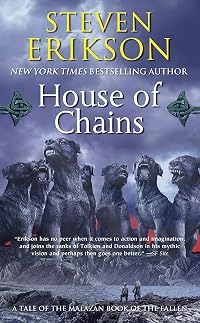
House of Chains
by Steven Erikson
World of Malazan (Book of the Fallen 4), Malazan Chronology (10), Malazan Book of the Fallen (4)
On This Page
Description
Best selling author Steven Erikson returns with the latest in the morbid history of the Malazan EmpireIn Northern Genabackis, a raiding party of savage tribal warriors descends from the mountains into the southern flatlands. Their intention is to wreak havoc amongst the despised lowlanders, but for the one named Karsa Orlong it marks the beginning of what will prove to be an extraordinary destiny.
Some years later, it is the aftermath of the Chain of Dogs. Tavore, the Adjunct to the show more Empress, has arrived in the last remaining Malazan stronghold of Seven Cities. New to command, she must hone twelve thousand soldiers, mostly raw recruits but for a handful of veterans of Coltaine's legendary march, into a force capable of challenging the massed hordes of Sha'ik's Whirlwind who lie in wait in the heart of the Holy Desert.
But waiting is never easy. The seer's warlords are locked into a power struggle that threatens the very soul of the rebellion, while Sha'ik herself suffers, haunted by the knowledge of her nemesis: her own sister, Tavore.
And so begins this awesome new chapter in Steven Erikson's acclaimed Malazan Book of the Fallen . . .
At the Publisher's request, this title is being sold without Digital Rights Management Software (DRM) applied.
. show less
Tags
Recommendations
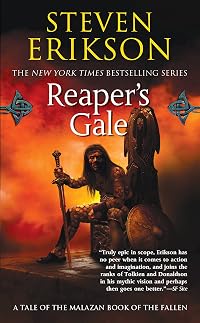
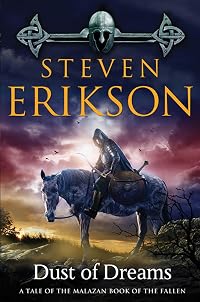
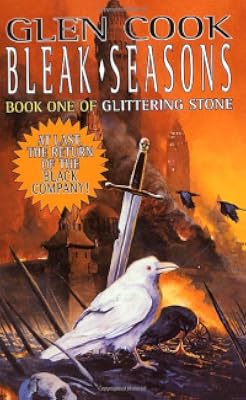
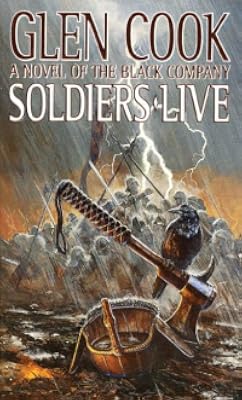



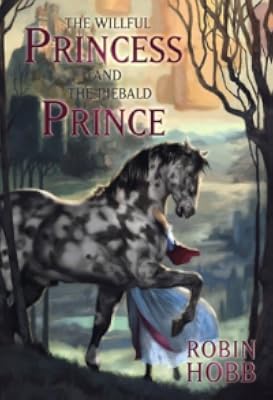
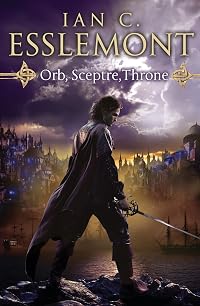
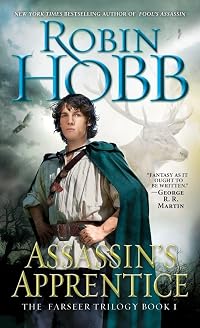
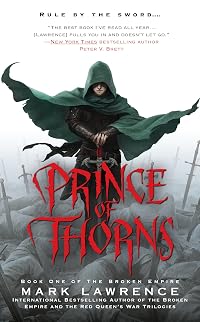

Member Recommendations
Member Reviews
Book 4 of Erikson's inspired Malazan Book of the Fallen series provides another compelling story. This is a big, complicated book (1000 pages, 7 different interweaving plot lines) set in a big, complicated world. Things that were completely befudling in the previous books begin to make more sense, but just when you think you're getting the hang of Erikson's world he throws you a series of new puzzles. Disparate plot lines end up fitting together effectively, leaving you with confidence that Erikson both knows where the series is headed, and how he plans to get there (are you listening Robert Jordan?). In short, Steven Erikson is a true god of contemporary fantasy writing (but in the world of the Malazan Book of the Fallen, being a god show more just makes you a more interesting target for the big, bad, and powerful).
Do NOT read this book if you are looking for light escapism and fairy tale endings. DO read this book if you are looking for the best in dark, gritty, compelling fantasy writing in the market today. show less
Do NOT read this book if you are looking for light escapism and fairy tale endings. DO read this book if you are looking for the best in dark, gritty, compelling fantasy writing in the market today. show less
So, listen up, House of Chains, we need to talk. Obviously your title is a reference to the literal High House Chains which is finally coming to real prominence in the fourth volume of the series, with many major players openly swearing to the Chained One. But something tells me that in addition to the Deck’s newest House, the title refers to the chains that bind many others—those of Sha’ik’s camp, especially the more well-meaning, such as the losing-it Heboric Ghost Hands, haunted by dreams of the jade giants (to my mind one of the weirdest and most interesting plotlines going, sadly abandoned for Treach for most of the book), chained to Shai’ik, chained to his knowledge of House Paran, chained by Fener, now fallen, and the show more giants, and now Treach too. What’s a guy to do? Karsa Orlong is chained by his gods and his tribal society, but also resents the literal chains the civilized world throws him into. He’s a perfect Knight for High House Chains—but it’s not a job he wants. Trull and Onrack, both Shorn in their way, are released from some chains but linked by others. Cutter and Apsalar are chained together, despite their very conflicted emotional states about the nature of those chains, and whether Cutter should chain himself to Cotillion as his patron, which he thinks might impress Apsalar (it doesn’t).
What makes me say all this? House of Chains is a good book and I think it’s a real “we’re getting serious about the Myth Arc” point, where 1-3 formed a neat little loop that could mostly close there—episodic menaces arising and meeting defeat. But here we pull back, and back, and realize the game is much much larger than we initially thought.
But regarding the above issue of High House Chains and the many mortals ascendants who labor beneath chains of iron and belief and duty, thematically: this book uses the word “chain” and its variants 274 times in about a thousand pages. Another important word, in Malazan if not common English, “warren,” is directly used 167 times. It’s hard to choose a character name to compare for the most used, since most major players have 2 (Tavore/the Adjunct, Sha’ik/Felisin, Fiddler/Strings, etc.), but for comparison’s sake, “Malazan,” the empire, people, and general designation, gets 280. That’s how many chains we’re talking about.
Wordcount.org (which counts “chain” and “chains” as separate words, alas) places “chain” at 2646/86800 in the ranking of word occurrence. For reference, 2647 is “parent,” and “army”, an important word in the book (Army of the Apocalypse/Whirlwind, the Fourteenth army, the Logros army, Onearm’s army, etc.) is 879th most common, and gets 177 mentions.
What I am saying is that we got a little heavy handed on the chains this time around. It’s okay! We got it! We can ease up a little. Every page someone felt the chains binding them. The metaphor is really solid. Don't hit it with a sledgehammer. show less
What makes me say all this? House of Chains is a good book and I think it’s a real “we’re getting serious about the Myth Arc” point, where 1-3 formed a neat little loop that could mostly close there—episodic menaces arising and meeting defeat. But here we pull back, and back, and realize the game is much much larger than we initially thought.
But regarding the above issue of High House Chains and the many mortals ascendants who labor beneath chains of iron and belief and duty, thematically: this book uses the word “chain” and its variants 274 times in about a thousand pages. Another important word, in Malazan if not common English, “warren,” is directly used 167 times. It’s hard to choose a character name to compare for the most used, since most major players have 2 (Tavore/the Adjunct, Sha’ik/Felisin, Fiddler/Strings, etc.), but for comparison’s sake, “Malazan,” the empire, people, and general designation, gets 280. That’s how many chains we’re talking about.
Wordcount.org (which counts “chain” and “chains” as separate words, alas) places “chain” at 2646/86800 in the ranking of word occurrence. For reference, 2647 is “parent,” and “army”, an important word in the book (Army of the Apocalypse/Whirlwind, the Fourteenth army, the Logros army, Onearm’s army, etc.) is 879th most common, and gets 177 mentions.
What I am saying is that we got a little heavy handed on the chains this time around. It’s okay! We got it! We can ease up a little. Every page someone felt the chains binding them. The metaphor is really solid. Don't hit it with a sledgehammer. show less
HoC opens with something entirely unexpected: more than 200 pages following a single character whose story begins in Genabackis. Karsa Orlong is a Conan-like barbarian with extra streaks of mean - not a likeable guy. At least he's surrounded by the author's hints of lessons to come for this character, and there's an undercurrent of humour to his kind of single-mindedness ("I can't wait for the day they put a pickaxe in your hands," another character observes.) The focus implies this character will have an enormous role to play, and we get a hint of what that is before the novel is done.
The rest of the novel is largely a sequel to the events of Deadhouse Gates, serving primarily as the tale of the Crippled God's assemblage of his House. show more It describes machinations on the part of gods and ascendants on both sides, as they manipulate events through the mortals over whom they have influence. By novel's end we can see that the storylines of Genabackis and Seven Cities are merging but without a clear future direction. Instead a secondary plot involving the T'lan Imass and Tiste Edur will be lending the next volume its focus.
The writing style is subtly different throughout this fourth volume. Erikson lingers this time over the philosophical points of his characters' evolutions, and some of his geographic descriptions (particularly of Raraku) turn more lyrical. I've the sense that he's found more value in these things than previously, a greater willingness to devote more energy than simply outlining and forging on. He's actually rather good at it when he makes the effort; some passages are worth pausing to reflect over, and I'm inspired again to believe there will be more aftertaste to reading this series than what mind-numbing scale and go-go-go action alone can supply. show less
The rest of the novel is largely a sequel to the events of Deadhouse Gates, serving primarily as the tale of the Crippled God's assemblage of his House. show more It describes machinations on the part of gods and ascendants on both sides, as they manipulate events through the mortals over whom they have influence. By novel's end we can see that the storylines of Genabackis and Seven Cities are merging but without a clear future direction. Instead a secondary plot involving the T'lan Imass and Tiste Edur will be lending the next volume its focus.
The writing style is subtly different throughout this fourth volume. Erikson lingers this time over the philosophical points of his characters' evolutions, and some of his geographic descriptions (particularly of Raraku) turn more lyrical. I've the sense that he's found more value in these things than previously, a greater willingness to devote more energy than simply outlining and forging on. He's actually rather good at it when he makes the effort; some passages are worth pausing to reflect over, and I'm inspired again to believe there will be more aftertaste to reading this series than what mind-numbing scale and go-go-go action alone can supply. show less
8/10
I know some veterans of the Malazan Book of the Fallen have said that the first 4-5 books are "set up" and the last 5-6 books are the "real story". While this installment resolved (apparently) a couple story lines, a whole pile of others were introduced which, I assume, are critical to the "real story". I found so many new characters and new races to be difficult to follow and, at least right now, I am still confused about the resolution of a couple major plot points.
Still, Erikson is a wonderful writer of both dialog and description. So many scenes are absolute standouts!
I know some veterans of the Malazan Book of the Fallen have said that the first 4-5 books are "set up" and the last 5-6 books are the "real story". While this installment resolved (apparently) a couple story lines, a whole pile of others were introduced which, I assume, are critical to the "real story". I found so many new characters and new races to be difficult to follow and, at least right now, I am still confused about the resolution of a couple major plot points.
Still, Erikson is a wonderful writer of both dialog and description. So many scenes are absolute standouts!
Erikson heldur áfram með uppbyggingu stórsögunnar um Malazan heimsveldið. Heiti bókarinnar Hús keðjanna vísar til spáspila sem notuð eru af sögupersónunum. Spilin endurspegla guðina í heimsmyndinni, völd þeirra og áhrif. Þau er hægt að nota við spádóma og töfra en ekki síður til að endurspegla innbyrðis vald þeirra.
Í þessari sögu segir frá sókn Malazan hersins gegn uppreisn eyðimerkurættbálka. Tvær systur berast á banaspjótum, önnur hefur brotist til valda innan heimsveldisins og stýrir herjum þeirra en hin er táknmynd eyðimerkurgyðju sem ættbálkarnir flykkjast um. Samhliða þessari átakalínu er valdabarátta milli helstu foringa uppreisnarinnar og bak við tjöldin birtast stöðugt show more fleiri spöld í spástokknum af nýju guðaafli - Húsi keðjanna. Brotinna guða og andhetja sem takast á við hina hefðbundu guði og draga heildarsögu Eriksons æ nær lokaátökunum sem væntanlega verða eftir fjölda bóka. show less
Í þessari sögu segir frá sókn Malazan hersins gegn uppreisn eyðimerkurættbálka. Tvær systur berast á banaspjótum, önnur hefur brotist til valda innan heimsveldisins og stýrir herjum þeirra en hin er táknmynd eyðimerkurgyðju sem ættbálkarnir flykkjast um. Samhliða þessari átakalínu er valdabarátta milli helstu foringa uppreisnarinnar og bak við tjöldin birtast stöðugt show more fleiri spöld í spástokknum af nýju guðaafli - Húsi keðjanna. Brotinna guða og andhetja sem takast á við hina hefðbundu guði og draga heildarsögu Eriksons æ nær lokaátökunum sem væntanlega verða eftir fjölda bóka. show less
“Regrets are as nothing. The value lies in how they are answered.” Echoed throughout House of Chains, learned by so very many characters, some of whom you think, at the beginning of the book, couldn't possibly grow enough to appreciate the sentiment.
A wonderfully adept book at weaving together multiple storylines and bringing them all together for a totally surprising ending. If you think you can predict what will happen, guess again.
Best written of the Malazan books up to 4, mainly because the growth of the major players is so amazing.
Also, Cotillion!
A wonderfully adept book at weaving together multiple storylines and bringing them all together for a totally surprising ending. If you think you can predict what will happen, guess again.
Best written of the Malazan books up to 4, mainly because the growth of the major players is so amazing.
Also, Cotillion!
House of Chains doesn't quite hold up to its immediate predecessors, although it's certainly a worthy entry. There are many new characters, and some (Karsa Orlong in particular, although all of the T'lan Imass we meet, the Tiste Liosan, and pretty much everyone involved with the Whirlwind) range from mildly to violently unlikeable. It's clearly on purpose, but it means that the majority of the story has much less emotional weight than the last two volumes.
A few words about Karsa Orlong and the issues he brings to the fore: I respect Erikson's boldness in beginning the book with a couple hundred pages from the perspective of an arrogant, violent, willfully ignorant barbarian who takes great pleasure in slaughtering his enemies and raping show more women. He also manages to bring the character through to a place where he's honorable and even somewhat likeable. I do not love that fact that this solidifies the pattern of rape as shock effect and/or plot device throughout the series - even when it's handled with some nuance. And it's not always handled with nuance, although the worst episode comes in a later book. It too often reads as voyeurism or, worse, wish-fulfillment, and it leaves a bad taste in my mouth that increases as the series goes on. It's the reason The Crippled God has been out for six months and in my possession for four and I've just now gotten around to a reread. I would like to come through this reread with the opinion that the series transcends its vices. I'm terribly afraid I won't. show less
A few words about Karsa Orlong and the issues he brings to the fore: I respect Erikson's boldness in beginning the book with a couple hundred pages from the perspective of an arrogant, violent, willfully ignorant barbarian who takes great pleasure in slaughtering his enemies and raping show more women. He also manages to bring the character through to a place where he's honorable and even somewhat likeable. I do not love that fact that this solidifies the pattern of rape as shock effect and/or plot device throughout the series - even when it's handled with some nuance. And it's not always handled with nuance, although the worst episode comes in a later book. It too often reads as voyeurism or, worse, wish-fulfillment, and it leaves a bad taste in my mouth that increases as the series goes on. It's the reason The Crippled God has been out for six months and in my possession for four and I've just now gotten around to a reread. I would like to come through this reread with the opinion that the series transcends its vices. I'm terribly afraid I won't. show less
Members
- Recently Added By
Lists

Best Fantasy Novels
821 works; 361 members

NPRs your picks: top 100 Sci-Fi/Fantasy books
297 works; 80 members

I Could Live There
185 works; 12 members

Books Read in 2016
4,666 works; 199 members

Which house?
423 works; 16 members
Author Information

78+ Works 38,265 Members
Steven Erikson, a pseudonym used by Steven Rune Lundin, was born in Toronto, Canada on October 7, 1959. He is an anthropologist and archaeologist by training and a graduate of the Iowa Writer's Workshop. He is the author of the Malazan Book of the Fallen series and the Bauchelain and Korbal Broach series. (Bowker Author Biography)
Some Editions
Awards and Honors
Notable Lists
Series

World of Malazan
33 works (Book of the Fallen 4)

Malazan Chronology
23 works (10)

Malazan Book of the Fallen
10 works (4)
Belongs to Publisher Series
Science Fiction Book Club (1215448)
Work Relationships
Is contained in
Common Knowledge
- Canonical title
- House of Chains
- Original title
- House of Chains
- Original publication date
- 2002-12-02
- People/Characters
- Crokus (Cutter); Karsa Orlong (Toblakai); Kalam Mekhar; Sha'ik; Fiddler (Strings); Trull Sengar (show all 12); Icarium; Mappo Runt; L'oric; Korbolo Dom; Scillara; Leoman of the Flails
- Important places
- Seven Cities
- Dedication
- For Mark Paxton MacRae, for the KO punch. This one's all yours, my friend.
- First words
- Grey, bloated and pocked, the bodies lined the silt-laden shoreline for as far as the eye could see.
- Quotations
- “Regrets are as nothing. The value lies in how they are answered.”
- Last words
- (Click to show. Warning: May contain spoilers.)Eventually, his patience was rewarded.
As he knew it would be. - Blurbers
- Cook, Glen
- Original language*
- Anglais (Canada) (Canada)
- Disambiguation notice
- For the German-language version of the series 'Das Spiel der Götter', this book was split into two volumes - 'Der Krieg der Schwestern' (2002) ISBN 3-442-24271-1 and
'Das Haus der Ketten' (2002) ISBN 3-442-24292-4
Ple... (show all)ase do not combine these works
*Some information comes from Common Knowledge in other languages. Click "Edit" for more information.
Classifications
Statistics
- Members
- 3,114
- Popularity
- 5,643
- Reviews
- 52
- Rating
- (4.23)
- Languages
- 10 — Czech, Dutch, English, French, Hungarian, Italian, Japanese, Polish, Slovak, Spanish
- Media
- Paper, Audiobook, Ebook
- ISBNs
- 31
- ASINs
- 21