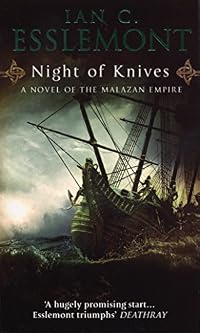
Night of Knives
by Ian C. Esslemont
Malazan Empire (1), Malazan Chronology (1), World of Malazan (Malazan Empire 1)
On This Page
Description
Shunted into the background of a great empire it once founded, the sleepy island city of Malaz frenetically prepares for a once-in-a-generation celestial event that has been foretold to be a precursor to the return of an ancient oppressive force.Tags
Recommendations





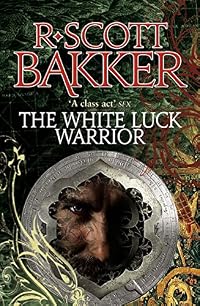

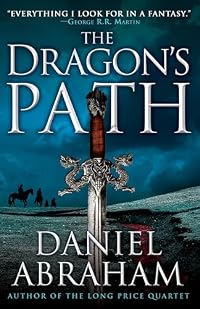
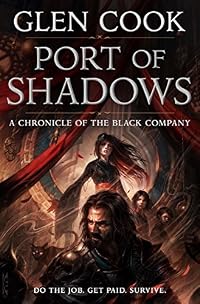
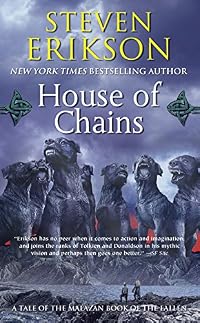
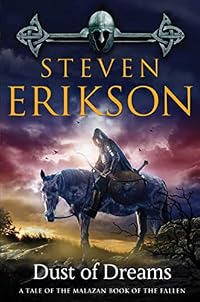
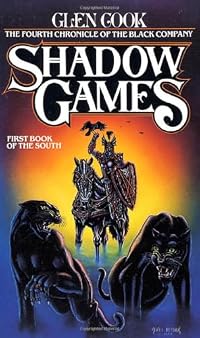
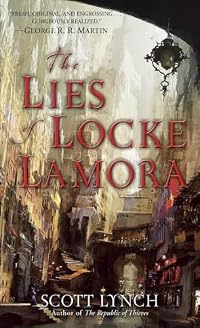




Member Recommendations
Member Reviews
I was really looking forward to starting this book. I had a hard time tracking it and Return of the Crimson Guard down, and was excited to see what a new writer's perspective would bring to the world of Malazan. Unfortunately, that this book would be a major let-down was pretty clear within the first 30 pages or so. Esslemont's writing is extremely amateurish, with paper-thin characters and poor timeline conception. Some of the very first scenes demonstrate that Esslemont is pathetically lacking in Erikson's biggest strength: insight into the human psyche.
Kiska is a girl living on the island of Malaz, desperate to make a name for herself in the world of intrigue and assassinations. Her thinking, as portrayed by Esslemont, is akin to show more that of an eight-year-old; and reading about it is like listening to an eight-year-old speak: "I can't believe that professional assassin blew me off! Just wait till I show him!" It would be laughable if it wasn't so painful to read. The other major POV character, Temper, is an old soldier, trying to maintain some anonymity in the city of Malaz. His encounters with the other soldiers of his garrison are just as absurd as the tales of the hapless assassin-wannabe Kiska.
Esslemont is not aided by his story-telling abilities. Flashback scenes (where most of the important information regarding the larger Malazan series can be gleaned) are integrated into the greater story-line in an unclear way, leading to a jumbled and confusing narrative that just leaves the reader annoyed. One entire story-line is forgotten about: Esslemont references it at the end, with one sentence indicating to the reader that the problem has been dealt with, but the resolution is never accounted for within the narrative of the book. Considering that this story-line gets a significant amount of attention in the first half of the text, being left with just taking Esslemont's word for it that the problem is solved at the end is more than a little frustrating.
While I was interested to read about the ascension of Dancer and Kellanved and the history of Dassem Ultor, this presentation of it was just terrible. I'm only about 150 pages into The Bonehunters, but it is clear that the sixth novel of Erikson's Malazan books takes some knowledge of the events of this book for granted. Sadly, that means that big Malazan fans probably ought to suffer through it.
At the end of the day, I'm appreciative to Esslemont if he did, indeed, play the large role in creating the world of Malazan that Steven Erikson credits him with. But Esslemont should stick to world-building, and leave the writing to his partner. Having to suffer through this book is an insult to the the readers who have come to love the sophistication and thoughtfulness of the Malazan world. Where Erikson's writing is clearly appropriate for intelligent adult fantasy-lovers, Night of Knives would be more appropriate to middle school readers. show less
Kiska is a girl living on the island of Malaz, desperate to make a name for herself in the world of intrigue and assassinations. Her thinking, as portrayed by Esslemont, is akin to show more that of an eight-year-old; and reading about it is like listening to an eight-year-old speak: "I can't believe that professional assassin blew me off! Just wait till I show him!" It would be laughable if it wasn't so painful to read. The other major POV character, Temper, is an old soldier, trying to maintain some anonymity in the city of Malaz. His encounters with the other soldiers of his garrison are just as absurd as the tales of the hapless assassin-wannabe Kiska.
Esslemont is not aided by his story-telling abilities. Flashback scenes (where most of the important information regarding the larger Malazan series can be gleaned) are integrated into the greater story-line in an unclear way, leading to a jumbled and confusing narrative that just leaves the reader annoyed. One entire story-line is forgotten about: Esslemont references it at the end, with one sentence indicating to the reader that the problem has been dealt with, but the resolution is never accounted for within the narrative of the book. Considering that this story-line gets a significant amount of attention in the first half of the text, being left with just taking Esslemont's word for it that the problem is solved at the end is more than a little frustrating.
While I was interested to read about the ascension of Dancer and Kellanved and the history of Dassem Ultor, this presentation of it was just terrible. I'm only about 150 pages into The Bonehunters, but it is clear that the sixth novel of Erikson's Malazan books takes some knowledge of the events of this book for granted. Sadly, that means that big Malazan fans probably ought to suffer through it.
At the end of the day, I'm appreciative to Esslemont if he did, indeed, play the large role in creating the world of Malazan that Steven Erikson credits him with. But Esslemont should stick to world-building, and leave the writing to his partner. Having to suffer through this book is an insult to the the readers who have come to love the sophistication and thoughtfulness of the Malazan world. Where Erikson's writing is clearly appropriate for intelligent adult fantasy-lovers, Night of Knives would be more appropriate to middle school readers. show less
Night of Knives is a difficult book to start reading, mainly because it is jarring, after having read four Erickson books, to have such a different authorial voice speaking of Malazan. Esslemont's style drops the majority of the purple language endemic in Erickson's novels in favor of something much more direct.
And, ultimately, this is a good thing. I know of only two authors who can pull off the flowery language (Erickson being one), but even then it can be a chore to read (I'm looking at you, Kruppe), and Esslemont's style brings a welcome change of pace to the Malazan world.
Beyond comparisons to Erickson's work, Night of Knives works quite well on its own. Few authors can pull off something with a scope so ambitiously small--the show more entire novel takes place over the course of a single night--but Esslemont surpasses that challenge with ease, and none of the novel feels like contrived conflict or filler to pad out the page count (unlike the TV show 24).
I feel like this review is boiling down to all the things this book is not. It's not Steven Erickson's Malazan as written by Ian C. Esslemont. It's not 24 with magic. What it is, though, is the first return salvo of the Malazan "dialog" through which these two men created this world, and I look forward to the next. show less
And, ultimately, this is a good thing. I know of only two authors who can pull off the flowery language (Erickson being one), but even then it can be a chore to read (I'm looking at you, Kruppe), and Esslemont's style brings a welcome change of pace to the Malazan world.
Beyond comparisons to Erickson's work, Night of Knives works quite well on its own. Few authors can pull off something with a scope so ambitiously small--the show more entire novel takes place over the course of a single night--but Esslemont surpasses that challenge with ease, and none of the novel feels like contrived conflict or filler to pad out the page count (unlike the TV show 24).
I feel like this review is boiling down to all the things this book is not. It's not Steven Erickson's Malazan as written by Ian C. Esslemont. It's not 24 with magic. What it is, though, is the first return salvo of the Malazan "dialog" through which these two men created this world, and I look forward to the next. show less
The first time I read this, more or less when it came out, I thought it was so-so. It was at times hard to follow, and in order to read between the lines, I often needed a more encyclopaedic recall of background characters and minor details in Erikson's "Malazan Book of the Fallen" (the volumes of it that had been published at this point, at least) than my poor memory could provide me. Even so, I enjoyed it a fair bit, especially as it filled in some very interesting mythology in their shared universe.
But when I in 2024 reread this directly after Esslemont's (for now) four volume prequel series 'The Paths of Ascendancy', I enjoyed it a great, great deal more. I am now able to actually read between the lines as intended, more often than show more not, I have a much better understanding of the concept of an Azath House than I did last time, and I am previously invested in Surly, Kellanved, Dancer, Agayla and (most importantly for this volume) Dassem and Tayschrenn, rather than them all simply being intriguing background figures I wished to know more about. I realise the typical recommendation is to read the World of Malaz books more or less in publishing order, but I must say approaching them this time in chronological order instead, I am having a much easier time getting the most out of them. This book, perhaps, being the standout beneficiary of that so far in the process. show less
But when I in 2024 reread this directly after Esslemont's (for now) four volume prequel series 'The Paths of Ascendancy', I enjoyed it a great, great deal more. I am now able to actually read between the lines as intended, more often than show more not, I have a much better understanding of the concept of an Azath House than I did last time, and I am previously invested in Surly, Kellanved, Dancer, Agayla and (most importantly for this volume) Dassem and Tayschrenn, rather than them all simply being intriguing background figures I wished to know more about. I realise the typical recommendation is to read the World of Malaz books more or less in publishing order, but I must say approaching them this time in chronological order instead, I am having a much easier time getting the most out of them. This book, perhaps, being the standout beneficiary of that so far in the process. show less
This review is written with a GPL 4.0 license and the rights contained therein shall supersede all TOS by any and all websites in regards to copying and sharing without proper authorization and permissions. Crossposted at WordPress, Blogspot,, Booklikes & Librarything and linked at Goodreads by Bookstooge’s Exalted Permission
Title: Night of Knives
Series: Malazan Empire #1
Author: Ian Esslemont
Rating: 4.5 of 5 Stars
Genre: SFF
Pages: 308
Format: Digital Edition
Synopsis: Spoilers
On the night of a Shadow Moon, when the division between our world and the world of the Warrens thins, Kriska and Temper have an adventure.
Kriska is a young thief who wants to join the Claws and get off of Malaz Isle. But nobody takes her seriously and even her aunt show more wants her to stay inside this night. Getting caught up in the battle between Kelenved & Dancer and Surly. Also involved in the mix is Tayschren, master mage, Surly's cadre of Claws and a group of cultists dedicated to Kelenved as a god. Kriska has to survive the night and all the terrors it holds.
Then we have Temper, a former soldier of the Malazan Army who has deserted. The desertion saved his life, as he was one of the Shields of the Swords, a might warrior protecting Dassem Ultor, the First Sword of the Malazan Empire, the mightiest warrior alive. The problem was, Surly doesn't want heros in her army and she has begun to purge them. Temper runs to Malaz Isle to become a lowly guardsman to survive. But others know his secret and on this night of Shadow Moon, Temper will be used once again, just as he was before.
My Thoughts:
Man, I had forgotten, or never realized, just how much foundational information Esslemont packs into this book. There is a lot about Dassem that I didn't realize was important but will definitely impact my read of future Malazan Book of the Fallen books. Chronologically this comes before Gardens of the Moon but I wouldn't recommend reading it before unless you're doing a re-read of everything Malaz.
There are some great battles here. Hounds of Shadows everywhere, monsters springing out of various Warrens, magical assassins fighting magical cultists, a hidden group of people trying to protect the whole Isle from some underwater threat, it all weaves together into one night of blood the likes of which the Isle has not seen in ages.
This was a short book, clocking in just over 300 pages. For a Malaz book, that is practically a short story. But as I was reading, it was dense. It had so much packed in that I felt like I had read a 500 page book by the end. I didn't mind that feeling at all, but others might and it is something to keep in mind if you decide to delve into this universe.
One downside, which is typical of the Malaz books, is that there are no real answers to any of your questions. Inferences, asides, round about explanations of Subject X which reveals bits about Subject Y. Nothing direct, nothing concrete. It is building a bridge in your mind. Esslemont gives us the materials and a rough architectural plan but it is up to us, the readers, to actually build the bridge and succeed or fail on our own. Some will see that as a weakness and others as a strength of the writing. I'm ok with it but have to admit, I'd prefer a bit more concrete facts baldly stated. Oh well, I'm not going to get it and neither will anyone who reads these books. show less
Title: Night of Knives
Series: Malazan Empire #1
Author: Ian Esslemont
Rating: 4.5 of 5 Stars
Genre: SFF
Pages: 308
Format: Digital Edition
Synopsis: Spoilers
On the night of a Shadow Moon, when the division between our world and the world of the Warrens thins, Kriska and Temper have an adventure.
Kriska is a young thief who wants to join the Claws and get off of Malaz Isle. But nobody takes her seriously and even her aunt show more wants her to stay inside this night. Getting caught up in the battle between Kelenved & Dancer and Surly. Also involved in the mix is Tayschren, master mage, Surly's cadre of Claws and a group of cultists dedicated to Kelenved as a god. Kriska has to survive the night and all the terrors it holds.
Then we have Temper, a former soldier of the Malazan Army who has deserted. The desertion saved his life, as he was one of the Shields of the Swords, a might warrior protecting Dassem Ultor, the First Sword of the Malazan Empire, the mightiest warrior alive. The problem was, Surly doesn't want heros in her army and she has begun to purge them. Temper runs to Malaz Isle to become a lowly guardsman to survive. But others know his secret and on this night of Shadow Moon, Temper will be used once again, just as he was before.
My Thoughts:
Man, I had forgotten, or never realized, just how much foundational information Esslemont packs into this book. There is a lot about Dassem that I didn't realize was important but will definitely impact my read of future Malazan Book of the Fallen books. Chronologically this comes before Gardens of the Moon but I wouldn't recommend reading it before unless you're doing a re-read of everything Malaz.
There are some great battles here. Hounds of Shadows everywhere, monsters springing out of various Warrens, magical assassins fighting magical cultists, a hidden group of people trying to protect the whole Isle from some underwater threat, it all weaves together into one night of blood the likes of which the Isle has not seen in ages.
This was a short book, clocking in just over 300 pages. For a Malaz book, that is practically a short story. But as I was reading, it was dense. It had so much packed in that I felt like I had read a 500 page book by the end. I didn't mind that feeling at all, but others might and it is something to keep in mind if you decide to delve into this universe.
One downside, which is typical of the Malaz books, is that there are no real answers to any of your questions. Inferences, asides, round about explanations of Subject X which reveals bits about Subject Y. Nothing direct, nothing concrete. It is building a bridge in your mind. Esslemont gives us the materials and a rough architectural plan but it is up to us, the readers, to actually build the bridge and succeed or fail on our own. Some will see that as a weakness and others as a strength of the writing. I'm ok with it but have to admit, I'd prefer a bit more concrete facts baldly stated. Oh well, I'm not going to get it and neither will anyone who reads these books. show less
An interesting read, though not a brilliant one. Having read the first four Erikson Malazan books I have ambivalent thoughts about the series. Sometimes it's great (most of Memories of Ice and portions of the other books) but at other times Erikson's reach frequently exceeds his grasp. For all the thousands of pages devoted to his storyline and characters many elements are oddly flat.
I thought it was about time to see what Esslemont was up to before pushing on ahead with the main Malazan storyline. Esslemont is a very different writer. On the one hand he certainly isn't as skilled a prose stylist as Erikson but this short (by Malazan standards) novel, focused mostly on one night's events is refreshing in its brevity and avoids show more Erikson's constant mistake of trying to juggle too many balls at once.
It's true that the story could be written more tightly and perhaps Kiska could have been a more interesting main character (her little islander dreaming of bigger things and getting in over her head is pretty basic and cliché). Yet for the most part the action rolls along and the insights provided into events prior to Gardens of the Moon is enough to make this a worthwhile read for fans of the series.
I think this might actually be a good place to start the Malazan series. It's a more gentle introduction to the concepts of the world than the plunge into the deep end that GotM provides (aside from the fact that everyone in NoK calls Laseen "Surly" when we're informed in the prologue of GotM that, prior to NoK, she had already assumed the name Laseen - but whatever, a minor quibble). show less
I thought it was about time to see what Esslemont was up to before pushing on ahead with the main Malazan storyline. Esslemont is a very different writer. On the one hand he certainly isn't as skilled a prose stylist as Erikson but this short (by Malazan standards) novel, focused mostly on one night's events is refreshing in its brevity and avoids show more Erikson's constant mistake of trying to juggle too many balls at once.
It's true that the story could be written more tightly and perhaps Kiska could have been a more interesting main character (her little islander dreaming of bigger things and getting in over her head is pretty basic and cliché). Yet for the most part the action rolls along and the insights provided into events prior to Gardens of the Moon is enough to make this a worthwhile read for fans of the series.
I think this might actually be a good place to start the Malazan series. It's a more gentle introduction to the concepts of the world than the plunge into the deep end that GotM provides (aside from the fact that everyone in NoK calls Laseen "Surly" when we're informed in the prologue of GotM that, prior to NoK, she had already assumed the name Laseen - but whatever, a minor quibble). show less
You know the feeling that after a book ends, you feel sad, because you don't want to leave the characters and the world yet? I had that after finishing 'The Crippled God', the last part in the Malazan Book of the Fallen series by Steven Erikson. I had three novella's about Bauchelain and Korbal Broach to entertain me a bit longer, but now I have no Steven Erikson works left on my shelves to read. Enter Ian C. Esslemont, Steven Erikson's friend, who, together with him, designed the world of these books. And he has written books too, taking place in that same world. So, I didn't hesitate and picked up the first one of his 'Novels of the Malazan Empire'.
According to LibraryThing this novel takes place chronologically before everything in show more the Malazan Book of the Fallen (including the Bauchelain novellas). It is one night in Malaz, the city that gave the empire its name. It is the night of a Shadow Moon, when the line between warren and real world is very thin. It is the night of a fight for the throne, but between whom and for what throne? Some known characters are in this novel, such as Kellanved, Dancer and Surly, and some new ones, like Kiska, a young thief who'd do anything to get out of Malaz and Temper, an old soldier who is just trying to keep his head down as guard of the Hold.
Esslemont is no Erikson. Not in plot nor in writing style. But if you keep that in mind, this is a pretty enjoyable Malaz novel, that takes you back to the world of warrens, Jaghut, magic, gods, House's etc. The fact that this is the story of one night is pretty interesting, and keeps the book short (a measly 298 pages in my mass market paperback edition). I was actually craving more, more about the warrens, more about the factions fighting in this one night. However, it was still good to be back in Malaz, and I am glad that more is still being written by both Esslemont and Erikson in this world. Four out of five stars. show less
According to LibraryThing this novel takes place chronologically before everything in show more the Malazan Book of the Fallen (including the Bauchelain novellas). It is one night in Malaz, the city that gave the empire its name. It is the night of a Shadow Moon, when the line between warren and real world is very thin. It is the night of a fight for the throne, but between whom and for what throne? Some known characters are in this novel, such as Kellanved, Dancer and Surly, and some new ones, like Kiska, a young thief who'd do anything to get out of Malaz and Temper, an old soldier who is just trying to keep his head down as guard of the Hold.
Esslemont is no Erikson. Not in plot nor in writing style. But if you keep that in mind, this is a pretty enjoyable Malaz novel, that takes you back to the world of warrens, Jaghut, magic, gods, House's etc. The fact that this is the story of one night is pretty interesting, and keeps the book short (a measly 298 pages in my mass market paperback edition). I was actually craving more, more about the warrens, more about the factions fighting in this one night. However, it was still good to be back in Malaz, and I am glad that more is still being written by both Esslemont and Erikson in this world. Four out of five stars. show less
Malaz Island, the island that named a great empire, is little more than a sleepy back-water until this night. This is the night of a Shadow Moon, a once in a generation event that threatens everyone on the island as the borders between realms become thin. Demonic hounds roam the night and it is rumored that the Emperor himself will return this night to the chagrin. As factions gather within to draw battle lines an ancient presence begins its all out assault on the island and its people.
Night of Knives is written in the world of the Malazan Empire drawing on events mentioned in Gardens of the Moon. The story is told from two vantage points: Kiska, a young and naive thief, and Temper, a war weary veteran. The two points of view contrast show more nicely. I really enjoyed reading Temper's perspective, especially the flash backs to his old army days, though the Kiska sections became annoying quickly, which was probably the point. It is not the most well written novel I've read. Some parts felt like they were padded to add length to the book while others felt rushed.
This book is primarily for people who are already fans of Erikson's series and they should enjoy being filled in on history only lightly touched upon in the books. I'm not sure I would recommend it to someone otherwise. show less
Night of Knives is written in the world of the Malazan Empire drawing on events mentioned in Gardens of the Moon. The story is told from two vantage points: Kiska, a young and naive thief, and Temper, a war weary veteran. The two points of view contrast show more nicely. I really enjoyed reading Temper's perspective, especially the flash backs to his old army days, though the Kiska sections became annoying quickly, which was probably the point. It is not the most well written novel I've read. Some parts felt like they were padded to add length to the book while others felt rushed.
This book is primarily for people who are already fans of Erikson's series and they should enjoy being filled in on history only lightly touched upon in the books. I'm not sure I would recommend it to someone otherwise. show less
Members
- Recently Added By
Published Reviews
ThingScore 100
If you have made the commitment to undertake The Malazan Book of the Fallen, it will in all likelihood be the most challenging and rewarding reading experiences you will ever undertake. I couldn't imagine, after having tackled that endeavor, you wouldn't want to take some time to read this small, enjoyable, and enriching entry into the Malazan Empire.
added by sdobie
Author Information

23 Works 4,671 Members
Some Editions
Series


World of Malazan (Malazan Empire 1)
Common Knowledge
- Canonical title
- Night of Knives
- Original title
- Night of Knives
- Original publication date
- 2004-09-01
- People/Characters
- Temper; Kiska; Shadowthrone (Emperor Kellanved); Cotillion (Dancer); Empress Laseen (Surly); Tayschrenn
- Important places
- Malaz City
- Dedication
- This novel is dedicated to
Steve
who made the world real - First words
- The two-masted raider Rheni's Dream raced northeast under full straining sails.
- Last words
- (Click to show. Warning: May contain spoilers.)He would never forget his surprise as the Rider's blood gushed warm and red over his hand.
- Blurbers
- Erikson, Steven
Classifications
Statistics
- Members
- 1,165
- Popularity
- 21,408
- Reviews
- 34
- Rating
- (3.59)
- Languages
- 6 — Czech, English, Polish, Portuguese, Slovak, Spanish
- Media
- Paper, Audiobook, Ebook
- ISBNs
- 20
- ASINs
- 10