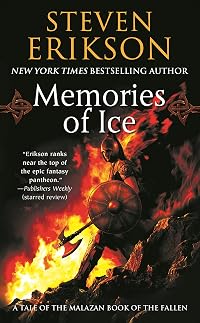
Memories of Ice
by Steven Erikson
World of Malazan (Book of the Fallen 3), Malazan Chronology (9), Malazan Book of the Fallen (3)
On This Page
Description
Marking the return of many characters from Gardens of the Moon and introducing a host of remarkable new players, Memories of Ice is both a momentous new chapter in Steven Erikson's magnificent epic fantasy and a triumph of storytelling.The ravaged continent of Genabackis has given birth to a terrifying new empire: the Pannion Domin. Like a tide of corrupted blood, it seethes across the land, devouring all. In its path stands an uneasy alliance: Onearm's army and Whiskeyjack's Bridgeburners show more alongside their enemies of old—the forces of the Warlord Caladan Brood, Anomander Rake and his Tiste Andii mages, and the Rhivi people of the plains.
But ancient undead clans are also gathering; the T'lan Imass have risen. For it would seem something altogether darker and more malign threatens this world. Rumors abound that the Crippled God is now unchained and intent on a terrible revenge.
At the Publisher's request, this title is being sold without Digital Rights Management Software (DRM) applied.
. show less
Tags
Recommendations
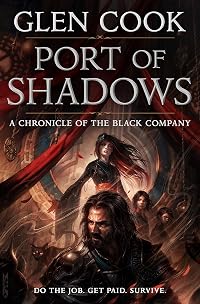
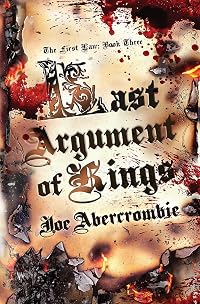
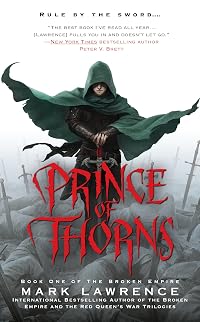
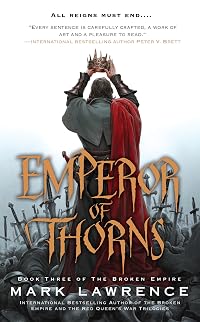


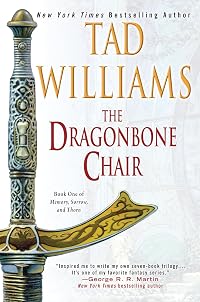
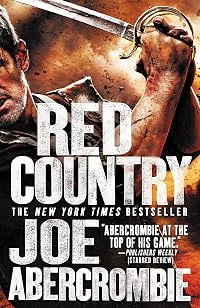

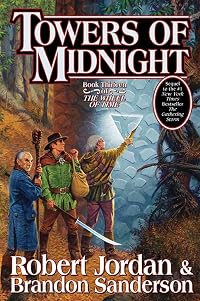
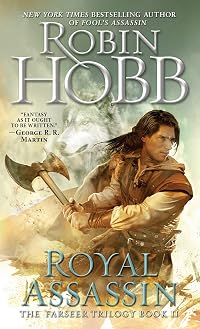
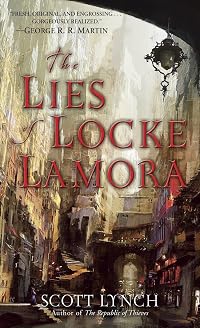
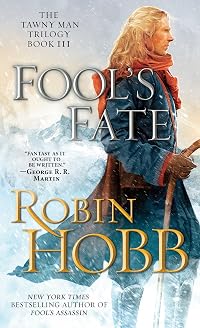
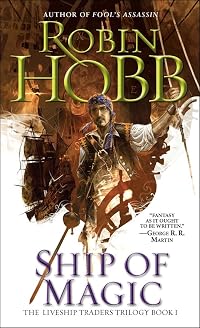

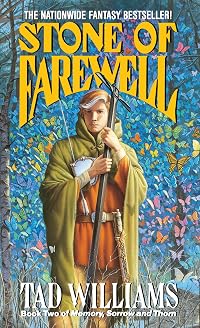

Member Recommendations
Member Reviews
By far the strongest entry in the series so far. Erikson's writing here is a big step up in a number of crucial regards. For one, he seems much more interested in character writing than in either of the previous books. There's a subtlety to the way that he approaches them that makes them leap off the page. There are many fewer disruptive POV shifts than there were in DG, and unlike that book all of the POVs here have an interesting arc. And although this book is focused on a pair of huge battles, the book has much more room for people to talk about things that aren't fighting. The Mhybe, for instance, is a great addition--a character with no interest or ability in fighting, but a strong emotional story that's worth getting invested in. show more Here we see resolved many of the threads we are introduced to in the first book. I wonder why we had to wait this long for that, but I enjoyed the story a great deal. In particular, Erikson finally gives us a sustained engagement with the story of the T'lann Imass. Overall, the book feels much tighter, more focused, and more engaging than previous entries.
There are still some issues, I think, with the construction of the book. Namely, a number of plot elements are bizarre or contrived in some of the final moments. Much of the book seems to be plotted out with an eye to increasing the drama of the final confrontation, which requires characters to make baffling, uncharacteristic moves in the middle parts of the book. I also wonder why we had to wait 2 books to finally get some details on the T'lann Imass and Jaghut--earlier books seemed to assume you'd find scattered tidbits about these factions interesting without giving you anything to hold onto.
It strikes me that this is something Erikson does often. In an earlier book, he'll give you some cryptic wisps of story about a character or faction. Then, in later books, he'll fill in the outline in such a way as to give you context for the character's or faction's previous actions--you're supposed to get the sense that, in retrospect, everything makes sense. This can have a cool effect, but sometimes I get the impression that he's working out the details as he goes along, and that the early bits we get about these characters or groups don't always match up perfectly with what we learn later. The characterization of Tool in this book, for instance, is very different from that in GoTM, and I'm not sure there's a compelling in-world explanation for that.
There are also some parts of the book that seem strangely thin to me. The Pannion Domin are the antagonists here, but the reader is given relatively little detail about them. We learn briefly about their origin, visit one of their temples, and that's about it. In fact, the book seems dedicated to talking about almost everything *but* the nature of the Domin. We are repeatedly reminded of how little our protagonists know about the empire, and many of their choices reveal their ignorance. I suppose I would have liked to see things more from the other side. Not that we need justification for the actions of a very-clearly-evil Empire, but I do wonder what the ordinary citizen believed in, what their crazy religion consisted in, how the empire ended up this way. What we learn is mostly just that more or less everyone is pure evil and dedicated to killing everyone who doesn't fall under their dominion. That is not that interesting.
Still, this is an enjoyable and engrossing read, and I feel like the story is finally starting to deliver on some of the promises of its most enthusiastic evangelists. I would almost recommend new readers to just start here and then read DG and GoTM once their interest has been piqued. The emotional core of this book is just so strong that it seems like a good place to start. show less
There are still some issues, I think, with the construction of the book. Namely, a number of plot elements are bizarre or contrived in some of the final moments. Much of the book seems to be plotted out with an eye to increasing the drama of the final confrontation, which requires characters to make baffling, uncharacteristic moves in the middle parts of the book. I also wonder why we had to wait 2 books to finally get some details on the T'lann Imass and Jaghut--earlier books seemed to assume you'd find scattered tidbits about these factions interesting without giving you anything to hold onto.
It strikes me that this is something Erikson does often. In an earlier book, he'll give you some cryptic wisps of story about a character or faction. Then, in later books, he'll fill in the outline in such a way as to give you context for the character's or faction's previous actions--you're supposed to get the sense that, in retrospect, everything makes sense. This can have a cool effect, but sometimes I get the impression that he's working out the details as he goes along, and that the early bits we get about these characters or groups don't always match up perfectly with what we learn later. The characterization of Tool in this book, for instance, is very different from that in GoTM, and I'm not sure there's a compelling in-world explanation for that.
There are also some parts of the book that seem strangely thin to me. The Pannion Domin are the antagonists here, but the reader is given relatively little detail about them. We learn briefly about their origin, visit one of their temples, and that's about it. In fact, the book seems dedicated to talking about almost everything *but* the nature of the Domin. We are repeatedly reminded of how little our protagonists know about the empire, and many of their choices reveal their ignorance. I suppose I would have liked to see things more from the other side. Not that we need justification for the actions of a very-clearly-evil Empire, but I do wonder what the ordinary citizen believed in, what their crazy religion consisted in, how the empire ended up this way. What we learn is mostly just that more or less everyone is pure evil and dedicated to killing everyone who doesn't fall under their dominion. That is not that interesting.
Still, this is an enjoyable and engrossing read, and I feel like the story is finally starting to deliver on some of the promises of its most enthusiastic evangelists. I would almost recommend new readers to just start here and then read DG and GoTM once their interest has been piqued. The emotional core of this book is just so strong that it seems like a good place to start. show less
I just finished the third installment in Steven Erikson's "Malazan Book of the Fallen" and while I loved it very much and I couldn't put it down, I am finding it pretty hard to write a review that conveys my enthusiasm for this book and this series.The main reason for this is that I want to say that this book is 'more of the same'. And that sounds like it is a bad thing, a boring thing, but for me this couldn't be farther from the truth.
The third book in a series of ten, Memories of Ice takes place right after Gardens of the Moon and during Deadhouse gates. In this book we mainly follow Dujek Onearm's army, who have been exiled from Malazan. They join forces with their former enemies Caladan Brood and Anomander Rake to fight the Pannion show more Domin. This is a new empire trying to take over everything in sight, let by a Seer, and having a terrible cult-like way of life, which includes cannibalism as a strategy of reward and feeding, and having demon-like undead creatures with swords for hands. Meanwhile, Toc the Younger, the former Claw and Onos T'ooolan the T'lan Imass warrior meet up and meet Lady Envy, a powerful sorceres who has three Segulah warriors as servants. Ganoes Paran finds he has a new role he is reluctant to accept, and we are also introduced to some new characters, new gods, and new legends. In the background The Crippled God is playing a bigger and bigger role.
When writing that short summary (without trying to spoil too much) I realize just how much was in this book. I haven't even named half the character (groups) and the new revelations in this novel. That's why it is easier for me to see these Malazan books as one long story, with each book looking at a different aspect, group of people or location but still fitting in the bigger picture. The world Steven Erikson creates is so complex that I can see links appearing between events happening in this book and the previous one, and I am sure I (with my crappy memory for plot details and characters) am missing a whole lot of the finer points. I am still addicted to these books, and I can't wait to start the next installment. Besides the complexity in legends, gods, magic and back story, I also enjoy something I loved in George R.R. Martin's books, which is that characters can die. Even the heroes, even the ones you love. And they might die, not in a grand way, but in an ugly, stupid and preventable way. That makes the books even better to me, because they feel more honest. I am glad I discovered these books while the first series is finished so I can just read them all back to back. This one also gets five out of five stars. If you liked the first two, you'll like this one. show less
The third book in a series of ten, Memories of Ice takes place right after Gardens of the Moon and during Deadhouse gates. In this book we mainly follow Dujek Onearm's army, who have been exiled from Malazan. They join forces with their former enemies Caladan Brood and Anomander Rake to fight the Pannion show more Domin. This is a new empire trying to take over everything in sight, let by a Seer, and having a terrible cult-like way of life, which includes cannibalism as a strategy of reward and feeding, and having demon-like undead creatures with swords for hands. Meanwhile, Toc the Younger, the former Claw and Onos T'ooolan the T'lan Imass warrior meet up and meet Lady Envy, a powerful sorceres who has three Segulah warriors as servants. Ganoes Paran finds he has a new role he is reluctant to accept, and we are also introduced to some new characters, new gods, and new legends. In the background The Crippled God is playing a bigger and bigger role.
When writing that short summary (without trying to spoil too much) I realize just how much was in this book. I haven't even named half the character (groups) and the new revelations in this novel. That's why it is easier for me to see these Malazan books as one long story, with each book looking at a different aspect, group of people or location but still fitting in the bigger picture. The world Steven Erikson creates is so complex that I can see links appearing between events happening in this book and the previous one, and I am sure I (with my crappy memory for plot details and characters) am missing a whole lot of the finer points. I am still addicted to these books, and I can't wait to start the next installment. Besides the complexity in legends, gods, magic and back story, I also enjoy something I loved in George R.R. Martin's books, which is that characters can die. Even the heroes, even the ones you love. And they might die, not in a grand way, but in an ugly, stupid and preventable way. That makes the books even better to me, because they feel more honest. I am glad I discovered these books while the first series is finished so I can just read them all back to back. This one also gets five out of five stars. If you liked the first two, you'll like this one. show less
Memories of Ice is the third in Erikson's epic Malazan Empire series. Chronologically this book happens simultaneously with events from Deadhouse Gates. We pick back up with Dujek Onearm's host and Whiskeyjack with his Bridgeburners a few months after their failure to take Darujjhistan. The power known as the Pannion Domin is spreading across the continent like a plague, devouring all in its path. The threat is enough that the Malazans unite with their former enemies, Caladan Brood and Anomander Rake, in an attempt to save the continent.
This book is easily my favorite of the series so far. There is so much going on at all times. This isn't fantasy for the weak of heart. Things are packed with emotion. Some of the horrifying scenes from show more Deadhouse Gates pale in comparison to what happens in Memories of Ice. To balance this Erikson has added in humor that helps lighten what is happening without cheapening anything. Beautifully written, many plot twists and he pulls off a multifaceted climax at the end. Erikson has hit his stride with this book. show less
This book is easily my favorite of the series so far. There is so much going on at all times. This isn't fantasy for the weak of heart. Things are packed with emotion. Some of the horrifying scenes from show more Deadhouse Gates pale in comparison to what happens in Memories of Ice. To balance this Erikson has added in humor that helps lighten what is happening without cheapening anything. Beautifully written, many plot twists and he pulls off a multifaceted climax at the end. Erikson has hit his stride with this book. show less
This is the 3rd in a mammoth series. A series that is spawning further series after it, and a series that is not based on some giant media property like Star Wars or Star Trek.
Now, having finished the 3rd, about 7 years after I bought it, i can give it a solid recommendation. One that you might even read as a stand-alone, though Erikson has done such a stellar job of world building that reading the first two is seriously encouraged. These books are rich. Rich in story, rich in detail, rich in pieces that are hidden to you as a reader and then a reveal happens and you know that something that just happened will be very important later even if it was trivial as you read it.
That is how rich and well planned out the writing is. In a series show more that has several million words, to think that far ahead and place a seed shows that there is a vast difference between this and something like Jordan's Wheel of Time. WOT is my favorite, but Jordan's work shows that as he was successful and more books were called for, things were added. Here, reading this work, it gives the impression that everything that you encounter was thought of before Erikson wrote the first sentence.
Something that perhaps forces Sanderson at present to reexamine how he tackles his Stormlight epic, and how others should regard their work. If you like fantasy, though this has many dark moments, and some of the abundance of magical and godlike interactions I found difficult to follow, you should be sure to add this to your library and read it. show less
Now, having finished the 3rd, about 7 years after I bought it, i can give it a solid recommendation. One that you might even read as a stand-alone, though Erikson has done such a stellar job of world building that reading the first two is seriously encouraged. These books are rich. Rich in story, rich in detail, rich in pieces that are hidden to you as a reader and then a reveal happens and you know that something that just happened will be very important later even if it was trivial as you read it.
That is how rich and well planned out the writing is. In a series show more that has several million words, to think that far ahead and place a seed shows that there is a vast difference between this and something like Jordan's Wheel of Time. WOT is my favorite, but Jordan's work shows that as he was successful and more books were called for, things were added. Here, reading this work, it gives the impression that everything that you encounter was thought of before Erikson wrote the first sentence.
Something that perhaps forces Sanderson at present to reexamine how he tackles his Stormlight epic, and how others should regard their work. If you like fantasy, though this has many dark moments, and some of the abundance of magical and godlike interactions I found difficult to follow, you should be sure to add this to your library and read it. show less
The best high fantasy has to offer in terms of literary aspiration; improved exponentially on reread. The scope is almost too vast to hold in one's head at once. A little heavy on people standing around realizing the import of the moment and weeping, but I guess I probably would too, in the circumstances.
By the way, I have this cover (and set of covers for all the paperbacks) and I detest it.
By the way, I have this cover (and set of covers for all the paperbacks) and I detest it.
What to make of the Books of the Fallen? I was rather lukewarm to the Malazan series after the first two volumes. Both Gardens of the Moon and Deadhouse Gates had their moments but were undone in various different ways. I had elected to give the series one final try with Memories of Ice and to give up on the series if it didn't sufficiently impress me. Well, impress me it did: MoI is definitely the best Malazan book so far and I've been persuaded that the series is worth continuing with after all.
In a way though, this is a curious affair. It does seem to me that it would be much better to read this book straight after GotM rather than DG. The meat of the story, of perhaps the entire series, seems to have been revealed here and that adds show more a lot of impetus to the overall story that was slightly lacking from both previous books. Then there are the little details: the Trygalle Trade Guild seemed like a huge deus ex machina in DG, but actually seems much more reasonable in the context of this book. Even the epilogue of MoI seems like a set up for reading DG thereafter. Having finished MoI, I really didn't think that much, if anything, would be spoilt by reading this book before the previous instalment. But that's just my opinion and I'm not sure how many might agree or disagree.
As for MoI on its own... It was very good. Not perfect by any means, but very good. I don't think Erikson is quite as good a writer as the likes of Abercrombie or GRRM are, or at least he's not as consistent. Erikson's dialogue can veer from sharp and insightful to clunky, and there are times when events are recounted and explained for us in such an obvious way that it's silly. Yet for all of that the siege of Capustan and the assault on Coral are set piece spectaculars that will live long in my memory alongside other memorable recent fantasy chapters like the Red Wedding. After three books I feel like I'm comfortable in knowing what to expect from Erikson in terms of prose: very solid, capable of the odd misstep but still with an ability to write scenes of great power.
Although, for all his many words and pages, I'm still not entirely convinced about Erikson's ability to write nuanced characters or even detail his fantasy world. The likes of Dujek and Whiskeyjack are likeable characters but I'm not sure I could say what type of person they were beyond, honourable and reliable. In fact many of the characters in this novel fall into that sort of category. They're enjoyable to spend time with but they're not all that distinct, something I think seen most obviously in the slightly amorphous unit that are the Bridgeburners. Similarly, although Erikson has given his world a long history some of its more recent aspect feel rather vague, even after some 3000 pages. For me the most obvious example of this is the Malazan empire itself - 3000 pages and I don't know much of its structure, how it came to be or even its motivations for expansion (perhaps I'm supposed to assume that's just what empires do?). This might be fleshed out in future books (and Erikson has certainly answered some of my early criticisms as the series has progressed) but when these books are so long it feels a little frustrating to notice some central parts of the world aren't fully rounded.
As ever it's easier to focus on what you don't like than what you do but one thing I must give Erikson special credit for is having woven a story which mixes very well an immediate and low level threat with a greater but further off danger. I think in this area the author has done as well as the likes of GRRM in A Song of Ice and Fire in balancing out the needs for action now with a greater danger further down the line.
Every Malazan book is a mammoth undertaking but I'm glad I gave the series one more try. The story came to life this time round and even if the characters aren't all wonderfully multi-faceted I was still gripped by the carnage that unfolded in MoI. I now want to know where the story will go and how it will be resolved - and at the end of the day you can't ask for too much more than that. I'm finally a believer, I think the Malazan series really is worth the effort. show less
In a way though, this is a curious affair. It does seem to me that it would be much better to read this book straight after GotM rather than DG. The meat of the story, of perhaps the entire series, seems to have been revealed here and that adds show more a lot of impetus to the overall story that was slightly lacking from both previous books. Then there are the little details: the Trygalle Trade Guild seemed like a huge deus ex machina in DG, but actually seems much more reasonable in the context of this book. Even the epilogue of MoI seems like a set up for reading DG thereafter. Having finished MoI, I really didn't think that much, if anything, would be spoilt by reading this book before the previous instalment. But that's just my opinion and I'm not sure how many might agree or disagree.
As for MoI on its own... It was very good. Not perfect by any means, but very good. I don't think Erikson is quite as good a writer as the likes of Abercrombie or GRRM are, or at least he's not as consistent. Erikson's dialogue can veer from sharp and insightful to clunky, and there are times when events are recounted and explained for us in such an obvious way that it's silly. Yet for all of that the siege of Capustan and the assault on Coral are set piece spectaculars that will live long in my memory alongside other memorable recent fantasy chapters like the Red Wedding. After three books I feel like I'm comfortable in knowing what to expect from Erikson in terms of prose: very solid, capable of the odd misstep but still with an ability to write scenes of great power.
Although, for all his many words and pages, I'm still not entirely convinced about Erikson's ability to write nuanced characters or even detail his fantasy world. The likes of Dujek and Whiskeyjack are likeable characters but I'm not sure I could say what type of person they were beyond, honourable and reliable. In fact many of the characters in this novel fall into that sort of category. They're enjoyable to spend time with but they're not all that distinct, something I think seen most obviously in the slightly amorphous unit that are the Bridgeburners. Similarly, although Erikson has given his world a long history some of its more recent aspect feel rather vague, even after some 3000 pages. For me the most obvious example of this is the Malazan empire itself - 3000 pages and I don't know much of its structure, how it came to be or even its motivations for expansion (perhaps I'm supposed to assume that's just what empires do?). This might be fleshed out in future books (and Erikson has certainly answered some of my early criticisms as the series has progressed) but when these books are so long it feels a little frustrating to notice some central parts of the world aren't fully rounded.
As ever it's easier to focus on what you don't like than what you do but one thing I must give Erikson special credit for is having woven a story which mixes very well an immediate and low level threat with a greater but further off danger. I think in this area the author has done as well as the likes of GRRM in A Song of Ice and Fire in balancing out the needs for action now with a greater danger further down the line.
Every Malazan book is a mammoth undertaking but I'm glad I gave the series one more try. The story came to life this time round and even if the characters aren't all wonderfully multi-faceted I was still gripped by the carnage that unfolded in MoI. I now want to know where the story will go and how it will be resolved - and at the end of the day you can't ask for too much more than that. I'm finally a believer, I think the Malazan series really is worth the effort. show less
I was looking forward to this third volume since many Malazan readers cite it as their favourite. MoI quickly establishes itself as the easiest read of the series so far. Not only is it headlined by a broad assortment of characters we've already met, but the writing style has become less coy. Chapter Three, for example, is a paragon of informing the reader what's happening: we're given all the information we need to understand who the major players are and what the situation is. Erikson has rarely been so forthcoming as that. There's an abundance of character interactions I was intrigued by when two camps of former enemies must unite against a common foe. We begin to see what manner of opposition could possibly challenge their combined show more strength, and what the true stakes for the series as a whole will be.
Through the first half, it really is a book that's difficult to put down and I felt this was easily the most engaging fantasy novel I've read in a long time. This mood carried me into and through the grim battle scenes in the middle that get a bit horrific, but are described in a factual way that prevented them from crossing my tolerance threshold. Similar to my experience with Deadhouse Gates, I wasn't deeply affected by these scenes no matter how grim they became. It might be my having read enough non-fiction about true life horror to make anything fictional pale by comparison. Less promising interpretation: the general 'sameness' of the characterizations shows its downside in these scenes, like watching a child randomly inflict casualties among rows of toy soldiers. Towards the end some of these events were more effective when they hit closer to home.
I wasn't always enthused about the use of humour. I like soldier dialogue, but the novel's third quarter has too much of it and the story lags a bit. Dire attention was no longer required when reading every page during the casual scenes with little consequence. Worst for me were the slapstick bits: Quick Ben drops Kallor down a hole, Picker confronts Bauchelain and Korbal Broach, Emancipor's toothache. I can't see what purpose Bauchelain and Korbal Broach serve. They're the stars of some related short fiction the author's written outside of the series, but in MOI they are only a sideshow.
If the entire series of ten books could be reissued as a trilogy, MOI would conclude its first volume. It builds on everything we've learned about the Malazan's world so far and sets up the series' true framework. There's some great links to the second volume's events which took place simultaneously. Best of all, I'm finally comfortable with the workings of this world (even as I'm sure there are surprises yet to come.) This is my primary enjoyment of the series - being challenged by its scale. MOI as a novel didn't quite impress me to the degree I expected, but it easily kept me invested in following Erikson's world and characters into the next book. show less
Through the first half, it really is a book that's difficult to put down and I felt this was easily the most engaging fantasy novel I've read in a long time. This mood carried me into and through the grim battle scenes in the middle that get a bit horrific, but are described in a factual way that prevented them from crossing my tolerance threshold. Similar to my experience with Deadhouse Gates, I wasn't deeply affected by these scenes no matter how grim they became. It might be my having read enough non-fiction about true life horror to make anything fictional pale by comparison. Less promising interpretation: the general 'sameness' of the characterizations shows its downside in these scenes, like watching a child randomly inflict casualties among rows of toy soldiers. Towards the end some of these events were more effective when they hit closer to home.
I wasn't always enthused about the use of humour. I like soldier dialogue, but the novel's third quarter has too much of it and the story lags a bit. Dire attention was no longer required when reading every page during the casual scenes with little consequence. Worst for me were the slapstick bits: Quick Ben drops Kallor down a hole, Picker confronts Bauchelain and Korbal Broach, Emancipor's toothache. I can't see what purpose Bauchelain and Korbal Broach serve. They're the stars of some related short fiction the author's written outside of the series, but in MOI they are only a sideshow.
If the entire series of ten books could be reissued as a trilogy, MOI would conclude its first volume. It builds on everything we've learned about the Malazan's world so far and sets up the series' true framework. There's some great links to the second volume's events which took place simultaneously. Best of all, I'm finally comfortable with the workings of this world (even as I'm sure there are surprises yet to come.) This is my primary enjoyment of the series - being challenged by its scale. MOI as a novel didn't quite impress me to the degree I expected, but it easily kept me invested in following Erikson's world and characters into the next book. show less
Members
- Recently Added By
Lists

Best Fantasy Novels
821 works; 361 members

NPRs your picks: top 100 Sci-Fi/Fantasy books
297 works; 80 members

Top Five Books of 2021
604 works; 181 members

Books Read in 2016
4,666 works; 197 members

Recommend Fantasy Books
100 works; 1 member
Author Information

Steven Erikson, a pseudonym used by Steven Rune Lundin, was born in Toronto, Canada on October 7, 1959. He is an anthropologist and archaeologist by training and a graduate of the Iowa Writer's Workshop. He is the author of the Malazan Book of the Fallen series and the Bauchelain and Korbal Broach series. (Bowker Author Biography)
Some Editions
Awards and Honors
Notable Lists
Series

World of Malazan
33 works (Book of the Fallen 3)

Malazan Chronology
23 works (9)

Malazan Book of the Fallen
10 works (3)
Belongs to Publisher Series
Science Fiction Book Club (1197768)
Work Relationships
Is contained in
Common Knowledge
- Canonical title
- Memories of Ice
- Original title
- Memories of Ice
- Original publication date
- 2001-12-06
- People/Characters
- Anomander Rake; Toc the Younger; Onos T'oolan 'Tool'; Dujek Onearm; Malazan 2nd Army; Caladan Brood (show all 21); Whiskeyjack; Korlat; Quick Ben; Grey Swords; The Crippled God; Ganoes Paran; Shadowthrone; Cotillion; Silverfox; Serrat; Kruppe; Empress Laseen; Barghast White Faces; Envy; Tayschrenn (Artanthos)
- Important places
- Malazan Empire; Coral; Genabackis; City of Pale; Darujhistan; Pannion Domin (show all 8); Moon's Spawn; City of Capustan
- Dedication
- To R. S. Lundin
- First words
- Swallows darted through the clouds of midges dancing over the mudflats.
- Last words
- (Click to show. Warning: May contain spoilers.)'This is the story of the Chain of Dogs. Of Coltaine of the Crow Clan, newly come Fist to the 7th Army...'
- Original language
- English, UK
- Disambiguation notice
- For the German-language version of the series 'Das Spiel der Götter', this book was split into two volumes - 'Die eisige Zeit' (2001) ISBN 3-442-24997-X and 'Der Tag des Sehers' (2001) ISBN 3-442-24998-8
Please do not co... (show all)mbine these works
Classifications
Statistics
- Members
- 3,580
- Popularity
- 4,587
- Reviews
- 70
- Rating
- (4.37)
- Languages
- 10 — Czech, Dutch, English, French, Hungarian, Italian, Polish, Romanian, Slovak, Spanish
- Media
- Paper, Audiobook, Ebook
- ISBNs
- 31
- ASINs
- 19