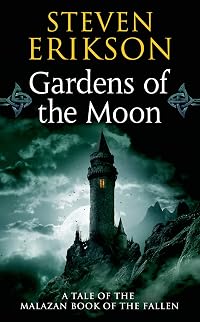
Gardens of the Moon
by Steven Erikson
World of Malazan (Book of the Fallen 1), Malazan Book of the Fallen (1), Malazan Chronology (7)
On This Page
Description
Vast legions of gods, mages, humans, dragons and all manner of creatures play out the fate of the Malazan Empire in this first book in a major epic fantasy series from Steven Erikson.The Malazan Empire simmers with discontent, bled dry by interminable warfare, bitter infighting and bloody confrontations with the formidable Anomander Rake and his Tiste Andii, ancient and implacable sorcerers. Even the imperial legions, long inured to the bloodshed, yearn for some respite. Yet Empress show more Laseen's rule remains absolute, enforced by her dread Claw assassins.
For Sergeant Whiskeyjack and his squad of Bridgeburners, and for Tattersail, surviving cadre mage of the Second Legion, the aftermath of the siege of Pale should have been a time to mourn the many dead. But Darujhistan, last of the Free Cities of Genabackis, yet holds out. It is to this ancient citadel that Laseen turns her predatory gaze.
However, it would appear that the Empire is not alone in this great game. Sinister, shadowbound forces are gathering as the gods themselves prepare to play their hand...
Conceived and written on a panoramic scale, Gardens of the Moon is epic fantasy of the highest order—an enthralling adventure by an outstanding new voice.
At the Publisher's request, this title is being sold without Digital Rights Management Software (DRM) applied.
. show less
Tags
Recommendations
Member Recommendations
majkia Both feature war-torn landscapes, confusing and conflicting motivations for main characters, and focus on complex characters whose loyalties are strained and oftentimes change.
131
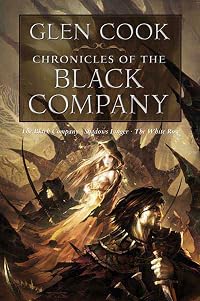
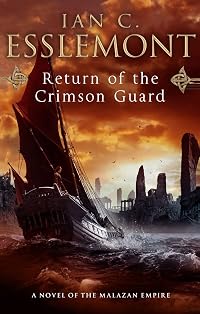
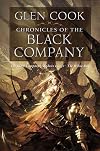
saltmanz If you love the Malazan Book of the Fallen (or even just the Bridgeburners) chances are you'll also enjoy Glen Cook's "Chronicles of the Black Company" series.
100
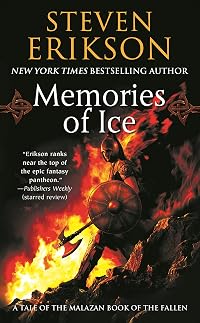
Donogh Recommending the second book of a series based on the fact that you've read the first - that's pretty weak usually. But I think it's worthwhile. Why? Because Gardens of the Moon is a poorly written and confusing book. If I'd not been forewarned and told that The Deadhouse Gates and Memories of Ice were significantly better I would've dropped this series in an instant.
So if the world seemed interesting but you didn't like this, do yourself a favour: stick with it and pick up The Deadhouse Gates
70
Konran Both series have complex characters, epic storylines, and detailed worldbuilding.
20
simon211175 Very similar, although Cook's work is better written.
21
WeeTurtle Third in the Malazan Series but acts as the sequel to Gardens of the Moon, specifically. Recommended even if one decides not to continue through the entire series.
Member Reviews
review is written with a GPL 3.0 license and the rights contained therein shall supersede all TOS by any and all websites in regards to copying and sharing without proper authorization and permissions. Crossposted at WordPress, Blogspot, Booklikes & Librarything by Bookstooge’s Exalted Permission.
Title: Gardens of the Moon
Series: Malazan Book of the Fallen #1
Author: Steven Erikson
Rating: 5 of 5 Stars
Genre: Fantasy
Pages: 688
Format: Kindle Digital edition
Synopsis: Spoilers!
The Malazan Empire, now ruled by Empress Laseen, is on the path of expansion through total war. The last Free City on the continent of Genabackis, Darujhistan, is the next city in the sights of the Empire. Wracked from within by politics and threatened without by show more armies and mages, Darujhistan doesn't stand a chance.
Enter Rake, Lord of Moonspawn, a floating city, sorcerer supreme. Having allied with the Crimson Guard, might mercenaries and mages, Rake allies with the lords of Darujhistan to fight the Empire, but for his own reasons.
To counter this threat, Laseen has set into motion several plans, one of which is to find and unleash an ancient terror, a Jahgut Tyrant, a veritable god of power. Laseen means to pit the Tyrant against Rake and then to take down the weakened winner.
Enter the Bridgeburners. Loyal servants to the Empire and the old Emperor, who Laseen assassinated to become Empress. The Bridgeburners are meant for extinction, as Laseen can't have anyone around who isn't loyal to her. But the survivors are crafty, powerful and full of tricks of their own. They are meant to take Darujhistan and die, but they have other plans, plans of their own.
Unfortunately for everyone, there is a veritable cornucopia of gods, ancient powers and beings so old and so powerful that they might as well be gods. When humans can become gods, gods can become extinct and power is all, nobody can predict what will result.
My Thoughts: Spoilers!
(For clarity's sake, I read this in June 2008 and again in December 2009. That link contains both my reviews in one review as Goodreads didn't have a re-read option and when importing to Booklikes I didn't feel like going through my 2000+ reviews and fixing "little" things like that.)
That synopsis barely scratches the surface of this book. In the forward Erikson tells us straight out that he will not be spoon feeding his readers anything and that he purposefully wrote things so as to make the readers work for connections. There are no obvious connections or explanations, there is Unexplained History of both nations and individuals and you are forced to hold on for your life or be thrown off the ride.

And what a ride this is! With this 3rd read I feel like I've finally got a little bit of a handle on this world. Since I have read the whole series, now I can begin to cobble it together. It helped that this time around I wasn't expecting all the threads started here to ever be finished or to connect. I have also finally accepted that this is The Book of the Fallen, which means that this is about people dying, not people winning or overcoming insurmountable odds. And even if they do win and overcome those odds, odds are they are still going to die.
At just under 700 pages, I believe this is the shortest of this decalogy. In one way it is the hardest of the books, as you have to sink or swim in terms of the world. Everything is new and unfamiliar and you simply don't know what is going on. In another way I found it the easiest of the books, as the action is relatively straight forward, the plot only slightly convoluted and the scope is kept pretty focused. When reading this for the first time you simply don't know how big the world is that Erikson has created nor do you know that the various narrators are only telling you what "they" know. Semi-unreliable not because they're trying to lie to you but because they have a very limited knowledge. Everything you learn in Gardens of the Moon is not necessarily true.
I added the "favorite" tag because this is the 3rd time I've read this and I still enjoyed the heck out of it while reading. It was a joy to read Erikson's prose, because while he is not sparse in his writins, nor is he turgid and bloviated. He walked that razor thin line of not writing to much or to little.
One thing to note. The kindle edition that I read had several noticeable OCR errors. There was a character named Coll, whose name came out as Coil more than a handful of times. Same for a guy named Toc the Younger. He became Toe the Younger half the time. I checked my hardcover and those errors were not there. I also don't know if those errors exist in the current kindle edition. I bought these when they first came out and promptly de-drm'd them and stuck them in calibre, so any updates would not have touched them. A potential issue if you're buying digital copies. show less
Title: Gardens of the Moon
Series: Malazan Book of the Fallen #1
Author: Steven Erikson
Rating: 5 of 5 Stars
Genre: Fantasy
Pages: 688
Format: Kindle Digital edition
Synopsis: Spoilers!
The Malazan Empire, now ruled by Empress Laseen, is on the path of expansion through total war. The last Free City on the continent of Genabackis, Darujhistan, is the next city in the sights of the Empire. Wracked from within by politics and threatened without by show more armies and mages, Darujhistan doesn't stand a chance.
Enter Rake, Lord of Moonspawn, a floating city, sorcerer supreme. Having allied with the Crimson Guard, might mercenaries and mages, Rake allies with the lords of Darujhistan to fight the Empire, but for his own reasons.
To counter this threat, Laseen has set into motion several plans, one of which is to find and unleash an ancient terror, a Jahgut Tyrant, a veritable god of power. Laseen means to pit the Tyrant against Rake and then to take down the weakened winner.
Enter the Bridgeburners. Loyal servants to the Empire and the old Emperor, who Laseen assassinated to become Empress. The Bridgeburners are meant for extinction, as Laseen can't have anyone around who isn't loyal to her. But the survivors are crafty, powerful and full of tricks of their own. They are meant to take Darujhistan and die, but they have other plans, plans of their own.
Unfortunately for everyone, there is a veritable cornucopia of gods, ancient powers and beings so old and so powerful that they might as well be gods. When humans can become gods, gods can become extinct and power is all, nobody can predict what will result.
My Thoughts: Spoilers!
(For clarity's sake, I read this in June 2008 and again in December 2009. That link contains both my reviews in one review as Goodreads didn't have a re-read option and when importing to Booklikes I didn't feel like going through my 2000+ reviews and fixing "little" things like that.)
That synopsis barely scratches the surface of this book. In the forward Erikson tells us straight out that he will not be spoon feeding his readers anything and that he purposefully wrote things so as to make the readers work for connections. There are no obvious connections or explanations, there is Unexplained History of both nations and individuals and you are forced to hold on for your life or be thrown off the ride.
And what a ride this is! With this 3rd read I feel like I've finally got a little bit of a handle on this world. Since I have read the whole series, now I can begin to cobble it together. It helped that this time around I wasn't expecting all the threads started here to ever be finished or to connect. I have also finally accepted that this is The Book of the Fallen, which means that this is about people dying, not people winning or overcoming insurmountable odds. And even if they do win and overcome those odds, odds are they are still going to die.
At just under 700 pages, I believe this is the shortest of this decalogy. In one way it is the hardest of the books, as you have to sink or swim in terms of the world. Everything is new and unfamiliar and you simply don't know what is going on. In another way I found it the easiest of the books, as the action is relatively straight forward, the plot only slightly convoluted and the scope is kept pretty focused. When reading this for the first time you simply don't know how big the world is that Erikson has created nor do you know that the various narrators are only telling you what "they" know. Semi-unreliable not because they're trying to lie to you but because they have a very limited knowledge. Everything you learn in Gardens of the Moon is not necessarily true.
I added the "favorite" tag because this is the 3rd time I've read this and I still enjoyed the heck out of it while reading. It was a joy to read Erikson's prose, because while he is not sparse in his writins, nor is he turgid and bloviated. He walked that razor thin line of not writing to much or to little.
One thing to note. The kindle edition that I read had several noticeable OCR errors. There was a character named Coll, whose name came out as Coil more than a handful of times. Same for a guy named Toc the Younger. He became Toe the Younger half the time. I checked my hardcover and those errors were not there. I also don't know if those errors exist in the current kindle edition. I bought these when they first came out and promptly de-drm'd them and stuck them in calibre, so any updates would not have touched them. A potential issue if you're buying digital copies. show less
I genuinely cannot decide if it's actually good or not. Artificially complex, lacking in suitable scale, not enough satisfying pay offs, little in the ways of actual excitement and not enough strong character work for its wide cast, whilst relying at times on cheap plot devices.
And yet somehow, it all just seems to work. Enough for me to look at book 2 at least. Many will abandon this long before anything noteworthy happens and I can't say I blame them.
It's a difficult book to recommend. There's some wonderful craftmanship going on here, but often at the sacrifice of strong storytelling. Crushed under the weight of its own ambition, the overall scale feels too small to satisfy as an epic and the sheer amount of threads that twist and show more turn at the end- throwing in more and more as the final Act unfolds - makes for a mess, with a wearying amount of feints and misdirections. But it's this breaking away from the predictable tropes that paradoxically makes it so riveting to behold. Like a car pile up that never stops adding more cars from roads you never knew existed and yet you just can't turn away from watching it happen.
If you like fantasy that is very fluently written, but heavy on intricate interwoven threads that play out like chess pieces that never seek their checkmate - with a wide cast, a solid magic system, and low levels of action - there's certainly something here to grab onto. Whilst far better fantasy books out there exist, I suspect the cardinal sin of needing to buy into the wider series for this all to finally click into place is what is needed.
For now though despite all its flaws, I finished it and I am invested enough to explore onwards to see how things unfold as a saga show less
And yet somehow, it all just seems to work. Enough for me to look at book 2 at least. Many will abandon this long before anything noteworthy happens and I can't say I blame them.
It's a difficult book to recommend. There's some wonderful craftmanship going on here, but often at the sacrifice of strong storytelling. Crushed under the weight of its own ambition, the overall scale feels too small to satisfy as an epic and the sheer amount of threads that twist and show more turn at the end- throwing in more and more as the final Act unfolds - makes for a mess, with a wearying amount of feints and misdirections. But it's this breaking away from the predictable tropes that paradoxically makes it so riveting to behold. Like a car pile up that never stops adding more cars from roads you never knew existed and yet you just can't turn away from watching it happen.
If you like fantasy that is very fluently written, but heavy on intricate interwoven threads that play out like chess pieces that never seek their checkmate - with a wide cast, a solid magic system, and low levels of action - there's certainly something here to grab onto. Whilst far better fantasy books out there exist, I suspect the cardinal sin of needing to buy into the wider series for this all to finally click into place is what is needed.
For now though despite all its flaws, I finished it and I am invested enough to explore onwards to see how things unfold as a saga show less
What a difficult book to review... I liked it and read it at a brisk pace, which should indicate I liked it a lot... but I can't in good conscience give it more than a 3.
The main issue a lot of people seem to have with this book is that it just throws you in media res to the deep end of a fully-fledged world and that it's hard to make sense of what's happening. That's partly true, though a lot of books are very successful at it. This one isn't, mainly because it's all over the fucking place. First of all, the author seems to suffer from awesomeitis, that is, he wants to put all the awesome stuff he thought of into this book. That's why you end up with a dozen viewpoint characters, plots and foreshadowing that won't pay off until the show more latter books in the series (hopefully, as I haven't read them) and a sense that all characters (with the exception of Kruppe) are pretty much alike. He doesn't stop to develop any character at all, even Whiskeyjack (who seems to be one of the main characters) doesn't get any development or even insights. The ones who do (Captain Paras, Adjunct Lorn, Rallick Nom, Crokus) don't benefit from the attention, since their "character arcs" are so overt and clichèd that you end up kind of hating them. Thus, the ones that tend to retain the reader's interest are Whiskeyjack and Quick Ben (since they get little direct exposure and seem slightly more nuanced) and Kruppe.
The strong point, as should be expected, is the plotting and worldbuilding. Given the 10-volume nature of it, I can't really say if the worldbuilding is tight or just a big old mess, since we mostly get name-droppings and hints in this book. There seems to be a magic system that appears more complicated at first than it probably is (due mostly to not bothering to explain any of it, due to the author's "hatred of exposition", as he says in the prologue. It's funny he doesn't realize he uses exposition a lot of the time, only he focuses it on things that needn't be explained, while basic things like the magic system, the extent of the empire, little things like that, get no explanation). The plotting is mostly tight, with all the various strands converging at the end of the story, in a very long climax that mostly pays off (though you can see some of the twists a mile away and some of the others feel too "deus ex machina").
Still, as I said, it's an enjoyable and brisk read, though it feels at times like an overly-complicated telling of an AD&D campaign more than a well-written book. In this and due to the meandering, unfocused storytelling, Erikson seems light-years behind other modern fantasists like Brandon Sanderson, Patrick Rothfuss and others. He seems "old-school", which shouldn't be the case, but compared to G.R.R. Martin, for example, he seems positively a product of the 80's or 90's. He seems much closer to Robert Jordan and his messy, meandering ouvre than to any of the authors who are revolutionizing fantasy.
I'll probably give the second book in the series a try, to see if it's on an upward swing, but won't read the full 10 volumes if it seems to be a "Wheel of Time" in the making... show less
The main issue a lot of people seem to have with this book is that it just throws you in media res to the deep end of a fully-fledged world and that it's hard to make sense of what's happening. That's partly true, though a lot of books are very successful at it. This one isn't, mainly because it's all over the fucking place. First of all, the author seems to suffer from awesomeitis, that is, he wants to put all the awesome stuff he thought of into this book. That's why you end up with a dozen viewpoint characters, plots and foreshadowing that won't pay off until the show more latter books in the series (hopefully, as I haven't read them) and a sense that all characters (with the exception of Kruppe) are pretty much alike. He doesn't stop to develop any character at all, even Whiskeyjack (who seems to be one of the main characters) doesn't get any development or even insights. The ones who do (Captain Paras, Adjunct Lorn, Rallick Nom, Crokus) don't benefit from the attention, since their "character arcs" are so overt and clichèd that you end up kind of hating them. Thus, the ones that tend to retain the reader's interest are Whiskeyjack and Quick Ben (since they get little direct exposure and seem slightly more nuanced) and Kruppe.
The strong point, as should be expected, is the plotting and worldbuilding. Given the 10-volume nature of it, I can't really say if the worldbuilding is tight or just a big old mess, since we mostly get name-droppings and hints in this book. There seems to be a magic system that appears more complicated at first than it probably is (due mostly to not bothering to explain any of it, due to the author's "hatred of exposition", as he says in the prologue. It's funny he doesn't realize he uses exposition a lot of the time, only he focuses it on things that needn't be explained, while basic things like the magic system, the extent of the empire, little things like that, get no explanation). The plotting is mostly tight, with all the various strands converging at the end of the story, in a very long climax that mostly pays off (though you can see some of the twists a mile away and some of the others feel too "deus ex machina").
Still, as I said, it's an enjoyable and brisk read, though it feels at times like an overly-complicated telling of an AD&D campaign more than a well-written book. In this and due to the meandering, unfocused storytelling, Erikson seems light-years behind other modern fantasists like Brandon Sanderson, Patrick Rothfuss and others. He seems "old-school", which shouldn't be the case, but compared to G.R.R. Martin, for example, he seems positively a product of the 80's or 90's. He seems much closer to Robert Jordan and his messy, meandering ouvre than to any of the authors who are revolutionizing fantasy.
I'll probably give the second book in the series a try, to see if it's on an upward swing, but won't read the full 10 volumes if it seems to be a "Wheel of Time" in the making... show less
The first book in Erikson's fantastic series, Gardens of the Moon drops you right into the action. From discovering the horrific massacre on Itko Kan, to the siege of Pale, the opening chapters of the book display its ruthless attitude towards war and the games played by the Gods. Gods and Ascendants prove a major role in the world, powerful beings of ever-differing character; from those who seek to meddle to those indifferent to the affairs of mortals.
Erikson's universe is huge in scope, and while you don't get the full extent of it in Gardens, you can come to understand the vastness that Erikson fills out into during his later books. The book focuses on the expansion of the Malazan empire across the continent known as Genabackis, and show more how their weary army trundles onwards, from battle to battle, city to city.
This book serves mostly as a setup for the events that follow, but it introduces many characters that become prevalent throughout the books that follow, in particular Ganoes Paran and the Bridgeburners. The Bridgeburners are legendary in the second army, and prove to be very likable characters. They're tough soldiers who have been put time and time again into bad positions, and their options suddenly aren't looking that great. The other half of the book focuses on the inhabitants of the 'lone jewel' of the continent of Genabackis; Darujhistan, and how their lives come to interfere with those of the Malazan soldiers.
Gardens of the Moon is a tragic tale of war, and all that war entails. It does not shirk from the destruction and death that occur during the pursuit of conquest, it shows a somewhat gritty tale of soldiers just trying to get from one day to the next. show less
Erikson's universe is huge in scope, and while you don't get the full extent of it in Gardens, you can come to understand the vastness that Erikson fills out into during his later books. The book focuses on the expansion of the Malazan empire across the continent known as Genabackis, and show more how their weary army trundles onwards, from battle to battle, city to city.
This book serves mostly as a setup for the events that follow, but it introduces many characters that become prevalent throughout the books that follow, in particular Ganoes Paran and the Bridgeburners. The Bridgeburners are legendary in the second army, and prove to be very likable characters. They're tough soldiers who have been put time and time again into bad positions, and their options suddenly aren't looking that great. The other half of the book focuses on the inhabitants of the 'lone jewel' of the continent of Genabackis; Darujhistan, and how their lives come to interfere with those of the Malazan soldiers.
Gardens of the Moon is a tragic tale of war, and all that war entails. It does not shirk from the destruction and death that occur during the pursuit of conquest, it shows a somewhat gritty tale of soldiers just trying to get from one day to the next. show less
So, there's a baddie sorceress woman who's made herself Empress, some other unsavory sorcerer-types who want to depose her, a handful of soldiers of various types, a bunch of fighting, and...? Other...stuff? Honestly, I couldn't be arsed to pay the attention needed to sort through all of this business. I like high fantasy. I really, very much do. But this was nuts. Erikson tries to set out his world building all at once in a big brain dump right in the first few pages and it's just too much. Then he seems to realize how unwieldy that is and around page 10 starts trying to lay more of it out in the hint-hint-nudge-nudge way (having characters make off-hand references to geographic and ethnic details and then just leaving them there as show more foreshadows to be sorted out later), but this is also at best clumsy and unwieldy and at worst just very much more confusing-making. If any of the characters or plot details had grabbed me, I would have tried to shuffle on, but by 50 pages in, nothing had yet seemed worth the massive effort it feels like it would take to sort it all out. And that shouldn't really be my job as the reader, so yeah. I'm jumping ship. show less
It took me five separate tries over ten years but I finally made it all the way through this one.
I think I can see why it has so many fans, but I'm not able to get on that train with them. We're just looking for different things. If you want huge worlds with ancient cultures and an almost Lovecraftian sense of elder races, then Malazan might well be your thing. But if your jam is nuanced characters with individual personalities and rich emotional arcs, you best keep looking.
Having finally finished it though, I was still curious about why it took me so many tries to reach the end. After all, it couldn't have been the lack of character arcs because there's no way I had picked up on that when I was bailing at the 100-page marker. There show more must have been something else going on that was pushing me away. Something more clearly evident in those opening pages. So I went back and reread them more closely and I think I've uncovered two things that triggered my repeated early departures.
Floating heads
One of the first things I noticed (when I started looking for it) was how often I felt untethered from the events of the story. I was constantly struggling to picture what was going on. This is not normally a problem for me, and when it does happen, it's usually because there isn't enough description to give my mental camera anything to look at, but that's not the case here. Indeed, Erikson spends a generous chunk of his word allotment on description. But when I looked closer, I realized that there was in fact a gap. Most of what he's describing seems to be big stuff. Things in the distance. He sets his scenes by giving us a sketch of the architecture and terrain that bound the action, which is all good, but after that, he pays almost no attention to what's going on up close; what I call the "choreography" within the scene - the sense of who is standing where and how they move as the action unfolds. As a result, my imagination had no recourse but to show me the characters floating in a gray fog, bounded by all that beautifully depicted ancient architecture.
Still, if it had been just that one problem, I think I might have finished the book long ago. Alas, it was not alone. And I think this next issue has been the real coffin nail for me in those earlier attempts.
Intimatus Interruptus
The story of Malazan is vast and so, of necessity, it is told from multiple POVs. This in itself doesn't bother me. Stories with a large scope often NEED multiple POVs to convey the entire scope, and I've loved many books that do this. (In fact many of my own books do it too.)
But what put me off here is what I will describe as a sort of "jerkiness" in the transitions. It felt like I was often being yanked out of scenes before they were completely finished. Not that we were jumping away before the necessary action had concluded, but I still felt that there was something missing. And that "something," I think, may have been the dimension of "emotional impact."
The point of any scene in a novel is to convey an event or interaction that is important to the story, and by extension, is somehow important to the characters. But time and again, Erikson presents us with an important scene and then jumps away without giving us much sense of the POV character's reaction to what's just happened. Or if we ARE told, it's in the manner of authorial "telling," and we're rarely SHOWN the impact in a way that let's us feel it for ourselves.
This is entirely in keeping with the more distant POV voice Erikson is writing in, but it feels too clinical to me; we are given plenty of facts but not nearly enough emotional resonance. It's as though I'm watching the story through the eyes of an autistic narrator for whom the human emotional landscape is an opaque mystery and so is left almost entirely undocumented.
But since I AM a reader who is interested in those emotional resonances, the dearth of them in Malazan was enough to put me off. And taking these two issues together, I think I have to conclude that in all those previous attempts to read Gardens of the Moon, I was being pushed out for a reason that will be familiar to most IOD followers.
I was unable to immerse. show less
I think I can see why it has so many fans, but I'm not able to get on that train with them. We're just looking for different things. If you want huge worlds with ancient cultures and an almost Lovecraftian sense of elder races, then Malazan might well be your thing. But if your jam is nuanced characters with individual personalities and rich emotional arcs, you best keep looking.
Having finally finished it though, I was still curious about why it took me so many tries to reach the end. After all, it couldn't have been the lack of character arcs because there's no way I had picked up on that when I was bailing at the 100-page marker. There show more must have been something else going on that was pushing me away. Something more clearly evident in those opening pages. So I went back and reread them more closely and I think I've uncovered two things that triggered my repeated early departures.
Floating heads
One of the first things I noticed (when I started looking for it) was how often I felt untethered from the events of the story. I was constantly struggling to picture what was going on. This is not normally a problem for me, and when it does happen, it's usually because there isn't enough description to give my mental camera anything to look at, but that's not the case here. Indeed, Erikson spends a generous chunk of his word allotment on description. But when I looked closer, I realized that there was in fact a gap. Most of what he's describing seems to be big stuff. Things in the distance. He sets his scenes by giving us a sketch of the architecture and terrain that bound the action, which is all good, but after that, he pays almost no attention to what's going on up close; what I call the "choreography" within the scene - the sense of who is standing where and how they move as the action unfolds. As a result, my imagination had no recourse but to show me the characters floating in a gray fog, bounded by all that beautifully depicted ancient architecture.
Still, if it had been just that one problem, I think I might have finished the book long ago. Alas, it was not alone. And I think this next issue has been the real coffin nail for me in those earlier attempts.
Intimatus Interruptus
The story of Malazan is vast and so, of necessity, it is told from multiple POVs. This in itself doesn't bother me. Stories with a large scope often NEED multiple POVs to convey the entire scope, and I've loved many books that do this. (In fact many of my own books do it too.)
But what put me off here is what I will describe as a sort of "jerkiness" in the transitions. It felt like I was often being yanked out of scenes before they were completely finished. Not that we were jumping away before the necessary action had concluded, but I still felt that there was something missing. And that "something," I think, may have been the dimension of "emotional impact."
The point of any scene in a novel is to convey an event or interaction that is important to the story, and by extension, is somehow important to the characters. But time and again, Erikson presents us with an important scene and then jumps away without giving us much sense of the POV character's reaction to what's just happened. Or if we ARE told, it's in the manner of authorial "telling," and we're rarely SHOWN the impact in a way that let's us feel it for ourselves.
This is entirely in keeping with the more distant POV voice Erikson is writing in, but it feels too clinical to me; we are given plenty of facts but not nearly enough emotional resonance. It's as though I'm watching the story through the eyes of an autistic narrator for whom the human emotional landscape is an opaque mystery and so is left almost entirely undocumented.
But since I AM a reader who is interested in those emotional resonances, the dearth of them in Malazan was enough to put me off. And taking these two issues together, I think I have to conclude that in all those previous attempts to read Gardens of the Moon, I was being pushed out for a reason that will be familiar to most IOD followers.
I was unable to immerse. show less
GotM is notorious for being a puzzling read if you're not careful. My second read did the trick, because I took it seriously this time. The writing is extremely dense. On practically every page something significant is happening, or revealing information is provided. If you don't at least try to catch it all, then within ten pages you may as well have skipped a hundred of any other book for all that you'll understand what's going on. You might continue reading in a sort of fugue state as I did the first time, making the (usually safe) assumption that anything you missed won't matter - but it will.
After a backstory prologue (essential reading) and an initial backstory chapter (also essential) that take place on different continents than show more the map that's provided, we get to the heart of the matter: the Malazan Empire is expanding, waging a military campaign in Genabackis. We're joining the story when only two significant strongholds remain defiant, and in short order we're introduced to a number of overlapping subplots involving players from a wide range of various factions and races (human, non-human and immortal). Towards the end, these threads come together in a powerful series of climactic events that extend for more than a hundred pages and that will leave you exhausted. I've not been so captivated since discovering Martin's "Ice and Fire" series (but fans of one won't automatically be fans of the other.)
The trouble with such a simple summary is that it mistakenly suggests GotM is conventional. There's a breakneck pace in this marathon of a book, and more factions and races than can be categorized into a simple good and evil schema. Seemingly throwaway lines can become surprisingly relevant. Very soon, if you're paying attention, you realize that 'throwaway' doesn't really apply here. That even includes the short poems prefacing each chapter, which all have something important to say (and might be your only means of acquiring some of the information.)
It's definitely impressive, although a book can't be made this dense for plot and pacing without sacrificing something. There are descriptive passages, but they're generally short and even those contain telling details. Gone is the flowery scene setting you're used to, normally intended for atmosphere rather than to convey information. The book's greatest weakness, for its demand on patience from readers, is the initial flatness of characters for lack of introducing them in immediate detail. Instead their facets are revealed to us in pieces at a time, gradually evolving into three dimensions over the course of pages and chapters.
The sheer density of GotM requires patience, absorption, and no skipping or skimming. The language is straightforward and it isn't actually a difficult book to follow and enjoy, provided you treat it with respect. If you don't "get it" on your first attempt, do some preliminary Internet research to help you sort out this world and its people, then try again. With moderate effort, any fantasy fan can find the magic that GotM has to offer and lose themselves completely in the rhythm and depth of this enormous beginning to an enormous story. show less
After a backstory prologue (essential reading) and an initial backstory chapter (also essential) that take place on different continents than show more the map that's provided, we get to the heart of the matter: the Malazan Empire is expanding, waging a military campaign in Genabackis. We're joining the story when only two significant strongholds remain defiant, and in short order we're introduced to a number of overlapping subplots involving players from a wide range of various factions and races (human, non-human and immortal). Towards the end, these threads come together in a powerful series of climactic events that extend for more than a hundred pages and that will leave you exhausted. I've not been so captivated since discovering Martin's "Ice and Fire" series (but fans of one won't automatically be fans of the other.)
The trouble with such a simple summary is that it mistakenly suggests GotM is conventional. There's a breakneck pace in this marathon of a book, and more factions and races than can be categorized into a simple good and evil schema. Seemingly throwaway lines can become surprisingly relevant. Very soon, if you're paying attention, you realize that 'throwaway' doesn't really apply here. That even includes the short poems prefacing each chapter, which all have something important to say (and might be your only means of acquiring some of the information.)
It's definitely impressive, although a book can't be made this dense for plot and pacing without sacrificing something. There are descriptive passages, but they're generally short and even those contain telling details. Gone is the flowery scene setting you're used to, normally intended for atmosphere rather than to convey information. The book's greatest weakness, for its demand on patience from readers, is the initial flatness of characters for lack of introducing them in immediate detail. Instead their facets are revealed to us in pieces at a time, gradually evolving into three dimensions over the course of pages and chapters.
The sheer density of GotM requires patience, absorption, and no skipping or skimming. The language is straightforward and it isn't actually a difficult book to follow and enjoy, provided you treat it with respect. If you don't "get it" on your first attempt, do some preliminary Internet research to help you sort out this world and its people, then try again. With moderate effort, any fantasy fan can find the magic that GotM has to offer and lose themselves completely in the rhythm and depth of this enormous beginning to an enormous story. show less
Members
- Recently Added By
Lists
Best Fantasy Novels
821 works; 361 members
NPRs your picks: top 100 Sci-Fi/Fantasy books
297 works; 80 members
Books Read in 2023
5,547 works; 145 members
Favourite High Fantasy Books
113 works; 23 members
Books Read in 2000
115 works; 4 members
Biggest Disappointments
606 works; 168 members
I Can't Finish This Book
189 works; 22 members
Literary SF/F
19 works; 1 member
Recommended Fantasy Books
77 works; 5 members
It Just Wasn't Worth the Effort
21 works; 7 members
Books Read in 2017
4,249 works; 129 members
Recommend Fantasy Books
100 works; 1 member
Books You Couldn't Finish
202 works; 32 members
Books Read in 2015
3,299 works; 129 members
infjsarah's wishlist
408 works; 2 members
Read in 2016
107 works; 6 members
Epic Fantasy of the 90s
111 works; 4 members
Recommended - Get back into reading
17 works; 1 member
Speculative Fiction to Read
706 works; 32 members
Talk Discussions
Past Discussions
Reread of Malazan on Tor.com in FantasyFans (August 2010)
Author Information

78+ Works 38,075 Members
Steven Erikson, a pseudonym used by Steven Rune Lundin, was born in Toronto, Canada on October 7, 1959. He is an anthropologist and archaeologist by training and a graduate of the Iowa Writer's Workshop. He is the author of the Malazan Book of the Fallen series and the Bauchelain and Korbal Broach series. (Bowker Author Biography)
Some Editions
Awards and Honors
Awards
Notable Lists
Series

World of Malazan
33 works (Book of the Fallen 1)

Malazan Book of the Fallen
10 works (1)

Malazan Chronology
23 works (7)
Belongs to Publisher Series
Science Fiction Book Club (1163672)
Work Relationships
Is contained in
Common Knowledge
- Canonical title
- Gardens of the Moon
- Original title
- Gardens of the Moon
- Alternate titles*
- De Tuinen van de Maan
- Original publication date
- 1999-04-01
- People/Characters
- Onos T'oolan (aka Tool); Ganoes Stabro Paran; Quick Ben; Fiddler; Sergeant Whiskeyjack; Empress Laseen (show all 66); Tattersail; Anomander Rake; Cotillion (Diety) aka The Rope (Diety); Shadowthrone (Deity); Sorry; Silanah; Crokus Younghand; Oponn (Deity); Hood (Diety); The Eel; Aspalar; Hedge; Toc the Younger; Adjunct Lorn; Tayschrenn; Caladan Brood; Hairlock; Nightchill; A'Karonys; Bellurdan; Coll; Rallick Nom; Kruppe; K'rul (Diety); Baruk; The Bridgeburners (Military Unit); Raest; Corporal Blues; Crimson Gaurd (Military Unit); Simtal; Dujek Onearm; Prince K'azz D'Avore; Turban Orr; Mammot; Kalam Mekhar; Kallor; Crone; Circle Breaker; Challice D'Arle; Vorcan; Ocelot; Derudan; Calot; Topper; Picker; Dassem Ultor; Murillio; Serrat; Hound Baran; Hound Blind; Hound Gear; Hound Rood; Hound Shan; Hound Doan; Hound Ganrod; Pannion Seer; Irilta; Meese; Estraysian D'Arle; Gamet
- Important places
- Moon's Spawn; City of Pale; Malazan Empire; Darujhistan; Genabackis; Blackdog Forest (show all 13); Phoenix Inn; Quon Tali; Gadrobi Hills; Itko Kan; Genebaris; Rhivi Plain; K'rul's Temple
- Epigraph
- Now these ashes gave grown cold, we open the old book. These oil-stained pages recount the tales of the Fallen, a frayed empire, words without warmth. The hearth has ebbed, its gleam and life's sparks are but memories against... (show all) dimming eyes - what cast my mind, what hue my thoughts as I open the Book of the Fallen and breathe deep the scent of history? Listen, then, to these words carried on that breath. These tales are the tales of us all, again yet again. We are history relived and that is all, without end that is all.
- Dedication
- Voor I.C. Esselmont. Zoveel werelden die wachten op ontdekking, zoveel werelden die wachten op ons.
This novel is dedicated to
I. C. Esslemont
worlds to conquer worlds to share - First words
- The stains of rust seemed to map blood seas on the black, pocked surface of Mock's Vane.
- Quotations
- "Out of your depth, Captain? Don't worry, every damn person here's out of their depth. Some know it, some don't. It's the ones who don't you got to worry about. Start with what's right in front of you and forget the rest ... (show all)for now. It'll show up in its own time ..."
- Last words
- (Click to show. Warning: May contain spoilers.)Then he returned his attention to the west, and wondered what it would be like, no longer anonymous to the world.
- Publisher's editor*
- La FactorÃa de Ideas
- Blurbers
- Donaldson, Stephen R.; Haydon, Elizabeth; Drake, David; Cook, Glen; Carey, Jacqueline
- Original language
- English
*Some information comes from Common Knowledge in other languages. Click "Edit" for more information.
Classifications
Statistics
- Members
- 8,195
- Popularity
- 1,346
- Reviews
- 221
- Rating
- (3.76)
- Languages
- 15 — Bulgarian, Catalan, Czech, Dutch, English, French, German, Hungarian, Italian, Polish, Portuguese, Romanian, Slovak, Spanish, Turkish
- Media
- Paper, Audiobook, Ebook
- ISBNs
- 62
- UPCs
- 1
- ASINs
- 30