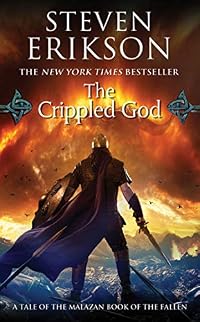
The Crippled God: Book Ten of The Malazan Book of the Fallen
by Steven Erikson
World of Malazan (Book of the Fallen 10), Malazan Chronology (18), Malazan Book of the Fallen (10)
On This Page
Description
Tavore Paran struggles to hold her army together in order to combat a fearsome alien force, while the gods threaten to once again unleash dragons to destroy the world.Tags
Recommendations



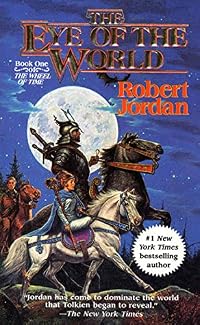

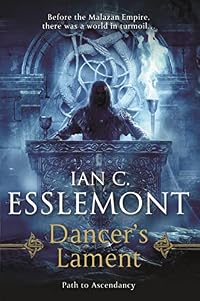
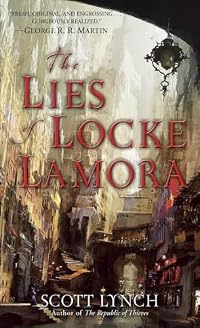
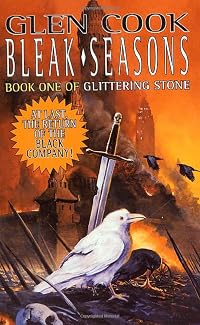

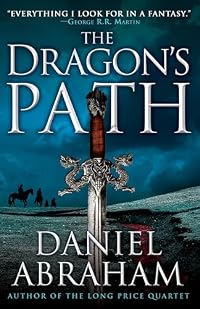
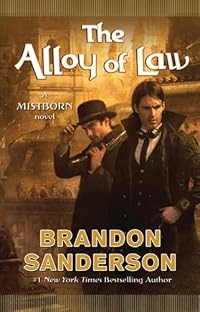
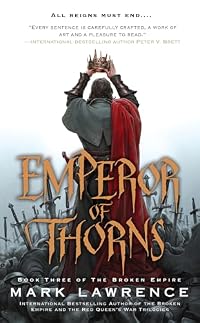
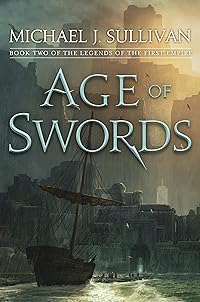
Member Recommendations
Member Reviews
Steven Erikson's The Crippled God is one of those books that, once you finish reading, you just sit back with your mouth agape and think to yourself, How am I ever supposed to review that?
It is the tenth and final volume of The Malazan Book of the Fallen, capstone to a series whose individual entries possess a scope and ambition that defies easy description. This is all a remarkable achievement in and of itself, never mind the accomplishment of releasing a completed ten-book series of epic fantasy doorstoppers inside twelve years.
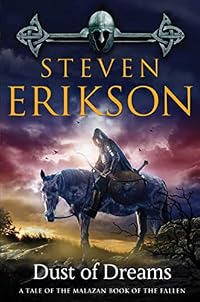
As for the concluding volume itself, woe betide anyone attempting to provide a relatively spoiler-free summary of any "volume ten", much less a Malazan book. However, unlike earlier entries in the series, this show more book is basically a direct continuation of the previous volume, Dust of Dreams: The Bonehunters are marching across the continent of Lether, headed to Kolanse, along with the armies of the Letherii, the Perish Grey Helms, and the Bolkando. The Shake prepare to make their stand on the First Shore against the invading Tiste Liosan hordes. And a cabal of Elder Gods move to play their hand.
Put that way, it almost sounds simple. And yet Erikson still manages to defy all expectations. Where DoD ended in a slam-bang confrontation that resulted in a massive "who's dead/who survived?" cliffhanger, TCG takes its time getting back into the proverbial swing of things. The first chapter is an eye-opener—raising the stakes by introducing a couple of new threats, while also finally thrusting some old favorites back into the mix—but then the pace slows down again as the march to Kolanse recommences. Though that plot doesn't move much for the first half of the book, Erikson thankfully writes in a lot of intrigue: betrayals and counter-betrayals and hints of further betrayal to come that leave you guessing how exactly it will all shake out at the final convergence. There's a nice, epic battle mid-book that breaks the perceived tedium of the Lether-based plot, but though it's satisfying in its own right, it's also a bit frustrating in that it's difficult to see how it relates to the main plot of the book, and indeed the series. When the final final battle does come, though, it's quite the spectacle; Erikson pulls out all the stops, throwing one thing after another at the reader. And when it's finally run its course, all you can do is sit back and breathe a sigh of relief that it's done. It is perhaps telling that there are two epilogues here, and I don't think that a third would have been too much to ask.
Everyone knows that a series finale is supposed to tie up everything that came before, or at least to mostly do so; but Malazan fans have always been aware that Erikson had no intention of following the old formulae. So it comes as no surprise that numerous plot-threads and mysteries go unresolved here. And yet for all of that, it's still impressive how much he is able to resolve in this book. The number of direct references to the first two books alone are ridiculous; one almost gets the mental image of Erikson rereading the series, making notes of everything he needs to address in the final volume. The number of previously-loose threads that actually do get tied up is impressive, especially in light of just how many years some of them had been left dangling. And there are a couple of key concepts that get completely turned on their heads, inviting a reread of the entire series with this newfound insight. Finally, the way the last epilogue mirrors the very first pages of Gardens of the Moon works beautifully, bringing the entire sequence full-circle in a fitting conclusion.
All of this is not to say that it's a perfect book. Besides the issue I had with the occasionally glacial pace, Erikson does some serious teasing. It's one thing to leave a mystery from a previous book unresolved; it's another thing entirely to take such a mystery and then build on it, adding new layers of mystery and fascination—and then just ignore it or brush it aside. There are a couple of mysterious characters that get this treatment; Erikson teases like he's going to do the big reveal here, and then fails to deliver. Another complaint I have is similar to the issue I took with Esslemont's writing in Stonewielder, which is to say that though events get resolved, much of the resolution goes unexplained. To be fair to Erikson, though, I've seen some good discussion online about the end of The Crippled God, and it looks like many of those answers might be hiding in plain sight, squirreled away within the text and just waiting for a reread to bring them to light. It is perhaps unfair, but I'm willing to give Erikson the benefit of the doubt here, even as I withhold it from Esslemont. Finally, dare I say that I found the ending to be not tragic enough? Like I said, Erikson continues to defy all expectations, including those that he himself has fostered throughout nine books.
When all is said and done, The Crippled God is a memorable and fitting finale to one of the most ambitious fantasy epics ever written. I've heard from fans who have finished it, unable to bring themselves to read anything else for a time afterward. I had a similar reaction, though in my case it just meant finishing my reread of Deadhouse Gates before moving on to something outside the Malazan universe. So for current Malazan fans, it's an absolute must-read. If you're not a fan yet, might I humbly recommend starting at the beginning with Gardens of the Moon to see what you're missing. [4 out of 5 stars] for The Crippled God, but [5 out of 5 stars] for The Malazan Book of the Fallen as a whole. show less
It is the tenth and final volume of The Malazan Book of the Fallen, capstone to a series whose individual entries possess a scope and ambition that defies easy description. This is all a remarkable achievement in and of itself, never mind the accomplishment of releasing a completed ten-book series of epic fantasy doorstoppers inside twelve years.
As for the concluding volume itself, woe betide anyone attempting to provide a relatively spoiler-free summary of any "volume ten", much less a Malazan book. However, unlike earlier entries in the series, this show more book is basically a direct continuation of the previous volume, Dust of Dreams: The Bonehunters are marching across the continent of Lether, headed to Kolanse, along with the armies of the Letherii, the Perish Grey Helms, and the Bolkando. The Shake prepare to make their stand on the First Shore against the invading Tiste Liosan hordes. And a cabal of Elder Gods move to play their hand.
Put that way, it almost sounds simple. And yet Erikson still manages to defy all expectations. Where DoD ended in a slam-bang confrontation that resulted in a massive "who's dead/who survived?" cliffhanger, TCG takes its time getting back into the proverbial swing of things. The first chapter is an eye-opener—raising the stakes by introducing a couple of new threats, while also finally thrusting some old favorites back into the mix—but then the pace slows down again as the march to Kolanse recommences. Though that plot doesn't move much for the first half of the book, Erikson thankfully writes in a lot of intrigue: betrayals and counter-betrayals and hints of further betrayal to come that leave you guessing how exactly it will all shake out at the final convergence. There's a nice, epic battle mid-book that breaks the perceived tedium of the Lether-based plot, but though it's satisfying in its own right, it's also a bit frustrating in that it's difficult to see how it relates to the main plot of the book, and indeed the series. When the final final battle does come, though, it's quite the spectacle; Erikson pulls out all the stops, throwing one thing after another at the reader. And when it's finally run its course, all you can do is sit back and breathe a sigh of relief that it's done. It is perhaps telling that there are two epilogues here, and I don't think that a third would have been too much to ask.
Everyone knows that a series finale is supposed to tie up everything that came before, or at least to mostly do so; but Malazan fans have always been aware that Erikson had no intention of following the old formulae. So it comes as no surprise that numerous plot-threads and mysteries go unresolved here. And yet for all of that, it's still impressive how much he is able to resolve in this book. The number of direct references to the first two books alone are ridiculous; one almost gets the mental image of Erikson rereading the series, making notes of everything he needs to address in the final volume. The number of previously-loose threads that actually do get tied up is impressive, especially in light of just how many years some of them had been left dangling. And there are a couple of key concepts that get completely turned on their heads, inviting a reread of the entire series with this newfound insight. Finally, the way the last epilogue mirrors the very first pages of Gardens of the Moon works beautifully, bringing the entire sequence full-circle in a fitting conclusion.
All of this is not to say that it's a perfect book. Besides the issue I had with the occasionally glacial pace, Erikson does some serious teasing. It's one thing to leave a mystery from a previous book unresolved; it's another thing entirely to take such a mystery and then build on it, adding new layers of mystery and fascination—and then just ignore it or brush it aside. There are a couple of mysterious characters that get this treatment; Erikson teases like he's going to do the big reveal here, and then fails to deliver. Another complaint I have is similar to the issue I took with Esslemont's writing in Stonewielder, which is to say that though events get resolved, much of the resolution goes unexplained. To be fair to Erikson, though, I've seen some good discussion online about the end of The Crippled God, and it looks like many of those answers might be hiding in plain sight, squirreled away within the text and just waiting for a reread to bring them to light. It is perhaps unfair, but I'm willing to give Erikson the benefit of the doubt here, even as I withhold it from Esslemont. Finally, dare I say that I found the ending to be not tragic enough? Like I said, Erikson continues to defy all expectations, including those that he himself has fostered throughout nine books.
When all is said and done, The Crippled God is a memorable and fitting finale to one of the most ambitious fantasy epics ever written. I've heard from fans who have finished it, unable to bring themselves to read anything else for a time afterward. I had a similar reaction, though in my case it just meant finishing my reread of Deadhouse Gates before moving on to something outside the Malazan universe. So for current Malazan fans, it's an absolute must-read. If you're not a fan yet, might I humbly recommend starting at the beginning with Gardens of the Moon to see what you're missing. [4 out of 5 stars] for The Crippled God, but [5 out of 5 stars] for The Malazan Book of the Fallen as a whole. show less
SPOILER ALERT!
Erikson evidently had a contract to write 10 huge novels because nothing else can explain the last 5 books in the Malazan series.
Though the first 5 books were top notch fantasy, well written, engaging, and exciting, the last 5 books were a self-indulgent mess, with pages and pages of introspective whining, and endless internal monologues decrying deforestation, hunting, religion, and civilization.
Erikson comes off as a left-wing, self-hating human (as apposed to all the inherently innocent alien creatures).
He can't resist reforming all his nasty characters, eventually resurrecting them as misunderstood good people. And don't get me started on resurrection, because no one dies in these books, ever, they just keep coming show more back and back and back.
Then there are the tough characters, warriors, and leaders, each and every one of them eventually breaks down and weeps and bemoans their fate. No matter how much out of character it is, they all end up cry-babies. Boo hoo.
And then there are the people who always know everything about what’s going on, but never, ever share it with anyone, no matter how much others beg to know, even when it means that their unexplained, obstinate silence will kill them all. Just because.
And why start each chapter by intentionally hiding the identity of the character (easy to do when there are 10 simultaneous plots going) so that by the time you figure out who he's talking about, you have to reread the last two pages. Every time.
In the last 5 books, the humor is forced and unfunny. In the last book, the words 'grief' and 'despair' appear on almost EVERY page. It must be some kind of record, I almost killed myself.
Lastly, did anyone else notice that Krupp's place in the scheme of things was similar to Tom Bombadil? Apparently Erikson sought to emulate the singular most irritating thing in the Lord of the Rings. show less
Erikson evidently had a contract to write 10 huge novels because nothing else can explain the last 5 books in the Malazan series.
Though the first 5 books were top notch fantasy, well written, engaging, and exciting, the last 5 books were a self-indulgent mess, with pages and pages of introspective whining, and endless internal monologues decrying deforestation, hunting, religion, and civilization.
Erikson comes off as a left-wing, self-hating human (as apposed to all the inherently innocent alien creatures).
He can't resist reforming all his nasty characters, eventually resurrecting them as misunderstood good people. And don't get me started on resurrection, because no one dies in these books, ever, they just keep coming show more back and back and back.
Then there are the tough characters, warriors, and leaders, each and every one of them eventually breaks down and weeps and bemoans their fate. No matter how much out of character it is, they all end up cry-babies. Boo hoo.
And then there are the people who always know everything about what’s going on, but never, ever share it with anyone, no matter how much others beg to know, even when it means that their unexplained, obstinate silence will kill them all. Just because.
And why start each chapter by intentionally hiding the identity of the character (easy to do when there are 10 simultaneous plots going) so that by the time you figure out who he's talking about, you have to reread the last two pages. Every time.
In the last 5 books, the humor is forced and unfunny. In the last book, the words 'grief' and 'despair' appear on almost EVERY page. It must be some kind of record, I almost killed myself.
Lastly, did anyone else notice that Krupp's place in the scheme of things was similar to Tom Bombadil? Apparently Erikson sought to emulate the singular most irritating thing in the Lord of the Rings. show less
After a brutal battle with the K'Chain Nah'ruk, the Bonehunters march towards Kolanse, the location of their final battle. To get there they must first cross a desert of glass, agreed by all as an impossible task. Awaiting them at journey's end: Forkrul Assail, the arbiters of humanity. Elsewhere, in the realm of Kurald Galain, is the city of Kharkanas. A mass of refugees stand on its Shore, awaiting the breach of Lightfall and the coming of the Tiste Liosian. This is a fight they cannot win in the name of an empty city and a mad queen. Yet elsewhere three Elder Gods plot to shatter the chains of Korabas, the Otataral Dragon, from her eternal prison. Her release will send a force of devastation across the realms that no mortals can show more withstand. And if that is not enough the gates of Starvald Demelain are about to open which will release the Elient, true dragons, across the world.
The Crippled God is the tenth and final tale of the Malazan Book of the Fallen. Picking up exactly where book 9 left us, the story immediately takes off and the reader must hang on tight. Everything you have come to expect from a Malazan novel is here: humor, action, magic, philosophy, utterly realistic characters, elder races, gods, heartbreak, joy and more. It amazes me at how set ups from the very first novel are all tied together in this book. Many story threads are given closure. Many important questions are answered. It wouldn't be a Malazan novel if some plot points and questions didn't remain. For me I can't say they bother me at all.
Where Erikson really shines is his representation of the human condition. He is able to dig deep into the heart, mind and soul of his characters to give us an array of views on war, love, hate, pain, sorrow, joy, life, death and all those themes that are the core of what makes us human. And compassion. If there is one theme for this series it is that of compassion. While Erikson forces us to look into the mirror and see all the ugly we wish we could hide he also shows us the beauty of the soul. These are the scenes that will move you.
The Crippled God is a fitting ending to what has become my all time favorite series. I started these books in 2012 and it has been quite a journey. To say that I have enjoyed these books doesn't do them justice. Amazingly complex, overwhelmingly hearbreaking, laugh out loud funny and everything in between this series elevates what it is to be epic fantasy. Thank you Steven Erikson for such an amazing story. I look forward to rereading this series in the future. show less
The Crippled God is the tenth and final tale of the Malazan Book of the Fallen. Picking up exactly where book 9 left us, the story immediately takes off and the reader must hang on tight. Everything you have come to expect from a Malazan novel is here: humor, action, magic, philosophy, utterly realistic characters, elder races, gods, heartbreak, joy and more. It amazes me at how set ups from the very first novel are all tied together in this book. Many story threads are given closure. Many important questions are answered. It wouldn't be a Malazan novel if some plot points and questions didn't remain. For me I can't say they bother me at all.
Where Erikson really shines is his representation of the human condition. He is able to dig deep into the heart, mind and soul of his characters to give us an array of views on war, love, hate, pain, sorrow, joy, life, death and all those themes that are the core of what makes us human. And compassion. If there is one theme for this series it is that of compassion. While Erikson forces us to look into the mirror and see all the ugly we wish we could hide he also shows us the beauty of the soul. These are the scenes that will move you.
The Crippled God is a fitting ending to what has become my all time favorite series. I started these books in 2012 and it has been quite a journey. To say that I have enjoyed these books doesn't do them justice. Amazingly complex, overwhelmingly hearbreaking, laugh out loud funny and everything in between this series elevates what it is to be epic fantasy. Thank you Steven Erikson for such an amazing story. I look forward to rereading this series in the future. show less
This tenth and concluding volume is decidedly true to what's come before, featuring all the flamboyant action and unresolved mysteries we've come to expect. The traditional structure of establishing who-versus-who at the beginning of a series and then building up to a final confrontation has always been manipulated and thrown into disarray throughout, and it would have been unreasonable to anticipate anything changing at this point. Many will question why the villains were not better foreshadowed, or the role of the Crippled God. This tenth volume is almost self-contained in a way we haven't seen since the first five books, even despite the ninth being its "first half". The result is a sort of discordant, asymmetrical ending to the show more series that does not tie up all threads, answer every question (it even inspires some new ones) or establish all fates. One key element is resolved: I think a very solid case can be made that Tavore Paran is the main protagonist of the series. That was rarely obvious during the prior volumes, with so many competing stories and points of view, but it becomes clearer as the thematic elements address one simple question: who or what is worth saving?
What strikes me most about this book, and what makes it my personal favourite in the series, is that I was made to feel every high and low. I complained in my review of MOI, for example, that it was often like watching the author set up and knock down a bunch of toy soldiers, all too remote. Not this time, possibly because I've finally spent enough hours with these characters and their world and because I knew this was the end. More likely, it's because enough time was spent on the "why" questions. Clearer motivations, more thoughts centered on confronting fate rather than abstract philosophizing, mixed with heartwarming reunions and painful separations or farewells - more heart, more of what was missing in most of the previous books. More real people, feeling and thinking real things like real people do.
Prior to reading this series I scoured the Internet for Erikson's posts where he illuminates what he intended, how much thought he put into what he created, what his goals were, etc. I wanted reassurance that taking on ten thousand pages would be worth it. The author claims it is ultimately about compassion, most explicitly stated in the contrast between Shadowthrone and Cotillion. He also likens reading this series to opening a history book at some random page, reading a hundred years' worth, and closing it again. These observations have proven true and helped me with the reading. I found less illuminating his claim that the reader is sent on a hero's journey during the course of reading, as I can't line that up.
The primary "pros" of the series that stood out to me: incorporating an enormous scale without making the story feel dragged out; demonstrating the significance of soldiers even within the context of massive-scale battles involving incredible magic and chaos, where individual lives still matter; a sharp sense of humour across all forms be it puns, farce or subtle insinuations, equally balanced with tragedy; creative choices in where the story is carried to next with each succeeding volume; a stab at literary aspirations through meta-fiction elements, particularly in the eighth volume (although the tenth I believe is his best work.)
The primary "cons": his bad habit of not establishing setting; a lack of concern with drawing the reader into his tale, like a driver who never inquires how his passengers are faring, challenging us through meta-fiction to blame ourselves if we don't feel properly engaged; being forced as the reader to treat every detail as important in case it becomes significant later and not always being rewarded; the awkward division of writing labour between Erikson and Esselmont, such that major threads are left hanging by one or the other and neither has produced something entirely self-contained.
Erikson succeeds brilliantly on the big-picture macro level, magnificent at marshalling an entire world of characters and peoples, history and geography. The weakness of his approach lies in the micromanaging: he can rarely develop any single character sufficiently for us to care enough about their fate in order for it to have the emotional impact he clearly desires (Coltaine the most glaring example, imo.) Readers' favourite books in the series vary widely, probably tied to who they managed to care most about. I find Erikson's greatest weakness is his portrayal of children, not one of whom I found believable unless I forgot how old they were.
This series has generated more fascinating Internet discussion than most fantasy novels, prompting readers to help one another make connections across volumes as though studying real life history, parsing phrase and line for subtext as I've usually only seen done with classic literature. Malazan earns and deserves more than a cursory scan of its surface - but how much reward does it ultimately provide for the effort? At its heart the story is rather a simple collection of numerous adventures, a sort of "Arabian Nights" except that the stories interweave and influence one another. Its complexity derives more from the manner of its telling than any message it delivers. It is hardly likely to be (or at least to remain) the most challenging literature you ever read in your life, contrary to the hype. I am not even convinced it is the most literary fantasy series (Gene Wolfe? Stephen R. Donaldson? Ursula LeGuin?). Happily I did feel compelled to consider those questions, which says something. My personal rating for the series as a whole would be four stars out of five, and I've no regrets for any of my time spent here. show less
What strikes me most about this book, and what makes it my personal favourite in the series, is that I was made to feel every high and low. I complained in my review of MOI, for example, that it was often like watching the author set up and knock down a bunch of toy soldiers, all too remote. Not this time, possibly because I've finally spent enough hours with these characters and their world and because I knew this was the end. More likely, it's because enough time was spent on the "why" questions. Clearer motivations, more thoughts centered on confronting fate rather than abstract philosophizing, mixed with heartwarming reunions and painful separations or farewells - more heart, more of what was missing in most of the previous books. More real people, feeling and thinking real things like real people do.
Prior to reading this series I scoured the Internet for Erikson's posts where he illuminates what he intended, how much thought he put into what he created, what his goals were, etc. I wanted reassurance that taking on ten thousand pages would be worth it. The author claims it is ultimately about compassion, most explicitly stated in the contrast between Shadowthrone and Cotillion. He also likens reading this series to opening a history book at some random page, reading a hundred years' worth, and closing it again. These observations have proven true and helped me with the reading. I found less illuminating his claim that the reader is sent on a hero's journey during the course of reading, as I can't line that up.
The primary "pros" of the series that stood out to me: incorporating an enormous scale without making the story feel dragged out; demonstrating the significance of soldiers even within the context of massive-scale battles involving incredible magic and chaos, where individual lives still matter; a sharp sense of humour across all forms be it puns, farce or subtle insinuations, equally balanced with tragedy; creative choices in where the story is carried to next with each succeeding volume; a stab at literary aspirations through meta-fiction elements, particularly in the eighth volume (although the tenth I believe is his best work.)
The primary "cons": his bad habit of not establishing setting; a lack of concern with drawing the reader into his tale, like a driver who never inquires how his passengers are faring, challenging us through meta-fiction to blame ourselves if we don't feel properly engaged; being forced as the reader to treat every detail as important in case it becomes significant later and not always being rewarded; the awkward division of writing labour between Erikson and Esselmont, such that major threads are left hanging by one or the other and neither has produced something entirely self-contained.
Erikson succeeds brilliantly on the big-picture macro level, magnificent at marshalling an entire world of characters and peoples, history and geography. The weakness of his approach lies in the micromanaging: he can rarely develop any single character sufficiently for us to care enough about their fate in order for it to have the emotional impact he clearly desires (Coltaine the most glaring example, imo.) Readers' favourite books in the series vary widely, probably tied to who they managed to care most about. I find Erikson's greatest weakness is his portrayal of children, not one of whom I found believable unless I forgot how old they were.
This series has generated more fascinating Internet discussion than most fantasy novels, prompting readers to help one another make connections across volumes as though studying real life history, parsing phrase and line for subtext as I've usually only seen done with classic literature. Malazan earns and deserves more than a cursory scan of its surface - but how much reward does it ultimately provide for the effort? At its heart the story is rather a simple collection of numerous adventures, a sort of "Arabian Nights" except that the stories interweave and influence one another. Its complexity derives more from the manner of its telling than any message it delivers. It is hardly likely to be (or at least to remain) the most challenging literature you ever read in your life, contrary to the hype. I am not even convinced it is the most literary fantasy series (Gene Wolfe? Stephen R. Donaldson? Ursula LeGuin?). Happily I did feel compelled to consider those questions, which says something. My personal rating for the series as a whole would be four stars out of five, and I've no regrets for any of my time spent here. show less
Wow. An amazing conclusion to an excellent series. Erikson is a master at writing characters, whether we follow them through ten books and thousands of pages or they are "on screen" for a few paragraphs. The plot lines are intricate and confounding, yet come together in unexpected ways that manage to make perfect sense--the clues are there, the groundwork laid, but the reader doesn't see it coming. Over and over.
There is heartbreak, betrayal, faith that is sorely tested. There is death, new life, friendship, and enmity. There are battles that are epic and yet singularly personal. There are promises kept and promises broken.
Erikson is not afraid to weave serious and substantial themes through his books, and these only add depth and show more meaning to the reader's experience.
I cannot recommend these books highly enough. show less
There is heartbreak, betrayal, faith that is sorely tested. There is death, new life, friendship, and enmity. There are battles that are epic and yet singularly personal. There are promises kept and promises broken.
Erikson is not afraid to weave serious and substantial themes through his books, and these only add depth and show more meaning to the reader's experience.
I cannot recommend these books highly enough. show less
We go round and round and this is the story of the world. Do not flee us. Do not flee this moment, this scene. Do not confuse dislike and abhorrence with angry denial of truths you do not wish to see. I accept your horror and expect no forgiveness. But if you deny, I name you coward.
And I have had my fill of cowards.
This is it, the close of what I can only refer to as the best collection of epic fantasy ever created. I don’t want to give a summary or even mention any names which might spoil this book or what comes in its first half, Dust of Dreams. The Crippled God picks up right where DD left off, and I recommend reading it immediately after completing the former. (I chose not to break and read Esslemont’s Stonewielder in between, show more and am glad I did so.) These last two books together were an emotional roller-coaster, as story-lines come to an end, as characters we’ve known and come to love over the years face their most heartbreaking challenges yet.
Was every storyline and question closed off, answered? No, at least not obviously so. Was there sufficient closure? Yes, I thought so. I was not disappointed by this ending. I cried several times in the last few hundred pages. Erikson is a genius in many ways, but his crowning achievement will always be his insight into human nature – the good and the bad of it, the mixed motivations, the self-doubts and recriminations, the sparks of compassion and the heartbreaking way people can go to the mat for one another.
I first picked up Deadhouse Gates from a used bookstore in the summer of 2005, and was immediately hooked. I backed up to read Gardens of the Moon and since then I have read and re-read the early episodes of this series so many times along the journey, never wanting to forget an important detail from an earlier episode when I'd been waiting for the release of a new one. My final re-read of the entire series began in June, 2011 and it has taken until early 2014 to complete it (with some breaks caused by work and personal events). I will read this series again one day, which is something I can say of very few books, let alone a project as monstrous as this one. I’m so grateful to Erikson for this gift, and have made sure to infect as many people as I could with a love for his books over the years. I will continue to do so. show less
And I have had my fill of cowards.
This is it, the close of what I can only refer to as the best collection of epic fantasy ever created. I don’t want to give a summary or even mention any names which might spoil this book or what comes in its first half, Dust of Dreams. The Crippled God picks up right where DD left off, and I recommend reading it immediately after completing the former. (I chose not to break and read Esslemont’s Stonewielder in between, show more and am glad I did so.) These last two books together were an emotional roller-coaster, as story-lines come to an end, as characters we’ve known and come to love over the years face their most heartbreaking challenges yet.
Was every storyline and question closed off, answered? No, at least not obviously so. Was there sufficient closure? Yes, I thought so. I was not disappointed by this ending. I cried several times in the last few hundred pages. Erikson is a genius in many ways, but his crowning achievement will always be his insight into human nature – the good and the bad of it, the mixed motivations, the self-doubts and recriminations, the sparks of compassion and the heartbreaking way people can go to the mat for one another.
I first picked up Deadhouse Gates from a used bookstore in the summer of 2005, and was immediately hooked. I backed up to read Gardens of the Moon and since then I have read and re-read the early episodes of this series so many times along the journey, never wanting to forget an important detail from an earlier episode when I'd been waiting for the release of a new one. My final re-read of the entire series began in June, 2011 and it has taken until early 2014 to complete it (with some breaks caused by work and personal events). I will read this series again one day, which is something I can say of very few books, let alone a project as monstrous as this one. I’m so grateful to Erikson for this gift, and have made sure to infect as many people as I could with a love for his books over the years. I will continue to do so. show less
Steven Erikson’s massive ten volume series comes to an end, on time and with the vast majority of its myriad plotlines and characters finding some sense of closure. And while, all in all, I feel that the final three books of the series don’t match the amazing storytelling of the series at its best, I stand by my often repeated assertion that this, for me anyway, is the greatest fantasy series ever written.
The Crippled God is not really a stand alone novel, but the second half of a concluding duology begun in Dust of Dreams. In addition to picking up the story of the survivors of book nine’s bloody climax, book ten gives a few new characters and brings back others whom we haven’t seen for awhile. This book had its fair share of show more surprises, as well as plenty of moments that made me laugh and plenty of moments that made me cry.
On the other hand, I couldn’t help but feel that there was something quite contrived about the coming together of so many successive seemingly hopeless situations to be won nonetheless. And despite their haughty self assurance, the supposedly uber-nasty Forkrul Assail prove in the end almost comically ineffective, reminding me of Robert Jordan’s Foresaken.
But these quibbles don't diminish my overall regard for the series. I finish the last book ready to go back and start again from the beginning, knowing that there are many layers to this story and world that I have not fully appreciated the first time around. I expect to return to these books often for the rest of my life. show less
The Crippled God is not really a stand alone novel, but the second half of a concluding duology begun in Dust of Dreams. In addition to picking up the story of the survivors of book nine’s bloody climax, book ten gives a few new characters and brings back others whom we haven’t seen for awhile. This book had its fair share of show more surprises, as well as plenty of moments that made me laugh and plenty of moments that made me cry.
On the other hand, I couldn’t help but feel that there was something quite contrived about the coming together of so many successive seemingly hopeless situations to be won nonetheless. And despite their haughty self assurance, the supposedly uber-nasty Forkrul Assail prove in the end almost comically ineffective, reminding me of Robert Jordan’s Foresaken.
But these quibbles don't diminish my overall regard for the series. I finish the last book ready to go back and start again from the beginning, knowing that there are many layers to this story and world that I have not fully appreciated the first time around. I expect to return to these books often for the rest of my life. show less
Members
- Recently Added By
Lists

NPRs your picks: top 100 Sci-Fi/Fantasy books
297 works; 78 members

Top Five Books of 2015
811 works; 241 members

Recommend Fantasy Books
100 works; 1 member
Author Information

78+ Works 37,956 Members
Steven Erikson, a pseudonym used by Steven Rune Lundin, was born in Toronto, Canada on October 7, 1959. He is an anthropologist and archaeologist by training and a graduate of the Iowa Writer's Workshop. He is the author of the Malazan Book of the Fallen series and the Bauchelain and Korbal Broach series. (Bowker Author Biography)
Some Editions
Awards and Honors
Awards
Notable Lists
Series

World of Malazan
33 works (Book of the Fallen 10)

Malazan Chronology
23 works (18)

Malazan Book of the Fallen
10 works (10)
Belongs to Publisher Series
Science Fiction Book Club (1333786)
Work Relationships
Is contained in
Common Knowledge
- Canonical title*
- Chromý bůh
- Original title
- The Crippled God
- Original publication date
- 2011-02-15
- People/Characters
- Edgewalker; Cotillion; Ganoes Paran
- Important places
- Kolanse
- Dedication
- Many years ago one man took a chance on an unknown writer and his first fantasy novel—a novel that had already gone the rounds of publishers a few times without any luck. Without him, without his faith and, in the years... (show all) that followed, his unswerving commitment to this vast undertaking, there would be no 'Malazan Book of the Fallen.' It has been my great privilege to work with a single editor from start to finish, and so I humbly dedicate The Crippled God to my editor and friend, Simon Taylor.
- First words
- Cotillion drew two daggers.
- Quotations
- Ignorant historians will write of us, in the guise of knowledge. They will argue over our purpose - the things we sought to do. They will overturn every boulder, every barrow stone, seeking our motives. Looking for hints of ... (show all)ambition. They will compose a Book of the Fallen. And then argue over its significance. In the guise of knowledge - but truly, what will they know? Of each of us? From that distance, that cold, cold distance - you'd have to squint. You'd have to look hard .... Whatever we manage to do, it will have to be enough. We will bring this book to an end, one way or another.
- Last words
- (Click to show. Warning: May contain spoilers.)Like a thing in chains.
- Publisher's editor
- Taylor, Simon
- Blurbers
- Donaldson, Stephen R.
*Some information comes from Common Knowledge in other languages. Click "Edit" for more information.
Classifications
Statistics
- Members
- 1,682
- Popularity
- 13,178
- Reviews
- 41
- Rating
- (4.33)
- Languages
- 8 — Czech, English, French, German, Italian, Polish, Slovak, Spanish
- Media
- Paper, Audiobook, Ebook
- ISBNs
- 20
- ASINs
- 9