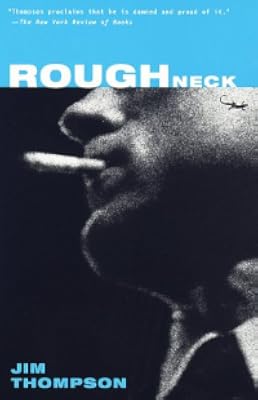
Roughneck
by Jim Thompson
On This Page
Description
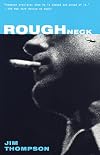
By the time Jim Thompson was sixteen years old, he had been a newspaper boy, a burlesque show hawker, a plumber's helper, a comedian in two-reel pictures, a night bellboy in a luxury hotel and over a dozen other occupations. By the time he was eighteen, he was driving across America in a broken-down Ford without a penny to his name and his mother and his kid sister Freddie in tow, looking for just one more paycheck to keep them all alive. A bittersweet comedy of a hard-won American life, show more ROUGHNECK chronicles the many jobs, near-criminal escapades, and downright unlawful grifts of the man who would become one of crime fiction's most enduring writers, in a larger-than-life literary memoir--or wildly entertaining tall tale--as only Thompson could tell it. Hard times have never sounded so good. show lessTags
Recommendations
















Member Reviews
Reviewed in conjunction with link: La Douleur.
Sometimes you read a book that makes you feel ashamed of your life, every time you thought you were unlucky or that you deserve more or that you should get more. Whatever you have suffered, however genuine it be, suddenly becomes as nothing, its place clearly fixed in the universe as the measliest dot the world ever has seen. Roughneck does that. It describes a portion of his life in the pared down, straightforward way Thompson tells all his stories. Nothing is oversized, filled with extra words so that you can feel like you are getting more than you paid for. You are, of course. But not in word count.
As is so often the case, the small story about a few, packs so much more punch than big show more numbers. This one starts before the Great Depression and takes us through that period. Not that I should be calling it a story. I groaned when I realised I’d picked up an autobiography, not a novel. Live life, don’t read about others, p-llllease. But I was too mean not to read it, serves me right for not looking carefully when I bought it. And before two pages were up I was goggle-eyed, gaping-mouthed hooked.
The man’s a genius. He can even make biography bearable. I’m not going to review this, for the simple reason that I’m not worthy too. The human suffering he writes about, what Americans did to Americans, even white Americans to white Americans, would be demeaned by anything I said about it. I don’t think I ever realised so clearly the extent to which poverty and wealth create the same barriers, the same hate as race or religion, maybe even worse. Watching the way wealthy Americans treated those they were exploiting in this period made my stomach churn. I think that’s the most incredible aspect of it. It is so easy to understand poor people might hate rich. But this book brings home the other side of this and it is truly ghastly to watch.
This is a wildy entertaining book, but it is about people who were rich, watching, exploiting and being despicable to their poor neighbours. It is about people unnecessarily half starving, living in the most desperate circumstances and heart in mouth hoping they pull through. It makes you ashamed to be human.
So I thought.
But then, I hadn’t picked up La Douleur yet.
‘Shit.’ That is what I did say out loud, irritated when I picked this up, the very next book after Roughneck. Another hasty purchase, another %$^#$ autobiography. A slightly wanky one, if it comes to that, I felt as I started it – after the plain matteroffactness of Thompson, Duras seemed on the hysterically dramatic side.
Then again, who wouldn’t be? Thompson writes about the half starved. Duras writes of the 95% starved. I don’t know how to put that. People who are literally skin and bones as they come back, those few who do, from the camps of Nazi Germany, people who are so close to death that food is going to kill them as surely as lack of it will, people whose skeletons can’t bear the tiny weight on them. I have no way of describing the horrors recorded here and to quote bits and pieces would seem plain disrespectful.
I did need some pages to adjust to the girly, introspective way Duras sets out her story here, but then, it was never supposed to be a story, not like that. It was what she wrote at the time for herself, trying to hang on to what was left of her sanity as she waited for her husband to come back during the period in which the prisoners were set free from the Nazi camps. She has some moments of marvelous acidity as she describes how some of the French take advantage of the new political situation. She is no friend of de Gaulle, who sounds like a right creep the way she tells it.
It turned out that being ashamed of America in the Depression wasn’t the half of it.
Lately I seem to keep on – completely coincidentally – reading books that pair each other in some significant way and here again, it’s happened. It’s an odd request, but I’m making it. These books go together. Get them and read them back to back. It’ll be totally worth it, I promise! show less
Sometimes you read a book that makes you feel ashamed of your life, every time you thought you were unlucky or that you deserve more or that you should get more. Whatever you have suffered, however genuine it be, suddenly becomes as nothing, its place clearly fixed in the universe as the measliest dot the world ever has seen. Roughneck does that. It describes a portion of his life in the pared down, straightforward way Thompson tells all his stories. Nothing is oversized, filled with extra words so that you can feel like you are getting more than you paid for. You are, of course. But not in word count.
As is so often the case, the small story about a few, packs so much more punch than big show more numbers. This one starts before the Great Depression and takes us through that period. Not that I should be calling it a story. I groaned when I realised I’d picked up an autobiography, not a novel. Live life, don’t read about others, p-llllease. But I was too mean not to read it, serves me right for not looking carefully when I bought it. And before two pages were up I was goggle-eyed, gaping-mouthed hooked.
The man’s a genius. He can even make biography bearable. I’m not going to review this, for the simple reason that I’m not worthy too. The human suffering he writes about, what Americans did to Americans, even white Americans to white Americans, would be demeaned by anything I said about it. I don’t think I ever realised so clearly the extent to which poverty and wealth create the same barriers, the same hate as race or religion, maybe even worse. Watching the way wealthy Americans treated those they were exploiting in this period made my stomach churn. I think that’s the most incredible aspect of it. It is so easy to understand poor people might hate rich. But this book brings home the other side of this and it is truly ghastly to watch.
This is a wildy entertaining book, but it is about people who were rich, watching, exploiting and being despicable to their poor neighbours. It is about people unnecessarily half starving, living in the most desperate circumstances and heart in mouth hoping they pull through. It makes you ashamed to be human.
So I thought.
But then, I hadn’t picked up La Douleur yet.
‘Shit.’ That is what I did say out loud, irritated when I picked this up, the very next book after Roughneck. Another hasty purchase, another %$^#$ autobiography. A slightly wanky one, if it comes to that, I felt as I started it – after the plain matteroffactness of Thompson, Duras seemed on the hysterically dramatic side.
Then again, who wouldn’t be? Thompson writes about the half starved. Duras writes of the 95% starved. I don’t know how to put that. People who are literally skin and bones as they come back, those few who do, from the camps of Nazi Germany, people who are so close to death that food is going to kill them as surely as lack of it will, people whose skeletons can’t bear the tiny weight on them. I have no way of describing the horrors recorded here and to quote bits and pieces would seem plain disrespectful.
I did need some pages to adjust to the girly, introspective way Duras sets out her story here, but then, it was never supposed to be a story, not like that. It was what she wrote at the time for herself, trying to hang on to what was left of her sanity as she waited for her husband to come back during the period in which the prisoners were set free from the Nazi camps. She has some moments of marvelous acidity as she describes how some of the French take advantage of the new political situation. She is no friend of de Gaulle, who sounds like a right creep the way she tells it.
It turned out that being ashamed of America in the Depression wasn’t the half of it.
Lately I seem to keep on – completely coincidentally – reading books that pair each other in some significant way and here again, it’s happened. It’s an odd request, but I’m making it. These books go together. Get them and read them back to back. It’ll be totally worth it, I promise! show less
Reviewed in conjunction with link: La Douleur.
Sometimes you read a book that makes you feel ashamed of your life, every time you thought you were unlucky or that you deserve more or that you should get more. Whatever you have suffered, however genuine it be, suddenly becomes as nothing, its place clearly fixed in the universe as the measliest dot the world ever has seen. Roughneck does that. It describes a portion of his life in the pared down, straightforward way Thompson tells all his stories. Nothing is oversized, filled with extra words so that you can feel like you are getting more than you paid for. You are, of course. But not in word count.
As is so often the case, the small story about a few, packs so much more punch than big show more numbers. This one starts before the Great Depression and takes us through that period. Not that I should be calling it a story. I groaned when I realised I’d picked up an autobiography, not a novel. Live life, don’t read about others, p-llllease. But I was too mean not to read it, serves me right for not looking carefully when I bought it. And before two pages were up I was goggle-eyed, gaping-mouthed hooked.
The man’s a genius. He can even make biography bearable. I’m not going to review this, for the simple reason that I’m not worthy too. The human suffering he writes about, what Americans did to Americans, even white Americans to white Americans, would be demeaned by anything I said about it. I don’t think I ever realised so clearly the extent to which poverty and wealth create the same barriers, the same hate as race or religion, maybe even worse. Watching the way wealthy Americans treated those they were exploiting in this period made my stomach churn. I think that’s the most incredible aspect of it. It is so easy to understand poor people might hate rich. But this book brings home the other side of this and it is truly ghastly to watch.
This is a wildy entertaining book, but it is about people who were rich, watching, exploiting and being despicable to their poor neighbours. It is about people unnecessarily half starving, living in the most desperate circumstances and heart in mouth hoping they pull through. It makes you ashamed to be human.
So I thought.
But then, I hadn’t picked up La Douleur yet.
‘Shit.’ That is what I did say out loud, irritated when I picked this up, the very next book after Roughneck. Another hasty purchase, another %$^#$ autobiography. A slightly wanky one, if it comes to that, I felt as I started it – after the plain matteroffactness of Thompson, Duras seemed on the hysterically dramatic side.
Then again, who wouldn’t be? Thompson writes about the half starved. Duras writes of the 95% starved. I don’t know how to put that. People who are literally skin and bones as they come back, those few who do, from the camps of Nazi Germany, people who are so close to death that food is going to kill them as surely as lack of it will, people whose skeletons can’t bear the tiny weight on them. I have no way of describing the horrors recorded here and to quote bits and pieces would seem plain disrespectful.
I did need some pages to adjust to the girly, introspective way Duras sets out her story here, but then, it was never supposed to be a story, not like that. It was what she wrote at the time for herself, trying to hang on to what was left of her sanity as she waited for her husband to come back during the period in which the prisoners were set free from the Nazi camps. She has some moments of marvelous acidity as she describes how some of the French take advantage of the new political situation. She is no friend of de Gaulle, who sounds like a right creep the way she tells it.
It turned out that being ashamed of America in the Depression wasn’t the half of it.
Lately I seem to keep on – completely coincidentally – reading books that pair each other in some significant way and here again, it’s happened. It’s an odd request, but I’m making it. These books go together. Get them and read them back to back. It’ll be totally worth it, I promise! show less
Sometimes you read a book that makes you feel ashamed of your life, every time you thought you were unlucky or that you deserve more or that you should get more. Whatever you have suffered, however genuine it be, suddenly becomes as nothing, its place clearly fixed in the universe as the measliest dot the world ever has seen. Roughneck does that. It describes a portion of his life in the pared down, straightforward way Thompson tells all his stories. Nothing is oversized, filled with extra words so that you can feel like you are getting more than you paid for. You are, of course. But not in word count.
As is so often the case, the small story about a few, packs so much more punch than big show more numbers. This one starts before the Great Depression and takes us through that period. Not that I should be calling it a story. I groaned when I realised I’d picked up an autobiography, not a novel. Live life, don’t read about others, p-llllease. But I was too mean not to read it, serves me right for not looking carefully when I bought it. And before two pages were up I was goggle-eyed, gaping-mouthed hooked.
The man’s a genius. He can even make biography bearable. I’m not going to review this, for the simple reason that I’m not worthy too. The human suffering he writes about, what Americans did to Americans, even white Americans to white Americans, would be demeaned by anything I said about it. I don’t think I ever realised so clearly the extent to which poverty and wealth create the same barriers, the same hate as race or religion, maybe even worse. Watching the way wealthy Americans treated those they were exploiting in this period made my stomach churn. I think that’s the most incredible aspect of it. It is so easy to understand poor people might hate rich. But this book brings home the other side of this and it is truly ghastly to watch.
This is a wildy entertaining book, but it is about people who were rich, watching, exploiting and being despicable to their poor neighbours. It is about people unnecessarily half starving, living in the most desperate circumstances and heart in mouth hoping they pull through. It makes you ashamed to be human.
So I thought.
But then, I hadn’t picked up La Douleur yet.
‘Shit.’ That is what I did say out loud, irritated when I picked this up, the very next book after Roughneck. Another hasty purchase, another %$^#$ autobiography. A slightly wanky one, if it comes to that, I felt as I started it – after the plain matteroffactness of Thompson, Duras seemed on the hysterically dramatic side.
Then again, who wouldn’t be? Thompson writes about the half starved. Duras writes of the 95% starved. I don’t know how to put that. People who are literally skin and bones as they come back, those few who do, from the camps of Nazi Germany, people who are so close to death that food is going to kill them as surely as lack of it will, people whose skeletons can’t bear the tiny weight on them. I have no way of describing the horrors recorded here and to quote bits and pieces would seem plain disrespectful.
I did need some pages to adjust to the girly, introspective way Duras sets out her story here, but then, it was never supposed to be a story, not like that. It was what she wrote at the time for herself, trying to hang on to what was left of her sanity as she waited for her husband to come back during the period in which the prisoners were set free from the Nazi camps. She has some moments of marvelous acidity as she describes how some of the French take advantage of the new political situation. She is no friend of de Gaulle, who sounds like a right creep the way she tells it.
It turned out that being ashamed of America in the Depression wasn’t the half of it.
Lately I seem to keep on – completely coincidentally – reading books that pair each other in some significant way and here again, it’s happened. It’s an odd request, but I’m making it. These books go together. Get them and read them back to back. It’ll be totally worth it, I promise! show less
Reviewed in conjunction with link: La Douleur.
Sometimes you read a book that makes you feel ashamed of your life, every time you thought you were unlucky or that you deserve more or that you should get more. Whatever you have suffered, however genuine it be, suddenly becomes as nothing, its place clearly fixed in the universe as the measliest dot the world ever has seen. Roughneck does that. It describes a portion of his life in the pared down, straightforward way Thompson tells all his stories. Nothing is oversized, filled with extra words so that you can feel like you are getting more than you paid for. You are, of course. But not in word count.
As is so often the case, the small story about a few, packs so much more punch than big show more numbers. This one starts before the Great Depression and takes us through that period. Not that I should be calling it a story. I groaned when I realised I’d picked up an autobiography, not a novel. Live life, don’t read about others, p-llllease. But I was too mean not to read it, serves me right for not looking carefully when I bought it. And before two pages were up I was goggle-eyed, gaping-mouthed hooked.
The man’s a genius. He can even make biography bearable. I’m not going to review this, for the simple reason that I’m not worthy too. The human suffering he writes about, what Americans did to Americans, even white Americans to white Americans, would be demeaned by anything I said about it. I don’t think I ever realised so clearly the extent to which poverty and wealth create the same barriers, the same hate as race or religion, maybe even worse. Watching the way wealthy Americans treated those they were exploiting in this period made my stomach churn. I think that’s the most incredible aspect of it. It is so easy to understand poor people might hate rich. But this book brings home the other side of this and it is truly ghastly to watch.
This is a wildy entertaining book, but it is about people who were rich, watching, exploiting and being despicable to their poor neighbours. It is about people unnecessarily half starving, living in the most desperate circumstances and heart in mouth hoping they pull through. It makes you ashamed to be human.
So I thought.
But then, I hadn’t picked up La Douleur yet.
‘Shit.’ That is what I did say out loud, irritated when I picked this up, the very next book after Roughneck. Another hasty purchase, another %$^#$ autobiography. A slightly wanky one, if it comes to that, I felt as I started it – after the plain matteroffactness of Thompson, Duras seemed on the hysterically dramatic side.
Then again, who wouldn’t be? Thompson writes about the half starved. Duras writes of the 95% starved. I don’t know how to put that. People who are literally skin and bones as they come back, those few who do, from the camps of Nazi Germany, people who are so close to death that food is going to kill them as surely as lack of it will, people whose skeletons can’t bear the tiny weight on them. I have no way of describing the horrors recorded here and to quote bits and pieces would seem plain disrespectful.
I did need some pages to adjust to the girly, introspective way Duras sets out her story here, but then, it was never supposed to be a story, not like that. It was what she wrote at the time for herself, trying to hang on to what was left of her sanity as she waited for her husband to come back during the period in which the prisoners were set free from the Nazi camps. She has some moments of marvelous acidity as she describes how some of the French take advantage of the new political situation. She is no friend of de Gaulle, who sounds like a right creep the way she tells it.
It turned out that being ashamed of America in the Depression wasn’t the half of it.
Lately I seem to keep on – completely coincidentally – reading books that pair each other in some significant way and here again, it’s happened. It’s an odd request, but I’m making it. These books go together. Get them and read them back to back. It’ll be totally worth it, I promise! show less
Sometimes you read a book that makes you feel ashamed of your life, every time you thought you were unlucky or that you deserve more or that you should get more. Whatever you have suffered, however genuine it be, suddenly becomes as nothing, its place clearly fixed in the universe as the measliest dot the world ever has seen. Roughneck does that. It describes a portion of his life in the pared down, straightforward way Thompson tells all his stories. Nothing is oversized, filled with extra words so that you can feel like you are getting more than you paid for. You are, of course. But not in word count.
As is so often the case, the small story about a few, packs so much more punch than big show more numbers. This one starts before the Great Depression and takes us through that period. Not that I should be calling it a story. I groaned when I realised I’d picked up an autobiography, not a novel. Live life, don’t read about others, p-llllease. But I was too mean not to read it, serves me right for not looking carefully when I bought it. And before two pages were up I was goggle-eyed, gaping-mouthed hooked.
The man’s a genius. He can even make biography bearable. I’m not going to review this, for the simple reason that I’m not worthy too. The human suffering he writes about, what Americans did to Americans, even white Americans to white Americans, would be demeaned by anything I said about it. I don’t think I ever realised so clearly the extent to which poverty and wealth create the same barriers, the same hate as race or religion, maybe even worse. Watching the way wealthy Americans treated those they were exploiting in this period made my stomach churn. I think that’s the most incredible aspect of it. It is so easy to understand poor people might hate rich. But this book brings home the other side of this and it is truly ghastly to watch.
This is a wildy entertaining book, but it is about people who were rich, watching, exploiting and being despicable to their poor neighbours. It is about people unnecessarily half starving, living in the most desperate circumstances and heart in mouth hoping they pull through. It makes you ashamed to be human.
So I thought.
But then, I hadn’t picked up La Douleur yet.
‘Shit.’ That is what I did say out loud, irritated when I picked this up, the very next book after Roughneck. Another hasty purchase, another %$^#$ autobiography. A slightly wanky one, if it comes to that, I felt as I started it – after the plain matteroffactness of Thompson, Duras seemed on the hysterically dramatic side.
Then again, who wouldn’t be? Thompson writes about the half starved. Duras writes of the 95% starved. I don’t know how to put that. People who are literally skin and bones as they come back, those few who do, from the camps of Nazi Germany, people who are so close to death that food is going to kill them as surely as lack of it will, people whose skeletons can’t bear the tiny weight on them. I have no way of describing the horrors recorded here and to quote bits and pieces would seem plain disrespectful.
I did need some pages to adjust to the girly, introspective way Duras sets out her story here, but then, it was never supposed to be a story, not like that. It was what she wrote at the time for herself, trying to hang on to what was left of her sanity as she waited for her husband to come back during the period in which the prisoners were set free from the Nazi camps. She has some moments of marvelous acidity as she describes how some of the French take advantage of the new political situation. She is no friend of de Gaulle, who sounds like a right creep the way she tells it.
It turned out that being ashamed of America in the Depression wasn’t the half of it.
Lately I seem to keep on – completely coincidentally – reading books that pair each other in some significant way and here again, it’s happened. It’s an odd request, but I’m making it. These books go together. Get them and read them back to back. It’ll be totally worth it, I promise! show less
This is the autobiographical book of part of Jim Thompson's life. I do enjoy reading his works, despite the horrible sexism. I've read quite a few. He had a really hard time making a go of it as a writer, and his books never did so well as after he died. He drank like a fish--seriously, I'm surprised he lasted till 71. He roamed from all over the country trying to make enough to keep his family together: mom, sister, and Pop. There are some seriously hilarious parts to this. The characters he lived around and worked with are something else. You have to read it to believe it.
Fantastic writing covering Thompson's life from his late teens to early forties.
Bad life makes good autobiography.
Ratings
Members
- Recently Added By
Author Information

58+ Works 14,567 Members
American novelist and screenwriter Jim Thompson was born in Anadarko, Oklahoma on September 27, 1906. In Fort Worth, Texas during prohibition, he worked as a bellboy at the Hotel Texas for two years where he earned up to $300 a week by supplying hotel patrons with bootleg liquor, heroin, and marijuana. During the Depression, he worked with the show more Oklahoma Federal Writers Project and was a member of the Communist Party from 1935 to 1938. During World War II, he worked at an aircraft factory where he was investigated by the FBI for his Communist Party affiliation. His first novel, Now and on Earth, was published in 1942. He wrote more than thirty novels during his lifetime and most of them were paperback pulp crime novels. His best known works are The Killer Inside Me, Savage Night, A Hell of a Woman, and Pop. 1280. In 1955, he moved to Hollywood, California to write screenplays with Stanley Kubrick. Thompson helped write The Killing and Paths of Glory. He died after a series of strokes in Los Angeles, California on April 7, 1977. His long-time alcoholism and recent self-inflicted starvation contributed to his death. His death attracted little attention because none of his novels were in print in the U.S. at that time. (Bowker Author Biography) show less
Common Knowledge
- Important places
- USA
Classifications
Statistics
- Members
- 236
- Popularity
- 137,002
- Reviews
- 6
- Rating
- (3.66)
- Languages
- English
- Media
- Paper, Ebook
- ISBNs
- 6
- ASINs
- 6